[Readmelater]

BehanVox: Chaos And Coalitions

This week in BehanVox: a democratic experiment, radical feminist ideas in Telugu magazines, and more

Subscribe to our weekly newsletter that brings you top stories, gender news from the world, and our team’s reading recommendations.

Hello and welcome to BehanVox! The results are in and it would appear that voters have spoken overwhelmingly for change except in Assam and Puducherry. After a particularly messy voter list revision drive, West Bengal’s mandate landed with the BJP, Kerala voted against the incumbent Left and Tamil Nadu stunned the rest of the country by backing by a huge margin a political novice but a seasoned superstar. Analysts and reports (here and here) that women drove the fates of at least two elections. That they voted against Mamata Banerjee’s TMC for not reacting effectively to the multiple incidents of sexual violence and for allowing some of its cadres to run riot on campuses and streets. And that they voted overwhelmingly – especially in urban pockets – for Vijay and his two-year old party, Tamilaga Vettri Kazhagam, because they were no longer impressed with just welfare-centric Dravidian politics. As we argued in an analysis of DMK’s uniquely positioned cash transfer scheme for women, political parties rarely undo such schemes even if power shifts and instead opt to build on it, increasing or expanding its reach. Vijay’s welfare budget, this analysis concludes, will up the state’s total welfare bill by 52%.

If the run up to the election was fraught, its aftermath is even more so, especially in Tamil Nadu, where Vijay’s lack of political, organisational and administrative experience should be a cause for worry. And West Bengal is seeing unsettling violence on the streets.

While the hurly burly of government formation unfurls in the coming days, we, at BehanBox, believe that no matter who comes to power, there is the possibility of an alternate agenda that can guide the new government’s priorities by centering marginalised groups. We will lay these out in the coming weeks.

This week, we published two articles that speak of pathbreaking shifts brought about in two diverse fields – the transformative idea of a social audit of government programmes that arrived with MGNREGA and the rise of Telugu women’s magazines in the late 19th and early 20th century that were way ahead of their times.

Story So Far

social audits MGNREGA

At BehanBox, we have been intently reporting on MGNREGA, the loopholes in its implementation and its now imperilled status. This focus on the globally acclaimed scheme, in its 20th year, is also a time to look back at its nascent years and how it pulled off some radical ideas. Three months ago, scholar Padmini Ramesh wrote for us on how it allowed ordinary people to make claims on the State, negotiate with local power structures and form friendships and networks.

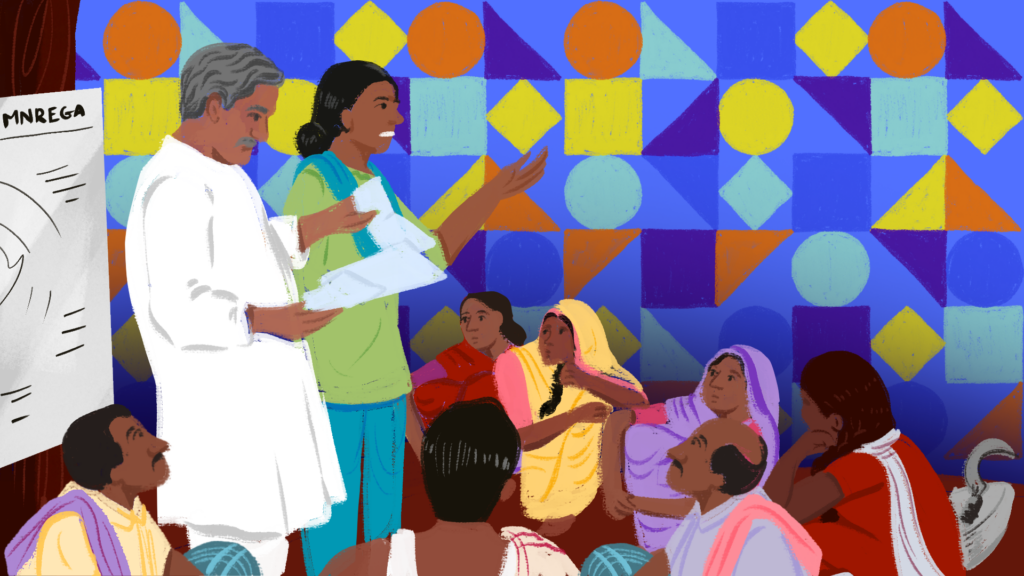
This week, Sowmya Kidambi, recalls for us the radical promise that the scheme made to the rural communities of India – the right to socially audit the programme and be heard and responded to by officials. Sowmya Kidambi, now the head of the Social Work and Research Centre (Barefoot College) in Tilonia, spent 13 years running Andhra Pradesh’s social audit unit which became the template for such exercises across India.

The concept of jan sunwai, or a public hearing of grievances, was at the time an experiment in participatory democracy, premised on the idea that ordinary citizens, especially the rural poor, can and must hold the state accountable. In doing so, social audits sought to invert traditional power hierarchies, placing workers and communities at the centre of monitoring and evaluation. This became a trailblazing idea not just for India but the rest of the world as well, says Soumya.

In a social audit all relevant records such as job cards, muster rolls, sanction orders and payment details – are placed before the community. Discrepancies between official records and lived realities are identified, discussed publicly, and documented. This method privileges lived experience over technical expertise. The testimony of a worker who has not received wages, or of a villager who knows that an asset exists only on paper, is treated as valid evidence.

It is not that the system never ran into big barriers. There is administrative resistance, which has often led to delays in the presentation of provision of records and non-attendance at public hearings. Political interference was common. And worst, funds were delayed leading to over dependence on the state for the running of the audits. “Social audits are not merely technical tools; they are democratic practices. Their success ultimately depends on the willingness of the state to accept scrutiny from below,” Sowmya concludes.

Read our story here.

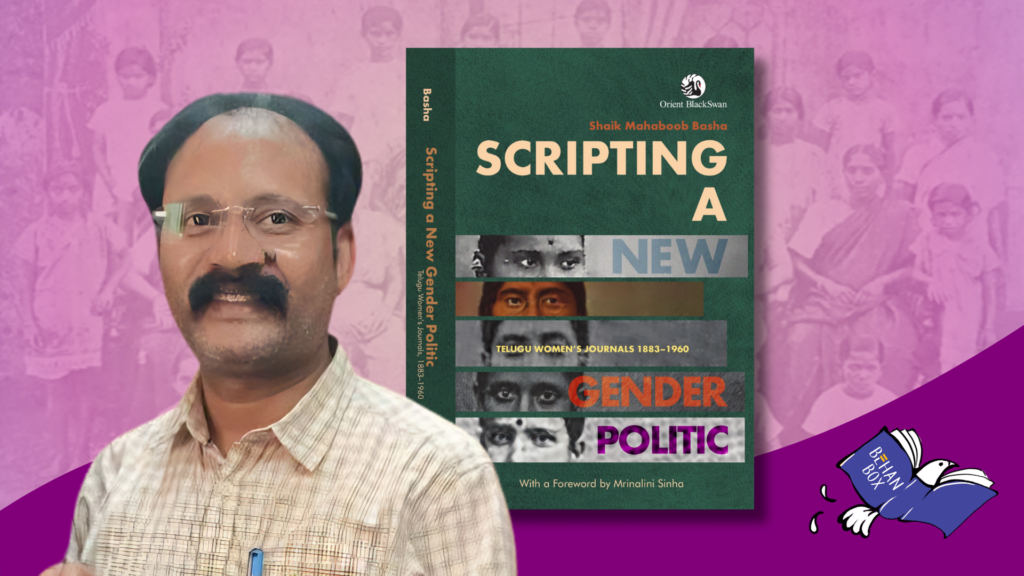
Hyderabad-based History scholar Shaik Mahaboob Basha has an interesting observation about popular Telugu literature at the turn of the 19th century – the maximum number of Telugu women’s journals sprang up in that period and the record remains unbeaten even today when media has become far more democratised in every way possible. And this is true, he says, of not just Telugu, it is true of many Indian languages. The reason lies in the impact of women-centred social reforms and the rise of an educated readership.

The first of these was the monthly Gujarati journal launched in 1857, Streebodh, followed by the Bengali magazine Bamabodhini Patrika and Balabodhini in 1874. The first Telugu women’s journal was titled – and there is some irony to this – Satihita Bodhini – and its aim was to promote women’s education, widow remarriage, and social reforms. There were some interesting aspects to these magazines, to begin with at least, they were edited by men who were reformists. They carried names that indicated a patronising intent to ‘educate’ and ‘improve’ women’s lives with a lot of how-to articles that preached the ‘right’ social and familial conduct.

Later the women stepped into the field, mostly from Brahmin households. This brought a perceptible shift. By the 1920s, women editors and writers were beginning to ask uncomfortable questions about social hypocrisy, gender skews and the unfair burden of carework they carry.

Basha’s new book published by Orient BlackSwan, Scripting a New Gender Politic: Telugu Women’s Journals, 1883–1960, chronicles the rise of these magazines. This week we publish and excerpt from the chapter ‘Autonomy and Legal Reform: Debates on Child Marriage and Kanyasulkam’. In it, he traces the radical content that began showing up in many of these journals, the women who espoused these ideas and how they were received.

Why should women be expected to be pativrata when men were incapable of being patnivratas, fumed Chimakurti Satyavati Devi in the magazine Vasavi. V Saraswati in Grihalakshmi demands that women be educated so they realise that they understood their individualism. Of women taking their husband’s name, she said: ‘This is worldwide slavery in the name of modern culture. To a woman with an individuality of her own, there is no greater humiliation than this. Women should become famous not by their husbands’ names, but by their own strength, effort and capacity.’

At the Godavari District Women’s Conference, held in September 1933, Sarangu Sita Devi delivered a speech [published in Grihalakshimi] in which she spoke bitingly of men who screamed reform on public platforms but in private lives continued to subscribe to orthodoxy. “These men have simply delivered lectures from the platform and got some two to three acts passed. That’s all! [What we must remember is that] the social evils do not die out with the passage of a few acts.”

There were questions too about religion and the place it assigns women. Would these journals have passed conservative scrutiny today? Likely not. The excerpt shows us a world where perhaps more social rules were being questioned and defied than today.

Read the excerpt here.

Talking Point

A Feminichi Wins: A 2024 film used a sexist Malayalam mashup of the word ‘feminist’ and the feminine suffix (-ichi) in its title – Feminichi Fathima – to tell the story of patriarchy in a conservative Muslim household. Perambara in Kozhikode now has elected its own Feminichi Fathima as its MLA. Fathima Thahiliya became the first woman leader from the Indian Union Muslim League (IUML) to win an assembly election in the state. She defeated the LDF leader, TP Ramakrishnan, by a margin of 5,087 votes. Fathima is a lawyer and among the three women leaders who were sidelined for filing a sexual harassment complaint against Muslim Student Federation state president PK Nawas. Earlier too, women league leaders — Kamarunnisa Anwar and Noorbina Rasheed — had been fielded from Kozhikode in 1996 and 2021 respectively. Neither won. Fathima is said to be a reformist voice in the IUML, and the founding president of Haritha, the women’s wing of the Muslim Students Federation.

Clampdown: Narges Mohammadi, 54, the jailed Iranian Nobel peace prize winner, has been hospitalised for acute cardiac distress but remains under guard, say her supporters. She has been jailed for most of the last two decades for activism and was arrested last December again for publicly denouncing the Islamic republic. She has already suffered multiple heart attacks while in the Zanjan prison in northern Iran. Her family, now in Paris, and her supporters want her to be transferred to Tehran for treatment but the government remains unmoved.

Rare Nature: Two Indian women conservationists have bagged the prestigious “Green Oscars” or the Whitley Award this year. Praveen Shaikh, a scientist with the Bombay Natural History Society, has been conferred the award for her ongoing work on Indian river birds, skimmers. The other Indian awardee Barkha. Subba, works with local communities to conserve a rare amphibian, the Himalayan salamander.

Devil Wears Ambition: The vastly entertaining saga of female ambition, Devil Wears Prada, is back with a sequel and so are the debates around women and work and “having it all”. And this is one film – now two – where women unabashedly love their work. Towards the end of the new film, Meryl Streep who essays the formidable Miranda Priestly, declares after a heartbreaking setback – “I love working.” And her once sidekick Anne Hathaway, concurs enthusiastically. Also hark back to the first film where Emily Blunt says to herself “I love my job, I love my job, I love my job…” as she grapples with a nasty cold at work. Whether you are a workaholic or not, these words come as a relief at a time when tradwives in aprons are asking women to give up their votes.

BehanVox Recommends

Race, Eugenics, Silicon Valley: Of course, Jefrey Epstein had a personal eugenics project. This Coda story brings startling revelations about just how much race science is entrenched in the heart of elite institutions, Silicon Valley, and the tech industry. Buried deep in the Epstein files is the logic and fantasy of the tech industry: to control human destiny, and naturally, to replace humans.

Saffron Sea In Bengal: Assam and West Bengal are the new models of Hindutva, the ‘anti-politics’ sentiment in Tamil Nadu’s verdict, and the blurring line of defense against Hindu nationalism. All this and more in political scholar Neelanjan Sircar’s interview with the Equator magazine about the 2026 Assembly poll results.

The Art Vs Artist Debate: Put on your academic gown. In this Open to Debate podcast, under ethical scrutiny is the timeless question of separating the art from the artist. From Michael Jackson to Louis CK, there is no dearth of your favourite artist turning out to be a monster. Do the sins of the artist corrupt their work? What is the emotional cost of compartmentalising two interlinked truths?

Want to explore more newsletters? In Postcards, we send you missives on the places, people and ideas that brought Team BehanBox joy. Our monthly offering Postscript invites you, the reader, into our newsroom to understand how the stories you read came to be – from ideation to execution. Subscribe for more.

Support BehanBox

We believe everyone deserves equal access to accurate news. Support from our readers enables us to keep our journalism open and free for everyone, all over the world.

Donate Now