
Published Over 100 Years Ago, Telugu Women’s Magazines Held Radical Feminist Views
They argued against unpaid carework, rules of wifely conduct, and the tyranny of faith
BUOYED BY SOCIAL REFORMS MOVEMENTS and opportunities for education, the second half of the 19th century saw the remarkable rise of the women’s magazine in Indian languages. The first of these was the monthly Gujarati journal launched in 1857, Streebodh, followed by the Bengali magazine Bamabodhini Patrika and Balabodhini in 1874. All were edited by men, and interestingly carried the word “bodh” in them, indicating their intent to “enlighten” women and set rules for them on how to conduct themselves at home and in the world. It was only later that women – initially mostly from Brahmin families and social reformers themselves – stepped into editorial roles in these publications to argue from a radically feminist stance. Very often the public speeches of women intellectuals were published in these magazines.
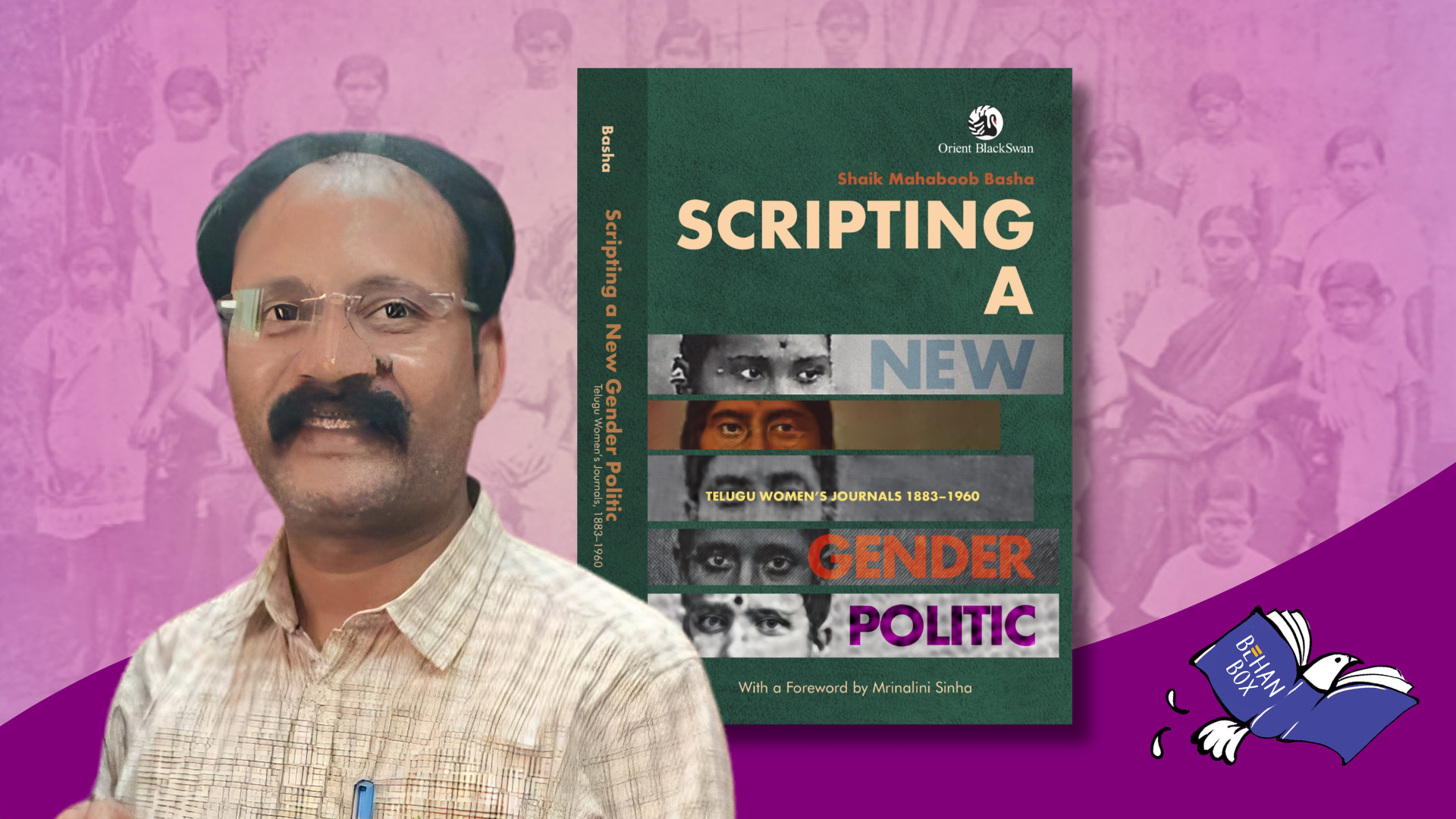
Among these pioneering journals was Satihita Bodhini, launched in 1883 and edited by Kandukuri Veerasalingam, a significant figure in Telugu renaissance in the 19th century. A whole host of women’s magazines in Telugu were launched in the late decades of the 19th and early 20th century, among them Grihalakshmi, Telugu Zenana, Hindu Sundary, Vivekavathi, Andhra Mahila and Anasuya. In his new book published by Orient Blackswan, Scripting a New Gender Politic: Telugu Women’s Journals, 1883–1960, Hyderabad-based history scholar Sheik Shaik Mahaboob Basha writes about the evolution of these publications, their content and social impact.
In this excerpt from the chapter ‘Autonomy and Legal Reform: Debates on Child Marriage and Kanyasulkam’, the author traces the radical content that began showing up in many of these journals, the women who espoused these ideas and how they were received.
Radical Departures: Women’s Critique of Society, Religion and Men
While the preceding section captures ‘soft’ stances on changing conjugal relations, other women intellectuals took a different approach. Chimakurti Satyavati Devi, for example, was very sharp and forthright. In a forceful essay [in Vasavi], she bitterly attacked the world for reserving all ‘sermons’ for women alone and sparing men. Deeply ‘aggrieved’ at the state of affairs, she wrote an article detailing what men’s responsibilities should be. Satyavati Devi emphasised that men must observe patnivrata (devotion to wife) rather than simply expecting pativratya from women.
Men Must Observe Patnivrata
Chimakurti Satyavati Devi observed that everywhere one found and heard, including in women’s conferences, men and women delivering ‘sermons’ to women on the issues of devotion to husband and pativratyam. From the ordinarily educated ones, who could compose some poems, to the established scholars, all wrote on this issue, producing works such as Manini Shatakamu, Sudati Suniti Shatakamu, Stree Niti Dipika, Kanta Suguna Dipika, Stree Hithabodhini and Kanta, which she knew. ‘There may have been many others, which I have not come across,’ she commented. Her biting sarcasm is palpable: ‘[All] these virtuous poets descended to deliver sermons to women the same way the Bramhastra [the deadly Puranic weapon used as a last resort to smash one’s worst enemy] was fired at a sparrow.”
This was quite ‘unjust’ and unfair. Satyavati Devi contended that Indian women had always been famous as pativratas. Such women who venerated their husbands as gods and served them with absolute love and devotion, even though the latter were wicked, were present even in the present. At least a few knew quite well that there were several such women who lost their happiness and life itself because of wicked husbands. It was really sad that, despite knowing this, people continued to find fault with women and delivered sermons on the importance of pativratyam. Such efforts, according to her, were misplaced. Correction must be made where it was required. ‘Though women were virtuous and sound in pativratyam, all of it got wasted because of the foolishness of men. Such women’s devotion to their husbands became useless, like a scent poured onto ashes.’ It was better men themselves turned virtuous and set an example to women rather than delivering a hundred sermons to them. ‘Patnivrata (devotion to wife) should be to a man what pativratya is to women,’ she emphasised. ‘Would not the wife be virtuous, if her husband was virtuous!’ she exclaimed. ‘If the husband was virtuous, there would be no reason for others to teach the wife the lessons in pativratyam,’ she observed confidently. Reminding men that they needed to be patnivratas was certainly a radical, novel proposition and that diverged completely from dominant ideas about wife-husband relationships then in circulation. It reflects Satyavati Devi’s distinct intellectual and political position.
Further, Satyavati Devi stressed that ‘only the virtuous husband could be treated as equal to God, not the wicked one.’ There was no use in teaching women to treat wicked husbands as gods. ‘The journey of family life could not be a happy one, unless both husband and wife were mutually affectionate, virtuous and equal.’ If they were unequal, the cart of family life would be unbalanced like one yoked to an ox and a horse. Thus, she established equality of women and men as the basis of conjugal bliss. Rejecting the dictum to accord god-like status even to a wicked husband, and instead telling a wicked husband that he was wicked, is a clear and sharp departure from the early conduct books intended for women.
Satyavati Devi’s writings [in Vasavi and Grihalakshmi] used irony to great effect. She suggested that it was perhaps because men were convinced that god would not appear to women—the uneducated and weak—that they designed the ‘easy’ way of pativratyam for women: in the pativrata model, husband is god and wife a devotee. Men deserved great salutations, she remarked, for devising such an easy method for the salvation of women. She said that she had a doubt as to how women could uphold the pativratya dharma and worship husbands as gods given the fact that immoral, characterless and wicked husbands were found all around. It was the duty of men to put women, even if they were unwise, on the right path with kind words. Rather than doing this, if they treated wives like a parrot in the clutches of a cat, the question of ensuring sati dharma and this worldly happiness would never arise.
Further, she appealed for ‘impartial judgement’, questioning how one could run family life smoothly with a wicked husband, when swimming that ocean of family life filled with mutual affection and compatible conjugality itself was becoming extremely difficult. Was it not impossible for women, the weak and the ignorant, to lead life on a virtuous path when men, the ‘superiors’, themselves were treading the un-virtuous paths? She warned men that if they did not correct themselves and continued counting the faults of women, the less knowledgeable, they could not possibly expect the nation to prosper. Finally, she stressed that ‘in her opinion, it was men’s conduct that required significant correction rather than women’s.’ She suggested that men should ‘see the truth. Think from the angle of justice. Stop counting others’ [women’s] faults, self-introspect, correct themselves and uplift the nation.’ She thus linked men’s responsibility towards women to the interests of the nation. If men improved themselves and conducted well with women, it meant that they also fulfilled their responsibilities towards the nation. Nation’s uplift was impossible to achieve, if men failed to fulfil their obligations towards women.
Identifying Men as Their Oppressors
In an issue of Grihalakshmi published in 1929, V Saraswati wrote that ‘Indian men or, for that matter, all men in the world were selfish’. According to her, ‘men were solely responsible for the superstitions present in women. Just as the Brahmins suppressed the non-Brahmins, men suppressed women.’ We find such views being expressed by many women from the 1920s onward. Cherukuru Nagabhooshanamma wrote that ‘men created stories [myths], moralities and dharmas, subjugated women and acquired rights over them; they treated women as their cattle and chattel’. She suggested that ‘women should not blindly follow whatever their husbands asked of them. They were not to meekly bear the torture of husbands. Realising that they were independent, they needed to come out of the shell of pativratya.’ She wanted women to be educated for the educated women ‘realised that they were individuals, did not follow others mindlessly, and acted according to their conscience.’ In a radical departure from discourse of the time, she found the practice of women taking on their husband’s name to be ‘negative and derogatory to women’s dignity and individuality’. She wrote: ‘This is worldwide slavery in the name of modern culture. To a woman with an individuality of her own, there is no greater humiliation than this. Women should become famous not by their husbands’ names, but by their own strength, effort and capacity.’
Men Had Failed the Women’s Movement
Women’s consciousness underwent such a tremendous transformation that they began to identify men’s ‘double standards’ and ‘opportunism’ as the reason for the ‘failure’ of the social reform movement. A section of women lost faith in the efforts of the male social reformers, whose activities failed to effect any substantial change in women’s lives. They urged women to take up the cause themselves, rather than depending on men. At the Godavari District Women’s Conference, held on 23 September 1933, Sarangu Sita Devi delivered a speech [published in Grihalakshimi] in which she said:
Educated men, who are interested in the development of the country, have been delivering lectures in favour of widow marriages, and in opposition to child marriages for a long time now! But no substantial change has taken place. It is because the same men who delivered lectures are reluctant when it comes to actual practice…. Though the reform movement has been in existence since the time of Raja Ram Mohan Roy, it has not succeeded because it is in the hands of men. These men have simply delivered lectures from the platform and got some two to three acts passed. That’s all! [What we must remember is that] the social evils do not die out with the passage of a few acts. The reform movement cannot succeed, and be sustained, until and unless women, assisted by some good, strong-willed men, take up the task into their hands. Hence, I appeal to you [women] to shoulder the burden of social reform and bring about [real] changes in our society.
Condemning and Discarding Hindu Scriptures
Just as women challenged scriptural arguments about widow remarriage and the age of consent for girls, they posed serious questions about gender biases in Hindu religious texts and the Puranic heroes. These writers did not consider these texts sacrosanct and repudiated them for sanctioning a derogatory and subordinate status to women. Dharmavaram Lakshmi Devi was of the view that the ‘Dharmashastras were not completely acceptable, and it was not possible for women to lead their lives [in the present] according to them’.
Women had to carve out new ways of living independently of the Dharmashastras by cultivating a rational mind. Unlike most of her contemporaries, she was highly critical of Rama and Krishna, the epic heroes of the Hindus, and condemned them for being unjust to women like Sita and Draupadi in the epics. She accused various Hindu religious texts of according a subordinate status to women. Kanuparti Varalakshmamma too recognised the instrumentality of the Dharmashastras and the other Hindu religious texts in ensuring the subordinate status of women, and suggested that they had destroyed women’s natural capacities and intellect, thus perpetuating asymmetrical gender relations. V. Saraswati, a trenchant critic of the Hindu sacred texts, concurred with these views. ‘Hindu scriptures were biased against women because they were authored by men’, she wrote. ‘If they had been written by women, certainly their nature would have been different.’ Contesting the authenticity of the Vedas, Dharmashastras and Puranas, she wrote that ‘we [women] had nothing to do with the Vedas, shastras and the Puranas. We should be bothered about our present condition… Let there be anything in the Vedas, women did not have high place in Hindu society’. . .
In an essay [for Grihalakshmi] titled ‘Stree Swatantryamu’ (Women’s Independence), V Saraswati criticised Hindu religious texts, epics, texts on morality, and men’s attitudes and conduct. Most surprisingly, she linked men’s loss of independence to the British with the loss of women’s independence to men. In a remarkably crisp essay, she proposed that women’s independence from men’s domination was a precondition to men’s independence from colonial domination. She suggested that god would also not cooperate with men if they did not mend their ways and improve their conduct towards women.
Today, everywhere in our country, great efforts are being made to achieve independence [from the British]. However, they are not successful. What is the reason? …Women, who occupy fifty percent of the Indian race, are enslaved to men. Men who are living with enslaved women cannot come out of slavery and become independent, you know! Whenever the issue of women’s independence is discussed, the scholars [shastravidulu] start making tall claims that a number of rights are granted to women in the Hindu scriptures [Hindu Dharmashastramu]. But upon close scrutiny, I have come to the conclusion that it is the same Hindu Dharmashastras which caused the slavery of Indian women. As per the Manusmriti, woman does not have any right over her own body all through her life. Father in childhood, husband in the adulthood and son in the old age protect her. Are not women and men a part of the same class [species] of humans! Of them, one has no freedom over its own body! And the other class [of men] wants freedom for the country! What an incompatible and absurd statement! The Indian man is a damn selfish fellow. He codified in bulky books how woman has to conduct [herself] with him…. howsoever useless that fellow may be, woman has to be his paada daasi [slave at the feet] and adore him like a God. Now, you see [what he has said] about the way a man has to conduct with a woman…. It is said that a man can abandon his wife for the most trivial flaw, no matter even if she is a mother of ten children. It is said that even if he is a useless funeral bier [wretch], the woman ought never to leave him. Further, it is said that she should believe that her ultimate salvation is with him alone. How unjust? Indian literature is spoilt with the books authored by men wherein it is written that the husband is God and the wife has to adore him howsoever wicked he is and if she does, she attains heavens and if she does not, she lands in perennial hell. In the name of Puranic recitation, the reciter—a man—narrated [stories] from these books to the innocent Indian women every day [and thus indoctrinated them].… If man wishes to regain the lost glory and attain independence [from colonial domination], he should grant independence to woman first. If he does so, God will grant him independence. If he does not, God will not grant him independence. This is certain.
Questioning Women’s Confinement to the Domestic Domain
Given this progressive change in the consciousness of a section of women, it was not surprising that they questioned the patriarchal division of labour. For example, Achanta Satyavatamma challenged this idea in her writings. Her story ‘Saraswati–Pushpavati’ [in Grihalakshmi] condemned the patriarchal culture that confined women to the domestic domain alone, as well as the discrimination meted out to them. Objecting to the notion that childcare was women’s duty alone, she complained:
our people [Indian nationalists] oppose discrimination [by the British] against the Blacks [that is, Indians]. [But] how are they allowing it against women? Women alone are undertaking the responsibility of child rearing, which is supposed to be shared by both men and women. Why should women remain at home always?’ . . .
Problematising the Kitchen and Children
Women complained against domestic drudgery and wished to liberate themselves from its ‘formidable clutches’. Focusing on the ‘oppressive’ nature of the kitchen, a contributor, Satya, criticised [in Andhra Mahila] the way tradition has turned women into the ‘slaves of kitchen’. According to her, it was ‘unpaid work’, a kind of vetti (bonded labour):
Cooking regularly makes women fatigued. But she has no other way. Whether she likes it or not, she has to spend her whole life in the kitchen. She is prepared for this since her childhood.… She has become slave of the kitchen.… The society has already decided her profession.… However knowledgeable a woman—particularly a middle-class woman—is, she does not find time for other activities as she is forced to spend most of her time in the kitchen. She cannot decide her profession; [society and] the elderly have already decided it for her.… [But] a man decides his profession. His work is time bound [and is paid]. He can use his leisure time according to his wishes. But a woman is denied the right to decide for herself, and the profession forced upon her is infinite.… This is an unpaid job, vetti, which brings not even gratitude. In the garb of sweetness in family life, she is bound to it. When everyone is flattering that it [cooking] is a great quality the Gruhini has to uphold, she is scared to dissent, and is thus compromising.
Satya problematised motherhood also. She saw it as a ‘problem’ in the way of women’s self-fulfilment:
Motherhood is great. [But] the result of reproductive services rendered by a woman is her confinement to [the] home. Children belong to both mother and father. But the mother alone is forced to bring up children. Nine months in childbearing, two to three months in recovering health after delivery, and another two years in child-rearing. Again the cycle of bearing and rearing follows. Thus a significant portion of a woman’s life is spent with children.… Man works outside. There is a time limit for it; he may work for six to seven hours a day. He makes use of the rest of his time according to his wish. But a woman’s work of child-rearing has no time limit. That is there throughout the day [and night as well]. She is forced to look after them always. Hence, she does not find time to go anywhere.… It is a reality in the middle and lower middle class families that women are wearied with child-rearing. It is also a reality that women are losing their freedom because of children.
Women’s Liberation First, National Liberation Next
Komarraju Atchamamba, writing in 1937 [in Grihalakshmi], urged women to challenge and overthrow male domination; she emphasised that women’s liberation from the clutches of male domination was much more important than the political liberation of the country from foreign domination. In other words, women’s liberation must precede the national liberation. According to her, women needed ‘unrestrained freedom’ to completely unfold their potential:
Now we [women] are of a low status. Marrying and producing children have become our major duties and responsibilities! We have no other alternative than depend on others [men]. We have become puppets in the hands of men, and are being used by them as commodities and articles. Various traditions have been haunting us since our childhood, and are obstructing us towards enjoying equal rights to men. The various laws of marriage, adoption, succession, and the right to property are against us. Many among us feel that it is our fortune to have a husband, who offers us limited freedom at his will. This thinking is nothing but a result of centuries of slavery and subjugation. In fact, we need equal rights to men in all respects—social, economic and political—to retain our individuality, and enjoy unrestrained freedom. What we must do is to look at the women of France, Russia, etc., and realise the significance of our freedom and individuality. Before demanding the freedom of our country, we should free ourselves [from male domination]. Until then, we and our country will have no future.

We believe everyone deserves equal access to accurate news. Support from our readers enables us to keep our journalism open and free for everyone, all over the world.
