BehanVox: Poll Predictions and Prejudice
This week in BehanVox: killer heatwaves across the country, an ASHA worker talks about caste discrimination, and more

Subscribe to our weekly newsletter that brings you top stories, gender news from the world, and our team’s reading recommendations.
Hello and welcome to BehanVox! The assembly elections are finally behind us and exit polls are suggesting various outcomes. But past poll prediction disasters show us why it is a good idea to wait till the results are out tomorrow. Our Feminist Election Room had analysed manifestos and we had reported extensively from the states on the issues that matter the most to voters, from debt relief for disaster-hit women in Kerala to cash transfer scheme for Tamil Nadu’s women. We had also reported from West Bengal, at the heart of a brutal electoral roll revision programme which had ended up disenfranchising women from marginalised groups, Muslims, migrants and queer persons. As election results unfurl, we will be tracking the composition of the new assembly and curating ‘alt agendas’ to guide the new governments’ priorities.
This week we published our last pre-election story from West Bengal. And brought you the next installment of our ASHA worker chronicles.
Story So Far
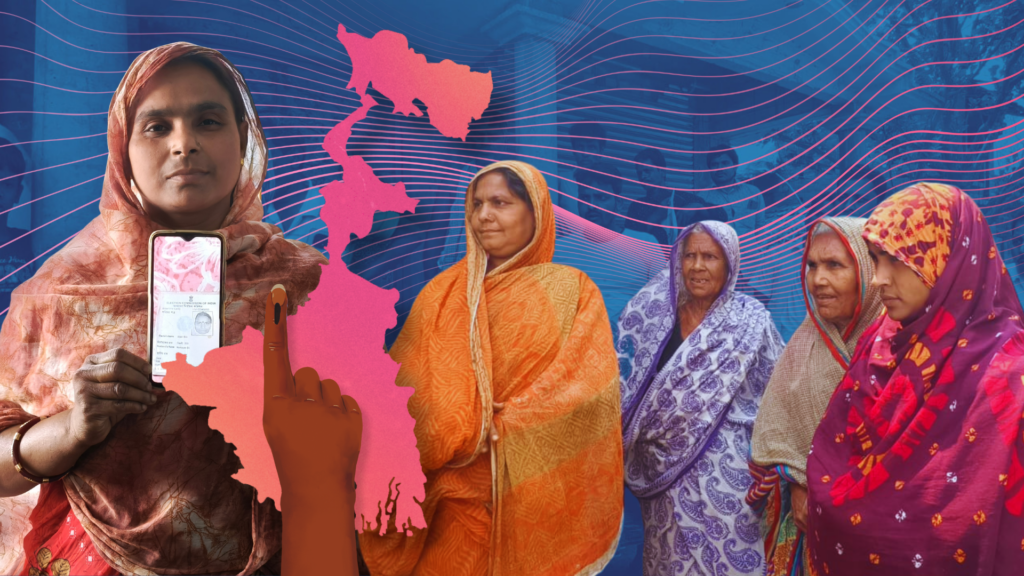
What are the fears of the lakhs of women from West Bengal, many of them from districts heavy with Muslims, Matuas and Dalits, whose names have been knocked off the voter list in the Kafkaesque SIR process? Or whose voter status is yet to be adjudicated by tribunals that could certainly not deliver their verdicts before the state election? What does it mean for their sense of citizenship or belonging to the lands they have inhabited for decades? Their anxieties around being shipped out of the country? Or being allowed to stay on but with no access to welfare schemes they so depend on to get through another day?
For answers to these questions, Sanhati Banerjee travelled to Murshidabad that sits on India’s border with Bangladesh with river Padma forming the eastern edge, and Metiabruz, a historic town just off Kolkata. She met women who have gone through several bewildering rounds of travel to screening centres far from their homes with documents in hand, none of which seem to be enough. No one has any answers for them, not even the incumbent party and its government, despite its public show of sympathy, the women said. As for the officials, they are like a brick wall of apathy.
“Ami ei gramer i beti [I am the daughter of this village],” said Nayantara Bibi, who works as a bidi labourer in Beldanga that sits at the heart of Murshidabad’s electoral battleground. “My family has lived here for seven generations. If my name is not recognised, what will happen to my children?”
The SIR in Bengal is tied to the state’s unique history of Partition in 1947, which unfolded differently from Punjab, explained Anwesha Sengupta, Assistant Professor, Institute of Development Studies Kolkata. The overlapping waves of migration across porous borders – for food, work, survival, and a shared language and culture – was the norm rather than the exception. “What was once a fluid history of movement and belonging is now being reframed through policy in ways that can exclude.”
Selina Bibi, who earns Rs 400 a week and needs to support a family of five, sits awaiting her turn at contesting the deletion of her names from the voter list at the Kazisaha Primary School in Beldanga. Alongside her are hundreds of women with similar travails.
We do not know how many of the women we interviewed finally made it to the poll booth. But as we reported, almost 61.8% of voters who were deleted or are under adjudication are women, according to data released by the Kolkata-based non-profit Sabar Institute.
In West Bengal, which shares the border and language with Bangladesh, the alienation is built around ‘illegal infiltration’. The SIR here is tied to its unique history of Partition, which unfolded differently from Punjab, says scholar Anwesha Sengupta. The overlapping waves of migration across porous borders – for food, work, survival, and a shared language and culture – was the norm rather than the exception. But this free mobility has now been problematised and its official face is the SIR exercise.
Across villages, rumours circulate via social media and whisper networks that those marked for deletion would be taken to detention camps. Across Murshidabad, women fear whether loss of voting rights might also mean losing access to women centric schemes such as Lakshmir Bhandar, Kanyashree, and Swasthya Sathi, even though there is no official directive from the state government.
On the streets of Samsherganj, a volatile area under the watch of state police and BSF security personnel, Rozina Bibi, whose documents were flagged for PAN mismatch despite voting for years, asked: “Will I now lose access to government schemes? Ration? My citizenship?”
The loss of benefits seems less damaging than the loss of citizenship, some women said, because it is the end of many more privileges. “If voting rights go, then other rights also go: land rights, school admissions, medical treatment, access to schemes,” said Farhana.
Read our story here.

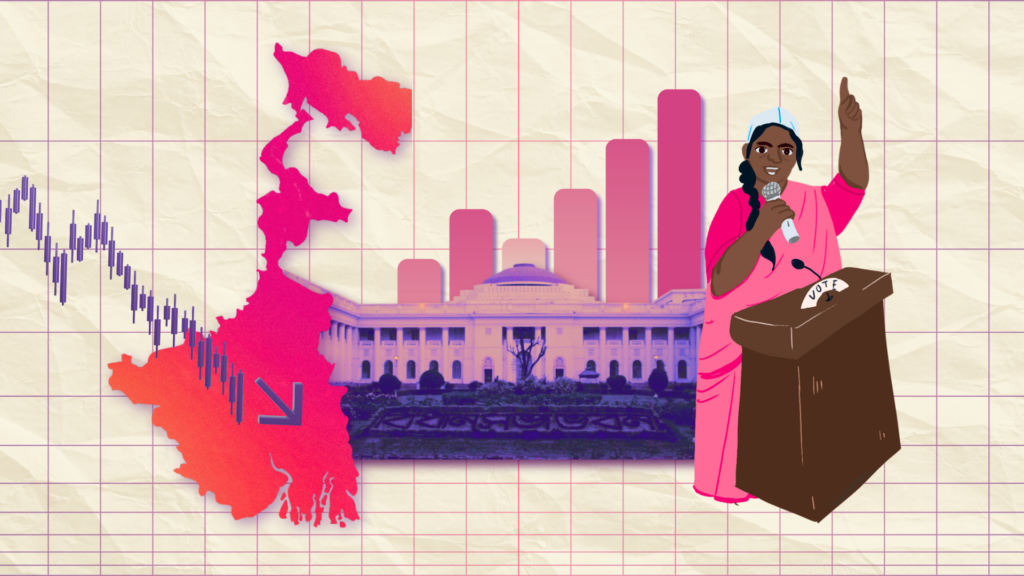
Though it has had three consecutive terms under a woman Chief Minister and her party, the Trinamool Congress has the highest proportion (38% of their total MPS) of women MPs, in the state’s legislative structures, gender representation remains far from equitable. Not only do women constitute only 13.7% of the total MLAs, but even among the women who do hold positions, the majority are from general caste backgrounds. Those from Scheduled Castes, Scheduled Tribes, and Muslim communities remain inadequately represented in positions of influence.
Read our analysis here.
This week, we begin our three-part series on how caste identities shape ASHA workers’ access to opportunities, safety, support, and dignity. The effort is to decenter caste privilege and reframe the history of the programme through the lens of marginalised ASHA workers’ experiences, document systemic exclusions and build grassroots evidence of how caste discrimination is embedded within and outside the healthcare structures for ASHA workers.
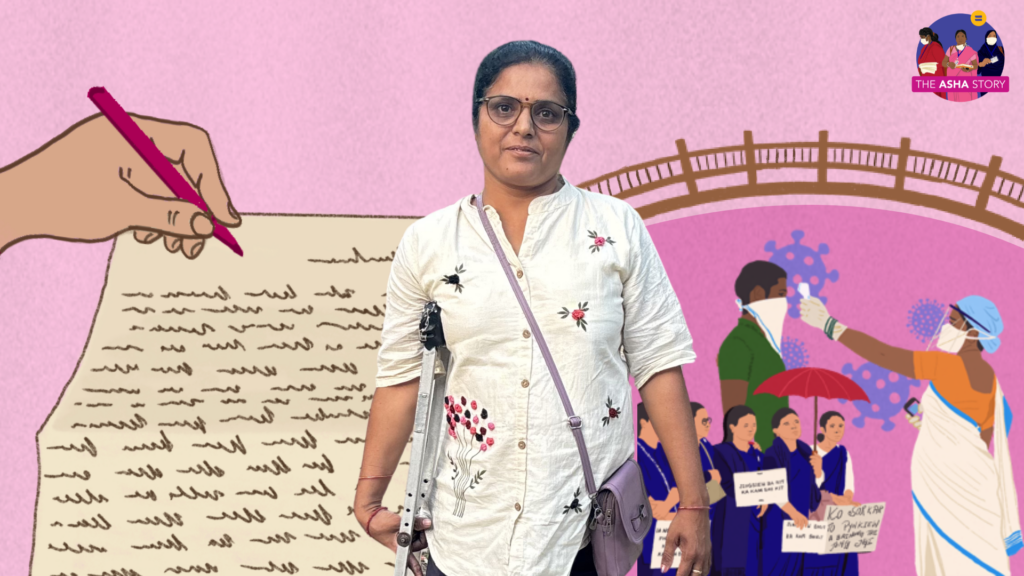
As the first ASHA facilitator from a Scheduled Caste community in her village, Dharmishtha Chauhan has had to fight discrimination based on caste as well as her disability, affecting her mental health and curbing professional mobility. Caste bias, she tells Sarasvati Thuppadolla, still remains missing from union concerns, and encourages marginalised ASHA workers to free themselves of fear.
The cruelties were small but obvious – on field visits people would offer water from afar. At work, colleagues would not share her lunch box, make sly references to her caste and make sure she visited SC homes.
“As a facilitator, ASHA workers from the SC category often come to me with concerns. They say when they go for field work in upper-caste communities, residents don’t co-operate or respond to them properly. There have also been instances where SC ASHA workers faced harassment in the form of false complaints from residents,” she said.
Dharmishtha has worked to give a voice to ASHA workers who are Dalits, exhorting them to stand up and complain about discrimination and abuse. “I have seen ASHA workers from our community staying quiet, because they are ultimately seeking some acceptance or individual advantages. But I have spoken against such casteism even if it meant they never interact with me ever. And secondly, we should show people who we are, and make them aware that untouchability can be subject to the Atrocity Act,” she said.
Read our interview here.
Talking Point
Killer Heat: Vulnerable workers across the country have been hit by an early heatwave. In Odisha, two school teachers on survey duty for census died in separate incidents in Mayurbhanj and Sundargarh districts, likely of heatstroke. It is also likely that the Noida unrest was triggered at least in part by the extreme discomfort suffered by workers who work and live with little protection against the suffocating heat that swamped NCR earlier this week. We had reported on how women workers in the garment factories of India’s textile belt deal with several health issues in summer months for want of any heat planning by owners. And the Indian Federation of App Based Transport Workers has sought heatwave protection for gig and platform workers.
Temple Row: “For centuries, certain things like customs and practices have crystallised and become an essential practice. You can’t forget history,” the Supreme Court told Indira Jaising, who is appearing for two women who challenged the ban on the entry of female devotees aged between 10 and 50 years into the Sabarimala shrine. The nine-judge constitution bench said that judicial intervention in purely religious practices could lead to the “annihilation” of a religion and result in “dangerous situations”.
Hai, Hai: Delhi’s women’s colleges have a reputation for pushing back against bullies. Decades of dealing with hoodlums scaling their walls, molesters stalking them in the campus and miscreants forcing their way into their college festivals have given them low tolerance for bad behaviour. When ABVP honchos forced their way into Gargi College recently, hundreds of girls rounded up on them, heckled them and literally marched them to the gate. All this while the police watched haplessly. And then there were the students of Lady Shri Ram College who put up a loud protest against having their principal in a video openly backing the BJP’s women’s reservation bill. They pointed to how “explicitly political” this was in a college with the stated commitment to being “apolitical”.
BehanVox Recommends
Doyenne and Dissenter: The grand historian of ancient Indian history is 94 and continues her indefatigable mission to not just write good history but also the way it must be taught in schools. Since her magnum opus ‘Asoka and the Decline of Mauryas’, her work spanning 60 years and two dozen volumes on dynasties, kinship, caste structures, paint a compelling portrait of the early history of India- and the subcontinent. This beautiful profile of Romilla Thapar by Raghu Karnad will sort you out for the weekend.
Hollow Body: If you’re feeling worn down by the speed and surface-level thinking of the AI era, here is a powerful meditation on attention, craft, and meaning. Through learning classical guitar, Peter Wayne Moe explores slow mastery as an antidote to despair and intellectual shortcuts.
Killer Fashion: The devil loves wearing red satin pumps and cashmere pullovers (preferably cerulean), but at what cost? Fashion has a fatal past and a frightening present — think silhouette-cinching corsets, flammable flannels, factory accidents — that imperil the lives of its makers and consumers. Listen to scholar Alison Matthews David discuss these in a Rest Is History podcast from 2022.
Want to explore more newsletters? In Postcards, we send you missives on the places, people and ideas that brought Team BehanBox joy. Our monthly offering Postscript invites you, the reader, into our newsroom to understand how the stories you read came to be – from ideation to execution. Subscribe for more.

We believe everyone deserves equal access to accurate news. Support from our readers enables us to keep our journalism open and free for everyone, all over the world.