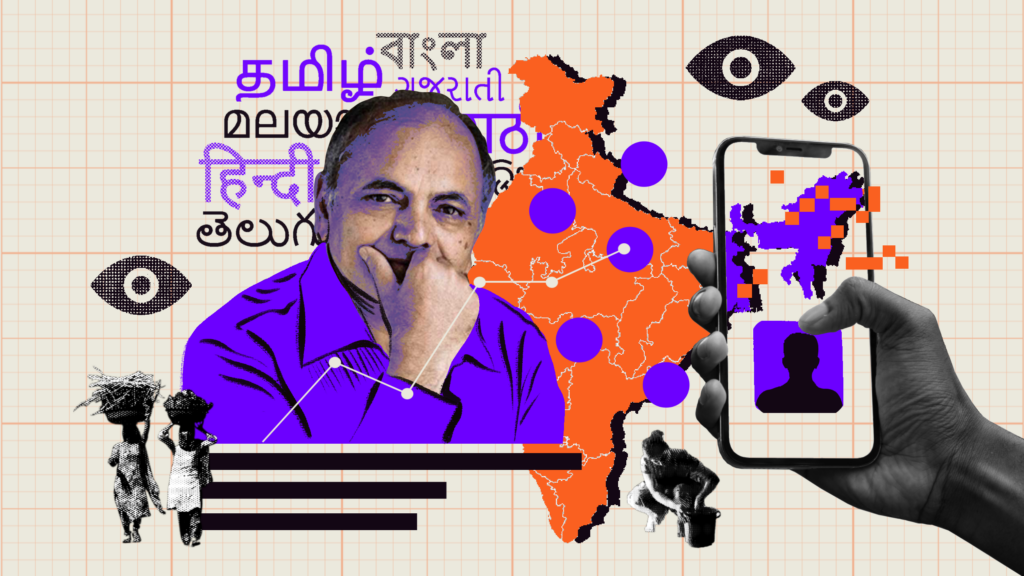
GN Devy is an acclaimed linguist but equally importantly he is an outspoken cultural activist who uses his profound knowledge of all communities but especially the marginalised to critique how regimes deal with those who are voiceless. We could of course have sought out a data specialist to interview on the Census and what it implies but then a population census is never just about numbers and this one comes way after it should have and brings in its wake many questions that only someone with the breadth of understanding of people that Devy has.
In 2013, a People’s Linguistic Survey of India – almost 50 volumes of 35,000 printed pages – was published as a record of India’s languages and by extension, its people. Devy had led the exercise. The survey found 780 languages while the government officially recognises only 22. To Devy, the privileged elite had sidelined languages over decades, disempowering identities and destroying whole knowledge systems. The same story – of dominance and exclusion – is now playing out with the Census in India, he says.
“The Census has to give a complete photographic image of the nation… but this Census is trying to doctor the photograph even before the exercise started,” Devy says.
There are many concerns around this Census – there are questions of deliberate delays, opaque processes, and a lack of accountability. And other fears around the method. India’s first digital Census brings with it worries about data security, data hygiene, and misuse in a country where digital preparedness is low and cybercrime has almost doubled between 2022 and 2024.
But the biggest problem for Devy is that it will end up serving a political cause instead of being what a census should be – a photograph of the nation, not the desired image of it.
There is also the gender dynamic. “One thing is that the population growth in different states is directly related to education and health access for women, which the state governments haven’t been able to provide sufficiently and equitably across the country. The second is the women’s reservation, which was passed in the parliament in 2023, and easily could have been implemented without any delimitation process since that was a matter of proportionate seats and not dependent on how many MPs are in the Parliament or Assemblies. One-third can be of anything – of 30 or 300 or 3000. But this government was cynical about women’s reservation. There was no need to tie it up with the Census or the delimitation,” Devy says.
Another issue that he has always articulated is the neglect of the highly marginalised communities such as the NT-DNT from the Census. And the role the Census has played in eliminating women’s languages. “In 1961 the Census recorded 1,652 mother tongues. In the 2011 Census, we recorded 1,369. In 50 years’ time, 283 languages were erased. These are not languages of livelihood, incomes, schooling, offices, courts, marketplaces; these are primarily spoken by women, they hold women’s memories. This Census is not ready to change its earlier methodology where it gathers the names of mother tongues and regroups them into linguistic categories [what is called ‘rationalisation’],” he points out.
Read our interview here.