[Readmelater]

BehanVox: Trouble On The Horizon

This week in BehanVox: the idea of citizenship online, Assam's push for the Uniform Civil Code, and more

Subscribe to our weekly newsletter that brings you top stories, gender news from the world, and our team’s reading recommendations.

Hello and welcome to BehanVox! The states that went to the polls finally have new governments in place. But some of the feared after-effects are also beginning to come true. When we were reporting on the radical SIR exercise in West Bengal, we had written about the existential anxiety faced by those whose names had been deleted from the voter list – if their very identity and citizenship were in question, what happens to their access to critical welfare schemes? Most of those hit by the exercise come from marginalised backgrounds, as we had reported – women, Dalits, and Muslims. For someone like Ayesha Begum from Taranagar who banked heavily on the Rs 1,500 that Lakshmir Bhandar direct benefit transfer scheme brought in every month, the SIR confusion jeopardised everything. Now, the new West Bengal government under CM Suvendu Adhikari has said that those deleted would not be eligible for several government welfare schemes though this would not apply to cases being adjudicated by tribunals. In Bihar too, the BJP-led NDA government is reportedly deleting beneficiaries from ration lists after SIR dropped them from the voter list. There was another fear – that with elections out of the way the true economic impact of the war in west Asia would finally be unveiled to us. And it was. On Sunday, Prime Minister Narendra Modi asked Indians to adopt austerity measures to conserve the use of fuel and stop the drain of foreign exchange – cut the use of cars, use public transport, buy less gold and limit foreign travel.

We bring you this week an extensive interview on the idea of digital citizenship, what it privileges and those it marginalises.

Story So far

behanbox talkies digital citizens

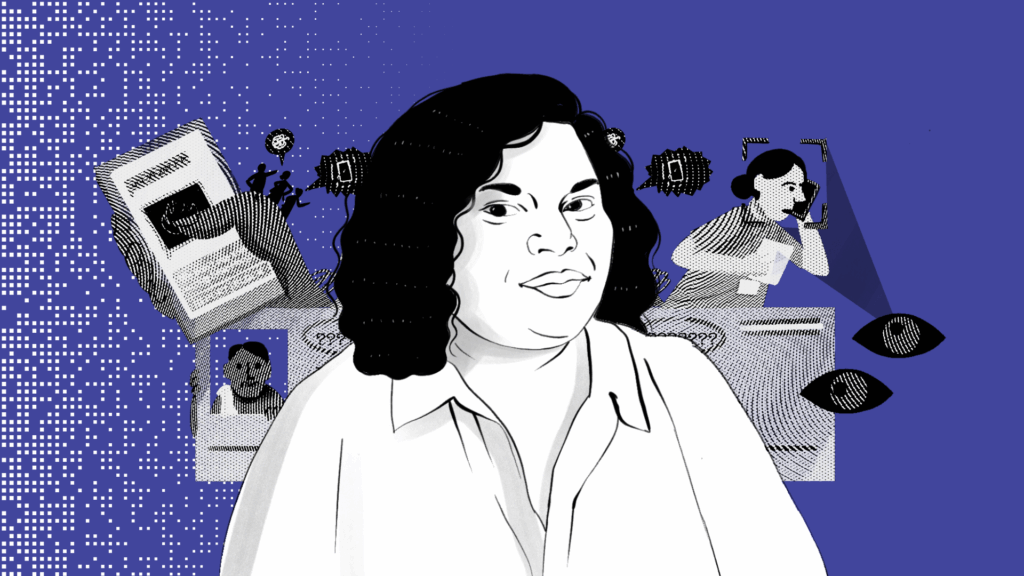
Devina Sarwatay is a scholar of digital cultures at City St George’s, University of London. In our latest installment of BehanBox Talkies, where we engage with scholars on varied subjects, she discusses with Saumya Kalia the practice and performance – and gradual hollowing out – of citizenship online.

There was a time when you could be online or off it as you chose, built networks, friendships, explored the world and remained who you were. All of that has changed today. Caste, economics, and religion decide who receives visibility and safety online. Instances like the GrokAI sexual deepfakes reflect a failure of digital citizenship, where the vulnerable are forced to shoulder the burden of reporting and redressal.

“I could never have imagined that we are in a position where we should indeed be panicking,” says Devina. “Even as I was defending my PhD, I felt the digital space is like any other – where you have both opportunities and risks, and it’s about how you use your agency to navigate through these spaces, to be able to benefit from the opportunities and protect yourself from risks. But with Generative AI technologies, with apps like Replika or tools like GrokAI, it’s much more difficult to just exist online, especially if you are someone from a gender marginalised group.”

With the tech bro oligarchy and its pursuit of power and profit, the question for Devina is: What would we need to make those spaces safe, to make those spaces accessible for everyone, irrespective of their identity?

“Who counts as a digital citizen? Is it someone who links their Aadhaar card to bank IDs, or registers for welfare schemes online? Or is able to access gas supply by using digital payment methods? These all count as acts of digital citizenship. But it is also if you have used platforms and social media to engage with democratic debates or to engage with society at large. I would say almost everyone is a digital citizen today – but that doesn’t mean everyone can practice citizenship on equal terms,” she points out.

Read our interview here.

Talking Point

NEET Axed: The National Eligibility-cum Entrance Test (NEET)-UG exam, an entrance exam for undergraduate medical admissions, was cancelled just a week after it was conducted for 22.05 lakh candidates on May 3. It had emerged that some papers had been leaked before the exam. Indian Express reports that it is the first time that the National Testing Authority is cancelling the exam in its entirety though it has earlier done so for certain papers in the wake of a paper leak. BehanBox had reported on an earlier cancellation of NEET-PG exams how devastating this can be for aspirants, especially women. Medicine is a tough, time-consuming career choice for young women as they deal with the social pressures to get married and start a family. And a postponement of an exam can hit their career goals, after gruelling years of preparation.

UCC In Assam: The implementation of the Uniform Civil Code (UCC) in Assam has been approved by the state’s cabinet. The tribal population, which has its own social customs and traditions that do not fit the UCC template, will be kept outside its purview, said Chief Minister Himanta Biswa Sarma. The code will deal with issues relating to marriage, live-in relationships and registration of marriage and divorce. Uttarakhand was the first state to go in for UCC, followed by Gujarat. In this interview with BehanBox, feminist legal scholar Surbhi Karwa, had argued that the UCC turns the State into a father figure who decides who we love, live with and marry.

First-ever: This might be hard to believe but St Stephen’s College, Delhi, appointed its first woman principal in its 145 year history. Susan Elias, who will take the position on June 1, is a computer scientist focused on AI and interdisciplinary engineering research, and as The Print points out, her appointment makes for a shift for the elite college which has always prioritised humanities. The college had been all-male till 1975.

Lot In A Name: In a bid to shift how polycystic ovary syndrome (PCOS) – which afflicts one in eight women – is perceived, an international medical panel has renamed it polyendocrine metabolic ovarian syndrome (PMOS). The panel argued that the old name misrepresented the condition and concentrated only on the ovaries while it also relates to multiple hormonal pathways, central metabolic dysfunction and broader systemic risks. The renaming, they say, will improve diagnosis, communication and patient care.

No Women In The Room: If one wants a snapshot of patriarchy, look no further than the recently-concluded US-China bilateral meeting. There were no women in sight from either delegation. Scholars and economists including Gita Gopinath scorned this spectacle of masculine, militarised power. “It’s just inexplicable how you end up with a single-gender table, given the many talented women around the world,” the former first deputy managing director of IMF told The Guardian. Globally women count for only 20% of ambassadors per one estimate, and this representation dwindles in regions like Southasia and West Asia.

BehanVox Recommends

Fiction Of AIA writing professor’s discovery and dismay of finding writing infested with AI. It wasn’t akin to plagiarism or farming out the task, “but it felt like a kind of naive chicanery; a perversion of the contract between writer and reader”, he writes in The Guardian. An essay about dead perfection and the labour of creation, and an appeal to let yourself move through language.

Lol for real: And language is whimsical, playful. The pause of the period, the interrogating question mark, the sweet embrace of the parentheses. This series in Granta is all about grammar and punctuations. Our favourite: the welcome deceptions of ‘lol’, placed in a sentence to mask its emotional intensity. It is a cool vulnerability, a nod to complexity, a cipher that holds care and attention and love. Lol.

Mothers And Daughters: You’ll enjoy this Modern Love podcast if you liked The House of the Spirits, and you’ll relish it if you appreciate the charm of letters. Author Isabel Allende maintained a correspondence with her mother for years and has over 24,000 letters to show for it. It was a declaration of love, practiced daily, which changed her relationship with attention and craft.

Want to explore more newsletters? In Postcards, we send you missives on the places, people and ideas that brought Team BehanBox joy. Our monthly offering Postscript invites you, the reader, into our newsroom to understand how the stories you read came to be – from ideation to execution. Subscribe for more.

Support BehanBox

We believe everyone deserves equal access to accurate news. Support from our readers enables us to keep our journalism open and free for everyone, all over the world.

Donate Now