[Readmelater]

BehanVox: Census And Cockroaches

This week in BehanVox: pay hike for Kerala ASHA workers, heat wave grips the country, and more

Subscribe to our weekly newsletter that brings you top stories, gender news from the world, and our team’s reading recommendations.


Hello and welcome to BehanVox! This was a week when the surreal became real. Somehow nothing works as well as satire when the world around is falling apart and there seems to be no light at the end of the tunnel. Remember Nisha Susan’s marvellous Pink Chaddi campaign that stumped the right wing campaign against women’s freedom to spend an evening as they wished? Or Pulkit Mani’s recent hysterically funny video where the bizarre was closer to the bone than was comfortable. Now comes the Cockroach Janata Party. Is it a meme? Is it a party? Is it both? Floated over social media as a response to Chief Justice Surya Kant’s comment about the unemployed (later denied), it has now acquired a life that falls in the twilight zone. The “party” now  has over 1 lakh joinees, more followers than the BJP on Instagram, a whole website and an anthem and the following of prominent critics of the government. It claims to the voice of Gen Z exhausted by the cynicism and corruption we see around us, the representative of “the Lazy & Unemployed” and its agenda demands sweeping changes — among them no post-retirement Rajya Sabha seats for Chief Justices, bans on defecting legislators and greater representation for women in governance. But beneath the humour lies a sharp critique of unemployment, institutional elitism, political privilege and youth frustration. Whichever this viral moment spins out in the coming days, according to Wall-E, the movie robot, only cockroaches will survive the apocalypse.

In this newsletter we bring you glimpses of a gripping interview with the linguist GN Devy in which he tells us why the ongoing online, self-enumeration Census 2027 is problematic for more reasons than one. And gender news from around India and the world.

Story So Far

GN Devy census

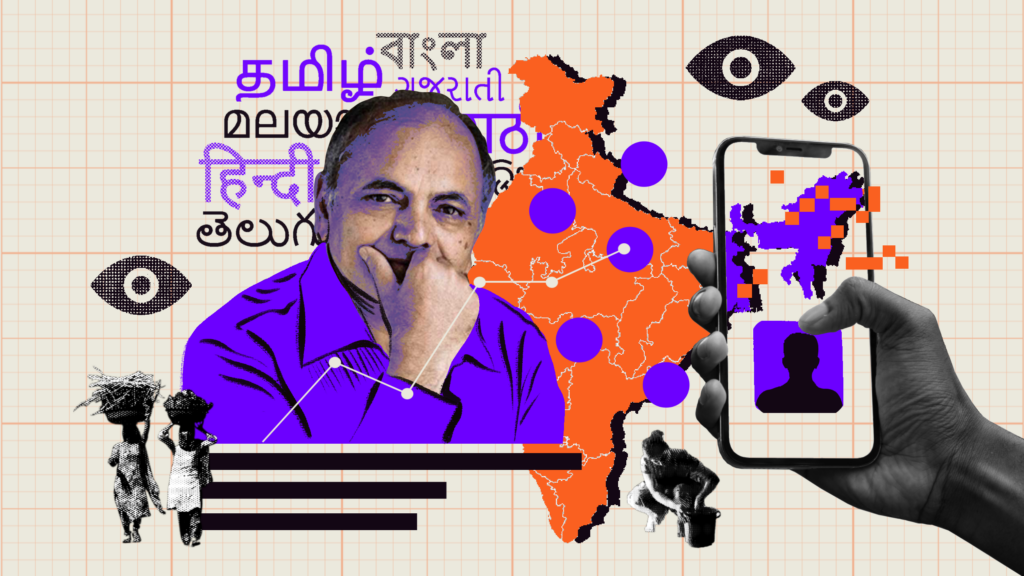
GN Devy is an acclaimed linguist but equally importantly he is an outspoken cultural activist who uses his profound knowledge of all communities but especially the marginalised to critique how regimes deal with those who are voiceless. We could of course have sought out a data specialist to interview on the Census and what it implies but then a population census is never just about numbers and this one comes way after it should have and brings in its wake many questions that only someone with the breadth of understanding of people that Devy has.

In 2013, a People’s Linguistic Survey of India – almost 50 volumes of 35,000 printed pages – was published as a record of India’s languages and by extension, its people. Devy had led the exercise. The survey found 780 languages while the government officially recognises only 22. To Devy, the privileged elite had sidelined languages over decades, disempowering identities and destroying whole knowledge systems. The same story – of dominance and exclusion – is now playing out with the Census in India, he says.

“The Census has to give a complete photographic image of the nation… but this Census is trying to doctor the photograph even before the exercise started,” Devy says. 

There are many concerns around this Census – there are questions of deliberate delays, opaque processes, and a lack of accountability. And other fears around the method. India’s first digital Census brings with it worries about data security, data hygiene, and misuse in a country where digital preparedness is low and cybercrime has almost doubled between 2022 and 2024.

But the biggest problem for Devy is that it will end up serving a political cause instead of being what a census should be – a photograph of the nation, not the desired image of it.

There is also the gender dynamic. “One thing is that the population growth in different states is directly related to education and health access for women, which the state governments haven’t been able to provide sufficiently and equitably across the country. The second is the women’s reservation, which was passed in the parliament in 2023, and easily  could have been implemented without any delimitation process since that was a matter of proportionate seats and not dependent on how many MPs  are in the Parliament or Assemblies. One-third can be of anything – of 30 or 300 or 3000. But this government was cynical about  women’s reservation. There was no need to tie it up with the Census or the delimitation,” Devy says.

Another issue that he has always articulated is the neglect of the highly marginalised communities such as the NT-DNT from the Census. And the role the Census has played in eliminating women’s languages. “In 1961 the Census recorded 1,652 mother tongues. In the 2011 Census, we recorded 1,369. In 50 years’ time,  283 languages were erased. These are not languages of livelihood, incomes, schooling, offices, courts, marketplaces; these are primarily spoken by women, they hold women’s memories. This Census is not ready to change its earlier methodology where it gathers the names of mother tongues and regroups them into linguistic categories  [what is called ‘rationalisation’],” he points out. 

Read our interview here.

Talking Point

Honorarium Hike: Some news to cheer in a bleak week– in its very first cabinet meeting, the newly sworn-in UDF government has announced a Rs 3,000 hike in the honorarium paid to the ASHA workers in Kerala. A monthly hike of Rs 1,000 each for Anganwadi workers and helpers, school cooking staff, pre-primary teachers and ayahs too was announced. We have been reporting from Kerala – and elsewhere – about the struggle and gruelling protests of ASHA workers about being underpaid and overworked. This was especially ironic in a state where frontline health-workers form the very backbone of the state’s acclaimed health model. The demands of the striking ASHA workers were better pay, social security benefits and work conditions. 

Heat Trauma: An intense heat wave has been sweeping across India, but especially across the north – Delhi, UP, Punjab and Haryana, with temperatures in some corners hitting 48 degree C. For women who have returned to use chulhas in the wake of the LPG crisis, this means dealing with insufferable conditions at home and at work. In a special order given to deal with the LPG shortage, the Commission for Air Quality Management has declared temporary permission to burn diesel and biomass.

Again, Yet Again: Every once in a while, with depressing regularity, the story of a dowry death swamps news headlines. This week it was 33-year-old Twisha Sharma, a former model from Noida who married into a Bhopal-based family. As usual there are two narratives – one pushed by the husband’s family of suicide and the other by the natal family of harassment and complicity. Then there is the other problem with investigating such incidents – an allegedly botched investigation where the police appear to have dragged its feet in collecting and conserving evidence.

Unquestionable: Norwegian journalist Helle Lyng has been the subject of intense trolling ever since she sought to question PM Modi on his two day visit to Oslo this week. Though he did not take the question, India has rejected her allegations that the country was guilty of human rights violations. In an interview to BBC Hindi she later said: “That’s how confrontational journalism works. You have to try to interrupt. You have to try to get more answers. And the answers that you are looking for. And, no, I did not get that.”

Sex Ratio Declines: Haryana’s sex ratio at birth for the first four months of this year dropped to 898 girls per 1,000 boys. This is a decline since last year when it stood at 923, the highest ever in the state. The state’s response was to take disciplinary action against four government doctors under Rule 7 of the Haryana Civil Services (Punishment and Appeal) Rules, 2016, for failure to arrest this decline in numbers. A notable aspect that emerged from the numbers this year is the micro regional variation in these numbers in Haryana, reports The Federal – Charkhi Dadri reported the lowest sex ratio of 768 and Rewari improved its numbers to 906.

BehanVox Recommends

Granta Gaffe: Another AI fraud sweeps the internet but this one is not so much about AI as it is about the prejudices of what writing from the South sounds like. The award-winning Commonwealth Story is prosaic, opaque, and incomprehensible at places, so why did the judges treat it as a postcolonial masterpiece? The answer lies not in the machine, argues writer Lina Abushouk, but in the biases held deep within elite metropolitan institutions.

AI Resist List: What a joy to see tech futures that are not bleak but purposefully colourful and collaborative with  people at its centre. This living repository of resistance holds collectives, movements, micro campaigns pushing back against Big Tech and imagining radical alternatives built around care, communities, histories, beauty — the best of humanity. 

Strangers On A Bench: A podcast about nothing and everything. Artist Tom Rosenthal wanders in parks speaking to strangers, opening windows into their lives and letting us in. Audio crackles, birdsong fills the air, as lovers and plumbers and basketball fans talk about their days, what hurts and heals them. It’s simple and sweet (if awkward at times). 

Want to explore more newsletters? In Postcards, we send you missives on the places, people and ideas that brought Team BehanBox joy. Our monthly offering Postscript invites you, the reader, into our newsroom to understand how the stories you read came to be – from ideation to execution. Subscribe for more.

Support BehanBox

We believe everyone deserves equal access to accurate news. Support from our readers enables us to keep our journalism open and free for everyone, all over the world.

Donate Now