[Readmelater]

BehanVox: No Pride, Only Punishment

This week in BehanVox: Erin Brockovich vs data centres, VB-GRAM G Act comes into force, and more
Subscribe to our weekly newsletter that brings you top stories, news from the world, and our team’s reading recommendations.

Hello and welcome to BehanVox!

It was a raid on a gay bar, Stonewall Inn, in New York City’s Greenwich village in June 1969 that led to street protests that lasted a week. The campaign that came to be known as the Stonewall Uprising was one of the most significant junctures of the LGBTQ movement in the US. But it also turned June into a month of universal celebration for the community and the history of its resistance against repression – what we now call the Pride Month. Sadly enough this last June did not offer much cause for joy for the movement. In the US itself where gender rights appear to be steadily regressing, this week the Supreme Court upheld state laws banning transgender athletes from participating in women’s sports. And in India, the community is still reeling under the blow dealt by the amendment to the Transgender Persons (Protection of Rights) Act 2019, that systematically erases several communities by questioning the right to self identification. 

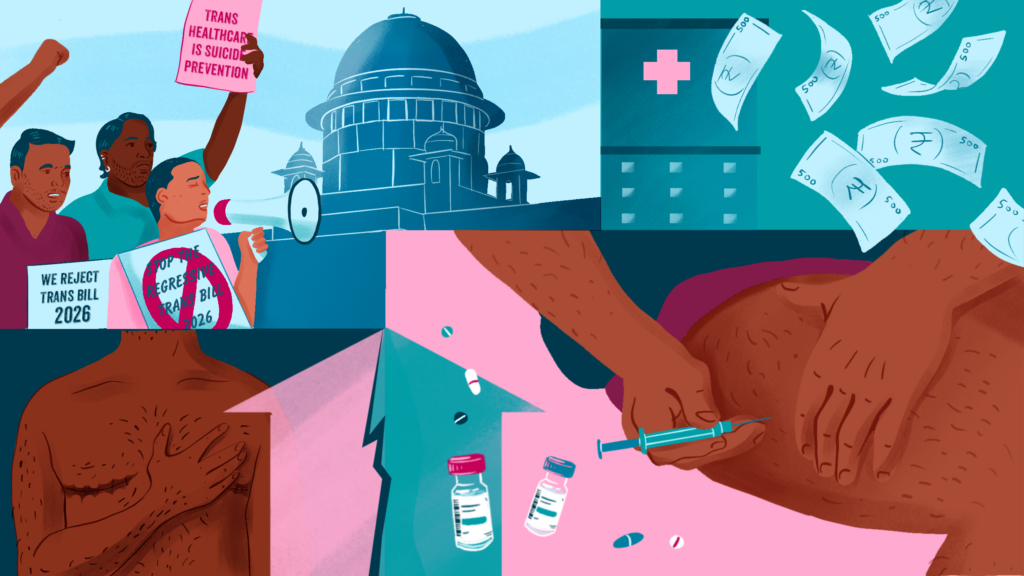
This week we published a deeply investigated report on why the amendment has strangled the support networks critical to transmasculine people. 

Story So Far

transmasculine communities trans law

Tan is a non-binary transmasculine person from Varanasi. He says he is deeply caring about the questions, fears and uncertainties of his community. He has chosen to refuse gender affirmative care as a political statement – to demonstrate to society how to treat trans people regardless of what their bodies look like. But he is also clear-eyed about his advantages – caste, class, education, family. “These are privileges that the rest of my community does not have access to,” he points out.

Tans is a part of the kind of safety nets that the trans community has had to construct for itself in the absence of any institutional framework. These nets of support and care, especially those involving healthcare professionals who deliver gender affirming care, have been endangered by the Transgender Persons (Protection of Rights) Amendment Act, 2026. It has triggered deep anxiety across India’s trans community for effectively erasing the legal identities of trans men, trans women and genderqueer people from Indian law. 

On the one hand, the law has now made medical certification the only legible path to legal recognition by erasing the right to self identify for many trans groups other than those historically recognised in India. But the same law also criminalises “inducing” a transgender identity, as we said earlier. The law is thus demanding proof that it is also harder to obtain.

“Gender affirming care was already inaccessible. The amount of violence you were experiencing was already horrifying. Now that the State doesn’t recognise us as constitutional beings, we can’t even imagine how these scenarios will worsen,” says Tan.

Transmasculine people are particularly vulnerable because they carry the gendered violence and surveillance that comes with being assigned female at birth. Secondly, there is little institutional framework, peer support or community based-care for them while the transfeminine and hijra communities have a longer, if inadequate, history within Indian healthcare. Even research is focussed almost exclusively on trans women and hijra communities.

What does this mean for the transmasculine community, caught between the State’s diktats, dysphoria and the medical community’s new anxieties around offering gender affirming care? Saranya Chakrapani brings together a moving and complex story that holds some answers.

Read our story here.

Talking Point

Instagram Child Abuse: Meta is under fire for the second time in a week after a BBC investigation revealed Instagram was running paid ads that promoted child sexual abuse videos. India has received nearly 1.9 million reports of suspected child sexual abuse material in 2025, making it one of the highest-reporting countries globally, according to the report. The platform initially failed to act on complaints (“the ads do not go against our community standards”) but has since suspended accounts. The Ministry of Information and Electronics Technology has also summoned Meta to seek an explanation.

Transgender Athlete Ban: States in the US can ban transgender women from competing in female school and college sports, the US Supreme Court has ruled. The court was ruling on cases challenging bans on participation in two states, Idaho and West Virginia. Over two dozen states have enacted bans since Idaho did in 2020. The argument behind the ban is that permitting transgender women in women’s sports gives the former a physical advantage in competition. Civil rights groups have argued that the verdict could encourage more transphobic policies.

Wage Hike: The Viksit Bharat-Guarantee for Rozgar and Ajeevika Mission (Gramin) (VB-GRAM G) Act, 2025 came into effect this week with a new fixed floor wage of Rs 300 per day across all states. The Act will also increase the number of guaranteed workdays from 100 to 125. However, as economists, activists and labour rights experts have argued in BehanBox, it was enacted without meaningful consultation with workers, women’s collectives, or state governments, and ends up dismantling a rights-based framework that had become a lifeline for millions of rural women farmers and workers. 

Erin vs Data Centres: Environmental activist Erin Brockovich is now campaigning against the expansion of AI facilities across the US. The activist, whose work became known worldwide after her story was made into a blockbuster featuring Julia Roberts, is starting this campaign at a time when public fury at these resource-draining data centres is growing across the US.

Serena Returns: The indomitable Serena Williams, now aged 44, returned to Wimbledon to play Maya Joint, 24 years her junior, after a break of four years. This made her the second oldest player to appear in the women’s singles draw at Wimbledon; Martina Navratilova competed at 47 in 2004. She lost, but then as Novak Djokovic said: “For her to come back after years of being absent from the tour, two children later, and to give so much effort to, not just for her own satisfaction or coming back on the tour, but also to give all of us a pleasure of seeing her back on the court — in singles as well as doubles — is remarkable.”

BehanVox Recommends

Untranslatable Food Words: Zankha is Arabic for an unpleasant odour but rancid or stench cannot quite capture the repulsiveness the word demands. Or take Khyali Pualo, literally translates to ‘Pulao of imagination’ does not come close to the dreamy timepass that only Hindi and Urdu speakers can conjure up. This delightful essay in the Vittles magazine, puts together ‘untranslatable words’ in their ‘mother tongues’ – like Nhậu in Vietnamese which means ‘eating or drinking with no particular purpose’. Now, that is an activity that we can totally get behind.

The New Space Race: Space exploration during the Cold War was geopolitical dominance alright, but it was also the scientific advances and the joy of discovering the glorious vistas of our universe. Consider it now, where the Space race has become somewhat of a libertarian capitalist project. ‘It’s futile to deny that we got the Space Age we got because one country grew drunk on capitalism and is still zealous about defending its mythic exceptionalism beyond the literal ends of the earth’, argues this essay in the New Republic.

Conversation with Joe Sacco: Joe Sacco, the comics journalist who has documented war–from Palestine to Bosnia–turns his eye to the 2013 Muzaffarnagar riots in Uttar Pradesh against the backdrop of a new polarised India. His new book The Once and Future Riot has a life of controversy of its own when Penguin India withdrew from distributing the book in India. In this Himal podcast, Joe Sacco talks about his work, censorship and more.

Want to explore more newsletters? In Postcards, we send you missives on the places, people and ideas that brought Team BehanBox joy. Our monthly offering Postscript invites you, the reader, into our newsroom to understand how the stories you read came to be – from ideation to execution. Subscribe for more.

Support BehanBox

We believe everyone deserves equal access to accurate news. Support from our readers enables us to keep our journalism open and free for everyone, all over the world.

Donate Now