How SIR Exacerbated The Election Anxieties Of The Queer-Trans Community In West Bengal
The SIR exercise left queer voters with two options – revisit the natal homes they fled early to find relevant documents or give up on their right to vote
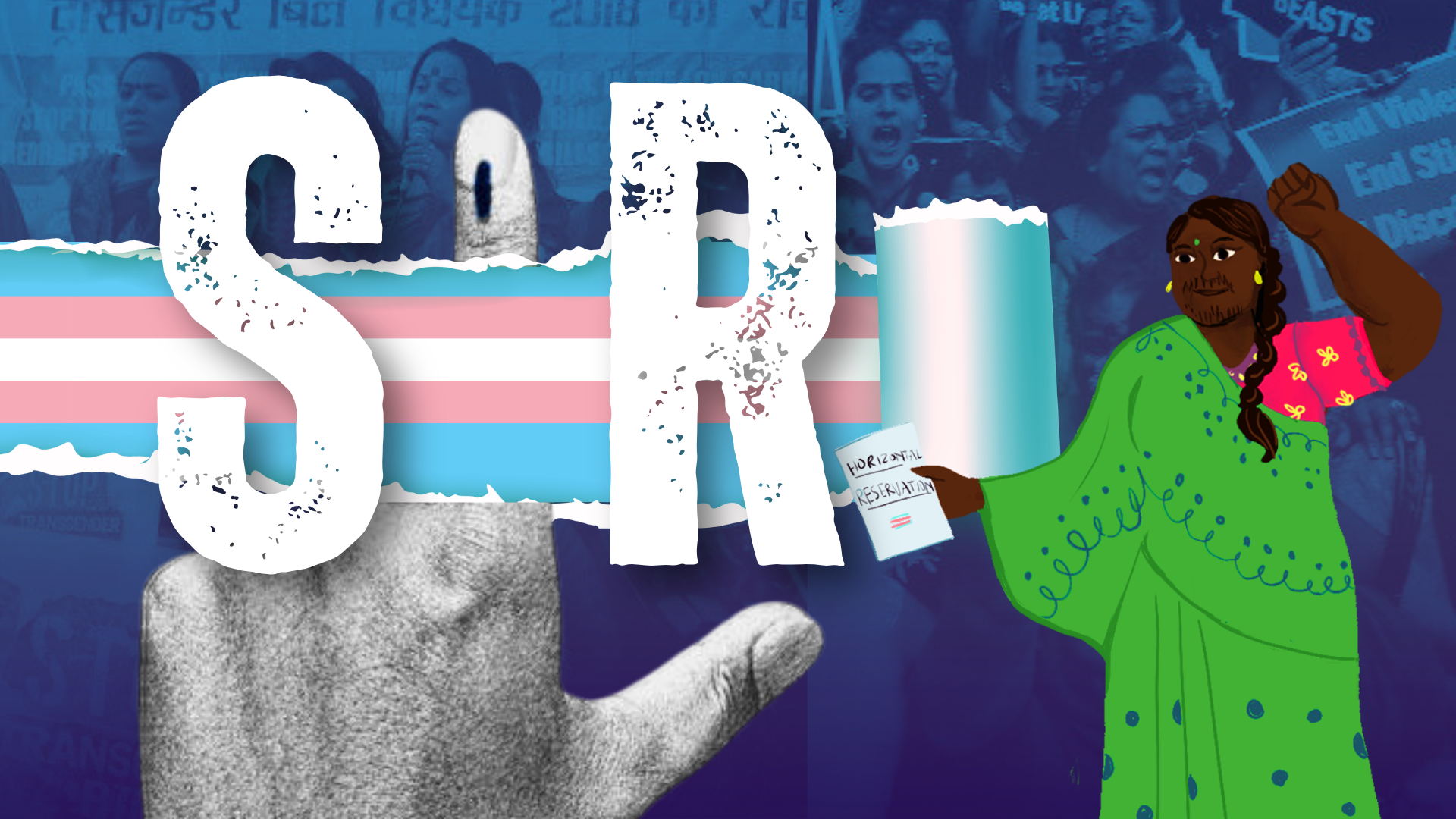
WHEN THE FINAL ELECTORAL ROLL for West Bengal that goes to polls on April 23 and 29, was published last week, Rahul, a 25-year-old trans man, was relieved to see his name on it. But he did not really have reasons to rejoice – for it carried his dead name and the address on it was located in Hooghly, at the home of in-laws he had fled five years ago.
This was not unexpected because the cafe worker from central Kolkata had not changed his name on all his official documents though he has a transgender identity card. And the Special Intensive Revision (SIR) exercise had been particularly frustrating for him as it had been for other transgender voters. Here is why.
When Rahul’s friends coaxed him to fill the SIR form, he found his Block Level Officer’s phone number online and called him.
“The form has been sent to your home,” the officer had said. The “home” that the official was referring to was the Hooghly address of Rahul’s former spouse. He had been forcibly married off to a man 10 years older to him when he was just 14 and he had fled it soon after the birth of a child. The events had left his own parental family in Howrah angry and upset; Rahul, in fact, has not had any contact with either family for at least five years.
Rahul then decided to fill the form online. “I had to find my father’s voter card number – what it was in 2002 and what it is currently, the school where he voted, the name of which has changed since,” he said. These details were extremely hard to locate but he somehow managed to find them and fill the enumeration form online.
“The website said the form has been ‘submitted’ but the BLO said he doesn’t accept this. He insists that I go to Hooghly [the home of his former in-laws] to pick up the form and fill it physically,” he said. A press note of the Office of the Chief Electoral Officer of West Bengal had declared: ‘The revision process utilised a 100% physical verification strategy, where Booth Level Officers (BLOs) personally managed the distribution and collection of enumeration forms.’
“Why have an online process if it is meant to be redundant?” asks Rahul.
For Rahul, the idea of returning to the Hooghly neighbourhood that he fled is inconceivable. It not only brings back painful memories of the hostility he faced but also poses a risk to his physical safety. “Okhaane gele ora maar-dhaar korte paare [if I go there, they could beat me up],” he said.
When he explained his situation to the BLO, the response was apathetic: “Na aashte to hobe hi [there is no choice, you must come].” It was eventually decided that Rahul would meet the BLO at the latter’s home, not office. This never happened but Rahul did find his name on the voter list from a constituency he had left long ago.
*
As BehanBox has reported (here and here), queer persons often leave their parental home early to escape familial pressure and abuse. Often they are subject to violence, abuse, attempts to medically ‘fix’ them or force them into marriage. In 2023, the findings of a closed-door hearing of queer and trans individuals were documented in a report, ‘Apnon ka Bahut Lagta Hai’ [our own hurt us the most]. It brought to light stories of abandonment, betrayal, abuse and forced marriage.
This means not just trauma but also interrupted education and a lifelong struggle to find employment, stability, and access to healthcare and housing. It also makes it hard for the community to lay claim to family property that they are legally entitled to without opening up old wounds and risking new ones. So revisiting their childhood homes to even vote, leave aside to seek out outdated documents for the SIR exercise, is painful for most lesbian, gay and trans individuals.
The SIR process in West Bengal was carried out in four stages between November 2025 when the household enumeration was carried out and April 2026, when the final electoral roll was published. Within this timeframe, 27 lakh voters have been permanently deleted and 90,830,000 voters were either deleted or put under adjudication. This represents 11.9% of the state’s electorate of 7.6 crore before the SIR began. On April 13, the Supreme Court declined to grant interim voting rights to those whose names were deleted and whose appeals are still pending before the appellate tribunals, effectively disenfranchising them for these elections.
The SIR exercise has been criticised for shifting the burden of proof of electoral eligibility onto individual citizens. Our analysis of the Election Commission’s data shows that this process that is predicated on producing documents and legacy linkages disproportionately affects women (about 61.8% of all deleted voters were women) and those from the most marginalised communities – Muslims, Adivadis and Dalits.
But the SIR’s requirements have proved to be particularly troublesome for queer and trans citizens, an economically and socially marginalised group often overlooked in public policy.
Under the SIR, it becomes compulsory for those born after 1987 to prove they have a parent or relative’s name on the 2002 electoral roll. Tying one’s voting rights directly to proof of their parent’s history as voters does not take into account the reality of natal family violence and abandonment that queer and trans individuals go through.
Around 250 names of those belonging to the ‘other gender’ category were deleted in the first West Bengal exclusion list published in December 2025, according to a data analysis by Kolkata-based SABAR Institute of the Election Commission data. While this number may not seem very high, it must be remembered that only 1,811 names were present in the voter list in this category.
“This makes it proportionally significant,” said Ashin Chakraborty, one of the researchers working on the study. So, close to 14% of ‘other gender’ names were deleted. “An additional 29 names were removed in the list published on February 28 and 230 names brought Under Adjudication. This number is extremely large for a community which originally only had 1,811 voters” said Ashin.
More than an inconvenience
As we said earlier, for queer-trans persons who have no way of contacting their families, access to these SIR documents is more than a logistical inconvenience – it often means returning to a neighbourhood or locality where things might turn violent, or forgoing one’s right to vote altogether. They may have left homes without identity papers or the families may withhold these papers. Even those with documents may not have their gender change or current names reflected in these, as was the case with Rahul.
We also found that those not in touch with non-profits or with strong kinship networks are not aware of government communications and what these imply.
Sayan, 27, a trans man from Jadavpur, also works as a cafe worker. His family home is in Kashirampur Gram in South 24 Parganas so when he started on the SIR form, he ran into the same wall as Rahul. He called home first but found his family hostile. “They did not let me come. They have filled the form on my behalf,” he said.
Sayan’s family has not accepted his identity and he holds little hope that they’ll come around. He isn’t sure if a ‘hearing’ took place on his behalf. “They [his family] called and told me to send a picture of my Madhyamik [10th board] Certificate,” he said.
Sayan’s name is on the final list of voters but he is not sure he can vote. His family, he said, submitted an old photograph of him with a dead name, never asking him for a recent one and he fears that the discrepancies might disqualify him at the booth.
Sayan’s registered constituency is in Kashirampur Gram but he has not visited it in four years. He has only voted once in his life, when his voter card was first issued. The thought of going to that neighbourhood — even to vote — is inconceivable, he said: “Parar lok amake alada kore dite pare, ei ekta bhoy thakei [I fear that the neighbours will isolate me].”
He cannot ask for an address change in his documents because he does not have a permanent address. “How will a working person afford a permanent address?”
As we reported in BehanBox, for trans persons, “finding safe housing is an excruciating experience, especially if they lack economic resources. Some leave or are forced out of their birth homes. They end up staying in public parks, under bridges, or in makeshift places offered by queer friends or queer support groups until they find a long-term shelter. Others move to traditional hijra communes, which, on some occasions, can become unsafe.”
Gap In Civil Participation
Sayan’s situation also points to a crisis which predates the SIR: if a queer person is unable to vote because they cannot return home for fear of violence, how will the gap in access to civic participation be closed or even measured?
There are systemic barriers that impede full electoral participation for the queer community. Updating gender on existing voter IDs requires that Form 8 be filled and a transgender identity certificate be furnished as proof. As BehanBox has reported, there are often delays and barriers in getting a TG card caused by official apathy and red tape. For those transitioning, their faces might not match their IDs, or people might not want to go out and vote under their dead names, as we said earlier.
Even those who are registered are often unable to vote, as seen in the data released by the ECI on the 2024 Lok Sabha elections, in which only 27% of voters registered as third-gender individuals turned up at polling booths. Lack of infrastructure for transgender people at polling booths, the absence of separate voting lines, inadequate facilities, and harassment by polling officials and other voters prevent even registered third-gender voters from exercising their franchise.
‘Am I A Citizen?’
Pointing to the low pre-SIR numbers, Ashin said: “Many who have been thrown out of their homes, or do not have documents which ask for residence or their mother’s or father’s name, did not have the luxury of being included in the first place. Most deletions were from rural constituencies in North and South Bengal. We reckon that trans people in Kolkata are more likely to have documentation or the social capital to get documentation.”
Pawan Dhall, secretary and managing trustee of Varta Trust, an organisation which works on promoting dialogue on gender and sexuality, pointed to the lack of data on queer and trans lives in India. When the SIR was first announced, they anticipated increased distress and put together a team of lawyers and peer counsellors. “The number of people who reached out for support with regard to exclusions has actually not been very high but we don’t know what the reason is – did people manage to get their work done? Or have they just given up on the process?” he said.
The SIR exercise also fed into the insecurities of a trans person’s fears around citizenship. “You are literally never a complete citizen of this country, something or the other keeps coming up that questions your existence,” said Pawan. The newly minted Transgender Persons (Protection of Rights) Amendment Act, 2026 seeks to upend the right to self determination of gender, instead enforcing medical scrutiny. It completely erases and excludes non-binary, transmasculine identities and identities that do not fit the Hindu socio-cultural mould.
For Sayan, being both Muslim and trans compounds this insecurity. “Je hocchilo na je Muslim der thaakte debe na sheta niye ekta bhoy chillo tar opore aami transition e aachi [there is already this fear that they will not let Muslims stay in the country, then on top of that, I am transitioning],” said Sayan.
Traumatising Hearings
We connected with P*, a trans woman from the Hooghly district, 40km north of Kolkata, over a phone call. She was in Bihar at the time of our speaking, a place she has been travelling to since age 15 as a dancer. She does sex work when in financial need. When I asked her how old she was, P seemed unsure, saying 25 at first and 30 later.
When she was called for a hearing, P saw only cisgender men and women around her and felt their eyes on her. “Amader moto keu chillo na [no one like us was present there]. Sobai alada chokhe dekhche. Ota khoob kharap legeche [people looked at me with an othering gaze. That felt so bad],” she said.
Avinaba Dutta, co-founder of Pleqsus India Foundation – an NGO that works on alleviating poverty in queer communities – spoke of how “there is strength in numbers.” Being called alone for a hearing, sharing space with people who may have bullied you, facing the wrath of the BLO, being in a tiny school room with memories triggering painful recollections – have proved to be traumatic experiences for many queer individuals.
“I think it would be good if all my documents would be changed,” said P. Her documents – such as Aadhaar card and Voter Card – currently say ‘Male’ under Gender [the options are male, female and transgender]. The photographs on the documents no longer match her appearance. The official present questioned her: “Is this you?”
They did not ask for or look at her Transgender Certificate and Identity Card. Notably, the TG Card is not present in the List of Indicative (Not Exhaustive) Documents published by the Election Commission for the purposes of SIR. She drew some courage from the fact that both her parents’ names were in the 2002 list. But she does not know how to check for her name on the final electoral list.
Chandni Biswas, 53, is a Kinnar from Cooch Behar zilla and says the name of one of her daughters in Siliguri has been deleted from the rolls though she has all the papers needed. “We don’t know what to do. We have no one to run around for us, sit with us and explain it all,” she said.
Chandni and her trans friends had been summoned for a hearing. “The eight of us went together, five have been confirmed and three put ‘Under Adjudication’,” she said. The BLO had no idea why only some had been included. When we followed up over a call, Chandni mentioned that the three names that were placed ‘Under Adjudication’ have been deleted in the most recently published roll.
“There are at least 50 deletions within my community in Uttar Dinajpur,” said Joyita Mondal, a trans woman who started the community based organisation Dinajpur Notun Alo (Dinajpur New Light). “Many others are ‘Under Adjudication’.” She mentioned reasons like not being able to go back home to procure documents and mismatches in name after transition. “One of my children’s names has not been included in the list because her name per her Aadhaar card does not match her other documents.”
When we followed up over a call, Joyita mentioned that four to five additional names have been excluded. For those excluded, they will have to re-apply using Form-6. She was concerned how that process would go since they would be re-applying using the same documents they showed during the SIR. “Over the months, we have been focused on the SIR and supporting our community, but recently with the passing of the Trans Act, I have not been able to follow up on SIR.”
This, of course, is part of a larger trend across the state.
When Solidarity Helps
Over multiple conversations, we heard people express their concern over what this could mean for their friends and community members. “I worry for my friends. One of my friends - their family is refusing to hand over their documents,” said Sayan. Those who got through the process either had access to information through NGOs or a strong kinship network or familiarity with BLOs.
In a community that faces structural violence from institutions and from their assigned families, it is the queer community and chosen intimacies that rally in support. But even here, there is evidence of Islamophobia, bolstered by the SIR campaign. “There is a rift within the community,” said Avinaba.
*P’s name has been redacted to protect her identity.

We believe everyone deserves equal access to accurate news. Support from our readers enables us to keep our journalism open and free for everyone, all over the world.
