
‘ASHA Workers Have No Choice But To Work In The Heat’
Punam Amol Ahire in Mumbai talks about tracking illnesses, pregnancies, and diseases while managing domestic work and dealing with bureaucratic hurdles
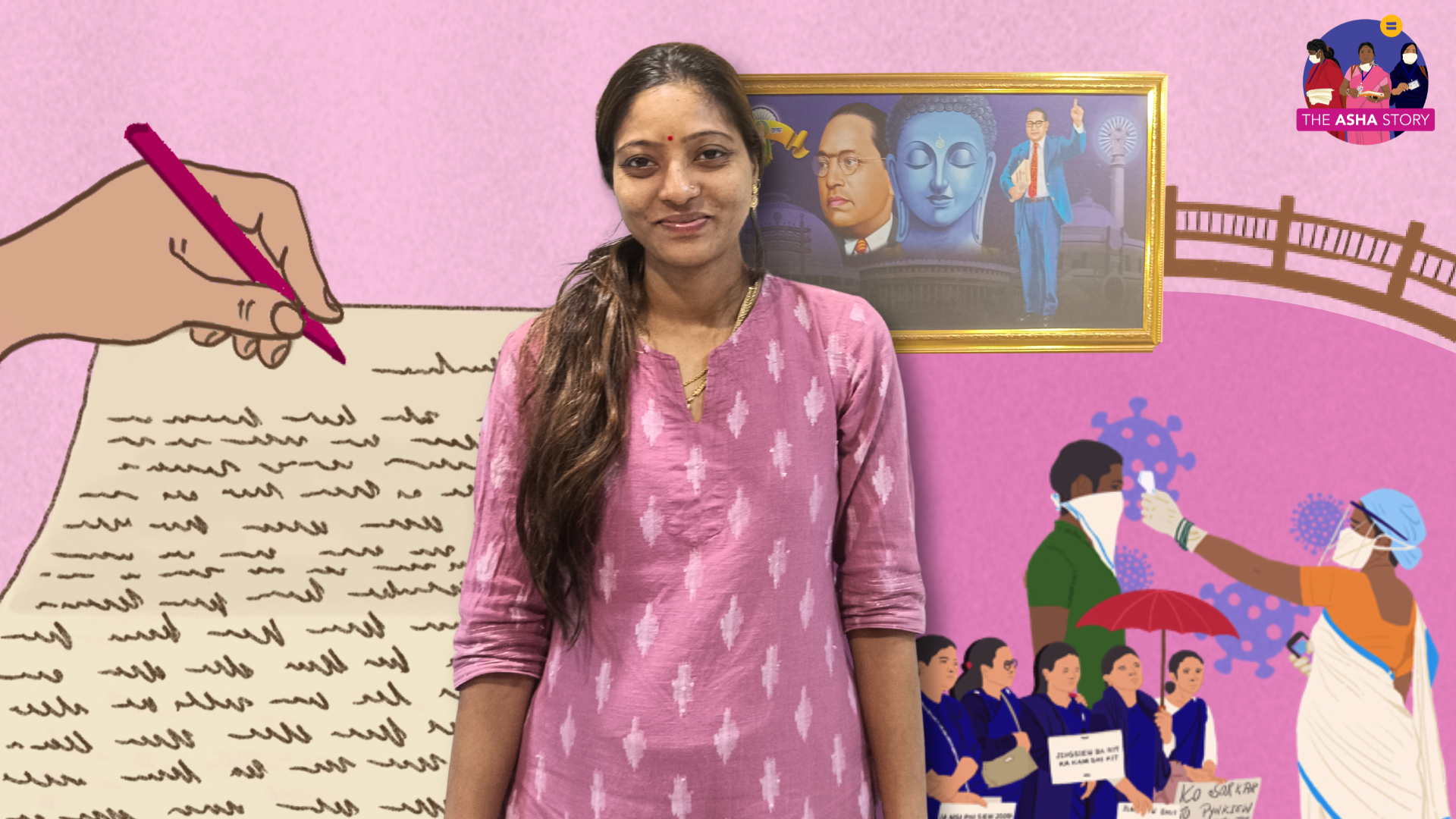
This interview is part of The ASHA Story, the first public archive of women workers’ lives and histories. Read the other stories here.
Punam Amol Ahire, a 34-year-old Dalit ASHA worker from Chembur, once dreamt of a government job but family and financial constraints derailed those ambitions. She worked as a domestic worker, and later, in 2023, also joined the ASHA programme.
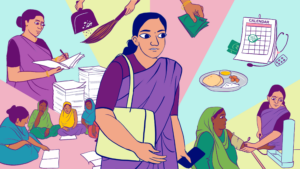
Her day now stretches close to 20 hours. Early morning and evenings go to paid domestic work in Chembur. During the day, as an ASHA worker, she threads through the lanes of M-West Ward in Suman Nagar, managing vaccines, vector borne diseases, making sure there are no pools of stagnant water in the area and now, conducting Census work. And she shows up in the extreme heat or waterlogging, managing vaccines, vector-borne diseases, emptying stale water, and now taking up Census work. Punam keeps a meticulous inventory of records for every task and finds ways to maintain communities’ trust. “We share helpline numbers for domestic violence and carry condoms with us. Women know it’s important, and they tell us quietly when they’ve run out,” she says.
She returns home at night to look after her family. These cycles of care, paid and unpaid, are crucial to surviving Mumbai’s growing economic, climate, and housing crisis, she says.
In a conversation with Anjali D, Punam talks about ASHA work in the urban metropolis, delayed payments, and the long fight for government recognition. “When you need us, you call us. When you don’t, you fire us,” she says. Punam has participated in protests against unfair work conditions and this has made her work precarious at times, but she keeps showing up, supported by unions and the solidarity of the ASHA network. “People give me a lot of respect…They know me now, they look out for me,” she says. Excerpts from the conversation:
Why did you become an ASHA worker?
When I was young, I wanted to become a police officer or banker. I even completed BCom and sat for the Maharashtra Public Service Commission exam to join the police force. But to be in the police or a bank, you need the right kind of home environment and support, which I didn’t have.
Before getting married I was working in the customer service office at Shoppers Stop and was close to being promoted to manager-level position. I had to leave this job during pregnancy due to health complications. Eventually our financial situation turned dire so I was pushed to take up domestic work when my son was just two years old.
In 2021, I found out about the ASHA programme and filled out the form. I thought as an ASHA worker I would be a government employee, and eventually, build a life and career. I also felt that I could manage household work better since the [ASHA] work was supposed to be less than four hours in the day.
I received a posting in 2022 but it was for a distant ward. I requested the Medical Officer of Health (MoH) to change it, and just around that time, in 2023, the Maharashtra Government directly hired 7,500 ASHA workers. We were given a population of 1,000, carved out from the areas where existing Community Health Volunteers (CHV) worked.
[In Mumbai, ASHA work operates under two parallel systems — those appointed by the State Government through the National Health Mission (NHM), and those under the BMC (Brihanmumbai Municipal Corporation), called ‘municipal ASHAs’. There is a separate cadre of CHVs, started by the BMC in the mid-1990s, but is not formally accredited or incentivised in the same way as ASHA workers.]
The area I was allocated – Suman Nagar – was walking distance from my house. When I first joined the work, I cried. I thought, I am so educated, what am I doing here? But I understand the work better now, and I enjoy it. The first time I visited Suman Nagar, a cargo train crossed the tracks that criss-cross the area. My blood pressure shot up immediately; I had no idea of the train schedule. Now I am used to it.
Tell us about the area you work in. How is ASHA work structured in Mumbai?
I look after over 1,000 people in Section A of Suman Nagar, which is divided into six sections due to its substantial size. In my section of Suman Nagar, there is one other ASHA worker and three CHVs. In the city, we don’t have ASHA facilitators the way rural areas do. Here, the experienced CHVs [hired contractually by the BMC] train us, even though we are not ranked below them in the hierarchy – the ANM is above ASHAs and CHVs, then comes the Public Health Nurse (PHN), and then the doctor.
When I first joined, a CHV was assigned to come with me every day to help me familiarise with the area and earn people’s trust. Many CHVs have been working in their areas for about 30 years and they look after 3,000–4,000 people each. They have built deep relationships with the people in their areas and they know their work well. [The BMC has refused to regularise CHVs as workers and continues to treat them as ‘volunteers’.]
In 2016, enrollments to the CHV programme were halted and all new health workers were enrolled as ASHA workers under the Maharashtra Government. But we have been protesting that existing ASHA workers should be enrolled as CHVs since the pay is better, around Rs 15,000. We were told [by union members] that one of the reasons ASHAs were brought in was that many CHVs are now 50-60 years old and struggle with digital tools, while most of us are younger and able to use phones.
What does your average day look like?
My day starts at 6:30 am, when I leave for my first domestic work shift. I took up that work to manage the loans we need to pay off. While we are promised Rs 10,000 a month as ASHA workers, in reality, we get about Rs 7,000, and even that is sporadic. This is not enough to survive in a city like Mumbai, where rent itself is Rs 15,000-20,000.
After my morning shift, I come home and cook for my husband and son before heading, by 10 am, to my post, the Urban Primary Health Centre. It is located in Laal Dongar and covers Suman Nagar, Laal Dongar, Kaala Nagar, and Kokan Nagar. Health posts are small government dispensaries for basic illnesses like colds and coughs, and they are located across the city. There is one MoH who oversees all the health posts in M-West Ward.
Our attendance is marked upon arrival, after which the ANM tells us what tasks have come from ‘above’ — extra work in addition to our regular tasks. For example, sometimes people are admitted to the hospital with a fever or rash that they contracted without our knowledge, say because they were travelling and didn’t inform us, because they got annoyed with us, or simply due to a human error on our part. This ‘lapse’ in detection and reporting makes its way from the hospital to the ward and eventually to the Health Post, which mounts pressure on us. “Tum udhar nahi gaye, idhar nahi pahuch paye, dekho upar se list aaya now go today and follow up.” We have to deal with this extra work every day.
I stay in Suman Nagar till about 2 pm, then come home to Laal Dongar to finish housework and rest for a little while, though rest is not always possible. At 5 pm, I go for my second domestic work shift and return by 7:30 pm. In between I go to pick up our son from school; my husband, who works as a security guard, used to do this earlier but his shift timings have changed. Between 7:30 pm and midnight, I make dinner, prepare for the next day and finish any remaining house work. I start my ASHA documentation around 12:30 am, which continues till at least 1:30 am.
I only sleep for four hours every day, but I have gotten used to it. What else can I do? Sometimes my husband and I go to a mall nearby, just to step outside and enjoy ourselves for a bit. But we can rarely leave the city or relax properly because of work.
What kinds of tasks do ASHA workers in a city like Mumbai need to carry out?
When I first started out, I didn’t know what ASHA workers actually did. I would see the CHV in our area ambling around and I thought the work must be easy. I would get irritated when the ASHA worker assigned to our area came to our house. But now, I understand.
The scope of our work is enormous and includes many medical aspects. We start tracking girls from the age of 10 – their periods, vaccines, development; to boys we administer supplements after they turn 10–12 years. People treat us like doctors but we try to correct this presumption because it leads to false expectations.
During monsoons, we go house to house checking for stagnant water, because it can carry mosquito eggs and then get further contaminated by animal faeces and carcasses. Many of the women in my area work as sanitation workers, and the work has left their hands covered in cracks and calluses; if they come into contact with contaminated water, they can get leptospirosis. If people don’t throw away stagnant water, we throw it for them. We also drop chlorine tablets into drums of drinking water as we move through the community.
Since dengue, typhoid and malaria are common during monsoons, we put up posters about these everywhere. If someone has had a fever for a few days, we call the malaria department and they come to do a blood test; if it is positive, they test at least 40–50 nearby houses and we have to then survey them. If someone has a cough for more than two weeks, we collect their sputum for TB testing. We check people’s blood pressure every Wednesday. And even for vaccine drives, we are the ones who have to convince residents that the vaccines are safe – even if we are not sure of their contents ourselves.
We also give pregnancy kits, injections, and iron, folic acid, and calcium tablets, through women’s pregnancies. We give the couple an Reproductive Child Health (RCH) registration number, a 12-digit identifier that the hospital requires before they can admit the mother. Without this number, they are turned away. This has been a problem in the past because many women don’t reveal their pregnancies – there is a belief that this could cause a miscarriage – which meant we couldn’t give them their medicines and vaccines on time. ASHA workers are then blamed for not doing their jobs properly.
It has been hard but we have created awareness among women. Even if you don’t tell your relatives, tell us, we say. Now women have started calling us on their own. We also share helpline numbers for domestic violence, and we carry condoms with us. Women know it’s important, and they tell us quietly when they’ve run out and want more condoms.
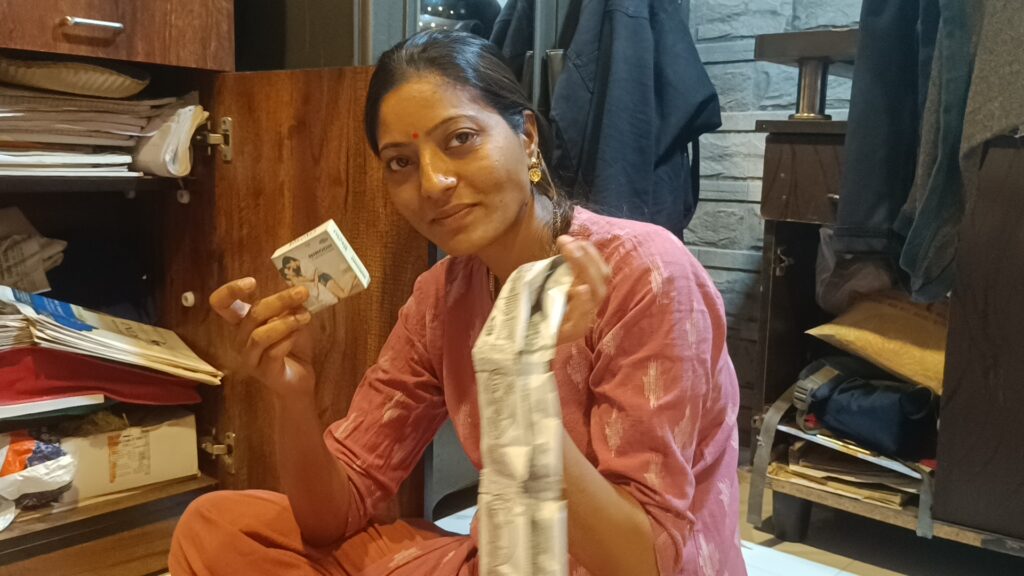
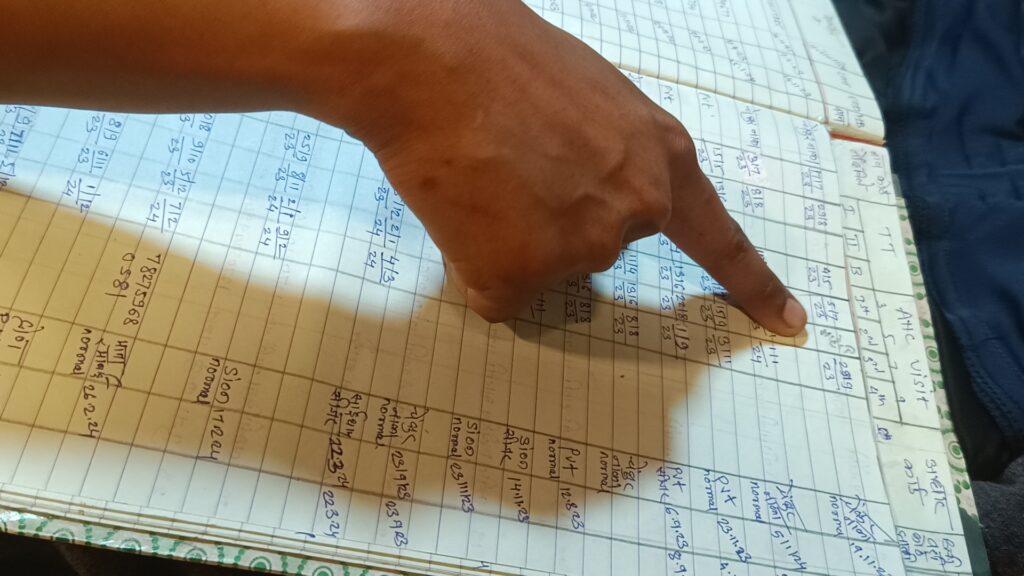
Every single day, we carefully document each part of this work. My entire cabinet is full of files. See? We take photographs as evidence every day, because if a complaint comes from above, we need to be able to show exactly what we did and when. Many families also migrate for work here – sometimes for as long as six months – and we need to keep a track of their illnesses, pregnancies, deliveries and other health issues even while they are gone so that we can either tell them to see an ASHA worker in the village, or help them once they are back. And now, because everything is digital, our documentation work is doubled – we write everything by hand and then upload it digitally.
On top of all of this, we are now being recruited for Census work from May 20. They said we can do this during our work hours, but we cannot stop the work we have been doing either. So how do we manage? We end up working beyond 2pm, but so far we have not been paid anything extra. We also have to go beyond our own areas, because Census areas [defined by the Central Government] are not mapped to our assigned areas.
Do Mumbai’s extreme climate conditions, heatwaves and heavy monsoons, make the work challenging?
We have no choice, we have to work during the heat. But I am not able to handle it. I get impatient and I sweat a lot. Mujhe kuch alag hi ho jata hai dhup mein (something happens to me in the sun). If I feel dizzy, I sit for a while and call people instead of going house-to-house. In Suman Nagar, new-born children suffer a lot due to the heat because all the houses are made from patra (tin).
Monsoon is equally as difficult. I wade through water up to my knees when it floods, and I have to be extremely careful of my own safety. In the bigger chawls, we are able to use umbrellas during the rain, but in smaller ones, the lanes are too narrow. My notebook got completely drenched the first time I worked in the rain. We are forced to hold meetings in common spaces or call people up [instead of visiting them]. This is not as effective and we end up missing out on many cases.
We don’t get any support from the government – no hat, no bottles, no raincoat or boots…nothing. And if we fall sick due to the heat or the rain [and are unable to work], they cut our payments.
What is the payment system? Are you paid on time?
Our monthly salary is made up of small components. For example, we get Rs 200 if 80% of young couples attend a monthly meeting we organise on family planning. We get Rs 300 if all the new born babies in our area have a good body-mass index (BMI). But if any are marked high risk, this amount drops to Rs 200, even though the BMI is completely outside our control – especially in cities where nutritious food is expensive and pollution is everywhere.
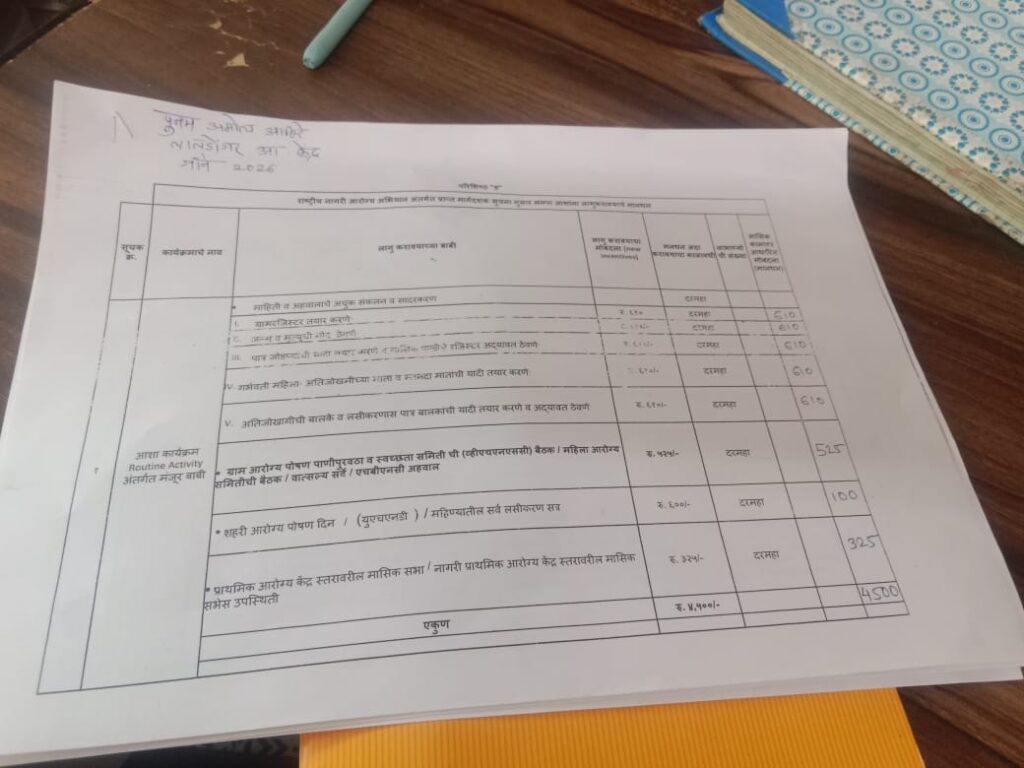
All our work is itemised and we are paid accordingly. The ANM checks every line carefully and if we haven’t been formally trained on something, such as how to conduct family planning sessions or administer medicines, she tells us that we can’t claim money for the task, even if we have been doing it all along.
When I joined, I worked for eight months without a single payment. They [the Health Department] said we could only be paid after our training was completed, and the first training took eight months to finally happen. Then in 2023, after we were trained on leptospirosis, leprosy, malaria, and TB, our payment went up to Rs 5,500. But then they increased our population load to 2,000 people.
This is what led to the ASHA and CHV worker’s strike in 2024. And right now, we haven’t received a salary for at least six months.
You were removed from your job due to the strike. Can you tell us what happened?
In 2024, we held a strike in Azad Maidan under the CHV Mazdoor Union. We demanded that if each ASHA worker is responsible for 2,000 people, we deserved at least Rs 10,000. They accepted this on paper but as soon as we returned to work, a letter from the top arrived stating that the number of ASHA workers needed to be reduced. They said there wasn’t enough work, there weren’t enough bastis to divide 2,000 people to each worker.
My name was on that list.
This was baffling, given that two ASHA workers in my area had left – tired of not receiving the Rs 1,650 we were paid at the start – and their populations were uncovered because no new ASHAs had been hired since 2023. So how has my population reduced? If anything, it only grew. Still, they removed four of us and refused to fill the vacancy in Suman Nagar.
I had been working for a meagre salary and just when it had started to increase, they removed me. The union told me to keep working in my area anyway. The government said whoever wants to work can come, but there will be no attendance recorded and no payment given. I kept going.
When the polio programme started, the PHN told our Health Post leader to ask me to return. Polio is a lot of work – every house is marked, campaign booths run every Sunday from 7 am to 5 pm, and on Monday we go house to house to follow up with anyone who missed the booth.
The CHV could not cover my area of 1,000 people in addition to her own 3,000. I told them I will not work just for polio, that I will only join if I am put back in the ASHA programme. They agreed.
But on the last day of the polio programme, they asked three of us to stay behind. I had a bad feeling. They showed us a letter from the M-Ward office saying there was no space for us here and we were being assigned to Tilak Nagar, effective immediately. They handed us joining letters and told us to sign under “agree to joining”. I signed and wrote, next to my signature, “not willing”. I wanted it on record that they were forcing us.
I was unemployed, again.
In November 2025, a message came from the Central Government about Census pre-survey work. I didn’t go at first. Why should I keep showing up when they are not keeping us? But they [the CHO] eventually called because no one can say no to the Central Government. I asked them, what is this game they are playing? We cannot look for other work, we cannot leave, we are stuck in limbo. When you need us, you call us. When you don’t, you fire us.
While they refused to guarantee my position in writing, they told me an order had come from above that no ASHA worker should be removed this time. They later assigned me to my area, Suman Nagar.
How do people in Sumar Nagar view ASHA work?
People treat us with a lot of respect now. Earlier they would say all kinds of things and swear at us, but now they invite us inside their homes, offer us chai, tell us not to sit in the sun. Despite being Dalit, I don’t face caste discrimination because most of the people I serve are from my own caste, and in new areas, I am viewed as a government employee. In Mumbai’s bastis, people from all castes and religions live very close together, overt discrimination is rare.
When I was removed from my position, I kept getting calls from people. They would go to the Health Post asking where I was; children were missing vaccines, no one was following up with pregnant women. People were angry. The officials did not realise the effort and time it took to earn people’s trust. When I was removed, the trust was immediately jeopardised.
Does the lack of government recognition lead to challenges within the community?
One of the biggest issues is that we still don’t have proper ID cards. Part of our work involves collecting people’s Aadhaar details for government schemes like Pradhan Mantri Jan Arogya Yojana under the Ayushman Bharat scheme. But people are rightfully reluctant to hand over their cards to someone with no identity proof. Yet, the government refuses to give ID cards to us because we are contract workers, not BMC employees – something they didn’t disclose when we first joined.
The government issued IDs one time a while back, but the cards clearly stated on the front that these are not BMC employees. They give us these ID cards on one hand and on the other, train us to enter a basti and say “we have come from the government”. Agar koi shaana hoga aur vo ID dekhega, moonh se bol rahe hain government se aaye hain, saamne likha hai government se nahi hain, toh chappal se nahi marega (if someone smart bothers to look closely at the ID, they’ll notice that it says we are not from the government…won’t they smack us with their chappal)? This has actually happened with some of our ASHA behans.
We immediately returned those IDs, asked them to remove the statement, and put the government logo and our name. But they won’t give us IDs…they are worried that as official BMC workers we will be eligible to file court cases for our rights. To avoid giving us any power, they withhold the ID entirely.
What support do you need to continue to do this work?
We don’t get much support from the government. We don’t even get maternity leave; any ASHA who takes months off for a pregnancy comes back to find her salary cut, or her job gone. So many of our ASHA behans leave their one-month-old babies at home because they are afraid to take a long leave of absence. We look after pregnant women across the bastis every single day but when it comes to our own health, there is nothing.
The union has been an important source of support. We are now fighting for pension – none of us get pension despite years of service. Though I have added my name to the union list, I often don’t have time to attend meetings though I wish I could. Still, if something happens, I send a message [to the group] and I know they will act.
The most important everyday support is from within the ASHA cadre. If I have some personal work I tell another ASHA worker and she covers for me, and I do the same for her. My family is also supportive: my husband and I share the housework when we can, and my domestic work employer is understanding. People in Suman Nagar give me a lot of respect, they know me now, they look out for me.
But honestly, I do ASHA work because what else do I do? Where else do I find work? In a city like Mumbai, with increasing costs and now sky-rocketing gas cylinder prices, I don’t have the time to sit and think about what I like, what I want, what I hope for. If I start, I will never stop.


We believe everyone deserves equal access to accurate news. Support from our readers enables us to keep our journalism open and free for everyone, all over the world.
