
‘Young Feminists Today Are Much More Joyful, Imaginative, Innovative’
In this instalment of BehanBox Talkies, feminist scholar Urvashi Butalia reflects on the past, and on the solidarities and possibilities of the women’s movement against sexual violence
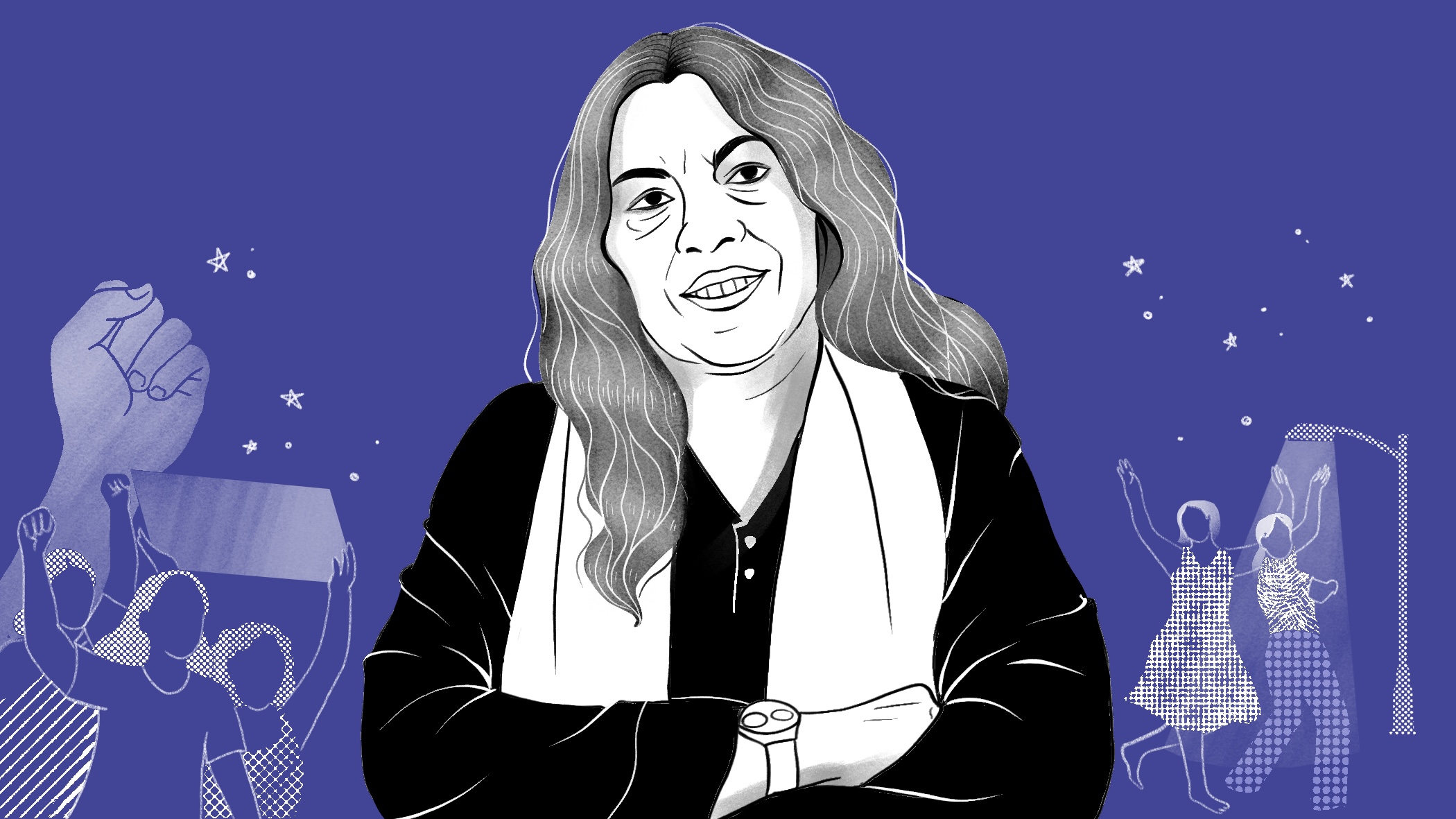
In BehanBox Talkies, we explore ideas through the lens of scholars. Read our collection of interviews here.
They took over streets and highways, podiums and pedestals, marching into the night to smash the patriarchy. The anger found its voice in rousing and poetic chants, from jibes about raja betas to cheeky calls invoking kachoris and samosas. These protests against sexual violence swept several Indian cities last month: a young girl was gangraped in a Delhi park after sunset, several rape allegations surfaced in a Punjab university, elsewhere in Bihar, a girl was assaulted and her friend beaten. And these are only reported cases.
These demands — for safe cities, freedoms, and accountable governments — have punctuated feminist movements for decades. Watching this resistance with awe, and a tinge of fear, is Urvashi Butalia, a feminist activist and publisher, who was part of the women’s movement against sexual violence in the 1970s and 1980s. Groups, across sections of caste, gender, ethnic identities, campaigned against rape, dowry, sati, and the whole gamut of sexual violence inside home, at work, in public spaces. The tactics used then ranged from street plays (“we didn’t need to take permissions”) to tarring misogynistic hoardings with black paint. “It was possible because you could do that kind of thing. There were no CCTV cameras so nobody could spot you for who you were.” Inclusive and sometimes uncomfortable solidarities expanded legislative possibilities, such as the passage of the POSH Act.
In a conversation with Saumya Kalia, Urvashi talks about what has changed, and what hasn’t, in the fight for sexual violence. It is, she agrees, much harder now to negotiate with a State that is “more distant from its citizens, if not hostile to and and much less accountable”. Of the young protesters today, she says: “I’m full of admiration for their courage because the consequences are so much more serious and greater than before.” Edited excerpts below.
Visuals from this month’s women’s protests reminded me of your 2018 interview: “Once women have begun to speak out, once they sense their power, once they challenge the state, then there’s no stopping them.” It also seemed to reflect in the recent women’s protests. How are you engaging with this moment? What stands out?
Well, several things. It’s interesting to see a resonance with the times when women of my generation came into the women’s movement and protested against violence, particularly sexual violence. There are echoes of the same kind of questions that were raised, but the modes of protest now are quite different. The younger protesters are much more innovative, more joyful, a lot more imaginative in taking up issues. There is such use of humor and satire, and they mount such a daring challenge posed to men.
Although we [too] did our share of things which could be counted as similar. Public spaces were not that accessible to us then, as they are to the younger generation of women, so many of our protests were in what today would be called “designated” protest sites. Except they weren’t necessarily designated, nobody had said that. We had a limit that we could go up to the Boat Club if we wanted to protest or bring something to the state’s attention, and that space, of course, receded and receded. From the Boat Club, it went to Jantar Mantar. [The Union Government on October 12 denotified Jantar Mantar as a protest site and announced three alternative sites, roughly 5-20 km from the political epicenter.]
But for my generation, the Boat Club was the space but there was no limit, if we wanted to perform street plays, we could do that anywhere in the city. We didn’t have to take permission. We would pitch up at places like Patel Chowk or outside the Supreme Court or Mandi House or in Mukherjee Nagar or Malviya Nagar. Just go and beat our drums and start singing songs and performing the play. Somewhere towards the mid-80s there was also the movement of taking back the night, so we held marches in the night while holding mashals [flare].
One time we protested against the objectification of women in advertisements. There was an ad for VIP suitcase plastered on a big hoarding right in front of the Defence Colony flyover – the flyover hadn’t been built then — and it showed a woman pulling a suitcase behind her, not in the way that trolley suitcases are today but with a looped rassi [rope] and wheels, and she was wearing nothing but her underclothes. We were infuriated! We went up there in the middle of the night with black paint and hoisted ourselves on ladders and painted the whole thing black.
It was possible because you could do that kind of thing. There were no CCTV cameras so nobody could spot you for who you were. But it’s not that we kept it secret; we also claimed it. This localised nature of the protest, where women are protesting in different sites across the city and country, mirrors, albeit differently, the kind of things we did. There is a kind of continuity to them.
It’s not to say that there wasn’t resistance before. Look back at the 1920s, you’ll find large numbers of women employed in textile mills and statistics show their employment slowly dropped off. Part of the reason, a very clear reason, was the sexual harassment they faced at work. They didn’t protest in the way, say my generation did or your generation does, but it was not like the issue didn’t exist or did not get articulated.
One beginning of the women’s movement against violence was, as you wrote, during the 1970s and 80s. What were the early pushes and pulls?
Yes, some issues didn’t get as much attention, issues became current at a particular time for a variety of reasons. If you’re looking at North India – say, Delhi or Rajasthan – the anti-dowry movement was a big thing. Then the anti-rape issue was one of the movements that spread across India and involved cross sections of women; it wasn’t only middle class, upper class, and upper caste women. There were instances of rape of marginalised caste and Adivasi women that were taken up.
[The rape of Rameeza Bee, 20, in 1978 sparked protests across Hyderabad. It left 26 dead, and pressured by organisations, the government set up an enquiry commission. The 1980 rape of a young woman Mathura and the subsequent demonstrations led to the reform of rape laws.]
This was also a time when local movements supported in some way. In Rajasthan, the Roop Kanwar sati case in 1987 was a big issue. At the time Bhanwari Devi was a worker, a sathin in the Women’s Development Programme that was launched in 1984 focussing on ’empowering’ women within their communities to work on the ground. This programme created considerable momentum across Rajasthan, and when the sati happened, it was possible to mobilise at a mass level partly also because the programme existed, and there were networks which could help to bring women together.
Then Bhanwari’s rape happened in 1992. As part of her responsibilities she tried to stop child marriages in her village, one upper caste family who was planning to marry their children was enraged that a low caste woman had the gall to tell them what to do. Their men raped her. This led to a massive mobilisation in Rajasthan and across India, to conversations about safety in the workplace, which eventually led to the filing of the Vishakha petition and much later, to the POSH act.
In places like Tamil Nadu and Kerala, many activists came through the route of the church; the church-related organisations were very open to marginalised caste women. So people like Ruth Manorma, Fatima Burnad, Celine from Streelekha, came to their activism through the church route. Ruth’s articulation of the caste question was born there, and also in her work in Karnataka where she fought for housing rights for the urban poor.
There were a range of issues being taken up and there were all kinds of beginnings – they were different for different people, happening roughly around this within the same time period.
What kind of solidarities did these different groups and movements forge?
Communication grew, these groups shared more and more what they were doing. They built connections and shared tactics. They learnt from each other. For example, groups like Vimochana in Karnataka and the Women’s Center in Bombay were both dealing with people seeking legal aid, counseling, and help with sexual and domestic violence. They would meet at different conferences and talk to each other.
The movement was part of a wider struggle for women’s rights, and in itself, was very capacious. It wasn’t only against domestic violence or sexual violence in the public sphere but addressed everything under the rubric of violence. It dealt with questions of women’s health and political participation, religious fundamentalism, the question of sexual identities, and the denial of rights.
Would you do anything differently? Was there a limitation or a point of disagreement you would like to revisit?
When you look back with the benefit of hindsight, it is always possible to think of doing things differently. Once, when we all came together to fight for housing rights, there was a split between party-affiliated women’s groups and autonomous groups on the question of sexuality and sexual identities. The Delhi government had thrown out all small industries they thought were ‘polluting industries’, and that meant thousands of people were made homeless. Organisations across the spectrum came together with housing rights as an issue but when the question of bringing their own separate banners to the protest was being discussed, the Left groups felt they could not allow the banner of one group — CALERI (Campaign for Lesbian Rights in India) — as the overall theme was housing rights. They had also not discussed the issue of sexual identities within their constituencies, so it concerned them to have that question be ‘seen’ through this banner.
Perhaps if we had talked more, it might have been easier to fix but that is a big perhaps.
I think it’s important that no matter the differences, when it was needed, we found different ways to work together.
Do you see traces of tactics in recent protests?
There are a lot of traces. Younger feminists are connecting with and learning from each other. But I think what is not possible for them, which was possible for us, is a certain access to street-level protests. You get to build different kinds of solidarities, take your issues to the public, get feedback, connect with what’s going on. That in itself is an education. When as young activists we were doing street plays in Delhi, when we jumped into action, we realised that it’s not enough to just go out there. There’s a next step and another and then another. I think that is difficult now for younger feminists. A slew of social and economic changes have made certain kinds of actions impossible, and therefore, the tactics and strategies are different.
But let me add a caveat: what is visible is not all there is. There is much more behind that that we don’t actually see. There was a huge protest against the politician Prajwal Revanna when thousands of people marched through Hassan [in 2024] and it was women who led that march. It did not get the same kind of media or internet attention an event in Delhi would. It’s worth remembering that a lot of things don’t easily enter the equation because too much attention is focused on the center, and on the most obvious parts.
Can you elaborate on the specific political or economic developments that are shaping the women’s movement right now?
Many things. Overall the State has become much more distant from Its citizens, if not hostile to and and much less accountable. If you look at the activism of the late 1970s and 80s, you could fault the feminist movement for addressing too many demands to the State or for focusing too much on legislation. One could ask why that was the only thing. But at the same time, we believed that at least 80% of the time, if you mounted a campaign and you pushed to get the ear of the State, they would listen. Whether they would continue to do that in the long run is a different story, but they would listen.
When we wanted to push an amendment to the dowry law, we were able to pressurise the State into setting up a law commission and getting the commission to hear people’s evidence and make recommendations. Even as late as 2012 – perhaps the last time this was possible – women’s groups came together from all over India and went to the Verma Committee and demanded to be heard. The committee gave us the space, two full days. They listened to 27 groups, those groups were very carefully selected to represent different strands of the women’s movement, including trans issues, queer issues, Adivasi issues, and issues from the northeast. Everybody came together at Vigyan Bhavan to talk to three people on the Verma Committee, who listened.
These things are not possible today. You cannot even hold the media accountable. So where do people direct their anger, their questions?
There are also other changes with the coming of the internet. Everybody imagined that there would be a democratisation and an opening up, which there has been, but nobody was prepared for the surveillance and the manipulation that comes with digital media and algorithms.
In an essay you noted that one lesson that emerged from 1980s’ activism is the clear identification of the State as a perpetrator of violence as well. How do you reflect on those lessons today?
I don’t think we can say anything has changed since then. You see the Armed Forces (Special Powers) Act and what it’s doing, and the impunity with which sexual violence is perpetrated. In the AFSPA, which offers extra legal rights to the army in “disturbed situations”, nowhere does it say that you can go out and sexually assault women. That isn’t in the playbook. No, the playbook will tell you that you can shoot at sight, you can do this or that, and that you will be immune from accountability in the interest of the nation state. But where does perpetrating sexual violence enter this picture at all? It doesn’t. But that’s not questioned. There is total impunity, no accountability for it.
You have to recognise that violence as something that carries the might and power of the State behind it.
Do you see a shift in the public narrative around sexual violence – inside home, at work, or in the public space?
None at all. Firstly I don’t think people talk about violence in the home; given the scale of violence it is perhaps the biggest public secret. To use scholar Pratiksha Baxi’s phrase, it’s what everybody knows but hardly talks about.
The silence around sexual violence has, if anything, gone grown deeper, and the acceptability of violence has found much more legitimisation. Why wasn’t the kind of outrage there should have been at the release of Bilkis Bano’s perpetrators? Why wasn’t there the same kind of outrage at what happened to the wrestlers’ protest [against former BJP MP Brij Bhushan]? Instead, there was celebration, it was seen as perfectly normal. The narrative has gotten worse. There is more acceptability, which is really scary.
A journalist who was assaulted during the anti-SIR protests in Delhi now faces an FIR against her for allegedly passing casteist remarks.
This violence is so normalised. This happened to some of us – activists Anita Bharti and Sheeba Chhachhi, a journalist called Meenu, and I. It was 1989. We were coming back from a Women’s Day meeting at Lal Quila and heading to Patel Chowk from where we could hail autos or buses. At Patel Chowk we found the tailend of a demonstration against Union Carbide Corporation. The protest had ended and there were a few activists, people we knew, straggling around. We were chatting when we saw the police beat up one of the male protesters, and we all instinctively ran to save him. Within seconds, the police turned around and beat us. I was wearing a silver chain which was snatched off my neck. The police guys pulled off their badges, and before we could do anything, leapt into buses and drove off (those days they didn’t have these big cars, they came on public transport).
We tried to file a complaint and the police eventually agreed to hold an inquiry. We decided to participate; we were so sure that it wasn’t our fault, that we have evidence on our side – there were pictures in the front pages of major newspapers like the Times of India and the Indian Express of us getting beaten up. But when the report was finalised, we were blamed. The narrative was that we had started the violence, we turned on the policeman (the only person excused was the journalist who was with the Indian Express at the time).
It’s the same kind of impunity now, except it’s greater. The institutions that we could rely on, or hope to rely on, like the courts, have also become weak.
You said in 2024 that the growing attention to rape “broke the barrier of silence” and even men showed outrage. What do you make of men’s allyship and participation in these spaces?
Men figured in different ways in our time. We were very clear that the ‘leadership’ – whatever leadership existed in campaigns given that the whole movement didn’t have any specific leader – would have no men at the front. At women’s conferences, men came and they could listen but by and large, they had to be there to support, they looked after the children and all of those things. They could not take over the space, and never took over the voice. To a degree they didn’t try to also, but there wasn’t a huge participation of men.
Then there were times when campaigns overlapped, say when we were fighting for housing rights, and everybody had their own identity. We divided the strategies jointly, it wasn’t that men decided the strategies and women followed. Not at all.
I think today, allyship is a much more well articulated question, and therefore there is a lot more awareness. I find it very interesting and encouraging to see young men who are curious about the articulation of women’s rights and the battle for women’s rights. They have questions. When I teach, my male students are keen to understand and to see how to behave in this world that is changing. When are they crossing the boundary? When are they not? How can they be good allies?
They’re thinking about all of these things but I also think that it also represents some kind of fear for men. So you see more backlash [than earlier] and a much stronger articulation of opposition among men publicly – through these men’s rights groups and the gospels of misogynistic influencers – than you would get in our time.
You navigated a male-dominated political landscape as a student at Delhi University. Can you tell us about the paths that led you towards activism?
The college I went to, Miranda House (MH), was the first women’s college to seek to join the Delhi University Students Union. Most women’s colleges at the time kept away from ‘politics’ – of the political party type. Miranda said, this space is ours as well, and we have to claim it, and they did. Today DUSU and other university unions have good numbers of women in them.
In MH we fought for our rights in different ways. For example we opposed the stringent and moralistic conditions imposed on women students in hostels, they had to be back by 7 pm and suchlike. We also fought for safe transport systems. At the time Delhi had no metro, the bus system was appalling, but we demanded special buses for the university and got them. Then we found men dominating them and not allowing women to sit or travel comfortably so we fought, and got, ‘women’s specials’. These, I think, were the precursors of the pink compartments on the metro. Many young women today are opposed to those, which is also valid, but at that time it seemed to us very necessary.
I sometimes think that we were very lucky. We were lucky to be able to immediately transition out of homes and colleges and move into an existing political movement. We swept along. We were lucky because we felt that the solidarity was a basis for change, that we could make some change. Not everything was positive, there were several difficult losses to take but somewhere there was a sense of possibility. I don’t know how many young people have that today. I think they have the battle in them, that’s for sure, but I don’t know how easy or difficult it is to hold on to that sense of possibility.
Feminist scholar Sara Ahmed wrote how the point of a movement was to keep moving to remain adaptable, inclusive, and liberating. Where does the movement go from here?
It’s difficult to predict. I don’t think it will regress. Whatever ‘progress’ or ‘gains’ have been made — and I hesitate to use these terms because they don’t really define the multi-layered way in which things are — the movement will move forward. This movement is not linear but zigzag: you have two steps forward, one step back. I think we have to take those as the road to progress because it’s never going to be that easy or that straight.
Apart from the fact that I’m an optimist, I do believe that change is possible. So I see this [wave of protests] as something that will eventually lead to change. It’s very encouraging and wonderful to see.
We ended with some rapid-fire prompts about lessons and inspiration that have stayed with Urvashi.
1. A reading recommendation?
Semiotics of Rape by Rupal Oza
2. Your favourite protest art?
There was a song that we sang madly all the time, and it’s not necessarily my favourite, but it’s the one that stays at the top of my mind. It’s Kamla Bhasin’s “Tod Tod Ke Bandhano Ko”.
3. What outcome of the women’s movement has stayed with you?
I wouldn’t say there’s one outcome I’m proud of but there is a process that was very important. That is the process for fighting, which resulted in the Vishaka guidelines.
When women came together, five groups were selected to file the petition. The petition was filed and the name of a local Rajasthan group – Vishaka – was chosen. It was collaborative and inclusive but not without tension. Since the Bhanwari Devi case happened in Rajasthan, Rajasthani women’s groups were particular in that they took the lead. Groups from across India that came to join in the protests had to learn to take a back seat. Some did it well, some not so much. It eventually resulted in a Supreme Court ruling that was really significant, even if it didn’t end up in the kind of POSH Act we wanted. We talk about how the women’s movement is a leaderless movement, and it was. How many people today know the names of the five groups that filed the Vishaka petition? None of those groups have come forward and claimed credit. That process was important. We learned how we could be, how we could collaborate. That was my biggest learning.
This story was produced with support from Report for the World, a global media service strengthening local independent journalism.

We believe everyone deserves equal access to accurate news. Support from our readers enables us to keep our journalism open and free for everyone, all over the world.
