
‘Partner Violence In Non-Marital Relationships Is Hard To Name And Address’
In this instalment of BehanBox Talkies, scholar Sundari Anitha says entering a relationship is itself an act of resistance for women and admitting that it has turned abusive therefore becomes difficult
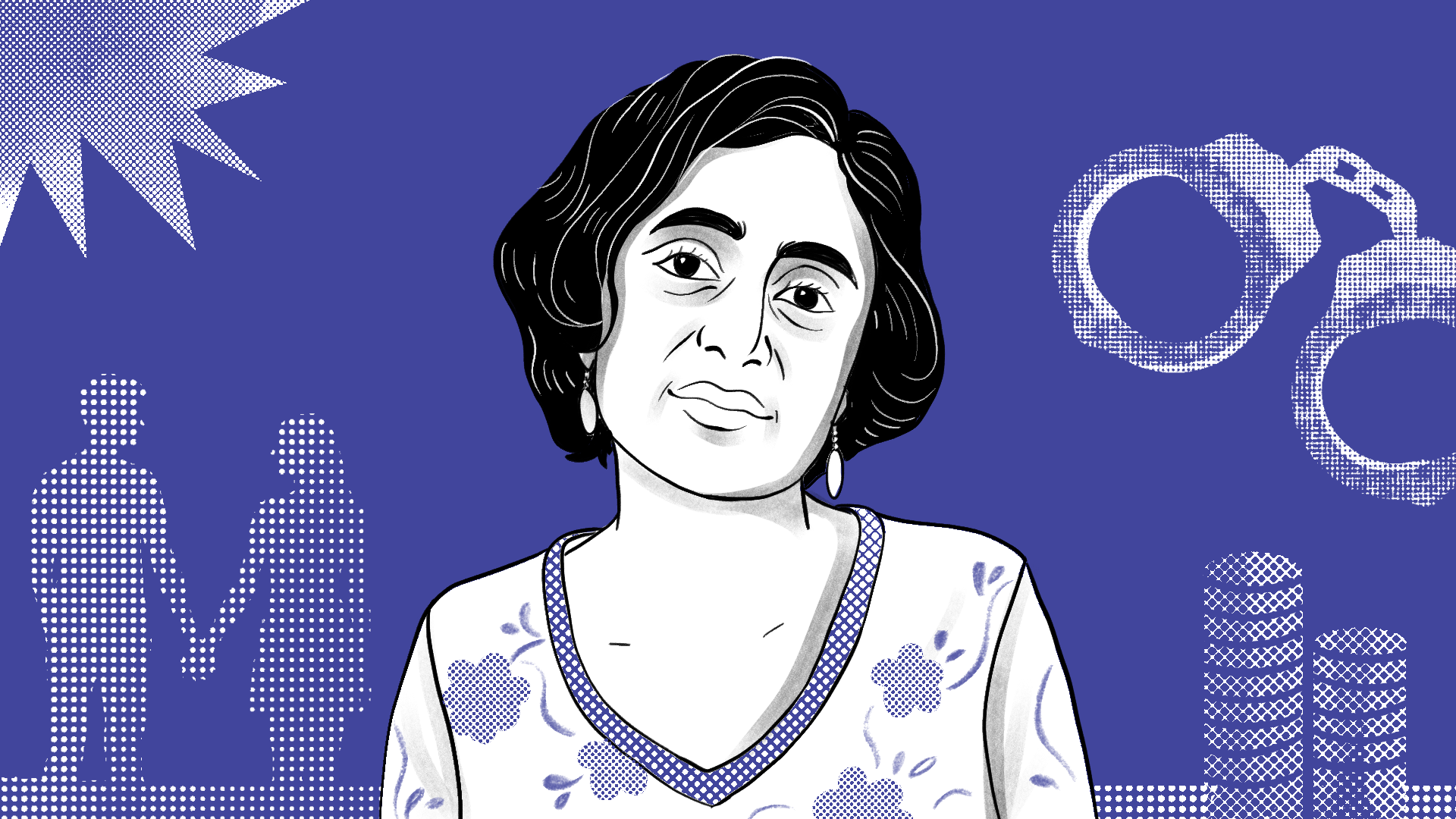
In BehanBox Talkies, we explore ideas through the lens of scholars. Read our collection of interviews here.
Until violence enters the picture, women’s intimate relationships are often treated as private matters. But a relationship can itself become the problem, bringing women’s choices, mobility and intimate lives under scrutiny.
Feminist scholar Sundari Anitha, author of the report ‘Violence and Abuse in Young Women’s Intimate Relationships in India’, examines how coercive control, economic abuse, family surveillance and gendered ideas of intimacy shape young women’s experiences of violence. She traces why violence in non-marital relationships remains difficult to name and address, and argues for recognising harm wherever it occurs. She also argues against regulating women’s intimate choices. In an interview with Anjali Chauhan, she addresses these issues. Excerpts below:
Violence against women in India is often discussed in the context of marriage, sexual violence or fatal assaults. What prompted you to explore violence within non-marital relationships among the young?
It’s impossible to escape the reality of young people’s relationships in India whether in big cities or small. Yet alongside this everyday presence is a strong stigma around young women’s relationships. You see this even in supposedly liberal, middle-class households. Young men might be teased with: ‘Girlfriend hai kya teri?’ But you don’t ask girls, ‘Boyfriend hai kya tera?’ in the same light-hearted way. There is a clear double standard; these relationships are happening, but there is a selective silence around young women’s participation in them.
Given the prevalence of domestic violence within marriage in India, it was important to ask why wasn’t anyone looking at violence within young people’s relationships. There is some research on premarital intimacy, largely through reproductive health surveys and concerns around pregnancy. But there was very little attention to violence, abuse, control or harm within the relationships themselves.
Even when cases of homicide or femicide within non-marital or live-in relationships received media attention, the focus often shifted elsewhere. Interfaith relationships could become absorbed into narratives around ‘love jihad’, while other cases were used to portray live-in relationships themselves as the problem, rather than examining the violence within them. That silence became impossible to ignore.
How does marital violence differ from violence in non-marital relationships?
In many ways, the patterns of violence are remarkably similar. The most significant similarity is that they are gendered. The key difference is that violence within marriage is, at least nominally, recognised through legal and social frameworks. We have a vocabulary for naming it as harm. Violence within non-marital relationships does not have the same recognition.
Within marriage, there is at least an understanding that violence is a social problem requiring a response, even if that response often asks women to ‘compromise’. In non-marital relationships, however, the assumption is that she chose the relationship and can simply leave. She is therefore seen as choosing to remain in the abuse.
For young women, this is particularly complicated because entering the relationship may itself have been an act of resistance or a search for freedom. Admitting that the relationship has become abusive can therefore be difficult, not only because of the violence itself, but because seeking help means confronting what has happened to a form of intimacy they actively chose for themselves.
Much of our legal and institutional understanding of domestic violence centres marriage. How does this shape what is recognised as violence in non-marital relationships and how women recognise coercion and control within them?
In non-marital relationships there are only limited forms of harm that tend to be recognised. The first is severe physical harm, violence that results in serious injury, long-term physical consequences, or fatality. Such violence can be recognised and acted upon legally. The second, rather problematically, is harm understood in terms of a woman’s ‘reputation’ or sexual ‘purity’.
This means that the concern often becomes less about the harm or coercion within the relationship than about whether the woman has lost her ‘reputation’ or virginity. It leaves very little space to recognise other forms of abuse and also makes women’s sexual agency difficult to acknowledge. A relationship that may have involved consensual intimacy can retrospectively be understood through whether it eventually resulted in marriage.
But even beyond the law, there is a wider problem with how we understand harm. We often describe abuse as escalating towards physical violence, as though coercion, control and emotional abuse are somehow lesser forms of harm. These forms of control can also be particularly difficult to recognise because women often grow up with control being framed as care: restrictions on mobility, friendships and behaviour are justified as protection. When a boyfriend demands to know where she is, asks her to change how she dresses, restricts her friendships, or insists that it is ‘for your own safety’, the language can feel remarkably familiar. That is what makes coercive control so difficult to unravel; behaviours that limit a woman’s freedom can be experienced and presented as love and care.
Young people increasingly use terms such as “toxic relationship” and “narcissist” to describe abuse. This is even as popular ideas of romance continue to celebrate persistence and pursuit. Is this new language helping young women recognise abuse?
Many young women enter relationships hoping to create an intimate life different from what they have seen their mothers and other women endure. At the same time, they are acutely aware of the consequences of a failed relationship, particularly one that does not end in marriage or becomes public. This shapes how romance itself is understood. Women are often expected not to say ‘yes’ too quickly, while men are expected to demonstrate their seriousness through persistent pursuit. A pursuit that continues for months can therefore be interpreted as evidence of commitment: ‘If he only wanted a fling, surely he would have moved on.’ Combined with ideas of femininity as passive and vulnerable, aggressive pursuit can become part of the script of romance.
There is now a great deal of what we might call therapy talk. Women may describe a partner as a narcissist or a relationship as toxic. But these frameworks can individualise the problem, locating it in one pathological person rather than asking why abuse is so gendered and so commonplace. If we understand violence only as individual pathology, we miss the broader social structures shaping both relationships and women’s choices within them.
In several accounts, women’s first relationships began around coaching classes, one of the few spaces where they had relative freedom to meet young men. But these were also spaces where stalking could begin. If a woman told her family that someone was pursuing or harassing her, the likely response might be further restrictions on her mobility or even an end to her coaching classes. She would therefore endure the stalking for months without being able to seek support. Meanwhile, friends might interpret his persistence as proof that he was serious. Eventually, some women might decide to give the relationship a chance because the person pursuing them was not going away; they could not safely turn to their families, and they were surrounded by the message that ‘this is what love looks like’. The relationship can therefore begin with an infringement of her boundaries, with coercion already present from the start.
How do caste, religion, family surveillance and other social inequalities shape both the form abuse takes and also women’s ability to recognise and resist it?
Intimate partner violence is often understood as a private form of harm, but it is never separate from wider structures of power. Caste, class, religion, age, disability and other inequalities shape both how violence plays out and the particular forms abuse takes. Perpetrators often tailor coercion and control to the inequalities women already live with.
Caste, for instance, was significant in some inter-caste relationships. Women’s diet, appearance, skin colour and bodies became the subject of caste-based slurs and derogatory remarks, deployed to diminish their sense of self. Religious difference could similarly intensify the fear of a relationship becoming public, particularly in relationships between Hindu women and Muslim men.
The fear of family finding out was present in almost every interview, although its consequences varied. Even in same-caste or same-religion relationships, disclosure could result in restrictions on women’s mobility or pressure to marry. In some cases, men used precisely that possibility to prevent women from leaving abusive relationships.
Women’s responses to abuse were equally shaped by their social location and experiences. Some tried to explain consent and boundaries to their partners, hoping that perhaps they simply did not understand. Others recognised particular forms of abuse immediately because they had encountered similar forms of discrimination elsewhere in their lives. One Dalit woman, for instance, immediately recognised caste-based derogatory remarks within her relationship because she had experienced them throughout her life.
But the situation became particularly complicated when men themselves mobilised the language of feminism. Some presented themselves as feminist men and used feminist ideas to pressure women into sexual intimacy: ‘If you are a feminist, shouldn’t you resist virginity norms and sexual conservatism?’ Such performative feminism could itself become a form of coercion and emotional manipulation.
And when relationships are clandestine, women may have no one with whom to sense-check what is happening. That is central to coercive control. It gradually narrows a person’s world until they are increasingly made to see it through the perpetrator’s version of reality.
Economic abuse is usually associated with marriage yet your research shows that it can take very different forms in young people’s relationships. How does this work, especially the persistent stereotype of women as “gold diggers”?
Economic abuse happens gradually. At what point does lending a partner money become a situation where she is paying for everything? His card is not working, his wallet is at home, or he repeatedly asks, ‘Can you lend me some money?’ It can then become difficult for women to ask for the money back because they are expected to manage men’s emotional sense of security and masculinity. Men may even present their willingness to be financially supported as proof that they are progressive: ‘I’m not a traditional man. I don’t have a problem with my girlfriend earning more than me.’ But the question is when support becomes an expectation and when saying no has consequences.
For some women, there were consequences for refusing to lend money and consequences for asking for it back. Emotional coercion was often wrapped around ideas of commitment: ‘If you saw this as a long-term relationship, you would support me now. When I get a job, I’ll support our household.’ The woman could be told that refusing financial support meant she was not serious about the relationship or was undermining its future. When relationships ended, many women never recovered the money. There was no documentation, no proof, and sometimes it was money their own families had provided for their education.
What is striking is that these relationships can still look equitable from the outside. The woman may be earning while the man is studying, yet the power dynamics remain gendered. This sits in sharp contrast to the stereotype of the gold digger, which is overwhelmingly associated with women. In my research, women generally saw themselves as having agency and sharing expenses was a natural part of being in a relationship. There was only one woman who had borrowed money from her partner, and she returned it when the relationship ended—even though it was an abusive relationship.
There is a clear double standard here. We have a whole vocabulary for women who supposedly exploit men financially, but not for men who do the same. The recent “Rs 370 biryani” incident also raises questions about how differently money can be understood within relationships. The man publicly described sexually imposing himself on his date after spending money on her. For women, spending often meant nurturing a relationship and investing in a shared future. For some men, however, spending, effort and even time can operate within a transactional logic, as though what they put into a relationship entitles them to something in return.
Women are socialised to imagine success as success in relationships. Supporting a partner through his education or difficult times can therefore become part of making the relationship work, particularly when they imagine a future together. And that is precisely what makes economic abuse in these relationships so difficult to recognise. What begins as love, care and investment in a shared future can gradually become one-way extraction, coercion and control.
Why is leaving an abusive relationship often the most dangerous moment for women, particularly when the disclosure of a relationship itself is fraught?
Leaving is often the point of greatest risk because it is the moment a woman escapes a man’s control. He is losing the benefits he derives from the relationship, emotional and financial benefits, sexual access, domestic labour and there is also a threat to his masculinity. The aim of violence at this point is to prevent her from leaving and retain control. ‘How dare she leave me? Now I will make her life even worse than it was when she was with me.’
What was particularly striking in my research were the forms of coercion that became effective in the Indian context because of the stigma surrounding young women’s relationships. Men used threats of self-harm, knowing that police involvement could lead to the woman’s family discovering the relationship. For many women, that disclosure itself could mean greater harm: restrictions on mobility, the end of their education, or severe consequences if there had been sexual intimacy.
I remember one woman whose boyfriend kept her abortion receipts and threatened to show them to her family or circulate them among relatives and friends. She could imagine leaving in the future but she could not imagine surviving the public disclosure of the relationship. And that raises the crucial question – why does this threat work? Why would producing those receipts result in harm to her rather than him?
This is where the violence extends beyond the individual perpetrator. His threats work because of broader social structures, ideas of sexual purity, family honour and the stigma surrounding women’s relationships. Families can also prioritise silence and reputation over women’s safety, protecting men from uncomfortable truths while expecting women and girls to bear the harm. This is societal violence. The boyfriend perpetrates the direct act, but his control becomes effective because the wider social world makes disclosure itself dangerous for women.
Universities have formal mechanisms to address sexual harassment and gender-based violence, but partner violence often remains institutionally invisible. What does this reveal about the limits of existing institutional responses?
Institutions are shaped by legal frameworks, but they also mirror broader social understandings of intimate relationships. Too often, the relationship itself is treated as the problem rather than the violence within it. For women, intimate relationships become a question of morality and appropriate womanhood, while men’s behaviour is still dismissed as ‘boys will be boys’.
This has serious consequences when women report abuse. Institutions may respond by informing parents, effectively saying: ‘Look what your daughter has been doing.’ In doing so, they reproduce precisely the threat that perpetrators use to control women, ‘I’ll tell your parents about the relationship.’ Disclosure can expose women to further harm and prevent them from leaving in the first place.
Through conversations with university practitioners and activists, I heard accounts of women whose universities contacted their families after they complained. They were called home, restricted from attending classes, and, in some cases, their education was effectively ended. Reporting violence had made their lives worse. At that point, institutions are not simply failing to respond to violence but are becoming complicit in it. We should think – how do we separate the violence perpetrated by the boyfriend from the institutional violence that follows?
In this context, how do concerns about women’s choices and non-marital relationships shape calls for legal regulation, including measures such as the Uniform Civil Code? What would a feminist response look like instead?
When legal measures come into the picture, I don’t think these arguments are really about women’s protection. They are about controlling women. If there were genuine concern about women’s safety, we would have to ask why, despite the severe and enduring violence within marriage, we are not questioning the institution of marriage itself. Marriage has to be upheld, come what may. But when similar forms of harm occur in non-marital relationships, the relationship itself becomes the problem. It becomes a way of mobilising the idea that marriage is the only legitimate form of intimacy.
The harm is the abuse and violence, wherever it occurs. Recognising it is particularly important for young people because these early relationships are also where young men learn how to behave within intimate relationships. When coercion and control are invisibilised, men can develop strategies of violence that may continue into subsequent relationships and marriage. Women, meanwhile, may begin to learn that violence is part of intimacy, and that control and jealousy are signs of care.
That is why the answer cannot be greater regulation of women’s intimate lives. We need ways for women to recognise, name and talk about coercion before it reaches crisis, and to access support to leave safely. I am less certain about the legal response; coercive control is a cumulative pattern of behaviour and difficult to address through law. A broader definition of domestic violence as violence within relationships could nevertheless help shape prevention, education and support. Ultimately, the crucial shift is to locate the harm in the behaviour of the perpetrator, rather than in the existence of the relationship.
What would it mean to imagine intimacy without fear and coercion, where young women can experience relationships as spaces of dignity, equality and freedom?
Young women are already trying to imagine intimacy without fear and coercion in the very act of entering relationships. Making that possible means giving them the space to enter relationships that may not work out, and to recognise harm when it does, not as a failure they must carry for the rest of their lives, but as part of learning how to do relationships.
We learn relationships in the same way that we learn friendships, through experience, reciprocity, mistakes and reflection. Young women need the freedom to leave relationships that do not work and, through that experience, learn what equality, dignity and freedom actually feel like within intimacy. This is equally important for men. They need to learn that intimacy cannot be built on dominance or control, and that if someone wants to leave, they have to let them leave. A relationship is more meaningful when someone stays because they want to, not because they are afraid.
Early relationships can shape how people understand intimacy later in life. Whenever we talk about young people’s relationships in India, the conversation quickly becomes one of morality and ‘Indian values’. Yet young people have always been in relationships. When our moral frameworks are disconnected from that reality, they do not protect young people. They constrain their lives and, as this research shows, can expose them to greater harm.



We believe everyone deserves equal access to accurate news. Support from our readers enables us to keep our journalism open and free for everyone, all over the world.
