‘The Data Center Has Taken Everything: Our Lands, Future, Happiness’
In this instalment of BehanBox Talkies, two Dalit women from Andhra Pradesh speak about their fight for their rights even as multinational tech-giants power a global AI boom
Visakhapatnam, Andhra Pradesh, is rapidly transforming into one of India’s largest AI Data Center hubs, with Google investing $15 billion (Rs 1.5 lakh crore) in a 2.5-GW AI data centre project in the region in partnership with Adani and Airtel. That is more than the country’s entire installed data centre capacity of 1.5 GW as of 2025. Welcoming the move with open arms, the Andhra Pradesh government, led by the TDP–JSP–BJP coalition under Chief Minister Nara Chandrababu Naidu, has committed incentives over Rs 22,000 crore for the project, including the allotment of around 600 acres of land across three sites — 266 acres at Tarluvada, 160 acres at Adavivaram-Mudasarlova, and 174 acres at Rambilli.
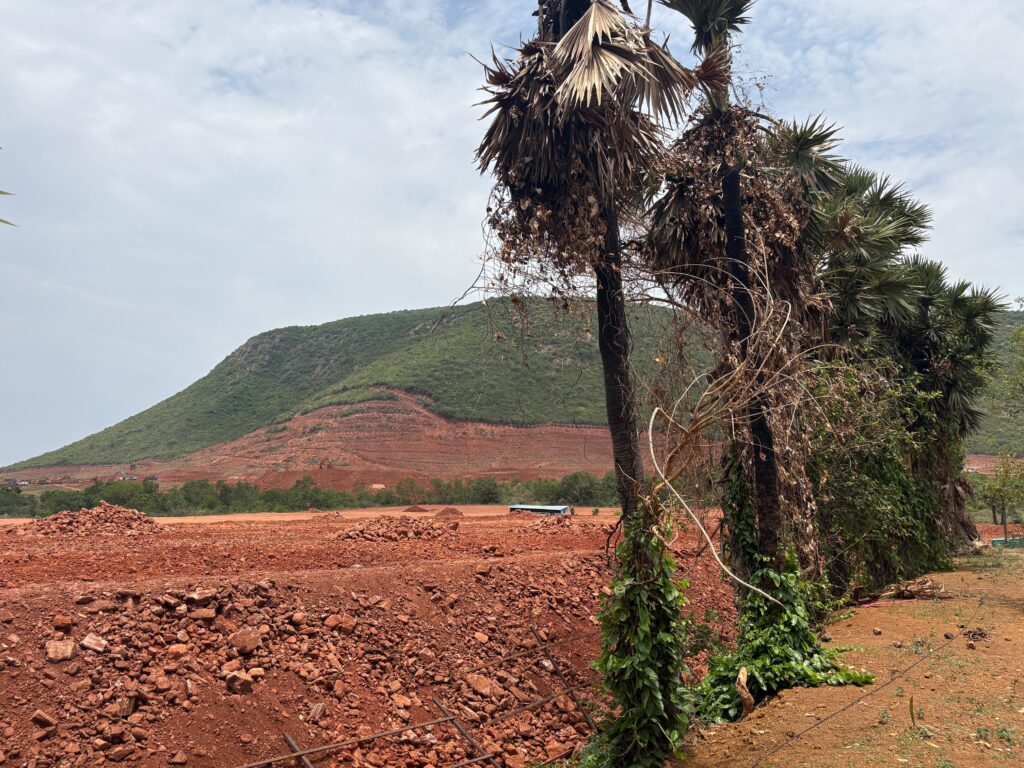
In Tarluvada, a village nestled among the hills of the Eastern Ghats, work on the 1 GW centre has progressed rapidly. Categorised as a (Category B2, 8(a)), project (building and construction) and exempted from both public hearings and a detailed Environmental Impact Assessment report, the project was granted environmental clearance within nine days. Ten days after that, CM Naidu laid the foundation stone.
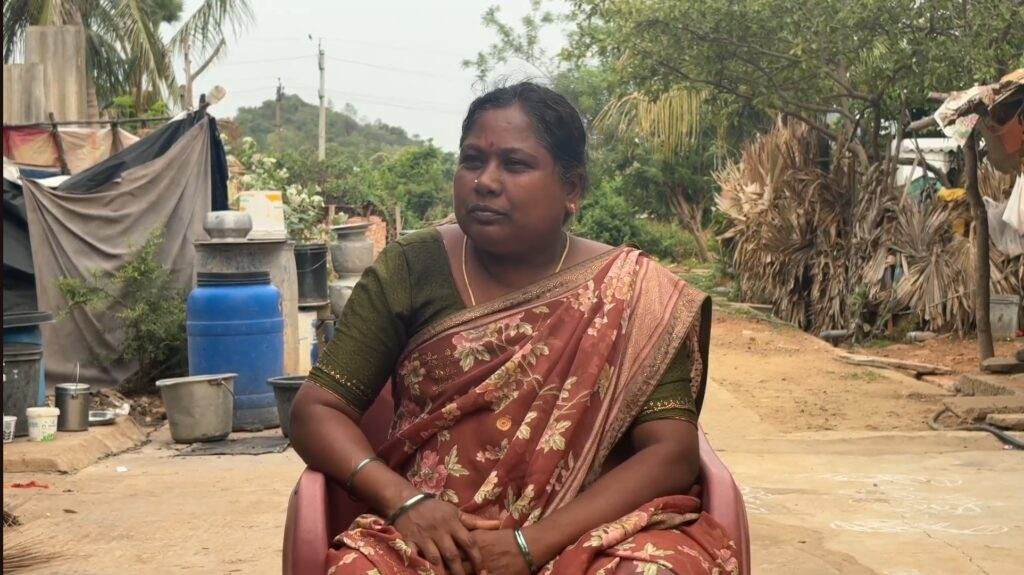
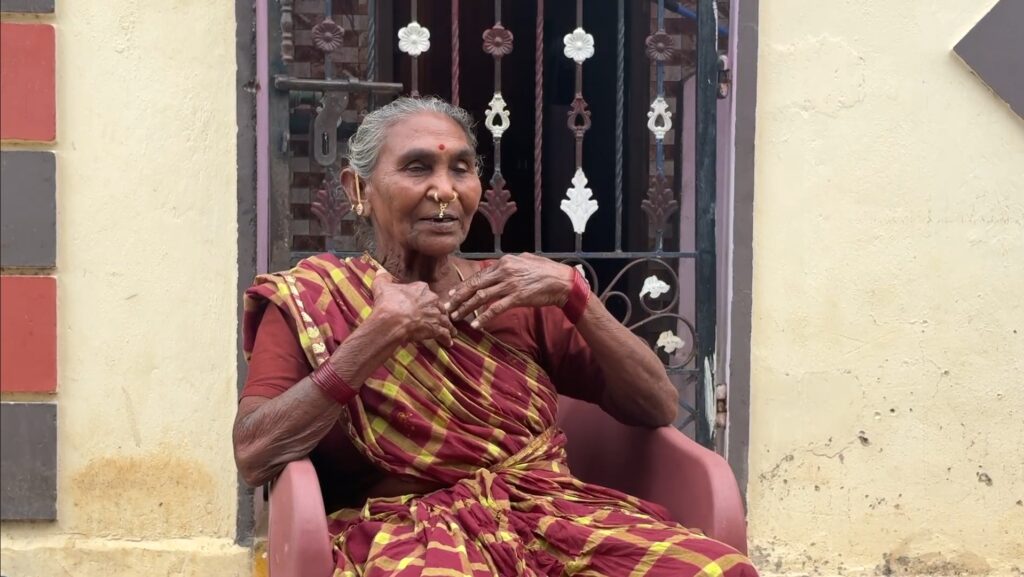
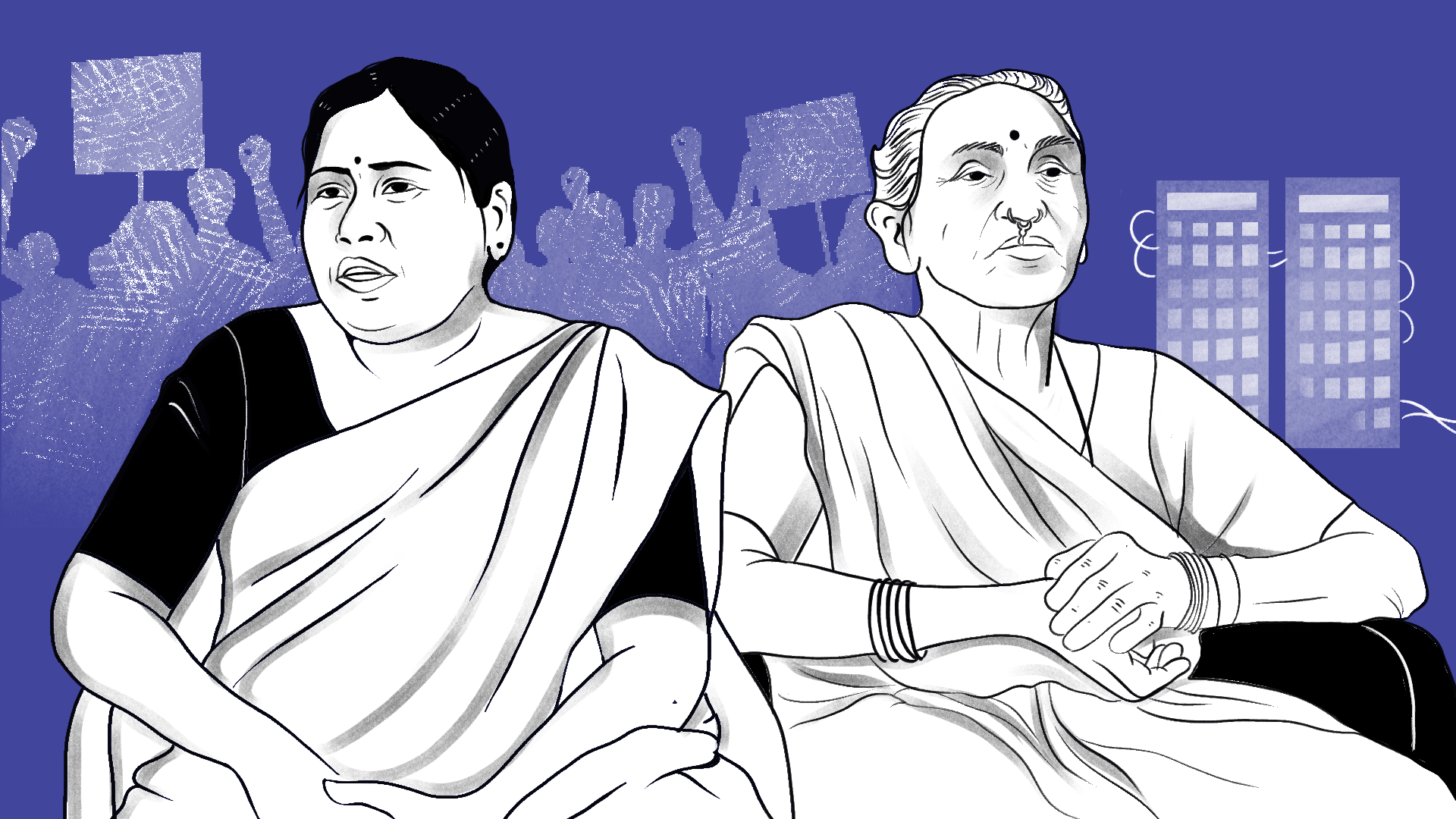
Months on, Dalit families from Tarluvada who resisted against the project and coercive land acquisition continue to live through its aftermath, struggling to comprehend a future shrouded in uncertainty, yet-to-be-fulfilled promises, and fear for their own survival. Despite heavy police repression and intimidation, Pyla Kondamma and Relli Ramakrishna, two Dalit women from Tarluvada, have been vocal opponents of the project since the start. They spoke to us about how the state deceived them, what they have lost, why they continue to fight, and their uncertain future.
Kondamma, whose name means ‘mother of the hill’, was one of the first people in the village to learn about the upcoming data center. Despite her own fears, she along with others raised awareness in the village about the need to demand fair compensation and land. Relli Ramakrishna, too, has lived in the village for decades, from the time she planted her first sapling to the day the data centre sprang up in its place.
Edited excerpts of the interview:
Can you tell us a little about yourself and your life in Tarluvada?
Pyla Kondamma: I was born, brought up, and married here in Tarluvada. I have spent my entire life in this village. I also served as the sarpanch for five years in the early 2000s. My family has resided in this village for nearly 60 years – both my mother-in-law’s family and my own mother’s family are rooted here. Our grandparents and parents would go up that hill you see right there, Chukka Konda (star hill), to cut wood and make charcoal for a living. Later, they started farming on the slopes of the hill, clearing the shrubs and tilling the land. I was a small child back then, but I remember those days vividly. My elders endured all those hardships so that we could have a better life.
Over the years, that land became the centre of our lives. And, until recently, we had two acres of that land planted with cashew and mango trees. Every summer, we would harvest both crops, while growing vegetables and leafy greens as intercrops between the trees. We would go there daily, gather what we’d grown, and eat straight from our own land. Everything, every single thing, we grew ourselves. We earned roughly Rs 80,000 per acre annually from agriculture, after covering all expenses. Apart from cultivating our own land, we also took up wage work whenever we could.
The land and the hill were also where we spent much of our time as a family. In the evenings, after working in our fields, we would trek up into the hills and enjoy the cool, pleasant breeze. We would spend some time there before walking back home. Life felt good. But ever since our land was taken for the data centre and construction began, we have stopped going to our fields altogether. It feels like, along with the land, we have lost those happy memories too.
It is rare for Dalit families to own land in Indian villages. Did your family always own this land?
Relli Ramakrishna: No, we had no inherited land. Before the 1970s, my husband, Relli Appanna, would climb the hill, burn charcoal, and carry it down to sell; that was how we survived. In the 1970s, during Indira Gandhi’s tenure as Prime Minister, the government allotted two acres of land to us and 50 other landless Dalit families [under the Andhra Pradesh government’s Land Reforms Policy that granted conditional land titles, or D-Form pattas, to landless poor families]. This became the foundation of our lives.
When we received the land, it was a dense forest, full of thickets, rocks, and undergrowth. Even walking through it felt dangerous, and we lived in fear of wild animals. All of us, women and men worked together – the men cleared the thickets and tilled the land, while we (women) removed the rocks and cleared the ground to make it fit for farming. It took nearly a decade of this work before the land was ready for cultivation. Later, the government supplied us with cashew and mango saplings and dug a borewell for irrigation. Once we began planting and harvesting, our lives improved somewhat. Agriculture has sustained us ever since.
What do you know about the data centre project coming up on your land? And how did you end up giving away your land?
Pyla Kondamma: Initially we had no idea a Google AI data center could come up on our lands—they [the government] didn’t tell us. But it has been 50 years since we were allocated our lands, and even half a century later, our land survey numbers were incorrect. The land was in one place, and the survey number in another. We kept submitting applications to the government asking them to correct these inconsistencies and give the right numbers to each landholder, but no one paid any attention to our requests.
Then sometime in the middle of 2025, the government approached us and said: “We will survey your land and give you corrected pattas.” We were suspicious of the government’s offer to conduct the survey on its own, especially when our petitions had failed to move them earlier. But since we had been fighting to sort out our land pattas for decades, we agreed to the survey.
Relli Ramakrishna: The government deceived us under the pretext of conducting a land survey. Revenue officials assured us the land would remain ours, that this was simply about correcting the records and issuing proper passbooks. Instead, the District Revenue Officer, the Mandal Revenue Officer, the surveyor, and the Village Revenue Officer worked together to mislead us. They collected information about who owned how much land and measured and recorded all the details, never disclosing any actual figures to us. Everything was calculated and decided behind our backs, and they settled on Rs 80 lakh as compensation for two acres.
Later, they told us that a company was going to come, and that we would be paid compensation. But, we refused to give up. They promised to pay us, but even this did not change our mind. When I told them I would not part with my land, I remember one of the revenue officials said to me: “Why won’t you give it up? You only have the right to live on it while you’re alive. It’s government land, and the government can reclaim it whenever necessary.”
Later, through fellow villagers, we came to know that the company they had referred to was Google, and that the project was a data centre. When they eventually asked us to hand over our land, we resisted at first, but the pressure eventually wore us down. Of the 50 Dalit families, 15 gave in early, some lured by the money, others worn down later by the warnings: “This is government land regardless. Accept it and you’ll be paid; refuse, and they’ll take it anyway since it’s government property, and then you’ll lose both the land and the compensation.” The isolation and fear eventually broke the rest of us too.
Pyla Kondamma: We fought a lot. We told them that if they needed only around 100 acres of the nearly 300-acre stretch of land, they should leave our 200 acres alone and take the vacant 100 acres instead. We said: ‘Our entire livelihood depends on our land, our children depend on this land.’ But they said: “As long as you’re alive and the government doesn’t need it, you may use it for your livelihood. But when the government needs it, you must give it up.” The land that was once granted to us as a blessing by the government to build up our lives was snatched away from us within moments.
Eventually, we decided that if our land was to be taken, we should be given land in exchange for land. This is how our struggle began.
What has your fight looked like since? Have you received compensation yet?
Pyla Kondamma: We have been fighting continuously. We have gone to the District Collector’s office and revenue offices several times, held meetings, pressed our case, and staged dharnas.
Earlier, they had offered only a financial package. Even if we were given around Rs 40 lakh per acre, that amount would not go to just one person. In each family, there are five or six children, and once the compensation is divided among us, how much would each person actually get? At most, around Rs 10 lakh. That might help sustain our children’s education or repay debts for a while, but what happens after that? How can we buy land again with this money? That is why our struggle began: we wanted land to be included in the compensation, so that we would have something to depend on.
Through our struggle, we managed to secure an additional compensation per acre (Rs 7 lakh increase), bringing it to Rs 50 lakh per acre, along with land, in return for what was taken from us. But later, they deducted Rs 10 lakh from the compensation, bringing it back down to Rs 40 lakh. They said that in return for the Rs 10 lakh deduction, we would receive 20 cents of land for every acre taken from us [100 cents make up one acre]. They also promised one contract job per household and a shop in an upcoming shopping complex.
But almost eight months after we gave up our land, none of these promises, apart from the cash payment, has been honoured, and even that cash payment was not made in full. We owned two acres, while our patta [document] recorded one acre and 80 cents. After the survey, however, the official records showed only one acre and 60 cents. Even today, we continue to visit government offices and, at times, even the Member of Legislative Assembly (MLA), to demand the full compensation package.
Relli Ramakrishna: My family had four acres in total, all of which we surrendered. But compensation came through for two of those acres. We keep asking officials when the rest of the money will come, but keep making empty promises, saying: “It will come, don’t worry, there was a discrepancy in the numbers.” Chala kolpoyinamu (we have lost everything).
It seems like many people are using the compensation they have received to build new homes or upgrade old ones in the village. Do people hope to continue living in Tarluvada with the data centre nearby? Are there any challenges you are already facing?
Pyla Kondamma: Some people tell us not to worry. They say the water for the project will come from Polavaram and be released back into the sea and we won’t face any problems. But many others have told us that the area will become unlivable, that water will vanish, the air will change. I feel so worried and anxious hearing this.
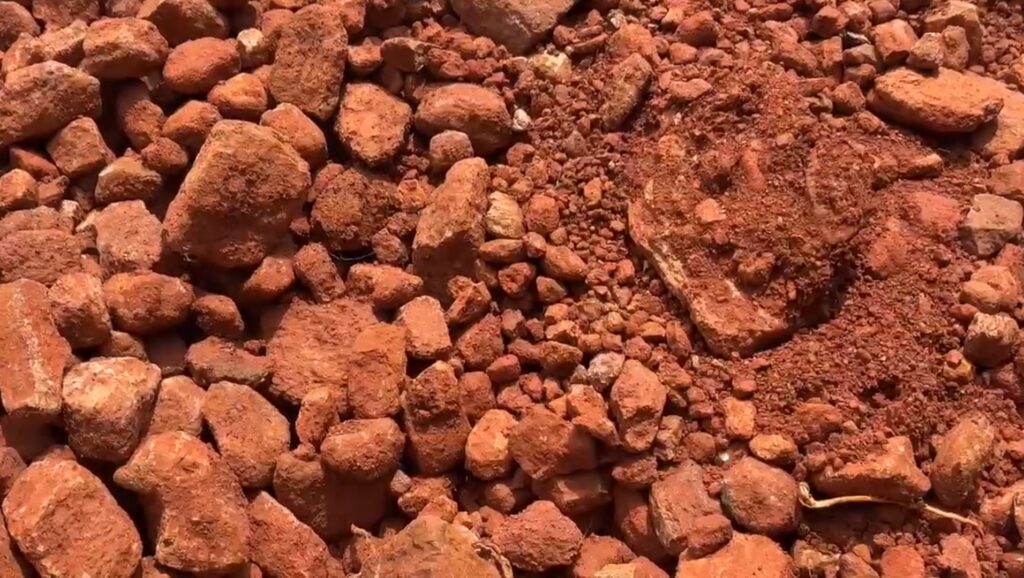
The project has only just begun but already every time the wind blows, it brings a heavy pall of dust because they are completely carving up the hill. We will understand the full impact later. People have told me the noise will be unbearable, and that it will take such a lot of water—thousands and thousands of liters. We have not been properly informed about the project in detail.
Relli Ramakrishna: We don’t know the technicalities of this data center. But we fear whether we’ll survive it at all. For us, well, what’s done is done. But how will our children and their families live? That’s what worries us.
What do you think life will be like in 10 years? How does this make you feel?
Pyla Kondamma: You know, if the government had done something good here on our land, like build hospitals, schools, or colleges, we would have gladly given our land. But what they are bringing in is dangerous not just to us, but to the entire region. It may endanger human lives, animal lives. Everyone is concerned about such companies being allowed to come into our neighbourhood.
Land is our livelihood, and farming is what we know. It is how we have always survived. Without land, we will struggle, and we have seen those days before. But now that our land is gone, all that is left is wage work for around Rs 300 a day. On days when there is no work, we simply stay at home. The company promised us jobs, but how many jobs will really be given? And what jobs? Cleaning?
Outsiders do not understand what we are going through or the struggle we face. We planted every single sapling on that hill. Now, the trees are being cut down right in front of us, and it feels as though we are cutting them down with our own hands. We used to walk in those fields everyday, and now we cannot even put a foot there. How can I tell you about the sorrow I feel?
We continue to talk among ourselves, hold small meetings, and discuss what life might look like once the Google data centre becomes operational here. If things turn out badly, we do not know where we will go or what will happen to us. Having to leave this place and start over somewhere else would mean abandoning our entire existence here. It is too painful to even think about.
We believe everyone deserves equal access to accurate news. Support from our readers enables us to keep our journalism open and free for everyone, all over the world.