[Readmelater]

BehanVox: El Niño In Action

This week in BehanVox: momos and memory, social media age bans in the UK, and more

Subscribe to our weekly newsletter that brings you top stories, gender news from the world, and our team’s reading recommendations.

Hello and welcome to BehanVox!

After 110 days of war that claimed thousands of lives, disrupted global trade routes, rattled energy markets, and deepened economic uncertainty across regions, the US and Iran have reportedly reached an agreement to cease hostilities and reopen the Strait of Hormuz. The deal has been welcomed by many as a step toward regional stability, given the Strait’s critical role in the movement of oil and goods. Yet even as one crisis appears to ease, other disruptions continue to unfold across the world.

Closer home, India is grappling with an intensifying climate challenge. Severe heatwaves have already strained livelihoods and public health, and the emergence of El Niño conditions threatens to weaken the southwest monsoon – the lifeline of Indian agriculture. The consequences will be felt far beyond farms, affecting incomes, food security, labour markets, and migration patterns across the country.

For millions of workers, climate stress is already reshaping patterns of migration. Drought, extreme heat, agrarian distress, and shifting labour markets are pushing people to move in search of survival and opportunity. Yet, migration does not leave vulnerability behind. Instead, as Dr Malini Ranganathan argues, climate vulnerability often travels with workers across villages, cities, and generations — a phenomenon she describes as ‘circular climate vulnerability’.

At BehanBox, we are delighted to host Dr Ranganathan, geographer and Associate Professor at American University, for a conversation on her groundbreaking research. Drawing on archival records and rich ethnographic accounts, she traces how historical and contemporary forms of climate vulnerability shape labour markets, migration, and political voice. This timely conversation takes place on Thursday, 25 June between 6:30–8:00 PM IST on Zoom. Do sign up here.

This week, we have a lovely book excerpt on food and memory in Kalimpong and a powerful interview with Sundaravva Patil, an ASHA worker from Gadag in Karnataka.

Story So Far

zubaan food and memory

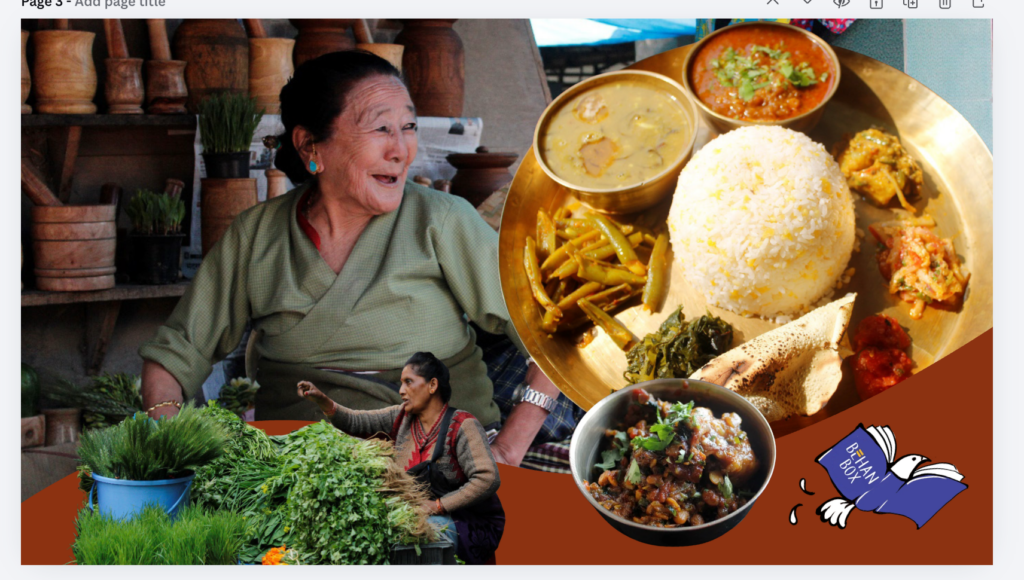
Can food become a way of seeing, understanding cultures in a world where it is easy to misrepresent and ‘other’ communities? 

In an evocative essay, Anshu Chhetri, a teacher, reader and food enthusiast, uses the culinary landscape of Kalimpong to explore histories of migration, labour, memory and belonging. Through dishes like momo, gundruk and phambi, she traces the lives of women whose culinary knowledge shapes both home and public life.

‘Momo enjoys celebrity status in Kalimpong, and the ladies are aware of it’, she writes. ‘The reason why momo is a perfect representation of the people of the hills, and more precisely of Kalimpong, is because it has now become like an identity marker for the hill community. And in the gaze of an outsider, momo and Nepali have almost become synonymous.’

Read the essay here.

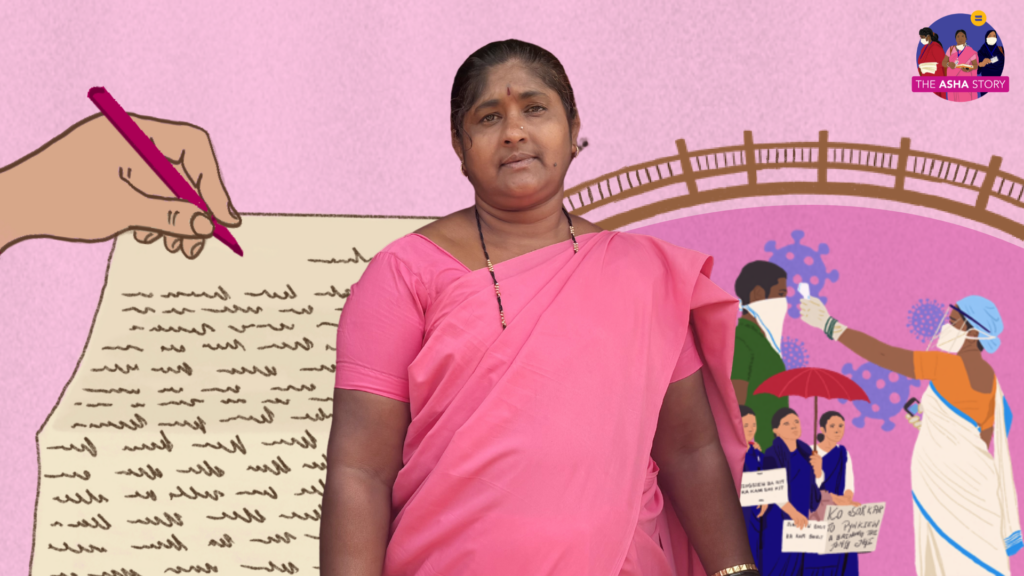
Sundaravva Patil knows every house, every person in that house and their stories in her village of Machenahalli in Karnataka’s Gadag district. She isn’t a local politician, but an ASHA worker.

“I have cared for them as I have cared for my family,” Sundaravva says. Her commitment to her work and community is evident when, In 2013, while conducting house visits in a hilly area, she suffered a severe fall that injured and displaced her left knee which needed a surgery. But Sundaravva was back at work the next day. She has gone beyond the call of her duty, sometimes spending her own money and pawning her assets to pay for the medical needs of her community.

So it hurts her that she is considered an employee with no value. As her daughter Jayashree says, “We are very proud of her. I have seen her give everything and more to this village … but I have also seen her be empty-handed more often than not. As a daughter, how do you think it feels?”

Story after story, this is a common refrain of ASHA workers and also their central political agenda. At Behanbox, we are painstakingly recording these narratives as a tribute, a record of their oral histories but more importantly as solidarity for their efforts and evidence of why things must change for a frontline healthcare workforce that is literally carrying the healthcare systems on its backs. As Sundaravva Patil says ‘It is exhausting, but there is no other choice. If we don’t constantly raise our voice, nothing will change for us.’

Read the interview by Aisiri Amin here

Talking Point

Period Tax in Pakistan: The Pakistan  government has announced plans to abolish the “period tax” on menstrual hygiene products as part of its 2026–27 budget. The move follows sustained campaigning by young activists and legal advocates like 25-year-old Mahnoor Omer and 29-year-old Ahsan Jehangir Khan, who brought a court case last year in a bid to get sanitary products zero-rated, so that they would not be subject to taxes of any kind. Pakistan currently imposes an 18% sales tax on locally produced sanitary products and an additional 25% customs duty on imported products. 

Australia Plus in the UK: The UK government plans to ban under-16s from accessing major social media platforms such as Instagram, TikTok, Snapchat, Facebook, YouTube, and X. The proposal, modelled partly on Australia’s approach, is expected to be implemented in 2027 and would be accompanied by stricter controls on features such as livestreaming and communication with strangers. Prime Minister Keir Starmer has framed the move as a way to “give children their childhood back”. The UK is part of a broader international trend with Australia, France, Denmark, Greece, and others are considering or implementing age-based restrictions on social media amid growing concerns about children’s online safety and wellbeing.

Church’s Reckoning: The Church of England has apologized for its role in the forced adoption practices that affected tens of thousands of unmarried pregnant women and girls in England and Wales. Many were sent to church-run mother-and-baby homes, where they faced stigma and pressure to give up their babies for adoption. In its apology, the church acknowledged the pain, shame, and lasting trauma experienced by those affected, admitting that the treatment they received was wrong and expressed deep remorse for the suffering caused by Christian institutions. The apology follows years of advocacy by survivors seeking recognition and accountability for these practices.

Queer rights in Africa: Ghana’s LGBTQ+ community is experiencing heightened fear after parliament approved a bill that criminalises identifying as LGBTQ+ and promoting activities, with penalties of three to 10 years in prison. The legislation is expected to be signed into law by President John Dramani Mahama, prompting concerns from rights groups that LGBTQ+ people could face increased discrimination, loss of housing, employment, and healthcare access. In response, many individuals are removing online content and concealing their identities to avoid being targeted. In Botswana, couple Bonolo Selelo and Tsholofelo Kumile are going to court for the right to wed but face fierce opposition from church groups.

BehanVox Recommends

The fate of Mlaheeyeh : In Jdeidet Marjayoun, a South Lebanese town, Mlaheeyeh was once a ubiquitous dish. Search for it today and you will find precious little. This is what war does to people and memories–the kind of loss that usually enters the record too late, if it enters at all, the food that disappears when the conditions that made it possible are destroyed. But as resistance, the emigre Marjayounis to Oklahoma City in the US have preserved the dish far away from home. In continuation with our unintended theme this month on food and memory, read this essay by Nada Bakri on how a Lebanese dish survived for a century in Oklahoma.

History of Film Censorship: How can boring government gazettes, where the minutiae of its proceedings are recorded in the most sterile manner, be a source of joy? Data and archive geek Aman Bhargava neatly persuades us with the opening to his new project on the history of film censorship with Henry David Thoreau’s line: ‘So, in the largest sense, we find only the world we look for.’ Read this if you are a data geek or a film buff, but you will find utmost pleasure if you are the sort of person who is able to find joy in the mundane.

Dear Roxanne: ‘Tis the season of football. There will be predictable heroes and some unpredictable ones. Yan Diomande always was one, for his sister Roxanne. ‘Ronaldo is good but my brother is better’, she’d say. This letter from Yan to Roxanne is a love letter to his sister, to sport, to his idols and to love.  ‘We’re leaving for the World Cup tomorrow. For real. Your brother is going to play for Côte d’Ivoire, like Drogba, like Yaya, like Gervinho.’ Get some tissues in hand and read this beautiful piece this weekend. 

Want to explore more newsletters? In Postcards, we send you missives on the places, people and ideas that brought Team BehanBox joy. Our monthly offering Postscript invites you, the reader, into our newsroom to understand how the stories you read came to be – from ideation to execution. Subscribe for more.

Support BehanBox

We believe everyone deserves equal access to accurate news. Support from our readers enables us to keep our journalism open and free for everyone, all over the world.

Donate Now