[Readmelater]

BehanVox: Tanashahi Nahi Chalegi

This week in BehanVox: return of the farmers, loneliness of a caregiver, and more

Subscribe to our weekly newsletter that brings you top stories, news from the world, and our team’s reading recommendations.

It has been a tumultuous week, marked by protest movements across the country with citizens demanding accountability from the Centre and states.

When it began, the Cockroach Janta Party agitation in Delhi was about one minister, his accountability to the education system, his failure to curb widespread leaks of national exam papers and the frustrated aspirations of the educated young, mostly middle-class Indians. But it took just a day for the story to change. When July 20th ended, with obvious evidence of police excesses against the protestors, it was clear that this was about much, much more. Packing the Jantar Mantar were young Indians from across India across class, caste and religion.

There were those who poured into the city from far and wide because they had finally found reason to fight for change along with thousand other kindred souls – the overworked, underpaid migrant workers, the underemployed city youngsters, the students staring at a bleak future. The call was no longer for an education minister to go, it was to hold an entire government to account for its multiple failures.

In an essay for The Wire, Arundhati Roy writes about what the agitation that began as a meme has done for India and Indians – it has allowed the young to “reclaim what their parents and grandparents’ generations had conceded: our dignity as a people and as a country. Our rights as citizens of a democracy. The protesters exorcised the corrosive fear that has become second nature to us all with their sheer courage and grace.” The protests have now found a life of their own elsewhere in the country (here and here).

You could disagree with what CJP did or did not do, there could be worries about where the agitation is now headed without any political wings but what it did was to mobilise the country and its political parties out of a long stupor. By the next day, the Congress party workers were parked outside the PM’s residence in protest. And in a rare display of unity, opposition parties are unanimous that they will not relent till they get some answers from the government on its protest crackdown and exam disasters.

What is clear is the headline is not NEET or Delhi, the protagonist is not Abhijit Dipke or Sonam Wangchuk. The main character is not any one leader, a single organisation, or a singular issue. What we’re seeing is deep, unflinching anger against the regime, its divisive politics and policy failures – and failure of the government to fulfil the aspirations of people. A woman from Delhi who accompanied her 15-year-old daughter did not mince her words when she said “Modi ko chappal padhni chahiye”’ – the CBSE exam leaks were a symptom of the larger malaise of corruption and transparency within social systems. Another woman from Mumbai told us: “Logo ke dilo mein bahut akhrosh bhara hua hain. Ab 12 saal hogaye, bahut sahen kar liya. Agar future kharab karvana hi hain toh kyun na ladke kare?” 

This anguish is the sum of many things: lack of transparency in democratic institutions, rotting infrastructures like NEP and healthcare, loss of academic freedom. And more resolutely, a rejection of Modi and the ruling BJP’s hate-fuelled politics.

As we said, this is not the only protest underway this week even if it is the most visible, high-profile one. There is a farmer protest against a trade deal, a sustained movement against the Ken-Betwa link and  vociferous ones in multiple cities against data centres – we bring you news snippets on these below.

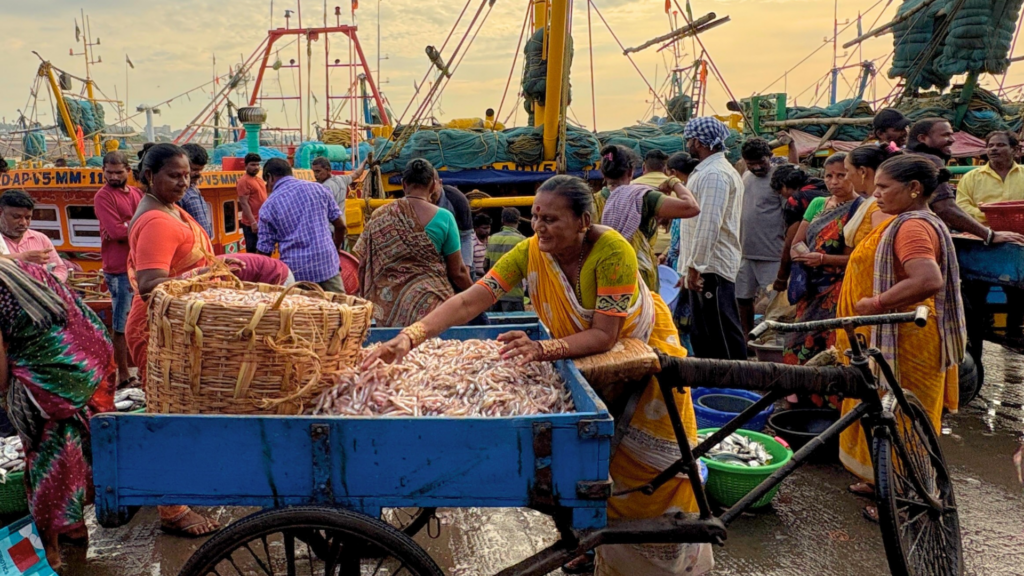
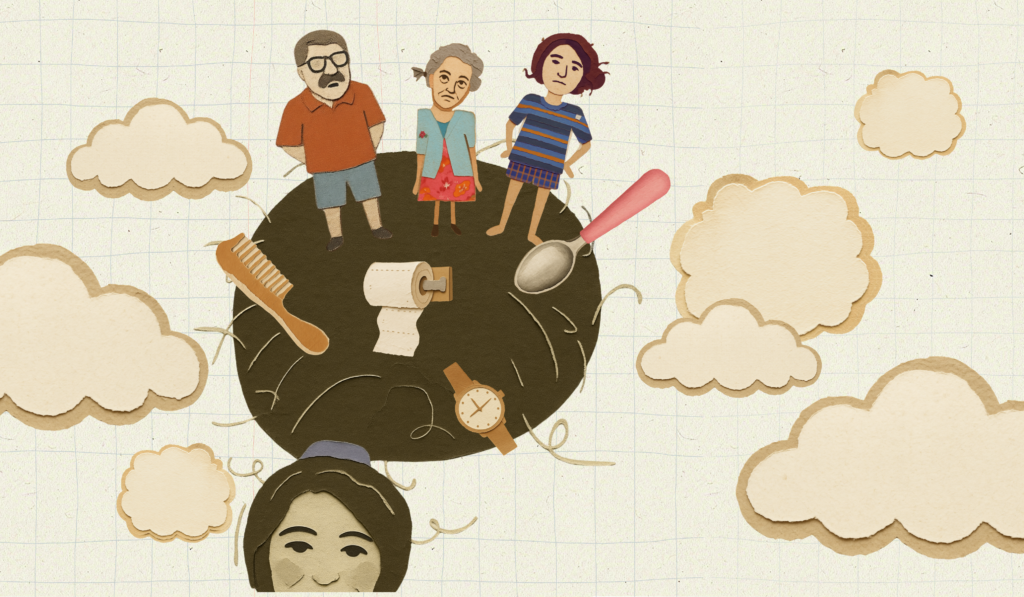
This week, we published an investigation into the gender bias that leaves women fishers, who make for 86% of sellers, out of government schemes. And a glimpse of our illustrated story on the loneliness of a caregiver’s life.

Story So Far

Every year as the monsoon sets in, a fishing ban comes into effect on both coasts of India to conserve fish stocks and allow marine resources to regenerate. It is also a time that leaves smaller fishers struggling to earn and pay debts. The state with assistance from the centre provides Rs 20,000 to help fishers tide over the slack months. But, there is a catch – the money only goes to fishermen who venture out to sea.

The women fishers, who hold up the industry in many ways all through the year, drying the fish and selling it both fresh and conserved in large markets, small stalls and on the streets, get no help from the state. This is despite the fact that women constitute 69% of the fishing workforce and 86% of those engaged in selling it.  

Marupilli Parvathamma, 70, president of the women collective, questions this gendered definition of a fisher. “The government has nothing for us during this period even though we keep the fish economy running. There is no recognition of our work or our identity,” she says.

Bhaskar Basava traces the work days of two women fishers—Dooda Dhana Lakshmi at the Vishakhapatnam fishing harbour and Dooda Devi, a fish vendor in the city’s local markets – and finds that they work in the midst of heat and stench, with no sanitation facility or infrastructure.

But what the women have is solidarity. A collective of women fishers now helps its members bargain at the boats, transport fish and ensure that they sell at a good price.

Read our story here.

What is it like for a woman in her prime, with an exciting career ahead and a vibrant social life, to become a full time carer for a parent with a progressive neurological condition? To fumble for an answer when asked: ‘What do you do?’ Is ‘bathe my mother, dress her, take her to the toilet, give her medicines, ensure exercise’ daily an answer? And how about ‘How was your day?’ when all you can say is: “I feel like I haven’t done anything all day.”?

Rachita Master, a design and behaviour change expert, puts together a movingly illustrated account of her life as a “full time care partner” to her mother who has Parkinson’s Disease. The care burden sits disproportionately on women and Rachita is among the many women who are struggling to find time and space for themselves in the oppressive routine of caregiving. She talks about seeking help, joining a support group, recalibrating her life and creating a patchwork of care that now supports her mother. And about caring for herself even as she tends to her mother’s needs, big and small.

This is the first in our series on women and care work, a largely ignored, underrepresented aspect of human labour that holds us all up from birth to death. If you have a caregiving story of your own, do write to us.

Read our story here.

Talking Point

Farmers Protest: Several farmers’ unions and groups protested this week against India’s proposed Free Trade Agreements (FTA), including a possible deal with the United States. Worried that the deal could hurt farmers and small businesses, they rallied at Kisan Ghat in Delhi under the banner of Desh Bachao Morcha. Many of the farmers who came into Delhi from Punjab and other states were stopped at different border points. 

Displaced And Disadvantaged: The controversial project to link Ken and Betwa rivers in Bundelkhand has entered a decisive phase, reports the Indian Express, and that means evacuation of 2,000 families across 10 villages. Those affected by the displacement and sparse compensation being offered are now protesting. Also protesting are those living in the shadow of Daudhan Dam who have to prove through countless records and documents that they actually are residents of the very land they are being asked to leave to make way for the project.

Pushback Against Data Centres: Environmental groups led a rally this week against data centres coming up in and around Visakhapatnam, demanding that the state pay attention to the impact of these projects on local residents, especially Dalit farmers. The protesters also sought public consultation, fair compensation for those affected and an Environmental Impact Assessment and a Social Impact Assessment of the projects before they kick off. In Thane too, there were protests against a proposed data centre being set up by Amazon in the district. These protests were centred on threats to the environment, noise pollution and consumption of large quantities of water and electricity. 

BehanVox Recommends

Fascists Fear Ideas: As India’s citizens rise up against an authoritarian regime, it is now more instructive than ever to read this lecture by British-Caribbean cultural theorist and member of the British New Left on scholar activism, and forging global solidarities that speak to the current moment of resurgent fascism.

The Looting of Science Fiction: How do you take radical imagination of science fiction like Asimov’s Foundation or Star Trek and rid it of the central politics of collective power, distributed knowledge and radical humanity and turn them into “reactionary futurism”, using futuristic aesthetics to sell a return to 19th-century frontier capitalism — deregulated, anti-democratic, hierarchical — dressed up in drones and algorithms instead of horses and railroads? Look no further than Silicon valley tech bros like Messrs. Musk, Zuck, Thiel and co. The very moral arguments of the universes in the sci-fi classics have been borrowed in name but hollowed out of morals, argues this excellent essay by Ali Rıza Taşkale.

India Sitting: ‘Sitting Dena’ — a term from small town India encompasses a post- liberalisation political economy of education, which explains the mass movement India is confronting today. Ethnographers Nilanjana Sen and Avishek Jha, through their fieldwork in Shimla and Meerut show how today’s youth are “sitting” — spending years in libraries preparing for government exams and argue that sitting is a neoliberal, self-disciplining practice of proving worthiness to families through hours of study, even as jobs remain scarce.

Want to explore more newsletters? In Postcards, we send you missives on the places, people and ideas that brought Team BehanBox joy. Our monthly offering Postscript invites you, the reader, into our newsroom to understand how the stories you read came to be – from ideation to execution. Subscribe for more.

Support BehanBox

We believe everyone deserves equal access to accurate news. Support from our readers enables us to keep our journalism open and free for everyone, all over the world.

Donate Now