
Momos And Phambi: Seeing Street Food As A Site Of Women’s Resistance
An excerpt from Anshu Chhetri's essay on how food can help us understand cultures and communities
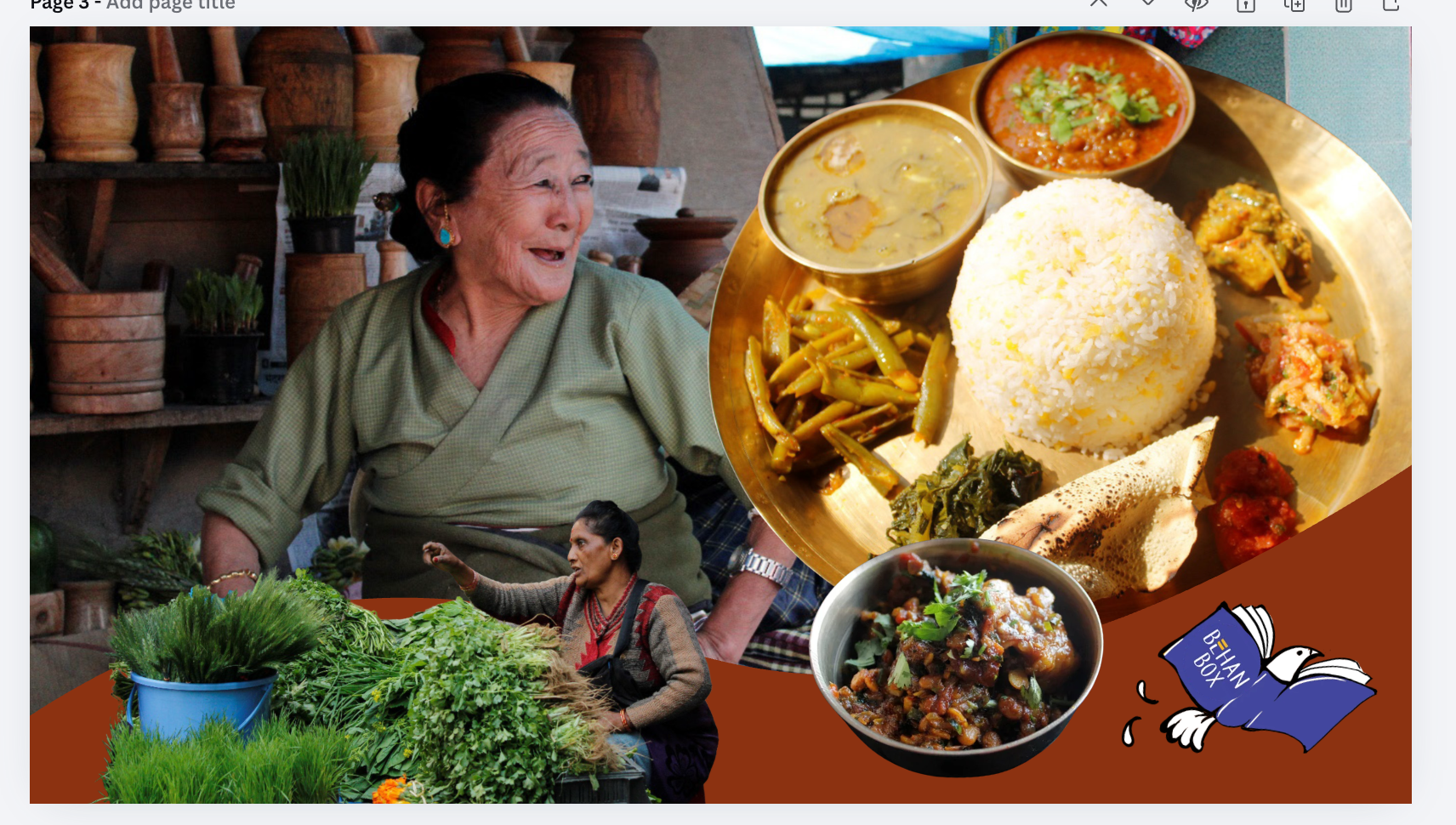
Momo with spicy piro sauce is the perfect appetiser, and on the streets of Kalimpong, the representation of the struggles of its working class women. An excerpt from an essay on how food can help us understand cultures, excerpted from a north-east focussed writing project titled ‘Food, Memory and Identity: Oral Histories and Culinary Practices’, conducted by Zubaan.
Appetisers
In his book, Ways of Seeing, John Berger writes that there are several ways of seeing the world. One often sees it from one’s own perspective. It is easy to lose the cultural meaning ascribed to objects when they are viewed by people who lack the knowledge to truly understand the culture they are engaging with. Several times, the misrepresentation of “other” communities in all forms of narrative, be they oral, visual, or written, is heard loud and clear. A book that became controversial for its misrepresentation of the Nepali-speaking Indian community was Kiran Desai’s The Inheritance of Loss (2006). Another example is Pataal Lok, a TV show that wreaked havoc with its use of certain racial slurs. More generally, comments are often passed almost daily wherein communities and cultures of the “other” are labelled and stereotyped due to a lack of sound understanding.
So the question is, how can one try to gain a better knowledge of a certain place and the cultures that it belongs to?
It is perhaps possible to find several mediums that could work to bridge this gap between perception and understanding. Could food be one such medium, one that could fulfil the role of transmitting knowledge of a place and its people?
When one thinks of food, one also thinks about eating. And eating is considered a way of knowing what the food has to offer, going beyond the satisfaction of the palate. A food’s offering could be its culinary history, which provides a sound understanding of the evolution of a certain kind of food and the eating habits of a specific culture and community. Thus, can food be used to understand a culture or a community better?
MOMO
When loitering on the streets of Kalimpong, it is a common sight to witness ladies huddled in some corner beside a gas stove where the moktu gives off steam and wafts of intense flavour. These ladies could be married, unmarried, straight, queer, Hindu, Christian, Nepali, Tibetan, dark, fair, literate, illiterate, upper caste, or lower caste, and they could hold many other differences amongst themselves. But what binds them together is their love for a typical dish, which has now gained much popularity in India.
Momo enjoys celebrity status in Kalimpong, and the ladies are aware of it. The streets of this little town are not bustling and are not busy, but they also don’t remain empty. The pedestrians are quite slow walkers, and sometimes get so lost in their camaraderie that they forget that the narrow footpaths aren’t the corridors of their houses where they can walk as leisurely as they want to.
The reason why momo is a perfect representation of the people of the hills, and more precisely of Kalimpong, is because it has now become like an identity marker for the hill community. And in the gaze of an outsider, momo and Nepali have almost become synonymous. They are so interconnected that when food, or rather Nepali food, is mentioned, momo often tops the list.
On unearthing the culinary history of this particular dish, one can find its origin in Tibet, one of the trading partners of Kalimpong in the past. It is possible that travelling Tibetan merchants could have introduced the dish to the town, and when people acquired its taste, they began to accept it as their own. However, there is no straight explanation for the cultural assimilation of momo by the people and the town.
Its preparation often demands a lengthy process. The skill of the hand is what matters the most. One has to be an expert at folding the tiny covering so meticulously that it looks like a pleated skirt. Is there an easy answer as to whether a man or a woman could perform the art of making momo well? This is because both are seen making it, and they often stand at par with each other. The kitchen is usually considered to be a woman’s space, but could it be a man’s too?
Gender differences seem to dilute when making momo as men often willingly participate in the entire process alongside the women of their household. From chopping onions to grinding meat for kheema, a momo filling, most men do not consider the preparation to be only the responsibility of women. Thus, men’s visibility in the kitchen equals that of women, and sometimes surpasses it.
It surprises me sometimes to witness women handling the task of cooking and cleaning every day like it is a responsibility assigned to them by birth. Do they perform daily household chores out of liability, domestic responsibility, or out of genuine interest and care? And I look at society with equal astonishment when it lauds and glorifies men when they enter the kitchen. I do not stop myself from asking who is to be praised. Isn’t the relationship that a woman shares with the kitchen deeper? It is because often in a traditional society, a woman is intrinsically connected with the kitchen. And is it fair to say that she holds more understanding of the chores like cooking and cleaning? If so, then why are men looked at with reverence and awe when they cook rarely, or even leisurely or even if they cook every day, their expertise receives more appraisal?
In her book Who Cooked Adam Smith’s Dinner? Katrin Marcal coins a new term, ‘second economy’ (Marcal, 2016), which she correlates with the ‘second sex’ (de Beauvoir, 1949). Here she talks about the other kinds of work that, according to her, a man doesn’t do. And this work that a woman does is taken for granted and remains invisible. The “invisible” work that Marcal discusses in her book is all about domestic chores, which include cooking and cleaning. Further, she writes, ‘This definition meant that everything that women were expected to dedicate themselves to went unseen’.
In the context of momo, I have noticed women championing culinary capital more than men. This is because the dish also serves as a business strategy for struggling working-class people from the hills. Undoubtedly, it helps create job opportunities for them as the love for momo transcends cultural and caste boundaries when served with piro (spicy) achaar, and dipping sauce. The makeshift stalls of the ladies in town rarely invite caste and racial prejudices as the visitors’ concern is mainly about the taste of the food compared to who made it. The diasporic women in Kalimpong remain divided politically and culturally. And within some of these communities, a caste hierarchy is deeply rooted. However, momo has almost acquired the status of a regional dish, thus binding people together when served on a plate.
Momo khanu jum! [Let’s go eat momo!] is a phrase shared by the people of Kalimpong, as there is nothing better than these succulent dumplings, and their taste heightens when dipped in piro achaar. It is like the soul food of the hill people and also a community dish that brings people together under one roof. As much as the American southern fried chicken is loved all over the world, momo is gaining prominence. If not, would there be tandoori momo or bun momo?
However, the cultural appropriation of momo is so rampant that people who do not understand the culinary cultures of the hill community well have created several of their own versions of momo, which are often very different from the original. When a mandatory ‘s’ is added to the name, momo(s), it makes it as obscure as when pizza suddenly becomes ‘pizzas’, the dish forcibly pluralised. The achaar that is served with momo becomes chutney in the outsider’s gaze. On one hand, it is not wrong to introduce new interpretations of food, but is it also right to deprive the dish of its very essence?
In Kalimpong, or the Darjeeling Hills as a whole, momo is more than just a food item; it carries the emotions of its people who take pride in this delicacy being something of their own. And even though the dish has travelled from Tibet through Nepal to the Darjeeling Hills, momo has not gone through any such radical changes, at least in Kalimpong or in the Darjeeling Hills.
SADEKO GUNDRUK
Another staple that is shared by almost all the communities living in Kalimpong is gundruk. It is undoubtedly a grandmother’s recipe, at least in my household. It successfully reflects the history of the town’s Nepali diaspora. However, it became difficult for me to find the etymological meaning of the word gundruk because there wasn’t much information surrounding the name. Everybody only talked about its taste and how versatile it was as a dish. The culinary roots of gundruk can be traced back to Nepal, where it is as valued and revered as kimchi in Korea or sauerkraut in Germany. The similarities between the three different dishes lie in their shared fermentation journey, which is much required for their rich umami flavour.
Sadeko gundruk, marinated gundruk, is a family favourite in my house. Only my grandmother made it well, as she mixed her recipe with interesting anecdotes about the food history of the Nepali community. She once said, “Hami kheti-pati garne manche haru hau. Keti manche bhaera saag ropnu pani siknu parcha anta pakaunu pani. Bujis?” [Our livelihood depends on agriculture. As a woman, one should learn to plant the greens and cook them too. Do you understand?]
Her statement left me pondering, as I couldn’t agree with what she said about the importance of learning how to cook as a woman. We were both female, but we shared dissimilar views. When I asked her if she liked cooking, she gave me firm repeated nods. That was also the time when my radical feminism suffered a huge blow, as my graceful grandmother never complained about cooking for her family. Instead, cooking made her feel empowered, unlike me, who refused to cook or step inside the kitchen because for me, it was not only a woman’s job to handle the household.
She wanted to teach me to make sadeko gundruk. I agreed, breaking my obstinacy for the very first time.
Her story started from the beginning of her teenage years when, according to her, Kalimpong was not the same as it is today. She often complained about the rapid modernisation of the town and believed that its old-world charm was slowly fading away. She had vague memories of her grandfather’s history of migration, who she knew had come from Nepal for a better life and better opportunities. As a high-caste Hindu, he inherited a few acres of land and started his agricultural livelihood.
The process of making gundruk happened in the winter season, when there were enough greens from the fields. Along with her sisters and mothers, she would collect leafy vegetables such as raayo ko aaag, broad-leafed mustard greens, and mulako saag, radish leaves. The leaves were then allowed to wilt for one or two days and were later shredded with a knife or sickle. The wilted and shredded leaves were stuffed inside an earthenware pot, and left on their own for about five to seven days.
The fermentation process would end soon after as the gundruk acquired a strong acidic taste. And sadeko gundruk is one of the many dishes that was prepared with raw acidic gundruk. My grandmother was always clear about the differences between gundruk ko achar and sadeko gundruk. The former was made out of the rehydrated leaves of dried gundruk, and the latter was prepared straight out of the just fermented non-dried gundruk.
However, this could be considered a trademark dish of my grandmother, who taught me that sadeko gundruk was best made with mustard oil with a pungent smell, which we called khane tel, finely chopped onions, green chillies, salt, and coriander leaves. When all of this was mixed together, the sadeko gundruk was ready.
Dried gundruk is also eaten as gundruk ko jhol (gundruk stew), and gundruk ko achar (marinated dried gundruk). But in whatever form it is made, gundruk is an essential comfort food for the diasporic Nepali community.
I successfully learned to make the dish and embraced this generations-old culinary culture as a new part of my cosmopolitan lifestyle. However, I could not fully accept my grandmother’s mandatory requirement for a woman to learn cooking. Why was it that, for my grandmother, cooking was a prerequisite to qualify as a woman? This was hard for me to comprehend.
After all, isn’t cooking similar to any kind of chore in the daily life of a person? My grandmother and I shared the same world but not the same worldviews. She insisted till the last that it was important for me to learn cooking, not as an individual, but as a woman. When I tried to ask for a reason, she told me that she was told the same by her mother or the women in her family. I wanted to ask why cooking was always so intrinsically linked to a woman’s identity. For my grandmother, her cooking skills were the expression of her identity as a woman. It was not the same for me. Though I learned to make sadeko gundruk, I saw daily ritualistic cooking as a mark of disempowerment and enslavement. However, whether cooking could be looked upon as a mark of love or a symbol of slavery is a highly contested question. My grandmother certainly held on to the traditional beliefs that considered men to be the providers for the family. Hence, she insisted that I learn to cook so that I fit in well with the traditional role that is assigned to a woman, as she is expected to be the nurturer in the familial household. When viewing these gender roles through the lens of the modern world, it rather depends upon the choice of an individual. Some women enjoy cooking and looking after their family, whereas there are also women who choose not to learn cooking and refuse to be a programmed homemaker just because it has been that way in the past, a grandmother’s lore passed down from one generation to the next that a woman needs to learn how to cook.
PHAMBI
Haat Bazaar, the local village market in Kalimpong, is almost like a heritage site that offers its visitors a one-of-a-kind experience of regional flavours that come from the deepest and most far-flung villages in and around the town. It is also a hub of delectable local dishes that one can try. Most of the time, people come here to try a quintessential and popular street food called phambi. According to the locals, it is the only dish that is found in Kalimpong and nowhere else, not even in Darjeeling.
On my visits to Haat Bazaar, I noticed that the ladies had a wise understanding of food economics and championed the culinary diversity of the town through their food stalls. Amidst the diasporic histories that each one of them carried, I could notice them faithfully representing their culture in the diaspora. If not food, they sold items needed in the kitchen or heirloom seeds and spices that represented their village and the kind of community they came from.
When I first talked to Tshering Kipa, I was instantly impressed by her vivacious nature and her Tibetan attire. She completed her look with lacha dori, which is a hair accessory that is also popular amongst Nepali women, mostly worn during weddings and festivals. In my observation, it felt as if she had mixed the two cultures, which made her stand out in comparison to all the ladies who were close by.
She was as curious as I was to know more. So, I sat beside her and we began to talk. Her shop sold traditional hand-carved mortars and pestles, and marcha, which she said was an important ingredient that helped in brewing traditional alcohol. Soon, she revealed that she was born in the year 1947 and was the thirteenth child. Her mother died when she was very young. Her father, Chwang Udup, loved her very much, and he took her along with him as he carried out his daily business and also taught her entrepreneurial skills. He used to run a cosmetics shop before, and they would go together to watch night shows where magic tricks were performed. She told me that she also remembered watching Harish Chandra Raja on the big screen.
Tshering Kipa was one of the many ladies in Haat Bazaar who were the unsung heroines of their communities. She was passionate about her work and refused to sit at home just to handle the house or the kitchen.
‘It is impossible for me to sit still. When my father was alive, we would go on rotations in places like Lava, Pedong, Teesta, and Melli. I am old now. I can’t do that anymore. But I still spread my shop in Teesta,’ she said, smiling.
As I passed on to the shop next to her, I went inside a narrow alley where a young woman was busy selling phambi from her huge dekchi, a silver cauldron that sat on top of the stove in her small makeshift kitchen. She served the yellow jelly-like cubes on a leaf plate mixed with achaar, a dipping sauce made out of red chillies. The combination of phambi with achar provides a unique taste to this popular Kalimpong street snack, which is made out of the starch water of soaked mung beans. The dish is mainly influenced by the Chinese cold noodles Liang Fen, which are spicy in flavour and slippery in texture and are usually eaten with soy sauce. When it reached Tibet, it became laphing, which is also sold in Delhi as a popular Tibetan street food. Phambi is somewhat similar to laphing in one aspect, as both dishes were supposedly introduced to the town by Tibetans.
The lady who ran the phambi shop was confident that it was the Tibetans who should be credited for its origins. She narrated a story from her schooldays, when phambi hadn’t yet become the popular Kalimpong street snack it is today. According to her, there were very few shops that sold phambi back then, and it was mostly the Tibetans who owned them.
In many parts of the world, lentils or bean paste are often used to make fritters or pakoras. But phambi’s speciality lies in the fact that it is made out of the accumulated lump in the starch water of moong dal, which is then made into a thin paste and cooked until the consistency is thick. The cooked product is then stored in a refrigerator, and is later cut into cubes.
Over time, phambi’s popularity has grown so much that it hasn’t remained an exclusively Tibetan dish in Kalimpong. Therefore, the ladies who sell it in Haat Bazaar do not necessarily belong to the Tibetan community, but have successfully imbibed its food culture and have made it their own. Phambi has become a quintessential street snack of Kalimpong.
As Katrin Marcal says, ‘Men have always been allowed to act out of self-interest—as in economics, so in sex. For women, this freedom has been taboo’.
Hence, the street vendors in Kalimpong’s Haat Bazaar, who are often women, are successful in breaking this taboo by ‘maximising [their] gain’, even if society often tells them that women are not entitled to go beyond the kitchen or aim further than marriage and childbirth.
The exclusion of women from public spaces continues in today’s “progressive” era. Women are still tied down to private spheres and limited to activities that do not let them step outside of the “home”.
However, it is quite different for the ladies of Kalimpong’s Haat Bazaar, who seemingly spend as much time in the private as they do in the public spaces.



We believe everyone deserves equal access to accurate news. Support from our readers enables us to keep our journalism open and free for everyone, all over the world.
