‘The Algorithm Is Paying Women To Uphold Patriarchy’
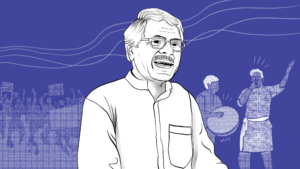
In BehanBox Talkies, we explore ideas through the lens of scholars. In this instalment, Devina Sarwatay talks about Indian tradwives, pastel patriarchy, and the saffronisation that threatens digital citizenship
The internet wasn’t meant to be like this. You could be online, for connection or joy or nothing at all, and do so without having to reveal or defend your identity. And equally you could choose to not be online at all and still access basic amenities like gas, ration, healthcare, vaccines, education. This claim to citizenship is under threat today.
“Almost everyone is a digital citizen today…But that doesn’t mean everyone can practise citizenship on equal terms,” says Devina Sarwatay, a scholar of digital cultures at City St George’s, University of London. In this installment of BehanBox Talkies, she discusses the practice and performance – and gradual hollowing out – of citizenship online.
A certain kind of identity is privileged online. For instance, a digital citizen today is expected to be a ‘good Indian’, one who asks no questions and upholds patriarchal Hindutva values, Devina says. Caste, economics, and religion decide who receives visibility and safety online. Instances like the GrokAI sexual deepfakes reflect a failure of digital citizenship, where the vulnerable are forced to shoulder the burden of reporting and redressal. “This has so much to do with the tech bro oligarchy and their relentless pursuit of power and profit,” she adds.
We look at what it means to be a digital citizen today – when much of the internet is owned by profiteering companies, resistance is shadowbanned, and AI slop and synthetic media rule. Edited excerpts below.
What sparked your interest in digital public lives?
I remember around 2016-17 when there was a lot of ‘technopanics’ in mainstream media. Articles and opinions were aplenty: ‘Young people will get addicted’, or ‘Spending too much time online will lead to physiological or psychological issues’. I was hearing all the adult voices, people who were talking about young people without talking to them. This lacuna eventually became my PhD.
I looked into children and adolescents, specifically on people aged 10 to 18 years. We often forget young people are figuring out who they are and what the world means to them and what they feel about their place in the world. There is a tendency to think they need protection because they are vulnerable, and indeed they are vulnerable and need guidance and protection to a degree, but they are not stupid. They have agency, ideas, and they can solve problems and identify problems to be able to solve them. That was what began my foray into this world.
I could never have imagined that we are in a position where we should indeed be panicking. Even as I was defending my PhD, I felt the digital space is like any other – where you have both opportunities and risks, and it’s about how you use your agency to navigate through these spaces, to be able to benefit from the opportunities and protect yourself from risks. But with Generative AI technologies, with apps like Replika or tools like GrokAI, it’s much more difficult to just exist online, especially if you are someone from a gender marginalised group.
A lot of the issues we see today is because of the way the internet and platforms have changed over the last decade. This has so much to do with the tech bro oligarchy and their relentless pursuit of power and profit. The question for me then is: What would we need to make those spaces safe, to make those spaces accessible for everyone, irrespective of their identity?
What did you find about the everyday negotiations people make – what to show, what to hide – to continue being present online? Is there self policing?
Girls and women are very aware of risks to privacy and safety, aware of cultural and social norms around how they should present themselves. I remember this interaction with a set of sisters, they said that they do a photo shoot whenever there’s a festival because everyone’s decently dressed and they’re looking good. There are other choices made: Oh, it’s fine if we upload our selfies on stories, because they go away after 24 hours, but we have to be extra mindful when we are making posts, because they stay forever. This was something that all girls felt, irrespective of their socioeconomic background, that they needed to present themselves in a certain curated fashion and appear decent. They were also conscious about who they allow and disallow from following them on their social media profiles.
In another conversation with a set of cousins, they said boys’ profiles can be public but girls’ profiles have to be private. A lot of these rules are self imposed based on the kind of environment they live in. It’s both self and external policing, and it unfolds as a cyclical feedback loop pattern.
I want to contextualise this experience of surveillance and censorship with another idea you wrote about – ‘digital citizenship’. What does that mean?
This idea of a digital citizen is so complicated. Who counts as a digital citizen? Is it someone who knows how to use their devices to be able to perform citizenship? Is it someone who links their Aadhaar card to bank IDs, or registers for welfare schemes online? Or is able to access gas supply by using digital payment methods? These all count as acts of digital citizenship. But it is also if you have used platforms and social media to engage with democratic debates or to engage with society at large. I would say almost everyone is a digital citizen today – but that doesn’t mean everyone can practice citizenship on equal terms.
For me, a digital citizen is not just someone who is present online, but someone who is able to participate, be visible, and make claims without disproportionate risk. And that distinction between presence and participation is where inequality really sits.
It’s also about the ability to not be online and not participate. Who can afford a digital detox or digital disconnection in this day and age where internet connections are a requirement to access the privileges afforded to you?
Can you give an example of how different communities practice citizenship online?
It depends on how much privilege one has and their socioeconomic backgrounds, what kind of policing or parental mediation is happening. So for girls and women who come from privileged backgrounds of caste and class, they have a lot more autonomy around what they can and can’t do. In my research on some participants who came from low-income families, mothers usually had dabba phones while fathers had a smartphone. So when the father was out working, others in the family didn’t have access to that device. In contrast, some girls would have multiple devices, free flowing Wi Fi – at home, school, and work.
For gig workers, citizenship is obligated because they cannot disconnect. A lot of risk is couched in opportunity for gig workers in their digital presence. Imagine you’re a gig worker providing beauty or cleaning services, you are literally going into people’s homes, and the app connects you with opportunity, but I don’t imagine the app offers you any support if there are issues when those worlds collide.
For trans people it’s this tug of war between negotiating presence online and facing trolling or bullying for the simple act of existing. In general communities that are disadvantaged due to economic or social reasons – gig workers, trans people – or are coming from marginalised castes and classes, have a very different experience from people who are doing well in the Indian digital publics.
These inequities produce a fractured experience online. But if we were to think about rights that all digital citizens can claim, what would those be?
There are basic rights: to be present, to express, to be safe. But I also feel that we have space to articulate what we should aspire for, a feminist ethos which centers safety, dignity, agency and even joy. The joy of connection, the joy of socialisation, the joy of putting something or yourself out there without clamming up at the idea that we have to face trolling or bullying or engage in comment wars with people simply because they are smiling or radiating joy by virtue of being a girl or a woman or a female-presenting content creator.
We have to think about what those rights would look like. Can we be visible, even if we enjoy privacy? Can we be present and online and be our authentic selves and not be pushed into performativity of a certain kind, to be able to lay claim to our rights to our share of the digital real estate? What would consent driven data practices be like – with not just your presence and your interaction with other people and other communities in these digital spaces, but also with the platform?
Let’s talk about the platform of it all. We know platforms reward consistency and emotional performance above all else. Does this interact with gendered expectations, where women content creators are expected to be domestic, respectable, self effacing?
In India, an example of tradwife manifestation is the fauji wife content. They espouse the whole idea that gender, religion, nationalism can be performed in a certain way. A lot of these accounts are of women who look beautiful, who wear pastels and pearls and perform a certain identity. I’m a fauji wife and I support my husband but I also have my own identity, I’m a pageant queen, or a fitness enthusiast, or a businesswoman. But then all of that is to demonstrate softness. The woman is still attractive, respectable, aspirational, and they are still monetising those patriarchal ideals of femininity. ‘Pastel patriarchy’, if you will.
There are also a lot of content creators who sort of game the system and play into the manosphere, and they project a certain image. And then there are also women who critique those content creators who are using their bodies for growth on the platform. Even critiques of platform labour often end up reproducing the same visibility logics they seek to challenge.
One could argue that all of this plays into the larger ethos of the country and the culture that we’re trying to set. Look at the PR at scale, like Operation Sindoor for instance. There’s a very specific kind of woman that you can be if you want to game the system around you, both offline and online. We’ll have to do a deep dive of everyone who’s a fauji wife on Instagram but mostly these will be privileged women coming from a certain class and a certain caste. That automatically erases a lot of other women; Dalit women or Muslim women will not be ‘ideal army wives’ for platform growth for instance. There’s an entire section of our population we are invisibilising by saying this is the kind of woman we want to see on our timelines.
Is there a broader commodification of domestic and maternal life on these platforms – mothers managing ‘kidfluencers’ or ‘momfluencers’ themselves?
We’re seeing a lot of kids who are influencers and their content is being managed by their mothers. There are other people also in the mix – sometimes their fathers or other family members participate – but it’s more often than not mothers who are managers (“momagers”). And it’s interesting to see how platform logics and monetisation dictate what kind of content they create and what kind of engagement they want. And there’s a very specific caste, class, religious, national identity demonstration here. Some kid influencers very neatly perform this identity of a good desi kid who’s lip syncing bhajans in a kurta with a tikka.
The other kind of kidfluencers is a very carefully curated identity where they show real life or snippets from real life, but then clearly those are very hyper-curated real life moments. The conversation is happening in English; the demonstration of their life is going out for brunch or going out for shopping or for a picnic or a beach trip or something very aspirational. For mothers, there is this aspirational bit of ‘if my favourite kidfluencer speaks in English at home then that’s what my kids should do too”. We haven’t got over our post colonial hangover. What is all of this playing into is that my kids should be a certain way, that I should be a certain way as a mom.
With momfluencers, we see similarities in which kind of women we see online doing well and not facing trolling or bullying or comment wars. You could draw parallels between those content creators who are army wives and momfluencers. They have very specific ideologies that they subscribe to, and, by extension, also propagate.
A lot of women are being asked to perform creative and emotional labour when they are creating content. It certainly pays to uphold patriarchy, it pays to project a certain kind of image. Platform economies don’t just reflect patriarchy, they actively incentivise and monetise it.
Parallel to this experience is misogyny and incel culture and the manosphere at large. Can you talk about this space in the Indian context?
What we are seeing is not just generic misogyny, but a very specific articulation of gendered violence that is deeply embedded within existing social structures. Online abuse directed at women – especially journalists, activists, Muslim women, Dalit women, and trans persons – is often explicitly casteist and communal. These are not random acts of trolling; they are ways of disciplining people who are seen as transgressing social and political boundaries. What global frameworks tend to miss is precisely this intersection. Gender-based violence in India is not only about gender – it is co-constituted by caste, religion, and nationalism. Technology does not flatten these differences; it scales and amplifies them. So the manosphere here is not just reacting to feminism, it is actively invested in preserving a very specific social and political order.
Research has shown platform algorithms favoured dominant caste narratives in India. Can you talk more about how platforms amplify these differences?
TikTok is a great example here. In my research, a lot of participants from low-income sections felt TikTok was amazing, it was relatable, they could find themselves represented because the platform allowed so many vernacular regional cultures to flourish. Instagram for them is very bougie (for a more urban privileged audience). It was very curious that TikTok got banned and at the same time, Instagram Reels was launched, and some of them actually tried out Instagram Reels to see if it matches up to the TikTok experience, and they hated it. Conversely, the high-income participants felt that TikTok was cringe and Instagram was cool. And that says a lot about how privilege affords you a certain experience on platforms. So the platform itself is not neutral…it encodes and amplifies classed and caste-based notions of legitimacy and taste.
When GrokAI surfaced sexually abusive AI-generated images of women and children, the burden fell entirely on people to report or document or pursue redressal, echoing what happens in cases of physical harassment. Is this a failure of digital citizenship?
Absolutely yes, but not at the level of individuals but at the level of systems. What we are seeing is a pattern where the burden of safety, reporting, and redressal is placed on those who are already most vulnerable. Expecting individuals to document harm, navigate opaque reporting systems, and pursue accountability is both unrealistic and unequal. This is particularly difficult for women and marginalised communities who may already lack access to institutional support.
Redistribution of this burden requires a structural shift. Platforms need to move towards safety-by-design and proactive moderation rather than reactive systems. The State must enforce accountability frameworks that prioritise user rights. And legal systems need to be accessible and responsive, rather than punitive or exclusionary. Without this redistribution, digital citizenship becomes conditional – something only those with time, resources, and resilience can actually practice.
None of these problems that we are facing are at the level of individuals – they are very much systemic and coming from a certain kind of governance that puts profit and power over people.
How did we get to this point? Did the idea of a digital citizen mean something else earlier?
These things don’t occur in isolation. There was a lot of ground mobilisation and resistance being showcased online, which is why you have your Twitter and Arab Spring and Discord and Nepal revolution. The protests and a lot of the resistance that we’ve seen hasn’t been covered by mainstream media – only being captured on social media. I’ve only seen these being shared by people like you and me, or smaller content creators who might not necessarily subscribe to the dominant ideology or the right-wing ideology irrespective of where they are placed in the world.
The online is an amazing space for democratisation and resistance, and that’s one of the reasons why I want to hold onto these spaces. These spaces have historically been a gateway to connecting and congregating with others for what you believe in, even if it’s against the establishment. The idea of the public sphere has been there for this – for resistance – whether that public sphere has been through community mobilisation offline or online, whether that public sphere is people congregating on TikTok or Twitter.
We’re seeing a slow but systematic erosion of critical thinking, around what civic life and citizenship means. The NCERT scandal showed that even something as simple as how the judiciary could function better faced backlash. We are increasingly seeing this in our digital spaces as well: the narrowing of acceptable discourse offline is mirrored in what becomes visible and viable online.
It almost sounds like the desired digital citizen today is basically a ‘good Indian citizen’.
A good Indian is a very specific identity. You are not Muslim, not Dalit, ideally you are a cis het, upper caste, upper class man. But if you’re not a man, then you are a woman and you both uphold patriarchal Hindutva values. Subscribe to these ideologies, engage with them, encourage your communities and your followers to think of these as aspirational.
There’s a lot going on in terms of who an ideal Indian citizen is, and if you do not fall into that bracket, if you ask questions or critique the government, you get labeled an anti-national, a terrorist, a secessionist, etc depending on your background. Clearly a certain kind of identity is privileged, online and offline.
Which is why content creators are obeying these unwritten and unset rules and creating content that gets traction, that does not get shadow banned, and gets them in the right rooms with the right people to keep their roti, kapda, makaan safe. It’s not as if these people do not have power themselves, but there is a certain saffronisation of creative and cultural industries that has taken hold.
If we keep building a digital space where the Hindutva identity gets traction and money, it’s going to be difficult for us to access content creators who actually stand for specific ideologies and resistance. It’s not because there is no such content; it’s because the platform and governance structures are not allowing their content to come to the fore. It is happening at both levels: the tech company’s policies and mandates of the government of India. A lot of satire and political critique has been shadow banned or removed. We are in an undeclared emergency.
So much of the social media feed right now is just AI slop, can we then meaningfully practise citizenship online?
Scholars like Papacharissi wrote in 2010 about the “networked self” – how we create/curate our identity and how we practise it is governed by social networking sites. Earlier there was still a level of agency where we could pick and choose our network and interact with them, and our identity creation and curation was to a certain extent in our hands.
Then in the early 2020s, two researchers wrote this fascinating paper on TikTok and coined this idea of the “algorithmised self”. Our identity was no longer about us but about the algorithmic recommender system and whether we now build our network or the algorithm does it for us.
I built on this idea the concept of the ‘synthetic self’, where our identities get co-opted in these digital spaces. It’s not just about us altering the presentation of our online selves using filters and creating a sort of an amalgam of ourselves online, but it’s also about using GenAI technologies to create your digital twin or content which is synthetic. How can you then say that you’re interacting with people, and not just the algorithm, the black box? Perhaps you’re not interacting with another human at all. If citizenship depends on interaction with others, AI-generated environments fundamentally destabilise the conditions required to practice it.
The problem with pushing for more digital literacy is also that it places a lot of responsibility on the individual. There is so much synthetic slop we see, that you can’t discern if it’s another content creator or another human that you’re indeed interacting with, or if it’s an AI-generated digital twin or an entirely AI-generated persona. If people who are perennially online are unable to discern the difference, what about older people who might not be online or young people who are still learning the ropes of who they are?
Where do we go from here then? Is it possible to be a consenting digital citizen to exercise agency here?
It’s going to be difficult to reclaim these spaces if we continue on this trajectory. We had a certain right to these spaces when the internet first came out and wasn’t commodified, datafied and monetised. The entry of social media platforms and tech companies made this slightly complicated – they laid claim to the space, and to our data, without actually giving us anything in return. Gig workers, trans people, Dalit communities, are trying to still hold onto whatever digital real estate we can.
But if tech companies, governance models, and regulation from governments don’t change, if we keep playing into the concentration of profit and power, it will be difficult to exercise this citizenship. And then the only option will be to go for alternative digital common spaces that we build where feminist ethics are prided over profit and power. Platforms like Mastodon – part of the fediverse [a decentralised, more democratic way of social networking] – might be a solution. Maybe those are the kind of spaces that will offer the digital real estate that we deserve, where we can actually be who we really are, our authentic self, and we can engage with others who are their authentic selves.
The question is no longer whether we can participate, but whether we can meaningfully shape these spaces.
This story was produced with support from Report for the World, a global media service strengthening local independent journalism.
We believe everyone deserves equal access to accurate news. Support from our readers enables us to keep our journalism open and free for everyone, all over the world.
