On Census Duty, Mumbai’s ASHA Workers Battle Peak Heat, Dread Monsoon Mayhem
Armed with nothing more than government issue caps to protect them in record heatwave conditions, frontline health workers in Mumbai are struggling with the additional load of Census work
- Anjali D

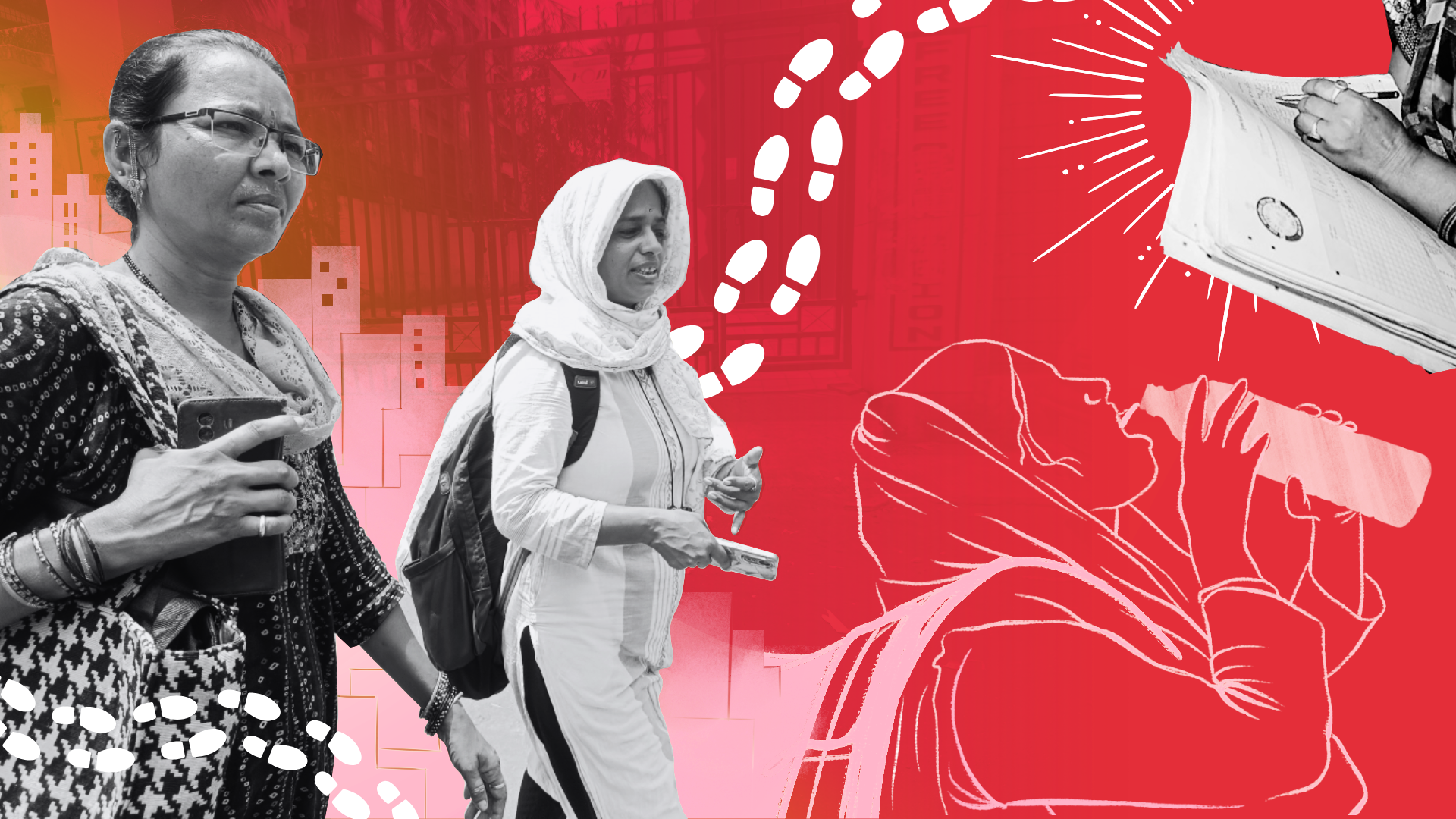
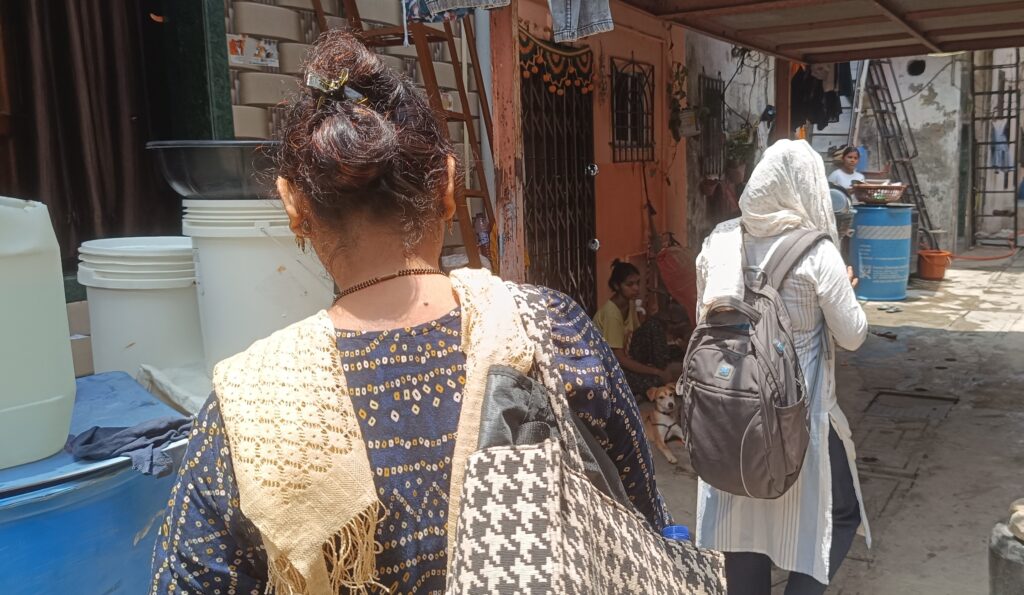
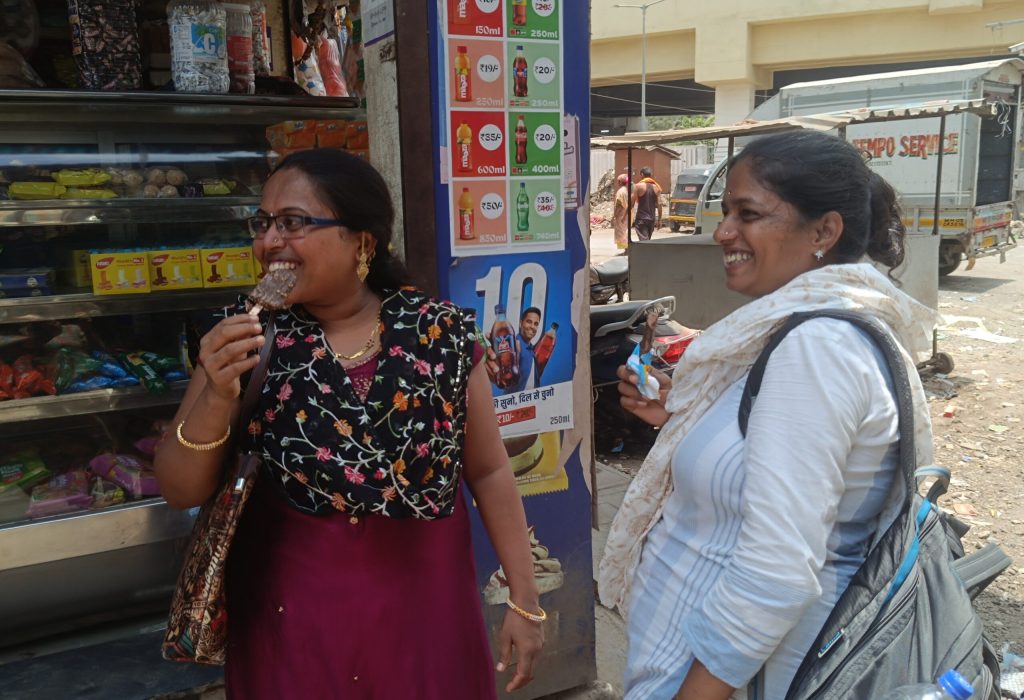
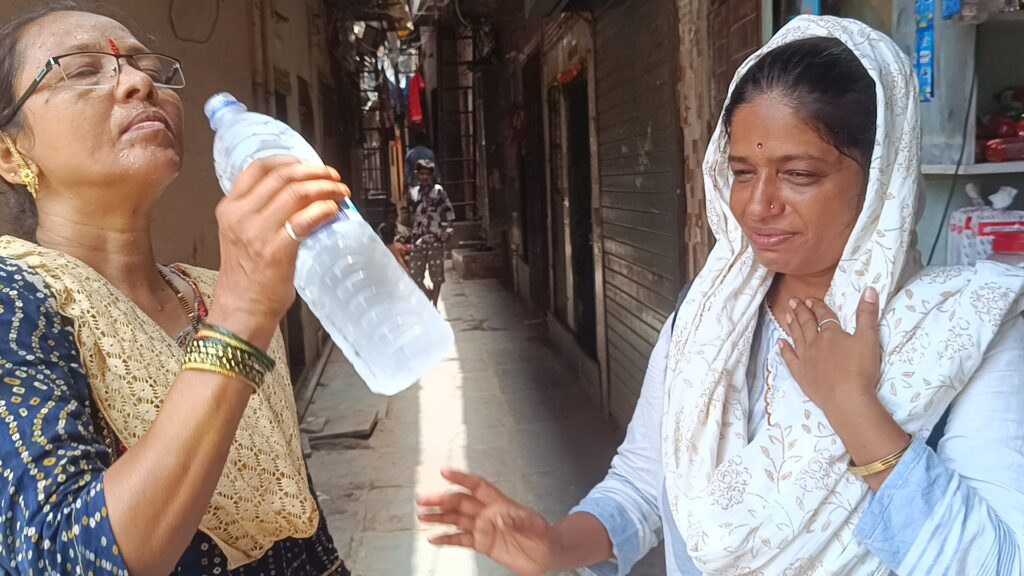
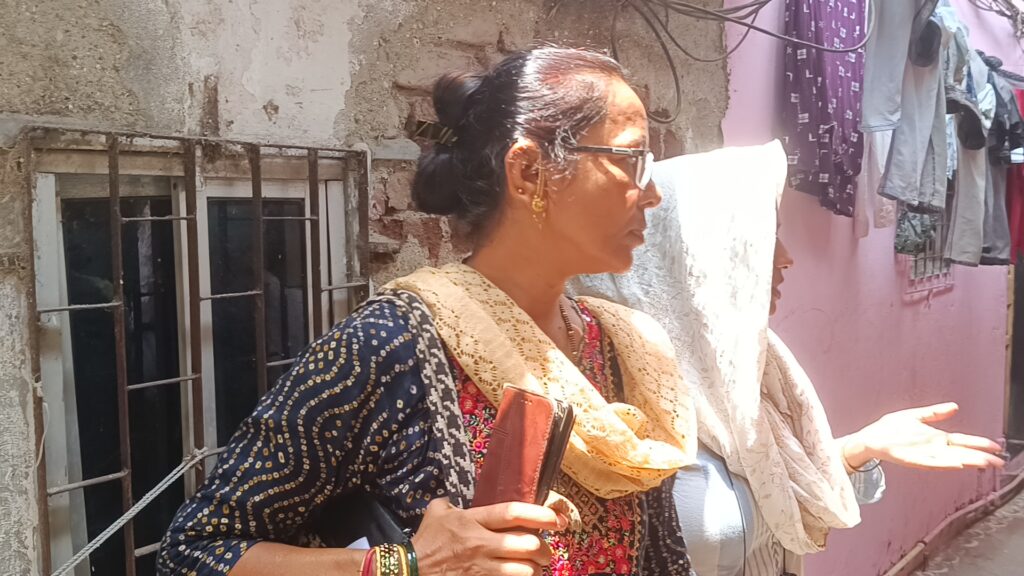
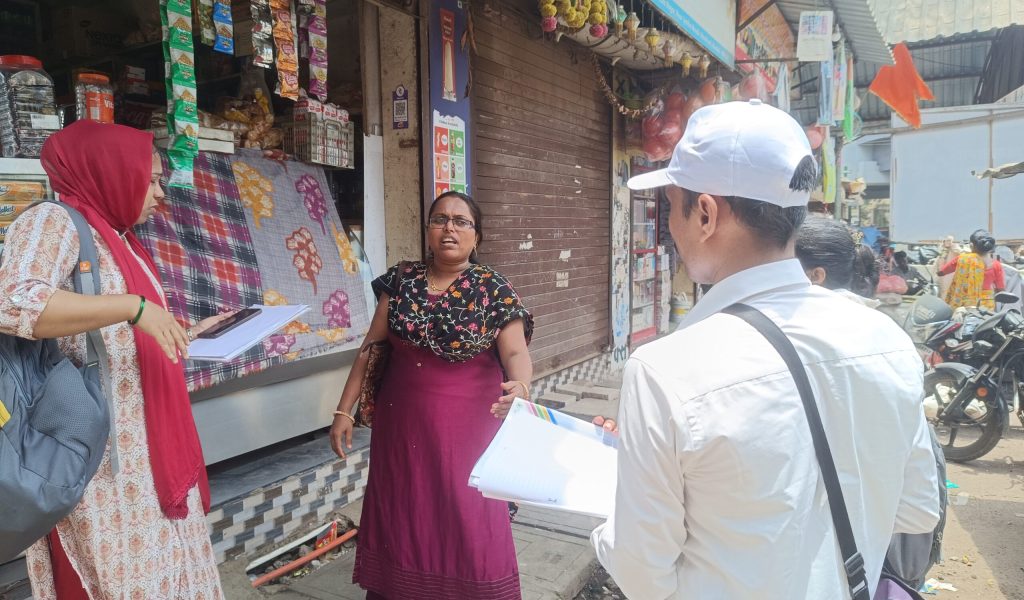
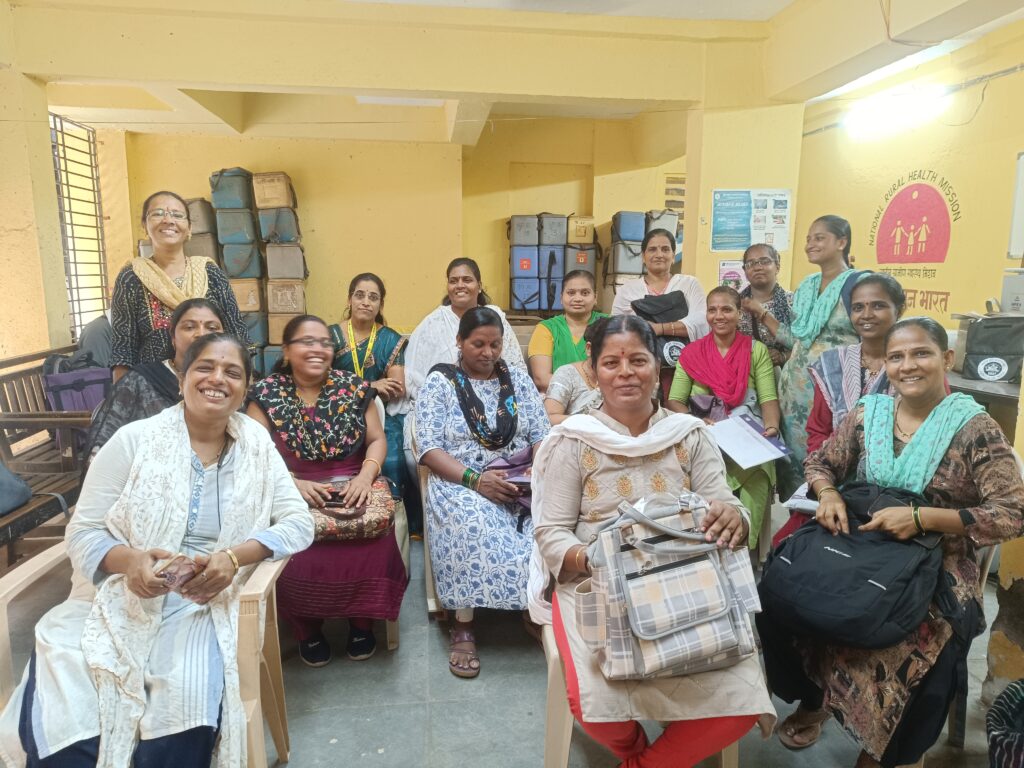
Ranjeeta Awale, 37, and Vanita Rajendra Detake, 45, weave through the narrow bastis of Maharashtra Nagar in Mankhurd in eastern Mumbai, completing their Census round for the day. As the high noon sun beats down, they cover their heads with dupattas. The caps they have been handed by the government as part of the Census kit – paper-thin, white, and ineffective against the sun – sit somewhere at the bottom of their bags.
This summer, Mumbai has routinely seen temperatures push past 40 degrees Celsius – the highest the city has seen in five years – exacerbated by dry winds from the north and humidity peaking at 91%. The India Meteorological Department has been issuing heat alerts for days amidst the super El Niño. A heatwave can severely affect the body’s ability to regulate temperature, impacting both mental and physical health.
The government’s advice to citizens? Stay indoors or avoid going out between noon and 4pm, and stay hydrated. But for ASHA (Accredited Social Health Activist) workers like Ranjeeta and Vanita, who must meet their monthly targets to get paid, none of these options are affordable or viable.
“What do we do if 9am to 2pm is the mandated timing for community health workers [CHVs, a Mumbai specific cadre that precedes the ASHA programme]? We cannot miss any more days of work. Our payments have already been withheld for months without any reason. Even if we take leave because we are sick we are not paid,” says Trupti Praveen Manjalkar, 37, a CHV who manages the health of 4,000 in Warli’s Jijamata Nagar, a predominantly Dalit neighbourhood. While the work timings for ASHA workers are more flexible, they are still required to gather at their respective Health Posts between 10am to 12pm to receive their tasks for the day and mark attendance.
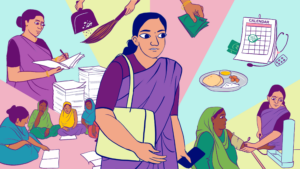
Deployed by the State as its last-mile public health resource, Mumbai’s ASHA workers and CHVs track pregnancies, carry out immunisations, accompany patients to hospitals, run polio camps, maintain health records, and serve as the first point of contact for lakhs of people living in informal settlements. For ASHAs, the basic payment for this work is just Rs 1,650 a month and everything above that is incentivised and depends on the completion of specific targets – ranging between Rs 4,000 to Rs 8,500 a month. To survive in a city like Mumbai, most health workers are forced to take on additional work in the evenings such as domestic labour, nursing, and home-based piecework – leaving no time for anything else.
Now, their workload has been made even heavier – amidst existing health mandates and election duties as Booth Level Officers, ASHA workers across Mumbai have been drafted into the national Census exercise, going door-to-door and digitally filling in a 33-question survey on their overheated phones, in the same hours they are meant to be doing everything else. Census enumerators have been promised a total of Rs 25,000 for their work – Rs 9,000 for the first phase and Rs. 16,000 for the second – which will be paid after the entire exercise is completed in 2027.
“We were not paid for working during COVID when so many ASHA workers died. And we are still waiting for our payment from election duty. Now they want us to spend money from our own pocket to do enumeration during peak summer,” says Amrapali Waghmare, 35, who has been an ASHA worker for 10 years in the Vishwakarma area. Enumerators were also to be paid Rs 600 for each day of Census training, but the ASHA workers we interviewed said they had not been made aware of this.
A 2025 HeatWatch report on ASHA workers and extreme heat built on the demands of their unions suggested these measures: climate safety kits and infrastructure, mandatory heat breaks during the day, clear restrictions on scheduling ad-hoc work during summers, and the development of heat action plans in consultation with ASHAs workers. None of these ideas, we saw on the field, had been implemented.
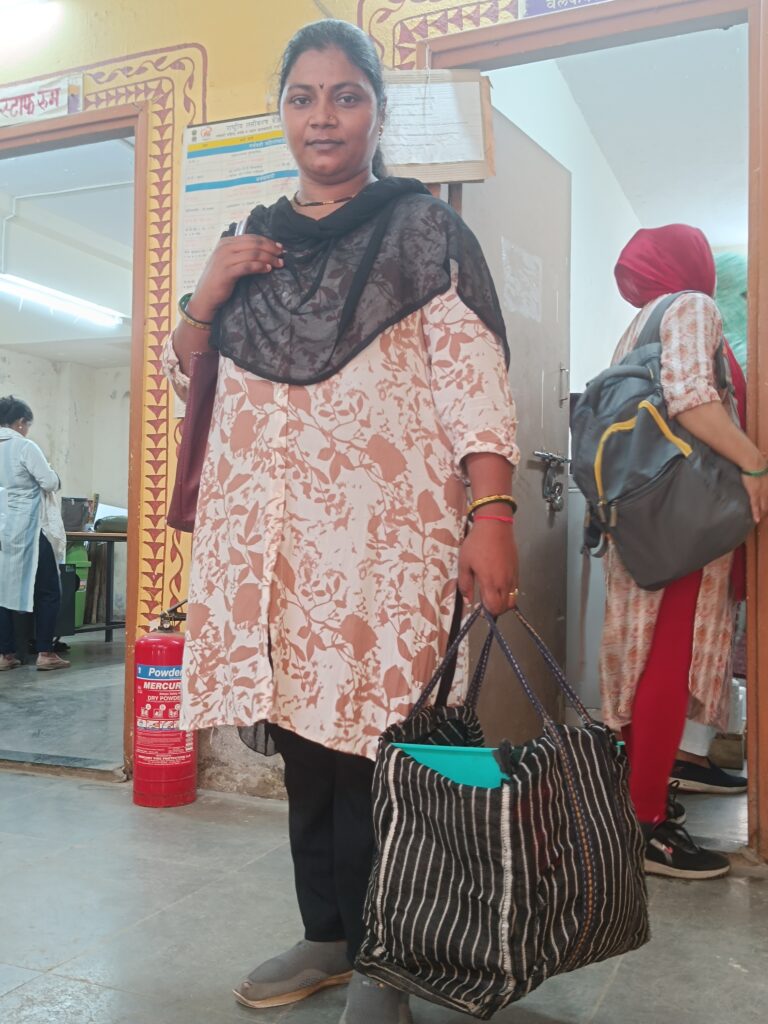
For a survey that costs the government Rs 11 crore, the kit the enumerators have been provided is laughable, says Dipali Sunil Kale, 36, who travels over an hour, one way, to reach her area in Mahatma Phule Nagar. Apart from the see-through cap, the workers complain that they are given a bunch of cheap pens that often fail when they need them to work, a flimsy writing pad and a bag so thin it cannot hold a water bottle.
A report on Census work across Delhi, Gurugram, Gorakhpur, Punjab, Maharashtra and Bhopal found that enumerators are spending hours outside in temperatures crossing 40 to 45 degrees Celsius, facing both extreme heat and locked doors as people step out for work or travel to their home towns during the summer break. In Odisha, two schoolteachers engaged in Census duty recently died of suspected sunstroke. Another enumerator in Sonepur district allegedly died of a cardiac arrest after returning from Census fieldwork.
Out, All Year Round
In Mumbai, Trupti says she and her colleagues are out braving the elements all year round. “Yevda varsha, oon, paus, vaara, aghadi thandi, hya sagdya goshti chi parva nahi karta, aarogyasevika hya kaam kartat (despite this much heat, rain, wind and extreme cold, health workers have set aside their own wellbeing and done their work for years),” she says matter-of-factly.
Faced with government apathy, the women at Maharashtra Nagar’s Health Post (small government dispensaries across the city for basic illnesses) have developed their own strategies to deal with the heat – making sure they carry ORS on the field, cover their heads, call respondents instead of visiting them, and pool resources to buy cooling systems such as fans. They also say that the people they interact with on the field are compassionate and helpful about their discomfort.
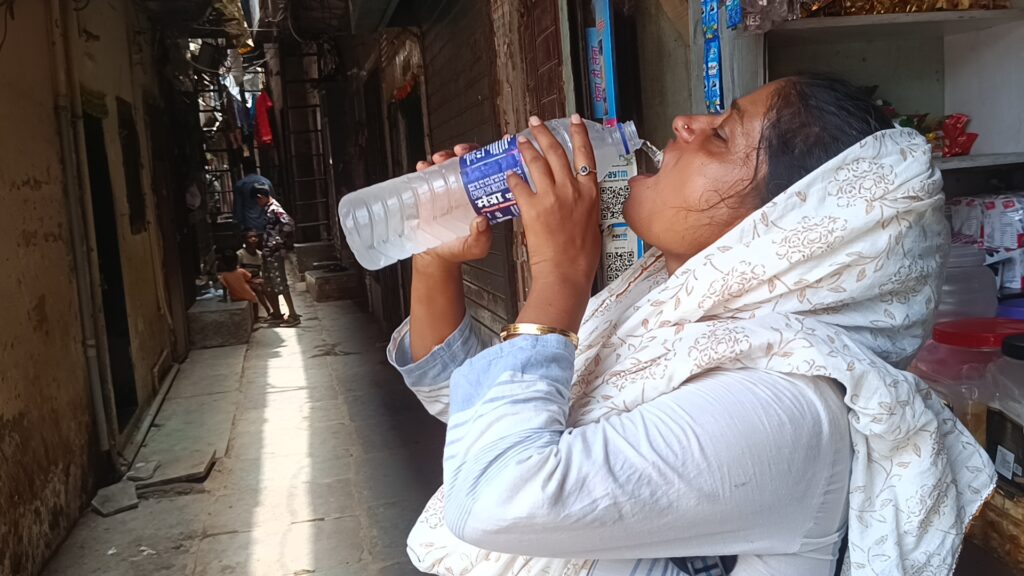
While working on the field, ASHA workers struggle to keep themselves hydrated. “We have to buy our own water everyday and cold water is more satisfying in this heat but it also makes us ill. So we simply drink less water,” says Ranjeeta. ASHA workers are hesitant to ask residents if they can use their toilet as Maharashtra Nagar has limited water supply – pushing them to drink even less water on the field.
The heat imposes a financial burden on the lives of healthworkers, we have reported. In Haryana, over 80% of ASHA workers interviewed by HeatWatch said they face increased expenses in food, water, electricity, and heat-related medical costs in summer, while nearly 40% spent more than Rs 2,000 a month treating heat-related issues.
Vanita, who worked as a private nurse for a decade, became an ASHA worker in the belief that a government position would offer more stability. She has two sons and a daughter at home, all still studying. Inspired by Dr Ambedkar, she says she joined ASHA work to do something good for society. She soon realised that it is increasingly difficult to survive on the pay.
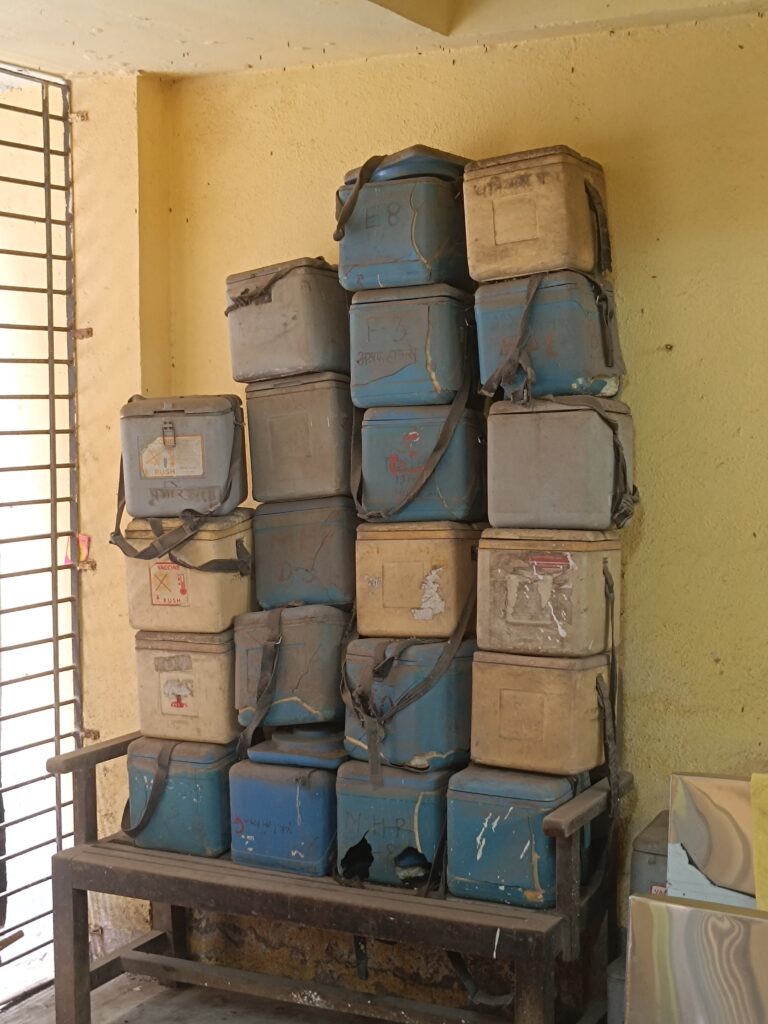
Everyday, Vanita walks at least two hours between the homes she supervises across three areas. On her shoulders, she carries heavy bags – a big cooler with injections and medicines and another with papers and random material needed at work.
Mumbai’s heatwave is immediately followed by an unforgiving monsoon.
Punam Amol Ahire, 34, describes what it is like to work in the narrow lanes of Suman Nagar when it floods, wading carefully through water up to her knees and holding her paperwork above her head. “In the bigger chawls, we can use umbrellas, but in smaller ones, the lanes are too narrow. My notebook was completely drenched the first time I worked in the monsoon. We are forced to hold meetings in common spaces or to call people up. This is not as effective and we miss out on many cases,” she says.
Neither summer nor monsoon come with any support from the government. No hats. No raincoats. No umbrellas. And no gum boots, despite the risk of leptospirosis from contaminated floodwater. BehanBox has previously reported on how umbrellas and rain footwear are a luxury for working-class women in Mumbai.
Vanita recalls, with disgust, how the monsoon floodwater rises to her waist and mixes with everything from the open drains and nearby toilets. “But if there is an emergency, no matter how much it’s raining, we have to go and help.”
Workplace, Amid Garbage
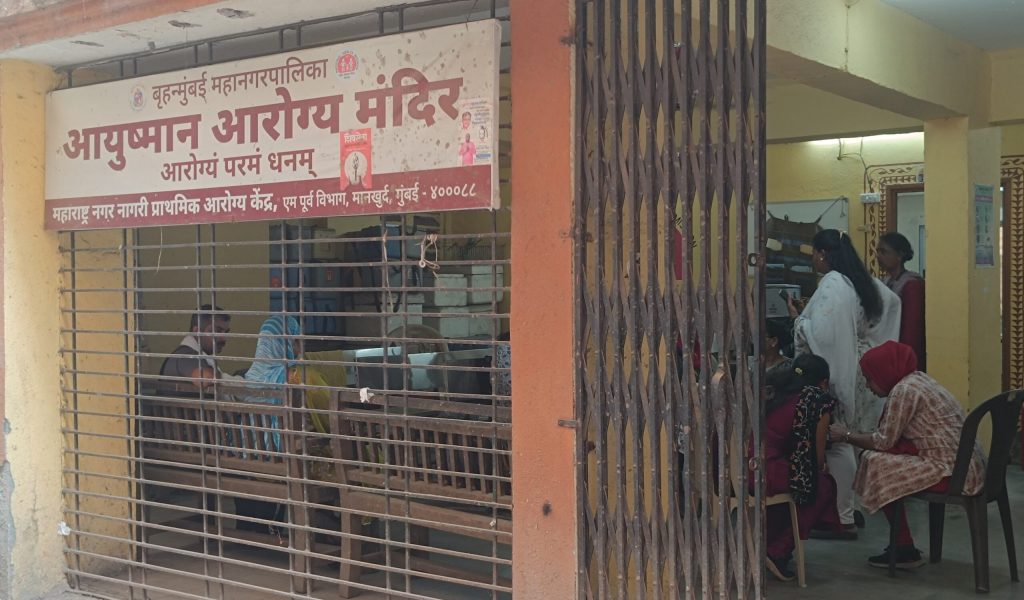
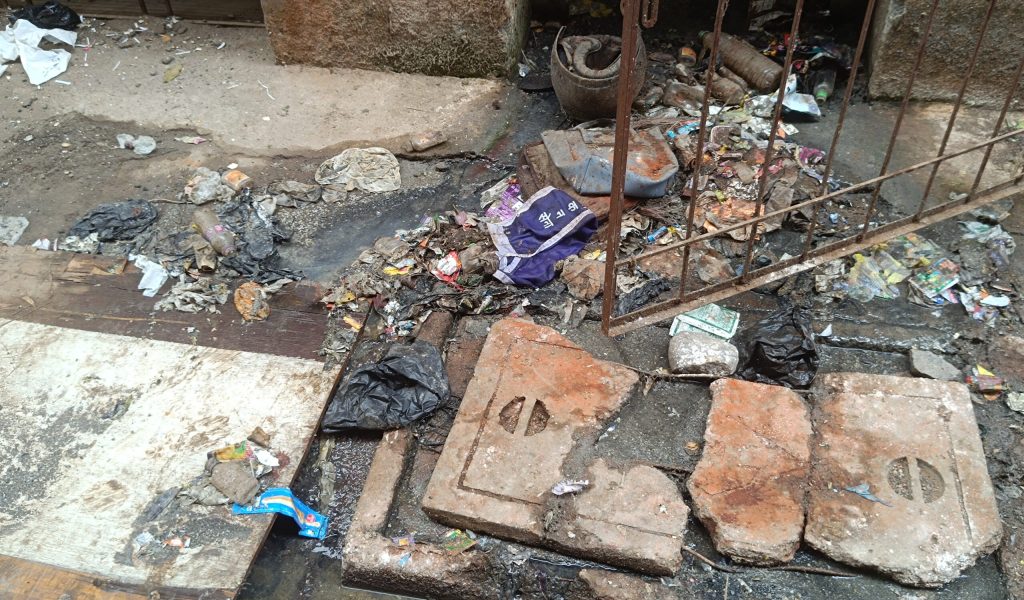
The Maharashtra Nagar Health Post sits on the ground floor of an old building complex in Mankhurd. Every morning, ASHA workers gather here at 10am to take stock of the tasks for the day, talk to each other, mark attendance and collect the materials they need for their rounds. The water-damaged walls of the Health Post sport posters about heat protection and ORS while open sewage gathers just outside.
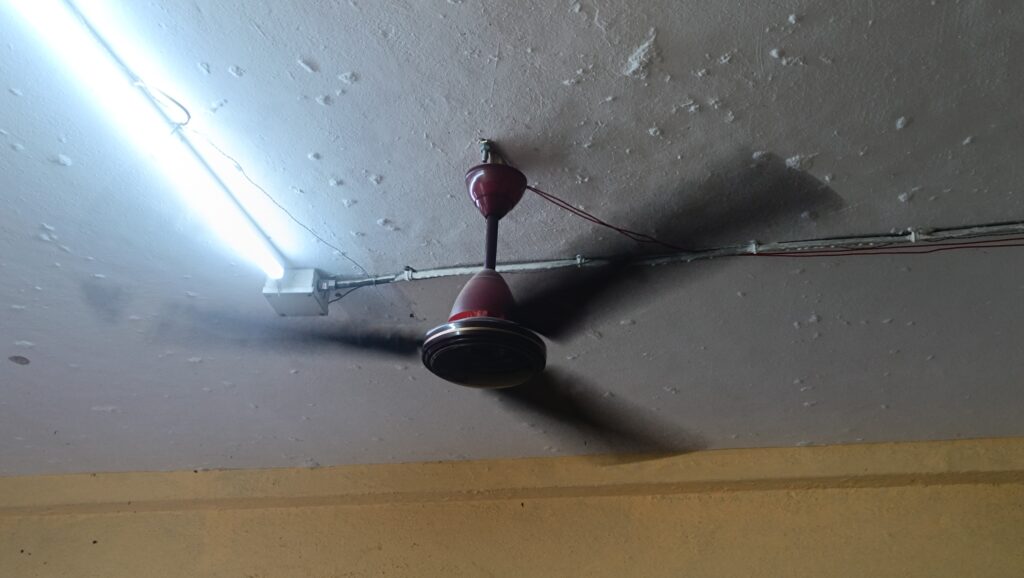
It has been 10 years since ASHA workers have been working from the Maharashtra Nagar health post, and in all that time, the government has not installed a single fan in their workspace or cleaned the surrounding area.
While senior staff – who are largely upper caste according to the ASHA workers – sit inside the cooler, interior rooms – ASHA workers in Maharashtra Nagar, who as we said earlier are mostly Dalit, sit in an area that is overwhelmingly hot and stinks from the trash piling up outside.
Most workers say they skip lunch because the food in their lunch dabba tends to spoil in the heat. “Also we don’t even feel like eating with how dirty the surroundings can be. Where do we find the time or space to eat?” says Vanita.
As BehanBox has reported, caste-based discrimination, caregiving responsibilities, and the concentration of marginalised communities in informal and low-paid occupations has compounded the heat burden for lakhs of women workers. A recent working paper found that marginalised caste groups face up to 150% higher heat exposure during work compared to dominant caste groups.
A few years ago, fed up with this system, some ASHA workers pooled in money to install a ceiling fan for themselves. “We are the ones who do health work for everyone else, but there is nothing for us,” says Amrapali.
The infrastructure around the health post is on its last legs. ASHA worker Hemangi Kamble, 40, points to the rickety windows in the next building. “If there is a storm or if it rains heavily, the windows from the nearby buildings come crashing down,” she says.
Public Health System Not Clear On Heat
Gayatri, a Mumbai-based community health worker who left her practice in emergency medicine after eight years frustrated with the tertiary health sector, notes that most working-class women are already operating on a “depleted system” with vitamin D deficiency, low haemoglobin, and B12 deficiency. “When such a person is exposed to an additional stressor like heat – which is not increasing steadily but rapidly – it makes things much worse,” she says.
Researchers studying heat stress have found that women workers, unable to relieve themselves anywhere like male workers can, routinely reduce their water intake during working hours, putting their kidneys under sustained stress. Another study on heat impacts on Haryana’s ASHA workers also showed that amongst surveyed ASHA workers, heat worsened dehydration (68%), exhaustion (67%), gastrointestinal or skin problems (55%), mental health, and reproductive tract infections. During menstruation, ASHA workers say they manage their entire workday without toilet access.
Heat is a particular irritant for those going through menopause. Many of the older CHVs are having a hard time in the heat, Trupti says: “They continue to work despite urinary tract infections, hot flashes and hypertension.” In Dahisar, she says, one of her fellow CHVs suffered a heatstroke and passed away last year.
But there is no clarity yet among public health institutions or professionals about exactly what a heat-related illness is. “People don’t know what is happening and are not told how to prevent it from happening again,” points out Gayatri. There are no dedicated wards for heat exhaustion in Mumbai’s hospitals that she knows of, despite the scale of the problem. As a doctor, she adds, she was never educated on how to handle a heat stroke.
The Added Burden of Census Enumeration
Over 32 lakh enumerators across India and nearly 24,500 in Mumbai – largely government teachers, Anganwadi workers, municipal corporation health department staff and ‘other staff’ as appointed by the State government – have been brought on-board for the Census, which began on May 19 and ends on June 16, 2026.
Those participating in Census work had undergone training in the last week of April. “During the training, we had to sit for 6-7 hours continuously every day, from 9 am to 6 pm,” says Ranjeeta. The heat and effort got to one ASHA worker who had to be admitted to a hospital with hypertension and swelling in her legs.
Each household survey takes between 15 and 30 minutes and ASHA workers are expected to cover at least 10 to 15 houses a day to meet their target of 800 to 850 houses – on top of their existing duties. To add to this, areas allocated for Census enumeration often don’t match the existing areas where ASHAs work, doubling their workload and travel.
anjeeta notes that people often find the survey ‘annoying’, referring to questions like ‘what kind of toilet do you have’, ‘where is the outlet’, and ‘how do you eat lpg supply method do you have’. She points out that many respondents in the city’s slums do not even have electricity or water supply and questions such as these irk them. Recent reports say that enumerators have been asked to “review” their findings on open defecation, LPG supply and tin roofs to ‘soften’ the scale of impoverishment.
The timing of the Census also raises concerns amongst ASHA workers. Mid-May and June are when a large section of working-class Mumbaikars return to their villages and it could make for under-reporting, says Trupti. Furthermore, the summer poses a challenge to the digital format of the Census, as phones heat up and sometimes even explode, says Vanita. Many ASHA workers do take a break during peak heat hours – 1pm to 4pm – to rest and resume Census work afterwards. But this means working late hours and jeopardising either their second job or carework tasks at home.
Amrapali notes that the digital format of the Census is also difficult for many CHVs and ASHA workers who don’t know how to use a phone well. “They say we should bring someone along to help us. How is this possible?”
Many ASHA workers say that their phones do not meet the exact software specifications required by the Census app, and they will, therefore, need to buy new ones. ASHA workers and CHVs who have not complied with the phone requirement have faced threats of removal, harassment and some have allegedly had cases filed against them.
“They made us sign contracts under the threat of firing us,” says Trupti. “We are not even permanent employees. Other Census workers like government teachers can afford these phones. On top of this, we even have to train teachers for the Census. It is a joke.”
Heat Protection Policy and Demands
Ranjeeta looks up from her phone as we stand in a galli while she enters Census data. “When we first joined, we had asha (hope) that the government would do something for us and that our lives would become better,” she says. “But there is nothing for us.”
The 2020 Occupational Safety, Health and Working Conditions Code permits the government to set safety standards that include heat protections. But Section 23 uses the word ‘may’, not ‘shall’, meaning that nothing is mandatory. No enforceable heat protection standard exists for workers in outdoor, informal, or gig settings, and India has not ratified the ILO Convention 155, which would mandate domestic obligations around occupational health and safety for the informal sector.
In the case of ASHA, Anganwadi and other health workers, India’s labour laws have effectively legislated away the state’s obligation to protect them by classifying them as ‘volunteers’ rather than ‘employees’. Unions have been pushing back on this for years, demanding that community health workers be regularised as permanent government employees with a fixed salary, pension, labour rights, health insurance, and income protection for days they cannot safely work.
ASHA workers are also absent from national and state-level Climate and Heat Action Plans, which experts say were designed to prevent deaths, not protect livelihoods – leaving workers already exposed to climate shocks and stripped of labour protections even more vulnerable.
The irony here is that ASHA workers are key to health-related climate adaptation strategies of multiple states. State Action Plans of Haryana, Kerala and Maharashtra include ASHA workers in campaigns around awareness creation about vector-borne diseases, capacity building on climate change and health, post-disaster surveillance, air pollution training, and disaster response, for instance. Maharashtra’s State Action Plan on Climate Change and Human Health lists a range of tasks for ASHA workers at the PHC level.
The National Plan on Heat Related Illnesses goes further, outlining an extensive pre-heat season role for ASHA workers and PHCs, from stocking inventories and mapping vulnerable areas, to conducting sensitisation meetings and making weekly reports on heat-affected patients. For all this work, there is no training, compensation or protection from challenges of any kind.
Apekshita Varshney, founder of HeatWatch, argues that safeguards are a non-negotiable if the government wants ASHAs to be involved in heatwave and monsoon awareness and relief work. “There needs to be formal recognition and compensation of climate-related duties, proper training… and shared responsibility across departments,” she notes. “Any role added to their workload must reduce risk rather than extract more unpaid labour from women who are already carrying the burden of public health delivery.”
Community health experts like Gayatri argue that heat must be treated not as a seasonal emergency but a governance challenge with dedicated infrastructure centered around the city’s informal and marginalised populations. “Unless we do that, do a stakeholder analysis, and map all of the determinants of heat, I don’t see it changing,” she maintains.
Apekshita notes that the fight for permanent employment and labour rights is not separate from climate justice. “You cannot build climate resilience on unpaid, insecure labour, especially when it falls disproportionately on women,” she says.

“They call us the backbone of India’s health system. If you are not keeping the backbone well and healthy, then what is the point?” Trupti asks. “We are entitled to our labour rights and protections and we will continue fighting till we get them.”
[This story has been produced as part of the Asian College of Journalism’s Climate Change Media Hub Mentorship Program.]
We believe everyone deserves equal access to accurate news. Support from our readers enables us to keep our journalism open and free for everyone, all over the world.