
How SIR Is Enforcing a New Impermanence on Delhi’s Migrant and Working Populations
Despite government assurances, the brunt of SIR exclusions are faced by those without a permanent address, rendering them even more temporary in a city where belonging comes at a cost
Read other reports as part of our SIR coverage here. For leads, queries, and suggestions, write to us at editor@behanbox.com.
“Jab maine pehli baar vote daalne wala machine dekha tha toh itni khushi mili, ye maano ki mai phule nahi sama rahi thi…ki ab mai badi ho gayi hoon. Hum chaaro-paacho bhai-behan ek saath naye kapde pehen kar vote dene jaate the (when I saw the voting machine for the first time, I felt so happy at the thought that I had finally come of age. All of us siblings would go together, wearing new clothes, to cast our vote),” Rani* recalls.
Now in her late 30s, she is marked for deletion from the electoral roll placed under the “Shifted” category in the Absent, Shifted, Deleted, Duplicate (ASDD) list of Delhi’s Special Intensive Revision (SIR). In the 2009 general elections, she had voted for the first time, and within three years, was married and living in a rented accommodation in Mangolpuri, an urban village in north-west Delhi. Her husband, an auto driver, barely makes enough to cover everyday expenses.
She is the only one marked “shifted” in her entire family. It is a big mystery to Rani how her name was deleted though she filled and submitted not just her own form but also that of her entire family. “Meri galti kahan ho gayi hai koi mujhe ye toh bataye (someone please tell me where I went wrong),” she pleaded with the Assistant Election Registration Officer (AERO) of her area.
Rani showed BehanBox a photo of her completed enumeration form. She tried to use Google Translate to fill it in, eventually spending Rs 50 on getting someone to help her complete each form. She claimed that her Booth-level Officer (BLO) did not provide any assistance in filling the forms, as was mandated by the guidelines.
“Ab mujhe vote dene ka bhi mann nahi hai (I have no desire to cast my vote now),” she said, visibly angry after making multiple rounds of the AERO office situated almost 3 km away from her home, only to be sent back with more forms to fill.
Rani’s case is not, however, isolated. There is a larger pattern of arbitrary exclusions under the SIR process, ostensibly meant to verify and update the electoral rolls. In Delhi alone, 47.7 lakh voters, accounting to 32.8% — or close to one in every three voters — have found their name excluded from the draft rolls. Of them, the majority (66.4%) have been marked “permanently shifted”. Our interviews showed that there are unexplained and inconsistent ways in which these deletions have been carried, affecting the most marginalised populations.
BehanBox spoke to people living on rent and in informal settlements, civil society organisations like the Voter Adhikar Manch (VAM) and Jan Sarokar, and a few BLOs. We found that those who cannot afford to remain rooted in one place are more vulnerable to exclusion, despite the safeguards laid down by the ECI. Deletions are one dimension of this exclusion. The other, less examined one, is the enforced impermanence that comes after filling Form 6, meant for inclusion of new electors, often rendering people’s lives more temporary than ever.
Temporary Places, Temporary Votes
Anita, 40, a single mother, has lived in a rented home in Mangolpuri since 2007. Every few years she has had to shift houses, but within the same lane. She has voted in all the elections, she said, from 2012 right until the Assembly Elections held in February 2025.
Married at 15, she moved to Delhi from West Bengal with her husband, and the two found work at a nearby factory. After her divorce, Anita had to rebuild her life on her own. She eventually began working on an app-based chat service to make a living.
However, her name was quietly dropped from the base electoral roll, before the SIR even began in July.
Anita is furious with the government, and has several questions and complaints. “Maine itne saal jo vote kiya voh kaha gaya? Mera vote ko use karke ab bedakhal kar diya? Sarkaar ko adhikar kisne diya mera vote kaatne ka (what about all the times I have cast my vote? They took my vote and then evicted me from it? Who has given the government the right to delete my vote),” she fumed.
She alleged that getting a Voter ID made as a migrant living in a rented accommodation itself was a confounding process. “Rent par rehte hain toh koi apna address nahi dena chahta hai. Makaan malik log darte hai sochte hai ki unka makaan kabza kar lenge (landlords do not want tenants to submit the address of their houses in the voter form because they fear that we'll become squatters),” she explains.
An analysis by The Wire showed that the constituencies that are renter-heavy saw a higher number of deletions, across income categories.
Anita claims that she was not even given any notice that her name could be deleted. Section 22 of The Representation of People (ROP) Act 1950, and Section 21A of The Registration of Elector Rules 1960, which are iterated as statutory standards for carrying out the SIR, mandates that the ERO shall give the person concerned for deletion a reasonable opportunity of being heard.
However, Sagrika Rajora, co-founder of VAM, a civil society group that works on addressing people’s grievances related to the SIR, reports that most people whose names were deleted were not notified.
According to an analysis done by VAM and Sabar Institute, an independent research institute, as many as 11 lakh voters were deleted before the SIR process, between January 2025 and June 2026. Removed through routine monthly pooling between revisions, the analysis revealed a sharp spike in the number of deletions just 2-3 months before SIR began.
As per a social audit conducted by Jan Sarokar in Mangolpuri’s Y block, almost 40% of voters have been deleted from the draft rolls, and 13% (1,328) of them did not even receive the SIR enumeration form. In Mangolpuri, a locality flanked by industrial hubs and made largely of migrant workers employed in various informal sectors, deletions have meant a new kind of metropolitan precarity.
“Main Delhi me itne saal se reh rahi hoon, yahin kharcha kiya yahin kamya. Par phir se mujhe yaad dilaya ja raha hai ki mai kabhi Delhi ki niwasi nahi ban sakti (I've lived in Delhi for so many years, spent my earnings here, earned here. Yet I'm being reminded, once again, that I can never become a resident of Delhi),” Anita says, almost breaking down.
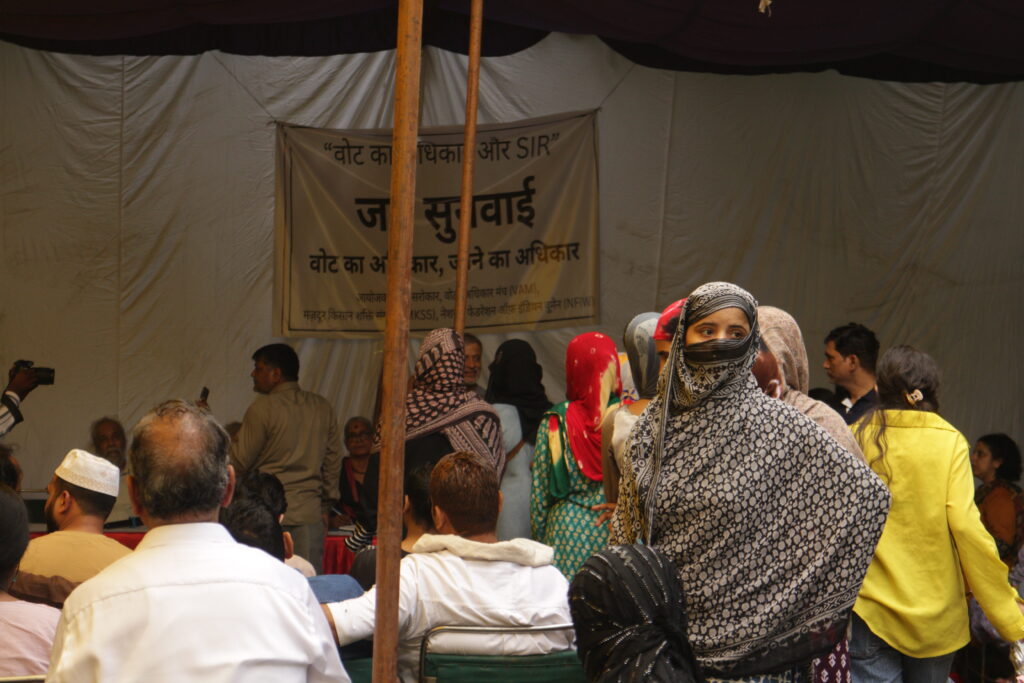
the burden of state displacement
“Mere paas itna time nahin hai, mujhe koi khaane ko nahin deta hai. Mujhe kaam bhi karna hota hai… Mai line me baar baar nahi lag sakti (I can’t queue up again and again like this because I have to work; no one else is going to feed me,” Anita declares in frustration.
Rani shares similar grievances and worries about losing a day’s earnings as her husband received a notice about a spelling error in his name. “Hamare yahan notice ko accha nahi maaante. 3 October ko jaana tha auto lekar foreign ke logo ko Delhi darshan karane, maine socha accha hai usme zyada paise aa jaate hai, par us din ab hearing hai (a notice isn't considered a good sign. On October 3, my husband was supposed to show some foreign tourists around Delhi in his auto. It would have paid well but the hearing is the same day),” she says.
In the ongoing phase of notices and appeals in Delhi, 33 lakh, accounting for 30% of the voters on the draft roll, have received notices for “logical discrepancies” or being unmapped. We have reported how SIR — demanding time, presence, and documentation — excludes a large section of the population, especially marginalised, working class women.
The SIR exercise presupposes the ability of the BLOs to physically locate existing electors at their addresses mentioned on their Voter IDs. Sagrika points out that those living on rent or in informal settlements are mostly poor and working class and often daily wagers. The inability of the State to locate them— due to displacement or mobility— shifts the burden on to those who possess neither the time nor the understanding to navigate this bureaucratic process.
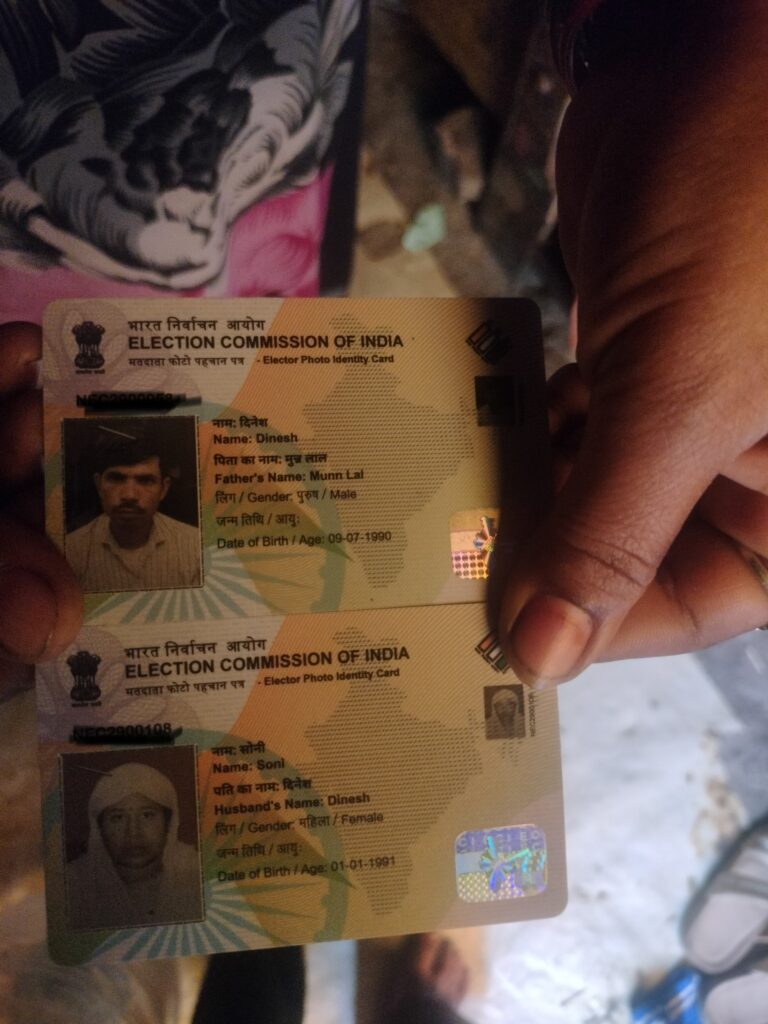
Soni and her husband work as scrap collectors in Kabaadi Basti just behind the huge Max Hospital in Malviya Nagar. They barely make Rs 15,000- 20,000 a month and have to sustain a family of four, including the education of their two daughters. They moved to a small house made of bamboo and tin sheets in the Kabaadi basti with around 200 people when their basti in Panchsheel Park was demolished to make space for a godown last year.
Both Soni and her husband have been marked shifted in the ASDD list, and deleted from the draft rolls. Soni alleges that she never got the enumeration form despite her efforts.
“I walked 2 km to Panchsheel Park because the people told me to go to the BLO of my previous basti. But he said he didn’t have my form. Then I was told to go to Chirag Delhi, near Shiv Mandir. I had to spend Rs 200 just travelling to and back with no result,” she says.
BehanBox talked to the other residents of the area who made the same shift last year. They had similar stories to tell.
Priya*, one of the BLOs from Panchsheel Park, admitted that it is difficult to distribute forms in bastis where the houses are rarely marked and people migrate often.
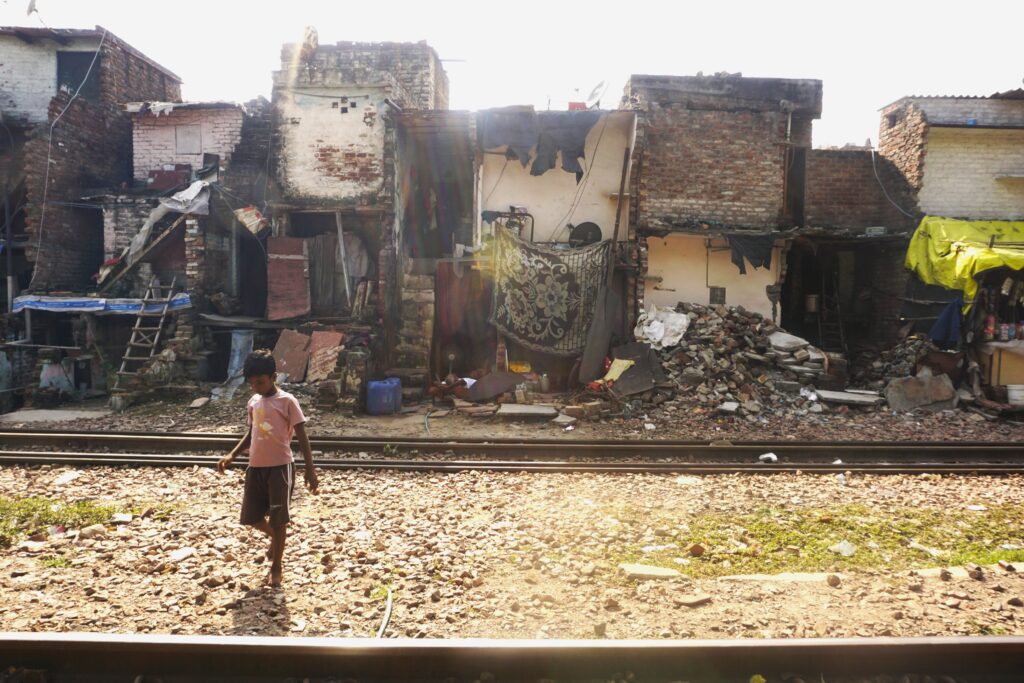
Chandra Shekhar Azad Colony, near the railway lines in the Wazirpur Industrial Area, also faced a demolition drive last year. Ram Behal, a man in his 50s, has been living in the area since before 1990. His single-storey house was amongst the many demolished and afterwards, he and his family of six shifted to a nearby rented room.
After making rounds of the area to where he was ousted from, to collect his enumeration form, he says, “Nahin zaroorat hai hamari toh hatao yahan se, hamara silsila khatam karo, ghumao bulldozer aur sab khatam kar do. Na yahan se jaane de rahe hain, na rehne de rahe hain (if we’re not needed, erase our existence, run the bulldozer and finish it all. They’re neither letting us leave, nor letting us stay).”
In JJ Colony Sawda Ghevra, residents evicted from BR Camp, DID Camp and Masjid Camp on Race Course Road in Central Delhi this August had to reportedly travel 45 km back to their old settlements just to collect the enumeration forms. Widespread confusion over which form to fill, where to fill it from and how to update their address only added to the distress of spending huge sums of money on travel only to return empty-handed.
“There is definitely no on-ground recognition of this population without a house, whose houses have been demolished, and who have been displaced. There is no mechanism to account for them. That’s why we see a huge number of deletions happening in demolished areas,” explains Sagrika.
This holds true of the Bela Estate JJ Colony too — a large slum cluster on the western bank of the Yamuna, a part of the Chandni Chowk constituency. The settlement has seen repeated evictions as part of an “anti-encroachment” drive along the Yamuna, an area categorised as the eco-sensitive “O-Zone.” Of the 729 voters in this basti, all except one have been deleted — though residents filled and submitted enumeration forms on time. Authorities cited the kacha (temporary) nature of their jhuggis, built on land owned by the Delhi Development Authority (DDA), as the reason for the deletion.
However, the Manual on Electoral Roll 2023, while detailing the determination of “ordinary residence”, a criteria for establishing eligibility of a voter notes that those who are homeless, displaced or do not hold any documentary proof of ordinary residence are eligible for enrolment in electoral roll, irrespective whether they live on private property, pavement or on encroached government land. But it adds that the “concept of ‘ordinary residence’ has not been defined clearly anywhere in the statutes”, and thus should be determined on a case to case basis, depending on the discretion of the authorities.
The names of nearly 48% of the registered voters in the southeast’s Delhi Tughlakabad constituency have been deleted from the draft rolls— the highest amongst all the 70 seats in the city. It is no surprise that this area, also largely comprising poor migrants and having faced multiple demolitions over the years, has reported such high deletions.
Form-6 and The Making of Temporary Lives
The Delhi High Court had earlier dismissed a public interest litigation alleging that people who are homeless or are rendered homeless through state demolitions are at the risk of being left out of the electoral rolls during SIR. The court said that there are existing mechanisms and any elector whose name is omitted from the electoral roll because of demolition or relocation can submit Form 6.
However, residents of Jailer Wala Bagh, a Jhugghi Jhopdi (JJ) cluster in Ashok Vihar, view this as suspect.
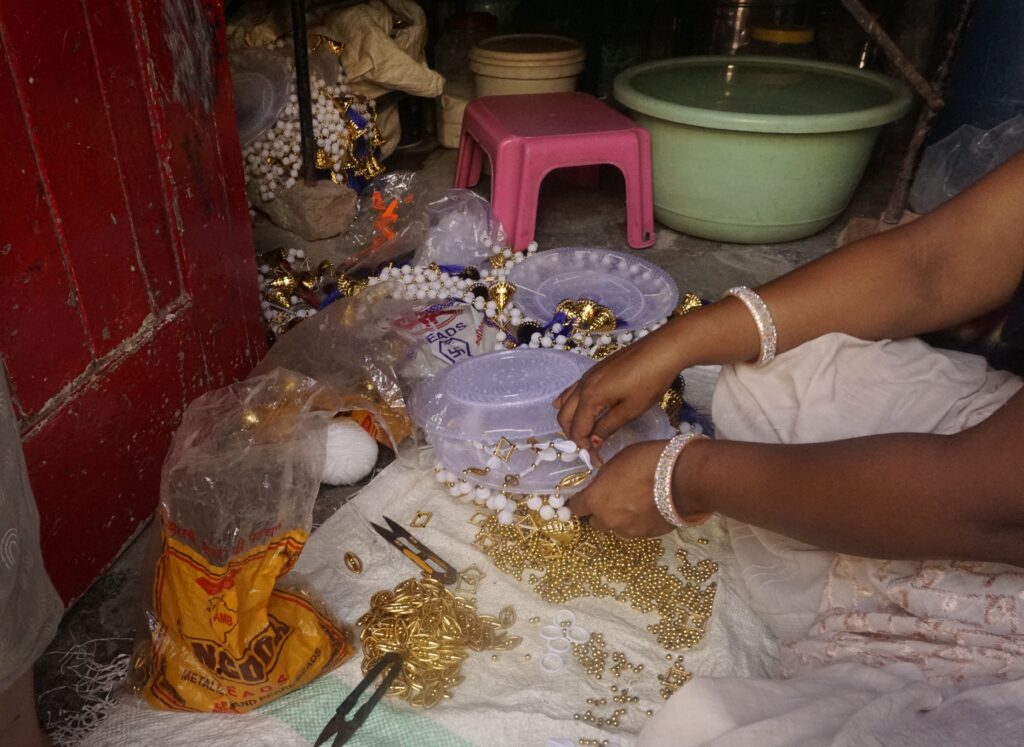
Amidst the rubble of demolished houses, Kamla Devi, sits at the edge of her small one-room house, making decorative wall hangings of blue and yellow colour. It takes her a tedious 2-3 hours to finish a piece for which she gets Rs 25. Her hands almost numb stringing together small shiny beads, she usually manages to complete 2-3 pieces in a day. Her husband works as a helper with a car dealer.
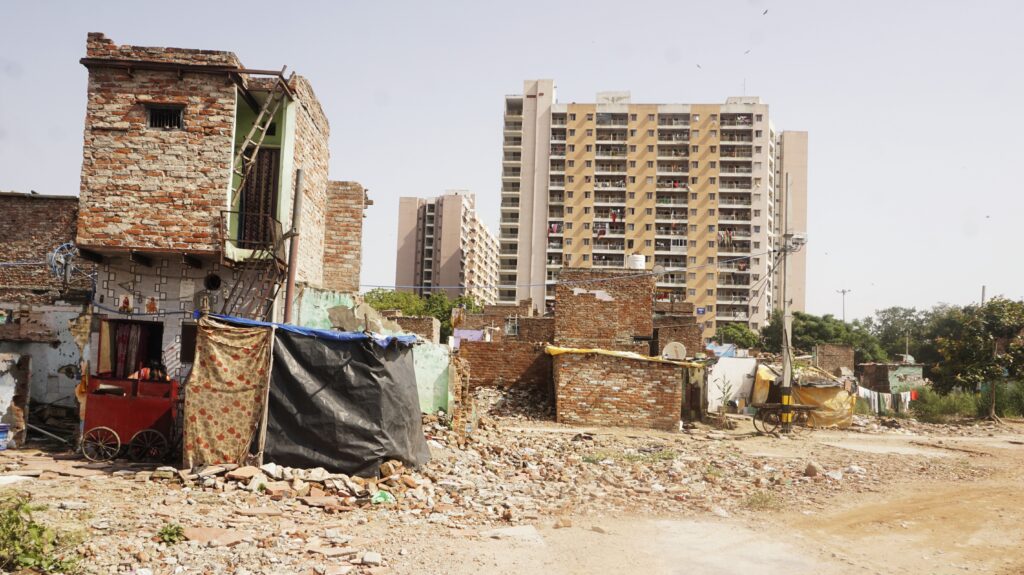
In June 2025, DDA tore down close to 300 houses in the settlement, declaring the houses “illegal”. Reportedly around 1,000 families were provided in-situ rehabilitation in the nearby Swabhiman Apartments as per the Delhi Slum & JJ Rehabilitation and Relocation Policy, 2015. Kamla Devi’s house, along with 567 others, were declared unsanctioned, and went without electricity for three months in Delhi’s scorching summer.
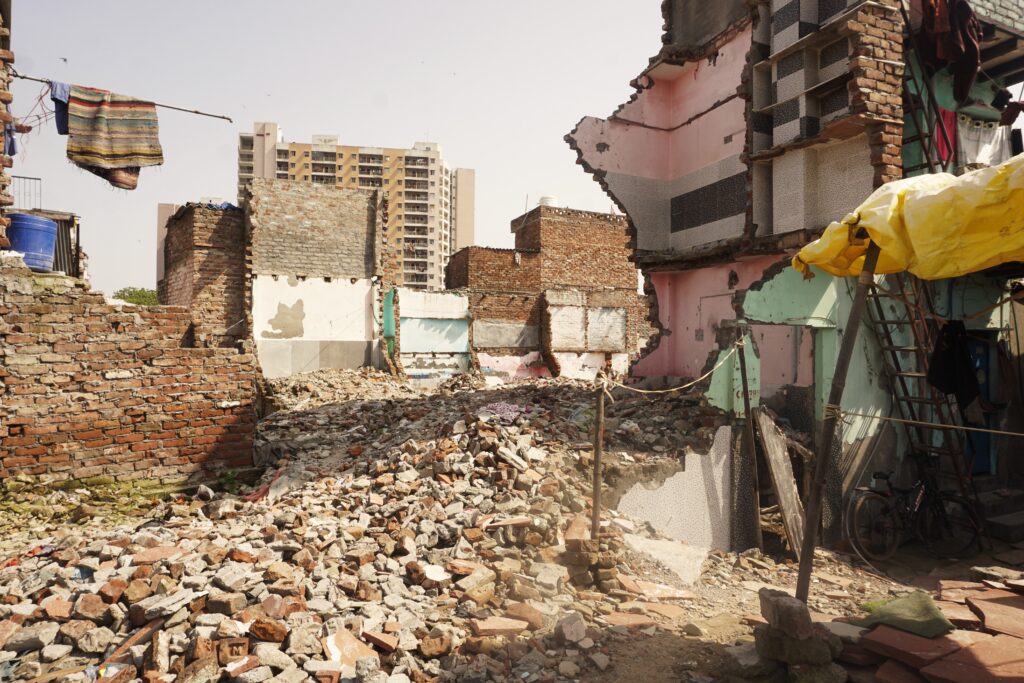
As per the Delhi Urban Shelter Improvement Board (DUSIB), there are 675 recognised JJ clusters across Delhi that are eligible for in-situ rehabilitation. As per the guidelines, the name of the JJ dweller must appear in at least one of the voter lists of the years 2012, 2013, 2014 and 2015 (prior to 2015 cutoff date) and must possess at least one of 12 valid documents, including electricity bills and driving license.
In Jailer Wala Bagh, the Delhi High Court ordered a stay on the households that were declared ineligible for rehabilitation. Kamla, and many other women BehanBox interviewed in the area alleged malpractices in process. “My ID card is from 2009, I also voted in the 2014 General Elections but they used my son’s recent Voter ID for establishing eligibility,” she says. “I was in Haridwar, and my son isn’t aware of these things. They [the officials] should have asked for my ID, then he would have shown them. Vote maangene ke time nahi dekhte hai 2014 ya 2015 se hai (when they ask for votes, they don’t see if [the voter ID] is from 2014 or 2015),” she says.
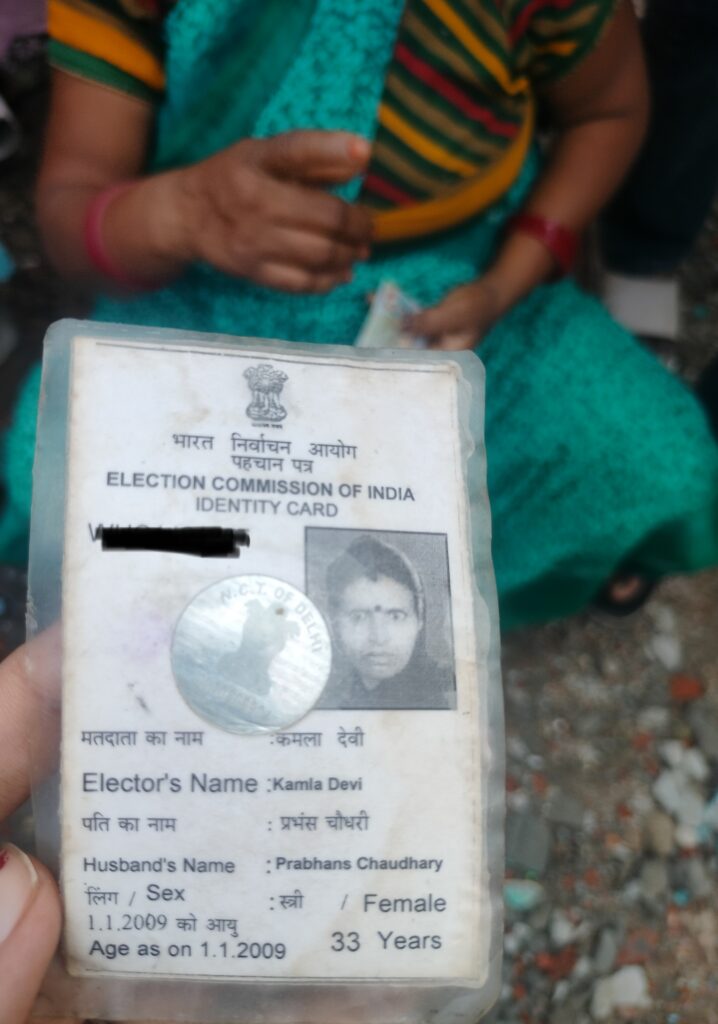
Kamla, her son and her husband, all have been marked “absent” despite filling and submitting the enumeration form. They also voted in the 2025 Assembly Elections. Now the only option left is to apply for inclusion through Form-6.
The Registration for Electors Rules was amended in 2026 making Form 6 exclusive for new registration of voters. Form 6 also carries a declaration about applying to be a voter for the first time. “This is a violation of Section 31 of the ROP Act, which makes a false declaration a punishable offense with imprisonment up to one year or fine or both. By making deleted voters fill Form 6, the CEO of Delhi is placing lakhs of ordinary people in the position where they must either sign an untrue statement carrying penal consequences or forfeit the franchise,” notes Sagrika.
No public clarification has been issued explaining how deleted electors are expected to comply with this statutory declaration while applying for re-enrolment.
Transparency activists and civil society groups have alleged that inclusion through Form 6 could lead to a complete erasure of existing voter history. They instead demand that Form 8, meant for correction in details of existing voters, be used.
“There are houses where the votes of the entire family are deleted. Even if included later through Form-6, it means that their voter history will be deleted. It is more than just disenfranchisement, it shows that some people are always disposable for the state,” says Sagrika.
Kamla has these fears too: “Ab agar ye form bharungi toh pehchan patr naya hoga. Phir survey wale bolenge hum naye hain… waise bhi hame log ‘Bangladeshi’ bolte hain (now if I fill this form, my identity card will become new again. Then the survey people will say we’re new here too. Anyway they call us Bangladeshi).”
She had hoped that her family too would be given rehabilitation like her neighbours. However, with the new Form-6, her hopes get dimmer.
BehanBox counted the number of deletions in Jailer Wala Bagh, spanning from Block A to I. Of the total number of voters (4,727) present on the electoral roll, 81.5% (3,854) have been deleted. Amongst the deletions, 89.1% (3,434) have been marked absent.
It is still unknown how many of those deleted are still awaiting rehabilitation. What is striking is that deletions have also hit residents rehabilitated in Swabhiman Apartments—the very voter cards that had made them eligible for that rehabilitation in the first place are now declared invalid.
West Bengal is a useful case for illustrating both the slow pace of the process as well as the low acceptance rate. According to reports, the EC data shows that from December 17, 2025, when the SIR draft roll was published, until August 7, a total of 34.13 lakh Form 6 were filled, including those applying for the first time and those who were deleted. Of those, 4.86 lakh forms remain unprocessed, 7.26 lakh were rejected and only 14,079 were accepted.
It thus remains doubtful whether those deleted from the draft rolls will be able to cast their vote in Delhi’s Municipal Corporation Election scheduled for next year.
Absence As Punishment
A study conducted by the Stranded Workers Action Network (SWAN) explains how, for migrant labourers, factors like low awareness, coupled with their physical absence from their home districts, create systemic barriers to democratic participation. In a survey of 338 workers, 68% did not have accurate information about what documents were required for the SIR verification process.
It is no surprise that states like Delhi, Maharashtra and Telangana — with the highest number of migrant populations in the country, according to 2011 Census data — have reported deletions of over 20%, extending till nearly 30%. Amongst these, the majority of deleted voters have been marked “permanently shifted” or simply “absent”.
Indrajit Roy writes about the idea of “sedentary citizenship”. He argues how citizenship and voting rights hinge disproportionately on people’s places of origin and habitat, disregarding the mobile character of migrant labourers, who circulate between their towns and cities of employment, and the villages where they are legally recognised to reside.
This vulnerability is compounded for those who commute far for work.
“The working class population does not have 9-5 pm timings. If the BLO comes during the day, and thrice during the same time, it is very unlikely that they will find someone. In most cases the BLOs have not even visited thrice,” Sagrika notes.
The ROP Act mentions three conditions under which people’s names can be deleted—shifted, duplicate and dead. The Act under Section 20 (1A) as well as EC Manual on Electoral Rolls 2023 notes that a person absenting himself temporarily from his place of ordinary residence shall not be deleted.
BehanBox talked to Shakuntala, a BLO from Panchsheel Park, Block-B, to understand the difference between the categories of “absent” and “shifted”.
“It also requires the help of the neighbours. If they say that someone has moved permanently we mark them as shifted, and in cases we cannot ascertain we mark them as absent,” she says.
She also points to the lack of training. “There is so much confusion on the ground. Most times it is difficult to verify because the phone numbers on the enumeration forms are also not updated. Our supervisors just send us PPTs and ask us to read them. I would have been an IAS officer if I could understand so much.”
We have reported on how overworked the BLOs are during the SIR process.
BehanBox reached out to Pawan Kumar, a BLO from JJ Colony Sawda Ghevra (new part number 127), who told us he does not know how to differentiate between the categories of shifted and absent. He admitted that this question could only be answered by his supervisor. Surprisingly, he along with his other BLO Anjana Devi has marked only 1 voter absent, 125 shifted and as many as 104 voters under “EF (enumeration form) refused” category.
Sagrika points out that the BLOs are not trained on these manuals and laws. “Even in the case of homeless people, the ECI Manual mandates that BLOs have to go at night and check where a person sleeps to ascertain their ordinary residence. While I agree that this is very unrealistic for the BLO — who is working all day — they should have found a way to figure this out,” she says.
Close to 45,000 people in the state capital are without homes, according to the 2011 Census. There is no account of how many of them have made it to the draft list after the SIR process, and how many of them will entirely be disenfranchised.
*Names have been anonymised to protect identity.



We believe everyone deserves equal access to accurate news. Support from our readers enables us to keep our journalism open and free for everyone, all over the world.
