[Readmelater]

What Counts As Proof Of Belonging? Women, Welfare And The New Citizenship Crisis In West Bengal

Increasingly deprived of access to welfare schemes, women deleted from the voter list during the SIR exercise are negotiating questions of citizenship and belonging in BJP-led West Bengal

Read other reports as part of our SIR coverage here. For leads, queries, and suggestions, write to us at editor@behanbox.com.

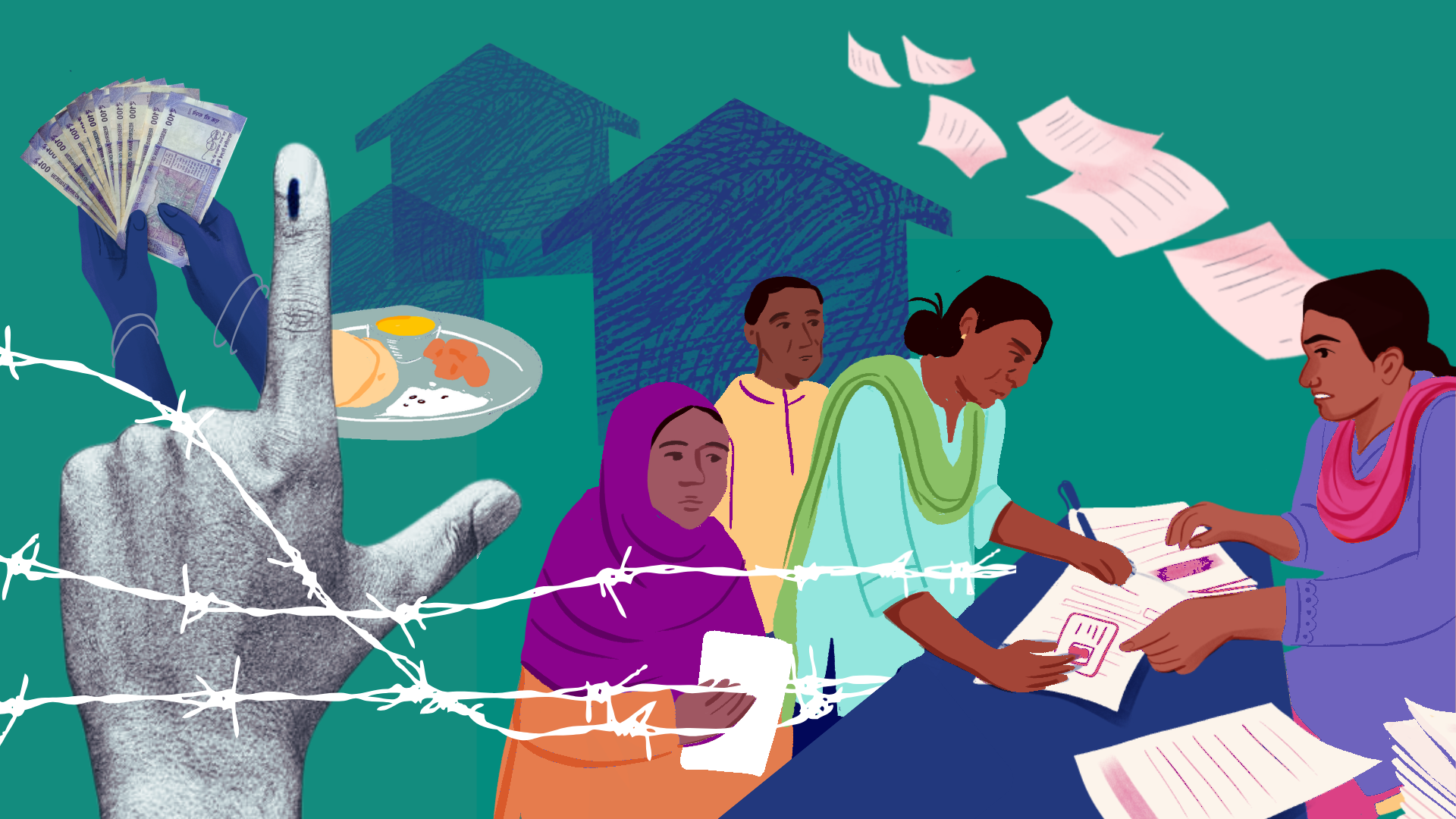
When Sarika Mallik’s name was first deleted from the voter roll in West Bengal during the Special Intensive Revision (SIR) ahead of the April assembly elections this year, her main concern was her political disenfranchisement—not the loss of her welfare entitlement. She received Rs 1,500 under Lakshmir Bhandar scheme, the state’s cash transfer scheme for women. That stopped in May 2026. 

After the new Chief Minister Suvendu Adhikari took office, he announced that Lakshmir Bhandar payments would be paused pending verification of beneficiaries and an investigation into “fake” or “ineligible” claimants. Later that month, a new scheme replacing the Lakshmir Bhandar, the Annapurna Yojana , was launched and rolled out in June. 

Now, a new government order from the West Bengal Department of Social Security, Women and Child Development requires the recipients of the new Annapurna Yojana to disclose their electoral status. The 10-page ‘Family Level Data Collection Form mandates disclosure of every recipient’s EPIC (voter ID), their SIR status (whether they have a case pending before the tribunal) and their status of the Citizenship (Amendment) Act, 2019 (CAA) application status, if they have applied for one.

Lakshmir Bhandar, which was the former Trinamool Congress (TMC) administration’s flagship scheme, was relaunched by the Adhikari-led government as Annapurna Yojana, upping the amount to Rs 3,000 but making it conditional on the SIR status of beneficiaries.

Sarika aired her concerns as she sat cross-legged on the cement floor of a wholesale garment godown in Metiabruz’s Darzeepara area where she works. 

“The Rs 1,500 from Lakshmir Bhandar was of great help. Sometimes, it would go towards children’s expenses, and other times towards household expenses,” she said as she hemmed and added buttons to a child’s frock. On rare occasions, she spent the money on herself.  

Metiabruz is a Muslim-majority cluster – part of the Diamond Harbour Lok Sabha constituency and a prominent hub for kidswear production units. Here, in one of Asia’s largest  informal textile clusters, women home-based workers like Sarika keep a vast tailoring economy running. Where women’s earnings are meagre – fluctuating between Rs 6,000 and Rs 10,000 a month depending on orders and season – the Lakshmir Bhandar scheme was an important lifeline. 

SIR was meant to “purge” voter rolls of Absent, Shifted, Dead, Deleted (ASDD) but it is now shaping citizens’ access to policies and public funds in a welfare state. Now there are 70 lakh fewer beneficiaries receiving the new Annapurna Yojana than before.

It is not the loss of welfare alone that troubles Sarika but that her very belonging is questioned. “I have lived in West Bengal since the time I was born — for 31 years. My parents and grandparents are from here too as are my in-laws,” Sarika said. “I am a daughter of this country.” 

The Minister of Urban Development and Municipal Affairs of West Bengal, Agnimitra Paul, told The Wire that those deleted voters who have filed appeals before SIR tribunals or have applied under the CAA will continue to be eligible for Annapurna benefits until their cases are disposed The CAA offers a fast track to Indian citizenship for non-Muslim refugees from Pakistan, Afghanistan and Bangladesh who entered India before December 31, 2014.

In April, as West Bengal was carrying out the state-wide SIR exercise ahead of the assembly polls, many women BehanBox spoke to in Metiabruz and Murshidabad districts were already apprehensive about the impending losses. 

“Will I now lose access to government schemes? Ration? Lakshmir Bhandar? My citizenship?” Rozina Bibi from Samsherganj had asked. Her documents had been flagged for a PAN mismatch despite voting in several elections. 

Since mid-August, women across Bengal are staging protests over unpaid or withdrawn Annapurna benefits. 

As the new government completes its first 100 days in office, it faces mounting criticism over a cluster of intertwined issues: the linkage of SIR with access to welfare schemes, linking of SIR with citizenship during the self-enumeration phase of Census 2027, and the growing perception that SIR is being used to police belonging.

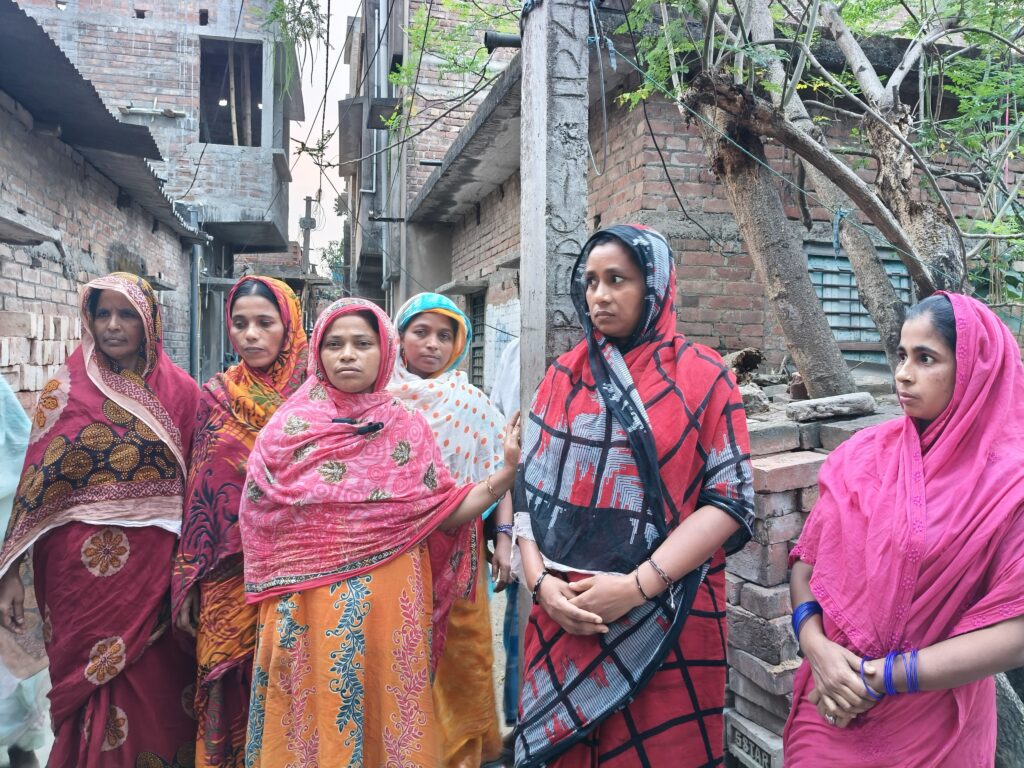
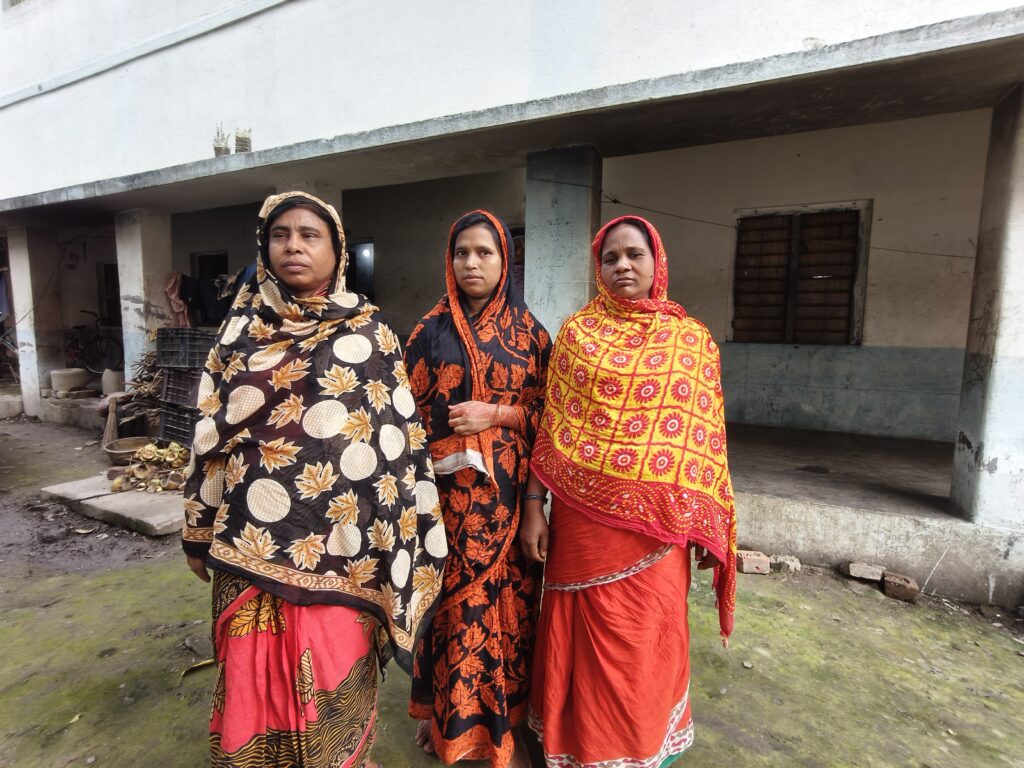
BehanBox travelled across Metiabruz, Murshidabad and Thakurnagar, spoke to more than 25 women, sometimes returning to the same women we spoke to in April, whose names were deleted in the SIR. Their accounts reveal how the linkage of SIR and welfare is shaping their everyday lives and how the idea of citizenship and belonging are being lived, imagined and negotiated in a BJP-led West Bengal.

Welfare and Citizenship

“I have become ‘suspect’ in everyone’s eyes. It’s insulting,” said Sarika. Deletion from Annapurna Yojana, she said, has made her a subject of ridicule and public shame.

“When everyone else gets the money and I don’t, I feel conscious. People will think my name was removed from the voter list, I don’t have a voter card and I have never voted,” she pointed out.

In Samsherganj, Murshidabad, Rukhsana Bibi*, a bidi worker, hands numb from rolling tobacco all day in a room with a makeshift kitchen, echoed Sarika’s anxieties. “People look at us differently. It feels as if we are being treated as second-class citizens — as if we do not fully belong here,” she said.

In another part of the state — Thakurnagar in North 24 Parganas district—women from the Matua community, shame was equally palpable albeit articulated differently. As Dalit refugees from Bangladesh with a very specific history of caste stigmatisation and displacement, the fresh question mark over their belonging has rekindled the stigma. North 24 Parganas recorded the second-highest number of ASDD deletions in the state, with women accounting for 53% of the deleted voters, according to data from the Kolkata-based non-profit Sabar Institute.

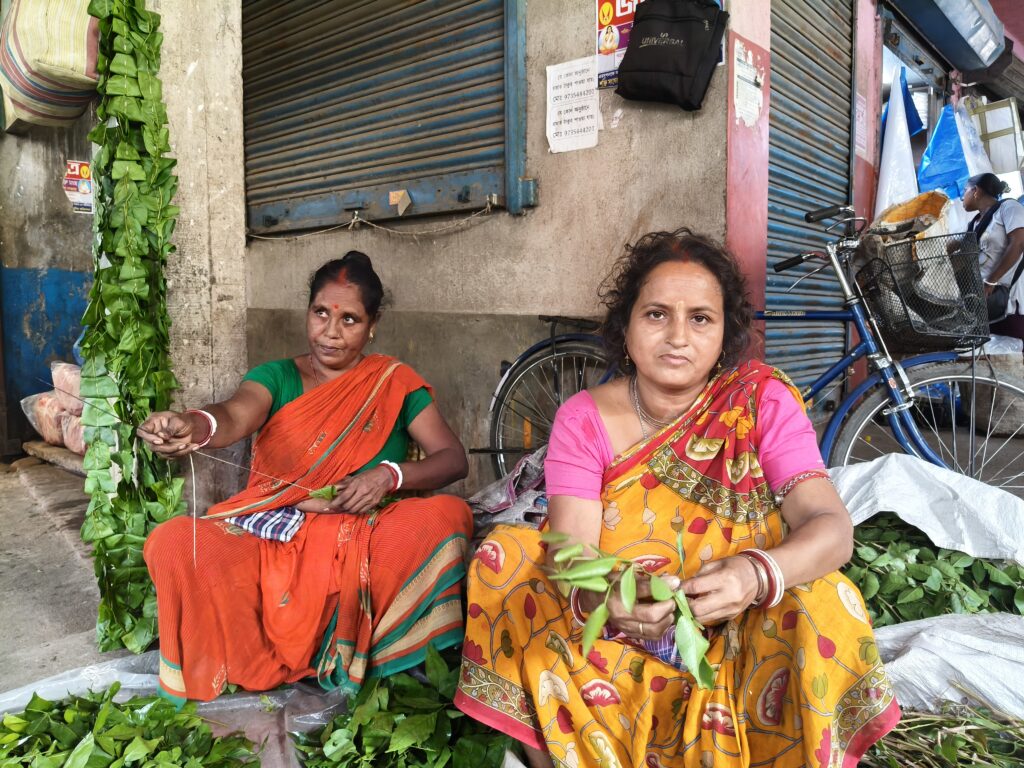
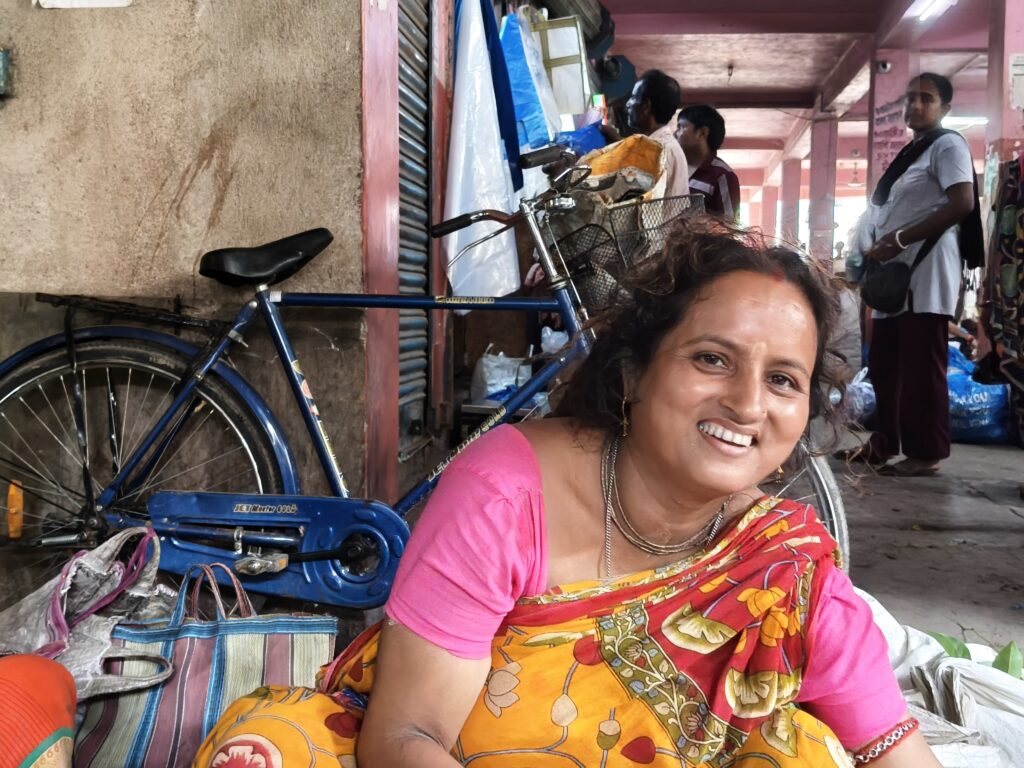
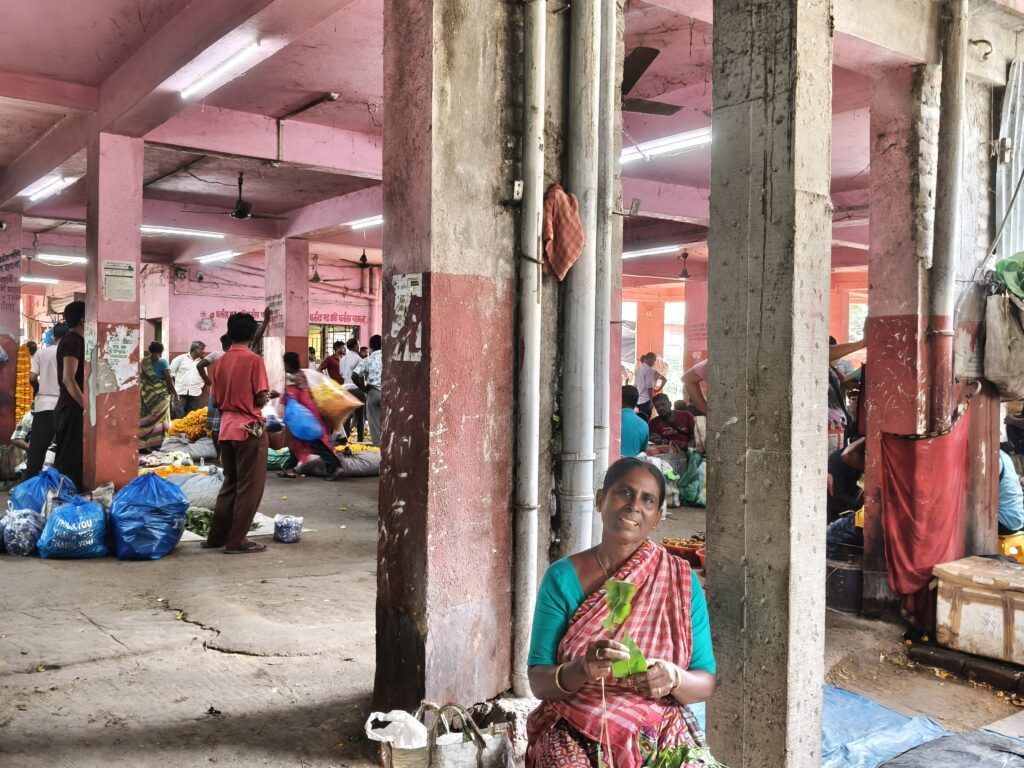
Radhika Rani Mondal, 39, draped in a red and yellow printed sari and sporting a sandalwood tilak on her forehead, sells bel leaves in Thakurnagar’s wholesale flower market. She described her status as “waiting”. She has applied for citizenship under CAA at the special facilitation camps set up inside the Thakurbari complex, the spiritual headquarters of the global Matua Mahasangha. When we asked her whether she received her installment of benefits under the Annapurna Yojana, she nodded yes. Shikha Samaddar, her next-door neighbour in the market prodded her to tell the truth: “Ete lojjar ki achey (what shame is there in this)?”

Flower seller Radhika Rani Mondal, alongside fellow flower seller, and threading bel leaves at Thakurnagar wholesale flower market. North 24 Parganas, West Bengal/ Sanhati Banerjee

This reluctance is rooted in a deeper history of the Matua movement, a 19th century anti-caste movement among the Namasudras in Bengal. The community’s memories of how it was treated in post-Independence West Bengal are still vivid, noted Rajat Roy, Assistant Professor of Political Science at Presidency University. From the Congress’ Dandakaranya rehabilitation policy to the Left Front’s Marichjhapi massacre, the state’s treatment of Dalit refugees – described as udbastu (displaced person) and sharanarthi (refugee) – framed them as subjects of burden and exclusion.

Radhika Rani’s only solace is her Krishna, not just a metaphysical abstraction but something more tangible. The State, she says, can question her belonging but “you can’t take my Krishna away from me.”

Flower seller Radhika Rani Mondal at the Thakurnagar wholesale flower market, North 24 Parganas, West Bengal/ Sanhati Banerjee

Shikha Samaddar, on the other hand, says she has continued to receive her “bidhoba bhata (widow pension)” and Annapurna Yojana because she is not a “Bangladeshi” — positioning herself as an insider within a political vocabulary in which Bengali-speaking Muslims are cast as infiltrators and as the Prime Minister described “ghuspaithiye” meant to be weeded out as his “demographic mission”. It is also indicative of how one oppressed community claimed legitimacy by distancing from another.

For Shikha, who earns Rs 400-500 a day in peak seasons such as the Matua Mahamela in March and Kali Puja in autumn, and practically nothing in the lean season, money from the cash transfer scheme helped buy even food staples like rice. “If I were to lose my entitlements, like Radhika, what would I do? I don’t have strength in my bones now, ma,” she said.

Flower seller Shikha Samaddar going about her day's work at Thakurnagar wholesale flower market. North 24 Parganas, West Bengal/ Sanhati Banerjee

In Darzeepara, Rabia Bibi, who belongs to the Ostagar community of master craftsmen, has organised local women’s groups and is affiliated with the Indian National Congress. She contended that Muslim women need to develop a stronger mind and muscle to fight this exclusion and gradual shrinking of rights. “Eventually, they will reduce minorities to a minority in every sense; those with no rights,” she pointed out. In doing so, she established her Muslim belongingness and legitimacy while indicating a distance from ‘Rohingya’, another racialised term often used interchangeably with “Bangladeshi”.

Niraja Gopal Jayal, professor of politics at King’s India Institute, London, said these accounts illustrate the gap between formal citizenship and lived citizenship — a rule rather than the exception. “Before the SIR, the formal political equality of citizens — the principle of one person, one vote — did not mean that citizens were substantively equal in all respects. The SIR has undermined even that formal political equality of citizens,” said Niraja, the author of the book, Citizenship and Its Discontents, in an email interview with Behanbox.

She framed  welfare denial as a subject of social citizenship. “What does citizenship theory say about such denials of social rights? The answer depends on whether a society is committed to social citizenship or to a minimalist view of citizenship as political,” she told BehanBox

In a May 2026 ruling, the Supreme Court  upheld the legality of SIR but clarified that inquiries conducted under it were confined to electoral participation and did not amount to a final determination of citizenship. The Court further clarified that exclusion from an electoral roll does not by itself determine a person’s citizenship, which remains governed by the applicable provisions of citizenship law and adjudicated by competent authorities. 

Adil Hossain, an anthropologist who has researched citizenship and is among the petitioners, challenged the use of SIR deletions to deny welfare benefits in the Supreme Court. “First, SIR resulted in the loss of political rights through disenfranchisement. Now, by linking welfare entitlements to electoral-roll status, the burden falls most heavily on already vulnerable populations and pushes them further to the margins,” Hossain told BehanBox.

Hunger and Precarity

SIR deletions, as we reported, have been highest in regions such as Murshidabad, a Muslim-majority border district and Metiabruz in Kolkata, North 24 Parganas with a high concentration of Matua community and the Scheduled Tribe majority Jungle Mahal belt. These are all districts with significant marginalised populations, where large numbers of women work in informal sectors such as bidis, flower vending and home-based garment work. Women account for almost 61.8% of voters deleted or under adjudication across West Bengal.

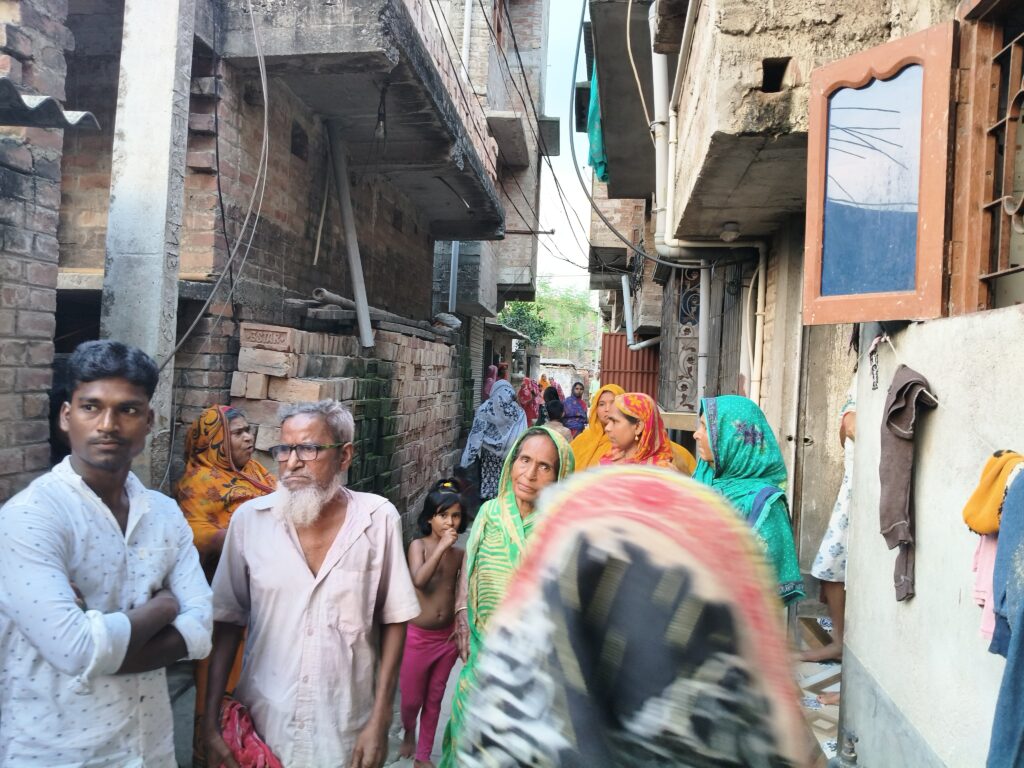
An inside view of the densely-packed narrow lane of Bara Jumla, a bidi making neighbourhood in Murshidabad/ Sanhati Banerjee

In the narrow lanes of Bara Jumla Colony at Raghunathganj Block of Murshidabad district, women sat cross-legged on floors rolling tobacco into bidis where a bundle of 1000 bidis would fetch them Rs 200 and for some as little as Rs 50 a day for a 12 hour workday, while managing homes and unpaid care work. Here, women were as afraid as they were angry. 

Women bidi workers inside Bara Jumla bidi colony, Raghunathganj Block, Murshidabad district, West Bengal/ Sanhati Banerjee

“What do you think would happen to our children now? That money was what bought them rice on days when I had no work,” said Hasna Rabeya, a bidi worker, and a mother of three. Now, she added, she stays awake most nights wondering if her children will have to live in fear. She is racked by fears for their future – ‘If they (the State) do not recognise us, what right will our children have? Will they be killed?’ 

Women whose names were deleted during SIR have also lost their homes to Padma river erosion, standing inside a temporary shelter at Sekhalipur High School, Lalgola, Murshidabad/ Sanhati Banerjee

There are others like Sahin Akhtar, who now live in a classroom at Sekhalipur High School after the river Padma swallowed her home during the last monsoon, worrying about their uncertain futures. “We are poor people.  We need food,” Hasna said. 

A June 4 order issued by the Bengal Food and Supplies Department links entitlements under the Public Distribution Systems (PDS) to the SIR too, depriving those flagged in the process and those deleted following adjudication by judicial officers of their entitlements. 

West Bengal’s PDS, which integrates the central National Food Security Act, 2013 covers around 6 crore beneficiaries, alongside the state-funded Rajya Khadya Suraksha Yojana covering around 2.73 crore beneficiaries. In all, it covers over 8.7 crore people, making it one of the largest food security networks in the country.

Prasanna S, a Delhi-based Supreme Court advocate representing the Paschim Banga Khet Majoor Samity (PBKMS)—a peasants’ and agricultural labourers’ union active on right to food and PDS issues—has challenged the order in the apex court.  

“SIR is an exercise undertaken for the preparation, correction and maintenance of electoral rolls,” Prasanna told BehanBox. “Its purpose is limited to electoral administration and the identification of persons entitled to be included in electoral rolls. The exercise is not intended to determine economic vulnerability, household eligibility, food insecurity, or entitlement to welfare benefits, or even citizenship.” 

Even if the State wished to revise the PDS entitlements database, as a process, it must first issue a notice, followed by a hearing and only then can take any action, said Prasanna. 

The linkage between electoral status and welfare has alarmed right to food activists. “This is unprecedented,” said Anuradha Talwar, a member of the PBKMS and former West Bengal adviser to the Supreme Court on Right to Food. “The ground for welfare delivery cannot be based on inclusion in the electoral roll. Welfare has always been delivered on the basis of poverty, labour, hunger, lack of access, and socioeconomic vulnerability.” The goal of the welfare state, she reiterated, was to recognise disparity and support sections of society who have historically faced structural inequalities. Instead, it is costing women multiple rights to food and citizenship.

Between SIR and Now

For Sahin Akhtar, a mother of two, the route from SIR deletion to welfare exclusion has been almost impossible to trace. Her name was deleted after the revision, and for two months she along with her neighbours ran from pillar to post, submitting online applications, family lineage records, panchayat certificates, PAN cards and school certificates.

“Even then our names were not restored,” she said. Then, Lakshmir Bhandar stopped two months ago and ration has not come since. “They said some facilities would be given. But what has happened? Nothing,” Sahin said. “Now they say my vote does not exist.” 

Murshidabad, a border district now with an operational holding centre in Lalgola for ‘suspected nationals’, recorded some of the most acute anxieties around SIR deletions. Inside Bara Jumla, Nazira Bibi lives in fear after someone told her: “You are a citizen of Bangladesh. You will soon be handed over to the Border Security Force (BSF). Or killed.”

Rozina Bibi, a vocal bidi worker whose own name and her husband’s were  deleted, described living in fear. She hears about the detention camps from her neighbours, through WhatsApp messages forwarded by male members of the household, and from the man at the Block Development Office (BDO) who calls her with “important news”.  

“People say that there are separate camps for people whose names are not on the voter list  and for infiltrators who came from Bangladesh are being set up,” said Rozina Bibi. Recent media reports, including by Scroll, describe Muslim men in Murshidabad being picked up from their homes in midnight raids and sent to detention centres, often without any clear explanation.

Rozina Bibi has also heard stories of people stranded at the Hakimpur border, a BSF-managed border checkpoint in North 24 Parganas district along the India-Bangladesh border that has emerged as a “pushback” flashpoint — born there, lived there, now “being sent from here towards Bangladesh. But Bangladesh is not taking them”. Rozina said people around her are falling sick with fear.

The exact number of appeals post SIR is itself contentious. CM Adhikari said that 27 lakhs were pushed to the adjudication stage while only 7 lakh people actually appealed, even as he acknowledged later that he did not have exact data. Other reports suggest far larger tribunal caseloads.

Nazma Bibi, another garment worker and mother of two, said that she received little political assistance beyond being told to submit forms and documents. “Applications have been submitted online. If the names come back, good. If not, then the new government will do whatever it wants,” she said. She did not know where she would have to go for her tribunal hearings. 

The question, said Niraja Gopal, is not merely whether insecurity exists, but how it is distributed. “We need to ask if the burden of insecurity is falling disproportionately on particular sections of the population,” she said.

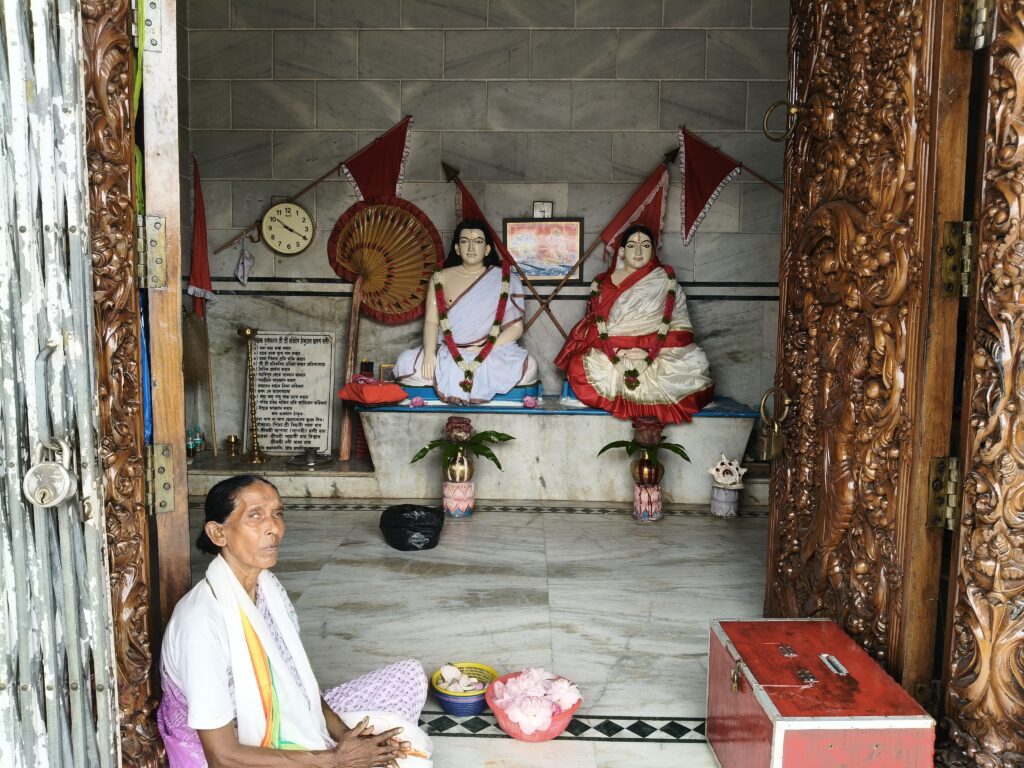
Temple worker Sushila Roy before starting her daily work at Sri Sri Harichand Thakur Mandir in Thakurnagar established by revered matriarch Binapani Devi or Boroma, Thakurnagar, North 24 Parganas, West Bengal/ Sanhati Banerjee

‘Any One Paper Will Do’

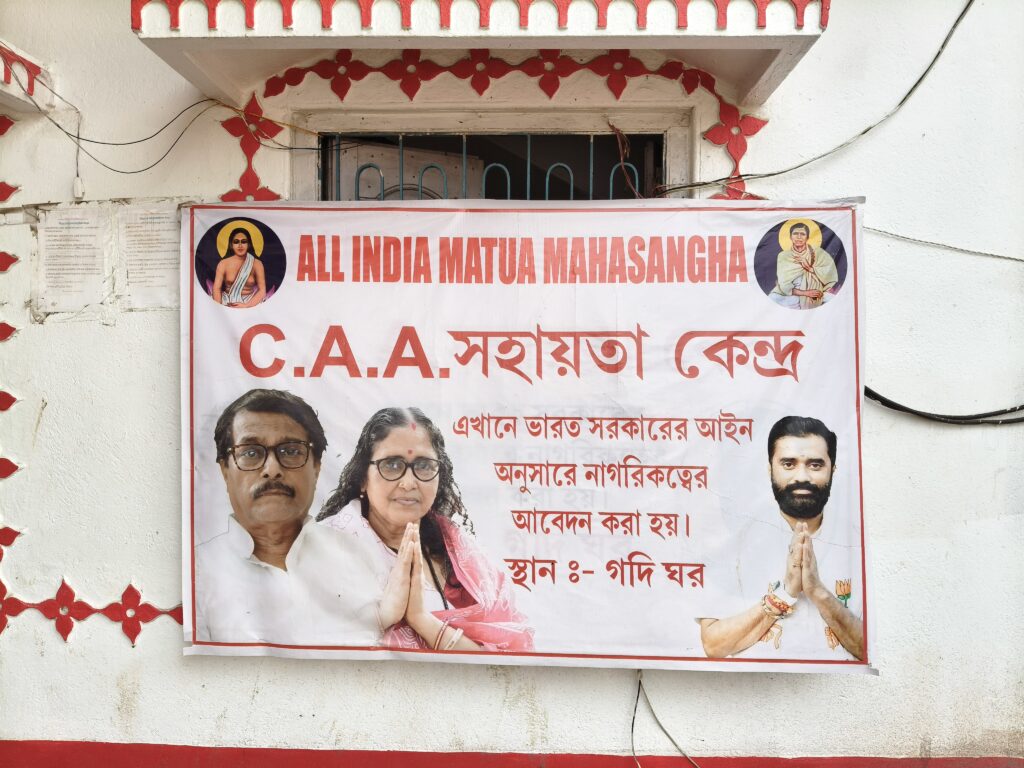
Matua districts tell a different story. Here, inside the sprawling Thakurbari complex adjacent to the Matua temple are the CAA facilitation camps where women sat cross-legged on the floor for hours, occasionally rising to approach counters where officials explained application procedures. Some had travelled from neighbouring districts and were still waiting well into the afternoon. 

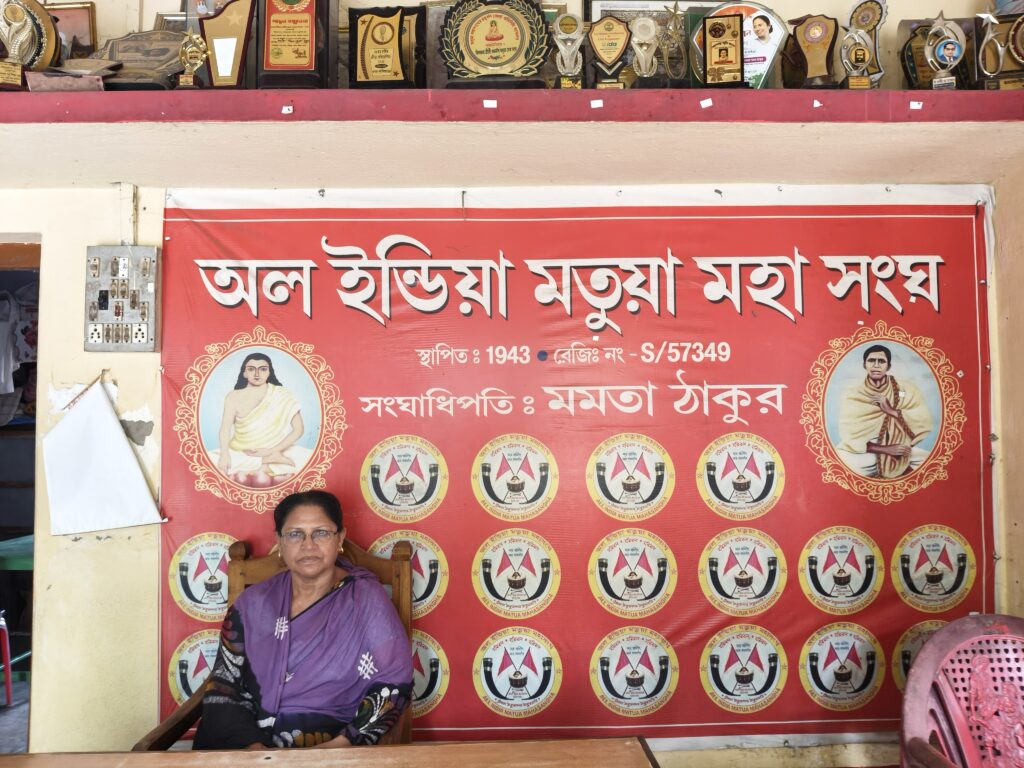
An outside view of a CAA facilitation camp, inside the All India Mahua Mahasangha Thakurbari complex, Thakurnagar, North 24 Parganas, West Bengal. On the banner: "Here, citizenship is offered, as per the rules of the Indian government"/ Sanhati Banerjee

Across one counter, Bishwa Biswas, a designated functionary assisting applicants gave little indication of  what documents were needed: “There must be something; any document: a Bangladeshi voter card. If not, I’m not exactly sure. Any one Bangladeshi paper will do.” For those who could not produce the documents, Biswas threw his hands up and said they would have to wait until the government announces what might be the appropriate documents.

“To many Matua refugees in West Bengal, East Pakistan or Bangladesh is a memory that immediately does not translate into paper,” said Rajat Roy amidst the current shift towards a decisive “paper citizenship”.

Mamata Bala Thakur, Trinamool Congress Rajya Sabha MP and a prominent Matua leader at her residence in Thakurnagar Thakurbari/ Sanhati Banerjee

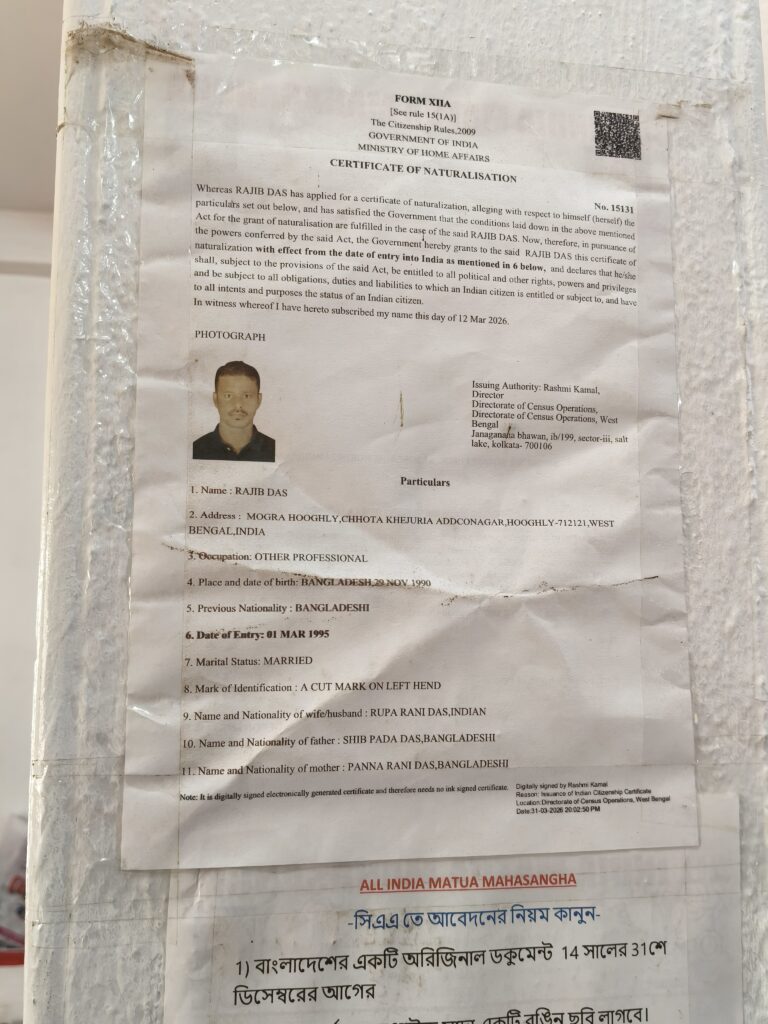
Mamata Bala Thakur, Trinamool Congress Rajya Sabha MP and a prominent Matua leader, has been among the most vocal critics of both SIR and the citizenship process now being offered to the community is apprehensive of this route. “The Certificate of Naturalisation and a Citizenship Certificate are not the same thing,” she said. “Today, many Matua people are happy to receive these certificates, but they are not realising that this could amount to second-class citizenship.”

A specimen of a Certificate of Naturalisation stuck on a wall adjacent to a counter inside the CAA facilitation camp inside Thakurbari, Thakurnagar, North 24 Parganas, West Bengal
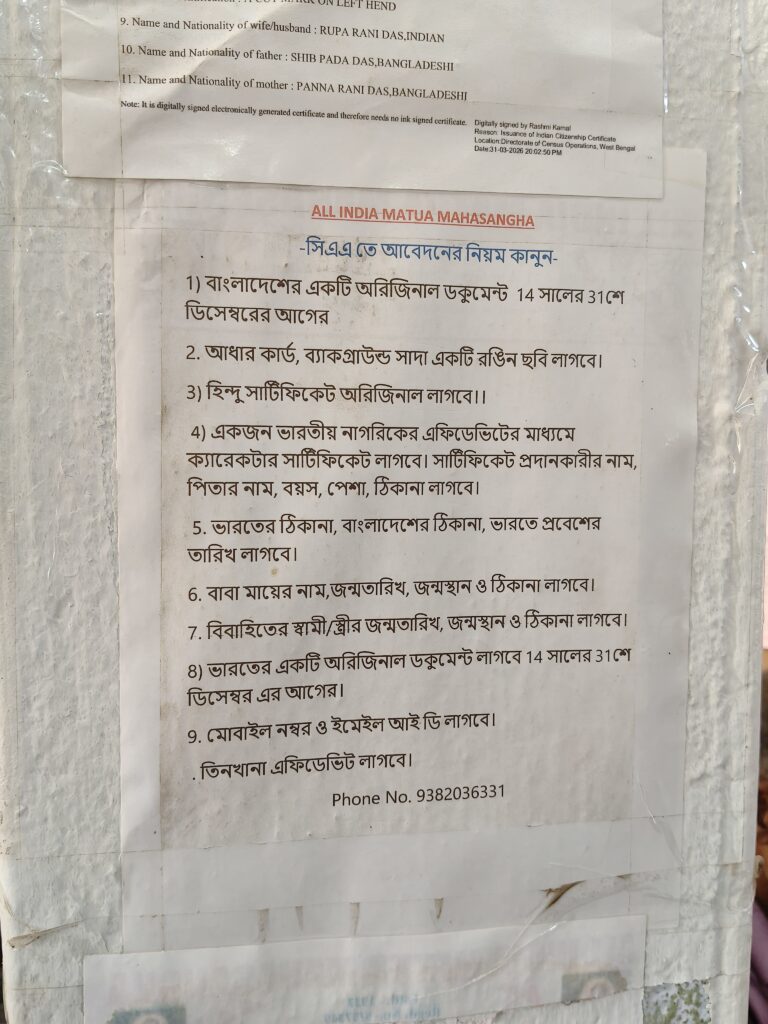
A paper listing the documents required for obtaining a Certificate of Naturalisation, as stuck on the wall of a CAA facilitation camp inside Thakurnagar Thakurbari

The Matua community’s desire to claim citizenship through the tribunals stems from a deep-seated desire for social and legal recognition and respect for the community against the backdrop of their historical marginalisation, said Roy.

Collective Action

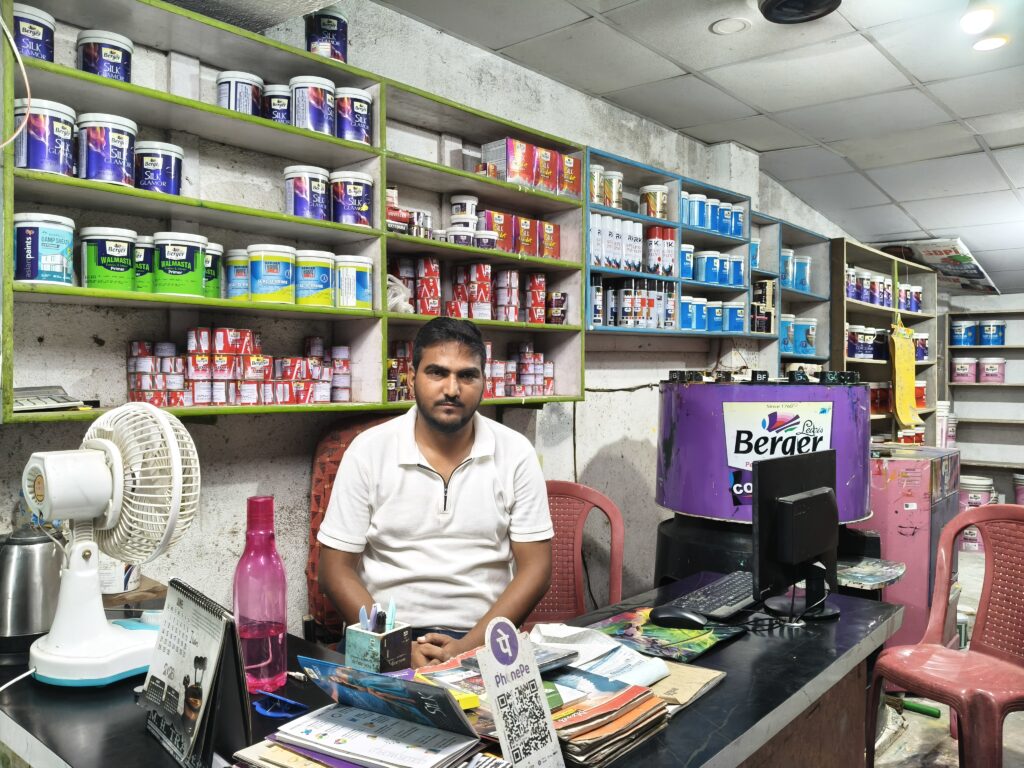
In Samsherganj, Murshidabad, the Deleted Voters Sangrami Mancha has become a focal point for residents whose names were removed during the SIR. MD. Alauddin SK , one of its principal convenors, also affiliated with Social Democratic Party of India (SDPI), said the forum emerged because deleted citizens were frightened, isolated and unsure who to turn to.

MD. Alauddin SK, principal convener of Samsherganj Deleted Voters Sangrami Mancha, and member of Social Democratic Party of India photographed at his paints store in Samsherganj, Murshidabad, West Bengal/ Sanhati Banerjee

In Murshidabad, where almost every woman works as a bidi worker, those who are able to take part in meetings, despite back pain and numb hands, do when they can.

Rozina refuses to let the fear stymie her. “Why would I not be afraid? But, let them come,” she said. She believes that collective action is what keeps hope alive. “If thousands and thousands of ordinary people stand together as one, then nobody will be able to do anything.”

“Today, our mothers and sisters are inside their homes. Tomorrow, when they cannot give milk to their children, when they cannot buy medicine for their elderly mothers, when there is fire burning in their own stomachs, then they will come on to the streets,” said Rabia.

In Thakurnagar’s flower market, Siuli Das offered a more expansive and mature view of citizenship as she packed for the day—years of living, working, and participating in society should count as proof of belonging. “Why is our labour not counted as proof that we belong to this maati (soil)?”

*Names have been anonymised to protect identity.

  • Sanhati Banerjee is an independent journalist and content consultant.

Bhanupriya Rao

Bhanupriya Rao is the founder of BehanBox. She is a researcher and advocate on gender and just governance.

Support BehanBox

We believe everyone deserves equal access to accurate news. Support from our readers enables us to keep our journalism open and free for everyone, all over the world.

Donate Now