[Readmelater]

BehanVox: Delete, Delete, Delete

This week in BehanVox: 1970s cabaret songs, data centre resistance in Andhra Pradesh, and more
Subscribe to our weekly newsletter that brings you top stories, news from the world, and our team’s reading recommendations.

Hello and welcome to BehanVox!

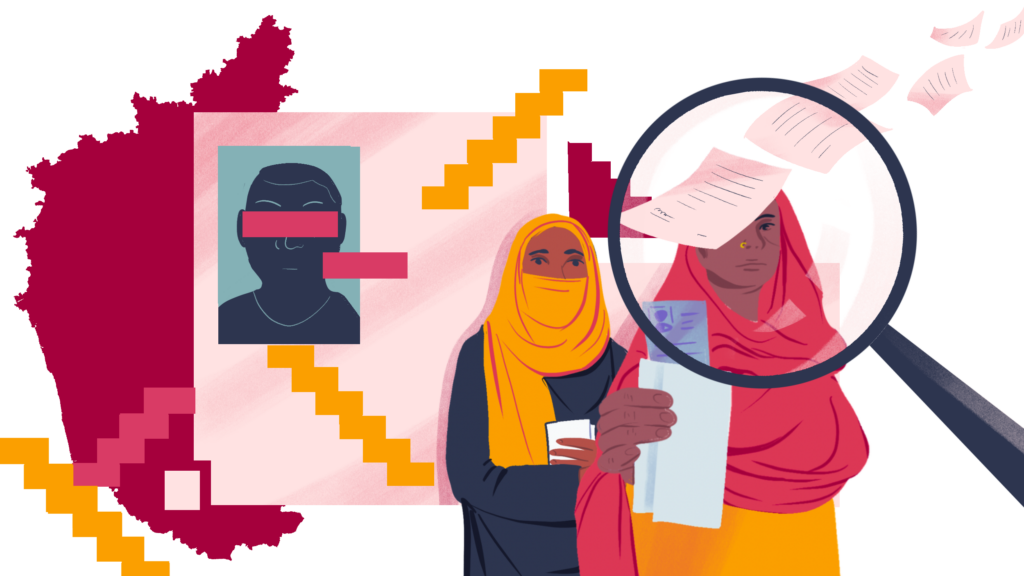
Where did you live 22 years ago? Were you enrolled for an electoral revision about which few knew? What about your father, was he? If he is not alive, surely you have his voter ID? Which booth in which district of which city did he vote all those years ago? Why is his name spelt differently in Tamil/Hindi/Bengali and English? Is that an ‘s’ or an ‘sh’ and where did the initials appear suddenly in his official records? On a now almost predictable basis, the rules around the SIR are changing, leaving every single voter rattled. It does not matter if you have lived in one place all your life, done the one job or voted at the one booth. There will still be the one rule that will elude you. This week, a volunteer who works for an organisation that is helping Karnataka’s voters navigate the labyrinth called SIR writes for BehanBox on why the exercise seems like a video game where the rules change every once in a while, making sure you never complete it.

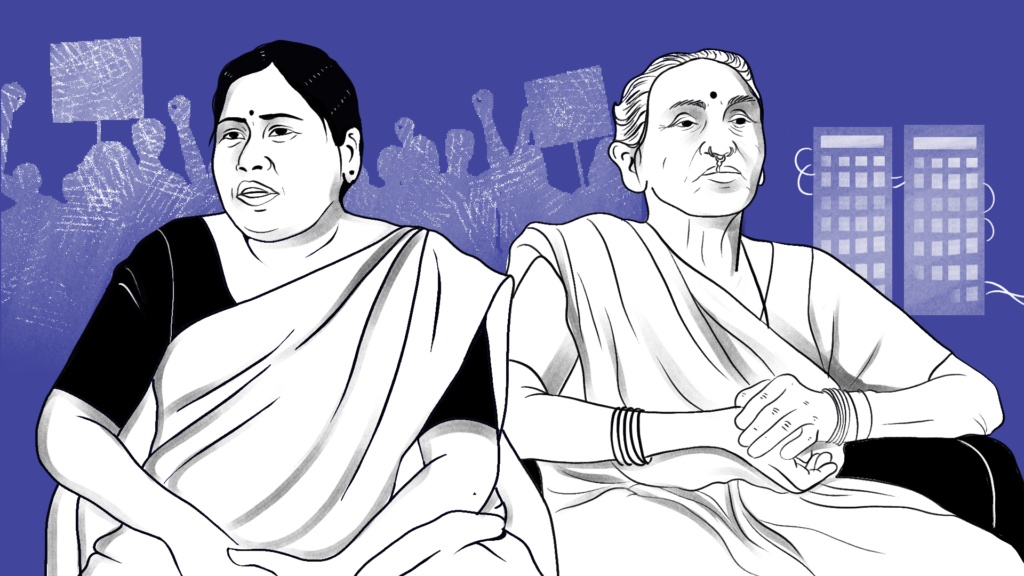
A recent Axios report says that public opinion in the US is set so sharply against data centres that the Republican Party has warned its candidates in critical states going to the polls that their support for such projects could cost them an election. And if one bastion falls because of a data centre, what does that forebode for the future of these ugly warehouses that are known for draining precious natural resources without generating much employment? In India, where chief ministers are vying to grab any passing data centre project, campaigns are slowly building force but are a long way from flipping an election. We talk to two intrepid women who have rallied support in an Andhra Pradesh village to at least secure a better deal for those losing their lands to these monstrosities.

Story So Far

Pamela D’Crasta, an 86-year-old woman living alone in Bengaluru, has in her possession every single voter ID she has held since 1995 but her name is nowhere to be found in her 2002 constituency in Mumbai.

“What should I do? They’re troubling old people like me,” she said to Meghana Choukkar, a volunteer with the SIR helpline set up by a coalition of civil society groups, My Vote, My Right Karnataka (MVMR-K)

Calls like these are all in a day’s work for Meghana and her team. Often the phone beeps with an incoming call even before the last one winds up. To Meghana, Pamela’s did not seem like a high risk case – an elderly, well off and college educated person with decades of voting behind her. But because she was vulnerable the volunteer says she was dogged in her search for her name. Nothing helped. Finally, Pamela gave up and submitted her form without the mapping information.

This exercise was supposed to clean up the electoral roll, deleting names that should not be there. Instead it is giving grief to genuine voters, such as Pamela or Bibi Fathima whose father’s name was wrongly entered in the electoral list as her grandfather’s.

In Delhi there are many such Pamelas and Bibi Fathimas as well. A news report says that names of over 47 lakh voters in Delhi are going to be excluded from the draft electoral roll to be published on August 31. 

“Having witnessed the chaos on the ground, I am in disbelief that our right to vote, the most basic element of a democracy, now depends on a process with no clear instructions, opaque ever-changing rules, and an assumption of a perfectly digitised and documented administrative Utopia,” concludes Meghana.

Read her account here.

For Pyla Kondamma and Relli Ramakrishna, two Dalit women from Tarluvada in Vishakhapatanam district, the slopes of Chukka Konda hills across their homes used to be everything – it was where they cultivated cashew and mango and leafy greens, where they spent time with their families and where they went to catch the evening breeze. The land did not officially belong to them though it had been promised to them in the 1970s under a land policy for landless farmers. But from the rough, arid patches they had created space for vegetation and farming.

Last year, all that changed. “The government deceived us under the pretext of conducting a land survey. Revenue officials assured us the land would remain ours. Instead, they collected information about who owned how much land and measured and recorded all the details, never disclosing any actual figures to us. Then they settled on Rs 80 lakh as compensation for two acres,” recalls Relli. 

The land now is where one of India’s largest AI Data Center hubs is coming up. It will be a project spearheaded by Google in partnership with Adani and Airtel. The promised compensation of land and money for those who have been impacted has not been delivered to their satisfaction. And the realisation that the centre, when it is up, will impact the water resources and environment is beginning to worry the village.

We interviewed the two women who have been spreading awareness in the village about why the compensation is not enough. For now, the future seems fraught, they say.

Read our interview here.

This week we bring you an excerpt from film scholar Shikha Jhingan’s new book, The Female Playback in Bombay Cinema: Voice, Body, Technology, that takes a fresh look at how women singers shaped the many shifts in Bollywood’s narratives, and in turn, themselves adapted to the industry’s new needs. In the chapter, ‘Courtesans, Vamps, Crooners, and Street Singers’, she analyses how the cabaret songs of the 1970s turned into dark and frenzied numbers – nothing like the cheerful club songs of the 1940s and 1950s and how how Asha Bhosle’s malleable voice whispered and breathed life into these memorable numbers.

Read our excerpt here.

Talking Point

Census Question: The Hindu reports that the questionnaire for Census 2027 rolled out in Ladakh and parts of Jammu and Kashmir, Uttarakhand and Himachal Pradesh has questions on the respondents’ religion, date of birth and place of birth, of both the father and mother, up to the village level. These questions, critics say, are disquieting because answers could be used to isolate minority communities and immigrants. 

Exams Axed: Jharkhand government has cancelled 22 of the public exams that had alleged irregularities, according to protesting students and job seekers in the state. The protestors in Ranchi had sought an overhaul of the state’s recruitment system. The campaign has now been called off and the protestors say they are giving the government two months to fulfil the remaining promises.

Not Giving Up: Vinesh Phogat, Olympian wrestler and Congress MLA from Julana, has said that the legal fight against former Wrestling Federation of India (WFI) head Brij Bhushan Sharan Singh, accused of sexual harassment of women athletes, will continue. Earlier this month, a Delhi court had discharged Brij Bhushan in the case. The court held that the allegations were “false” and part of a “deep conspiracy which seems to be politically motivated”.

Surrogacy Battle: Surrogacy occupies a grey space where so many moral, legal, ethical and medical issues clash that many countries have opted to ban it rather than deal with the complexities. One such fraught story is playing out in the US – a surrogate mother, McKenna West, is fighting for the right to take decisions for her sick newborn who had been promised to a couple that had legally sought termination of the pregnancy in case the fetus had severe health issues. This being the US, pro life campaigners have now jumped into the debate.

BehanVox Recommends

As you step into the weekend, let us recommend some fun, witty as well some sobering reading and listening.

City of Sweat: What does heat look like in the Maximum City? As spring disappears and summers linger, journalists Aruna Chandrashekhar and Ishan Tankha wanted to understand how people on the frontlines of extreme heat are adapting across India’s cities and countryside. So they set out, using thermal imagery, to document the city and its people dealing with heat because thermal imagery both captures what ordinary photographs cannot while allowing for visualisation of  vulnerability without compromising the dignity or anonymity of the precariat. 

Student of Desire: “It’s one thing to think abstractly about what men want, as a literary or philosophical question, or even to decry sexism as a social phenomenon; it’s another to be a single woman in New York City seeking love and partnership, and to worry that what you have to offer is not especially desired by those you are attracted to.” Do men want smart women?, is the question Adelle Waldman is asking.

A Surfer’s Dance: Surfer Caitlin Simmers, like Fredrich Ashton’s “Ondine”–the water nymph, moves like a ribbon over the waves. Read this beautiful profile of the surfer who at 18 was the youngest women’s world champion.

Want to explore more newsletters? In Postcards, we send you missives on the places, people and ideas that brought Team BehanBox joy. Our monthly offering Postscript invites you, the reader, into our newsroom to understand how the stories you read came to be – from ideation to execution. Subscribe for more.


Support BehanBox

We believe everyone deserves equal access to accurate news. Support from our readers enables us to keep our journalism open and free for everyone, all over the world.

Donate Now