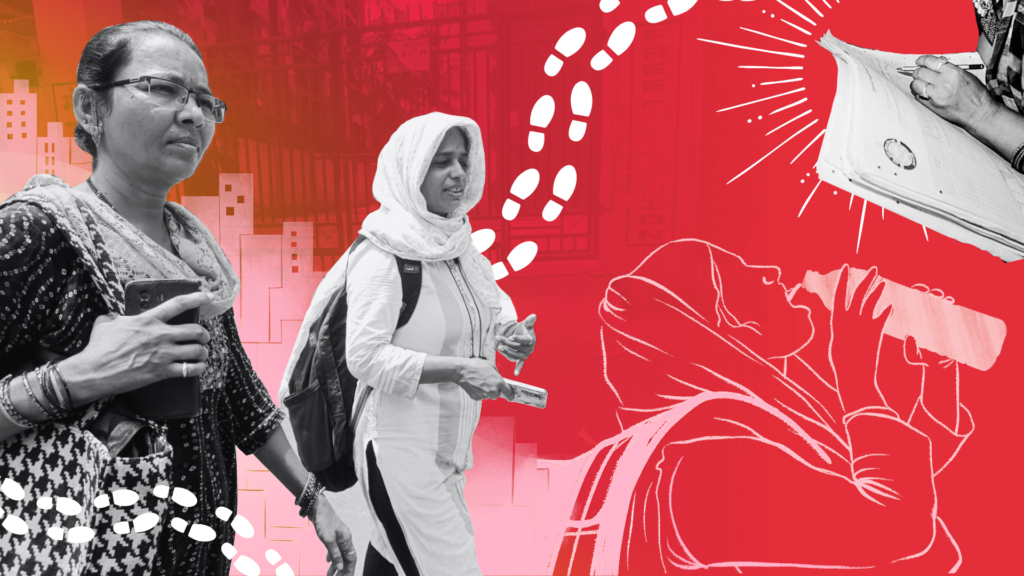
The ASHA workers on Census duty in Mumbai have been given a “kit” – a thin white cap, a bunch of pens and a bag so tacky it cannot hold a bottle of water. Out in the afternoon sun that often burns at 40 degree Celsius and enervating humidity, they have to bank on their survival instincts and the solidarity of their colleagues to protect themselves from heat stroke.
“What do we do if our work timings are 9am to 2pm? We cannot miss work. Our payments have already been withheld for months without any reason. Even if we take leave because we are sick we are not paid,” says Trupti Praveen Manjalkar, 37, who manages the health of 4,000 in Warli’s Jijamata Nagar, a predominantly Dalit neighbourhood.
In Maharashtra Nagar’s bastis in Mankhurd, Ranjeeta Awale, 37, and Vanita Rajendra Detake, 45, weave through the lanes, completing their Census round for the day, their heads covered with dupattas. Many of the doors are locked, for one this is the middle of a working day and then, it is vacation time, the month when many migrant families leave the city to visit their home towns and villages.
A 2025 HeatWatch report on ASHA workers suggested climate safety kits and infrastructure, mandatory heat breaks during the day, clear restrictions on scheduling ad-hoc work during summers, and the development of heat action plans in consultation with ASHAs workers. None of these ideas, we saw on the field, had been implemented.
And when the heat abates, monsoon mayhem will set in, flooding the basti roads, pushing garbage around, the sewage water mixing with rain. Through all this the ASHA workers on Census duty will have to trudge filling in survey documents.
“Yevda varsha, oon, paus, vaara, aghadi thandi, hya sagdya goshti chi parva nahi karta, aarogyasevika hya kaam kartat (despite this much heat, rain, wind and extreme cold, health workers have set aside their own wellbeing and done their work for years),” she says Trupti matter-of-factly.
The workers pay for their own water, drink as little of it as possible, carry ORS, call respondents instead of visiting them and sometimes pool in resources to buy a fan at the health post where they report. And, bank on the kindness of the households that they visit. Women who are menstruating or dealing with menopause have it the hardest.
Read our story here.