The Two Women Leading A Delhi Settlement’s Fight Against Demolition
Migrant workers from Bihar, Shabana and Ruksana have organised their neighbourhood to resist repeated demolitions and displacement from their homes in Delhi’s Dhobi Ghat
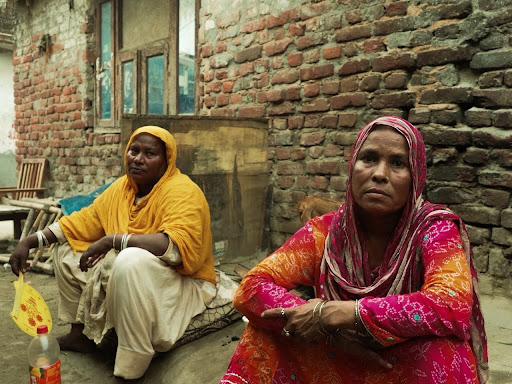
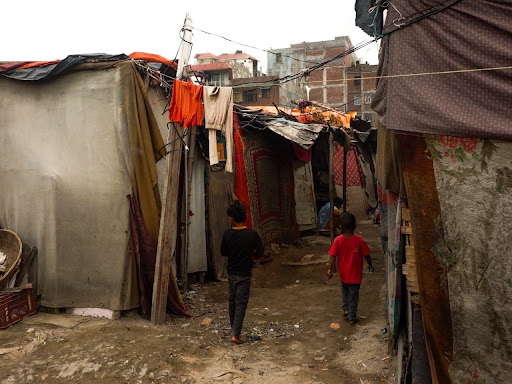
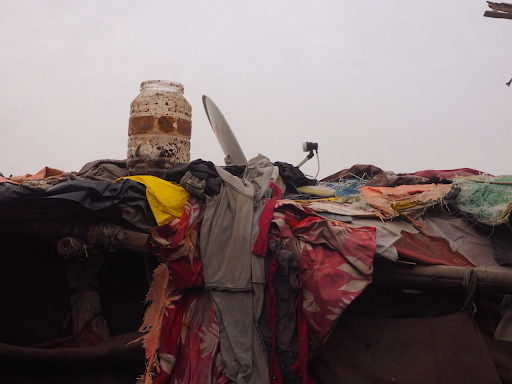
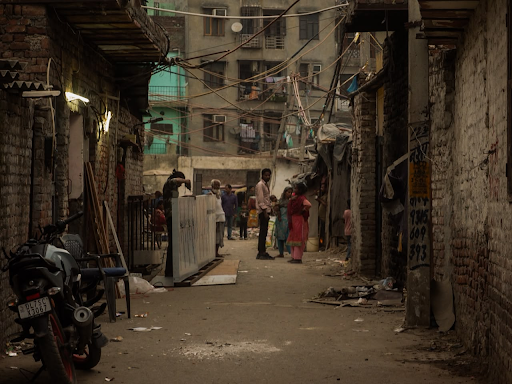
SHABANA KHATOON SITS BESIDE A CHULHA in front of her house, a temporary structure of tarpaulin sheets propped on wooden sticks. With her is her younger sister, Ruksana Khatoon, a domestic worker, who also lives next door. Their homes, and those of around 800 families in Dhobi Ghat, have been repeatedly razed by the Delhi Development Authority (DDA) since 2018, which says the settlement on the banks of the Yamuna in Batla House, Jamia Nagar, has been built on what they describe as “encroached lands”.
Their stories are not unusual in Indian cities, where settlements like theirs are commonly demolished in the name of ‘urban beautification’, ‘environmental conservation’, ‘slum clearance’. Between 2022 and 2023, around 59% of evictions across India occurred under the guise of ‘slum’ and land clearance, ’encroachment-removal’ or ‘city-beautification’ drives, per a 2023 report ‘Forced Evictions in India’ by the Housing and Land Rights Network (HLRN). In Delhi, which recorded the most evictions in the country, around 2.8 lakh people were evicted by various state authorities in 2023, says the report. BehanBox has reported on how displacement and mindless rehabilitation have disrupted women’s livelihoods, access to support networks and everyday lives (here, here and here).
There is one thing that sets apart the lives of Shabana and Ruksana from those of the thousands of others displaced. For the last six years, they have led Dhobi Ghat’s fight to hold on to its homes. They have done this by unionising, sustaining a legal fight and exhorting reluctant neighbours to join.
A few minutes before we met her, Shabana had received a call asking her to attend a union meeting at the Okhla Sabzi Mandi, about 6 km from her home. “It is at nine in the morning,” she told neighbours passing by, urging them to join.
Shabana, 40, is a member of the All India Central Council of Trade Unions (AICCTU) and one of the community leaders of Jhuggi Adhikar Manch, an informal group of Dhobi Ghat residents that has been fighting a case against repeated demolition of their homes by the DDA since 2021.
“People are willing to come now for the meetings. It was not like this in the beginning. Nobody wanted to fight or file cases,” she said.
Kawalpreet Kaur, the lawyer representing the Manch, said that the case filed by Jhuggi Adhikar Manch against DDA maintains that the basti “has been in existence since the 1990s” and that it is “legally entitled to proper rehabilitation”.
According to the Delhi Slum & Jhuggi Jhopri Rehabilitation and Relocation Policy, 2015, administered by the Delhi Urban Shelter Improvement Board (DUSIB), jhuggi jhopri (JJ) bastis that came up before 2006, and jhuggis within them built before 2015, “shall not be removed… without providing alternate housing”. This included a list of 675 bastis and an additional list of 82 bastis. According to the petition filed by the Manch, this provision was violated in the case of Dhobi Ghat as the settlement was included in the list of 82 additional bastis eligible for rehabilitation. However, this additional list was later withdrawn by the DUSIB from its website in 2023. This silence on the 82 additional bastis was maintained in the Delhi High Court’s judgement that came in March 2025, where it acknowledged Dhobi Ghat as one of the 82 bastis while not reconciling on the rehabilitation for the same.
The DDA, in its response to the case, maintains that Dhobi Ghat residents cannot produce any documentary evidence to support the existence of their jhuggis since the 1990s. It also claims that the residents “encroached upon the subject site only a few months before the [2020] demolition”, while the residents have been voting and using public facilities for years.
Moving In Dhobi Ghat
The Yamuna floodplain is subject to planning and environmental restrictions. The DDA's Master Plan for Delhi 2047, notified in August 2026, divides the floodplain into O-1 and O-2 zones, with different restrictions on construction and development. The DDA has relied on the site's location on the floodplain in opposing the residents' legal claims. In its 2025 judgment, the Delhi High Court held that the settlement posed a ”significant threat to the ecologically sensitive River Yamuna floodplains”. This floodplain, according to a 2022 report, is home to around 9,350 households—roughly 46,750 people spread across 56 bastis, mostly migrants from Uttar Pradesh, Bihar, Jharkhand, Haryana, Rajasthan and West Bengal.
Shabana and Ruksana are among these migrants. They arrived in Delhi 25 years ago with their family from Supaul district in Bihar. The family owned a home in the village and Shabana’s father worked as a watch mechanic. But his death left the family in crisis. Ruksana was just five years old at the time. With no means to sustain the household, the family relocated to Delhi, where they had relatives. A cousin had arrived first, followed by an uncle, before the rest of the family moved.
The clan first settled in Madanpur Khadar, a slum near the Yamuna floodplain that housed several thousand families. As it faced evictions and demolitions there, residents dispersed to other, newer unauthorised settlements nearby. Dhobi Ghat was one of them. “We have shifted and rebuilt every time our homes were cleared,” said Ruksana.
This shifting and rebuilding repeats across Dhobi Ghat, home mostly to migrant labourers from Bihar. The men in Dhobi Ghat are largely engaged in informal labour, including construction, welding, and contract work, while the women, including Ruksana, often take on domestic work in the nearby middle-class neighbourhoods for a few thousand rupees a month.
“I work in three houses, earning Rs 1,500 from each every month,” said Ruksana, whose husband abandoned her and their children. She was bedridden for months because of repeated asthma attacks and has only recently resumed working.
The Demolition of 2020
According to 2023 data from the DUSIB, Delhi has around 675 jhuggi jhopri settlements that house around 15.5 lakh people.
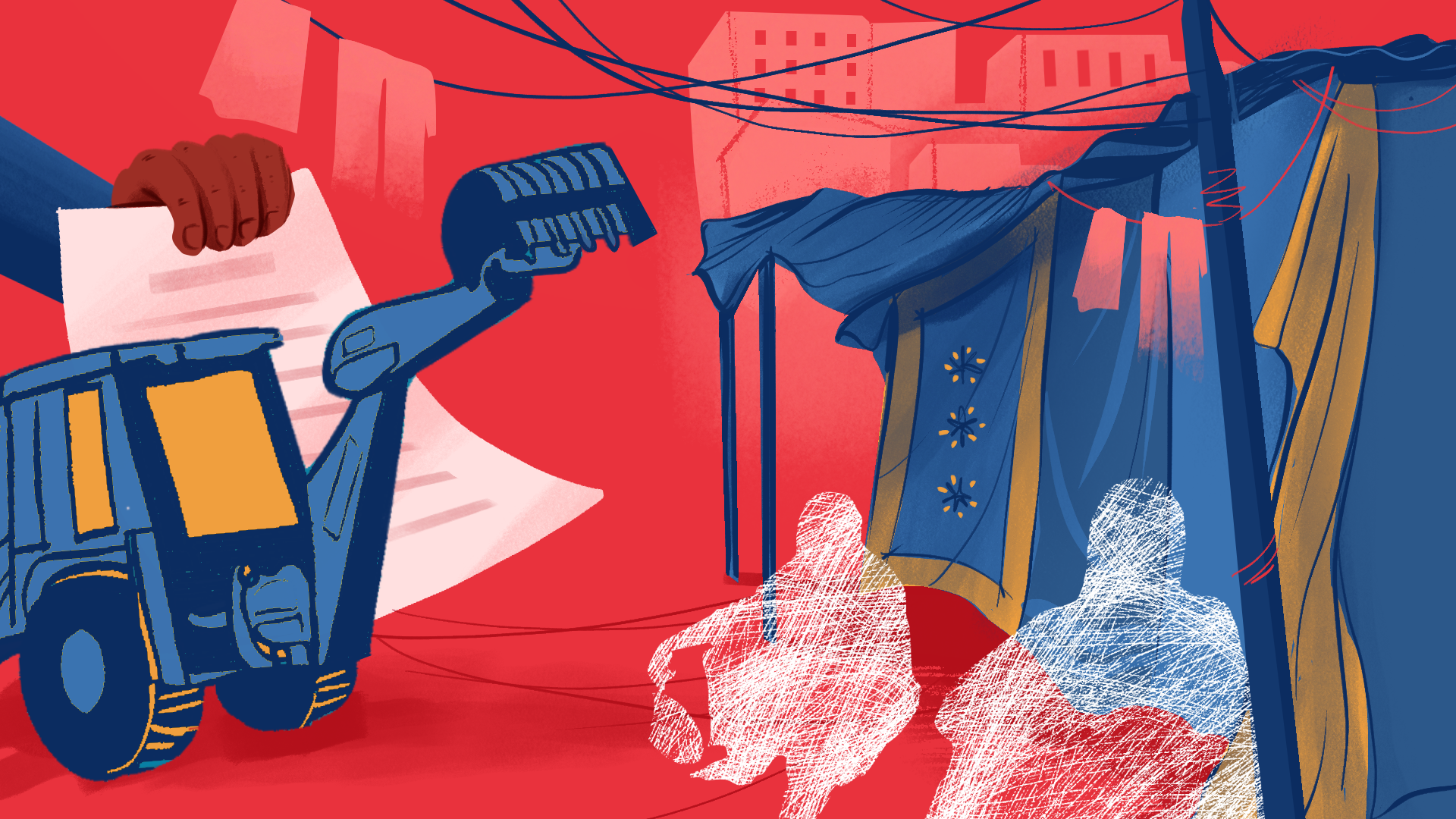
In September 2020, several houses in Dhobi Ghat were bulldozed by the DDA, following an order from the National Green Tribunal to “repossess the floodplain area under illegal and unauthorised possession”. This repossession included the homes of Shabana and Ruksana. It was this demolition that turned the sisters into organisers, and the shift is evident in how directly Ruksana describes her own response to it.
”It was noon. The men were out for work, and the women were in the homes where they do domestic work,” she said. “When the bulldozers started razing our homes, I asked them why they were doing this; my children and my sister's children were also with me.” For resisting the demolition and obstructing civil work, she was arrested, along with her children. Six years later, she is still contesting this charge. “I still appear for court proceedings,” she said.
Residents say they got no written notice of the demolitions; the police told them to leave only the day before, leaving them with no time to remove their belongings. Then began the cycle of rebuilding and razing. “In the evening we’d put up the tarp, and in the morning the police would come and take it down again. This happened every morning and evening,” said Shabana.
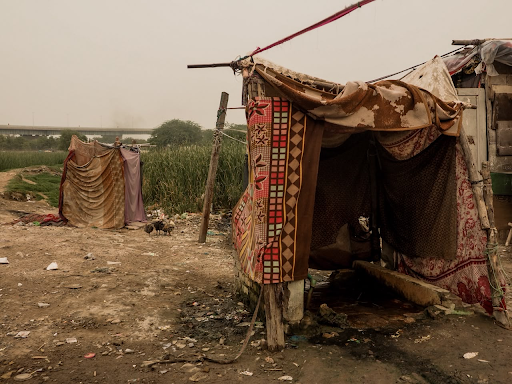
The colony had no power throughout this period, nor did it have any sanctioned toilets or bathing spaces. Residents put up makeshift structures of sticks and cloth that would be torn down. Rations, bedding, and whatever else the families managed to put together after each demolition would then again be left out in the rain and cold. All of this happened as the Covid-19 pandemic swept through the city and residents had to somehow stay inside their fragile shacks with little access to healthcare or livelihood.
Residents first tried approaching local representatives to ask for a stay on the demolitions or, at least, a rehabilitation plan. It went nowhere. That is when they held a chakka jam in front of the house of Amanatullah Khan, the MLA of Okhla. “We blocked his path. He came out and said that there was nothing he could do. That is when we decided to file the case,” said Shabana.
The legal battle
It was around this time that the AICCTU began helping residents with the legal side of their fight. However, most residents were reluctant to move for a legal fight. “There was fear. Fear of the government, the builders and so on,” Shabana said.
Months earlier, it was at the Shaheen Bagh sit-in protest against the Citizenship (Amendment) Act (CAA) where the women first met trade unionist Neha, a member of AICCTU’s [Delhi] state committee. The union works in multiple bastis around Delhi that face constant demolitions and evictions. “Forming Jhuggi Adhikar Manch was an organic decision. The women of Dhobi Ghat were very vocal and Shabana baaji worked as a connection between the community and the legal system,” Neha said.
AICCTU is also involved in the mobilisation of residents who were evicted or are facing the threat of eviction in Wazirpur, Priyanka Gandhi Camp, Lal Bagh, Ghausiya Colony, and Jai Hind Camp in Delhi.
Shabana and Ruksana started speaking to the Dhobi Ghat residents about the need to collectivise and take legal action. Ruksana went from house to house, especially to speak with women who were hesitant to get involved. Meanwhile, Shabana took an active role in public meetings, court proceedings and forums.
“Everybody saw that I could speak, that I don’t get scared, I fight,” she said of her new role. The younger organisers gave her confidence, and that confidence inspired her to speak in front of officials, to march, to argue. “It seemed like there was someone behind me, someone supporting me,” she said.
Neha said Shabana has been a political inspiration for her too. “I started my political work around the same time as the first demolition. Since then, we have been very close,” she said.
Shabana alleged that she faced intimidation from local builders who were interested in the land occupied by the settlement. She said she was warned that she could be reported or picked up for speaking against them. She has kept doing it anyway. “We'll say the things we want to say because it’s true,” she said.
She also recalled speaking at other activist forums, including the AICCTU’s National Workshop on Informal Workers in Rajasthan and the Central Trade Union’s Joint Forum on Housing Rights in Delhi.
The union meeting that Shabana was attending the day after we met was one such platform. People from various Delhi bastis under threat of demolition, including Shakur Basti, Madrasi Camp, Wazirpur and Jai Hind Camp, lawyers and activists were coming together to discuss the conditions here, the status of their cases against the DDA and the larger political narrative of these evictions that disproportionately affect marginalised groups.
“Shabana is an active speaker at these events. She keeps abreast of not just the legal developments but also the issue of mobilisation,” said lawyer Kawalpreet Kaur, who is associated with the Housing and Land Rights Network (HLRN), a non-profit focused on housing access for the poor.
The Jhuggi Adhikar Manch also ran a community kitchen for a period, where the residents coordinated the packing, preparation and funding. After roughly three months, Shabana proposed to shut it down, deciding that the labour and money it required were better spent on the legal case than on daily meals. This decision was not welcomed in the beginning, but she managed to convince everyone.
Locating Papers
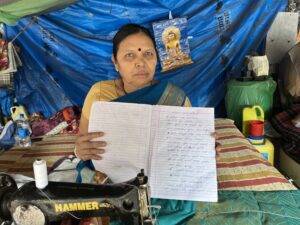
The Jhuggi Adhikar Manch’s legal battle began with a documentation drive during which residents had to locate and organise decades of paperwork, including ration cards, Aadhaar cards, voter ID cards, PAN cards, and so on, to establish how long the settlement had existed. Residents alleged that they were accused of power theft by BSES Rajdhani Power Limited, and were stuck with electricity bills as high as Rs 20,000. When they contested this in court, the charges were reduced. “They also stopped the electricity connection,” Shabana said.
Shabana and Ruksana are among the residents most consistently present at these hearings, which often means giving up a day’s wages to sit through proceedings that may simply be adjourned to a later date.
The 2020 election campaigns of both the AAP and BJP had featured the concerns of slum-dwellers threatened with eviction. Both AAP and BJP promised Jahan Jhuggi Wahin Makaan, where pucca houses would replace slum dwellings. The BJP also promised the creation of a Colonies Development Board for regularising unauthorized colonies. The AAP government announced the “Jahan Jhuggi Wahin Makaan” scheme, promising in-situ redevelopment, in November 2020. Subsequently, residents said that the government officials visited their houses, verified their records and formally numbered them, promising secure housing. They said, thereafter, nothing happened.
Most demolitions are carried out without meeting legal requirements. No adequate notice period is given, documents proving the settlement predate the cut-off are not considered verified, and legal notices carry a punitive tone. Often, the State also dismantles community infrastructure in neighbourhoods. A small learning centre, built by the union for the settlement’s children, for instance, was bulldozed along with the houses in 2020. “Whatever we build, they come and demolish it,” Shabana said, walking us through a trampled patch of ground where residents had rebuilt a washroom and bathing area out of sticks and cloth for what is by now perhaps the fourth or fifth time.
'We're Not Occupying Anyone's Land'
Shabana’s youngest daughter, Ayesha, has been promoted to Class 9 but has not yet enrolled in her new school. The family cannot afford the fee of almost Rs 3,000 and she is also required to submit a transfer certificate from her previous school. Ayesha has already missed close to three months of classes while the family tries to resolve these issues.
Private tuition, which many families in the settlement rely on to keep the children abreast of the syllabus, runs to roughly Rs 1,200 to Rs 1,500 a month. When families have to deal with legal or medical costs, this fee becomes unaffordable. Every demolition puts a pause or even a full stop on the education of the children living here. “Sometimes houses wouldn’t get demolished for six months, sometimes a year; sometimes we’d build in two months and they’d tear it down, build in three months and they’d tear it down. They’d dig up the foundation, dig a big pit. Still, we didn’t give up,” said Shabana.
During the 2020 demolition, her husband was injured, suffering nerve damage. The police initially refused to take him for treatment, she alleged, insisting that no formal complaint had been filed. By the time he was taken to a hospital, he was worse and the family would lose weeks of work and face mounting medical costs.
Ruksana’s troubles run deeper. Around a decade ago, her husband abandoned the family, leaving her to raise her children alone. Then her eldest daughter, Shehzadi, passed away. Her asthma also repeatedly interrupts her ability to work. She has no place to go if she is removed from Dhobi Ghat.
When authorities offered to relocate displaced residents to a rain basera (a government-run night shelter) close to the entrance from the area near Khalilullah Mashid, Shabana argued that it was unsafe for women and girls. Residents backed her, choosing to remain on the open road with their children rather than accept a shelter she thought unsafe.
Dhobi Ghat remains the only home either sister has known in Delhi, and that fact is central to why they lead rather than simply leave. “I got married right here,” Shabana said, pointing to a lane near her house now lined with homes on both sides.
“We’ve lived here, our children grew up here, were married here; all my family is here,” she said. “So we’re familiar with this area; we can do anything here. We won’t get lost, we won’t get pushed around, we won’t get punched, nothing will happen to us. But if someone moves far from here, they’ll die of starvation,” she said.
As we ended the conversation, Shabana allowed herself a moment of doubt. She asked whether any of it—the meetings, documentation, court hearings and years of organising—would actually change the outcome. Then she answered her own question. “The case is moving forward. God willing, something will come of it, some shelter will be arranged,” she said. “We’re not occupying anyone’s land. We’re not thieves. We’re not begging from anyone.”
We believe everyone deserves equal access to accurate news. Support from our readers enables us to keep our journalism open and free for everyone, all over the world.