[Readmelater]

BehanVox: A Kafkaesque Nightmare

This week in BehanVox: confessions of a BLO from Bengal, Gloria Steinem’s legacy, and more

Subscribe to our weekly newsletter that brings you top stories, news from the world, and our team’s reading recommendations.

Hello and welcome to BehanVox!

What is better than black humour to describe the Kafkaesque nature of the SIR exercise? In a scathing column this week, former Election Commissioner SY Qureshi points out that the SIR has achieved in months what decades of population control programmes could not – send 13 million Indians into some kind of non-existence. Every third voter in Delhi has been left out of the draft electoral roll, the most deletions so far. In Maharashtra, over 2 crore names have been dropped from 9.78 crore electors. “Perhaps we are no longer 1.45 billion people. Perhaps we have quietly slipped to 1.2 billion. Another round or two of intensive revision and the much-desired 1-billion mark may be within reach,” Qureshi writes. Beleaguered voters, fearing not just the loss of franchise but also a dozen other citizenship rights, will rush with claims and papers to have their names reinstated. Some will make it, some not. The rulebook is changing too fast to tell. But one thing is clear – as we understood this week through the first person-account of a BLO from West Bengal – that the system is mercilessly and definitively loaded against the disadvantaged. An analysis by Sabar Institute, for instance, points out that in Hyderabad, deletions across 15 assembly constituencies exceed the 2023 winning margin in every constituency. And Muslim voters make for 40.7% of all deletions.

This week we also bring you a moving story from a flood-prone remote village in Bihar where women are managing to pull themselves out of poverty through a livelihood programme.

Story So Far

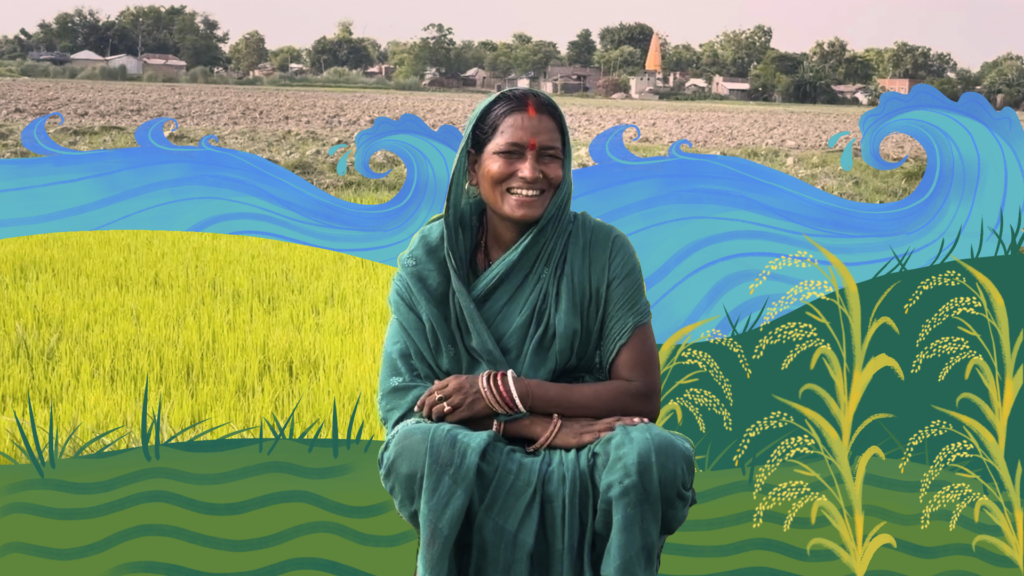
Fulo’s story has to be heard to be believed. A child bride from an utterly impoverished Dalit family from one riverine village she arrives in another, Alani, that sits on the banks of the flood-prone Kosi. She was already used to labour – at age 8 she had started working in the fields of her natal village, picking vegetables. So she never complained about working in Alani’s rice fields for Rs 30 a day. Her husband was rarely home, migrating where work took him – Delhi, Rajasthan or Punjab. She raised three children through terrible precarity, having to borrow even Rs 100 to get her sick child medicines.

Today, at 39, Fulo is mobilising force for the women of her village. Each Friday afternoon, she goes door to door, summoning women from their homes. Most of the 15 women in the group are left-behind wives of migrant workers. Over the next two hours, the mud courtyard they sit in becomes a sort of microfinance office.

Together, they are JEEViKA didis, members of one the 12 SHGs in Alani, and also one among the 12 lakh self‑help groups across Bihar. They are a part of Bihar’s Rural Livelihoods Promotion Society or JEEViKA, a programme that encourages women like Fulo to save money, and helps them access low-cost bank loans, and run non-farm micro-enterprises, livestock, or farm-based work.

Alani’s story is one of neglect. No buses run here, public or private, and there are no railway lines within a radius of 10 km. There are only steamer boats, teen pahiya (three wheelers), and bikes. Nobody owns a char‑chakka gaadi (a car) in the village, and only a few well‑off families can afford to rear buffaloes; the rest own goats and cows.

But Fulo and her group are an island of growing self-reliance in the midst of this. Fulo leads the group as its adhyaksh (president); Phool is sachiv (secretary) and Parmila is koshadhyaksh (treasurer). Khushboo Kumari, 28, is the master book keeper for Alani and two neighbouring panchayats.

Fulo exhorts them to save just Rs 10 a week. It is how she now owns a quarter acre of farmland on which she grows rice and maize. She had started small – borrowing for a goat, a sewing machine and a kirana kiosk before she found the capital to become a farmer with her own land.

Jyoti Yadav writes about Fulo and how she navigated poverty and marginality to propel herself into a place of strength.

Read our story here.

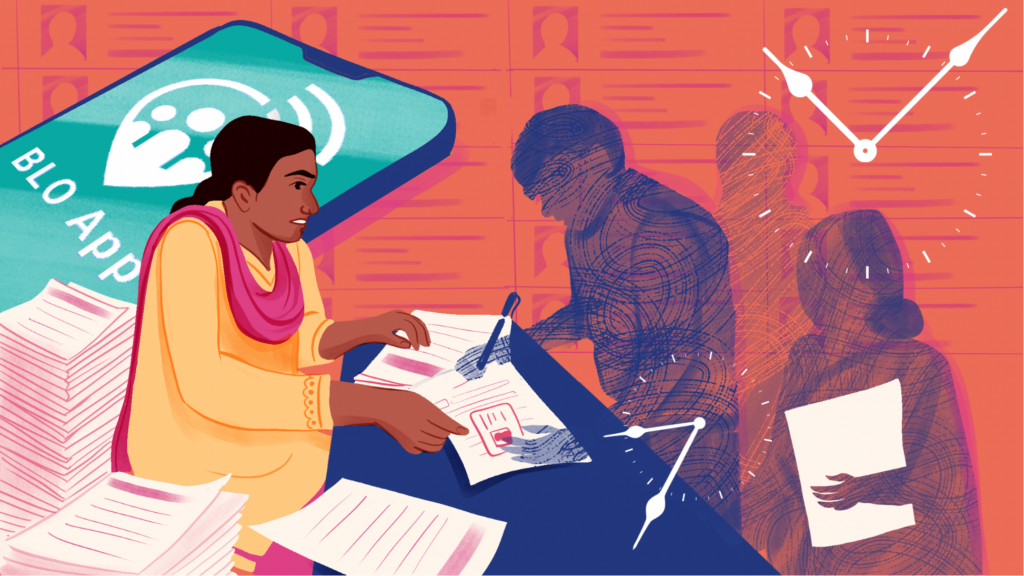
“I don’t know what orders we are following.” Those words of despair come from Aditi (name changed), a Block Level Officer (BLO) and the most public face of the ongoing bewildering SIR process. One of the many BLOs involved in the highly contentious West Bengal SIR, she spoke to BehanBox about what it was like to work with no systems in place, fast changing rules and no answers for an agitated public.

“The whole process was riddled with biases. Thumb prints were not considered valid, and even with birth certificates, EROs made absurd claims, asking how could the voter be certain it was their thumbprint and not someone else’s. In many ways, those who did not know how the system worked, especially the working class and the poor, were exploited. They were deliberately kept from any sort of clarity and were often dismissed, or shooed away,” she says.

Read Aditi’s first-person account here.

Talking Point

Glorious Gloria: “A woman without a man is like a fish without a bicycle.” That is likely the snappiest, funniest and most irreverent expression of feminist autonomy ever. And only Gloria Steinem could have said it. Trailblazing woman’s rights activist, journalist and writer, Gloria, has died at age 92. She straddled some of the most critical decades of the feminist movement in the US, and was witness to and part of a bitter struggle to wrest rights for women that we now take so easily for granted. From reproductive choice to domestic abuse to racial equality, she was a vociferous advocate of women’s freedoms. She launched and edited Ms, a fiery magazine that took on topics that were beyond radical in the 1970s. Feminism, Gloria famously said, shouldn’t be about women fighting for a slice of the pie because there are so many of us – “It’s about baking a new pie.” Her legacy is a complicated one–feminist advances on one hand while also taking an abolitionist perspective on sex work, denying their rights and agency. And then there is the critique of her heading the Independent Research Service, an operation funded by the CIA, and when asked in later years, being wishy-washy about it. In her later decades, Gloria received flak for some of her positions but she spent her last months speaking out against the tyranny of the right wing rule in her country. Here is an interesting dispatch from the time she went undercover as a Playboy Bunny and this article “If Men Could Menstruate”.

Climate Fury: There are growing risks of glacial floss in the Himalayan region, the UN has warned. A Guardian report points out that researchers have identified 47 potentially dangerous glacial lakes in Nepal, China and India and this might be an underestimation. A crisis like the one unleashed last week could imperil the lives of millions. Glacier lake outbursts can be traced to the rising pressure exerted by glacier water accumulation behind a natural barrier, and a resulting overflow that sends a flash flood downstream–all caused by the climate crisis.

Dirty Secret: Not surprising in the least but Indira Jaisingh has called sexual harassment in the judiciary as a dirty secret. In a lectureshe delivered recently she said: “In the course of my experience, I have had to deal with women judges. I have represented a lot of women judges. These women judges have come to me with complaints about sexual harassment by male judges, which is why I did write in my book that sexual harassment is the dirty secret of the judiciary of India. No one wants to talk about it.”

BehanVox Recommends

As you step into the weekend, let us recommend some fun, witty as well some sobering reading and listening.

Confessions of an AI Editor: Forget every sermon about the evils of using AI tools for creativity and instead sit through this confessional of an editor who was forced to sacrifice her creativity and perspective at the coded altar of “the thing”. “The side effect of fraternising with AI as much as I was expected to do was that I started to see the hand of the machine lurking in things it could never, ever have touched,” writes Diya Isha in The Nation. Read this essay as an AI-era workplace tragedy or a plea against numb productivity , in either case, what one also finds lurking behind is just how banal and uninspired “the thing” is, and will always be.

More Than My Food: Asma Khan is a legend. She has a PhD and runs an all women restaurant in London, The Darjeeling Express. The tale of the women who Asma assembled is in itself one for the books. They are all immigrants who she assembled over time and today power her business. Besides great food, Asma has been a great advocate of decolonising food and doing away with exploitative practices in the food industry. In this podcast with Trevor Noah, she talks about identity, legacy and dismantling imperial garbage.

The Odyssey’ Belongs to All of Us: Nolan’s Odyssey brought in heaps of criticism–from MAGA lot to serious scholars. In this thoughtful essay, Sukaina Hirji is an associate professor of philosophy at the University of Pennsylvania asks the perennial question—who gets to determine what a text means, and who it is for?

Want to explore more newsletters? In Postcards, we send you missives on the places, people and ideas that brought Team BehanBox joy. Our monthly offering Postscript invites you, the reader, into our newsroom to understand how the stories you read came to be – from ideation to execution. Subscribe for more.

Support BehanBox

We believe everyone deserves equal access to accurate news. Support from our readers enables us to keep our journalism open and free for everyone, all over the world.

Donate Now