[Readmelater]

From Dalit Child Bride To Landowner – How Fulo’s Life Changed In A Flood-Prone Bihar Village

The quarter acre farm Fulo owns yields rich harvests of maize and rice. But she had started small -- with a goat, a sewing machine and a kirana shop, all bought with loans from a state livelihood scheme
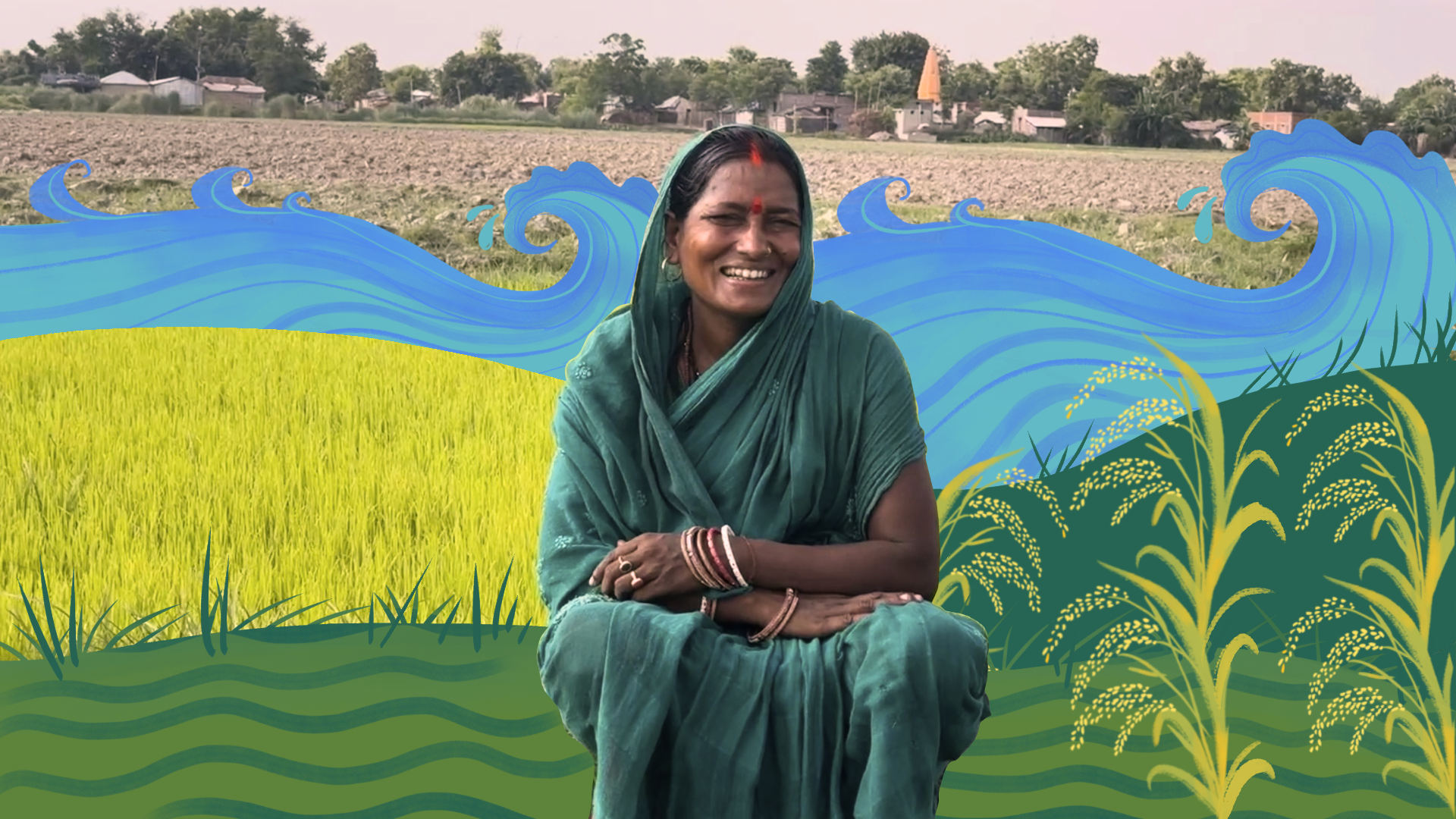
EACH FRIDAY AFTERNOON, Fulo disrupts the rhythm of her village, Alani, as she goes door to door, summoning women from their homes. The women hurriedly finish their chores, drape their best sarees and head to the home of one of them.

Over the next two hours, the mud courtyard of that home transforms into a sort of microfinance office, set not in some urban skyscraper but in a remote village perched on the banks of the Kosi river in Bihar’s Saharsa district.

The women, 15 of them, are the “left-behind wives” of Alani’s men who work as migrant labourers across India. They begin with a small prayer: “Itni shakti humein dena data, man ka vishwas kamzor ho na (give us strength, O God, so that the faith in our hearts doesn’t waver).” Then, one by one they rise and introduce themselves.  

Parmila…Kaari…Phool…Soniya…Sita… Vibha… Ranju… Lalo…Fulo…Khushboo…Muniya…

Together, they are JEEViKA didis, members of the Rajender Self‑Help Group, one among 12 such groups in Alani, and also one among the 12 lakh self‑help groups across Bihar. The Bihar Rural Livelihoods Promotion Society (BRLPS) also known as JEEViKA, covers 1.8 crore women, making it the largest army of self help groups in India. The programme encourages women to save money, helps them access low-cost bank loans, and run non-farm micro-enterprises, livestock, or farm-based work.

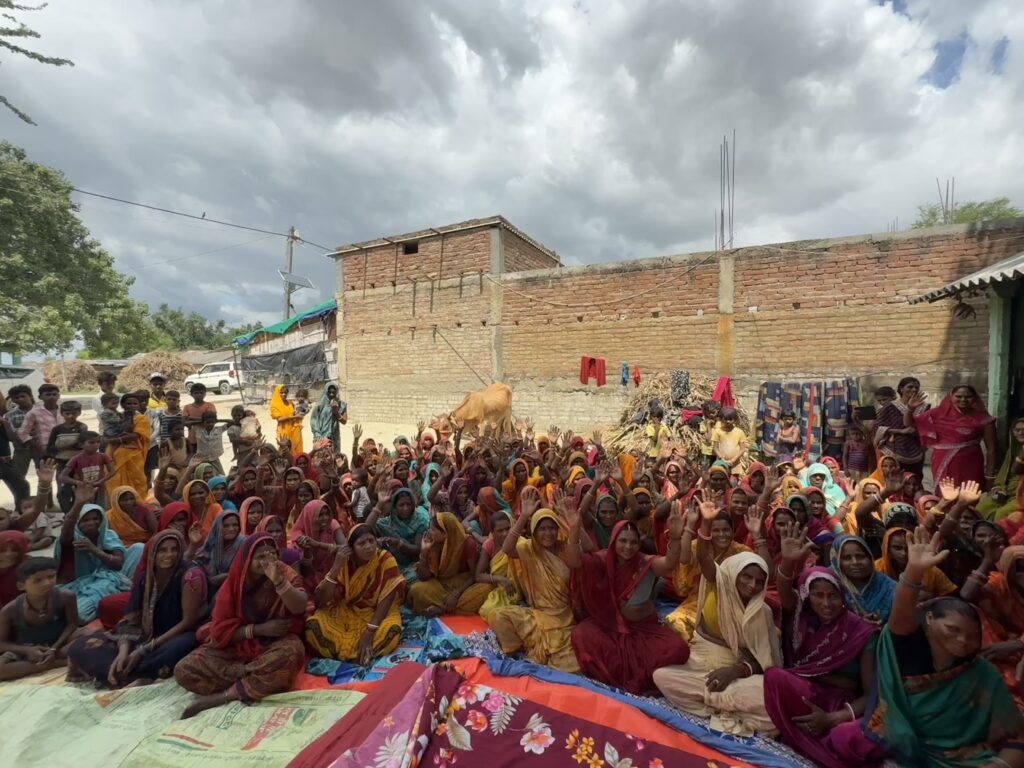
On a monsoon afternoon, nearly a hundred Jeevika didis from twelve self help groups in Alani village gathered under the open sky for a discussion / Jyoti Yadav

Fulo leads the group as its adhyaksh (president); Phool is sachiv (secretary) and Parmila is koshadhyaksh (treasurer). Khushboo Kumari, 28, a master book keeper whose jurisdiction extends across the  Alani, Kabira, and Samar Khurd panchayats, joins them. She is part of the 1.40 lakh paid community cadres of JEEViKA that include CM (cluster mobiliser), CC (cluster coordinator), MBK (master book keeper), and others who support the self‑help groups. 

Saving Rs 10 A Week

Of the 12 lakh self-help groups under JEEViKA, 11.20 lakh have been linked to banks through savings accounts, as per Mukesh Chandra Sharan, Programme Coordinator, Financial Inclusion, BRLPS. Of them, 10.73 lakh have established credit linkages of Rs 74,838 crore. Currently, the outstanding loan stands at Rs 31,255 crore. The repayment rate among Jeevika Didis is an impressive 98.61%. A look at the steady persistence with which Fulo’s group functions tells us why.

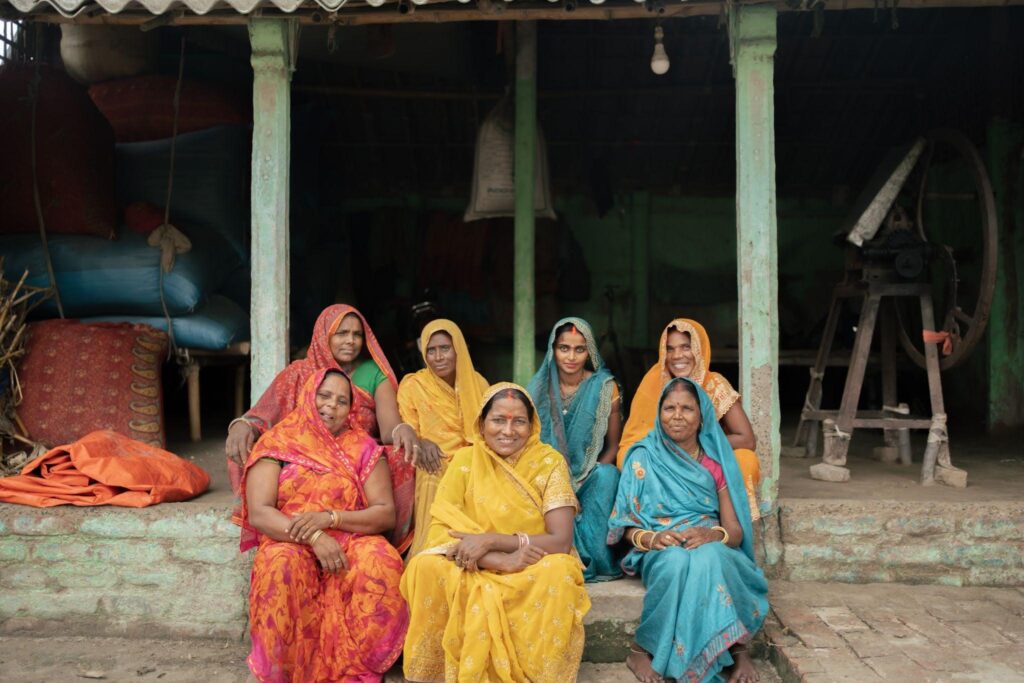
Fulo, in the middle, is surrounded by other members of her Jeevika group — Rajender SHG / Poshali Goel

At the courtyard meeting in Alani, Fulo begins by asking the members if they were able to save das takiya (Rs 10) the past week. The master book keeper records the minutes of the meeting and sets the agenda for the day. The discussions relate to loan distribution and recovery of bank deposits, and then move on to the intimate things that shape their everyday lives – illnesses and loneliness for instance.

The sachiv maintains the diary, keeps the keys to the money box. The koshadhyaksh collects the savings, and safeguards the money, while the adhyaksh, Fulo, holds conversations with members like Sita who struggles to save. She suggests tips that worked for her: cutting a day’s Kurkure from the children’s snacks or buying cheaper vegetables at the Budhwaar hafta bazaar (Wednesday weekly fair).

After all, Fulo – a Dalit, landless, barely schooled woman –  became the first woman in her group to buy five kaththas (one-fourth of an acre) of land in her own name in 2023. That was also the year she became a grandmother for the first time, at the age of 36.

She paid nearly Rs 3 lakh in small installments to an upper‑caste landlord, Sarvesh Kumar Mishra, in whose fields she had spent two decades of her life, standing in water, roping paddy or cutting it. 

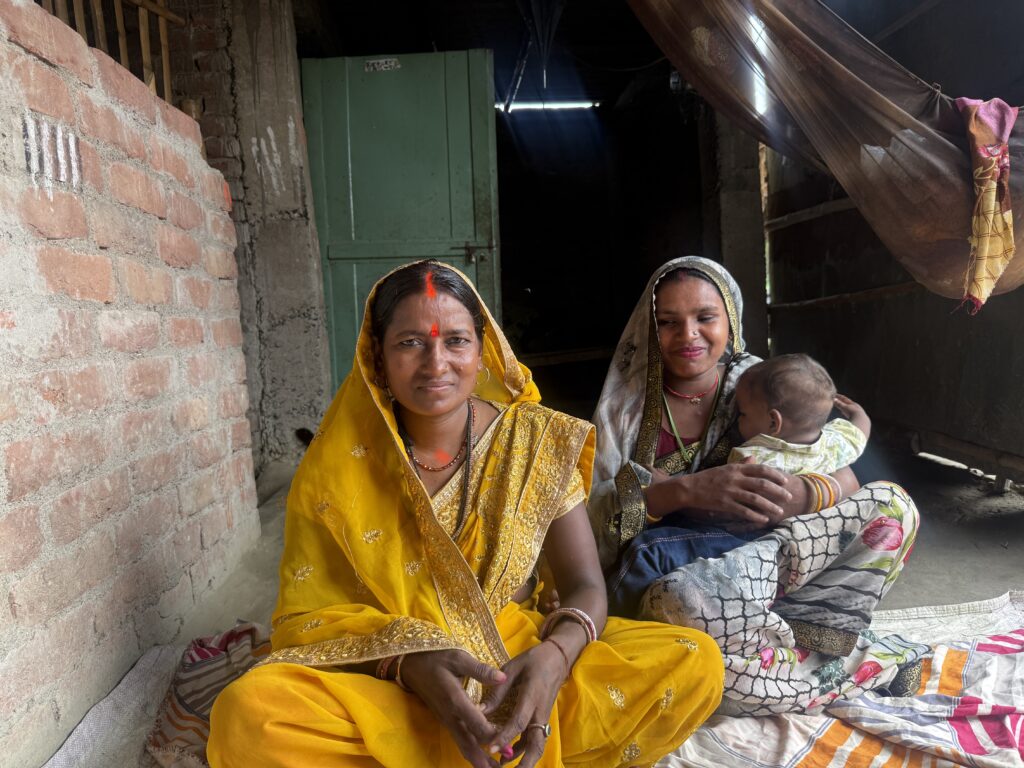
Fulo is a woman of few words. She carries keys to her home on a black thread hanging around her neck. A bright orange sindoor fills her hair parting and her face is creased with a permanent thoughtful expression, and often the most dazzling smile of confidence.

But she wasn’t always like this.

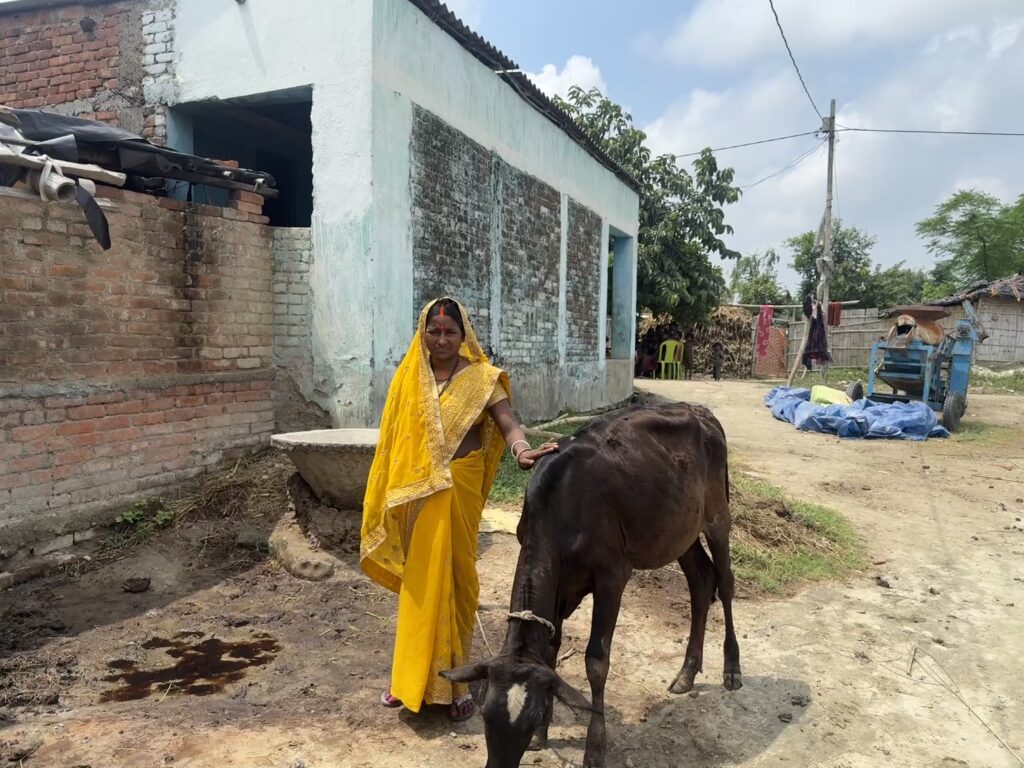
Fulo is caressing her three-year old cow/Jyoti Yadav

Around 87% of women farm workers like Fulo — mostly from Dalit and Adivasi communities — who own no land. The country’s food production systems rest on their labour — they sow, harvest, save seeds, care for soils, preserve ecological knowledge and sustain households through climate shocks and economic uncertainty. Despite that, they are excluded from the resources, institutions and decisions that shape agriculture and rural livelihoods.

Fulo too had struggled in the margins because of her gender, caste and landlessness. She had been buried in debt and poverty in 2013. Her husband was a seasonal farm worker in Punjab, while her youngest son, a toddler then, had clung to her side all the time. Khushboo Kumari, the master bookkeeper, who has known Fulo for more than a decade now recalled her days of dire poverty. “Our diary records show that in the initial years she borrowed loans of even Rs 100. It meant that even if her children fell sick, she had no money to buy medicines,” she said.

Fulo was once Sita too, the woman she is trying to train in financial discipline, these days.

Farm Worker, At Age 8

Fulo was the first child of Sakindar Ram and Bimla Devi, a Mahadalit couple in Khutauna, a small village in Samastipur district on the banks of the Kamla river. Mahadalits, in Bihar are a group of 23 Scheduled Castes that constitute 19.7% of the state’s population. Per the 2011 Census, their literacy rate is at 48.6%, lagging behind the all‑India figure of 66.07%. The Ravidas caste, into which Fulo was born, makes up 5.2 % of the state’s population but holds barely 0.5% of the total land.

It was her grandmother Sudamiya’s wish to name her first granddaughter Fulo. She struggles to find its meaning but many women named Fulo in Bihar say that the name is reserved for girls who are quick to anger.

Her parents were landless; all they owned was a thatched hut. Her father worked as a construction labourer who mixed cement; he also worked outside Bihar sometimes and did so till he contracted tuberculosis. Fulo was then eight or nine years old and her father’s illness forced her into farm work – harvesting parwal (pointed gourd), makkai (maize), and dhaan (paddy). In lean farm season, she sought work in households, doing chores such as cutting grass and feeding cattle. The work fetched her dhai ser (2.5kg) of maize.

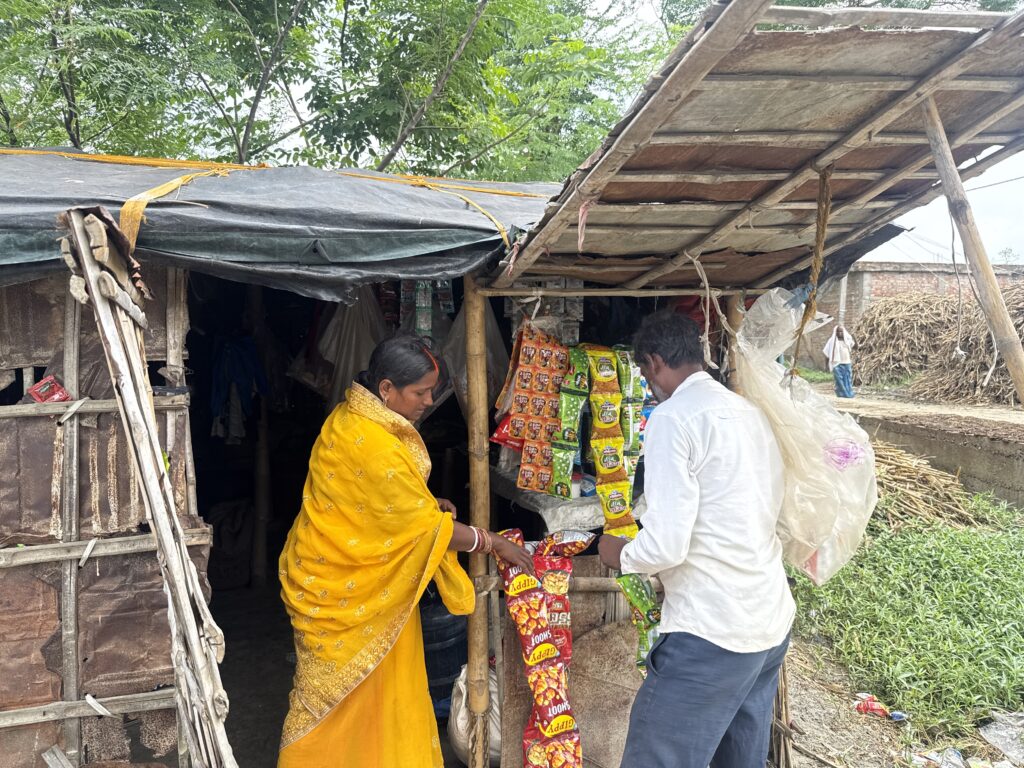
Fulo’s husband, Gajendra Ram, stopped migrating outside Bihar when Fulo leased agricultural land. In the photo, he is seen helping her at the kirana shop/Jyoti Yadav

Fulo’s mother was still breastfeeding her infant, her fourth‑born, a girl named Ruby. So Fulo also took it upon herself to help raise her six siblings. By the time she reached pachma, a colloquial word for Class 5, she was out of school already.

One October, during Durga Puja, a rishta (marriage proposal) came for her from a relative. The potential groom was from Shaharbanni – a village between Kosi and Kamla, it was where the late Ram Vilas Paswan was born and for the state’s Dalit community, it is a place of pride.

Fulo’s wedding to Gajendra Ram, a teenager himself and the second son among six children of Bram Das and Girija Devi  from Alani, was rushed during Aashwin (October), a time when there was no auspicious muhurat for weddings. She would discover why later.

“Ek tho cycle (one cycle), do hazar rupya, one ka ek nath, aur chandi ki paunchi (a bracelet),” was the dowry arranged for her.

The teen couple, still far from 18, spent three years in Shaharbanni, the village Girija Devi was born into, with the marriage working around Gajendra’s seasonal departure and return as a migrant worker. It was in Shaharbanni that her elder sister‑in‑law, Thekni, draped sarees on her for the first time. 

And it was there, too, that Fulo started menstruating.

'I HAVE ENDURED IT ALL'

The wooden steamer boat that ferried Fulo and her husband cross the Kosi’s muddy brown waters in peak summer, from Baghwa village to her matrimonial home in Alani (both situated across the river in south‑west corner of Saharsa district), then cost a fare of Rs 10. Today, the journey costs Rs 50. 

Alani has 550 households belonging to the Sada (Mushahar), Shah (Teli), Chaudhary (Mallah), and Ravidas communities, along with two or three houses belonging to a Brahmin family and Baniya families. The village is a part of Alani panchayat, comprising 12 villages, with a total population of 6,458, according to the 2011 Census. The panchayat is one among the 11 in the Salkhua block of the district, the most critical flood prone region in Saharsa.

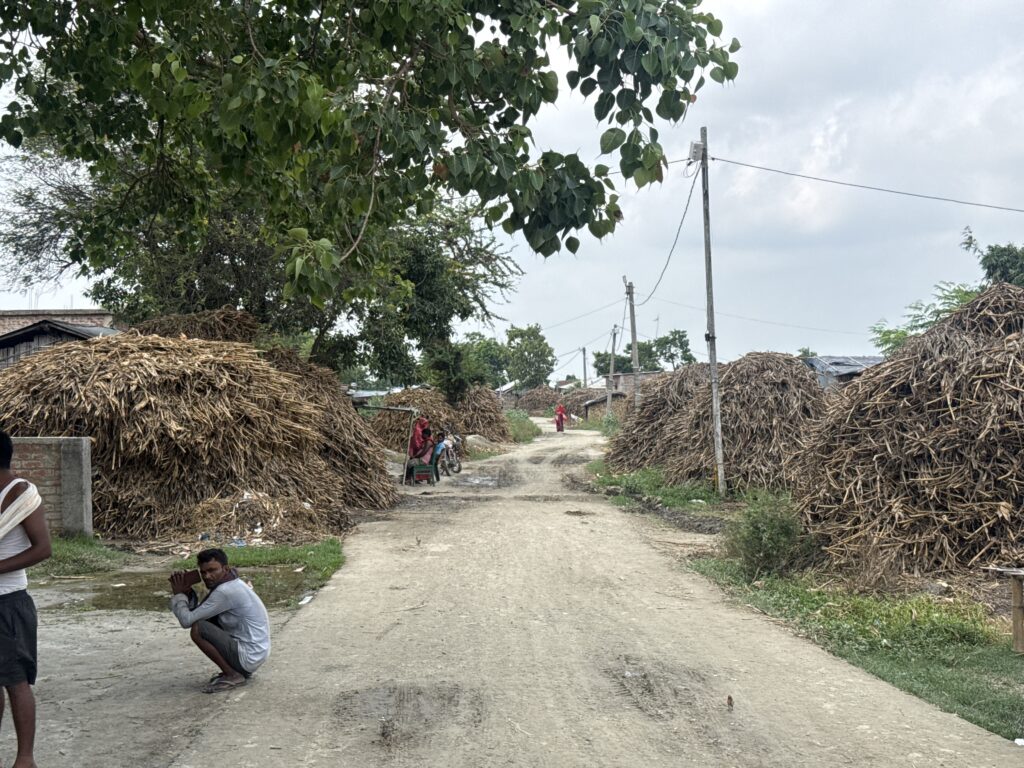
In Alani lanes, dry maize stalks stacked together outside houses. It is called thethar— used both as fodder for cattle and as firewood/Jyoti Yadav

Nearly 70% of the panchayat population remains illiterate. No buses run here, public or private, and there are no railway lines within a radius of 10 km. The only means of transport are steamer boats,  the teen pahiya (three wheelers), and bikes. Nobody owns a char‑chakka gaadi (a car) in the village, and only a few well‑off families can afford to rear buffaloes; the rest own goats and cows.

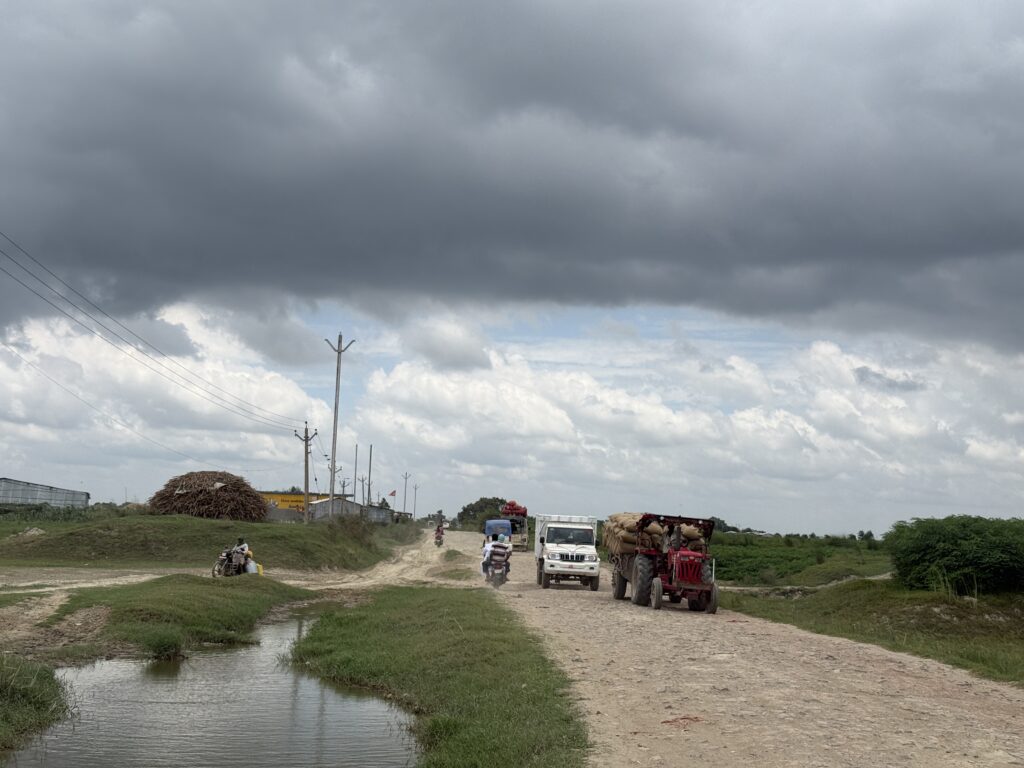
A bumpy, broken road that connects the Kosi region to the mainland. In the photo, maize harvests are being ferried to storage facilities in nearby grain markets/Jyoti Yadav

Alani held no surprises for Fulo. She had grown up amidst rising waters, flooded houses, and fields swallowed by the Kamla river. What surprised her was the revelation that she wasn’t her husband’s first wife – he had been married earlier to Reena, another teen, from Parihara village in Begusarai. The marriage had crumbled in two years, and neighbours told Fulo that Reena could not cope with life in Alani. ‘’Khet pasar nahin che [they don’t have any land),” they told her.

But within a year of Reena’s departure, Gajendra’s mother had found him another bride. And unlike Reena, Fulo stayed on despite the hardships.

“Ham takleef kaat lel [I endured it all],” she said. Gajendra, chastened by Reena’s desertion, never drank or abused Fulo. He moved across the north for work – from Bhatinda where he worked in paddy fields to  Jaipur where he was a construction labourer, and then to Jasola in Delhi to drive  a rickshaw. He would return to Alani during  harvest, working as a tractor driver, and then leave again. 

Fulo stayed on in Alani through all this, giving birth to three sons, Gulshan Kumar, Dilkhush Kumar, and Mankhush Kumar. Then she opted for nasbandi in Begusarai.

She has only sat in a train twice, stepping outside Bihar, once to attend her sister‑in‑law’s daughter’s wedding in UP’s Bahraich and once to Jharkhand’s Ranchi to visit the ashram of a self‑styled godman.

Kosi’s Fury And Precarity

Fulo’s in-laws say that their ancestral home lies under the Kosi’s waters, swallowed by the catastrophic floods of 1984 that swept across Bihar, affecting nearly millions of  people and killing thousands. The floods drowned some land and the rest kept disappearing as the river changed course over the years. These floods have displaced families in Alani periodically – in 1987, 1990, 2008 and 2010, and then in 2011, 2016, and 2024.

Displaced multiple times, Gajendra’s family had to live in shanties. His father Bram Das reared others’ buffaloes for a living but had died young, in his early 30s, of a mysterious stomach ache. Gajendra was sent away to work and married young so that his mother, Girija, could raise the other children.

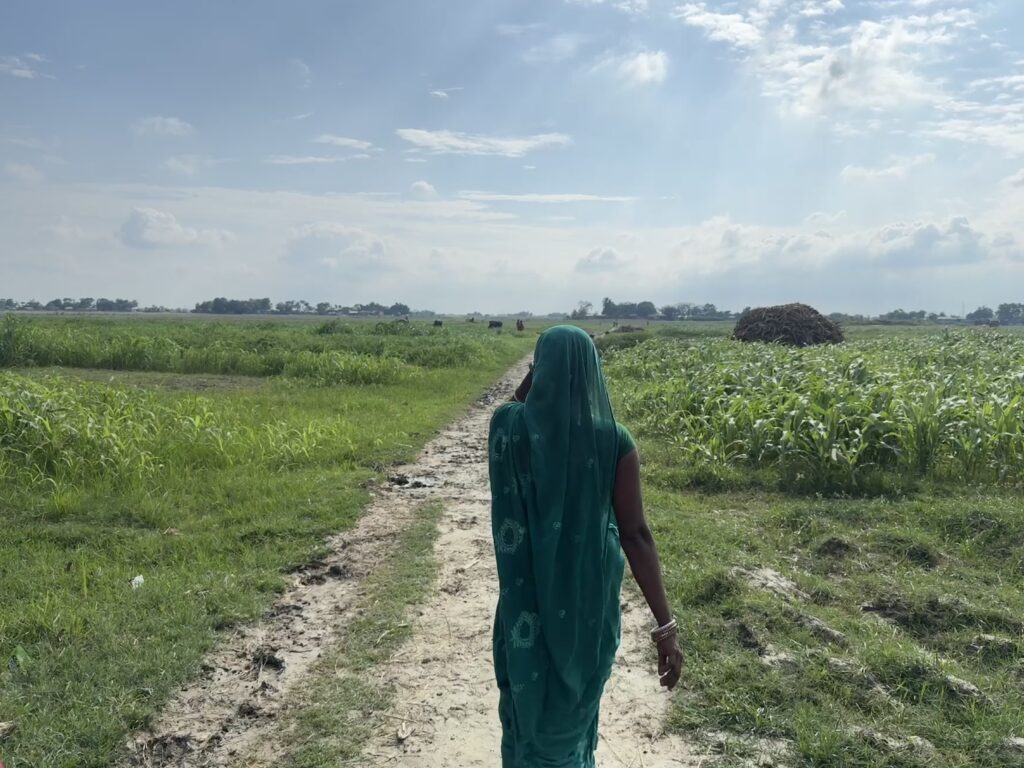
Fulo walks towards the field where she first worked as a daily‑wage labourer. She remembers being paid Rs 30 per day when she first started working/Jyoti Yadav

Fulo stepped in to work alongside Girija, spending years bent over other people’s fields. She earned Rs 30 everyday and like the other women of Alani worked through pregnancies and postpartum recovery.

In 2013, the relative who had fixed Fulo’s wedding had brought news of a new scheme for women – JEEViKA. Launched in 2006 by the Nitish Kumar government with World Bank support, it had initially covered six districts with 87,000 SHGs. By 2013, the number had grown to 1.2 lakh SHGs. 

When the JEEViKA cadres arrived in Alani, the idea behind the scheme appealed to Fulo. She didn’t know what a self help group meant  but she understood its motto: “Swayam se swayam ki sahayata karna [you have to help yourself].”

She joined the Rajendra group. The diary entries show her borrowing Rs 700, Rs 200 and Rs 400. Khushboo emphasised that the small loans were only for emergencies, but Fulo always repaid. 

Rising Up For Themselves

In the years since Fulo joined, the  JEEViKA has gone from being a social identity to a political force. In 2015, at a public gathering, JEEViKA didis complained to then CM Nitish Kumar about the domestic violence and financial distress alcoholism brings to families. The chief minister then brought in one of the world’s strictest anti‑liquor laws in 2016. In Alani too, Fulo and 10 heads of other SHGs got together and passed a resolution to end alcoholism in their village. 

In Alani, the campaign also hit the desi daaru (hooch) business of one of the members of Heera SHG. “We went together and smashed the bhatti (furnace), the pipes, and the inflated vessels used for brewing to end the practice,” Fulo recounted. The group also started inspecting the mid‑day meals offered to children in Alani’s government school and checking if the teachers were present. 

The JEEViKA community cadre has also been quietly watching a parallel national women’s workforce, the ASHA workers, protesting for better wages and working conditions. And decided to demand a better work deal for themselves too. In February 2025, they organized a protest at Patel Maidan in Saharsa town, demanding higher wages. “Do hazar mein dam nahin, 20 hazar se kam nahin (two thousand is too little, no less than 20,000),” said the slogan.

Five months later, their salaries were increased. Now a cluster mobiliser, who previously earned an honorarium of Rs 4000 for overseeing 10 SHGs gets Rs 8000. The bookkeeper, who works with five village organisations, gets Rs 11,200, up from Rs 5,600 and the master bookkeeper, overseeing three panchayats, gets Rs 13,500 up from Rs 6,750.

Becoming Landowner

In her first year as a JEEViKA didi, with a loan of Rs 1000, Fulo bought a goat, which birthed many lambs that she sold later to multiply her savings. She used the earnings to repay her loan and borrow again.

In 2015, Fulo bought a Usha sewing machine for Rs 4,000, and started tailoring for her family and neighbours. In two years, she had saved enough to open a kirana shop in the village with a Rs-10,000 loan from JEEViKA. “She was travelling to markets, buying stock and selling litti‑chokha at the shop — all by herself,” Khushboo said, adding that Fulo worked harder than the men in the village. That same year, her eldest son, Gulshan, who had quit school after Class 5, fled home with someone from the  village to Jaipur to find work as a labourer. 

The turning point in her life came the next year. With another loan from JEEViKA, and some loan from a neighbour, she paid Rs 1.2 lakh and took a lifetime lease on three kaththas of land. And for the first time, cultivated her own crops on the land.

“I started growing paddy and maize in two seasons,” she recalled. That year she harvested nine boras (sacks) of maize with each holding 60 kg of the yield and four quintals of rice. She earned Rs 8,000 from selling the maize and Rs 2,400 from the rice.

In 2020, when the first Covid wave hit, she took a bigger plunge, leasing another five kaththas of land for Rs 50,000 over three years. Her husband was back in the village, to help her. She was to later buy the 5 kaththas she leased.

“Now I had fodder for my cattle,” she said. By 2022, she owned three cows.

Since its formation, the Rajender SHG has got around Rs 12 lakh in loans at the JEEViKA interest rate of 1%; of this Rs 2.15 lakh went to Fulo who, having never defaulted so far on her repayments, has high creditworthiness. Local money lenders charge 4-5% on loans.

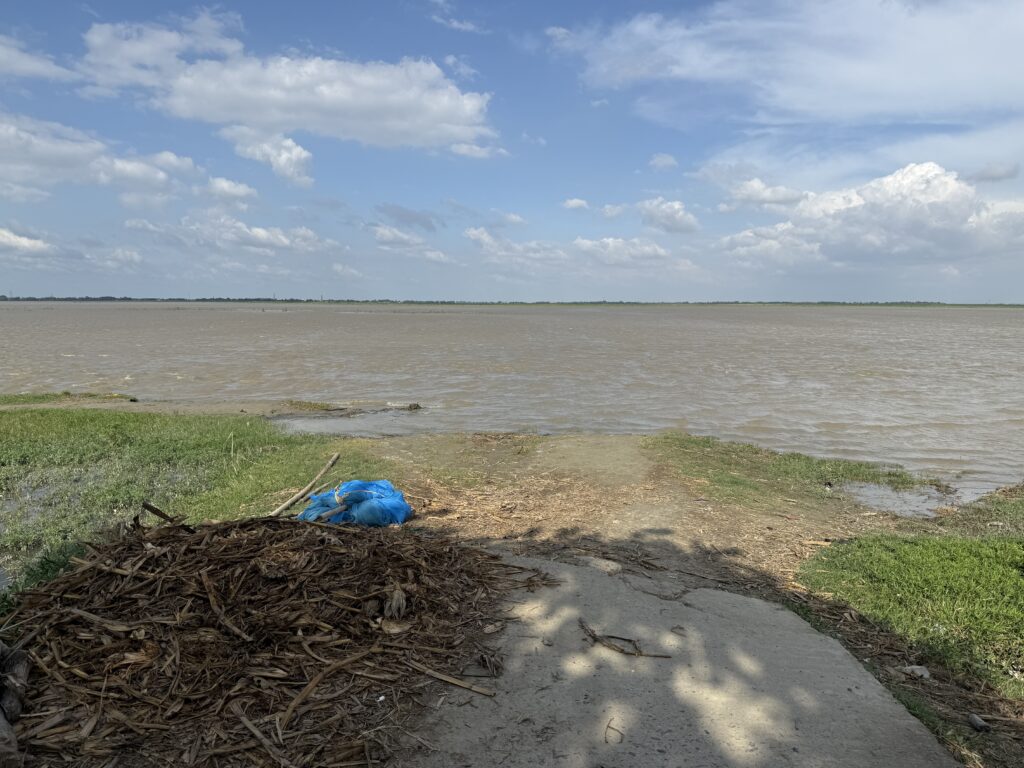
This year, Kosi began swelling at the start of July. Each year it eats away some part of the village, hut by hut. This year it’s the last home belonging to a Jeevika didi Sundar Devi, a member of the Hira Jeevika group, and her husband Sanjay Ram/Jyoti Yadav

None of this was without heartbreaks. During monsoon months, Kosi’s waters would flood, leave the cattle sick, reduce the milk yield, or damage ripened crops. Some years brought profit, some ended in loss. “Never in my life had I seen rain in November. I watched my entire paddy crop being washed away, and the water receded only in January,” she said of last year’s flash floods that inflicted on her a loss of Rs 10,000 and wasted months of labour. 

The dreadful memories of the catastrophic 2008 floods too are still etched in her memory.  Kosi had broken its eastern embankment at Kusaha in Nepal that year. State rescue helicopters hovered over Alani, evacuating the stranded. Many villagers had built machans (tree houses) and climbed atop these and stayed there for days to survive. Fulo’s family was also rescued by National Disaster Response Force boats. They spent months living in temporary tents along the road, and returned to their homes when the water went down.

“We all survived, but all the grains, chickens, and pigeons were swept away,” she recalled.

ENDing landlessness

In August 2024, when the rains came, Fulo and her husband went to the registry office in Saharsa and had the five kaththas of land that she used to lease registered in her name. But there were personal crises to reckon with  – her sons dropped out from school while she struggled with loans, worked and saved.

Her son who left home to find work did not return for two years and when he returned during the Chhath festival, he was no longer the boy he was when he left. She found him a bride and got him married in 2022, the same year Girija Devi passed away. Pooja, her daughter‑in‑law, is a year younger than her son. She gave birth to Harsh in 2023, and now has a second son– nine month old Aarav.

Fulo, sits beside her daughter‑in‑law, Pooja Kumari. As 9 month‑old Aarav clings to Pooja’s arms. Pooja was married to Gulshan, Fulo’s eldest son in 2022. She is one year younger than Gulshan/Jyoti Yadav

“JEEViKA mein judale se hamar mummy aur aage badle, bahoot accha lagai che (I am happy my mother progressed after becoming a  JEEViKA didi),’ Gulshan said. 

Fulo’s second son, Dilkhush, was enrolled in private tuition for which she paid Rs 3,000 a year. He dropped out after the 7th grade. She enrolled her youngest son, Mankhush, in a hostel in Khagaria, paying Rs 2,500 per month. After a year, he was out of school too— he never crossed Class 1.

“Tu chal jaiye padhal, hum ghas katele jaichee (you go study while I go cut grass for the cattle),” is a common instruction that Alani’s mothers give their children as they remain immersed in work. During floods, the school would shut. All of this means that children are found either playing, climbing trees, or swimming in the Kosi. Fulo has been furious at seeing her sons outside the classroom but the beating that followed changed nothing. 

“Nobody around us was studying,” Gulshan said. Both his younger brothers, Dilkhush, 21 and Mankhush, 16, now work as helpers – Dilkhush at a construction site in Madhepura district, and Mankhush in a kirana store in Noida. 

Though she did not have the privilege of inheriting land or wealth, Fulo wants to leave her sons with assets. She said she will have the 3 kaththas she took on lifetime lease in 2018 also registered in her name. But it is not the only thing her sons will inherit. They will also inherit the fury of Kosi. 

“The river swallows a house a year, and in some years, in bulk too,” she said with a sigh.

  • Jyoti Yadav is an independent journalist based in New Delhi and the author of the book Faith and Fury: Covid Dispatches from India’s Hinterlands.

Malini Nair (Editor)

Malini Nair is a consulting editor with Behanbox. She is a culture writer with a keen interest in gender.

Support BehanBox

We believe everyone deserves equal access to accurate news. Support from our readers enables us to keep our journalism open and free for everyone, all over the world.

Donate Now