
Lost And Unfound: How All Systems Fail Missing Persons With Cognitive Disabilities
There is an added vulnerability for persons with cognitive disabilities who stray far from their homes and carers: some cannot communicate their distress. For families, the search can be exhausting, with disjointed responses from public systems
- Vandana Menon
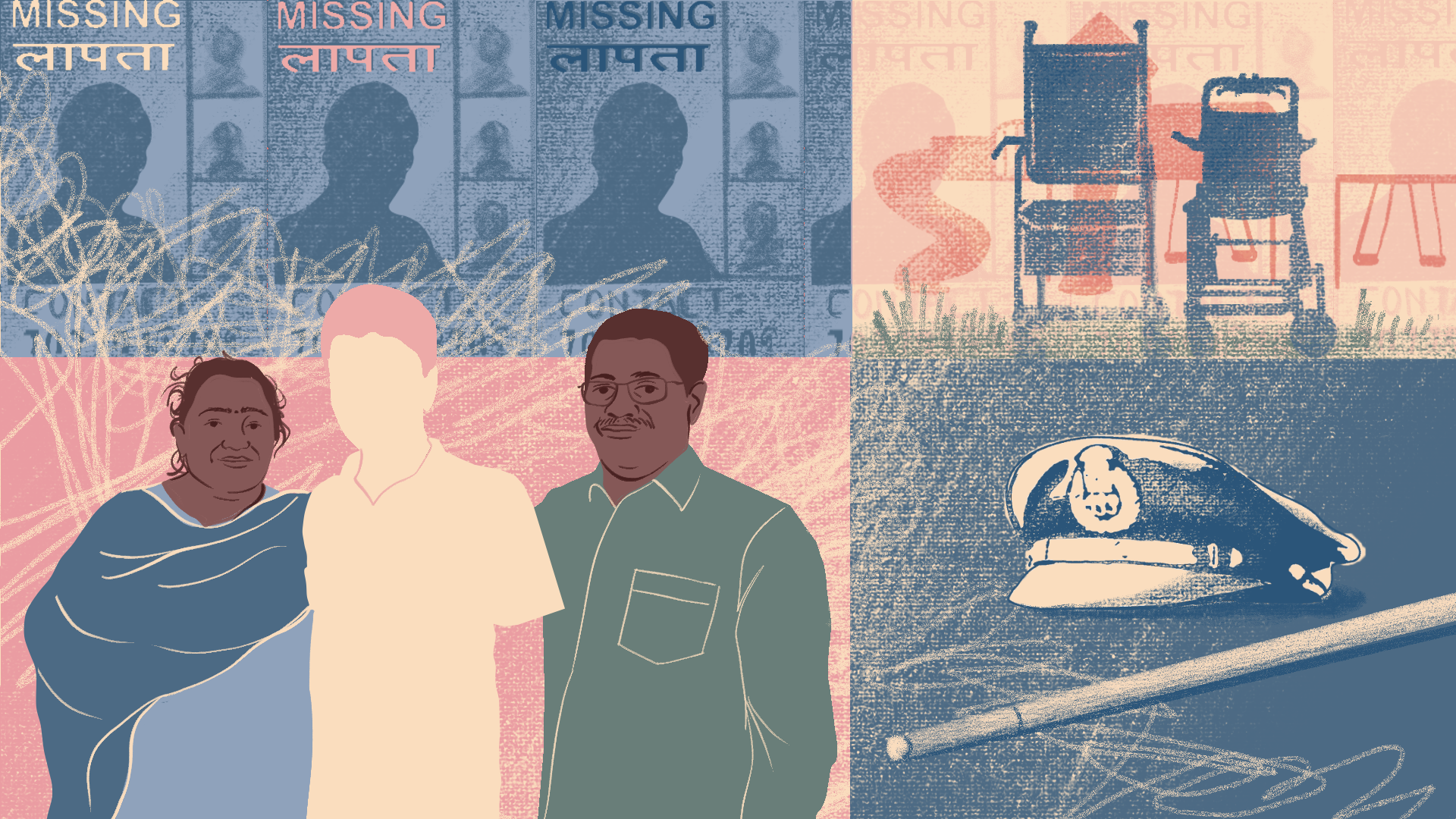
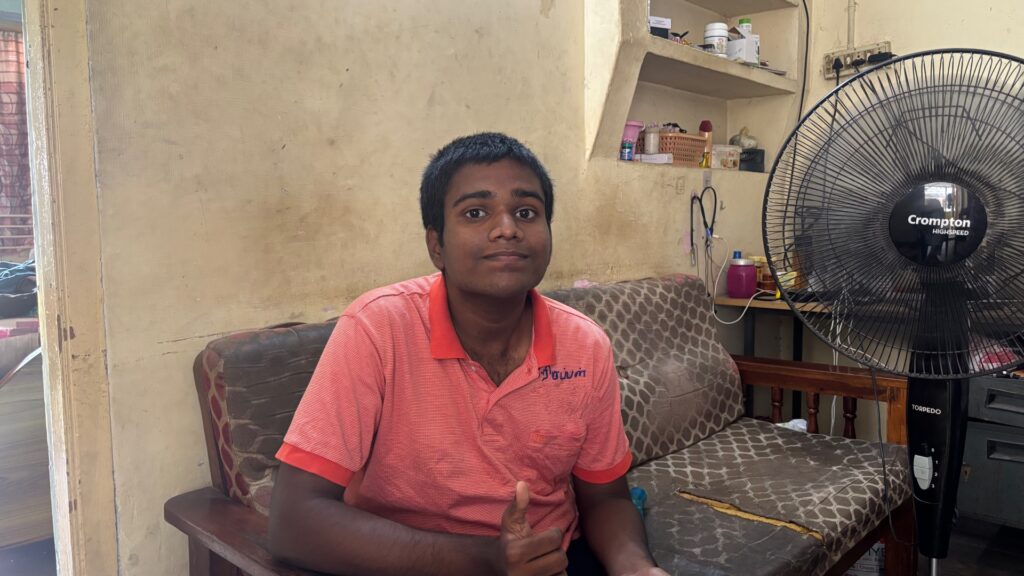
In November 2025, 15-year-old Nirupan vanished from right under his father Shankar’s nose. The two were in a market close to their home in Kilpauk, central Chennai, one morning when Shankar stepped into a shop. When he turned around, his son had disappeared.
Nirupan, who is non-verbal, deaf and autistic, loved vehicles. When he saw a train on television, he would grab the remote to keep anyone from changing the channel. It was a vehicle that drew him away from his father that day, too. As Shankar ran through the streets looking for his son and questioning passersby, it became clear that Nirupan had first got into an auto and then a bus. A conductor said she had helped him get off the bus at a depot. There were no clues to where he went thereafter.
By evening, the family was in a panic. They went to register a Missing Person report; it was the first time Nirupan’s mother, Suneeta, had set foot in a police station. Messages were also sent off on WhatsApp groups run by civil society and philanthropic organisations that are focussed on locating missing children.
Tips began to trickle in: a person wearing a red shirt had been spotted walking in Triplicane in central Chennai; a Zomato delivery worker thought he’d seen a child wandering about Vepery in northern Chennai. Shankar, whose side Nirupan rarely leaves, spent the entire day wandering wildly around the city, looking for his son, his whole world.
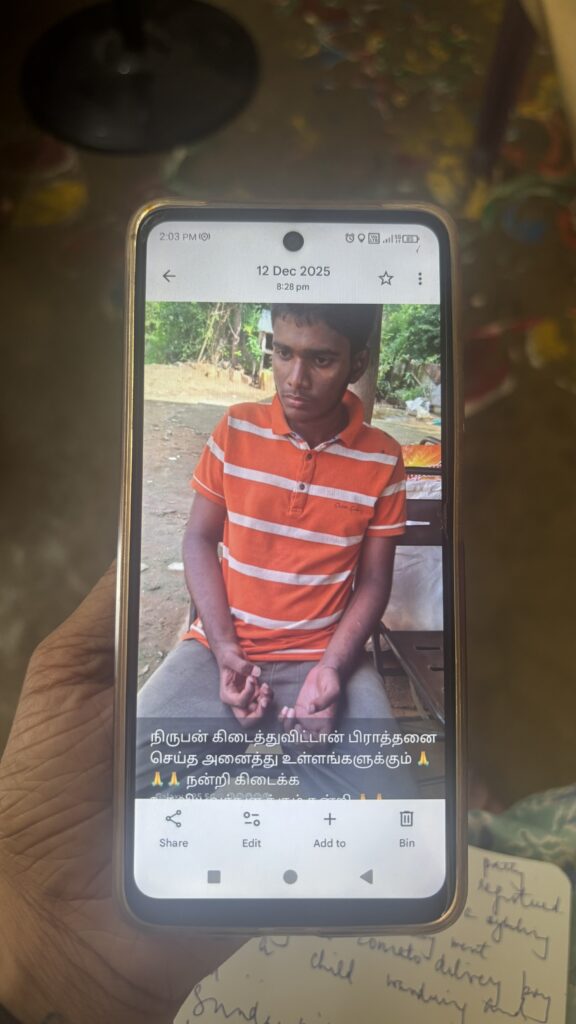
Family and friends combed through the beaches and streets of Chennai as rain lashed the city for four consecutive days. Then one evening, a photograph from a government orphanage around 400 km away in Salem arrived on one of the WhatsApp groups—a child found at the city railway station had been dropped off at its doorstep. Could it be Nirupan?
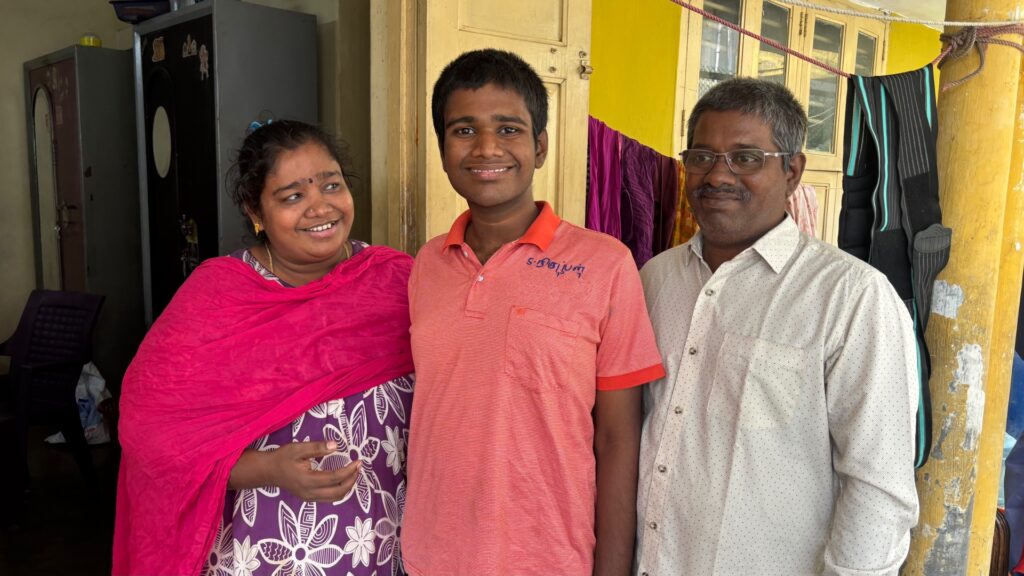
It was. When he was reunited with his parents, with a police escort, Nirupan simply smiled and clapped. He looked exhausted. His clothes were dirty but untorn, he had lost weight, he had no visible wounds, and he was more silent than he usually was. When BehanBox met him at his home recently, he was playing as his parents relived their nightmare. When shown a video of himself being found, he pointed and laughed, recognising himself. The family and police have not been able to piece together the three days after they had lost him—how he had landed up in Salem and whether he had gone hungry and thirsty in the meantime.
Nirupan is one of thousands of people with cognitive disabilities—children with autism, adults with intellectual disabilities, elderly people with dementia—who wander off, board a wrong train, or follow a sound that pulls them somewhere unfamiliar. Many cannot speak; those who can often have no clarity about who they are or where they live.
Some are found alive, months or years later, in public places, care homes or hospitals that never thought to check the Missing Persons list with the police. The onus is on the affected families to figure out effective means of searching for the missing person. Institutions say they are too overburdened to check lists put out by police stations across the country.
Others are found dead, and the people looking for them never learn how close they came to finding them. And many others aren’t found at all. India’s missing-persons crisis is enormous: In 2024, 9.28 lakh people were listed as missing across the country, including cases from earlier years, according to the latest National Crime Records Bureau (NCRB) data. New cases rose by 7.3% from the year before. Only about half of the 9.28 lakh were traced that year.
There is no way to fully prevent this crisis, especially in the case of children with cognitive disabilities as they grow through life. But the response to the crisis is severely fragmented, with State authorities, care workers and civil society all working in information silos, as we detail later.
The solutions to the problem are neither expensive nor new. High Courts in Rajasthan, Tripura and Karnataka have already directed the police to make a photograph and address mandatory on every Missing Person entry and cross-check it with hospitals, shelters and mortuaries. What is missing is a small change that is easy to make: a box on the Missing Person form which specifies that the person cannot tell you who they are, triggering a different kind of search, a wider alert, and an immediate biometric check the moment a potential match is found.
In a two-part series, we will explore what happens when people with cognitive disabilities go missing in India, and who is left to bring them home. In this, the first, we look at how the search fails them, from flawed police procedure to insular databases. The concluding story will examine what happens after they are found: the institutions that take them in, the gaps in State care, and the civil society groups and families who step in to fill them.
To piece this story together, BehanBox spoke to over 10 families across three cities whose loved ones have gone missing, the search process complicated by their cognitive disabilities. We also interviewed police officers, the first State responders, voluntary searchers and organisations that shelter people who cannot find their way home, lawyers, and disability rights activists.
Here is what we found: India has no cohesive system to deal with this issue. The Missing Person form that families fill in has no way of flagging the fact that the person is not in a position to identify themselves. This is also the case with countrywide police databases. And the staff at hospitals, shelters and railway stations—the people most likely to encounter a lost person—are not routinely given Missing Persons lists. Frontline workers are trained to spot trafficking victims and runaways, but not those with a cognitive disability. And the one law, the Mental Healthcare Act, that obliges police to protect an adult found wandering, covers only mental illness.
Missing and Vulnerable
“Cognitive disability” is an umbrella term, not a diagnosis, for people whose ability to reason, remember, communicate or orient themselves is affected. It could be a child with autism, an adult with an intellectual disability, an elderly person with dementia, or someone in the grip of a severe mental illness. These conditions are clinically distinct, and many autistic people have no intellectual disability. What they can share is what happens when they are lost: they often cannot say who they are or where they live.
There is no comparable study from India, but a 2012 study in the US found that 49% of children with autism had tried to leave a safe setting at least once after age four, and more than half of them went missing long enough to cause real alarm. More than a third of children who wander are never or rarely able to communicate their name, address or phone number. And the numbers are equally significant for those who are elderly and deal with severe memory loss—the Alzheimer’s Association estimates that six in 10 people living with dementia in the US will wander at least once, and many do so repeatedly.
What sets these disappearances apart is that conventional tools of search assume that a missing person is in a position to be helped. But as we said earlier, those with cognitive disabilities often cannot give their names or addresses, ask for directions or accept help from strangers. Some run from those trying to help them. We found in interviews that many rarely carry a phone that can be traced, and those who wear an ID tag may tear it off. Many are drawn to moving vehicles, bright lights and crowds that can carry them hundreds of kilometres away from home in a day. And social stigma misreads their distress as defiance, drunkenness or ‘madness’.
On paper, the FIR that Nirupan’s family filed should have set national machinery in motion that could have located him sooner. But it failed them and him at almost every point. Let us look at these gaps.
An initial Missing Person report filed at a police station, and treated as an FIR, is meant to be entered into the Crime and Criminal Tracking Network and Systems (CCTNS), a database that all police stations across the country can access. Since 2020, the NCRB has had a photo-matching tool called UNIFY that allows police personnel to search images of missing persons against those of unidentified people and bodies in the CCTNS database. There is a separate child tracking portal too, as part of the national scheme Mission Vatsalya, which records both children gone missing and as those “found” in care homes.
But Nirupan did not show up on any platform.
In an ideal scenario, the Missing Person report should have flagged him as high-risk because he is nonverbal and autistic. Within the hour, his photograph and details should have been sent to bus depots, the railways, auto stands, hospitals and shelters across the region. The conductor should have been able to recognise his disability and hand him over to the police instead of dropping him off at the depot. When he turned up at Salem railway station, the Railway Protection Force (RPF) should have photographed him and reported him “found,” which should have then been matched to the Chennai report. He should have been found in hours, not days.
The members of the public Nirupan met during his search—the bus conductor, railway porter, shopkeeper, police constable—had no idea how to recognise a disabled person in distress, or if they did, what to do about it.
“The only basic thing expected from the State, especially the police, when a person goes missing, is the regular dissemination of information, so that identification becomes easy,” says Gopinath Ramakrishnan, co-founder and managing trustee of Special Child Assistance Network (SCAN), a Chennai-based support group and trust that works with families caring for individuals with intellectual and developmental disabilities.
Ramakrishnan, who participates regularly in search drives for missing persons along with other volunteers, estimates that, on average, they get an alert about a person with a cognitive disability going missing every fortnight. And in India, where the systems around a missing-person search depend on their ability to self-identify, people with cognitive disabilities tend to fall through the cracks.
Missing The Language
Indian law recognises some of these conditions related to cognitive disability, but not in a vocabulary the police use. The Rights of Persons with Disabilities Act, 2016, expanded the list of recognised disabilities from seven to 21, adding autism spectrum disorder and specific learning disabilities alongside intellectual disability and mental illness. Dementia is not on that list. A standard Missing Person report records details like name, age, sex, height, build, clothing last worn,known identification marks and “physical deformities”, but doesn’t record whether the person can speak, read, or recognise their own name. In contrast, police across the US enter Missing Person reports into the FBI’s national database and sort Missing Person cases into categories, including a “Missing Disabled Persons” classification that changes how urgently and how widely the case is treated.
The law is actually clearest on what to do only when a person is found. Section 100 of the Mental Healthcare Act, 2017, makes it the duty of every police station in-charge to take under protection any person found wandering who appears to have a mental illness and cannot care for themselves. But the Act’s definition of mental illness expressly excludes intellectual disability, and doesn’t mention autism at all. Dementia may fit, since the definition covers disorders of memory and orientation, but the Act does not say so. In practice, it is left to the officer on the spot to decide. Such a person cannot be held in a lock-up. A Missing Person FIR must be lodged for them, and the station house officer has the duty to trace their family.
But there are plenty of enforcement challenges here: a Delhi lawyer once had to petition the High Court simply to have this section enforced. More recently, Madhya Pradesh’s police headquarters had to remind its own field units of the duty. The law also speaks only of mental illness. An adult with autism, or a grandmother with dementia, sits in a grey zone that officers are left to interpret on their own.
Cultural and religious beliefs often perpetuate negative attitudes towards intellectual disability, pushing families into self-imposed isolation and denial of a diagnosis. Society often reads the signs of cognitive disabilities—a teenager who won’t answer a question, a woman talking to herself—as defiance, delinquency or ‘madness’. In Nirupan’s case, he was seen—but his disability was not recognised.
What brought Nirupan home was the fact that the orphanage in Salem thought to forward his photograph to the right WhatsApp group. Nirupan’s case, by these standards, counts as the system working: an FIR filed the same day, a police escort at the end, a boy found alive within four days.
But not every missing-person story comes with a happy ending.
‘How Can I Give Up?’
Tarun Gupta, who was 16 when he went missing, should have been found within hours. CCTV cameras recorded his route through Mumbai city in October 2019, the best trail of crumbs any missing-persons investigation could hope for.
The teenager, who loves dancing to music, had followed the noise of an election procession, later getting swept up in the crowd. He has autism, speech impairment, a paretic hand and low vision. By the time the procession had reached its destination, however, he had drifted to Chhatrapati Shivaji Maharaj Terminus (CSMT) station and boarded a train.
His parents, Vinod and Asha Gupta, filed an FIR the same day. Over the next few days, CCTV images helped piece together what had happened to him: two days later, he had somehow reached Panvel, and was seen pleading for help at a railway station. An RPF personnel put him on a train bound for Sawantwadi. He was spotted eight days later in Goa—about two hours from Sawantwadi—asking for food and water, according to the parents. Unconfirmed tip-offs poured in from along Maharashtra, Goa and Gujarat.
The RPF had launched a programme in 2018, Operation Nanhe Farishtey, that is meant to rescue children like Tarun found alone and asking for help on railway platforms. Under that operation, a rescued child is supposed to be handed over to the district Child Welfare Committee. The railways have also set up help desks for children in distress at over 135 stations. The operation is not small: the RPF rescued 16,450 children between January and October 2025.
Tarun should have been taken to the help desk for children, had his photograph taken and recorded, and the information shared with the local police, who would then have run it against Missing Person reports. Instead, a boy who could not explain himself was treated as a problem and moved along.
Part of the reason is the grammar of rescue. The railways’ child-rescue work is framed around trafficking, child labour and runaways. Porters, vendors, ticket checkers and RPF personnel there are trained to spot those children. But they are not trained to spot a disabled teenager who is lost.
So Tarun’s trail went cold. And seven years later, his parents are still looking for him.
“I have searched 80,000 km for him across India. I have searched in almost every city in India, visited orphanages and shelter homes in every state across the country except in Tripura and Mizoram. How can I give up?” asks Vinod Gupta, his father, his voice choking as he spoke over the phone.
Vinod says railway staff and the police are not trained to recognise autism, and this was why Tarun wasn’t found.
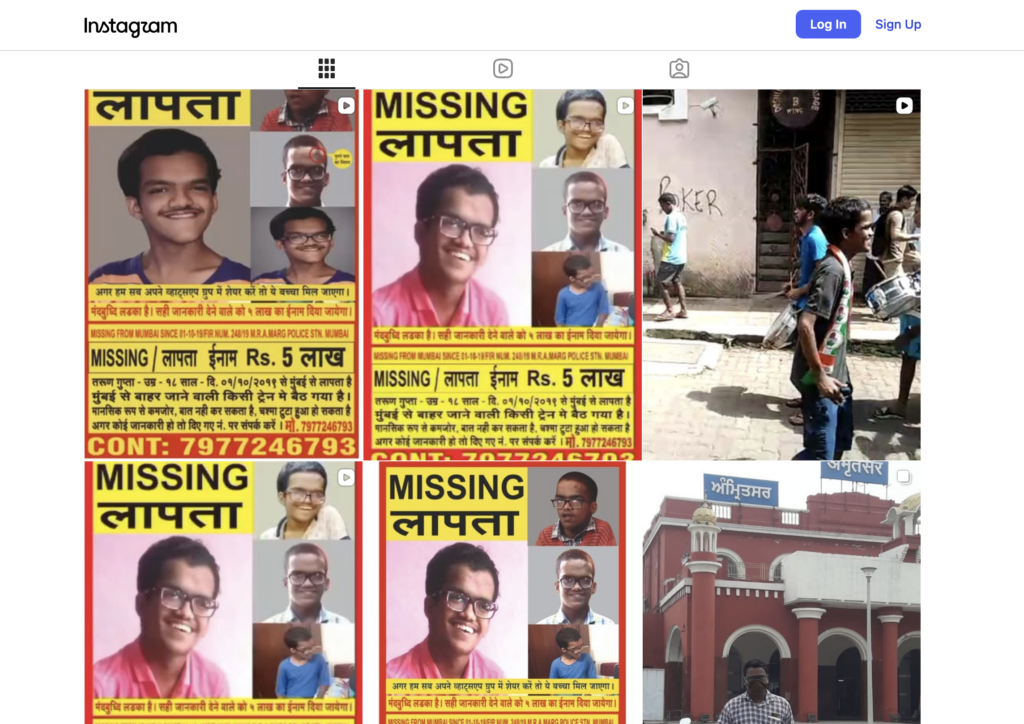
Tarun has one older brother and a younger sister, and both his siblings are still caught up in their loss. The family hasn’t celebrated a single festival since Tarun went missing. Vinod operates a Facebook and an Instagram page and keeps sharing his son’s photographs. He pointed to the fact that untraced children are often seen sitting outside railway stations: he himself has emailed the Railways department “at least a thousand times”, he says.
“In this day and age, where can he disappear? We will find him, we will keep looking for him,” Vinod says.
Modern technology should certainly help speed up the process, but practical deficiencies often stall it.
Preetha Krishnadas, co-CEO of the Banyan Academy of Leadership in Mental Health under The Banyan, an NGO dedicated to mental health care, recovery and rehabilitation, pointed to the sheer labour—physical, mental and emotional—involved in the search for a missing person. “It’s not an easy process to convince a system to track someone down because it’s extremely tedious. Plus, oftentimes families are scared of going to a police station because it can be intimidating and cumbersome,” she says.
In urban India, the widespread use of CCTV can help track missing persons. But this network is not easily available to families that initiate a search. The search is usually spearheaded by families with the assistance of NGOs and the police. Ramakrishnan also points to the fact that the footage captured on the cameras is often grainy and of little use. He recalled one particular case where they were looking for a missing person at a railway station in Tambaram, and despite there being multiple CCTV cameras on the platforms, they were unable to track the person.
“When we talk glibly about AI and facial recognition technology, we have to take such issues into account,” says Ramakrishnan. “All the processes needed to fix this need State investment,” he adds, referring to the costs of training personnel and installing cameras, amongst others.
Checkpoints Along The Way
India has a national emergency number for children: 1098. Since 2023, the service has been integrated with the Emergency Response Support System (112), with calls routed through state control rooms and emergency cases forwarded to the police. Neither helpline has a protocol that treats a non-verbal or cognitively disabled person as a higher-risk case.
Most states have a Missing Persons bureau or cell, usually within the CID or the State Crime Records Bureau. At police stations, a Missing Person information about a missing person must trigger the immediate registration of an FIR.
Once the complaint is filed, the databases are meant to be checked. The FIR goes into the CCTNS; the NCRB too maintains a national database of missing persons, unidentified people and unidentified dead bodies, which affected families can access. Delhi Police’s Zonal Integrated Police Network (ZIPNET) allows eight member states and Union Territories to share data on missing persons and unidentified bodies.
But here is the glitch: each database only works if someone on the other end, such as a hospital, a shelter or a railway post, has entered the found person, and if someone thinks to search. None of them has a field that flags a person as being unable to self-identify.
If the person is found injured, unconscious or dead, they enter yet another register—a hospital’s medico-legal log or a mortuary intake form. These are the records least likely to be cross-checked against a Missing Person complaint in another district, let alone another state. A hospital’s medico-legal register, for example, stays with the hospital; it informs only the work of the local police station. That station is supposed to enter the person into CCTNS—as an “unidentified found person” if they are alive, or an “unidentified dead body” if not—and into ZIPNET, in the eight states and Union Territories that use it.
Whether a match is ever made depends on that entry being made, with a photograph and sufficient identifying details, and on the national system catching it. There is no direct link between a hospital register and a Missing Person report filed in another district or state, or sometimes even between neighbouring police stations in the same city.
The police themselves often complain about the red tape in the process. A Delhi-based policeman, who is also the father of a child with an intellectual disability, complained to us about the hoops he has to jump through to access the information he needs, like a biometric match through Aadhaar. Under Section 33 of the Aadhaar Act, identity information can be disclosed only on the order of a High Court, and core biometric data such as fingerprints and iris scans cannot be disclosed at all. This makes it especially hard to identify someone whose name is not known—a common situation with a nonverbal child or an adult with an intellectual disability who cannot identify themselves. Sometimes police or shelters assign them names, which complicates any potential biometric match—new names make name-based Aadhaar searches difficult, but fingerprints or iris scans would still match.
Ramakrishnan has an estimate of the number of children with disabilities who go missing: roughly one lakh children go missing every year, as per NCRB data, and assuming that 10% of this population has disabilities, that’s 10,000 children across India. In Delhi, 807 people were reported missing in the first two weeks of 2026—191 of them minors, the rest adults—and only 235 had been traced by the time the figures made news in early February.
The Aadhaar Factor
Left to fend for themselves, families are building their own versions of systems to find loved ones at risk of going missing. Nirupan, for example, now wears clothes with his name and parents’ contact number embroidered onto them. But Shankar knows this is an imperfect solution: when frustrated or angry, Nirupan often tears off his clothes. The family has considered putting a GPS tracker on a rudraksha necklace for him, but the same problem persists.
Another father, whose son has accidentally wandered off twice before, retraces his son’s favourite spots each time. Once his son was found curled up on a metal bench outside his father’s office. A daughter, whose elderly father has dementia, has advised all shopkeepers and security guards in the area to keep an eye on him—setting up an invisible boundary to keep him from wandering too far.
The irony is that India already has a potentially effective tool to deal with the problem—Aadhaar, which is the mandated proof of identity for anyone applying for a Unique Disability ID (UDID) card. A disabled person’s biometric identity and disability status already exist together in the government digital system. As of July 2026, over 1.39 crore UDID cards have been issued nationwide, against a disabled population the 2011 Census put at 2.68 crore.
But in a missing-person search, this tool is not routinely used to identify someone found wandering, someone found in a hospital’s register of unidentified patients, or someone who is entered in a police mortuary intake form. As we pointed out earlier, all these systems exist in silos.
Consider what is lost by this gap.
In November 2016, a 15-year-old boy with speech and hearing impairments was found at the Nagpur railway station. Railway authorities followed procedure and handed him over to a government orphanage, where he was given a new name. Nobody connected him to his family in Bihar’s Khagaria district, from where he went missing the same month. Six years later, in July 2022, the orphanage’s superintendent took him to enrol for an Aadhaar card. The enrolment failed because his fingerprints matched an existing Aadhaar number, issued in 2016 in his real name. He was home within weeks, by then aged 21.
In a similar case, B Bharath Kumar, a speech-impaired child who went missing from a Bengaluru market in 2016, was reunited with his mother six years later when a rehabilitation centre in Nagpur tried to enrol him for Aadhaar and the request was rejected as a duplicate.
The police have for years pushed to use Aadhaar’s biometric database to speed up these identifications, an idea that has repeatedly stalled over privacy concerns. In August 2026, Karnataka formalised rules allowing police to seek an Aadhaar match only as a last resort, at least 72 hours after a body is found, with no bulk searches. On October 7, 2026, the Union Home Ministry issued a national Standard Operating Procedure for identifying unidentified bodies through Aadhaar, strictly within the limits of Section 33 of the Aadhaar Act. Both apply only to the dead, not to living people who can’t say who they are.
Some of that may finally be changing.
In May 2026, the Supreme Court heard a case that traces back to 2011, when a father from Chennai named G Ganesh reported his daughter missing. The court ordered every police station in the country to register an FIR the moment it learns of a missing person, without waiting for a preliminary inquiry. In August, it clarified that the order applied to adults as well as children, closing a loophole that would otherwise have left out the elderly with dementia. The Court has also directed that a missing person, once found, must be taken to an Aadhaar verification system that could potentially identify and facilitate restoring missing persons once they’re found.
Unable to Seek Help
One of the major consequences of people with cognitive disabilities going missing is a certain homelessness. Unable to find their way back home, they are often left roaming the streets.
Preetha says this is a significant chunk of the population that The Banyan deals with. In her experience, people with cognitive disabilities do not always seek help. But with people with mental illness, the symptoms are often misunderstood as behavioural issues — stigma often keeps people from offering them food or help.
The scale of this population is vast. According to the 2011 Census, India had about 1.7 million homeless people, and per a 2018 estimate, nearly half of them were likely to have a mental illness.
Much of the work of tracing families has fallen to civil society organisations. The Mumbai-based Shraddha Rehabilitation Foundation, for example, has rescued, treated and reunited more than 10,500 people with mental illness with their families since 1988. Its staff sometimes find families by matching patients’ details against police missing-person lists—the very check the State is supposed to run.
“Apart from their mental health issues, there is the trauma of homelessness. If we can reduce that trauma—caused by the time it takes for them to be found—it could really help long-term recovery,” Preetha says.
In Nirupan’s case, the trauma of his trial had a lasting effect on him.
“For months after he came back, he didn’t leave the house and he was scared of others,” says Suneeta, whose open, laughing face hardened as she recalled the panic of the four days they spent looking for him. “There was nothing else on my mind except that he was missing. My mind was blank. By some miracle, we found him.”
In the middle of the conversation with his parents, Nirupan moved off the couch to the floor to rest his forehead on his father’s knee. Shankar absent-mindedly stroked his hair and Suneeta talked of the temples they had visited in gratitude after Nirupan was found unharmed. There is a fear that this could happen again, and not end as well.
[This story was reported with support from the International Foundation for Disability Inclusion fellowship.]



We believe everyone deserves equal access to accurate news. Support from our readers enables us to keep our journalism open and free for everyone, all over the world.
