
It Is Time To Recognise, Record The Life, Labour And Art Of Marginalised Film Dancers
Only a handful of celebrated cinematic dancers are known to us but there are dozens of trained and talented artistes who have upheld the fabled song and dance tradition of Hindi films but whose work has remained unacknowledged and underestimated
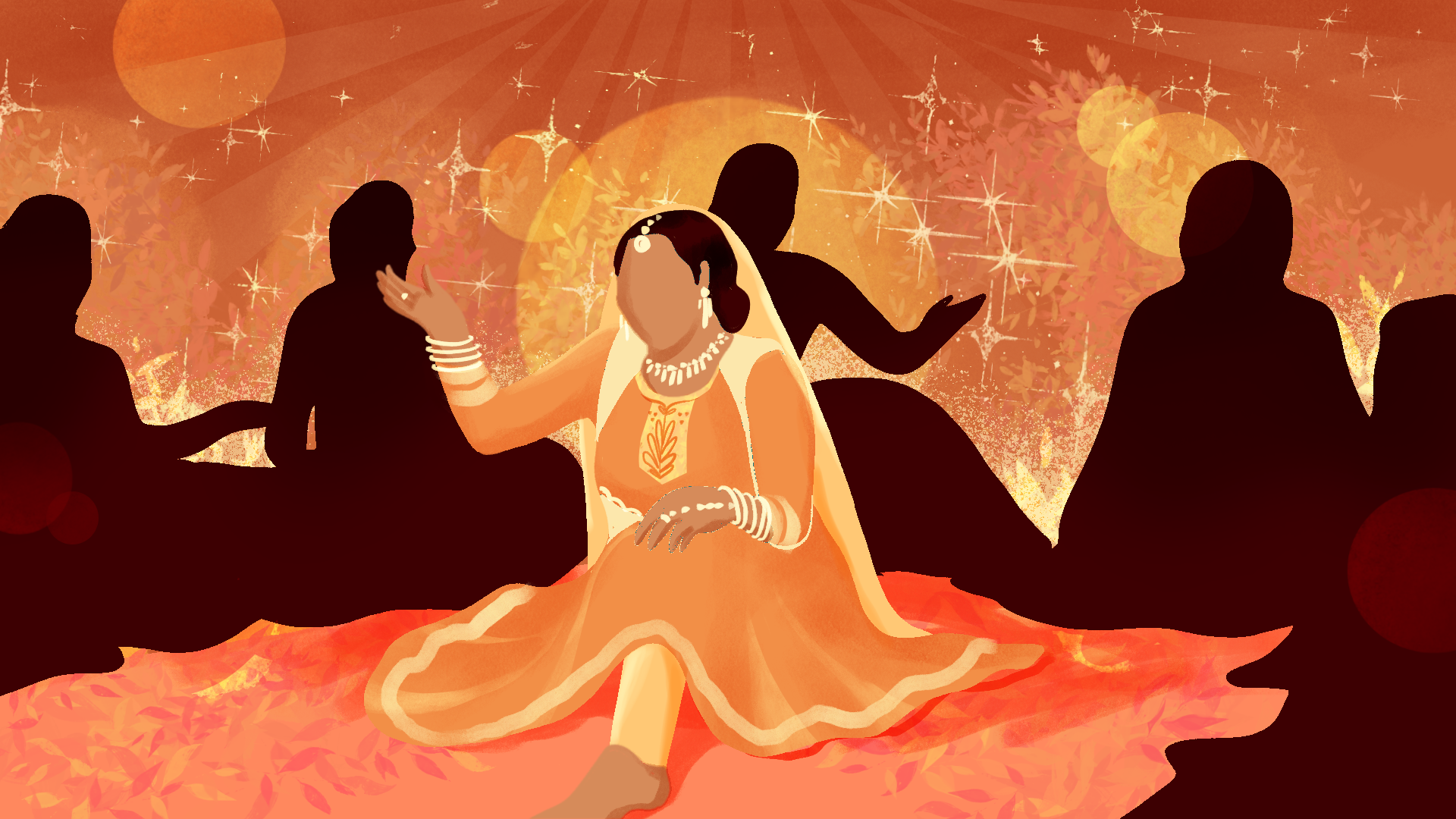
THINK ABOUT DANCE IN BOMBAY CINEMA and two things come to mind – one, that dance has been an inseparable part of the industry almost since its inception in the early 1900s. And second, that if you remove dance from Bollywood, you remove its beating heart.
As a Kathak dancer and researcher, there are three questions that have preoccupied me: Who are the dancers who livened up its innumerable songs and choreographies? Who gets to represent cinematic dance? And is it still important to delve into their lives and work?
When we discuss dance in Bombay Cinema, only a few star names come up. Vyjayanthimala, Waheeda Rahman, Madhuri Dixit, Saroj Khan, and Hema Malini among them. A few might even remember Bhagwan Dada and Cuckoo Moray from the 1940s and 1950s hits such as Shola Jo Bhadke Dil Mera Dhadke (Albela, 1951) and Mere Piya Gaye Rangoon (Patanga, 1949). Some who played popular vamp roles like Helen, Bindu, and Kalpana Iyer are well-known. In contemporary Bollywood, the scene is dominated by names like Raghav Juyal, Nora Fatehi and choreographers Remo D’ Souza, Kruthi Mahesh, Vaibhavi Merchant, Ganesh Acharya, Farah Khan.
But the question that emerged through my research was this – is this a complete list and is it fair?
Let us look at the numbers. A simple Google search reveals that Bombay Cinema has produced an estimated 8,000-10,000 Hindi movies since the 1940s. Given this massive pool, the number of dance songs should run into thousands. But the names we recall are only a handful. So, who danced the rest? Which names remain in the margins of film and dance history despite their significant contribution to cinema? How were they trained and by whom? What were the stories of their lives of which we know so little? How did they relate to the film industry and what kind of networks did they have?
In this essay, I focus on a small but very significant group of women dancers in Bombay Cinema. Not the stars, not the choreographers, and not the celebrated names, but those who still formed an undeniable, and non-negotiable part of the picture — the hundreds of nearly anonymous women who performed, assisted master choreographers and were often the bodies on whom songs were first set, from the 1950s to 1970s. Roopmala, Rani, Meenaxi, Chanda, Habiba Rahman, Alka Noopur, Sujata, Nalini Chonkar, Laxmichhaya, Kammo, Rani, Heera Sawant: even many film and dance buffs do not recognise these names that came up in my research.
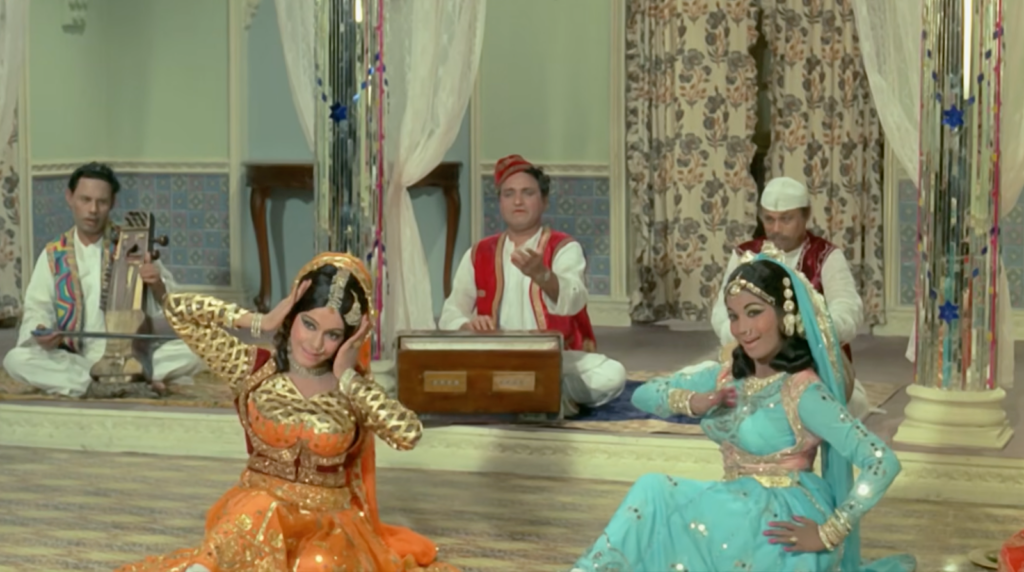
There was a time, especially 1940s-70s, when Bombay cinema had a very active presence of a unique category of performers who were brought in for the specific and very important purpose of dancing to a song. The song was woven into the film’s narrative, often taking the story forward and revealing critical plot lines.
This was also the time when most lead actors did not dance, except those who were trained such as Waheeda Rahman, Vyjayanthimala, Hema Malini, Asha Parekh, and Jayaprada. Artists like Bhagwan Dada, Cuckoo Moray, Sitara Devi, KS Moray, and Roshan Kumari were some of the earliest faces of cinematic dance, and they brought individual styles and flair to their roles.
Kathak’s Cinematic Links
From the 1950s, there is a surge in this category of dancers, especially women who started to register their presence in almost every film, through songs. Dancers like Sheela Vaz, Bela Bose, Kumkum, Nimmi, Padma Khanna, Jayshree T, Helen, and Saroj Khan occupied a singularly unique position in the Hindi cinema of the time, holding up its song and dance tradition.
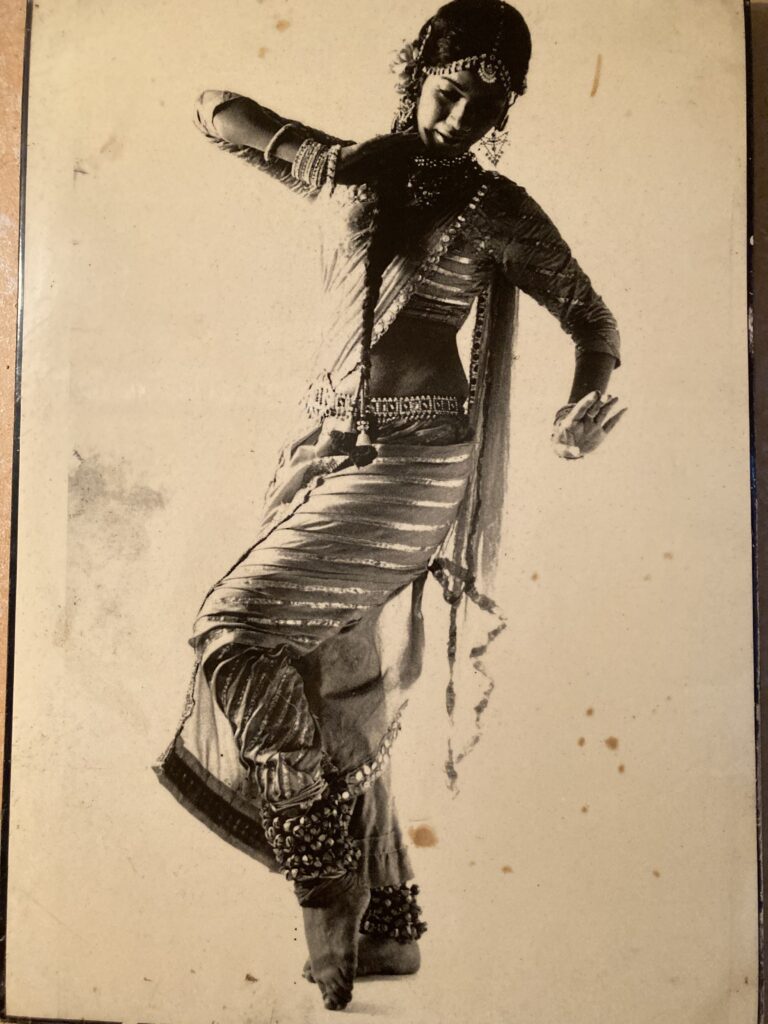
Many of these dancers came with years of training in Kathak behind them, tutored by the legends of the time. Habiba Rahman was a disciple of Sitara Devi and Mohanrao Kallianpur, Padma Khanna had learned Kathak in Banaras for years before training with Gopi Krishna in Mumbai, actress and dancer Anjana Mumtaz had trained under Gauri Shanker and later Gopi Krishna, Rani was taught by Ram Narayan Mishra and Krishna Maharaj in Kolkata before assisting Gopi Krishna in Mumbai, and Kumkum was a student of Shambhu Maharaj of the Lucknow Gharana.
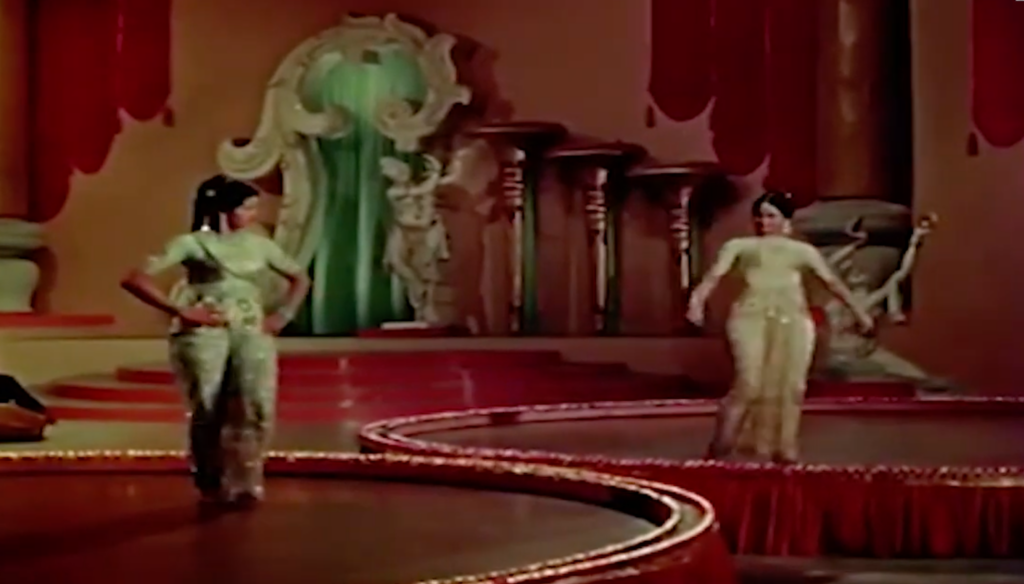
While Bollywood dance is an amalgamation of many dance styles, classical and folk, its connection to Kathak has been the strongest right from the earliest years of Indian cinema.
One reason is that Kathak is naturalistic, fluid and open-ended (khula naach), and can potentially accommodate different choreographies. It also uses the soft kneed stance that is closer to real life than the bent-knee posture Odissi and Bharatanatyam. This idea was echoed by dancers such as Padma Khanna, Saswati Sen, and Habiba Rahman in my interviews with them.
Secondly, and perhaps more importantly, many of the women from the earlier decades of Hindi cinema had links to hereditary courtesan families. Jaddan Bai, Nargis, Zubeida, Nimmi, Saira Banu and Kajjanbai were among the better known among them. They or their mothers had migrated to Bombay seeking work in cinema after the decline of feudal and courtly patronage.
It is not surprising that the tawaif was an integral part of Hindi cinema. In the decades of 1940s to 1970s, it was very common to spot a courtesan character in a film and have at least one song by her, which solidified the connection between Kathak, courtesans and films.
“Pehle ke zamane ke director, Bimal (Roy) da wagerah, kothon pe jate the ye dekhne ki ada kya hoti hai (early directors would visit courtesans to understand what stylistic grace is),” said Habiba Rahman in an interview with me. The directors would then try to make their heroines emulate and adapt these expressions for the film: How should a woman use her eyes to express her love for the hero? How does she convey hurt, anger, disappointment, or longing in love? How will she seduce a man, or recede into a pool of shyness when he embraces her? The adayegi (performance skill) of courtesans thus became an important influence on the emotive skills of early women actors.
CONNECTING THE DOTS
There are several examples of choreographies that were so singular that they came to be identified with the film. Ramaiyya Vastavaiyya starring Sheela Vaz (Shree 420, 1955), Reshmi Salwar Kurta Jali Ka featuring Kumkum and Minoo Mumtaz, (Naya Daur, 1957), Ja Main Tose Nahi Bolun performed by Rani and Jeevankala from Sautela Bhai (1962), Sajna hai mujhe sajna ke liye starring Padma Khanna (Saudagar, 1973) remain classic examples of songs transcended the movie and lived on in people’s imagination for decades.
But even though these dancers are very visible across the hundreds of songs featured in film after film, they also remained absent from film history, classical dance history, and many times, from their own film credits. This is despite the fact that they honed their craft through decades of training, practice and experience.
When I started my research on Kathak in Bombay Cinema, I knew only what pop culture taught me. I knew the magnum opuses, the classics, and their stars -- Mughal-e-Azam (1960), Pakeezah (1972), and post-2000s, the Kathak in the films of Sanjay Bhansali and others.
Apart from stars, the only other Kathak artists I knew who worked in films were the gharanedar or hereditary artists. They were documented in history, we were taught about them in our Kathak classes, and it was easier to access stories of their work in cinema. I knew of the great Sitara Devi, the flamboyant Banaras Gharana Kathak exponent who was also an actress in the films of the 1940s and 1950s. I knew of Gopi Krishna, Sitara Devi’s nephew who was a renowned film dance director and the choreographer of blockbusters such as Mere Pairon Mein Ghunghroo from Sanghursh (1968), Vyjayanthimala's fabled dances in Amrapali (1966) and Dil Cheez kya hai from Umrao Jaan (1981). Lacchu Maharaj of the Lucknow Gharana who had been a dance director in films was associated with the larger-than-life classics such as Mughal-Azam and Pakeezah, among others.
But as I dug deeper I started discovering more names. Slowly, a whole slew of dancers emerged, many of them trained in Kathak. They had worked extensively in cinema but their lives and art remained shrouded in anonymity.
My interviews with Shampa Gopikrishna, the daughter of Gopi Krishna, revealed the names of many little known women dancers who were actively associated with her father. From these names I found links to others. It was like connecting dots, finding clues in a treasure hunt. I managed to interview quite a few women dancers such as Habiba Rahman, Padma Khanna, Anjana Mumtaz, Padma Sharma, Jeevankala, Jayshree T.
‘It’s Like Lightning Strikes My Body’
One such dancer-actress whose work fascinated me was the late Jeevankala. Her charming expressions, rigorously trained dancing body and pleasing screen presence intrigued me. As a dancer, it was important for me to understand her life, training, rehearsal sessions, and screen dances. I also wanted to decode how dance became a currency that allowed women in cinema to leave a mark on an industry that was otherwise very hierarchical and patriarchal.
I was fortunate enough to find her in Mumbai in 2022.
Born in 1944 in Pune, Jeevankala was one of the most recognisable dancer-actors from 1950s-60s. She was trained in Kathak by Balasaheb Gokhale in abhinaya (expressions) and technical work like tatkaar, tode tukde and so on. She also recalls being taught in class to dance on classical based-film songs of that time.
Jeevankala started dancing early as a regular at the local Ganpati Utsav in Pune where established dance parties performed. She recalls training for hours in dance, long before films happened. Eventually, she shifted from Pune to Mumbai to work in films, and switched to studying at a night school near Dadar Plaza cinema. This allowed her to balance movie shifts and dance training with her studies.
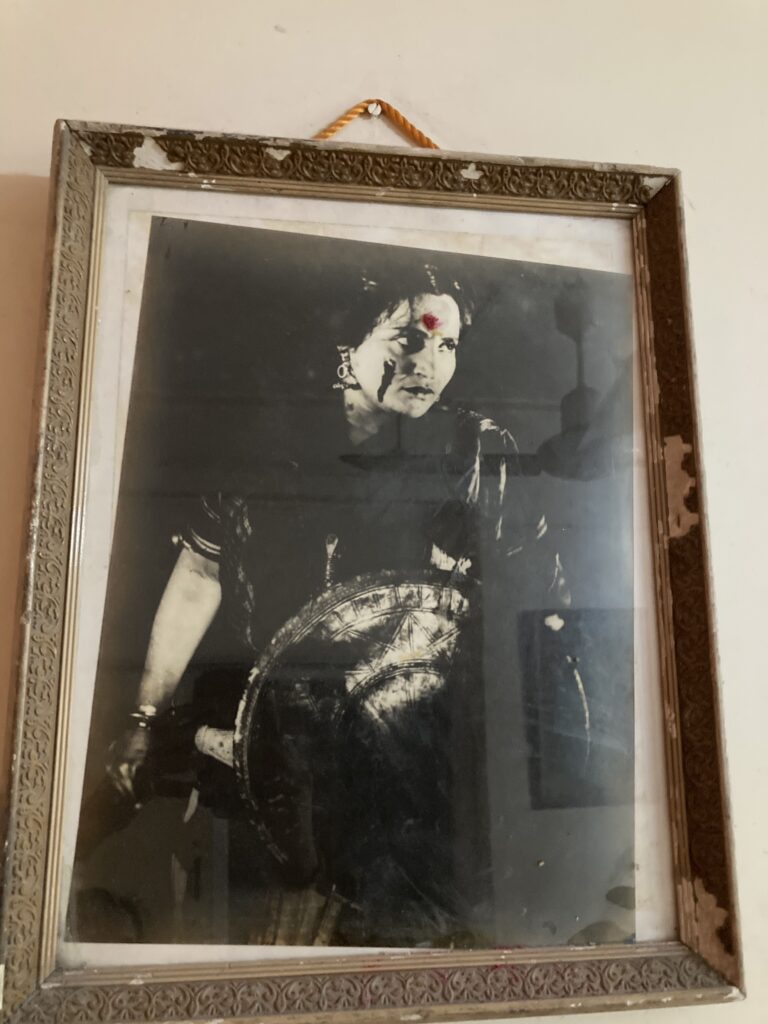
“Mere mata aur pita dono bahut acche the, picturon mein kaam karte the, us zamane mein bhi (my parents were very nice people and they worked in films),” she recalled. Both Dattatrey Kamle and Gangu Bai had been a part of the silent films of the 1910s, doing stunts for films such as horse riding and fights. They were her inspiration.
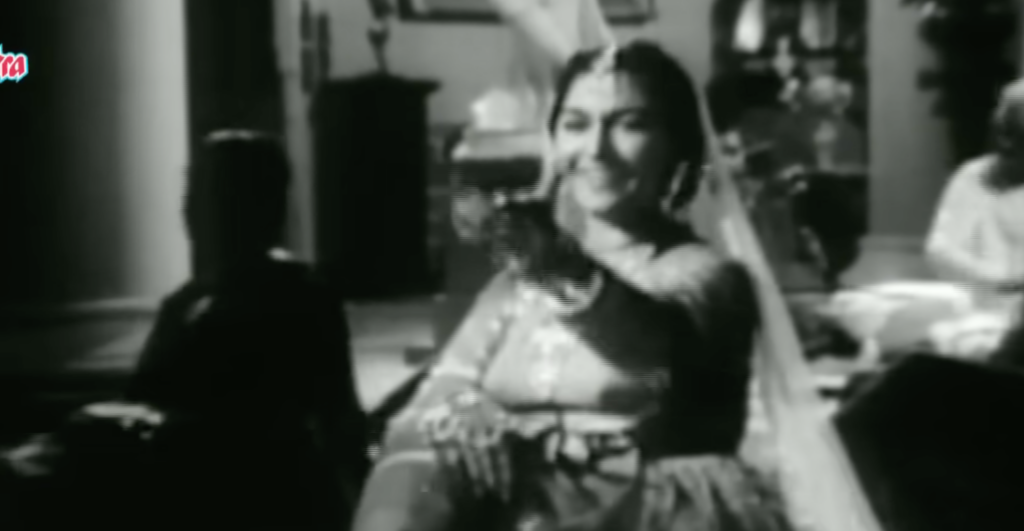
Arguably, the most popular song that Jeevakala starred in, was the enormous blockbuster hit ‘Hansta hua noorani chehra’ from Parasmani (1963), a duet she performed with Nalini Chonkar. It was to be a complete game changer for her career.
“Woh gana to baap re, itna famous hua, aaj bhi log yaad karte hai (that song was something else, even today people remember me by it),” she said. So alive is it in popular imagination that she recently performed it on a reality show recently.
“Jeevankala ji, how do you feel when you dance?” I had asked her.
“I don’t know, it’s like lightning strikes my body,” she had replied.
At 86, even though her body had slowed down, the eyes and face carried that spark. It told me two things: she wasn’t exaggerating when she used the lightning metaphor, and that she really embodied music and dance.
Whether she is dancing vivaciously alongside Shammi Kapoor in ‘Bada qaatil hai mera yaar china chin chin chu’ from China Town (1962) or playing sharp and subtle tawaif in ‘Ja main tose na hi bolun (Sautela Bhai, 1962) alongside Rani, or she doing an energetic duet with Helen in ‘Meri mitti mein mil gayi jawani hai ram’ from Khandan (1965), Jeevankala’s technique, range of expressions, uplifting screen presence always shone through.
What sets apart Jeevankala from many others is her ability to energise her face and her body at the same time. Her facial expressions, never too dramatic or loud but not muted either, lighten up the screen, even as she shares screen space with the star actresses like Waheeda Rahman. Who inspired her expressive dancing? I asked.
“Shakeela Bano Bhopali,” she said, referring to the famous actress and qawwal who was known for her strong expressions and flamboyant body language on screen.
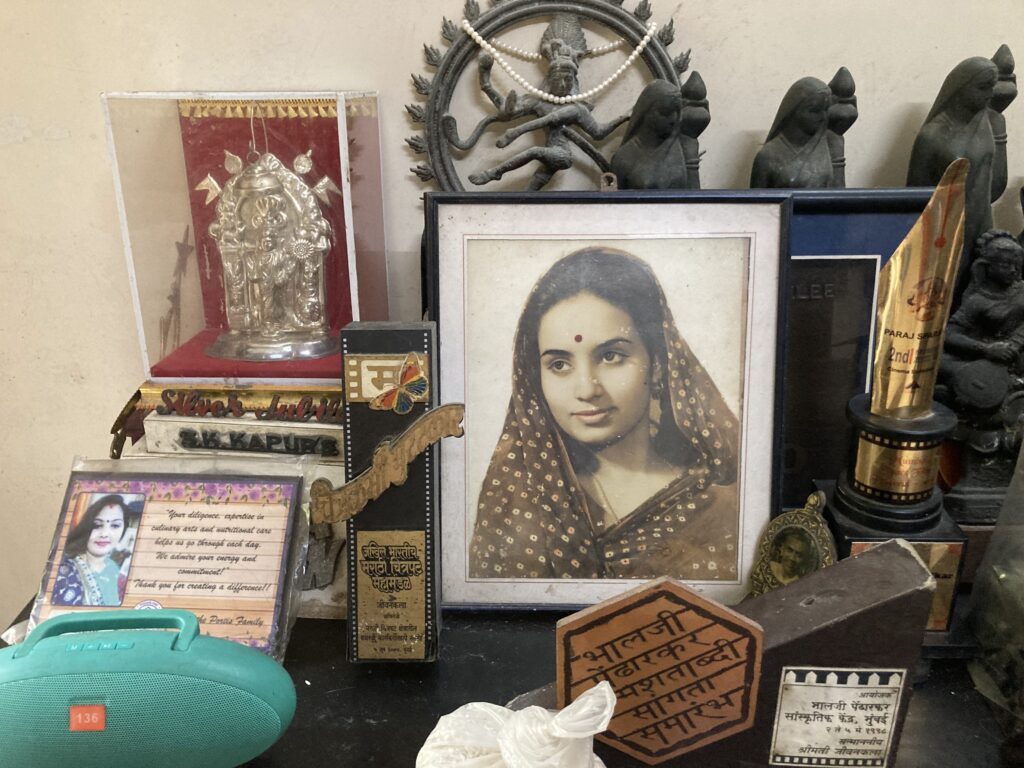
In Bombay Cinema, songs are not just a listening experience, they are also a visual experience. The dancer/actor starring in the song, the picturisation, the expressions, dancing, and overall cinematography of the song play a very big role in how popular it becomes and how well it is able to connect to audiences.
“Producer-distributor log kehte the Jeevankala ka ek gana dalo picture mein (producers and distributors would ask for my dance to be used in films),” she said. Songs and dances are also the one thing that brings audiences back to the theatre for a repeat viewing of a film.
dance as labour
There is just not enough recognition of the hours of labour that goes into the work of the dancer-actors. Many of them did more than dance in song sequences; they also assisted male dance directors. There were also those who graduated from being masterji’s student to his assistant.
Their job was to teach the choreography to the actors, work through long hours of rehearsal, manage potential star tantrums and be on their feet for extended periods.
Rani and Saroj Khan both assisted Gopi Krishna, and Saroj had also assisted the renowned choreographer B Sohanlal. Habiba Rahman and Padma Khanna too worked with Gopi Krishna for many years, taking lessons from him while also being asked to learn the film choreographies he was working on. Padma Khanna remembers how their knees and elbows would be bruised after multiple repetitions of the demanding dance steps he was known for.
As assistants and students of the masterjis, they also often became the bodies on whom choreographies were composed before they were taught to actors, making them an integral part of the creative process.
Reflecting on the days and weeks of rehearsal that would go into the preparation of every song, Jeevankala recalled the gruelling rehearsals in dance halls and studios with the dance director. Practising for 15 days with Gopi Krishna on the duet Meri mitti mein mil gayi jawani, she said : “Helen mujhe bolti ‘Jeevan, mein tere jaisa Indian dance nahi kar sakti (Jeevan, I can’t do Indian dance forms like you).”
Jeevankala, like many of her peers, was also a regular at the live concerts of the prominent singers of her time such as Kishore Kumar and Mohammed Rafi. She would perform ‘filler’ dance sequences in between the songs, tapping into her popular dance numbers.
dance as livelihood
Today, when we talk of hereditary dance it is mostly in the context of the male gharanedar gurus. But before the anti-nautch movement started in the end of the 19th century leading to the social, political and material stigmatisation of courtesans, performing arts were pursued by both men and women. The women belonged to a diverse group of communities, such as tawaifs, bednis, and so on.
By the 1950s, the system was in a steady and sure decline. As we said earlier, with the collapse of courtly and feudal patronage, many singers, dancers, performers, went to the emerging film industry in various centres across India, looking for work. This exodus also included male hereditary Kathak gurus such as Lacchu Maharaj, B Sohanlal, B Hiralal, Gopi Krishna.
Quite a few women dancers took to cinematic dance to support their families. In an interview with actress and host Tabassum, Bela Bose, one of the most well-known dancer actors of her time, talks of the financial struggles her family went through after her father, a cloth merchant, died in an accident. She recalled being taught for free by a dance master, and how she, in turn, would participate in the group dances he choreographed for films. Eventually, she joined films to earn and support her family.
Saroj Khan in the PSBT documentary The Saroj Khan Story directed by Nidhi Tuli talks of how hard it was for her family to survive in post-Partition Mumbai as refugees and how, on the advice of a doctor who noticed her love for dancing, she started working in films to support her family.
LEFT OUT OF CULTURAL HISTORIES
When I approached the women dancers to interview them, I found most were very eager to talk. I also realised that very few of them had been asked about their dance. They had been quizzed about the films they worked in, the actors they worked with, their experience of working with various directors and producers. But few had been asked about their training in dance, their practise, or dance peers. Dance formed the basis of their public identity, and it gave them fame, money, opportunity and created a space for them in a highly competitive industry. It was also why researchers like me would land up at their door to hear their story.
History however has not been that kind to these dancers, many of whom faced multiple levels of marginalisation. Film dancers and choreographers rarely got the kind of attention that stars, directors, music composers or singers got. And even in dance, the most attention went to male choreographers, especially those who carried the gharana. Then came the established dancers. But most of the women who featured in my study got little or no recognition. For example, it is far easier to find research material on Gopi Krishna than on Rani though she too was trained in Kathak.
All of this has left women dancers outside the periphery of discussions on Kathak in Bombay Cinema, making it all the more important today to document their lives and art. But what do we gain out of this documentation? The goal of any archive, surely goes beyond the act of archiving and documentation. It creates space for what was left behind, and highlights what needs our attention.
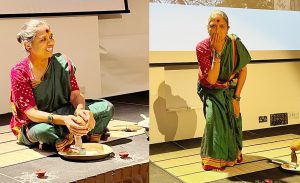
For me, the next step from the research was to start talking about this in public. I started giving illustrated lectures and workshops often featuring dance demonstrations from film choreographies. Later, Instagram became a platform for me to share my research and passion. I started ‘All Things Kathak’ to begin a conversation on film dance and Kathak that went beyond conventional themes. ATK is now a registered entity, and an organic means for me to generate discourse around the intersection of classical dance, popular culture and value systems.


We believe everyone deserves equal access to accurate news. Support from our readers enables us to keep our journalism open and free for everyone, all over the world.
