[Readmelater]

BehanVox: Gone In A Flash

This week in BehanVox: the eroding right to food, biased chatbots, and more
Subscribe to our weekly newsletter that brings you top stories, news from the world, and our team’s reading recommendations.

Hello and welcome to BehanVox!

This week brought devastation. The visuals of flash floods from Nepal are unreal – one moment people are walking about and getting on with life and another a gush of water sweeps them by and obliterates them. The floods have so far claimed at least 600 lives and 2,000 people are missing by official estimates. Keshav Prasad Baral recounted to the Guardian: “It was a huge gush of mud coming straight towards us. As it got closer, it kept rising higher and higher.” Keshav survived but he saw his wife being swept away. My wife is still somewhere beneath the mud. She’s gone.” Arjun Pudel, a journalist with the Kathmandu Post, writes about witnessing his entire village disappear. How does one make sense of this? 

The human devastation raises a political question about how small countries like Nepal or the Pacific island nations are bearing the brunt of climate change largely driven by rich nations. Since 2000, the world’s glaciers have lost 5% of their ice, with much more drastic impacts in certain regions, says The Wired. Nepal’s glaciers lost nearly a quarter of their area between 1970 and 2010. 

Our thoughts are with the people of and in Nepal at the time of the tragedy. If within your means, consider contributing to the Prime Minister’s Disaster Relief Funds here; refer to organisations like Ecosathi, Karmyayog Foundation, and Hami Nepal if you are looking to donate clothes, food, and medicines and support through other means. 

This week we have two diverse reports – one on the rollback of a hard won people’s right and another on how LLMs and big tech are unable to process indigeneity and language diversity.

Story So Far

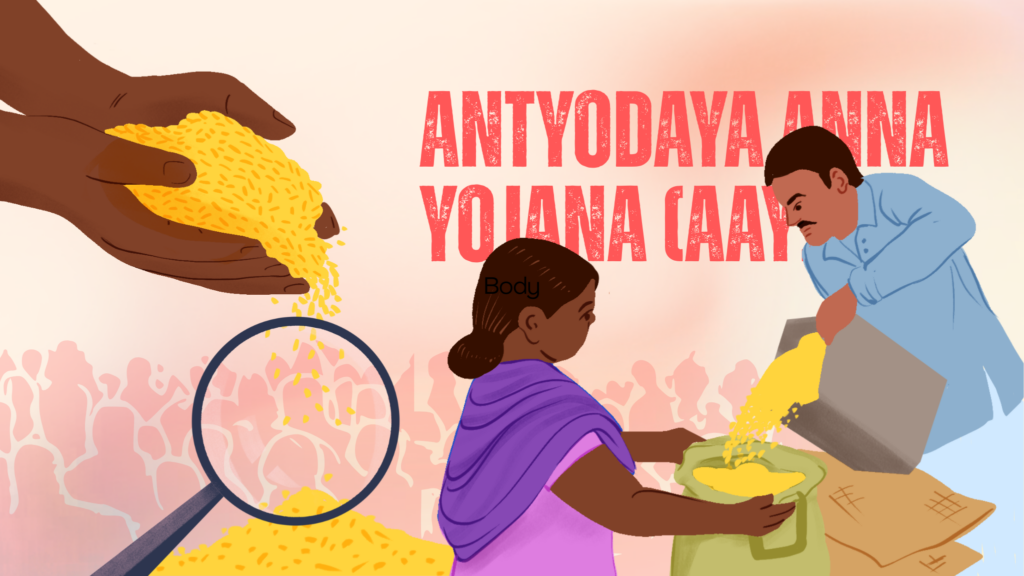
In the late 1990s, India faced a stark paradox. Her food stocks were overflowing and grain rotted in Food Corporation of India godowns while millions went hungry.

It was this contradiction that helped fuel the Right to Food Campaign—a movement rooted in villages and led by workers, activists and progressive economists including Jean Drèze. Drawing on evidence of hunger and deprivation from vulnerable households across several states, the campaign took the battle to the Supreme Court and in a petition argued that the right to life guaranteed under Article 21 of the Constitution must encompass the right to food. Through a series of landmark orders, the Court effectively recognised food as integral to the right to life and transformed several welfare schemes into enforceable entitlements, including universal Mid-Day Meals in schools and the Antyodaya Anna Yojana (AAY), aimed at securing food for the “poorest of the poor”.

The movement’s most significant legislative victory came with the National Food Security Act (NFSA), 2013, which gave statutory backing to food entitlements for roughly two-thirds of India’s population and remains a foundation of the country’s food security architecture.

Today, that legacy—and the AAY itself—faces a new threat.

The government’s proposed amendment, presented in the language of “equity”, would replace AAY’s existing entitlement of 35 kg of foodgrains per household per month with 7 kg per person per month, capped at 35 kg per household. In practice, it could mean reduced entitlements for around 73% of AAY households, which have fewer than five members.

“The government is trying to cut costs at a time when the godowns are already overflowing with undistributed grains,” says economist Jean Drèze.

So what exactly is at stake? And what would the proposed change mean for some of India’s poorest households?

Samra Iqbal pieces together the history, the numbers and the implications in an explainer. Read here.

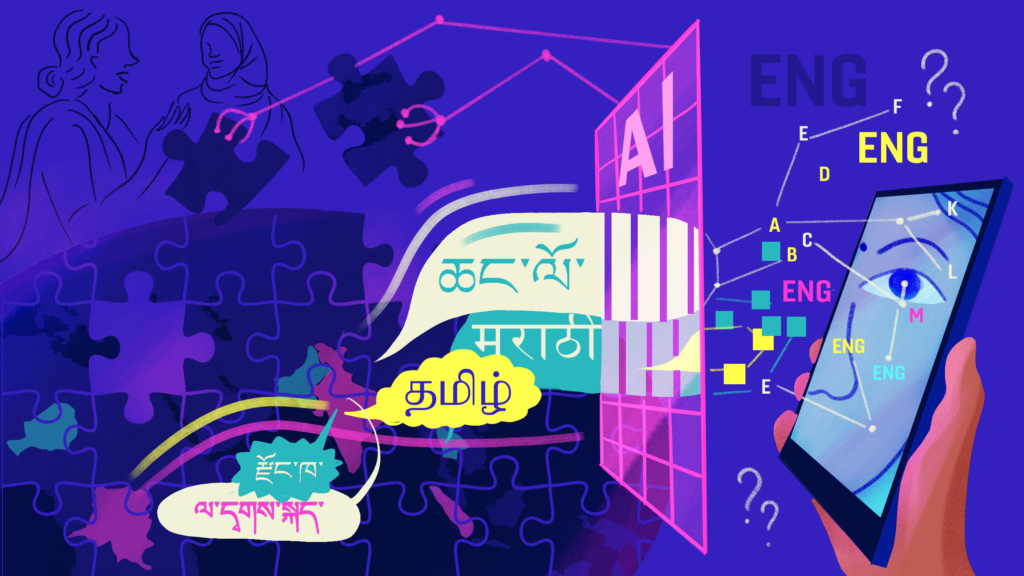
Ask ChatGPT a question in English and it may stun you with its eloquence. Ask the same question in Bangla, Dzongkha, or Maithili and it stumbles or produces “complete nonsense.” Whose language gets digitised, deemed ‘correct’ and made legible is as political as it is technical.

For communities already marginalised by caste, religion, geography and gender, the cost of linguistic invisibility is very real. Aindriya Barua, who built Shhor.AI to detect hate speech in Indian vernacular languages, notes that LLMs are often trained on unconsented data and repeatedly fail marginalised communities. Leki Choden, a tech practitioner from Bhutan, shares how disaster management systems trained only in a national language can result in life-or-death failures.

“Any model will reproduce the same biases and inequalities that exist in the real world… It always comes down to where the data is collected, and from whom,” says Aindriya.

Saumya Kalia spoke with Nova Ahmed, a NLP researcher from Bangladesh, Aindriya Barua and Leki Choden on the promises and fallacies of linguistic diversity in AI, and the way ahead. Read the insightful interview here.

Talking Point

Legends Get Wings: “Dolly got her wings this Tuesday,” wrote Stella Parton in a touching tribute to her sister, the legendary country singer and songwriter Dolly Parton.

The outpouring of memories from celebrities and ordinary people alike is a testament of the extraordinary reach of Dolly’s life and work – from the iconic songs to her philanthropy, building one of the largest children’s book-gifting programs, supporting education, and even helping fund the development of a COVID-19 vaccine. As Kathryn Schulz wrote in The New Yorker, “Even more than she was a singer, Dolly Parton was a performer, and her longest-running show was herself.” Along with Dolly, other legends got wings too – Tim Curry and the polka dot queen Yayoi Kusuma.

Counting Caste: The Census exercise has once again raised eyebrows. Delayed as it is by a good five years, it has triggered fears of a nefarious National Population Register kind of exercise with the 40 point questionnaire that probe individual details like parents’ particulars, bank account details, Aadhaar, passport, Voter ID, place of Covid-19 vaccination, among others. The caste Census which is being undertaken for the first time since 1931 has left out the OBC as a separate category. Researchers Ashok Danavath and Trina Vithayathil write about the design that may end up reproducing old systems and rendering data unusable. Pair it with our own interview with Trina who emphasised that any caste Census exercise should also include the knowledge of those most marginalised by caste apartheid, patriarchy, and neoliberal capitalism to ensure the collected data supports policies that lead to annihilation of caste.

Meta Changes: Meta has agreed to overhaul how teens use Instagram and Facebook for kids under 18 as part of a landmark settlement ending a federal trial in Oakland. These include default two-hour daily limit, blocks on late-night scrolling, stopping notifications during school, a block on the app during critical overnight hours, bans on plastic surgery filters among others. Meta, YouTube, TikTok and Snap face thousands more similar US lawsuits brought by families, individuals, school districts and other attorneys general. A former Meta engineer Arturo Béjar, who turned whistleblower, testified that the company had a ‘don’t ask, don’t tell policy’ on questions of safety on the platform even as Mark Zuckerberg was fully aware of the harm.

BehanVox Recommends

As you step into the weekend, let us recommend some fun, witty as well some sobering reading and listening.

Sharjeel Imam’s Private Grief: Seven years since activist Sharjeel Imam’s incarceration, his loved ones oppose the performance of grieving, and the unwieldy task of keeping public memory alive. There is nothing romantic about suffering, and in casting the prisoner as a martyr or hero, one distances themself from the living political thinker who continues resisting. “The struggle has not ended. It cannot be seen as past or converted into poetry. It is current and it is now,” Imam’s brother writes in The Quint.

I Will Always Love You:​ Why fight grief? Sit back with your beverage of choice, get a comfort pillow or two, and well, let go. Perhaps as endearing as this song is its history: it was not Whitney Houston but Dolly Parton whose delicate and sweet voice ushered one of the greatest love songs into the world almost five decades ago. Houston’s version two decades later soared charts and gave the song a new life and fascinating lore, but one legacy of the song and its singer will always be about collaboration, generosity, and willingness to be moved by great art.

Delhi Metro Jazz: Its web spreads across the national capital, and its stories even farther, but have you ever heard its song? The fantastic folks at Ministry of All Transport Ever turned the movement of trains across Delhi Metro into a live, changing jazz performance. Tune in.

Want to explore more newsletters? In Postcards, we send you missives on the places, people and ideas that brought Team BehanBox joy. Our monthly offering Postscript invites you, the reader, into our newsroom to understand how the stories you read came to be – from ideation to execution. Subscribe for more.

Support BehanBox

We believe everyone deserves equal access to accurate news. Support from our readers enables us to keep our journalism open and free for everyone, all over the world.

Donate Now