Postcards #17: Sisters and Furious Women
This month in Postcards: Ballykupe’s Tibetan food, Canadian summers, and more
Dear reader, we write to you about the people, places, and ideas that brought team BehanBox joy.
After the Fire, Fireweed
“We’ve got rocks and trees, and trees and rocks and rocks and trees…and water.” This satirical song by the Arrogant Worms popped up in my search as I planned my Canadian summer escape. It jokes that Canada may lack history, gold-winning teams, heroes and famous volcanoes—but it does have all these rocks, trees, mountains and water.
It was amidst the imposing Rocky Mountains that I spent five glorious days, where the scenery is so spectacular that describing it feels almost rude. So I’ll keep it in my mind’s eye (and, of course, my photos folder).
But in Jasper National Park, apart from the glacial lakes and wonky mountains, what caught my attention was a flower: Fireweed (Chamerion angustifolium).
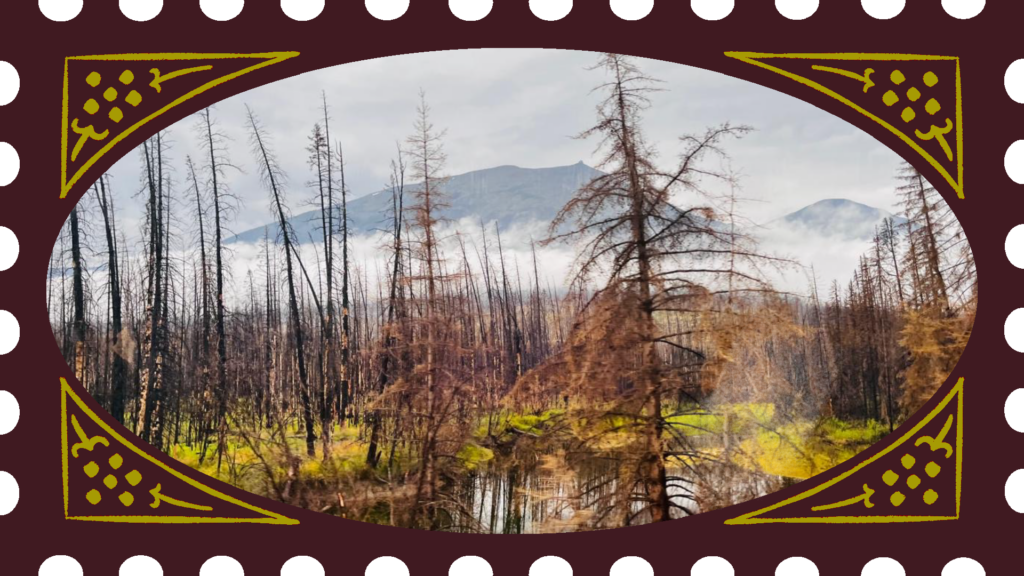
Everywhere, particularly across the vast expanses blackened by the 2024 Jasper wildfires, Fireweed announced its presence. Delicate, purple and elegant against the charred remains of Lodgepole pines and aspens, it was easy to miss. Locals said that it is the first to appear after a wildfire—the first sign of regeneration on scorched earth.
Fireweed is known as a coloniser—an inappropriate word for the purpose it serves. Where the forest has been reduced to charcoal, it arrives, takes root and begins building a community. In wartime Britain, it was nicknamed “bombweed” after carpeting the ashes of bombed cities in vivid magenta.
Walking through those burned landscapes was moving. Miles of blackened trunks marked the scale of the devastation, while people nearby were still rebuilding their lives—often in caravans—with only a short Canadian summer offering a window for repairs.
And there, amid all that evidence of destruction, was one small purple flower, spreading colour and hope. The earth will burn, sometimes it must. But something else will take root. Steadfast. Strong. And beautiful.
Bhanupriya Rao
Furious Women
I am not so sure that I was hankering for a feminist serial killer to appear on the crime fiction scene, which is already thickly populated with ghastly male specimens. Think Lars Keppler’s Jurek Walter, Jo Nesbo’s Tom Waller or Thomas Harris’ Hannibal Lecter. Do I want a woman to join this nightmarish gang? This isn’t quite my idea of gender equity. I remember being deeply disturbed by Tilotamma Shome’s utterly convincing but horrifying turn as a psychopath in Delhi Crime 2. And Killing Eve, for all its sass, didn’t send me into the rapture the rest of the world seemed to be experiencing.
So, when Furious came along this month as a pathbreaking American series on feminist serial killer, I can’t say I was thrilled. Broadly here is the plot, no spoilers: A young woman, brutalised as a teen by dirty rich men, sets out to seek revenge against each of them with a deadly kit that includes seduction. The other furious protagonist is a detective, recovering from an abusive relationship, and clawing her way back into the police force by chasing the killer. Both women are furious, and in a mood to smash up the world, but also on different sides of the justice system.
There are legions of ruthless men in the pages of crime fiction who are supposed to have grown up with broken childhoods, abuse, and poverty. Scandi thrillers are full of them, some so their handiwork graphic I have skipped entire pages if not chapters. Why not women then? Why not, indeed? Theoretically I should not be squeamish about this. After all, there is some cinematic satisfaction to be had in watching a rapist having his knuckles smashed. The macabre series is still unfolding and I am unable to look away. But I would still rather this one glass ceiling stay intact.
Malini Nair
10/10, No Notes
In my mid-year (break) of rest and relaxation, I was basically that Pablo Escobar meme—the lonely one where he’s standing and staring into the middle distance. My version was at the window with a chai, watching Bengaluru rain come down, waiting for absolutely nothing. 10/10 activity, no notes.
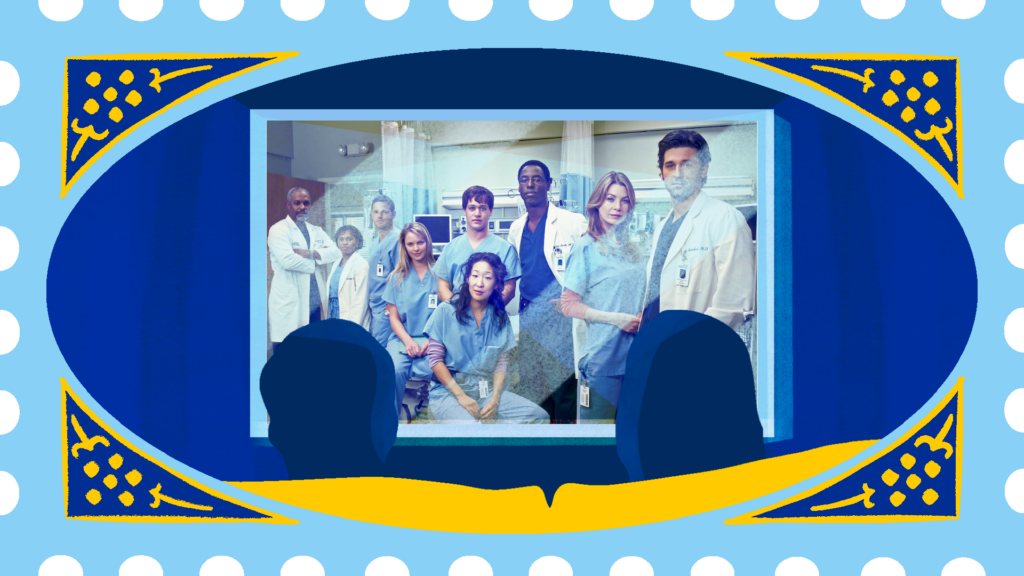
The highlight from the rest of it was Grey’s Anatomy, restarted from episode one. Partly because life has been a lot recently, I wanted one dependable thing to come back to, where I already know how everything plays out. Mostly, though, it was an act of petty sadism—so I could sit and watch my partner walk into it blind. They have never seen a single episode. They think it’s a nice show about doctors who save lives and date each other. They do not know it is an unending emotional slaughterhouse with a banging soundtrack, and I have chosen not to warn them.
We made it to season two last week and they are having a mostly wonderful time. They have adopted George O’Malley as their favourite — sweet, decent, put-upon George — and narrate his feelings out loud like a proud parent. “He’s just a good guy,” they said last night, fully relaxed. I say nothing. I nod.
The season one finale ends on Tegan and Sara’s song “Where Does the Good Go,” and reader, I can tell you exactly where the good goes: straight into the writers’ shredder, every single time. I know what’s coming for George (spoiler alert: he dies). I know what’s coming for the cheerful heart patient currently flirting with Izzie (spoiler alert: he…also dies). I’ve seen where all the bodies are buried, literally, because this show buries several.
I just sit there every night, like a gremlin on holiday, feeding my partner one comforting episode at a time, giggling away as they clutch their pearls every time Shonda Rhimes decides someone lovable has suffered insufficiently. 10/10 couple’s activity, no notes.
Pallavi Prasad
‘People Pleaser’ Instagram
One of the most low-effort hangout plans nowadays is to watch reels together. Ironically, the knowledge – that this phenomenon exists widely and is not considered peculiar – also came to me through reels (Is this algorithmic propaganda, a “trendification” of sorts, to promote more reel consumption?).
Even if two people aren’t particularly close, but share similar political leanings and economic backgrounds and have decided to partake in said reelwatch, it is likely they will chance upon reels the two have encountered before. That’s just how algorithms work.
But its merits and demerits aside, reels at times do make for an engaging, even wholesome hangout – oh, to compare Instagram feeds, laugh over similar content, share unsolicited opinions. But during one such hangout, my friend brought tidings: “Did you know PCOS has been renamed as PMOS?”
It’s been almost four months since the name of Polycystic Ovary Syndrome (PCOS) was changed to Polyendocrine Metabolic Ovarian Syndrome (PMOS), a historic decision on many accounts – and my friend is getting to know about it now. I snickered. Someone who is chronically online on Instagram and Twitter, consumes news like water, was oblivious. Was it because it did not concern him? Maybe because he could do without having to know it?
In contrast, this news nugget had popped up everyday on my feed in all forms imaginable — reports, analysis, op-eds and reels of women sharing their experiences with PCOD.
I know the algorithm is biased. It shows what we want to see, it is a ‘people pleaser’. But what struck me, and what I see more than before, is that our realities are curated, predictable, even isolating. Either we share bubbles or we don’t, and a machine changes how I relate with the next person, with the world. Even in its predictability, algorithms never cease to surprise.
Samra Iqbal
The Family You Keep
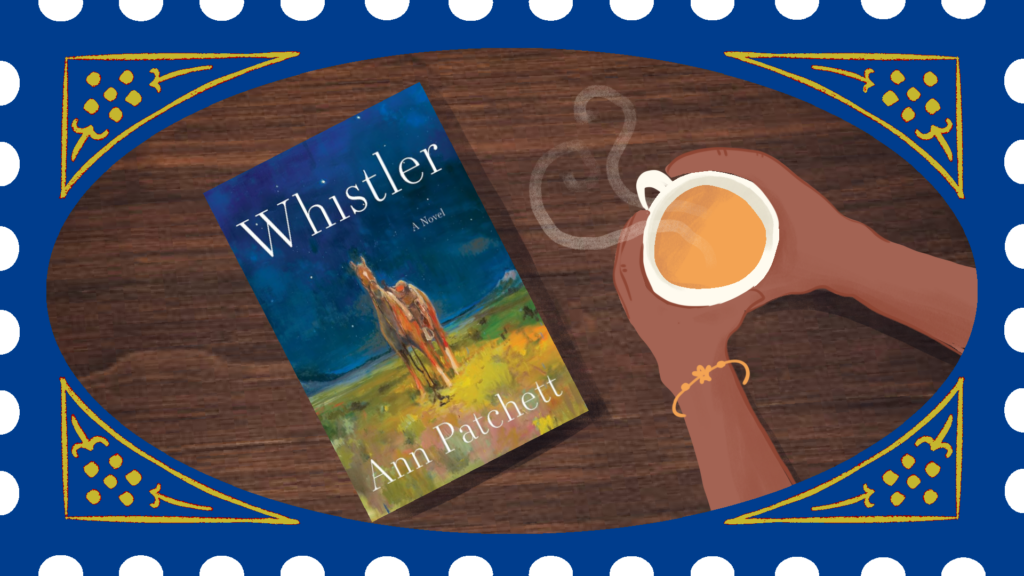
About 50 pages into Ann Patchett’s Whistler, I scream-texted my sister: “THIS IS US.” It was, really. Here were Daphne and Leda, with an age gap of two years between them, two people who would probably inhabit different worlds if they met today. One taught writing at a high school (and would go on to become a writer herself), married to a humble hospital administrator in the suburbs with no desire for children; the other was a famous psychologist with a New York Times column, a house facing Central Park, married with one child to a finance guy. All the world’s differences mattered little — they were, for all intents and purposes, each other’s family.
So naturally, where there is a secret to be told, when an emotional whiplash hits you and unsettles everything you knew about your childhood, Daphne rushes to Leda, laying it all out: Daphne had found an opening into their shared past, and now the sisters sat cozy on a couch, holding in their intertwined hands a memory from four decades ago.
There are plenty of reasons to devour, savour, relish Whistler. One of them is this filial relationship. The two have at least two sets of families (their mother remarried thrice, father was single, and now their first step-father had re-entered their lives), so enough parents to go around for a lifetime, and yet the two felt adrift: where did they belong, who was their family, whose home could they call their own? It is hard to make sense of this kind of rupture, and I imagine, harder still to do it alone.
So there is abundant comfort in the knowledge that Daphne had Leda. And I had my sister.
We are twins (“Oh, you don’t look alike! Who is older? Did you wear matching clothes? What a wonder”). The true wonder, if you ask me, is the fact that there is someone who has known me, will always know me, every minute of my life (minus the first one, yes, I’m older). Someone who is in my corner, in every room and every house. Someone I can turn to, to unpack old memories and discover new ones, filling in the blanks of each other’s pasts.
Look, I texted my sister, how uncanny these parallels. Leda pulls like a magician an obscure memory from 30 years ago. If Daphne doesn’t respond for more than 12 hours, she is obviously to be found at Leda’s house (like you are at mine). The two sleep over ever so often, do debriefings in bed post dreary dinners or dramatic encounters. Isn’t that crazy?
Two minutes later this syrupy love curdled into stodgy anger when she discovered I had borrowed (“how can you steal!!!”) a red dress. Yes, this is us.
Saumya Kalia

A Weekend in Bylakuppe
It’s been a week, and I’m still trying to recreate the Tibetan food I lavished upon during the most memorable trips I took during the break.
I visited Bylakuppe, a Tibetan settlement established in the 1960s, about 80 km from Mysuru. It’s a two-hour bus ride through mountains and beautiful landscapes. We stayed at a guesthouse about a 15 minute walk from all the eateries and monasteries. You’ll find small cafés and restaurants everywhere, swarming with kids, monks and families every few meters, serving momos, chowmein, packaged ramen and shapta and tigmo (a pillowy soft Tibetan roll bread).
One day, we discovered this quaint, local restaurant hidden behind a gate and a bougainvillaea tree. We tried a bowl of warm tomato soup with rice, with paper-thin eggs, which filled us up with its comforting aroma and tang. Then there was this spicy beef salad swimming in chilli oil.
Every eatery had a similar scene: At the tables next to us, young monks would be chatting jovially during their meals, drinking Mountain Dew, laughing. You’d see old monks in sun glasses riding around on their scooters, carrying themselves with their own kind of swag.
We also spent time wandering around the monasteries like Namdroling, Sera Jey, Sera Mey, and Tashi Lhunpo. Of them, Namdroling is the most popular, especially for people stopping on their way to Coorg. We had warm butter tea at one of the monastery cafés run by monks.
The monastery walls were probably my favourite part. They’re covered in incredibly detailed paintings of Buddhist stories, teachers, deities and kings. They felt almost like comics with stories unfolding across each of the walls. We took our time admiring each one, trying to decode the characters and scenes.
I’m already making plans to go back. Until then, I’m browsing YouTube food tutorials. There aren’t many mainstream Tibetan recipe channels so I’m experimenting with the limited information I can find, trying to bring bits of Bylakuppe back through food.
Urvi Sawant
Want to explore more newsletters? Our weekly digest BehanVox and monthly Postscript invite you, the reader, into our newsroom to understand how the stories you read came to be – from ideation to execution. Subscribe here.
We believe everyone deserves equal access to accurate news. Support from our readers enables us to keep our journalism open and free for everyone, all over the world.