Growing Rapidly, Farmer Producer Units Now Have A Capital Problem
A women-led farmer producer company in Maharashtra’s drought-prone Dharashiv district reveals both the promise and the contradictions of India's ambitious attempt to turn poor rural women into agri entrepreneurs
- Jaideep Hardikar

OUTSIDE HER SMALL tin shed-home, a slim, short and gaunt-faced woman in her early 40s gives instructions to a caller on her cell-phone even as she fills a plastic can with water. A pipe snakes into a neat row of blue cans and aluminium buckets and a large black Syntex tank in the courtyard of her fenced plot. The water comes out in a trickle but every vessel must be filled before the supply stops because this will be her water insurance for the next fortnight.
In Walvad, a village tucked into the drought-prone plains of Bhoom block of Maharashtra’s Dharashiv district, some 300 km from Pune, piped water is supposed to arrive once a week. This time it has taken 10 days and nobody knows when it will come again.
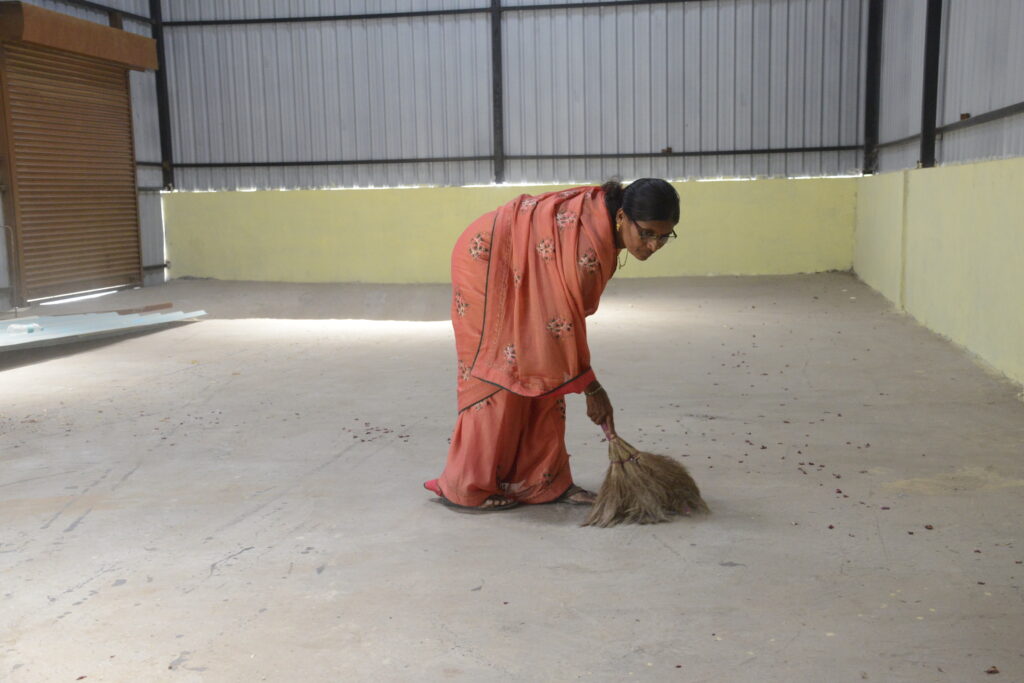
Vrundavani Yadav (Patil) shifts the cans as they fill, checks the overflowing tank and disconnects the call she is on. She bends to sweep the courtyard before the phone interrupts her chores again. There seems to be no particular sequence to her morning. Water. Phone. Sweeping. Phone. Cooking. Phone.
Barely a few metres from her home stands the old Walmikeshwar temple, built of dark stone. Before stepping into the kitchen, she folds her hands briefly towards the shrine in reverence. Inside her tidy single-room house, steel utensils are stacked neatly on narrow racks; a small mattress is rolled up in one corner and there is a small shrine too.
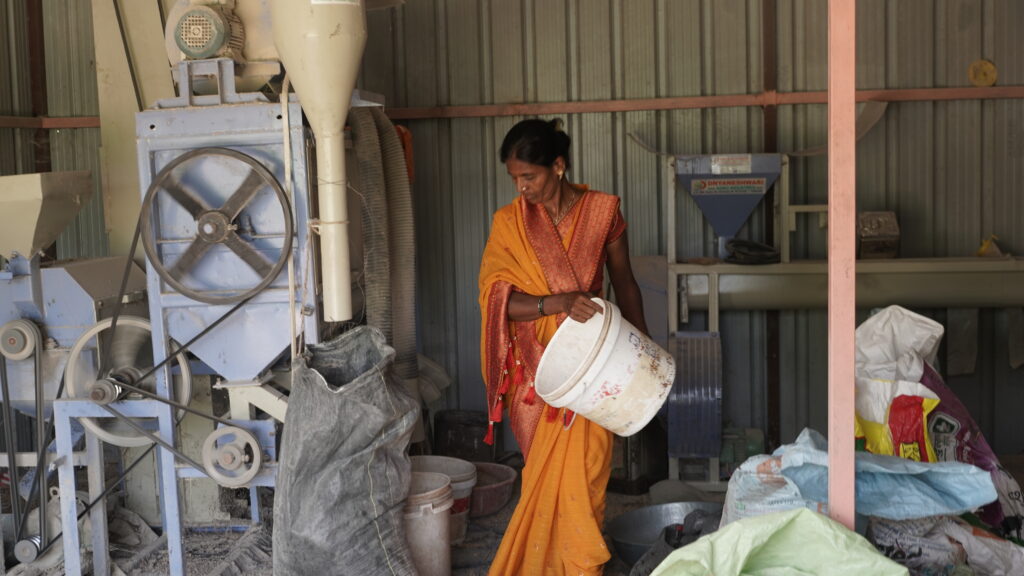
This is May, so by noon, the corrugated metal roof will turn the room into an oven, one reason why she prefers to spend the day outside. It is also why she has to cook before she leaves. By then, the women will already be waiting. Most are widows, like her, some are divorced while a few have been deserted. They are members of the self-help groups that Vrundavani helped build over the past decade. The meeting must finish before the afternoon after which she has yet another meeting – with the directors of the Walmikeshwar Agro-Producers Company- a farmers producers company
The two meetings are connected, yet the two institutions are separate. The self help group is built around savings, mutual support but the farmers producers company (FPC) that she heads aims to do business in the marketplace. The agri company is one of the many to have emerged across Maharashtra, and across India, over the past few years. Registered in 2019, Walmikeshwar has around 510 shareholders from nearly 20 villages, about 300 of them women cultivating small and marginal farms of under 3 acres.
The monsoon was barely weeks away. Farm operations had to be planned. Procurement and working capital had to be arranged and officials had to be chased. Every phone call brings another problem waiting to be solved. “Amhala company baddal kahich mahiti navhti (we knew nothing about companies),” she says with a laugh that quickly fades.
Launched with a promise of financial support from the government, Vrundavani’s company is struggling to mop up working capital. She is worried that their dreams would fall apart.
Walmikeshwar has always struggled to raise working capital to upscale its business, its members say. The problem? Lack of a low-interest credit facility in banks. Because of this, the FPC can’t enter into aggregation of agriculture commodities at a scale, set up processing facilities, or diversify into paneer or khoa-making units, which is one of its ambitions, as we explain later.
Banks refuse to lend because there are red flags around the personal loan repayment histories of its directors and members, reflected in adverse CIBIL scores. And for accessing government subsidies, the company must first contribute 12% per cent of the project cost, a condition that adds to the problems of capital needs. There is thus a perpetual bottleneck to expansion.
Building Confidence In Distress Zones
When we met her four years ago, Vrundavani had stood on an empty plot not far from the company’s derelict office and described the future she could see. There would be a processing unit where women would clean, grade and package farm produce. A paneer unit could come up nearby. Women farmers would one day run a business of their own.
Back then there was nothing except scrubland here, a few stones marking the imaginary boundary of their premises, and a dream shared by a handful of women who had spent much of their lives being told that business is a man’s turf.
Today, while the company has a large warehouse built with government support, the financial crisis facing her company, and the intricacies of a fierce marketplace, has dented her confidence slightly though her commitment, urgency and focus remain unwavering. Since 2019, the FPC has never made any losses and its annual turnover remained under Rs 25 lakh. But in 2025-26, it barely managed to do business worth Rs 2 lakh because it found it hard to raise the capital.
The operating margins on aggregation is just around 2-3%.
Mahadev Mohite, a shareholder who also doubles up as the accountant of the FPC, says that unless you achieve scale, that margin does not translate into robust revenues. Today, the FPC’s bank account has tanked, he laments, but it still has to pay for its regular expenses on fulfilling GST compliances, audits, and other miscellaneous things.
It is end-July and the company is sending capsicum to Jaipur. The 10-tonne cargo is worth Rs 4 lakh and transportation costs Rs 20,000. “We borrowed this money, as we always do, from our directors, at a nominal interest. After the sales, the FPC would repay that sum, but the nominal interest would eat into our profit,” says Mahadev.
If the company managed to raise, say, Rs 1 crore, it could aggregate more, and tap into other major markets all over India for a better price. For instance, the FPC would sell this capsicum at Rs 44 a kg at Jaipur, but in the Delhi market, it could fetch upwards of Rs 50.
The only way out, Mahadev says, is for the FPC to become a recognised agriculture produce procurement centre for the state government, by getting a license. That, he says, will bring in regular revenues in the form of a commission. That revenue could then help it as capital to borrow from the banks to invest in putting up two or three diverse business plans – like a khoa and paneer-making unit and vegetable grading centre.
But to procure that license, the FPC must pay a fee and advance deposit together requiring Rs 10-12 lakh. “We are trying to raise this money,” he says. “It’s our only way out.”
There’s a new revenue stream the FPC opened up earlier this year (2026) by becoming a retailer for an organic agri-inputs brand to sell organic products to its farmer-members. And once there is enough capital, it aims to build a farmers’ mall in the village – a one-stop-solution for all their needs.
This story epitomises much of India’s FPC landscape. But for Vrundavani, the journey had not begun with a company. It began with widowhood.
From Helpers To Entrepreneurs
Thirteen years ago, when she was barely into her 30s, Vrundavani’s husband Anil had died of a heart attack. Her son Suraj, was still a toddler, and she had been left with no income and almost no experience of dealing with the world beyond her kitchen. Married young into a landless family, she had never worked on farms independently.
Women are largely invisible in India’s official agricultural statistics despite being central to farm work. Across much of rural India, they sow, transplant, weed, harvest, care for livestock and manage post-harvest tasks, yet are often recorded merely as “helpers” on family farms rather than as farmers or agricultural workers.
According to the latest Periodic Labour Force Survey (PLFS 2023–24), women account for nearly two-fifths of the agricultural workforce. A majority of them work as unpaid helpers in household enterprises. The last Agricultural Census conducted a decade ago (2015-16) also shows that women operate only about 14% of operational landholdings, reflecting how land ownership—and therefore recognition, credit and decision-making—continues to be concentrated in male hands.
Vrundavani was shattered by her husband’s sudden death. “I had no money. No work. I didn’t know what I would do,” she recalls.
The village offered little reassurance. Walvad lies in Maharashtra’s rain-shadow belt where drought is a recurring condition, and agriculture is almost entirely rain-fed. Most farmers cultivate small or marginal holdings. Decades of agrarian distress had resulted in farmer suicides and a deeply patriarchal social order where female foeticide, and child marriages were common. Women contribute substantially to agricultural labour but seldom control land, income or decisions.
Widowhood, Vrundavani tells BehanBox, deepens those problems. “I had only one option,” she says. “I had to step outside.” ‘Outside’ was not just stepping across the threshold but also crossing invisible social boundaries. She joined Mauli, a self-help group in the village in 2014. It gave her the freedom to dream. “I decided not to shy away from learning, seeking help, and taking risks,” she says.
Mauli is a Marathi word that evokes a compassionate, nurturing mother. Along with a handful of other women, Vrundavani began saving small amounts – just Rs 200-300 – every month, borrowing modest sums of Rs 2000 to Rs 5000 and learning to manage money. It was the first time she had entered a bank. Several such groups in the village later federated into a village level SHG called Matoshree or revered mother under the State Rural Livelihoods Mission christened Umed (hope).
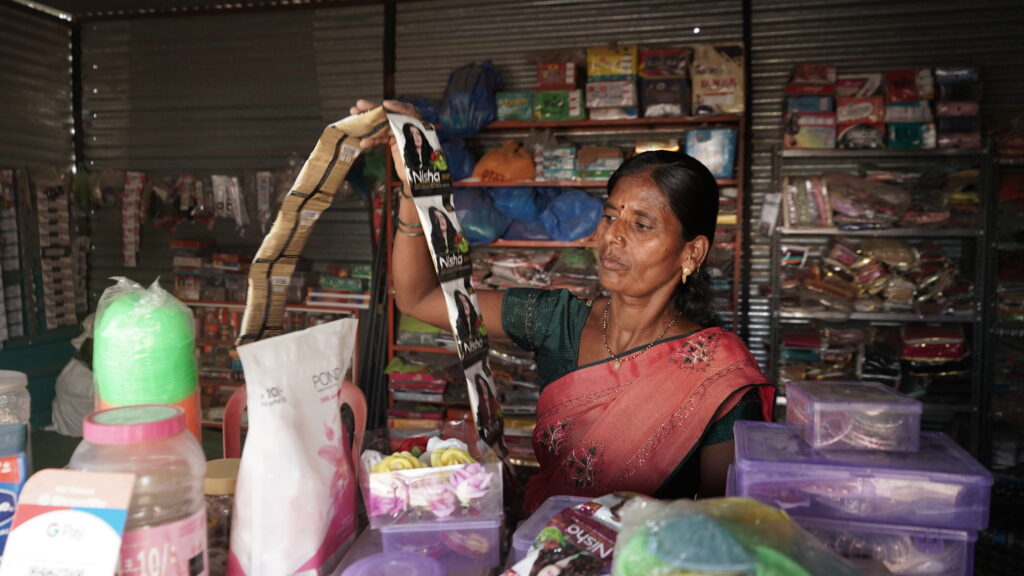
With her first loan of Rs 5,000, Vrundavani opened a small stationery shop in the village. Over time, she expanded it to sell cosmetics, imitation jewellery and everyday household goods. The enterprise brought a modest but steady income. As she repaid each loan, she borrowed again, grew the shop, and eventually bought two acres of land from her savings.
“It wasn’t the money alone,” she says. “It was the confidence that I could stand on my own.”
Experimenting With Business
A few years later, with government support, she set up a small flour and dal mill beside her shop. It soon became more than a business. Women gathered there after work to talk about debt, difficult marriages, widowhood, their children's education and the struggle to make ends meet. Some sought loans, others advice. Many simply needed someone to listen.
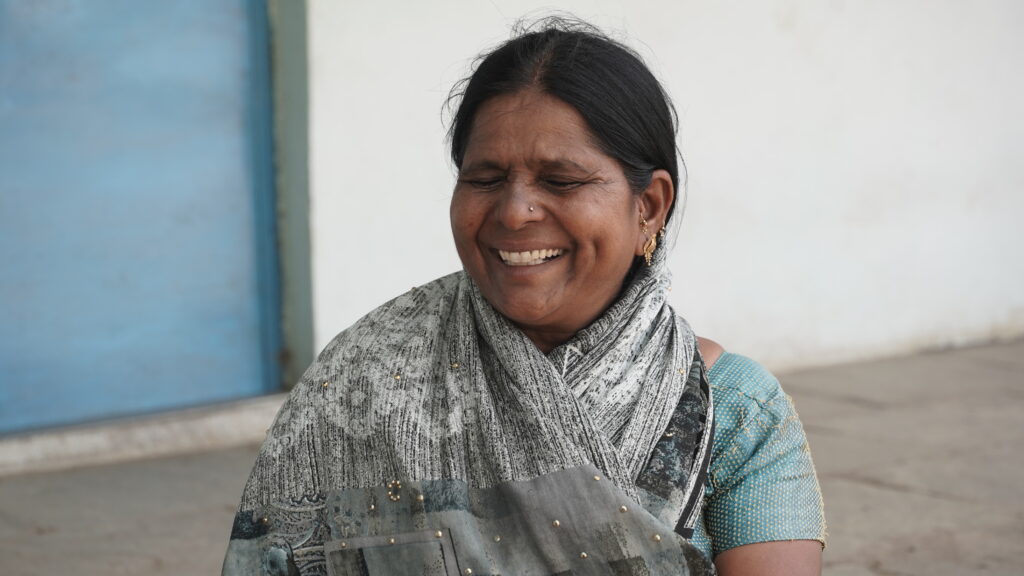
“When I lost my husband, I had nowhere to go. Vrundavani was my only support,” says Lata Shrihari Mohite, who farms 3.5-acre land all by herself. She has no children. Latabai became a member of Vrundavani’s SHG and later a member in the farmer’s producer company.
As more women joined, the group gradually grew.
“I realised our lives would always remain difficult,” she says. “But if we stood together perhaps they would become less lonely; I don’t want others to suffer like I did.”
Among the first women to join her was 54 year-old Ashabai Mohite, a widow with barely two acres of land. Their husbands, both tempo drivers for a local transport firm, had been friends and died within a year of each other. Though she studied only up to primary school, Ashabai has an instinctive grasp of farming—the soil, the seasons and the value of every rupee.
Vrundavani became the public face of the collective and Ashabai, its quiet organiser—persuading women to attend meetings, settling disputes and reminding them the group belonged to everyone. Four years ago, she lived in a hut. Today, after her elder son joined the Army, she lives in a modest concrete home he built for her. Smiling, she leads us through her soybean fields, nutrition garden and goat shed, recounting the arduous journey that brought her here.
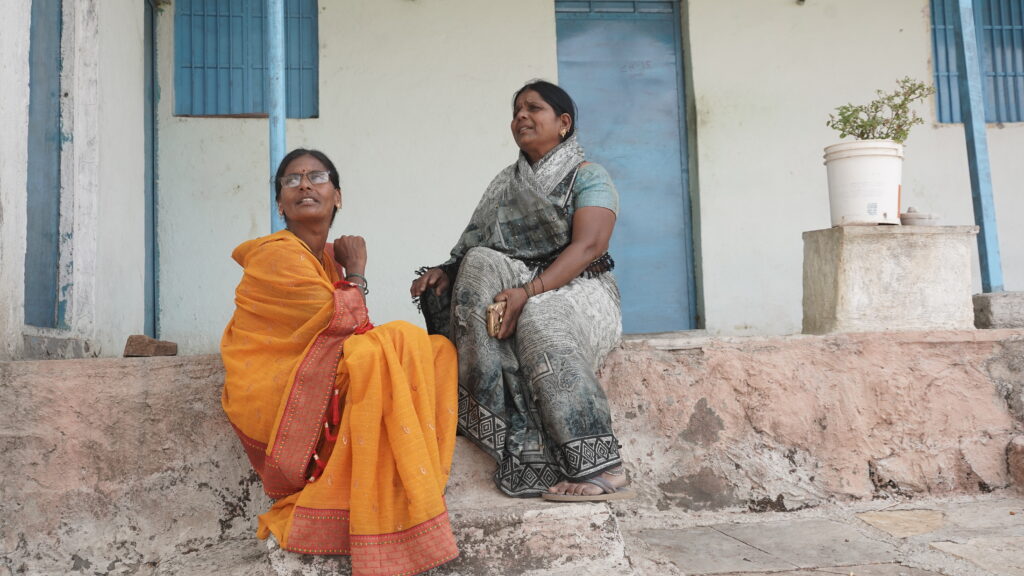
“She speaks,” quips Ashabai, pointing towards her friend, “I work.” Vrundavani laughs and retorts: “No. We both work and speak.”
Vrundavani takes the lead outside the village, while Ashabai builds trust within it. Together, they persuaded women farmers to adopt organic farming and grow fresh, chemical-free produce in their kitchen gardens.
Gradually, they began to envision something bigger than a network of SHGs. Years of saving had taught them discipline, record-keeping and loan management, but they saw the limits of the model. Individually, women farmers with small holdings produced little and remained dependent on traders who set the prices. What they lacked was collective bargaining power.
Then, one day, they heard about the farmer producer company. They saw it as the answer to their struggles—a way to move beyond small, individual efforts and gain collective strength. It was a leap into unfamiliar territory. None of them had ever imagined becoming entrepreneurs.
An FPC And Teething Troubles
The Walmikeshwar Agro Producer Company was registered in 2019 and incorporated a year later with 510 shareholders, each contributing Rs 1,000. The membership has since grown to 650.
Initially, Vrundavani presided over a 10-member board that included just one man—Mahadev Mohite, a young graduate who became the company’s secretary-cum-accountant, driven by a desire to lift his village out of poverty. Today, four of the 10 board members are men, but women remain the overwhelming majority among shareholders.
The company’s goal was straightforward: while SHGs and individual members continued their small enterprises, the FPC would aggregate their soybeans, pulses and other crops, secure better prices, reduce input costs through collective buying, and gradually move into processing and value addition. It promised an additional income stream and a reliable marketplace.
Paneer was one opportunity. Bhoom and its surrounding areas, with vast grasslands and abundant cow and buffalo milk, already had a tradition of making khoa (or sweet paneer), sold across the state at temples and shrines. By working collectively, the women hoped to earn far more than they could as individual farmers.
At its core, Walmikeshwar represents the evolution of women’s self-help groups into micro-enterprises—transforming members from borrowers and lenders into aggregators and processors.
“We decided not to become too ambitious in the beginning,” Vrundavani says. “We wanted to understand the markets first. We had to learn what a company actually meant."
The women knew farming but not business. That distinction soon became apparent.
Inside the company’s modest office—a small building leased from the Walvad panchayat—a board lists its directors. Of the six women on the board, five are widows, an unusual sight in rural Marathwada.
Manoj More, a young farmer from the neighbouring village of Ganegaon, has become a trusted ally. Having helped run his family’s textile business, he understands finance and is unafraid to question officials when needed.
Mahadev talks about women’s resolve. “If they don’t understand something, they ask. If they make a mistake, they don’t hide it. They simply try again,” he says.
The learning curve was steep. They had to move from managing savings and small loans to mastering procurement, warehousing, crop quality, transport, GST, audits, invoices and cash flows—all while navigating poor farm incomes, volatile prices, recurring droughts and rising cultivation costs.
It is here that Walmikeshwar’s story mirrors a larger national experiment. For nearly three decades, India’s rural women’s movement has been built around self-help groups which has seen mixed results. Millions of women now save regularly and access credit, but most SHGs have remained confined to thrift and lending, with notable exceptions such as Kerala’s Kudumbashree, which evolved into successful collective enterprises. Even so, SHGs have transformed women’s confidence, mobility and financial inclusion across rural India.
Farmer producer companies represent the next stage of that journey. They are not bigger self-help groups but fundamentally different institutions. As development scholar M.S. Sriram of IIM Bengaluru has argued (here and here), institutions must be judged by the purpose they serve. SHGs were created to tackle financial exclusion through mutual trust, discipline and small loans. Producer companies, by contrast, must aggregate produce, negotiate with buyers, manage inventories, raise working capital, comply with company law and compete in markets. Their promise lies in converting the social capital built by SHGs into commercial capital.
Years of working together had built trust among Walvad’s women but not the skills needed to run a business. “People think that once a self-help group is strong, forming a producer company is easy,” says Mahadev. “In reality, that’s when the real struggle begins.”
The women had to now learn how to trade together.
Cost Of Credibility
The women believed a decade of saving together had prepared them to run a business. The market quickly proved otherwise.
The first setback came after Walmikeshwar company was selected under Maharashtra’s World Bank-funded SMART Project, which promised to support FPCs with warehouses, processing units and other infrastructure.
The company was sanctioned a warehouse worth nearly Rs 60 lakh, with the government funding Rs 48 lakh and the FPC expected to contribute the remaining Rs 12 lakh as Swa-Nidhi—its share of the project cost. On paper, the arrangement seemed fair. In practice, raising that money from resource strapped farmers became the company’s first major hurdle.
“But where does a company of small and marginal farmers suddenly find Rs 12 lakh?” asks Mahadev. In this instance too, the FPC raised Rs 12 lakh by borrowing from its own directors and members at a nominal interest.
The same hurdle follows almost every expansion plan. Whether setting up a processing unit, buying machinery or investing in value addition, the company must first raise its own contribution to claim government subsidies and support. Then come the compliances.
Every month, the company must file GST returns, maintain statutory records, complete audits, meet company law requirements, and pay accountants and auditors. These costs don’t disappear when business is slow. Staying compliant, by itself, is an expensive affair.
But the biggest obstacle is the CIBIL score—a three-digit measure of creditworthiness used by banks. “Our members’ individual CIBIL scores affect the FPC’s ability to access loans because many are small farmers with old, unpaid bank dues,” says Mahadev.
The CIBIL challenge remains largely invisible outside the FPO ecosystem. Yet many of Walmikeshwar’s shareholders are the very people such collectives aim to support—small farmers, widows and debt-burdened families facing years of erratic harvests, overdue loans and declining farm incomes.
Legally, an FPC is a separate corporate entity, its balance sheet distinct from that of its members. In practice, however, banks rarely examine only the company.
“They look at us,” Mahadev says. “They ask who the directors are, whether members have outstanding loans, whether there are defaulters among us. If they are not satisfied, lending becomes very difficult.”
Then comes the endless paperwork and compliances.
Rapid Expansion Of FPCs
In theory, FPCs represent the next generation of rural institutions—combining the democratic ownership of cooperatives under the company law. Farmers become shareholders, elect directors, and share in profits while competing in markets. In practice, however, they require a very different institutional culture.
Over the past decade, governments have embraced this model enthusiastically. According to the National Association for Farmer Producer Organisations (NAFPO), India now has over 45,000 active FPCs. The Union government's flagship programme to set up such operations crossed its target of promoting over 10,000 FPOs by mid-2025. But this rapid expansion masks a more complicated story.
“The policy conversation has largely celebrated formation. The next challenge is survival,” says a February 2026 assessment by the Tata-Cornell Institute which suggests that the FPO movement is entering a second phase. The question is no longer how many have been registered, but how many can survive without government support. Its analysis estimates that only 43–49% of FPCs (part of the broader FPO rubric) remain operational after external support ends, while just 23% access formal credit.
“The Indian government has made a big bet on the ability of FPOs to improve agricultural productivity and increase farmer incomes,” said the director of Tata Cornell Institute for Agriculture and Nutrition, Prabhu Pingali, while releasing a comprehensive report on the state of Farmer Producer Organisations (FPOs) in India in February this year. “Assessing the FPO ecosystem—what works and what doesn’t—is crucial to ensuring that wager pays off.”
Creation Vs Survival
That gap between creation and survival is visible across rural India. Many FPOs begin with grants, mentoring and institutional support, but agriculture demands more: working capital, storage, logistics, professional management and resilience against price swings. When project funding tapers off, many struggle to become commercially viable enterprises.
The 2025 State of the Sector Report by NAFPO identifies access to affordable credit as perhaps the single biggest structural bottleneck. Financial institutions have sanctioned nearly Rs 4,000 crore in loans to FPOs, but only about 6,100 organisations have accessed this credit, leaving most outside the formal banking system. The sector’s actual credit need is estimated at over Rs 5,800 crore. Credit, however, is only one part of the puzzle.
NAFCO’s State of the Sector Report 2025 points out that many producer companies continue to function more like development projects than businesses. Their professional management remains weak and boards often consist of first-generation entrepreneurs learning accounting, compliance, taxation and marketing on the job. Governance standards vary widely. Capacity-building therefore becomes just as important as financial assistance, according to the report.
Recognising this, NAFPO argues that the focus must shift “from quantity to quality”, emphasising performance, governance and long-term financial sustainability rather than merely counting registrations.
This is where Walmikeshwar’s case becomes particularly interesting.
Unlike many externally promoted producer companies, the Walmikeshwar FPC grew from an existing network of women's self-help groups (SHGs), where trust and collective action were already well established. However, as M.S. Sriram notes, SHGs are designed for savings and accessing credit through joint liability groups for micro social enterprises, while FPCs aim for aggregation, scale and market engagement. Walmikeshwar FPC members are finding it difficult to make this transition into a financially sustainable business with strong governance.
Women-led FPCs Have Better Survival Rate
The Tata-Cornell study found that women-led FPCs consistently demonstrate higher compliance and survival rates than male-led organisations though they represent a much smaller share of all FPCs nationally. These also recorded compliance rates four to 13 percentage points higher than their male counterparts.
Researchers of the Tata-Cornell Study caution against simplistic explanations. Women-led companies cannot be presumed to be more profitable but they often emerge from stronger community institutions—especially self-help groups—where habits of collective decision-making, savings and accountability are already well established. Yet gender also introduces new constraints: limited ownership of land, weaker access to formal credit and working capital, greater care responsibilities, restricted mobility and fewer opportunities to negotiate directly with markets and buyers.
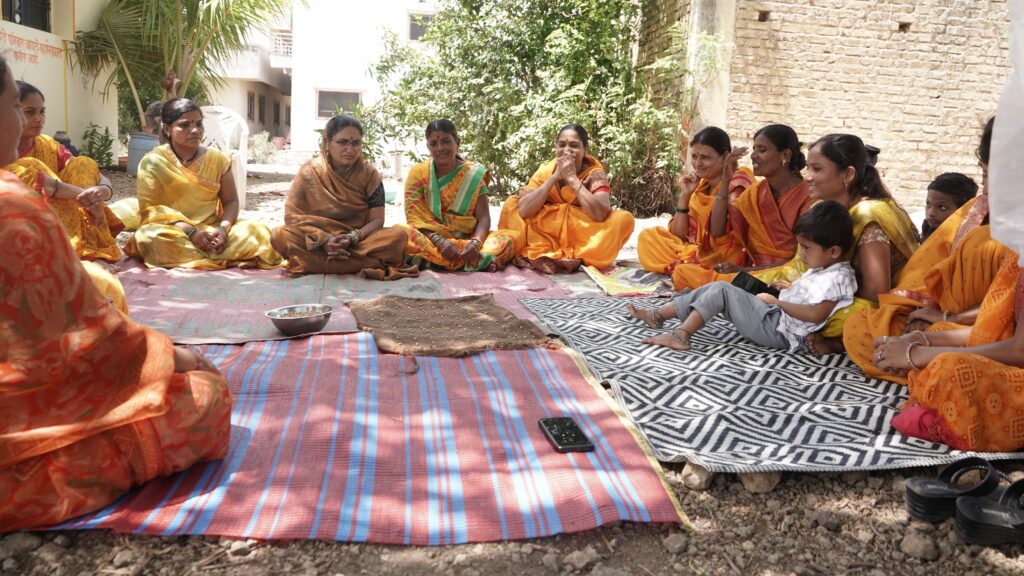
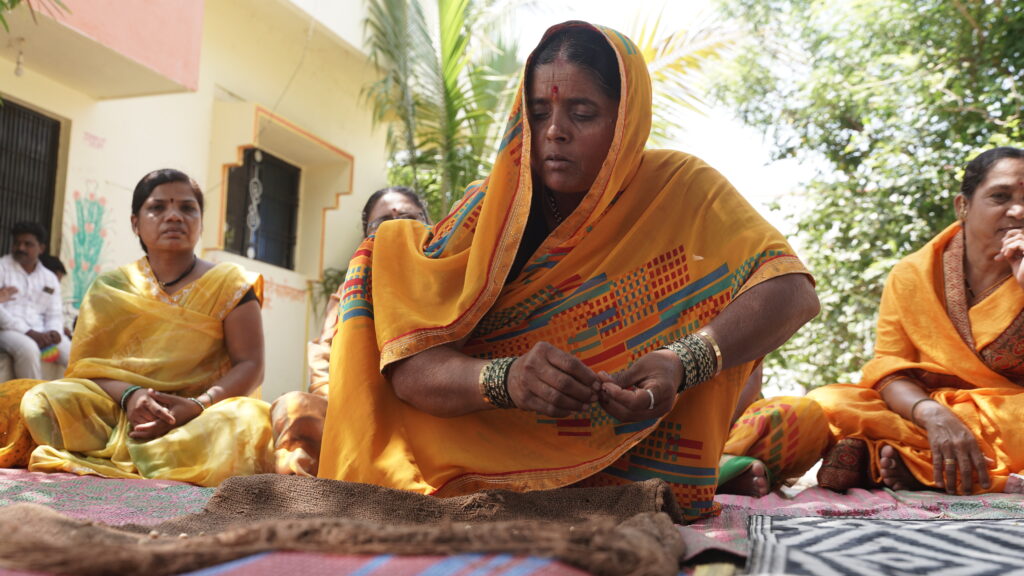
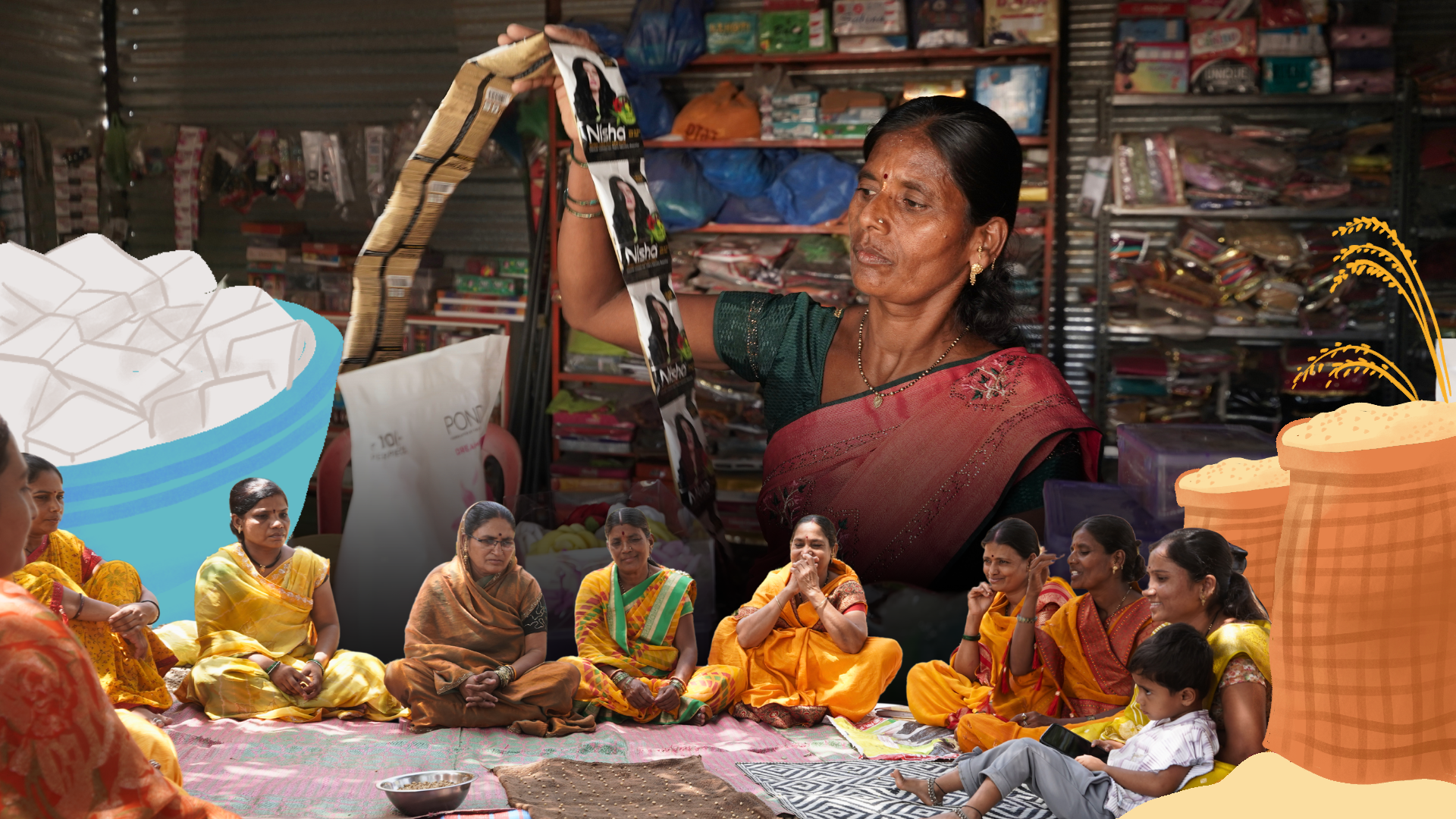
The meeting at Walmikeshwar begins with a familiar prayer: “Itni shakti hamein dena data… mann ka vishwas kamzor hona”—a plea for strength and unshaken confidence. Women of all ages, dressed in colourful sarees, sit in a circle with folded hands. This is the SHG federation’s working committee, with each member representing her own group.
After the prayer, they record monthly collections, update accounts and complete their bookkeeping. Then comes the day’s main task: traditional seed testing, which has brought them together.
Each woman arranges rows of soybean seeds on a damp sack, observing them for 10 days. In drought-prone Bhoom, soybean is the main kharif crop, and a germination rate above 70% indicates seeds are fit for sowing. The seeds have been carefully saved from their previous harvests. Five members of the group are also shareholders of the Walmikeshwar FPC.
One of the members has an orchard of custard apples. She says they fetch a better price for their organically grown “chemical-free” fruits in the market. Additionally, they save on production costs since they don’t use expensive chemicals.
A couple of days ago, the women conducted soil testing experiments on their respective farms to assess nutritional deficiencies. Summer, they say, is a good time for soil testing.
“Apart from being members of our company, every member is free to start her own small enterprise so that they earn their livelihood independently,” she says. Vrundavani makes it a point to educate the women members about new bank and government schemes that women can leverage. Sometimes, it helps.
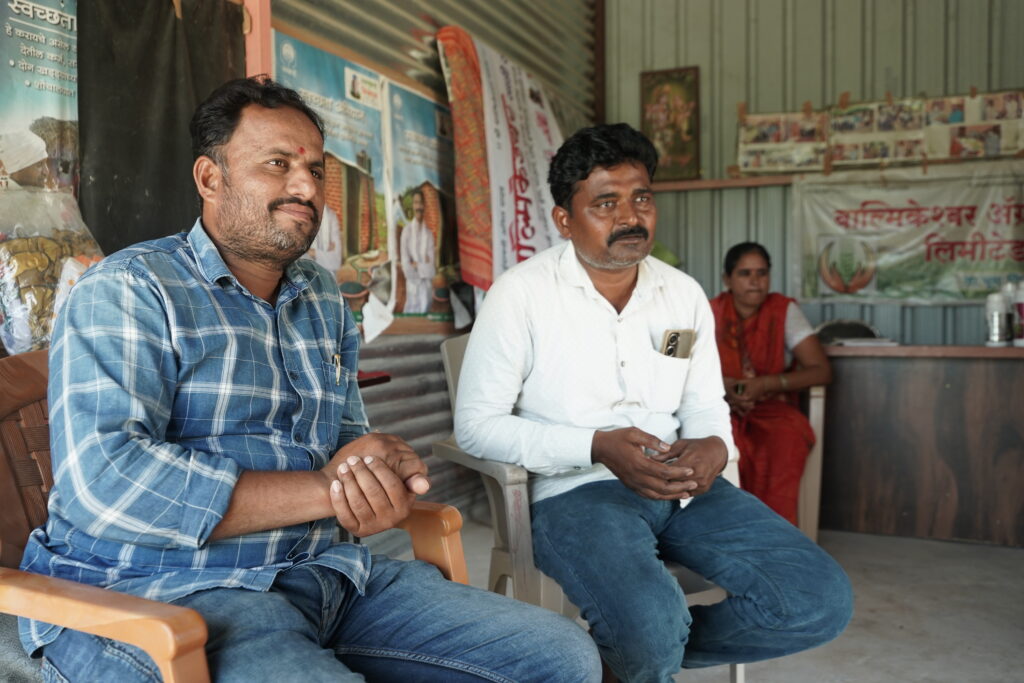
As women conduct seed testing, Mahadev Mohite and Manoj More pore over company documents on a wooden charpoy, waiting to discuss Walmikeshwar’s affairs with Vrundavani. It is late May, and they must prepare for audits, file GST returns and find funds for the licence fee to start a grain procurement centre.
“We will try once more with the banks,” Mahadev says. “Else we will pool in money from our members, but once we get a procurement centre, we will have a steady business.”
Procurement centres act as aggregators for the government to stock its own quota of grain. The FPCs have been allowed by the Maharashtra government to be its agencies. The government pays for the support prices, and gives a decent commission to the procuring agencies.
While the SHGs that Vrundavani helped form in the last 10-15 years, remain viable and useful to most women in and around her village, even as the Walmikeshwar FPC that faces a the board’s immediate worry is that the crisis of their company should not undo the SHGs and leave them tattering on all fronts.
“The company has not made any losses, but it hasn’t made any profits either,” she says.
Unless the company stands on a sound financial footing, it can’t bring prosperity to members. And upscaling will remain a dream–one that Vrundavani and Walvad’s other women members aren’t ready to forgo without a good fight.
We believe everyone deserves equal access to accurate news. Support from our readers enables us to keep our journalism open and free for everyone, all over the world.