
Bottom of the Cup: The Women Who Grow Araku Coffee
Araku’s globally recognised Arabica coffee commands premium prices, but the Adivasi women who grow, harvest and process it see little of that value
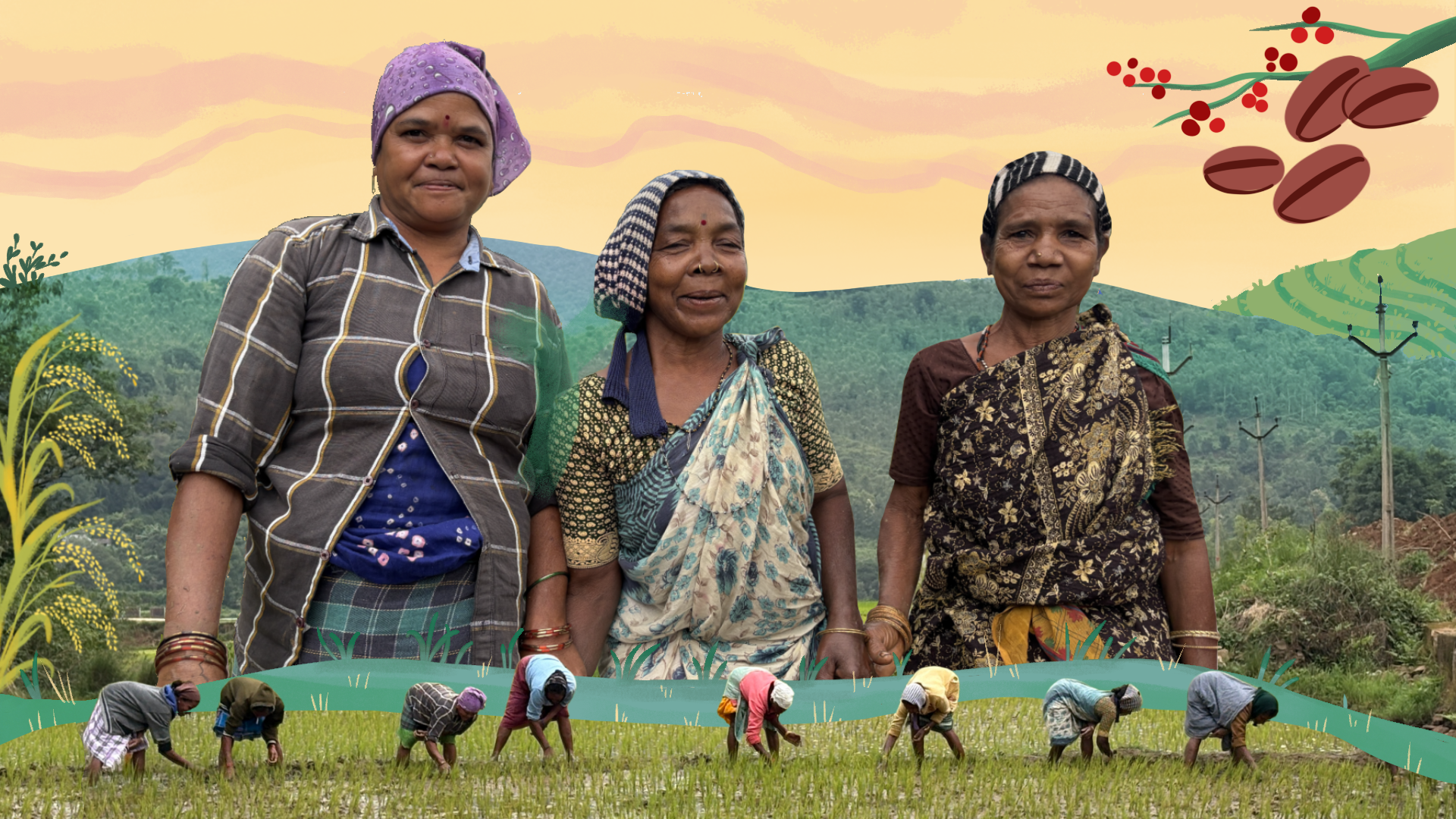
THE OVERNIGHT RAIN SOAKED the verdant landscape of Karakaputtu in early August, a small village nestled in the Eastern Ghats of Andhra Pradesh, around 1,000 metres above sea level. It is also the land of the super premium globally recognised, GI-tagged Araku Valley Arabica that sells at between Rs 1,000 and 14,000 a kg. But behind the exclusive coffee is a largely invisible workforce of Adivasi women who cultivate, harvest and process the crop, while earning a fraction of its market value because they have insecure land rights, poor access to credit and markets and climate challenges to deal with.
It was 10 am, and Surra Pushpa was still finishing her brunch – a bowl of fermented rice porridge – when the quiet of the misty morning was broken by the laughter and chatter of a group of women who stopped at her home.
“Oye, Pushpa, are you done with kaburlu (chatting)? Everyone has left for the fields,” one of them said. Embarrassed, Pushpa asked the group to wait a bit. Sare, bega ra (okay, come quickly), was the response.
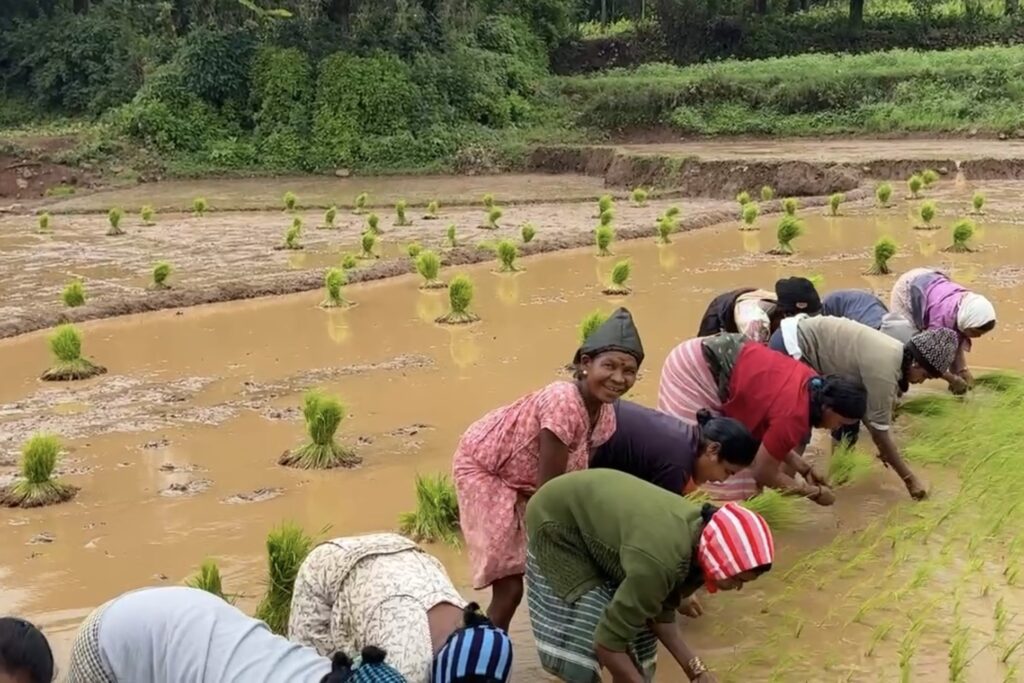
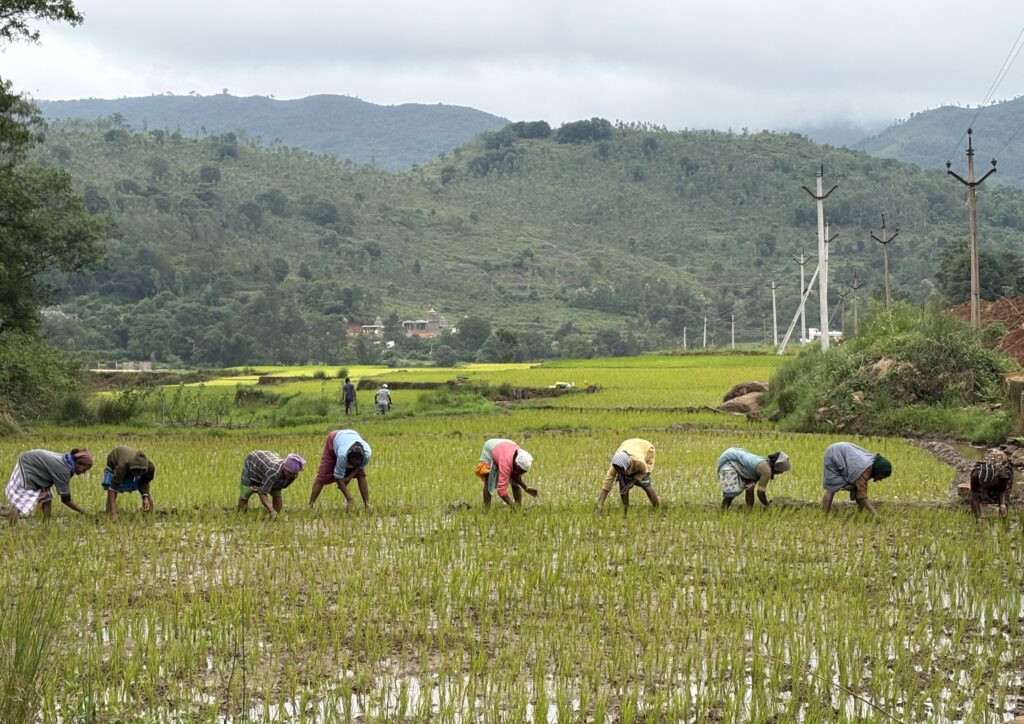
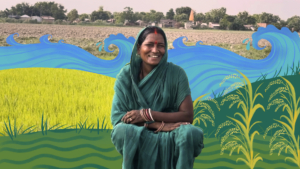
Pushpa, in her mid thirties, finished her hurried brunch, pulled on her husband Subba Rao’s oversized shirt over her saree to cover it from the mud spatter, and joined the merry bunch. These women, all from the Adivasi Konda Dora (translated as Lords of the Hill) community, a Scheduled Tribe (ST) community in Araku Valley, were headed to work at the two-acre paddy farm of another Adivasi woman, Kuda Appalamma. In a unique exchange, these women will work on each other’s farms, wageless — a form of reciprocal labour. Vyavasayam (agriculture), as Pushpa puts it, forges a bond. “In the fields, we share fun, work, life and help each other.”
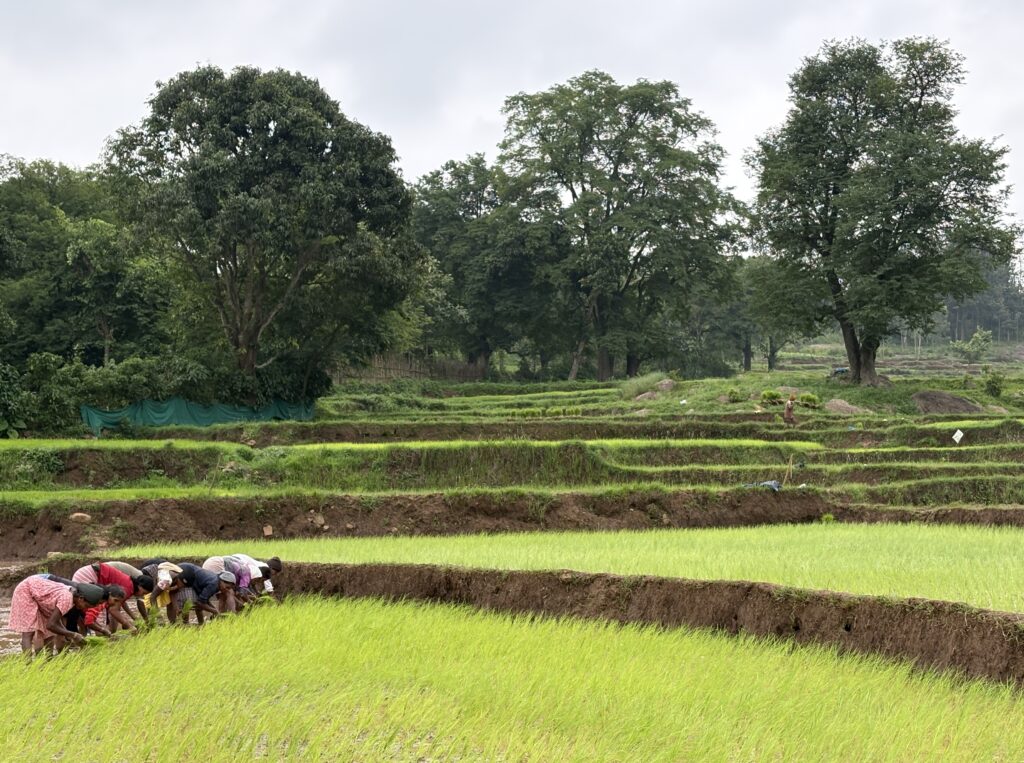
Karakaputtu village, with a population of around 240, falls in the Paderu Agency Area — an administrative region comprising 11 mandals inhabited by Scheduled Tribes. August is the season of paddy in this region where agriculture is rain fed but women here work on a multiplicity of crops throughout the year.
“Memu anni kaalaallo pani chestune untaam (we work in all seasons),” says Pushpa. In monsoons, it is the rice fields, and in other seasons, they work on turmeric, millets, pepper, fruits and vegetables.
“In a couple of months, we’ll all move on to coffee,” says Pushpa as she points to the massive plantations of Arabica coffee in the distance.
The Coffee Journey
Masada Chandramma, in her 50s, has been cultivating coffee on two acres of land for more than two decades.
“That coffee, spread across the hills, is our coffee. It is world-famous,” she says, beaming. “Bhutalli odilo pandinche pantalu ikkadavanni (all the crops here are grown in the lap of Mother Earth).” The women take collective pride in this world-famous yield.
But coffee was not traditionally cultivated by the local Adivasi communities. It was first introduced to the region in the 1890s by British civil servant NS Brodie. By the 1950s, coffee cultivation had spread to pockets of the region. The State Forest Department subsequently developed plantations across nearly 10,000 acres as a part of the afforestation measures to address the deforestation caused by the shifting cultivation practised by Adivasi communities, according to the Integrated Tribal Development Agency (ITDA).
From 1970 onwards, the Coffee Board of India, and later the ITDA, which was constituted for the formulation and execution of plans and programmes for the development of Adivasi communities, began supporting coffee cultivation. Today, Andhra Pradesh is India’s fourth-largest coffee-producing state and India, the seventh highest among coffee producing countries in the world.
Coffee first entered Chandramma’s life at the turn of the millennium. Her family cultivated kidney beans and pulses on their two-acre farm until the ITDA reached their village and distributed free Arabica coffee and silver oak saplings. “We were told that coffee would improve our social and economic conditions. That is how we became part of the region’s coffee-growing community,” said Chandramma.
But adapting to coffee was not easy, she recalled. The crop requires several years of preparation before it begins to fruit. Coffee fields thrive in shade and so silver oak trees are planted first (around 800 saplings per acre) and allowed to grow for at least four years. Thereafter, coffee saplings (around 900 saplings per acre) are planted beneath the trees and they take another four years or so to bear fruit. The coffee plants then continue to bear fruit for 20 to 30 years.
Coffee and Women’s Labour
From then on, sustaining the crop year after year and carrying it through the various stages of production until it reaches the market involves considerable labour from the Adivasi women.
The women begin work in the coffee fields at 10 am, often heading to the coffee fields together and spending long hours tending the plants. Coffee flowers between March and April, developing into unripe fruit by September. During this period, women weed, clear wild growth, and prune dead branches. “We move from one plant to another, looking after them with care,” Pushpa said.
This is work Pushpa began as a child. “I’ve been doing this all my life. I used to walk the coffee fields with my mother in the forest land in my maternal village. Ever since I got married, I have worked in these farms.”
By November, the coffee cherries turn red and ripen for harvest. Even in Araku Valley’s winter cold, when temperatures can fall to 3°C, women head to the fields with bags on their backs. They handpick the ripe cherries, leaving the unripe ones to mature, and return repeatedly until January to gather the harvest.
A one-acre coffee farm yields an average of 400 kg of coffee fruit, per ITDA and the Coffee Board of India estimates.
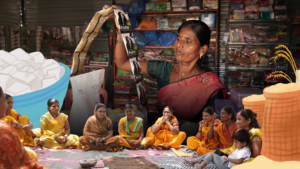
The work is labour intensive and costly. Since the women cannot afford to hire workers till the coffee is sold, they have built their own system of reciprocal labour—taking turns to work on one another’s fields, sharing the workload without immediate payment.
“We give our labour to one another, and when the time comes, we receive it back. Today, Appalamma needed our help in her paddy field. When the coffee season comes and one of us needs help in her coffee fields, we go there in return. That is how we support each other,” Pushpa said.
This reciprocal labour is also gendered. “Men handle fire lines, grubbing and pulping, while women do the weeding, cutting, harvesting, cleaning and drying — work that often requires many hands. We learnt it from our parents and grandparents,” she said.
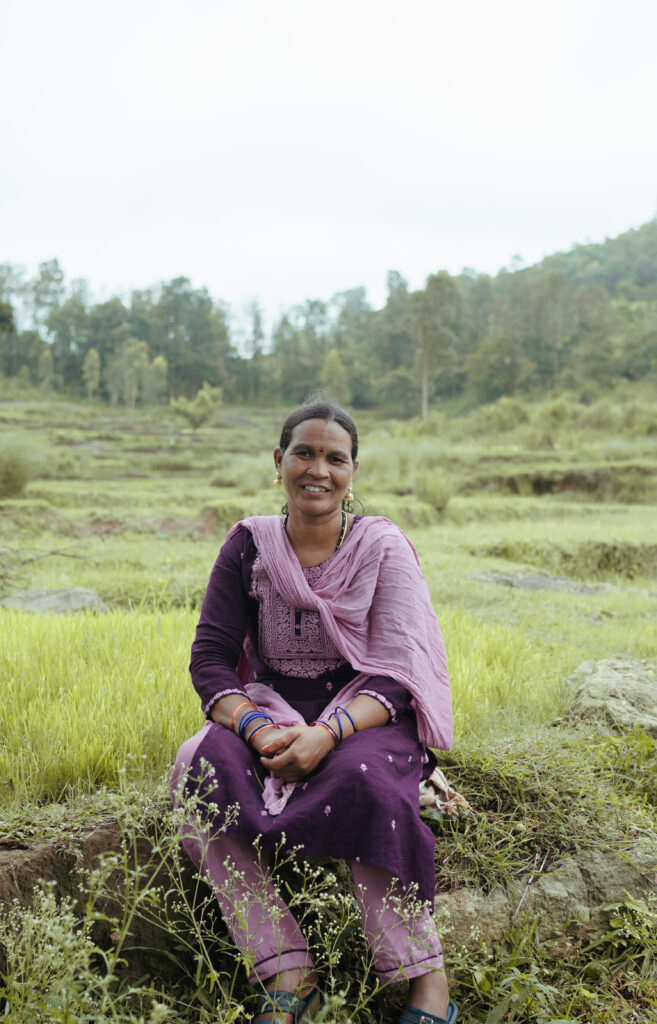
What if someone does not agree to reciprocal labour? “Then we work on their farm as an agriculture wage worker for Rs 300-500 per day,” she answered.
After harvest, coffee processing moves into the household. Families may sell the fruit raw or process it into dry cherry, parchment, green beans or ground coffee. In Karakaputtu, dry cherry is sun-dried for two to three weeks, while parchment requires pulping, cleaning and repeated drying.
Men typically operate the hand pulping machine; women clean, dry and re-dry the beans by hand. The process demands constant attention. “One of us has to stay home and watch the coffee—sometimes me, sometimes my mother-in-law. If it suddenly rains, we have to gather it quickly and move it under shelter. If we leave it out, it will spoil,” Pushpa explained.
Not a farmer
Yet Pushpa and many of these women are not recognised as farmers by either the state or the Centre. “This is because recognition as a farmer is linked to ownership of the land,” said B Ainthi Kumari, assistant director of coffee at the ITDA.
The Paderu Agency Area falls under the Fifth Schedule of the Indian Constitution and is governed by the Andhra Pradesh Scheduled Areas Land Transfer Regulation, 1970, which prohibits the transfer of land or other immovable property to non-tribal persons.
Farming is dominated by small and medium-scale farmers owning less than five acres, with only a few holding 10 acres or more, says Kumari. Much of the land is inherited by men or is forest land cultivated under granted rights. Women may hold land rights, but often only after their husbands’ deaths or through jointly issued forest titles, Pushpa added.
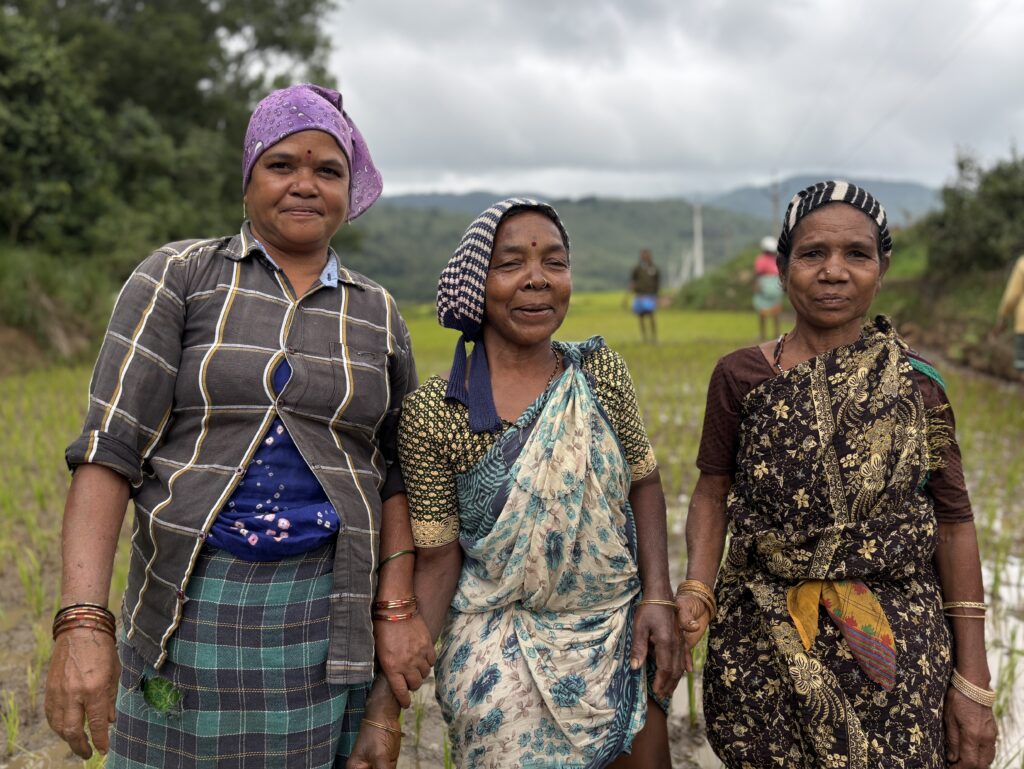
Surra Parvathamma, Pushpa’s mother-in-law, also moved to her husband Surra Somayya’s home after marriage. “I came with biyyam (rice), petti (trunk), mancham (bed) and beeruva (cupboard), but no bhoomi (land),” she said. For 50 years, she worked alongside her husband on nearly 10 acres while raising their five children. More than six years after his death, the land is still not in her name. Authorities told her the transfer would follow a land survey. She is still waiting.
Today, Parvathamma and Pushpa continue to work on the same land. The ITDA does not maintain gender-disaggregated data on farmers, said Kumari.
The Girijan Cooperative Corporation (GCC), the Andhra Pradesh government agency responsible for procuring Minor Forest Produce (MFP) in Scheduled Areas, estimates that women make up around 40% of coffee farmers. Its General Manager (Coffee), Thanga Srinivasa Rao, said the estimate is based on roughly 20,000 farmers registered with the GCC.
Women’s labour is unrecognised in public imagination too. Young children in the village often said: “My father is a farmer, and my mother is a homemaker.”
But the women were clear about how they saw themselves. “How can we not be farmers? We sow, weed, harvest and care for the crop, just like our men. We also run our homes and care for our families. If that is farming, why shouldn’t we be called farmers?” Pushpa said. “Whether the government calls us farmers or not, we know who we are. We have done this all our lives. We are farmers.”
Women, however, do not necessarily feel the immediate economic loss of not being officially recognised as farmers. For one, both the state’s Annadata Sukhibhava scheme, which provides Rs 14,000, and the Centre’s Pradhan Mantri Kisan Samman Nidhi, which provides Rs 6,000, are linked to land ownership. The assistance is paid to the “family unit”—husband, wife and minor children—rather than to individual cultivators.
Women also point to limited access to institutional credit among Adivasis, citing high interest rates and cumbersome procedures. “My family does not take loans from formal institutions. We opt for informal loans, where our status as farmers is not an issue,” Surra Parvathamma said.
Usha Seethalakshmi, an independent researcher associated with MAKAAM (Mahila Kisan Adhikaar Manch), traces the problem to the gendered history of land ownership. “Since Independence, land reforms and agricultural policies have largely treated men as the primary holders of land and productive assets, with the assumption that the benefits would eventually trickle down to women in the family,” she said. This pattern, she added, is evident across land redistribution policies, including the assignment of government land.
Women in households where spouses share decision-making may not view the absence of formal recognition as an immediate problem, Seethalakshmi said. But where men control land, capital and agricultural decisions, the consequences can be serious, leaving women with little bargaining power or agency within the household.
The Sixth Five Year Plan in the 1980s marked a shift towards joint land titles for husbands and wives, as well as exclusive titles for women. Andhra Pradesh also amended the Hindu Succession (Andhra Pradesh Amendment) Act, 1986, to give women equal rights in ancestral property. Yet these measures have had limited impact. A study by Bina Agarwal and others found that women accounted for just 14% of landowners and owned 11% of agricultural land in rural landowning households, averaged across nine states.
As men move to cities and informal employment, women increasingly remain in agriculture, contributing to its feminisation. Without land in their names, however, they can struggle to access credit, subsidies, inputs and other farm benefits. Independent land rights and formal recognition as farmers are therefore crucial to their economic and social security, Seethalakshmi said.
The National Policy for Farmers, 2007, adopted a broad definition of “farmer” covering landowners, tenants, sharecroppers, agricultural labourers and others engaged in farming and allied activities. Yet, there is no legal mechanism to translate that definition into recognition or entitlements, says Kiran Kumar Vissa, co-founder of the Rythu Swarajya Vedika, an advocacy group. The MS Swaminathan’s Women Farmers’ Entitlements Bill as a Private Member’s Bill attempted to bridge the gap but it lapsed in 2013.
The new Maharashtra legislation moves in this direction by recognising women engaged in agriculture and allied activities as farmers regardless of land ownership but its operationalising is awaited.
Price of Coffee
For the coffee she grows on her three-acre farm, Parvathamma earns about Rs 1 lakh a year. “I sold around 250 kg of parchment coffee at around Rs 400 per kg for the coffee grown. That comes to around Rs 33,000 per acre,” she told BehanBox. “This is what we earn for the labour of an entire family for a year.”
The low returns are shaped by a market in which farmers have little control over either prices or buyers.
At the start of each harvest season, the Girijan Cooperative Corporation (GCC), which handles the marketing of Araku coffee, announces procurement prices for the two types of coffee–parchment and dry cherry. For 2025–26, these were Rs 450 and Rs 270 per kg. Some farmers also sell coffee fruit directly without processing. At government prices, coffee from one acre could fetch about Rs 28,000 from fruit, Rs 30,000 from parchment, or Rs 36,000 from dry cherry.
But the GCC and the ITDA together procure less than 5% of the region’s estimated 90,000 MT annual coffee fruit production. Most farmers therefore depend on private merchants, or sahukars, usually from the upper castes or backward castes, who come from the cities in the plains like Visakhapatnam for both markets and credit.
This year, Parvathamma sold only 60 kg of fruit to the government and the rest of her produce to sahukars. The coffee procurement prices are better this year than before, she said, because the yield in the Agency area has been low, but it has always been lower than government procurement prices. Sahukars, meanwhile, offer prices 10-50% below the government-announced rates. But they also provide loans when formal credit is difficult to access, creating a relationship in which farmers are dependent on the same traders for both money and markets.
“When we need money, we turn to them because getting a bank loan is difficult. The merchants lend us money without asking for documents or charging interest. Once the coffee is harvested and processed, we give them the produce and settle the balance,”Parvathamma said.
That dependence weakens farmers’ bargaining power. “If we go to another merchant, they offer us the same price. And if this merchant finds out, he will not give us a loan again. It is like a union. But we need both the money and the market,” she said. If farmers repay the loan in cash instead, she added, merchants charge 1–2% interest on the principal.
For some farmers, returns are even lower. Gamelli Surna Kumari and Vanthala Bangaramma, from Peddaporlu village higher up in the hills who belong to the Adivasi Kodhu, a Particularly Vulnerable Tribal Group, said they processed about 60 kg of parchment from an acre but sold it to a sahukar for just Rs 250 per kg or about Rs 15,000 an acre, half the price of the lower regions.
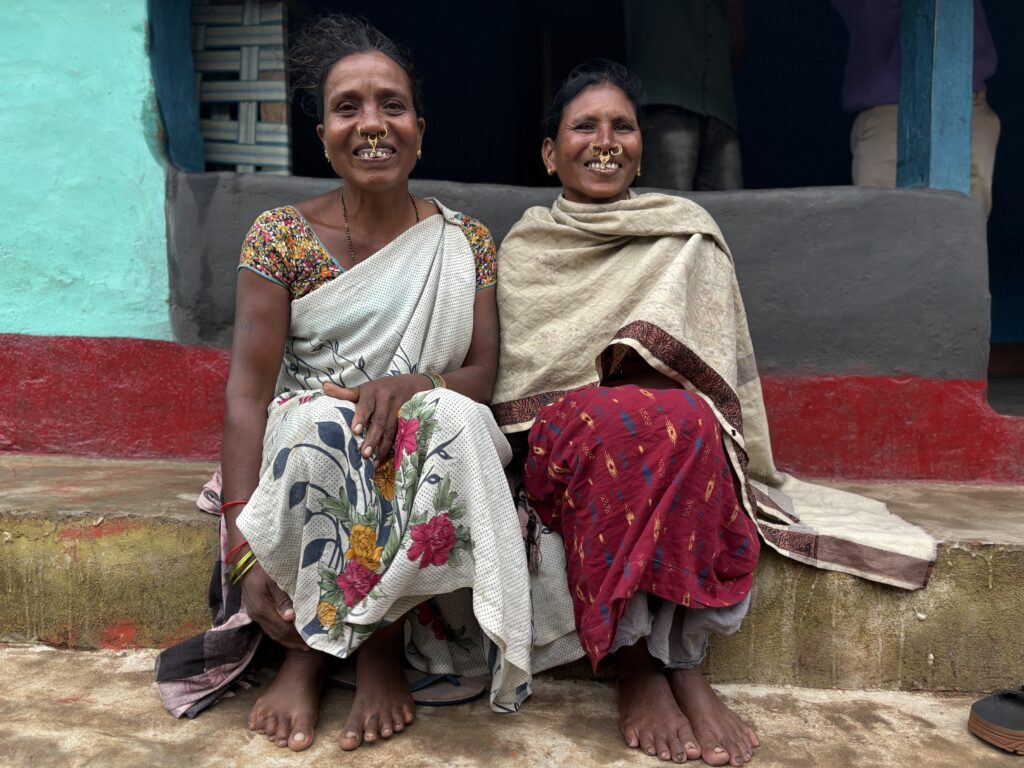
The disparity widens further along the value chain. Some private organisations pay Rs 100–120 per kg for coffee fruit, above the ITDA-facilitated Rs 70, but generally do not buy processed parchment—the form produced by farmers in the Araku Valley. The coffee is later sold for more than Rs 2,000 per kg, often marketed as coffee produced by Adivasi women of Araku.
Parvathamma earns between Rs 70 and Rs 450 per kg for her coffee, depending on how it is sold and processed. The same coffee can fetch between Rs 1,000 and Rs 14,000 per kg in the market.
When she heard of these prices, Parvathamma was surprised: “Do people really pay this much for the coffee that grows in our fields? Then why do we hear only saakulu (excuses) when it comes to paying us?”
GCC General Manager Thanga Srinivasa Rao said that it procures a limited quantity because it is impossible to sell the entire stock through their own channels. “The coffee procured by the GCC is sold to private players through bidding. These buyers either export it or sell it within or outside the state,” he said. The GCC retains only around 100 MT, which it sends for curing before selling the coffee, packed, through its GCC outlets.
“But we announce the procurement price so that farmers know the prevailing market rate and can decide whether to sell to us or to private buyers. While the price is not binding on private players, it puts indirect pressure on them to offer prices at or above the rate we announce,” he added.
Vanthala Raju, an Adivasi coffee farmer from Baram village, said the government should go beyond market intervention and revise its procurement prices to reflect the market value and demand for Araku coffee.
To supplement coffee incomes, Kumari of the ITDA said pepper and other crops are being promoted as intercrops. Pepper vines climb silver oak trees nearly 30 feet tall. After the coffee harvest, women climb bamboo or aluminium ladders to handpick the pepper into bags slung over their shoulders. “We bring it home, crush it underfoot, and dry it for at least two days before selling it to the Sahukars,” said Parvathamma.
But the additional income from pepper is limited because the crop is harvested only once every two years, earning around Rs 20,000–40,000 per acre.
Changing Climate
As evening approached, it started to drizzle. With the sky overcast, Appalamma urged the women to wrap up fast.
“Ee varshalu ento, babu (what is with these rains?),” wondered Chandramma. “They either come all at once, without a break, or do not fall at all.”
Kuda Bullemma did not want the rain to stop as her fields needed the water for her to begin tilling soon. Rainfall has been erratic and this year has been recorded at 25% below normal.
S Karuna Sagar, senior scientist at the India Meteorological Department (IMD), Amaravati, attributed this to El Niño conditions, which suppressed monsoon circulation across the country. By September, cumulative rainfall was 15% below normal with prolonged dry spells, and rising heat.
In Araku, women said this has implications for both paddy and coffee. Climate change added an average of 30 days of dangerous heat each year to India’s coffee growing regions between 2021 and 2025, according to an analysis by Climate Central, an independent climate research group. This is a matter of great anxiety for the coffee farmers.
After nearly six hours bent over in the fields, the women straightened their aching backs, washed the mud from their feet, hands and clothes at a drainage channel, and began the walk home along the narrow paths between the paddy plots.
Led by Bullemma, a few women broke into song, stretching the opening—“Eyye eyyyy”—before singing, “Pacha pachani thota lo, uyyaalo, Intiki velletiki nenu unnanu, uyyaalo (in the lush green fields, I am ready to go home).” The others teased her about her eagerness to get back home.
Whether they would return the next day depended on the rain. If an overnight shower soaked the fields, there would be work again. If not, they might get a rare day off. For now, they walked home together, leaving the fields behind. There was work waiting at home.
[This story is part of the series ‘The Full Field: The Many Faces of Women Farmers‘, a collaboration between Womanity and BehanBox.]

We believe everyone deserves equal access to accurate news. Support from our readers enables us to keep our journalism open and free for everyone, all over the world.
