Postcards #16: Sweet Discoveries
This month in Postcards: Somnath Hore’s art, sattu parathas, a Marxist cat, and more
Dear reader, we write to you about the people, places, and ideas that brought team BehanBox joy.
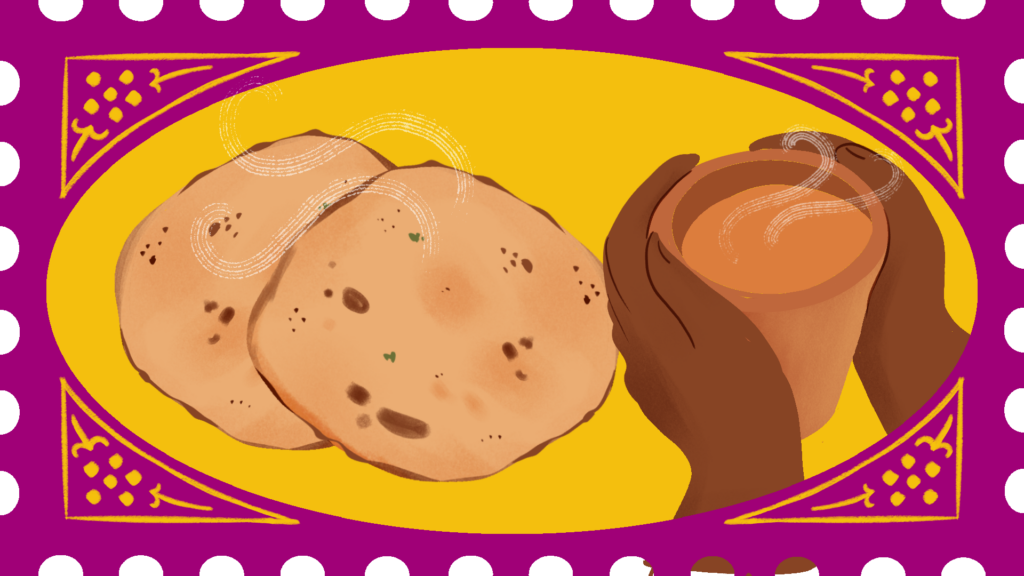
The Soft Comfort Of Sattu Paranthas
5 am. I rolled out of bed to shut off my alarm and pulled back the curtains. The sun was already out, shielded by a layer of gray-blue clouds. Phew, no rain yet. I pulled on my jeans and got my bag ready for the day – makhana, raincoat, notebook, water.
I was in Khagaria, heading off to one of Bihar’s most remote and politically-charged corners just on the banks of the Kosi river. As I put on my shoes, my eyes glazed over a small package wrapped in tin foil. Sattu ke parathe! How could I forget? My fingers wrapped around the warm parathas as I carefully tucked them into the side of my bag. There was also a box full of yogurt and smaller pouches of peanut chutney. I contemplated where to place them and eventually decided to scoop them up in my arms.
And so, the two-hour journey on Khagaria’s decimated roads began. About 30 minutes in and we were all desperate for a break from the rollercoaster ride. One by one, we tumbled out of the car – Rahul ji (the driver), my colleague and I – right in front of a small tea stall with the words “tandoori chai”.
Though a chai fanatic, I had never heard of tandoori chai. But oh! What a beautiful, earthy flavour it had. It melted into the sides of my mouth, mixing with the warm sattu paratha and chutney to create a symphony – spicy, sweet, salty, nutty, all rolled into one.
Later that day, we sat inside Phulo didi’s house, a woman we met on the field, for some much needed respite after spending the morning in scorching heat. The first thing she did was feed us. “Nahi nahi di! Bohot jyada ho jaega, pet phat jaega!” I protested as Phulo didi shovelled another spoonful of rice and a serving of sattu-shimla mirch sabzi onto my plate. She beamed, her nose ring shimmering. I resigned to my fate and continued eating.
I hadn’t eaten this much sattu since my mother made sattu protein shakes for me in school. I hated it then, but after eating it in Bihar, it has taken on a new meaning. I used to scoff when people would say “food is the best way to experience a new place”. Now, I can’t imagine travelling any other way. Food introduces you to some of the kindest, funniest and most caring people. And like a river, it carries stories and memories – of land and labour, of the tangible and intangible, and of life itself.
Anjali
Love All
Two weeks ago, I picked up a new sport — badminton.
The last time I held a racquet was in the eighth grade. I wasn’t exactly the sporting kind, far from it. My school report card read: “talks too much and does not move at all”.
Yet, I found myself on centre court at the prestigious inter-school badminton championship. Our school’s star player had fallen ill, and in what can at best be described as grave illogic, the PT teacher declared that I would represent the school. Needless to say, we lost. I did not feel a shred of guilt or trauma, as players usually do.
I like to think I’m a different person now. So when Arthur, an avid badminton player, threw down the gauntlet with, “What men! Come and play and all,” in Bambaiyya English, I was ready.
Now, talent may be optional, but looking the part is non-negotiable. I dug out my running shorts, and hopped onto the court with the warm up routine that I had seen in Wimbledon. All four courts were occupied by men. Shelly and I were the only women. The seasoned players were incredibly welcoming and graciously generous with their time, patience and skill. One gent let me serve again and again because the shuttle refused to be touched by the racquet. On day one, I played four games and lost all four.
But I walked off the court with the kind of high that had nothing to do with winning.
It’s been two weeks now, and I think I’ve found a sport I’ll keep playing for as long as my knees and lungs agree to the arrangement. A pair of expensive Yonex shoes will certainly keep me committed.
Badminton is deceptively brutal. It demands speed, agility and quick thinking. Three years ago, I took up swimming, a sport I absolutely adore. It built my stamina, endurance, and character. Every lap in the pool is now paying dividends on the badminton court.
If you’d told my eighth-grade self that one day I’d willingly play a sport that leaves me sweaty, and sore, and still eager for the next game, she would’ve laughed in your face. But wonders never cease.
If you’re able to, pick up a sport. There’s an inexplicable high that comes from discovering your body is capable of more than you imagined. If nothing else, you’ll have a good excuse to buy ridiculously expensive shoes. Or swimwear.
Bhanupriya Rao

Marks And Memories Of a Painter
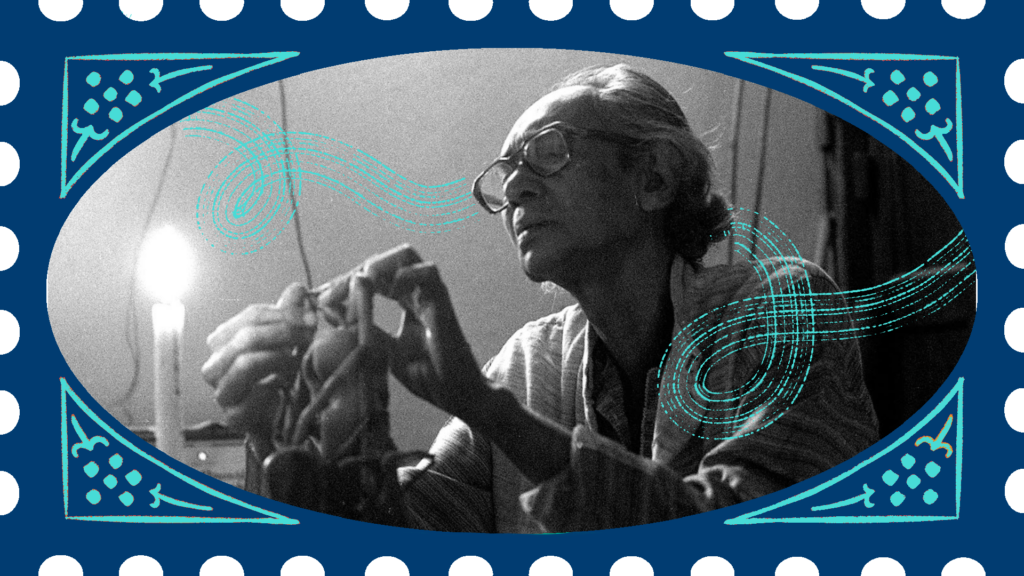
I was resting my aching feet at the endless stretch of the India Art Fair and scowling at the passing crowd that seemed dressed up for a soiree at 2pm, when I saw across the aisle a kiosk, starkly tented in all-black. ‘Marks and Memories Carved in Wood, The Woodcuts of Somnath Hore’, it said.
Apart from some vague idea packed away with a host of other arts trivia that he was a Bengal master, I had little idea who Hore was. And what a revelation his art turned out to be. Not just for the sheer anguish of war, famine, displacement and poverty that his works brought out without in spartan lines, black and white. But for the story they told of the times the printmaker, painter and sculptor lived in.
Barely into his second year at the arts college, Hore was asked by the Communist Party of India to document the 1946 agrarian movement in north Bengal, known as the Tebhaga (sharecroppers’ demand for a third of the crop instead of half) uprising. There are strikingly evocative images of farm workers collectivising, striding through fields and secretive night meetings lit up only by fury and fervour. There is his series on the Bengal famine too that he witnessed, skeletal bodies of humans, children and dogs – but not bereft of dignity.
Hore’s art told the rest of Bengal and India about the reality of those living on the margins. It struck me then, what a tremendously effective political tool art can be to document people’s lives. And how distant art and politics have become, surrounded as we are by the relentless onslaught of mindless political blather. Hore’s art is not propagandist, it is humanist and real. And for all the pain and suffering they depict, they are magnificent works. They move because only great art can.
Malini Nair
Journey With Basu Chatterjee
A few months ago I chanced upon the fun, almost comical side of the 70s’ Hindi cinema. The type of cinema that my mother grew up watching in her early 20s, usually after bunking her college classes. A few decades later, this cinema became a way for me to navigate what I call “pangs-of-boredom-amidst-an-insipid-college-assignment”.
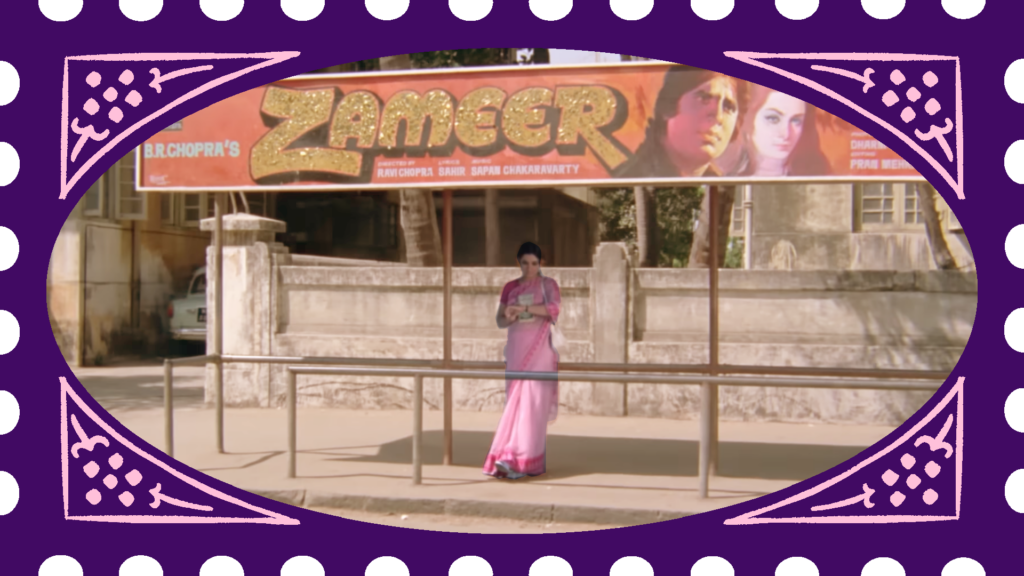
My introduction to Basu Chatterjee’s films was one such discovery. They were and are celebrated for articulating the internal conflicts and desires of middle-class women of that time. They held another appeal for me. They made for perfect background entertainment (filmbros are going to kill me for this).
Unlike other movies that demand rapt attention to follow the subtitles or keep pace with the plot and characters, Basu Chatterjee’s films were built on simple and light-hearted plots. I could finish a decent amount of work within the span of one movie.
One imagery that runs through almost all of his films is the space of the public transport — a bus or a local train — navigated everyday by the central female character while going to work or college.
I suddenly found a bittersweet resemblance to that imagery a few days ago, when my mother was leaving for a brief trip to her hometown, Asansol, a district in West Bengal. This is the place where she grew up, attended school and then later college. While dropping her off at the New Delhi Railway station, she told us about her plans to visit her sister’s place in the nearby district of Raniganj via a bus and then a shared auto. Despite my father’s insistence on booking her a cab, she wanted to take the bus.
My mother, who disproportionately took the responsibility of taking care of us and running the household, has stayed at home for most of her marriage. She rarely navigates Delhi transportation, the metro or even the city, by herself.
In her hometown, under familiar skies and frequented roads, I wondered if maybe using public transports was her way of experiencing the confidence and freedom she fails to recognise now. Maybe, like many of us, it is her attempt to understand, reminisce, take joy and make sense of the grief in these everyday spaces of belongings and exclusion.
Samra Iqbal
Raku the Daku
It started out as a flirtation, this relationship with my new neighbour. He stood there on the steps next to my door, gazing into the distance, his eyes refusing to meet my gaze. Then, on the third such run-in, he let his guard down. His neck arched gently and tilted sideways as I stroked this furry gentleman’s neck.
I was discussing this meet-cute with my flatmate later when she filled me in with details. His name is Raku, he lives next door, and well, he is a bit of a rover. The society network — our domestic worker, the press bhaiya, guard bhaiya, other neighbours — shared more tales about his benders and indulgences. There was no house that hadn’t fed Raku, no hand that hadn’t scratched him behind the ears.
Since then he has made himself a frequent visitor. He comes, inspects the house, rests for a bit, before ambling out of the door. He dislikes being picked up or told what to do, no sir, he marches to the beat of his seasoned paws. He is gentle and mild mannered, never exhibiting an errant purr or bursts of energy that end up with broken vases.
If he were to believe in any ideology it would probably be Marxian, for he doesn’t believe in private ownership of wealth or capital. He enters and exists as he pleases, daring anyone to turn him away. If anything, he liberally sniffs around cupboards and corners, lounges on tables and across doorway passages with his legs sprawled out.
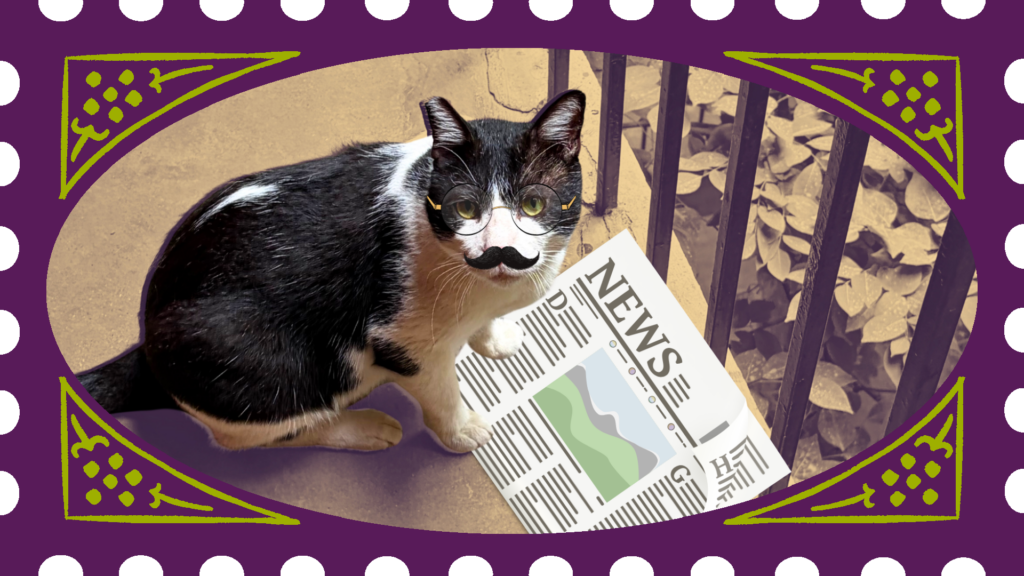
Yesterday, as Raku promenaded along the railing, I couldn’t help but notice he does indeed have the measured and inquisitive air of a middle-aged scholar. My flatmate and I joked that if you give him a pair of thick-rimmed glasses and a newspaper, he’ll look just like a middle-aged man. He would also probably elect himself the head of the Cat Welfare Association.
I regaled my partner with tales of this new visitor. He was mighty impressed with his hustle. “Raku is a full on daku,” he joked. I worry Raku will not be pleased.
Saumya Kalia
My Go-To Chana Chaat
This month I’ve found joy in making the perfect chana chaat. I’ve become the kind of person who meal preps at night (gasp!), I even invested in a packet of tamarind chutney, which has replaced tomato ketchup for me. All the sev and namkeen sent from home that I otherwise barely touch now ends up in this chaat bowl.
Black chana and I would have had the perfect relationship if it weren’t for the overnight soaking. Miss one evening, and there’s no chana the next day. If I could redesign one thing about the biology of black chana, it would be that.
But here’s my recipe. I hope you enjoy it as much as I do.
- Soak a bowl of black chana overnight.
- The next day, throw away the water and give the chana a good rinse.
- Add the soaked chana to a pressure cooker with double the amount of water and salt.
- Pressure cook on medium heat until soft, about 4–6 whistles.
- Add chopped onion, tomato, and boiled potato (optional).
- Mix in a spoonful (or two) of tamarind chutney.
- Sprinkle over some chaat masala and lemon juice.
- Finish with sev or any namkeen sitting untouched in your kitchen.
- Eat immediately. Don’t give the sev a chance to go soggy.
Urvi Sawant
Want to explore more newsletters? Our weekly digest BehanVox and monthly Postscript invite you, the reader, into our newsroom to understand how the stories you read came to be – from ideation to execution. Subscribe here.
We believe everyone deserves equal access to accurate news. Support from our readers enables us to keep our journalism open and free for everyone, all over the world.