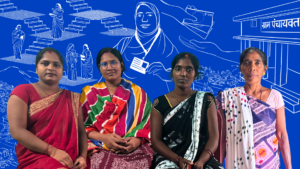
‘ASHA Workers Have To Fight For Everything, That’s The Tragedy Of Our Lives’
Sundaravva Patil shares the challenges of working in rural Karnataka, activism over the years, and how community relationships keep her going

This interview is part of The ASHA Story, the first public archive of women workers’ lives and histories. Read the other stories here.
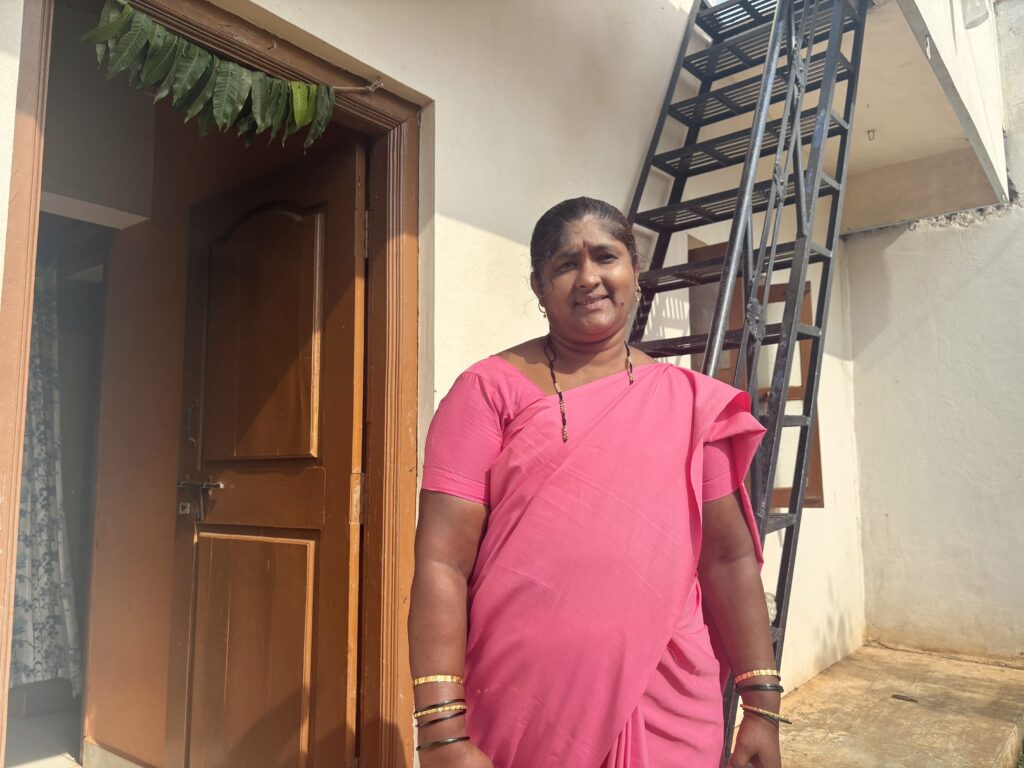
It’s a short walk from the village bus stop to Sundaravva Patil’s house in Machenahalli, Shirahatti taluk, Karnataka. But as we walk those 200-odd steps, all passerbys stop to greet her, ask her something or just smile. Each time, Sundaravva beams – the acknowledgement is a testimony of the work she has done for almost two decades as an ASHA worker.
She knows every house, every person in that house and their stories. “I have cared for them as I have cared for my family,” Sundaravva says. “I have never given less than my best to this job. So, when I am not treated as an employee and not seen as someone of value, it hurts,” she says. The government continues to label ASHA workers as ‘volunteers’ and not ‘workers’ – a misclassification that denies them benefits and rights.
In a conversation with Aisiri Amin, the 48-year-old talks about the challenges of working in a small village tucked near hills. Sundaravva travels to inaccessible places at odd hours to support women giving birth, delivers vaccines and counters misinformation. The work is perilous at times, and in addition to the physical demands, online work keeps her awake at night. Despite sustained protests, compensation remains inadequate and payments are frequently delayed.
At Sundaravva’s house, her 24-year-old daughter Jayashree’s eyes remain fixed on her mother and a wide smile clings to her. “We are very proud of her,” she says. “I have seen her give everything and more to this village … but I have also seen her be empty-handed more often than not. As a daughter, how do you think it feels?”
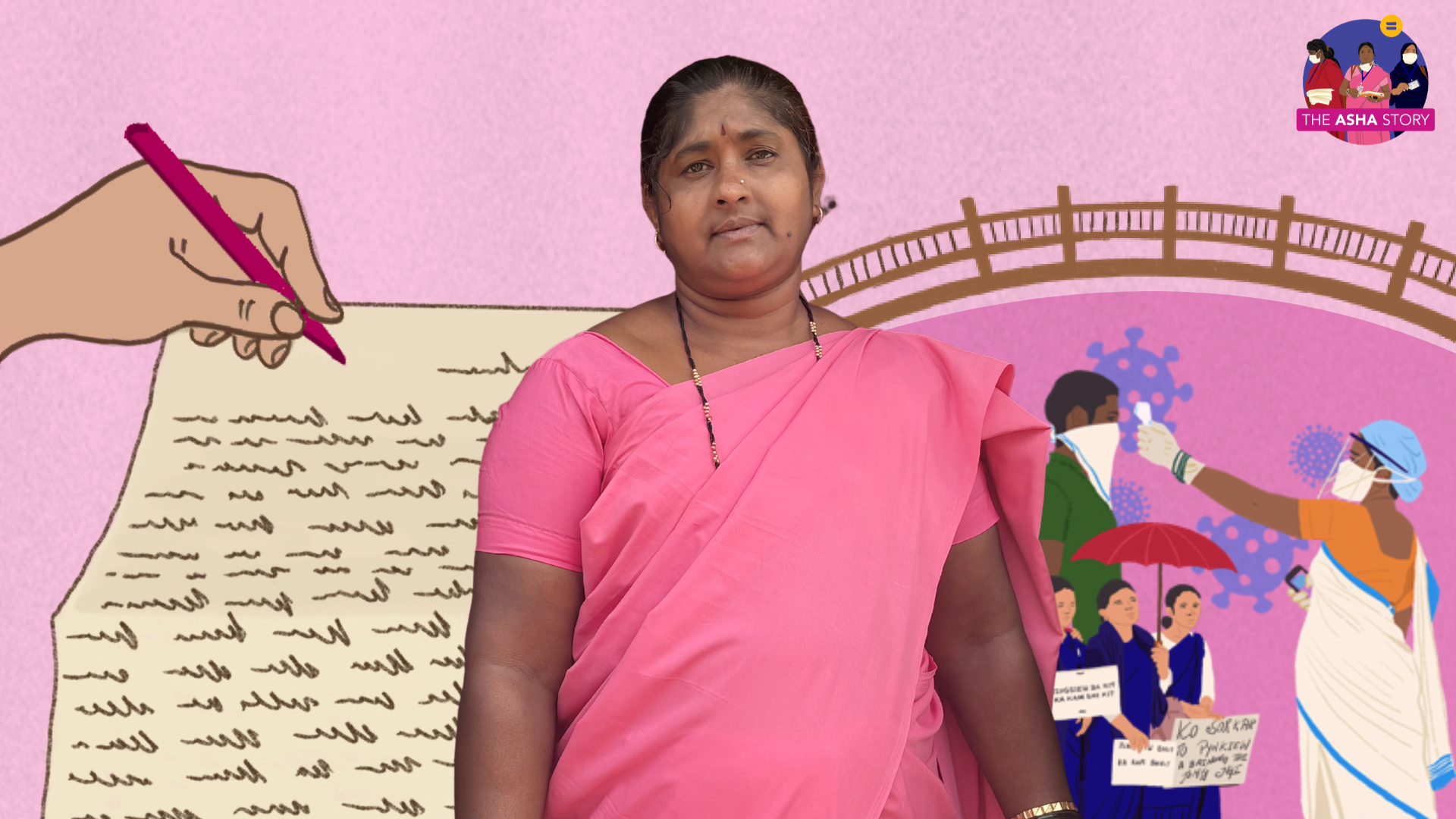
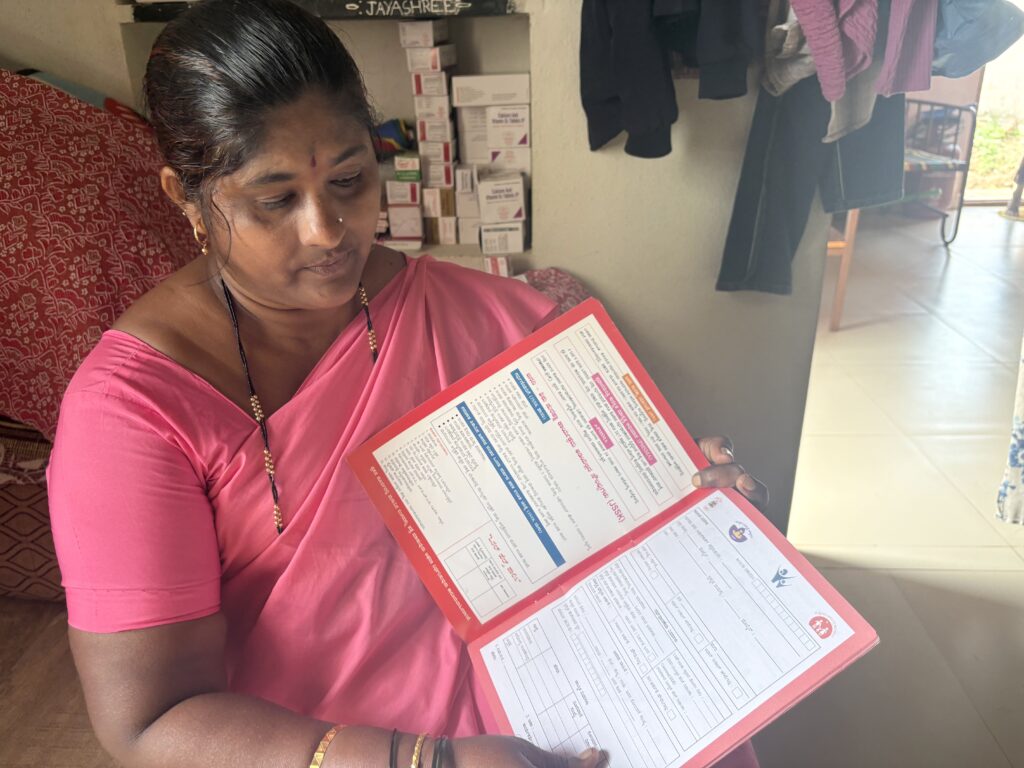
After the interview, as we prepared to take photos, Sundaravva insisted on wearing the pink saree – her ASHA uniform. “I have fought for this, so I want to show it off.” Edited excerpts below:
Tell us about your journey as an ASHA worker.
I was 22 when I got married into a joint family. With that came responsibilities of a big household – cooking, cleaning, chores – along with other women in the family. We had to depend on our father-in-law for expenses, because my husband is disabled. People have questioned me about why I chose to marry my husband despite knowing this, but I made a choice that I don’t regret.
But of course, as our family grew and two children entered the picture, we faced financial troubles.
I studied in an Anganwadi school and grew up seeing the difference teachers make in people’s lives. I wanted to do that, become an Anganwadi teacher since my childhood. But life had other plans. I didn’t study past class 10. I still tried; when I was 18, I worked, without compensation, as a teacher at a night school.
Interestingly, it was an Anganwadi teacher who first offered me work after marriage. I was around 24 then. Seeing that I could write well, she asked if I was interested in documenting some meetings. In 2009, the same Anganwadi teacher informed me about the ASHA programme which offered Rs 500 to 600 per month. My children were in school at that time, and I didn’t have money to buy basic stationery. My first thought was that the money could help me afford at least a pencil, an eraser and other basic things for school.
My in-laws supported me. I went for the training which lasted for 21 days; it was the first time I had gone somewhere on my own and met so many people.
During the training, they noticed my enthusiasm and encouraged me. When you are a homemaker, you tend to be invisible, so it was a good feeling when people see value in something you do. When I returned, I visited the Primary Health Centre (PHC) in Bellati to introduce myself, and they gave me a bag and an information booklet about ASHA work.
My first case was a child delivery. By the end of the first month, I had helped with six deliveries. We were also asked to give necessary injections. I remember when I had just started, I gave 15 measles injections in one day. The work was heavy from the start, but it brought me joy.
What did you do with your first payment?
My first salary was Rs 6,000. I was very happy.
But I soon learned it was a mistake. They confused my area [Machenahalli] with Malnad, another hilly region where ASHA workers are paid higher wages because they live in remote locations and lack reliable transport. We also face transport issues due to the hilly landscape although buses do reach us. But ASHA workers in Machenahalli are paid less.
When I got Rs 6,000, I eagerly started making plans for my children and their education. But from the second month, the honorarium turned out to be about Rs 600 only. That was disappointing – for the amount of work we do, it stung.
I initially gave the money to my father-in-law, but he asked me to deposit it in the bank. There wasn’t much I could do with this money anyway; it was a small amount. I saved as much as I could, spent it on basic household expenses or on my children.
What does your average day look like?
I leave home early in the morning, around 6, check the drinking water in the village and coolers in houses for dengue larvae. If there are, I wait till family members remove them. On many occasions, I have cleaned it myself when people don’t listen. If one person gets dengue and it spreads, then supervisors will reprimand us for not doing the work properly.
Around 10:30 in the morning, I cook breakfast, do household work, then again at 2:30 in the afternoon, I head out to check on elderly people and pregnant women and give them medicines. If there is a delivery, then work goes on till late at night, sometimes all night, if we go to the hospital.
To be honest, there is no set time – we are working 24/7. I am currently in charge of 1,200 houses, but there have been times when I was responsible for 2,000 houses.
How does the terrain of a hilly area, where dense forests are common, impact your work?
There is little access to transport, so I have to walk a lot. Some houses are on slopes, and for some, I have to cross a forest, which puts my safety at risk. In 2013, while visiting people as part of the polio campaign, I had a bad fall and both my knees suffered permanent damage. I took a painkiller and continued working.
Then, days later, when the pain increased, I went to the hospital where they did an X-ray, which showed a displacement on my left knee bone. It couldn’t be fixed. I needed to get a surgery, but with no leaves and inconsistent payments, it’s difficult to schedule that. I continued working.
There are also wild animals in the area, so walking through forests in the evening feels risky. When we get calls in the night, I have to ask my son to drop me off, but he is also young, so I worry about his safety.
We frequently accompany pregnant women to the hospital for scans, checkups and deliveries. Most deliveries happen at night, I have to take a photo after the birth and only then can I leave. Sometimes it’s past midnight, and no buses run at that time, so I end up spending all night at the hospital. This doesn’t feel safe, but there is no other option.
I know asking for a vehicle to ferry ASHA workers late at night is probably too much and won’t happen. But at least, can they be assigned a room in the hospital to rest and spend the night? It’s not just one ASHA worker, there are many, so it will help all of us. We have asked but haven’t received any response.
Seeing these challenges, my family asks me to quit. But I feel a responsibility, not just towards them, but more so towards the community that depends on me.
When did you start using a phone and apps for work? What are the challenges?
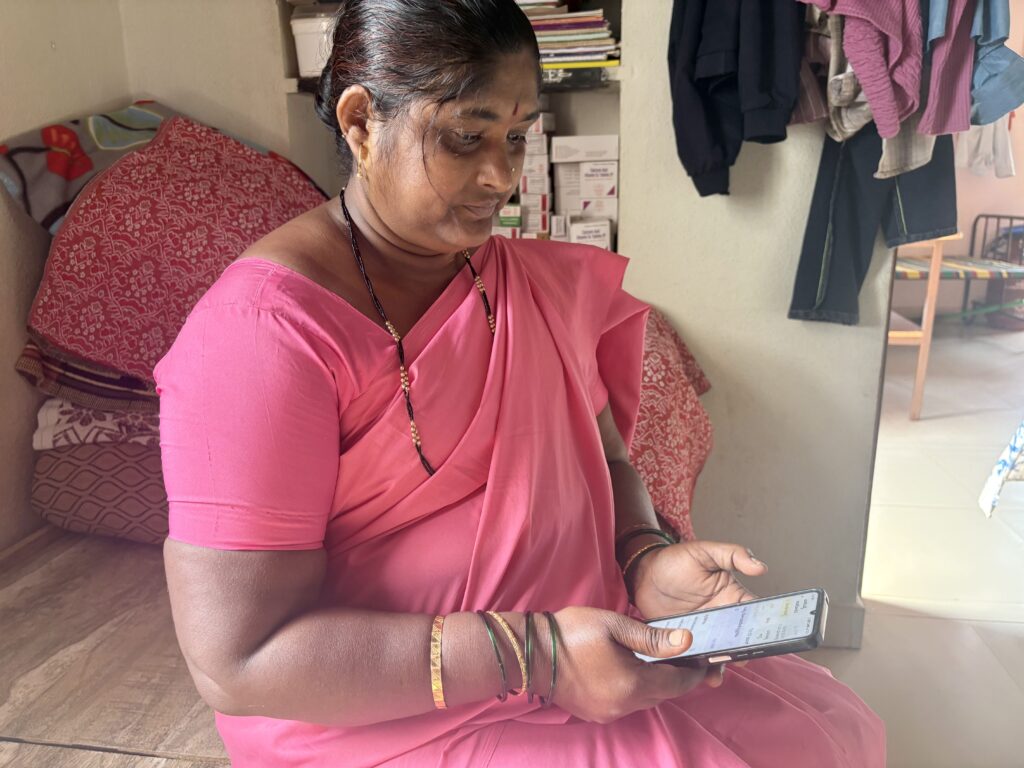
We got a BSNL SIM card from the government, which stopped working soon. So I had to buy my own. They didn’t give us a phone. All details have to be recorded in the Samasta app [where ASHA workers record their fieldwork to get their honorariums and incentives] which takes a long time. We don’t even get paid extra for that.
I can’t fill in the details of more than five houses in a day – the server is that slow. I go to at least 20 houses daily, so when do I sit down and fill in the details? Even after coming home, we have to work because of this app. If we don’t fill in all the details, then we don’t get payment.
I ask nurses for help. But many people don’t have that help and don’t even know how to use the phone. What will they do? It’s just extra work.
You worked during Covid-19 and are now raising awareness about the HPV vaccine. What has been the response?
We faced a lot of issues during the pandemic. We were told not to touch someone if they fell sick, so it was difficult to treat them without others in the village panicking. Women in labour needed help so checking on them was an issue, but we managed somehow. When a medical camp was held in our village, some people picked fights and even came to hit us. I stood in front of them, asked them to hit me instead, to shield others. I didn’t back off.
I provided assurance to people in quarantine and encouraged them to go to the hospital – without which they would dither. Once I waited until evening and helped take people to the hospital, so that others wouldn’t see and make a big deal. Anyone who got the virus was ostracised, and if we helped, people kept their distance from us also.
I wasn’t scared because I had so many responsibilities. How could I sit and worry? There was no time. Today, people say, I saved many lives.
Now, people are talking about the HPV vaccine. I read about it last year, and then my daughter showed videos on YouTube about its importance. I asked the PHC if we could spread awareness about the vaccine. It is difficult to make people understand its importance; despite being educated, people are still reluctant to take vaccines.
People hold misconceptions. Some thought that if girls got the HPV vaccine, they would not be able to get pregnant. Many refused the vaccine for this reason. I had to sit them down and explain why prevention is important, and that there is no scientific proof that it impacts fertility. Many understood, and children have taken the vaccine.
During this year’s Republic Day function, I went on stage and talked about the vaccine. If we ask Anganwadi teachers to bring this up in class, it might not work because it’s just children. But in such functions, both parents and children are present.
Can you talk about your relationship with the women in your community?
For women, ASHA workers are often the only people they can depend on for help. They trust us. If today, women go to hospitals and doctors for regular checkups, especially pregnant women, it’s because of ASHA workers.
Family members in the early days would protest and ask, women have given birth at home for ages so why do they need to go to the hospital? Or they would say they don’t have money for the bus journey. I have taken pregnant women to the hospital with my savings so many times.
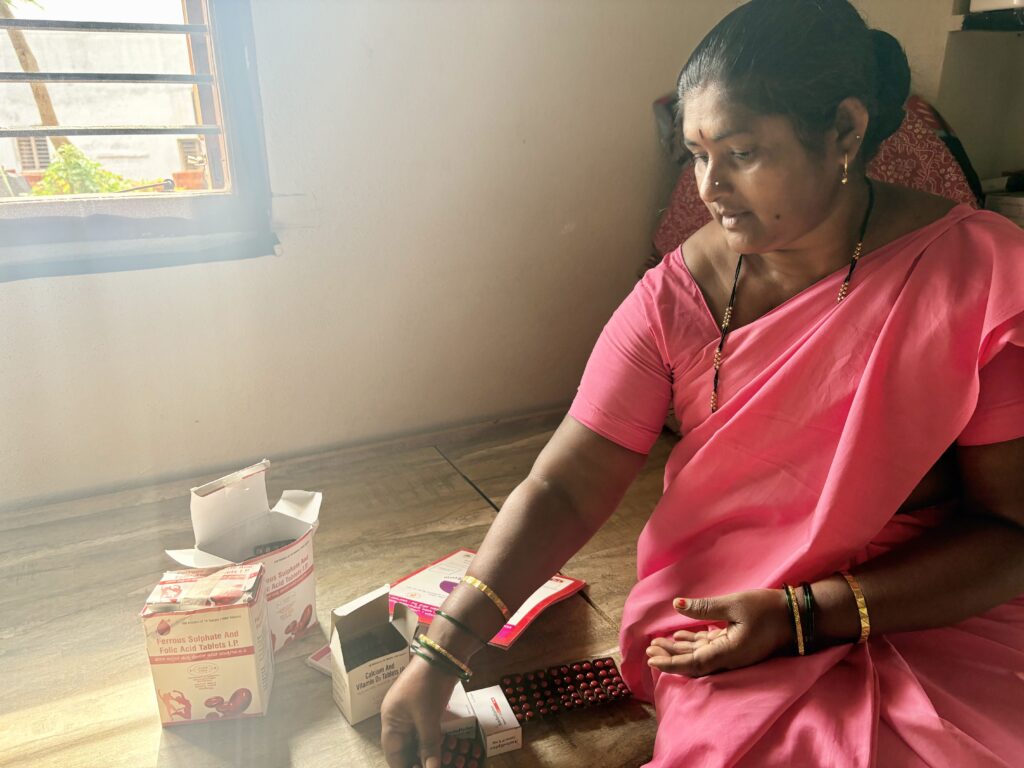
Earlier, pregnant women would also continue working and not eat properly. Many of them were anaemic, too, and often children would be born prematurely and weak. Some didn’t survive. As ASHA workers, we held meetings to create awareness and explain the importance of nutrition and medicines. During pregnancies I visit them to give them tablets, including iron tablets where needed. If I don’t bring them the medicines every day there is a chance that they won’t take it. Sometimes family members say that these tablets affect women negatively, so I have to sit, answer their questions, and reassure them.
What we do every day matters. Even after birth, I visit daily for the first 42 days to check if they are taking tablets, drinking water, eating nutritious food and breastfeeding.
One time, I took a woman in labour to the government hospital but because of severe complications they asked us to go to a private hospital. This was at night. The doctor there asked for a deposit of Rs 30,000. The woman had only about Rs 3,000, and it would take a while for her family to bring the rest of the money. I decided to go to the nearby jewellery store and take a loan against my thali [wedding chain] to make the deposit. The doctor agreed to go ahead with the admission.
Then I went to the blood bank. Instead of taking a rickshaw, I walked to save money. I spent Rs 1,500 from my savings to get the blood and returned to the hospital. By the time I was back, the baby was delivered and the mother was doing well.
Be it a sexual assault or domestic violence incident, people call for ASHA workers first. We go and intervene. We tell women their options, collect proof, so that the women have that in case they need it. Women also ask us for help to file FIRs, and we explain the process. It’s not just basic healthcare – it’s a lot more things that women depend on ASHA workers for. This trust that women have in us is important; this is one of the reasons to keep doing what we do.

What do you make of the delayed payments and ASHA workers’ ‘volunteer’ status?
In 2014, many people in my village were infected with cholera. People were vomiting, had severe diarrhoea and weakness. For many days, I cooked food in my home in large batches with help from other ASHA workers to ensure all of them got nutritious food.
[Her daughter Jayashree comes into the room and adds: “I had typhoid at that time. More than me, she has looked after the people of this village. She worked while she worried about me constantly.”]
I feel a responsibility for all of them. I have never given less than my best to this job. It hurts, then, when I am not treated as an employee and not seen as someone of value. Which volunteer has worked for 17 years in the same job?
We haven’t been paid for months, but we still continue doing our work. When we protest, the payment comes regularly for a while but time passes and it resumes its infrequency. Income from other work is also not possible. We have a bit of land, but I can’t work on it because of ASHA duties. I can get a call any time, and I can’t run from there, with my knee.
I have a home loan and other expenses to take care of. My children are in college, I have to ensure they get the best education. I want a better life for them. My husband used to get about Rs 1,400 as disability pension but the monthly payment is inconsistent. What am I supposed to do? These worries are constantly on my mind.
You have actively participated in protests since your first year as an ASHA worker. What made you join and what makes you continue?
I met D Nagalakshmi, the State Secretary of All India United Trade Union Centre (AIUTUC), in the first year of joining the ASHA programme. I was a bit hesitant initially about taking the union’s help, I don’t know how much we could trust them. But we were struggling. The payment was meagre and the workload was mounting. Going on strike was not something we did on a whim – it was a necessity.
ASHA workers have had to fight for everything; nothing has come easy. That’s the tragedy of our lives. For instance, the uniform I’m wearing today was given to us after we staged a strike. Doctors and nurses have their uniforms so people see them a certain way. When we visited homes in our personal clothes, many people refused to treat us as someone they should listen to and take advice from. It made our job more difficult. Wearing this uniform makes me happy – it gives me an identity, something I don’t have to keep proving to people.
After the protest in 2010, we got other basic things such as an umbrella and a bag. We have been going on strike at least twice a year. We have to travel to Bangalore, assemble everyone for the strike, and then hopefully, with enough pressure, we get some benefits.
Participating in strikes and protests is not easy. We have to submit a written statement to the local PHC and the police. Since we can’t work we have to forgo any incentives. I have to take two different buses to reach Gadag, and then take a train to reach Bangalore. And do this all over the next day to reach home early to go to work.
It is exhausting, but there is no other choice. If we don’t constantly raise our voice, nothing will change for us. It’s because of constant protests that we have been able to raise our fixed honorarium to at least Rs 5,000 and incentives to Rs 3,000. But in this economy, this is not enough to meet our basic needs. How are we supposed to survive? We have to think about everyone but no one is thinking about us.
When we went on strike last year the government promised to increase our payment to Rs 10,000. A year later, nothing has happened. We have been discussing options, including the possibility of ASHA workers across the State going on strike and quitting. If ASHA workers in one district go on protest and others don’t, then it doesn’t work; but if we do this together, the entire health system will collapse and the government will be forced to listen to us.
Even when we are on strike, people call us – sometimes about medicines, sometimes to ask us to go with them to the hospitals. People trust us more than doctors and nurses, they look at us before taking medical help. In such a scenario, if ASHA workers quit, can you imagine how big a problem it would be? The government still doesn’t realise our value.
Do you get time to look after yourself? What does rest or leisure mean to you?
In this line of work, where is the time for rest? Even in the middle of the night, we have to be ready to help someone reach the hospital for delivery. If it is a delivery case, then we have to stay there until the baby arrives, and if we get a bus, we make it home or else wait till we get one.
Yesterday in the middle of a family function, I was making calls to help a woman at the hospital. I have to prioritise others; they depend on me. Rest happens in moments. Sometimes I want to just sit and do nothing. If I get the weekend to myself, I can finish household work one day and be free the next day. But rest is not really possible for us.
[Jayashree adds: “Amma meets her friends, that’s rest for her. She wants to sit and talk with them and share stories. But she doesn’t get time.”]
It’s been 17 years since you became an ASHA worker. How do you see this journey?
In the beginning, I only did household work and that was my whole world. But because of the ASHA programme, I know people in this village and beyond. When the police come for checks or something, people direct them to our house because it’s well-known as ASHA akka’s house. People know who I am and respect me. That’s a great feeling.
There is dignity in this job. I can keep my head high when I walk around. I take pride in what I do. It has also made me confident in life; I was shy when I joined, and I didn’t know much about how the world works. Now, I feel more confident.
In 2013, I even won the Best ASHA award in my district – the first recognition of my work. These things wouldn’t have happened if I weren’t an ASHA worker. I am very aware of how this job changed my life. I am very proud to wear the pink saree.
But I wish the government treated us better and paid fairly – life wouldn’t feel like such a struggle. We are all exhausted, I don’t know how long we can keep doing this.
We believe everyone deserves equal access to accurate news. Support from our readers enables us to keep our journalism open and free for everyone, all over the world.