Postcards #13: The Untold Stories Of Women’s History Month
This month in Postcards: from Delhi to Chennai, women leaders talk about solidarity, friendship, and struggles that deserve to be documented

In Postcards, we write to you about the people, places, and ideas that brought team BehanBox joy this month. For Women’s History Month, we’re stepping away from our usual postcards to share something truly special – postcards from women leaders who have been organising, campaigning, and advocating for a more just and equal world, a world without margins. Their stories, struggles, and histories deserve to be seen, heard, and remembered.

The Fight for Water
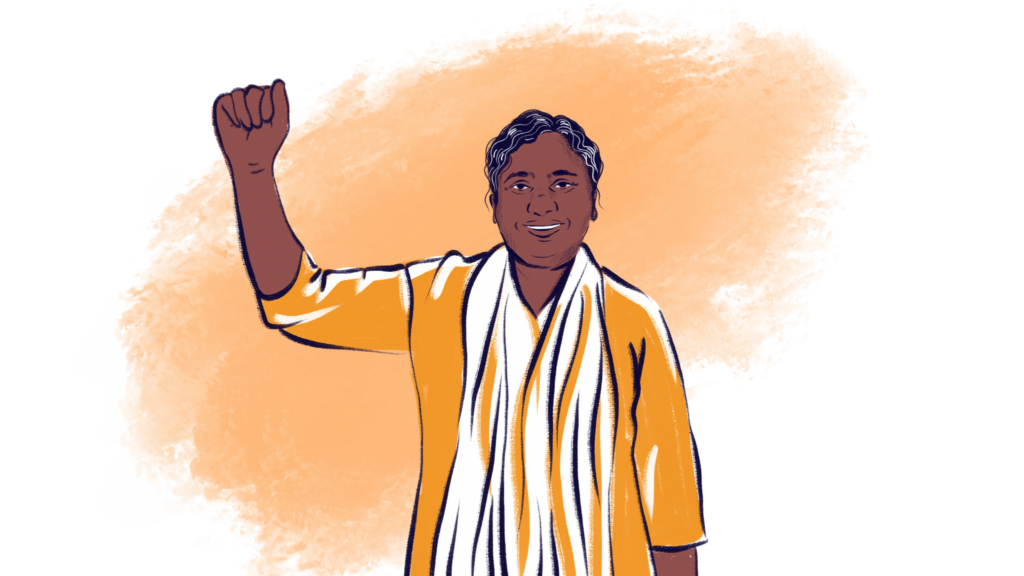
Although we gained independence 76 years ago, most of us from ‘lower’ castes still live in gulaami – paani ke liye gulaami, light ke liye gulaami, road ke liye gulaami. I laughed when I first heard that we had to fight for drinking water. But now, my eyes well up as soon as anyone mentions it. We have faced so much injustice in the name of water.
We started organising after Pani Haq Samiti was formed in 2010. We held meetings and morchas, conducted scientific research, and spoke to many people. On March 8 2016, (Women’s Day) we undertook a huge signature campaign and morcha at the BMC office.
Later in 2016, we held the ‘paani pilaao andolan’, where we filled bottles of water from our homes in British Port Trust, Maharashtra Nagar and other areas and took them to the government to drink. They got so scared that they gave us documents for water connections. When we still didn’t receive water a year later, we manually filled and digitised over 1,000 forms.
After nine years of sustained struggle, we finally received our first water connection in 2019.
Women faced the brunt of water scarcity and we were the ones who fought for it too. Women from across the bastis joined the struggle – sometimes we would go to their area, sometimes they would come to ours. While I am happy that we have won one fight for water, we need to continue fighting everywhere else now. As citizens of this country, we deserve access to clean water.
Alongside this fight, we also need to fight for our homes. Across Mumbai and in British Port Trust, the government is intent on demolishing our houses without any resettlement. We have lived here for over 100 years and built the entire economy, yet we are not even on their development plans. We have started our fight for our homes now and we will not stop until we win.
Women’s history month is especially important so that we remember the struggles and wins of the world’s working women. So many women from marginalised castes and class have shed their blood and sweat to build up this samaj, clean the society, and provide care. Yet, no one asks them their name, there is nothing written in history about them, and they have never been nominated for any awards.
Today, there are hundreds of sparkling NGOs, but behind each NGO are thousands of ‘uneducated’, marginalised women who toiled on the ground to bring change. I also want to talk about the women who clean our roads and public toilets but are paid no attention. I want to celebrate women’s day with them so that they too can feel respected and wanted in this society.
Women’s History Month is for the women who have come from the most marginalised places and have brought us to where we are today.
Shanti Ravi, Pani Haq Samiti, Bombay Port Ghar Haq Sangharsh Samiti, and Pragati Mahila Mandal
(As told to Anjali)

For Domestic Workers, The Struggle Must Go On
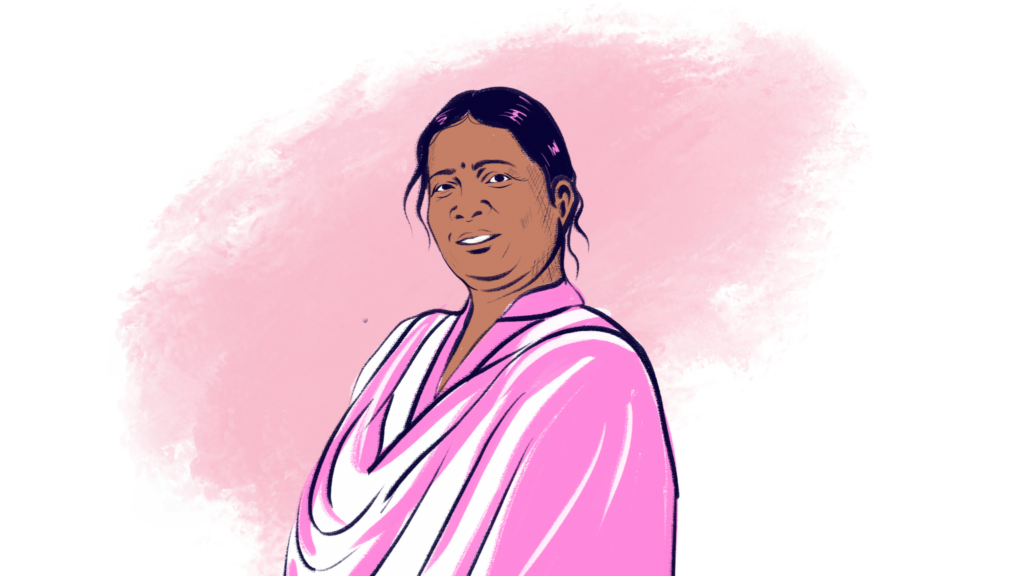
Earlier we were called Shahri Mahila Kamgar Sangathan. Then we felt “sangathan” didn’t carry enough weight, so we renamed it a union. Back then most women were working as domestic workers in kothis, or garment workers, or were home-based workers making moti sippi (piecework like shell craft) — all kinds of workers were associated with us.
There have been small struggles, from winning wages for someone to fighting against police atrocity. In the early 2000s, police atrocity cases were very common. If anything went missing in an employer’s house, the domestic worker would immediately be blamed for theft. She’d be arrested. Even if the ring later turned up in the folds of their own wardrobe or on the car’s floor mat.
I remember a case from Lajpat Nagar, where a young girl was accused of stealing five bottles of beer. What would she do with beer? But they locked her inside and refused to let go. Imagine her mental state. She had no one there.
You can’t reach every worker. We try – we go to their homes, we talk, but the police always sides with the employers. And when something is found somewhere, the whole thing ends with just an apology.
This organising, these achievements – there is no space to document them, and yet they are very significant at our basti level.
Take protests for minimum wages. About three decades ago, there were only a handful of organisations talking about this. Live-in workers, part-time workers, women who work 12 hours – all of them demanded minimum wages. We put these issues up in small meetings and consultations. When an employer wouldn’t pay, all of us women would go together to the police station or to that employer’s house.
These ground-level struggles were never covered by national media. This is such a massive sector and women make up 99% of it – it’s ignored because of exactly that. Because it’s led by women, and our work is entirely invisible.
There are so many stories I have forgotten over the years. I’m tired and depleted, but what can I do? This work is my passion. The challenges are there today, they were there before, but despite them, we have to keep talking about minimum wage, equal opportunity, dignified work, economic strength for women.The fights of different demands need to come under one big umbrella – like the fights for water, forest, and land. Small struggles, small experiments, small achievements.
Women have always fought and struggled for their working hours and dignified wages. That’s history. But today it’s still the same. Compared to 30 years ago, when we started our struggle, today we have moved backwards. But still, the struggle must go on. If we can’t run, we have to still keep moving. To remember all those small organisations, all those women who are fighting these fights – not many people remember them, we have to remember ourselves. That’s just how it is.
Anita, Shahri Mahila Kaamgar Union
(As told to Saumya Kalia)

The Union – A Home – For Working Class Women
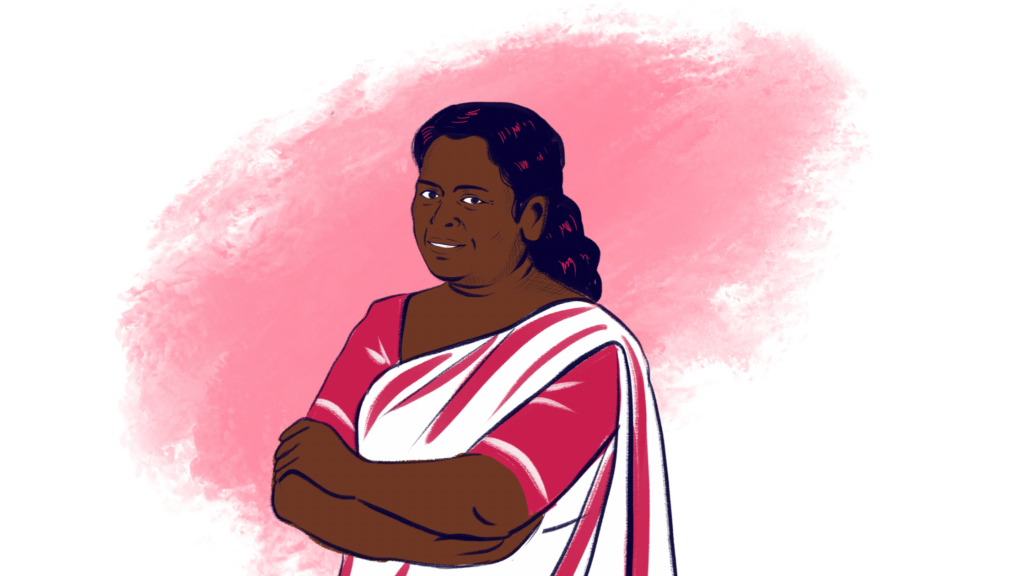
When I first started working, I never imagined that I would one day lead a union. Like many women workers, I believed that we simply had to accept whatever conditions we were given — long hours, low wages, humiliation or harassment at work, and sometimes violence at home. Speaking up felt impossible, both in the workplace and in our own families.
The union changed my life.
Through the Tamil Nadu Textile and Common Labour Union, I learned that I am not powerless. When women workers come together, something powerful happens. We begin to see that the problems we once thought were personal are actually shared by many of us. And when we stand together, we find the courage to demand dignity – not just for ourselves, but for others around us as well.
The union gave me something that many working class women rarely experience: a real sense of freedom. Freedom to speak. Freedom to question injustice. Freedom to support another woman worker like me who is suffering. It also gave me a new kind of community, a place where women look after each other, guide each other, and grow stronger together.
This solidarity and comradeship you build in a union does not stop at the factory gates. I have seen how women in the union stand by each other during the hardest moments in life – supporting one another when facing domestic violence, helping a sister worker care for her children when she must travel for work, or standing together when women face sexual violence at work. In those moments, the union becomes more than an organisation: it becomes a community of care and strength, sometimes the only real community a working-class woman is able to build.
What has moved me most over the years is watching working-class women transform through the union. Women who were once afraid to even raise their eyes in front of their husbands began speaking confidently in gram sabhas, union meetings, and community spaces. They challenge caste discrimination, speak out against injustice, and defend other workers facing violence. Seeing this transformation has been one of the greatest lessons of my life.
To young women workers, I want to say this: do not think unions are not for you, or that they are only about workplace issues. Joining a union can be a deeply personal transformation. The friendships you build, the confidence you gain, and the collective support you find can carry you through many struggles in life — from raising children to confronting injustice in your workplace or community.
And when women stand together, we build stronger families, stronger communities, and a better world, one where the next generation of girls can live with real freedom and dignity.
Thivya Rakini, Former State President, Tamil Nadu Textile and Common Labour Union (TTCU)

In Our Solidarity Lies Our Strength
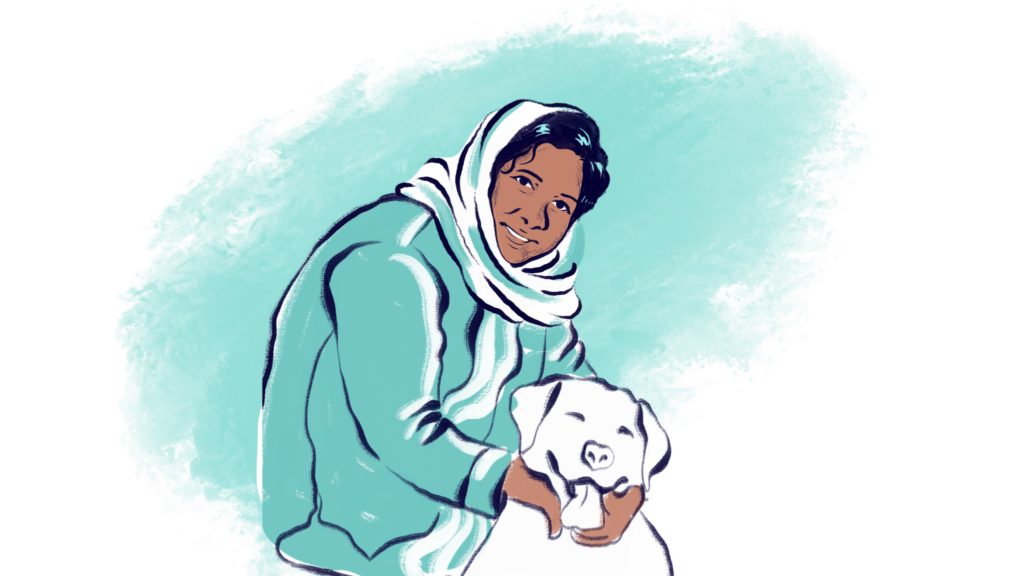
Around 2002–03, I was leading the mahila mandal, working closely with women in my community in Kusumpur Pahari to address the issues shaping our everyday lives. We would sit together and speak openly about what was happening around us – alcoholism, molestation, gambling – problems that were escalating and affecting women the most. These meetings gradually became safe spaces, where women could share their experiences without fear. Over time, we collectively realised that we needed to involve the police.
I took the initiative to organise a meeting with the Station House Officer. I coordinated with the women, reached out to the police station, and ensured that we could all come together and be heard. When the moment came, I found myself explaining our situation calmly and clearly. I told him that violence does not remain confined within the home; it spills over into women’s workplaces and public spaces.
After listening, he asked me who I was. When I said I was the General Secretary of the mahila mandal, he turned to the others and said, “This woman will go far ahead. Not everyone has the ability to express their ideas so succinctly.”
That moment stayed with me. It was an affirmation of my own abilities from someone who had just met me. It reminded me that I could speak, organise, and connect with people, and it strengthened my belief that I was on the right path.
I have been part of this community for years. There is no separation between the people here and me – we share the same realities. Later, as a Community Health Worker with an NGO, I took on many responsibilities, particularly working with women and young people. I often acted as a bridge between doctors and pregnant women.
My work was never about preaching. The prachar I engaged in took the form of songs, conversations, and questions. I never felt like I was teaching my own people; instead, I tried to create spaces where we could come together, speak freely, and learn collectively.
What brings me the most joy is when people return and tell me they understand something better, or simply that they felt heard. Those moments stay with me. At the same time, I have often been overlooked for opportunities. Many organisations I worked with did not consider me for promotions, saying I lacked formal qualifications. That has hurt, but it has never stopped me from continuing this work.
This kind of work demands patience and persistence. Change does not happen overnight. To those who come into these spaces to “work,” I would say this: listen more. Do not appropriate our voices or stop at appreciation. Give us the space to lead our own communities. Support us through your networks and help open doors that are often closed to us.
Each of us women is on her own journey, but it is through our solidarity that we find the strength to challenge capitalism, casteism, and patriarchy.
Sunita, Social Worker and organiser in Kusumpur Pahari, New Delhi, and founder of 4B Foundation
(As told to Srimoyee Biswas)

Want to explore more newsletters? Our weekly digest Behanvox and monthly Postscript invite you, the reader, into our newsroom to understand how the stories you read came to be – from ideation to execution. Subscribe here or visit our Substack channel for more.

We believe everyone deserves equal access to accurate news. Support from our readers enables us to keep our journalism open and free for everyone, all over the world.