
Bhopal Gas Tragedy: The Disaster Lives On In The Women Of Bhopal 41 Years Later
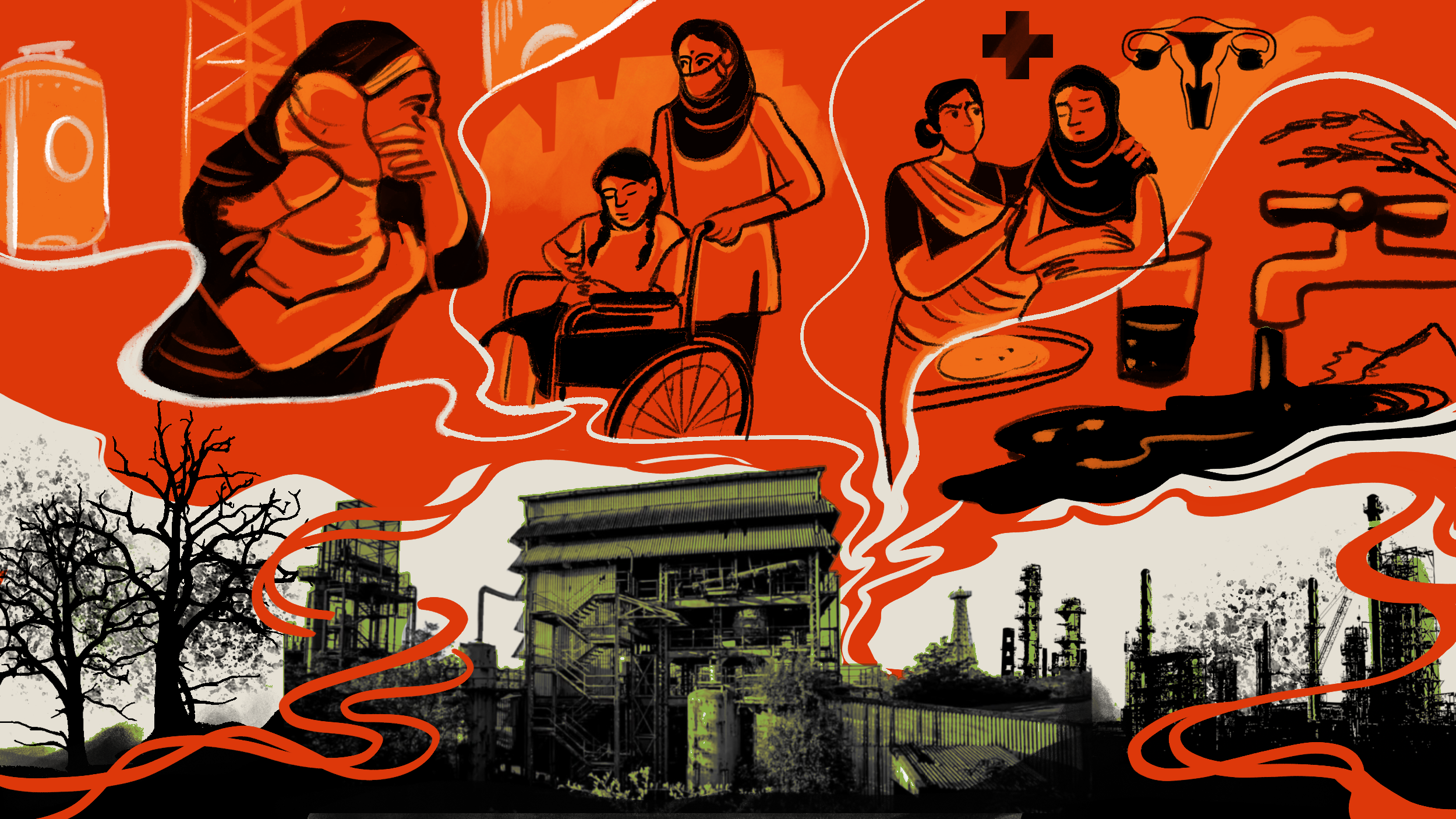
The industrial catastrophe did not end the morning after it killed and sickened thousands, it continues to destroy lives – through contamination and the physical and mental trauma passed across generations
- Tulika Bansal
Click to listen
Bhopal Gas Tragedy – Part 1
Trigger Warning: The story contains accounts of death and suicide that maybe disturbing. We suggest reader discretion.
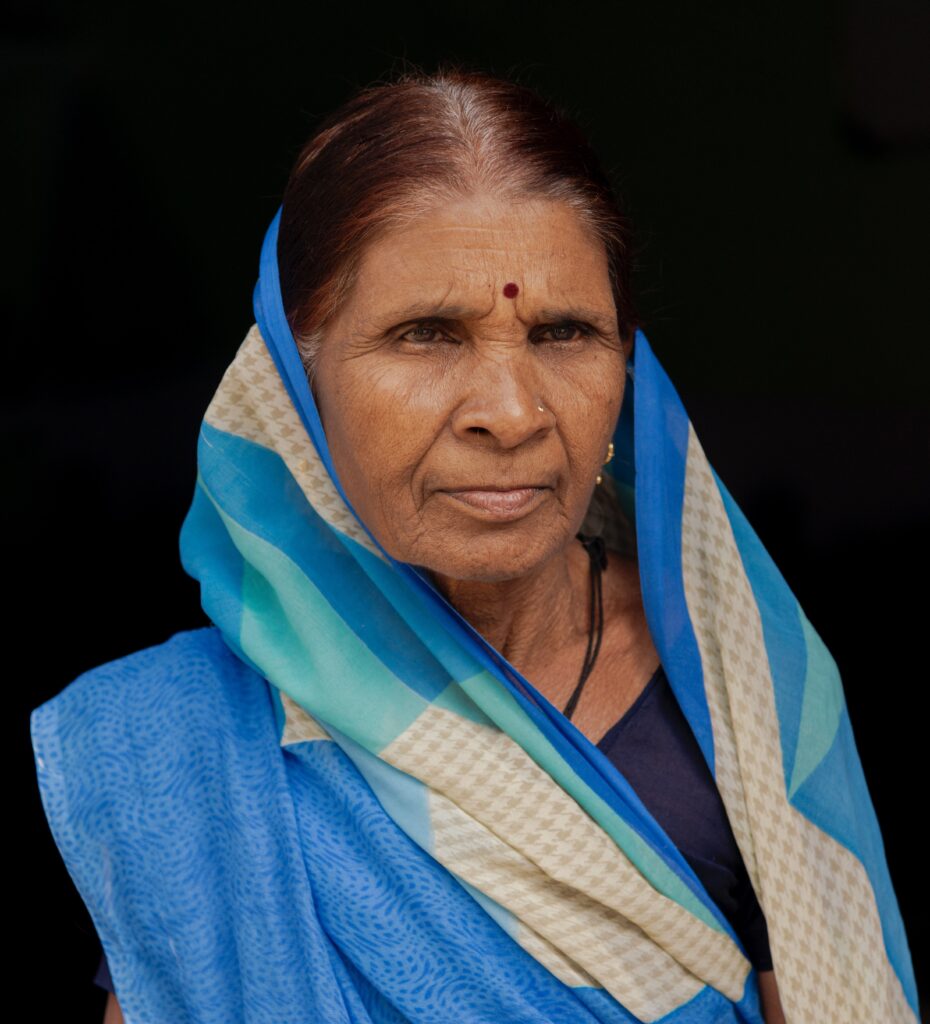
Just after sunrise in JP Nagar, the neighbourhood closest to the abandoned Union Carbide pesticide factory, Leela Bai steps into the lane outside her home, one hand pressed against the wall for support. “Even today, it feels like the gas never left my body,” says Leela Bai, who is well into her 70s now.
She remembers everything about the night of December 2, 1984. She was a young mother, asleep in her mud-walled home, her husband and in-laws nearby. Her one-year-old daughter woke up crying; then came the burning sensation as though chilies were being rubbed into their eyes. They covered their faces with cloth, but outside, their neighbours were screaming: “Bhago! Run! Save yourselves!”
Leela ran barefoot into the darkness with her baby, the air white with thick smoke. “People were screaming, collapsing, vomiting. We ran over bodies. The whole mohalla was empty and full of death,” she recalls. “Every time we tell this story, we live it again.”
This night, 41 years ago, thousands of people in Bhopal lost their lives and in the following days, 10,000 died as a result of the gas leak at the pesticide plant of the US multinational corporation. The death toll is currently estimated at over 22,000. In the days after the leak, Union Carbide’s CEO Warren Anderson fled the country and his company abandoned the plant. According to a 2010 report, more than 1 million metric tonnes of toxic industrial waste from the plant are still in Bhopal, slowly seeping into the groundwater, causing a second, more silent disaster.
Throughout JP Nagar, Kainchi Chhola, Oriya Basti and other neighbourhoods surrounding the factory, women recount that night of panic. To the outside world, that was a single catastrophic night but for the survivors that night never ended. The gas seeped into their lungs, into their drinking water, into their pregnancies, and into the bodies of their children and grandchildren.
In this, our two-part report on the tragedy and its lingering aftermath, we look at how the State and corporate responsibility failed those affected and how they continue to do so. And in the second part, we look at how women led the struggle for justice and redressal.
‘We Ran Through The Smoke’
Vishnu Bai, now in her early 60s, lived with Anuj, her one-year old son, her mother, her siblings, and her elder sister’s four sons as well as other relatives in a cramped, mud-walled home in JP Nagar. When the gas hit, three of her nephews died within minutes. “They were coughing, lost control of their bowels and were vomiting,” Anuj survived.
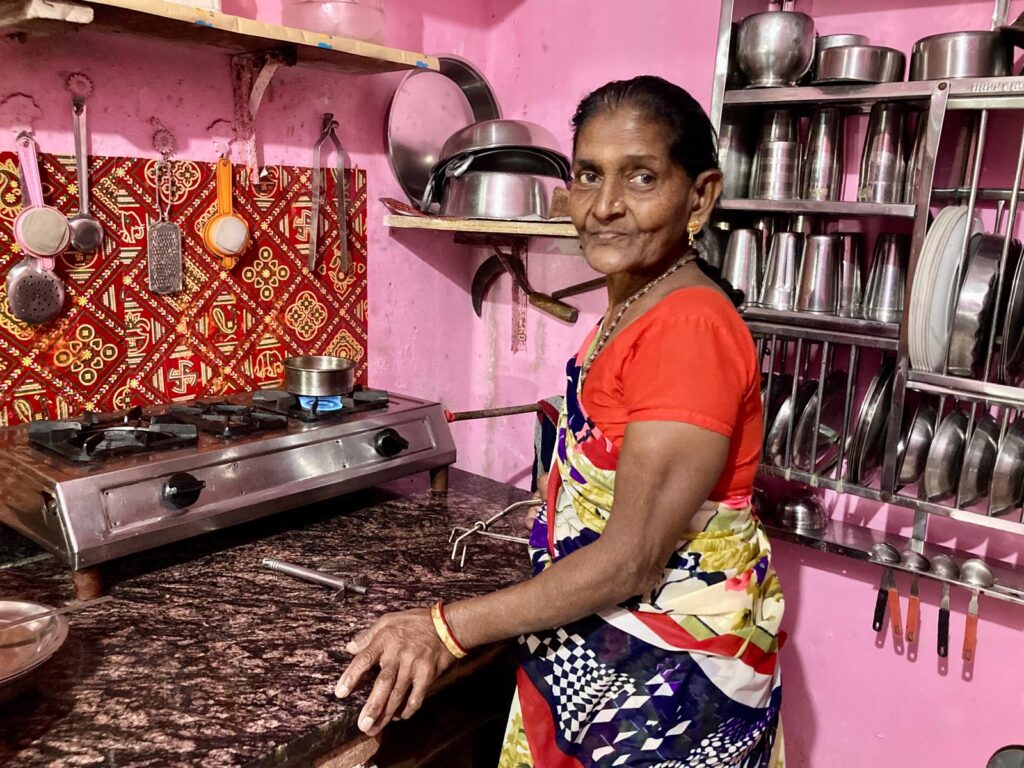
Vishnu Bai never really recovered. She has high blood pressure and breathing problems. Her husband, who was heavily exposed the night of the leak, died 20 years later from lung complications related to tuberculosis. One of her sons, born after the disaster, developed severe anxiety and died by suicide.
Nasreen Khan was just five at the time but she remembers running with her five siblings and parents to Kamla Park, a waterbody where the gas spread was low. They all survived, but her father was severely affected and died prematurely.
About 75 now, Savitri Bai recalls hearing people shouting outside as she tried to keep her four children warm on that cold December night. Then her eyes began burning and the air thickened and she ran with her children and the women of the neighbourhood. When dawn arrived, she saw the devastation: trees had turned black, goats and cows lay lifeless on the streets and there were inert bodies scattered everywhere. Her husband died of gas poisoning a few months later and her eldest son, who suffered severe headaches and nosebleeds, died a few years later.
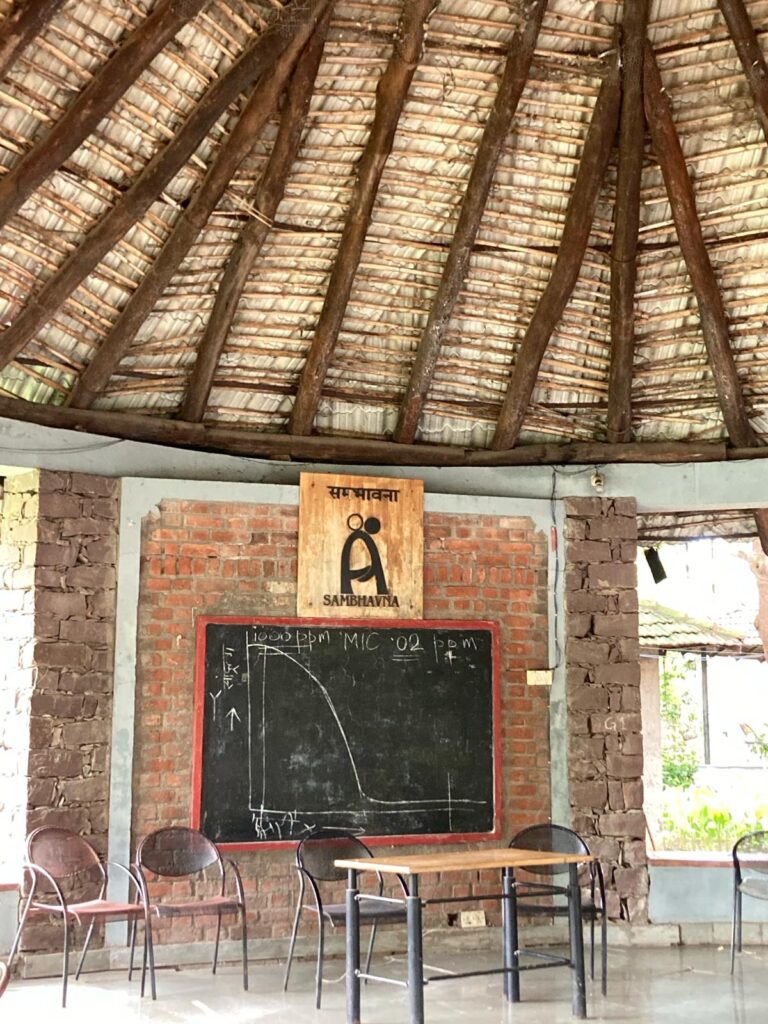
Aziza, now an assistant gynaecologist at the Sambhavna Trust Clinic, a non-governmental clinic that provides free holistic healthcare to survivors of the gas tragedy and those affected by contaminated water, was nearly three months pregnant as she fled past dead bodies with her two young children. She lost consciousness when they reached Kamla Park. Women she had never met cleaned her, washed the vomit and excrement from her children and gave her fresh clothes. “That night I miscarried and my life changed forever,” she says.
Ongoing Disaster
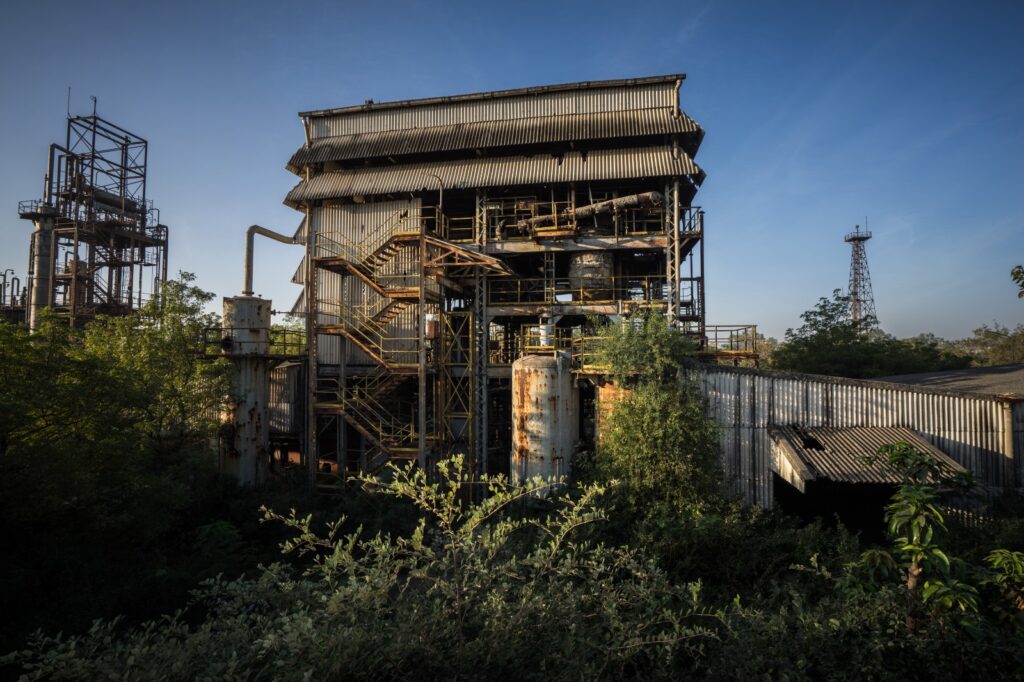
The Union Carbide factory still stands at the same location, pipes rusted and twisted. But perhaps most disturbing is the toxic waste that still seeps into the soil and the groundwater.
For decades, large quantities of hazardous waste abandoned at the site have been swept by rainwater into the groundwater in the neighbourhood. Women say the water began smelling chemical soon after the tragedy. “Our water became undrinkable and the aata (flour) we had at home became bitter,” Leela Bai recalls. “We told the government something was wrong, but nobody came to help us.”
Every survivor we interviewed says that students and NGOs came the morning after the gas leak with eye drops, medicines, water and food. But the government was nowhere on the scene.
In certain neighbourhoods in a 5km radius of the abandoned factory, contamination is still ongoing. It is so severe that some soil samples near the factory taken in the past contained mercury levels up to 6 millions of times above permissible levels. Gas exposure was the first disaster; groundwater contamination has become the second.
Women’s Say Their Bodies Changed
Many of the women we interviewed described how their bodies had been permanently altered by the gas. Many said they developed severe breathlessness shortly after the leak and even today walking a short distance or climbing a few steps are a struggle. Others describe severe headaches, burning eyes, chest congestion and joint pain that worsened over time. But the most profound changes were noticed in women’s reproductive health.
An academic study was carried out in 1996 on the consequences of the gas leak for women’s reproductive health. It found significantly higher rates of pregnancy loss and neonatal deaths and persistent gynecological disorders among exposed women. Last year the International Campaign on Justice for Bhopal also highlighted the impacts on women’s reproductive health in their submission to the UN Special Rapporteur on Human Rights and Toxics.
Aziza, who now treats thousands of women at the Sambhavna Trust Clinic, has observed that many women who were exposed to the toxic gas methyl isocyanate (MIC), experienced irregular or absent periods for months or years. In 1997 a gynaecology department was opened at the clinic as there was none in any of the special government hospitals set up for gas survivors.
The gynecological impacts were clear from the start: of a sample of 865 women who lived within a radius of 1 km of the factory and were pregnant at the time of the tragedy, 43% did not have a live birth and 14% of the babies born died within the first month.
Some women complained of heavy bleeding, others of frequent vaginal infections that failed to respond to treatment. The disaster saw another consequence: women started entering menopause in their mid-30s. Aziza herself experienced sudden menopause at 33 and years later, through patient case histories, she found that this was common among survivors.
Over decades, the Sambhavna Trust Clinic observed that polycystic ovary syndrome (PCOS) was four times more common among exposed women than the national average. More disturbingly, the condition was significantly common among daughters of survivors, even among those born long after the gas leak. “Our hormones have been disrupted due to the chemicals, and they have affected our entire reproductive system, from our periods, to fertility to menopause,” says Aziza.
Many women struggled to conceive after the gas leak and some experienced repeated miscarriages. Meena, Savitri Bai’s daughter, now in her 40s, tried for years before giving birth to her first daughter and then son, who was born with severe developmental disabilities. Her pregnancy, she says, was a very difficult one, marked by constant pain.
An increasing number of cases of breast and cervical cancer among survivors has also been recorded by Sambhavna, many diagnosed too late. Aziza says that in her family alone eight persons died of cancer in the years since the disaster.
Most women described the ‘gas relief’ hospitals set up by the government to provide free healthcare to gas victims – as places where they find no dignity. They spoke of endless lines, absent doctors, missing medicines and malfunctioning equipment. Only those with “connections” would one get proper medical care. Women often hesitate to discuss gynaecological symptoms in these hospitals that offer no privacy and where specialist doctors are absent.
Gynaecology and paediatric services, crucial for survivors, and especially for women and their children, are absent in several facilities meant for them such as the Bhopal Memorial Hospital and Research Centre. This forced survivors to seek expensive private care which they cannot afford. “We go from one counter to another, filling in forms, queuing for hours, and still come home without proper treatment,” Meena says.
The abandoned toxic waste has seeped into groundwater in 42 localities, where women cook, bathe and wash clothes in poisoned water. This has led to high rates of birth defects, menstrual disorders and cancers in these communities, according to studies conducted by Sambhavna.
Unspoken Contamination
Almost 20 years after the disaster, an independent investigation by the Fact-Finding Mission on Bhopal carried out in 2002 found lead, mercury and organochlorines in the breastmilk of women living near the factory. Given that these chemicals are hydrophobic (material that repels water), once they are in the system they can only leave through the placenta or through breast milk. “Nobody told us that breastmilk could carry poison. We were doing what mothers do, feeding our babies,” says a mother. “And we cannot afford formula.”
Women have repeatedly pointed to their children and grandchildren as proof that Bhopal remains a living disaster. At the Chingari Trust Rehabilitation Centre – founded by two survivor-activists, Champa Devi Shukla and Rashida Bee, winners of the Goldman Environmental Prize for their lifelong fight for justice in Bhopal — 200 to 300 children receive therapy every day. Many children cannot walk, speak, hold their heads upright or feed themselves. Diagnoses include cerebral palsy, muscular dystrophy, Down Syndrome, autism, hearing loss and intellectual disabilities, among others.
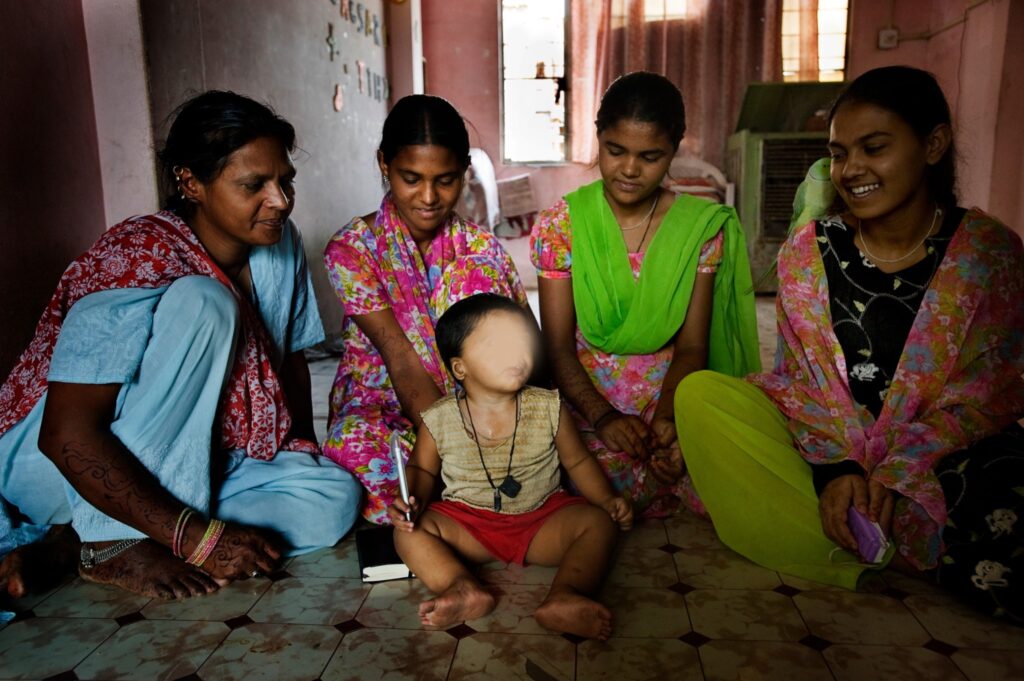
Champa Devi, herself a survivor of the gas tragedy, says: “Every child who comes here has one thing in common, their parents or grandparents were gas exposed.”
According to studies by the Indian Council for Medical Research (ICMR) carried out between 1985 and 1994 on the health effect of the gas tragedy, children born a decade after the gas leak suffer chronic respiratory infections. Many struggle with poor immunity, stunted growth and unexplained neurological issues.
Meena’s son, Sayal, cannot speak, has severe developmental delays and has to be bathed, fed and carried. “Chingari Trust has helped us a lot but since my husband passed away, also due to gas exposure, we don’t come anymore. I have to work to make ends meet so I don’t have time.”
Deny, Deny
What is less spoken about is the social stigma faced by girls born into survivor families. Women said their daughters struggle to find marriage partners because of the fear that they may be dealing with infertility or other illnesses related to the gas poisoning. According to a 1996 study, girls between 15 and 29 years who were not married was 19% in severely exposed areas compared to 6% in mildly exposed areas.
For decades, the ICRM conducted studies on survivors, as mandated by the government, to research the impacts of the disaster. But several crucial reports, especially those on congenital anomalies, were never published. A major 2016–17 study was shelved despite being approved multiple times on the grounds that the methodology was flawed. RTI requests by survivor groups finally led to access being given to the report. And the findings were shocking: 9% of the 1048 the babies born to gas victims had birth defects as opposed to the 1.3 % of those born to the unaffected.
Says Rachna Dhingra, an activist who has worked for over 20 years to ensure justice for Bhopal survivors and one of the persons behind the RTI request: “ICRM did not reject the science – it rejected the consequences. When a publicly funded study found birth defects to be seven times higher in children of gas-exposed mothers, the response was not to protect the children, but to bury the results.”
Without official data out in the public domain, survivors struggle to claim compensation or demand specialised healthcare for children with birth defects.
All the women we spoke with describe the nightmares and panic attacks. But there is no mental health programme for the survivors. As Vishnu Bai says: “Many of us continue to live with anxiety, it hasn’t left our bodies.”
Many of the women interviewed described teenagers and young men who took their lives. Some were overwhelmed by chronic illness, others felt hopeless living in contaminated neighbourhoods with no opportunities for the future.
Gendered Weight Of Caregiving
The often invisible burden of caregiving has fallen almost entirely on women. All the women we interviewed shared their stories of caregiving. Bathing and feeding disabled children, nursing sick husbands, managing the elderly with chronic lung conditions, besides cooking, cleaning, earning and navigating hospital visits. Many of them themselves are suffering the health impacts of the gas leak.
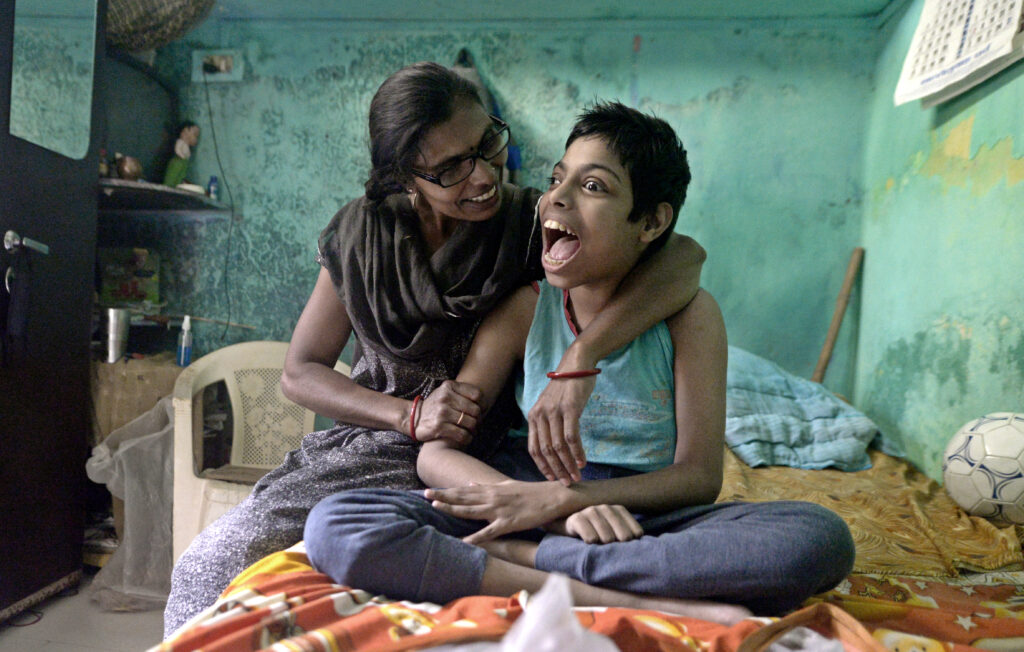
Vishnu Bai and Savitri Bai, both aged and widowed, continue to work to put food on the table. However, nobody has ever been compensated for the time and opportunities they lost.
Those widowed that night and its aftermath were left to fend for themselves. The state built so-called “widow colonies” with around 2500 houses but these neighbourhoods have been neglected. Community workers like Nasreen mention that these colonies, developed in the late 1980s, have poor infrastructure and facilities in spite of promises made by the Madhya Pradesh CM back in 2010.
A widow’s pension scheme for women who lost their husbands in the gas tragedy were offered Rs 1000 a month, insufficient to cover even basic needs leave aside crucial medicines. A more realistic pension, as per activists, is Rs 3000. During 2016 and 2017 and then again during the pandemic, widows’ pensions were arbitrarily stopped for over a year and a half without any warning. Hardly anybody talks about the gas-exposed husbands who were children when the tragedy hit and died many years later. Meena’s husband passed away in his 40s, leaving her a young widow who is denied any compensation for his death.
Corporate, State Accountability
Survivors are clear that the tragedy was not just an industrial accident but the failure of both corporate responsibility and the State. They ask: who is accountable for the deaths, illnesses, lost pregnancies and generations of children living with disabilities? Who will pay the costs? Why have not the guilty been punished?
Leela Bai’s voice tightens when she speaks about the companies in question, Union Carbide and Dow Chemical. “A foreign company came to our country to make a profit but [they did so] at a cost to us, poor and vulnerable people. They got away because we are poor. The government has inflicted pain and injustice to its own people by allowing a foreign company to get away with it,” says Leela Bai. “It is their duty to do something.”
In the aftermath of the gas leak, many mothers miscarried and lost their unborn children, yet this loss was largely ignored in compensation. According to section 92 of the Bharatiya Nyaya Sanhita, the death of an unborn child, when it results from an act that could have caused the death of the mother, amounts to culpable homicide and is punishable with imprisonment and a fine. However, this provision was barely applied in Bhopal, leaving families without meaningful redress.
Survivors point to how exploitation was built into the system – the factory was built here precisely because the lives of poor, working-class, largely Muslim or Dalit men and women were seen as expendable. These are ‘sacrifice zones’, places and communities where hazardous industries choose to locate themselves precisely because they wield least political power. Another example is St Gabriel in Louisiana, part of the region known as ‘Cancer Alley’ which has one of the highest concentrations of petrochemical plants in the United States.
Bhopal’s gas tragedy survivors became victims of corporate and state misconduct a second time: during the Covid-19 pandemic some of them were used as guinea pigs to test Corona vaccines. Residents from JP Nagar believed they were receiving an approved vaccine but later learned they had been a part of the clinical trials for Covaxin. Many participants, some illiterate, alleged they were not properly informed that it was a trial and that they were recruited with loudspeaker announcements and an offer of Rs 750.
While in 1984 Union Carbide was banned from doing business in India, in 2022 it was discovered that the chemical company continued to operate in India for 14 years, from 1988 to 2002, through dummy companies.
When US company Dow Chemical acquired Union Carbide in 2001, survivors expected that it would assume moral and legal liability for the gas leak. Dow denied its responsibility. Rachna Dhingra claims that Dow Chemical’s operations have increased exponentially during Modi’s regime and it continues to sell Union Carbide’s intellectual properties to Indian companies. Through the company Corteva, a spinoff company of DowDupont, the company is a market leader in the area of insecticides, selling products in India that are similar to what was being manufactured at the Union Carbide plant.
When it comes to compensation for those exposed to the gas and who lost their family members, the first settlement amount received from Union Carbide 1989 was USD 470 million, while a much higher amount was sought. Up to Rs 25,000 was paid out to those who were exposed and Rs 8 lakh was allocated for each life lost.
Even getting this amount was not easy – middlemen tried to make money from the bureaucracy and from the survivors’ suffering. In 2010 a curative petition was filed to increase the settlement for the survivors to USD 1,1 billion, arguing that the initial amount paid late 1980s was based on incorrect figures. A hearing date is still due after hearings have been postponed since 2014.
In that same year, 2010, a court in Bhopal convicted seven former employees of Union Carbide India Limited of causing death by negligence in connection with the 1984 gas disaster, sentencing each to two years’ imprisonment and a fine of about USD 2000. All were released on bail shortly after the verdict.
Lawsuits against Dow in the US have been dismissed by US courts stating that it was not responsible for the disaster.
Several other cases are ongoing, including a criminal case filed against Union Carbide immediately after the leak for culpable homicide. When Dow Chemical took over the company, it was summoned to Bhopal court but has always argued that Dow is a separate company from Union Carbide and that the Indian court does not have jurisdiction, contrary to what the US courts say.
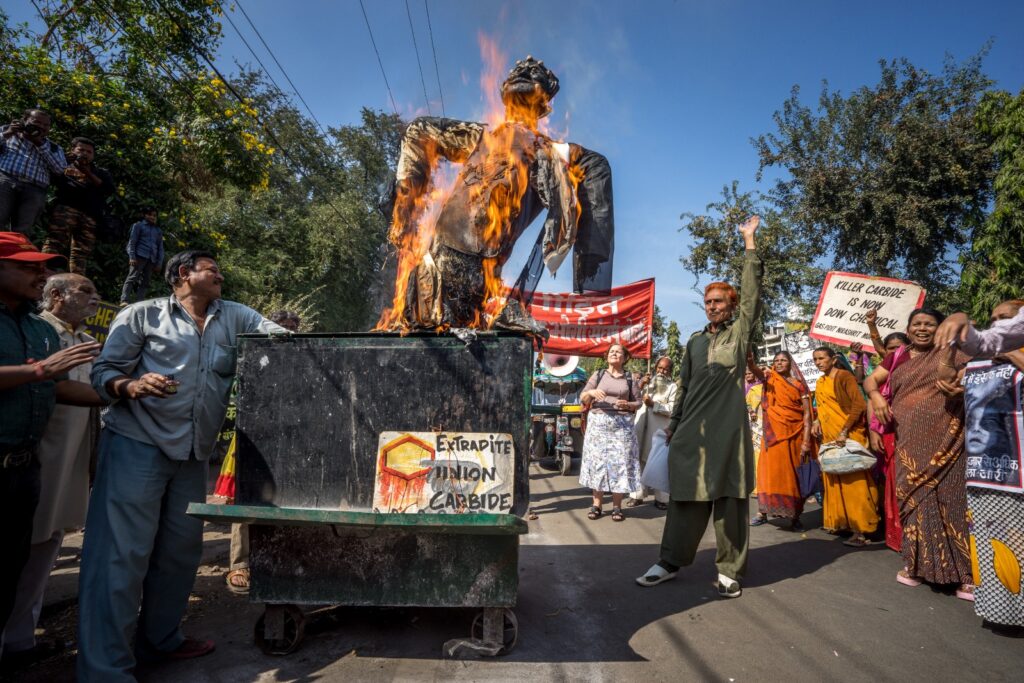
For the clean-up of the abandoned factory site, a public litigation case was filed by the MP High Court against Dow to ensure payment for the costs for environmental remediation, according to the ‘Polluter Pays Principle’. However, Dow in this case has also argued it has nothing to do with this case stating that Union Carbide settled the case before the merger.
“A corporation should not be able to evade responsibility by changing its name or by merging with another company. Dow Chemical, as the successor of Union Carbide is profiting from its products. It has the prime responsibility for cleaning up the toxic waste in Bhopal and should compensate the communities who have suffered and continue to suffer serious health harms,” says Avi Singh, a senior advocate who is representing the survivors in an ongoing case against Dow Chemical Company.
As Rachna Dhingra puts it: “What happened in Bhopal is not just an industrial disaster, it is a corporate crime and must be called as such. Instead of being held accountable, Union Carbide and Dow Chemical have been able to get away with this crime and other companies in India and abroad have learned how to evade justice and accountability.”
Lessons From Elsewhere: Accountability Is Possible
International legal developments in recent years could give survivors a sense of renewed hope. In France, courts recently allowed the prosecution of Lafarge SA for aiding and abetting crimes against humanity in Syria. In the Netherlands, the oil company Royal Dutch Shell was held liable for oil spills in Nigeria and ended in a settlement of 15,5 million USD, establishing that parent companies are responsible for the actions of their subsidiaries abroad years later.
For survivors, accountability is also about their future generations. As the Indian government invests heavily in chemical industries, there is every fear that what happened in Bhopal could happen again: for example, there was the transfer of over 300 MT of toxic waste from Bhopal to Pithampur for incineration in January this year. It led to heavy protests among residents and fears that a second ‘slow-motion’ gas tragedy could occur in Pithampur. The court is still to decide where the toxic ashes produced through the incineration are to be buried to avoid toxic material from seeping into the ground.
Survivors’ organisations have made clear and gender-just demands for accountability: they are demanding that India must finally pursue criminal action against Dow Chemical and expedite stalled prosecutions of Union Carbide’s Indian subsidiary. That a fair compensation of Rs 5 lakh be given for lifetime injuries to gas-exposed families as agreed upon in the 1991 Supreme Court settlement. And that adequate pensions for widows be provided.
Other demands include guaranteed, free and specialised healthcare for gas victims and scientific research into generational impacts, including on women and their reproductive health, something that ICMR was mandated to do but did not. One of the most important demands is that Dow Chemical clean up the toxic waste and ensure clean drinking water for affected neighbourhoods.
‘Let Them Not Forget Us’
As we leave JP Nagar, the survivors tell us: “Share our stories, share the truth, so that people don’t forget us.” But the Bhopal gas tragedy is fading from public and State memory – younger generations have little idea of the events from four decades ago.
“Bhopal remains relevant, even now, 41 years later”, says Rachna Dhingra. “Recent disasters like the LG plant gas leak in Visakhapatnam and the oil leak in Ennore, show that we have not learned from the past. We all live in Bhopal.”
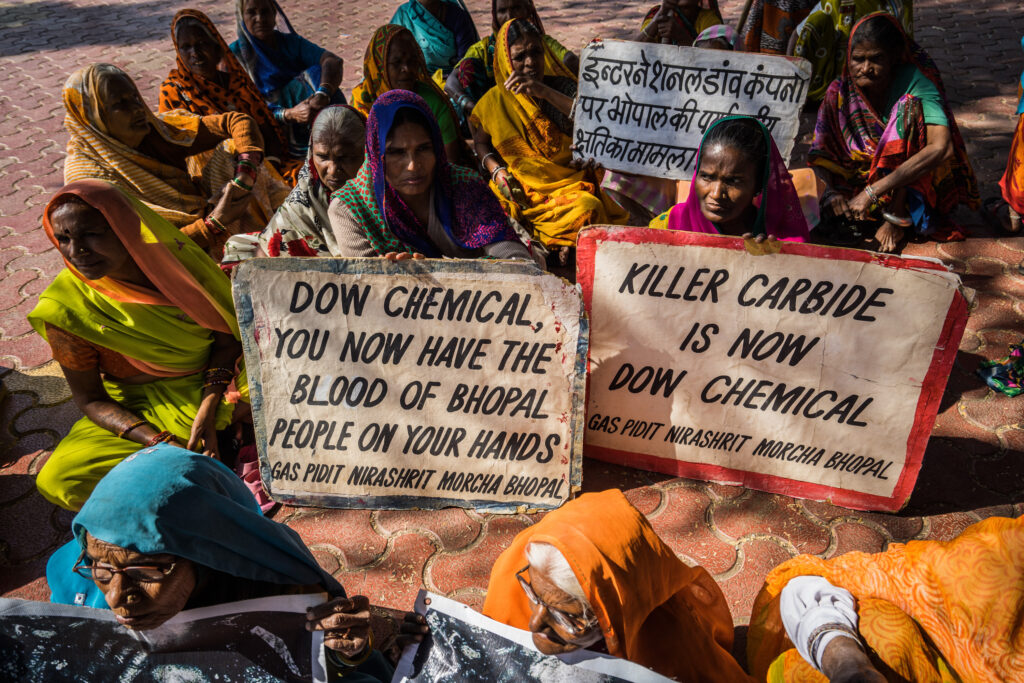
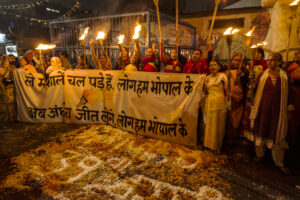
But the women of Bhopal continue to fight, through illness, grief, poverty and exhaustion. They have become leaders of one of India’s longest-running struggles for justice – tirelessly collecting data and information to use in court cases, marching from Bhopal to Delhi and Mumbai to be heard by the Prime Minister and other decision-makers, and staging peaceful sit-ins and hunger strikes. All this has made a difference: more compensation for survivors was granted in 2005, and piped drinking water in contaminated neighbourhoods was provided. But the fight for gender justice in Bhopal goes on.

We believe everyone deserves equal access to accurate news. Support from our readers enables us to keep our journalism open and free for everyone, all over the world.
