
A Vote Against The Data Centre Boom: Farmers Fight Land Acquisition In Andhra Pradesh
After 250 days of protests and a legal battle, Andhra Pradesh farmers take their fight against land acquisition for Reliance’s proposed AI data centre to the ballot box, winning two seats and gaining political leverage
- Bhaskar Basava
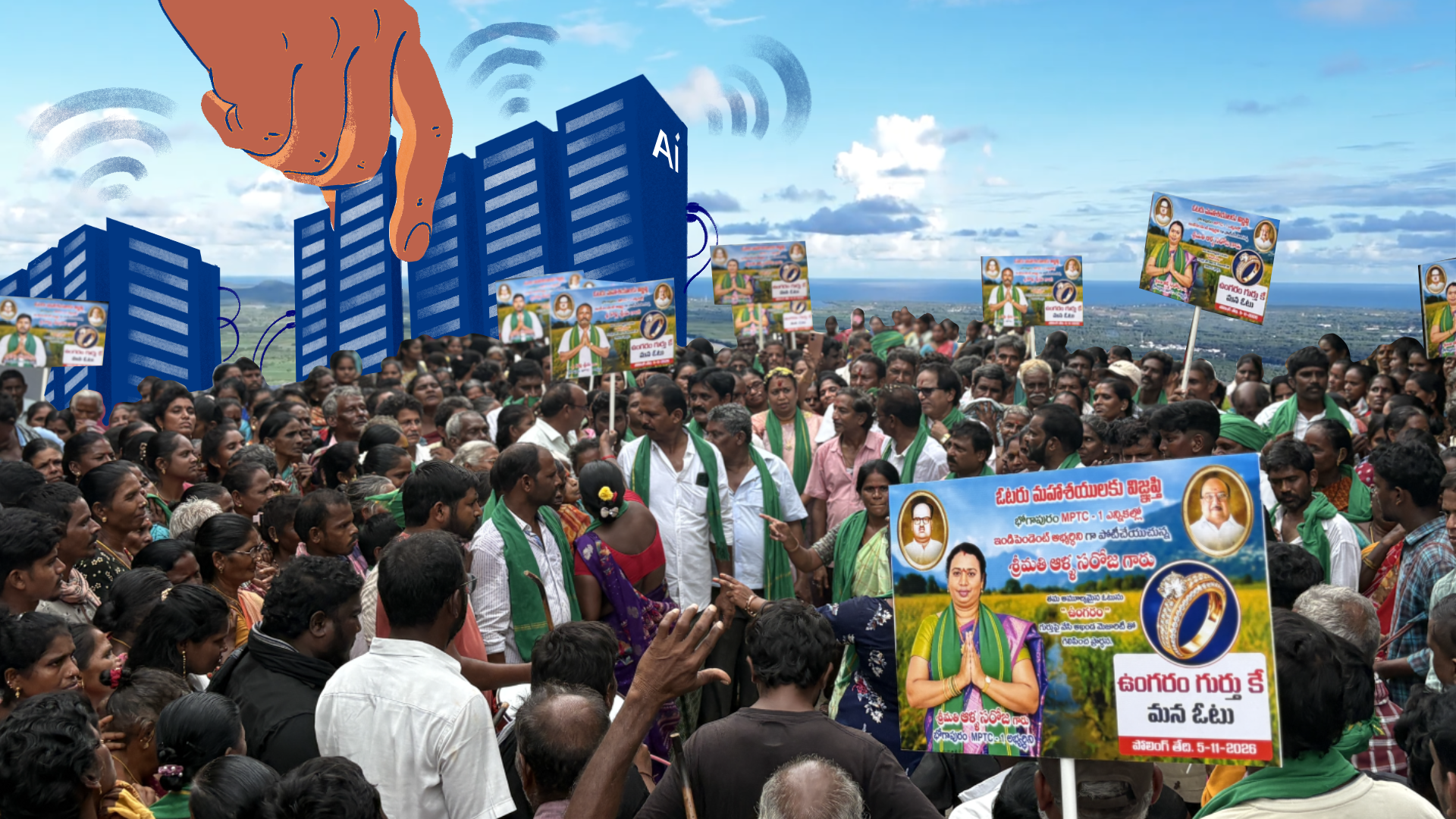
A FARMERS’ COLLECTIVE RESISTING a data centre project in Bhogapuram, a village in coastal Andhra Pradesh, has won the very first election in India to be fought on the issue. ‘Say no to the data centre’—this was the single agenda that drove the elections to the three seats of the Mandal Parishad Territorial Constituency (MPTC), the middle tier of Andhra Pradesh’s three-tier local governance system.
The project at the heart of the campaign is a 1-gigawatt (GW) AI data centre (AIDC) being built at a cost of Rs 1.08 lakh crore ($11.5 billion) by Reliance Industries Limited, for which the Andhra Pradesh government has earmarked 854.97 acres of agricultural land for acquisition. This is, so far, the largest land acquisition in Andhra Pradesh for a data centre—bigger than the 2.5 GW Google-Adani-Airtel data centre coming up in neighbouring Visakhapatnam for which 600 acres of land has been acquired.
The three candidates who contested—Alla Saroja, Godla Seshagiri and Kolli Srinu—are part of a farmers’ movement in Bhogapuram that emerged earlier in 2026 to protest against the project and initiate a legal battle.
However, when nothing worked, the farmers decided to take their fight down a new path—the ballot box. The candidates’ decision to contest independently was a challenge to what they perceived as an alliance between mainstream political parties and corporate interests. Of the three candidates, Alla Saroja and Godla Seshagiri won against candidates from mainstream parties that refused to take a stand on the proposed data centre.
Saroja is elated. “Sala santosam (very happy),” she says in her unmistakable Uttarandhra Telugu dialect. “It felt as though we had won the fight to stop the AI data centre. It wasn’t easy standing up to political and money power.” The victory also brought relief from the stress of agitating for months and mounting an intense election campaign. Seshagiri too is thrilled that an issue critical to the agrarian community got the popular vote but he is also aware of the enormity of the fight that lies ahead.
On results day, at the counting centre in the district headquarters of Vizianagaram, farmers had waited anxiously amid a sea of party workers representing the state’s major political parties.
“We must win somehow,” muttered Kola Prasad, a farmer in his 40s, pacing restlessly outside the counting centre. Prasad, dressed in a red T-shirt and black track pants and with a towel wrapped around his head, had reason to worry: his family’s one acre was listed for acquisition. Most others waiting for the results too were farmers whose land or livelihoods were threatened by the proposed project.

As BehanBox has been reporting, the AI data centre story has two faces—the one pitched by companies and governments about jobs and foreign investment and the other about the reality of projects large enough to consume the resources of an entire village or city, cleared within days, with no public consultation and through opaque processes and diluted laws.
It is the communities that have to pay the price for these ambitions–forsaking land rights, livelihoods, food security, environmental well-being, and precious water resources. We had reported from Tarluvada village of Visakhapatnam of how Dalit families who resisted the Rs 1.5 lakh crore ($15 billion) Google data centre project, in partnership with Adani and Airtel, are struggling to comprehend an uncertain future with no access to the lands and surrounding hills that brought them food, work and solace. In Maharashtra’s Thane, too, people are opposing plans to build a 53-acre hyperscale data centre that will hit the bastis (settlements) and villages of Balkum, Majiwada and Kapurbawdi with soaring energy costs, water shortages, and heat stress.
The backlash against data centres and local resistance movements are believed to have somewhat shaped the recent midterm elections in the United States. A recent poll for Associated Press and a consortium of news organisations found 56% of surveyed voters said data centres were a “crucial or major” factor in their vote, while 76% said they would oppose the construction of a new data centre in their community. Against the backdrop of these movements, the electoral victory of protesting farmers in Bhogapuram assumes great significance. BehanBox followed the farmers’ collective on its election campaign, documenting its bid to turn a land rights movement into political power. We spoke to the candidates about their victory, the campaign and the road ahead.
the resistance movement
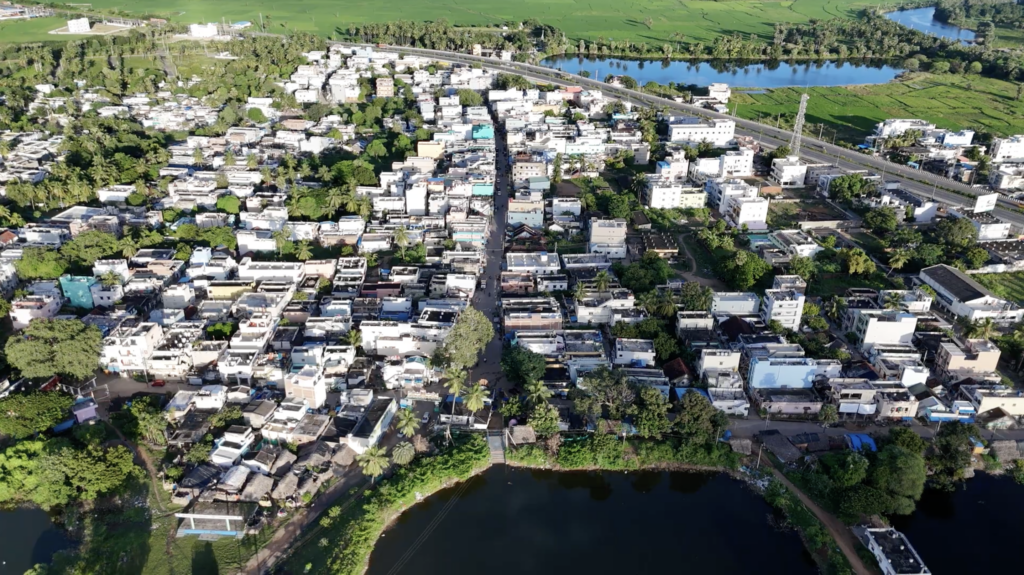
Located about 40 km from Visakhapatnam, Bhogapuram lies between the eastern ghats and the Bay of Bengal. Paddy fields stretch along both sides of National Highway-16 as it approaches the village.
At the main junction of the village, a short walk from the highway, a tent stands battered by two successive cyclones, still plastered with posters and slogans. One reads: “Rythu hakku, bhumi; rythula bhumulu data centre ki ivvakudadu (land is the farmers’ right; their land must not be given to the data centre).”
The tent has become the nerve centre of a campaign against the state government’s push to make land available for the proposed Reliance data centre. Spread across Bhogapuram East and West and neighbouring village of Polipalli, the land is predominantly fertile, multi-crop farmland.
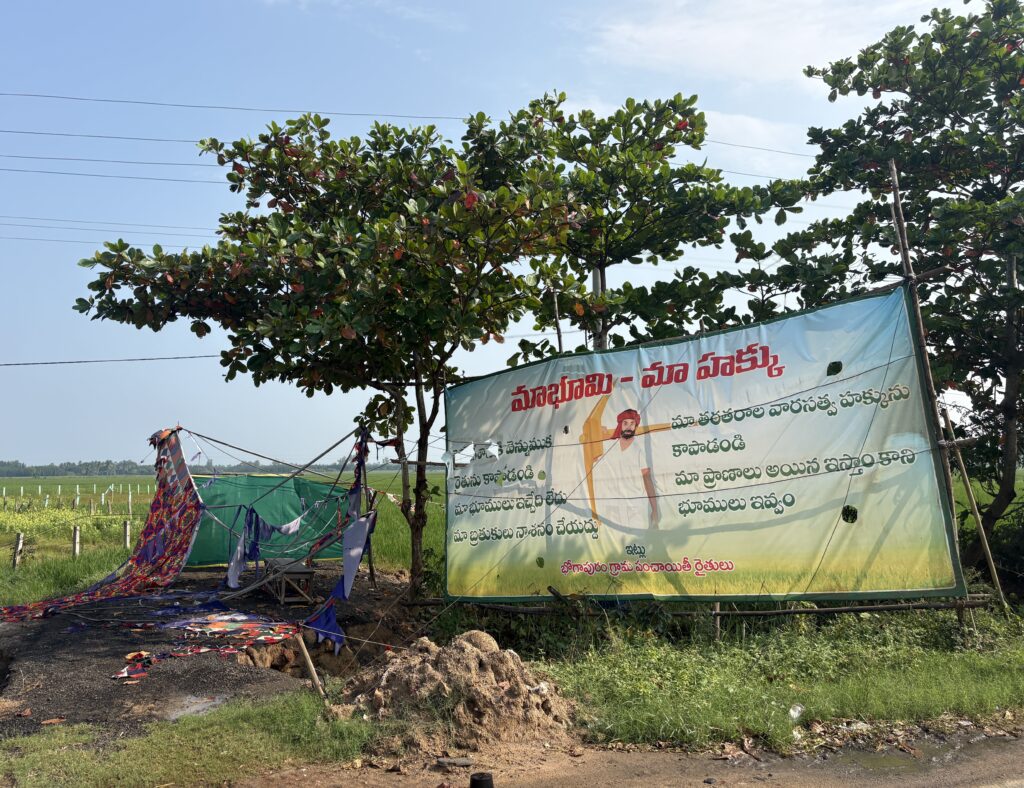
“Before the elections, we sat for over 250 days under a tent at the entrance to our farmland. Farmers took turns, sitting either after work or by making time during the day, to keep watch and ensure no one enters to take over our land,” said Kommuru Subhoshan Rao, former vice-president of Bhogapuram village Panchayat who has been part of the agitation. “At the same time, we have been running from pillar to post, approaching government officials, the ruling party and the opposition.”
When the election notification was issued in mid-October 2026, the farmers, frustrated by the silence of mainstream political parties, had considered boycotting the polls. “Neither the ruling party nor the opposition had unequivocally opposed the land acquisition or demanded that the project be scrapped,” Subhoshan Rao said.
However, even if a few of the 7,000 electors in the village voted, a party candidate would win. “So we decided to contest independently,” he added.
The farmers’ collective fielded three candidates from different social and economic backgrounds. Alla Saroja, from an agricultural family belonging to the Telaga sub-caste of the Kapu community, stands to lose 10 acres to the land acquisition. A homemaker, she entered the electoral fray when her husband Alla Sreenivas Rao stepped aside–if he won, he would have to resign from his elected position as president of the Denkada Anicut System Water Users’ Association.
Godla Seshagiri, 30, who belongs to the Mala Scheduled Caste community, holds an engineering degree and runs a dairy farm but owns no agricultural land. Kolli Srinu, 45, from the Yata community, classified under Other Backward Classes (OBC), cultivates around 10 acres, also listed for acquisition. He supplements his farming income by buying and selling plots in the area.
Together, they were up against candidates backed by the ruling alliance–of the Telugu Desam Party (TDP), Bharatiya Janata Party (BJP) and Jana Sena Party (JSP)–and the principal opposition, the Yuvajana Sramika Rythu Congress Party (YSRCP). The contest also included several independents, among them rebels disgruntled with the ruling alliance’s ticket distribution and former members of the farmers’ collective who had split over its choice of candidates.
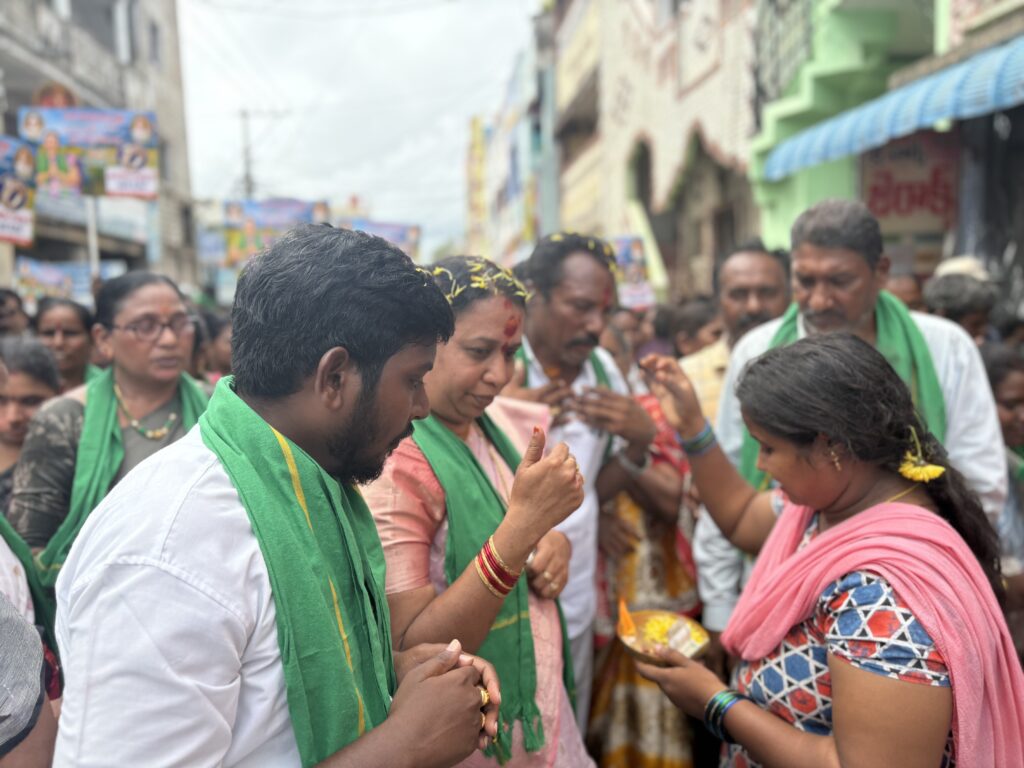
For Saroja, the contest was a way to assert farmers’ presence in a political system that had largely ignored their demands and “colluded” with corporate interests to take away farmlands. “Mukhyamga, ma rythula uniki, mariyu balanni chaatadaniki (more importantly, to assert the identity and strength of our farmers),” she said.
For the farmers, this is both a moral and strategic triumph that can open a valuable door for negotiations.
The Government Order
It all began in January 2026.
“One morning, several government officials suddenly turned up at our lands. We were suspicious,” recalled Kolli Srinu. “We found out, informally, from government officials that our lands were to be handed over for an AI data centre.”
These are fertile, multi-crop fields yielding two to three harvests a year–chiefly paddy, pulses and sesame. Farmers keep the paddy for household consumption and sell the rest. “We cannot afford to buy rice from the stores amid rising inflation,” said Srinu. The modest returns from farming also force many to supplement their incomes by working on the lands of other farmers. “This land is our bathuku teruvu (livelihood),” he said, his voice breaking.
Their worst fears were confirmed in mid-May 2026, when the state government issued GO No. 30, earmarking around 854.97 acres in Bhogapuram and Polipalli villages of Vizianagaram district for acquisition by Reliance Industries Limited. The order outlines the company’s proposed Rs 1.08 lakh crore investment in a giga-scale AI Data Centre, backed by a package of customised fiscal and non-fiscal incentives.
As we said earlier, there is an ambitious push by the Centre and state governments to position India as a global data centre hub. The Union government has announced a tax holiday until 2047 for eligible foreign cloud service providers operating through data centres in India. Andhra Pradesh, said that it aims to add ‘200 megawatts (MW) of additional data center capacity, with a focus on attracting investment from advanced AI-enabled data centers and positioning Andhra Pradesh as a preferred destination for large-scale data embassies and data center parks.’ The Andhra Pradesh Data Centre Policy 2024–29, classifies projects involving fixed capital investments of more than Rs 5,000 crore and capacity of at least 50 megawatts as “mega projects”, making them eligible for customised incentives.
Reliance’s proposed data centre falls into this category. Under GO No. 30, the company is entitled to a 25% discount on the land price, along with a complete waiver of stamp duty and registration charges. The package also includes subsidies, reimbursements and exemptions on electricity, taxes and water, extending over 10 to 20 years and subject to an aggregate cap of approximately Rs 19,000 crore.
The state government has also assured the company a guaranteed water supply for 20 years and uninterrupted electrical infrastructure, the costs of which are to be borne by Reliance. The GO also suggests the possibility of setting up a desalination plant, jointly owned by Reliance and the Andhra Pradesh government.
Forging Solidarities
The farmers decided to challenge the government order in court. “We agreed to pool our money and approach the High Court, seeking a teerpu (verdict),” said Saroja.
The government, in the meanwhile, amended its earlier order. On July 21, 2026, just three days before the farmers filed their petition in the High Court, it issued GO No. 52.
The original order had directed the Revenue Department to transfer the land to the Andhra Pradesh Industrial Infrastructure Corporation (APIIC) for allotment to Reliance. The amended order changed the route–it directed the APIIC to first allot suitable land already in its possession to the company, and only if sufficient land was unavailable would it acquire additional land.
In their submission to the court, the farmers’ counsel argued that the original wording indicated that the government had already decided to take over the petitioners’ land, even before initiating proceedings under the Right to Fair Compensation and Transparency in Land Acquisition, Rehabilitation and Resettlement (RFCTLARR) Act, 2013. The counsel argued this was “arbitrary and illegal besides being violative of petitioners rights guaranteed under Article 300-A of the Constitution of India”. Under the principal RFCTLARR Act, the government must procure the consent of at least 80% and 70% of affected families for private projects and for public-private partnership (PPP) projects, respectively. The Act also requires the government to conduct Social Impact Assessment (SIA) to identify the affected families and evaluate the intended and unintended social consequences on communities and ecologies.
On July 30, six days after the petition was filed and nine days after a second government order was issued, the Andhra Pradesh High Court disposed of the case. The single-judge bench of Justice Challa Gunaranjan clarified that any land required from the petitioners or other private owners would have to be acquired with their consent or in accordance with applicable laws.
Saroja recalls that for the next two months, the farmers continued protesting, demanding the withdrawal of the acquisition orders. Then, in early October, came another shock. “Most of us learnt that our land was being acquired through a newspaper advertisement announcing the gazette notification,” she said.
The advertisements for Bhogapuram (West and East) were based on three gazette notifications—Nos. 410, 411 and 412—issued by the Revenue Department on September 29, 2026. Listing the survey numbers and land parcels proposed for acquisition, they cover around 560 acres in Bhogapuram (East and West) and 270 acres in Polipalli—a total of 830 acres of the 854 acres earmarked for the data centre.
From October, landowners named in the gazette notifications began receiving individual notices. One such notice gave them 60 days to file written objections with the Authorised Officer for Land Acquisition and the Revenue Divisional Officer. The objections would be heard in December, they were told, with landowners or their legal representatives required to appear.
For the farmers, the notices brought the prospect of losing their land closer to reality. But responding to the acquisition process has brought its own challenges.
“Most villagers here are not well educated. The land has not yet been partitioned among the next generation and remains registered in the names of older family members. So we have started helping one another prepare and file objections,” Saroja said. The group now plans to approach the Andhra Pradesh High Court once again and challenge the land acquisition.
‘Our Land Is Enough For Us’
For the farmers, this fight is also about the future they face once their lands are gone.
“I don’t understand why we should give up our land for a data centre. If I lose I don’t know whether I will ever be able to buy bhumi (land) here again. An acre now costs more than Rs 5 crore,” said Alla Kanna Rao, a farmer involved in the campaign whose family’s three-acre farmland is listed for acquisition. “If I sell my land, what will I do? What will happen to my uniki (existence)?” he asked.
Routhu Vasu, whose family’s 1.5 acres are listed for acquisition, wanted to know how all this was being described as ‘development’. “Our farmland is being handed over to a private company that will reap profits from it while receiving subsidies and incentives. What do farmers get in return? How many will get jobs? And what kind of jobs?” he asked.
The Union Ministry of Science and Technology projects India’s data centre capacity to reach nearly 6.5 GW by 2030, generating close to 1 lakh engineering jobs. But the employment gains may be limited at the local level. A 2026 Brookings research finds that data centres are relatively low-employment facilities, with large projects creating only dozens of permanent jobs, while most construction jobs are temporary. In Telangana’s Mekaguda, as BehanBox reported earlier, youngsters holding graduate degrees were offered only security jobs when the data centres arrived.
There is a precedent to land acquisition in the region which is causing disquiet among the farmers. Since 2015, around 2,703 acres in Bhogapuram mandal have been acquired for the Alluri Sitarama Raju International Airport, the new airport of Visakhapatnam city inaugurated in 2026. According to a report by a private consulting firm for the National Investment and Infrastructure Fund (NIIF), nearly 40% of the acquired land was agricultural and displaced numerous farming families.
Kadamba Brahmaji had given up a part of his family's three acres for the airport, located less than 10 km from his village. “Many of us received compensation ranging from Rs 30 lakh to Rs 60 lakh per acre, but no agricultural land in return,” he said.
The little land his family retained is now under threat. “We were left with less than half an acre, which is my only aasthi (asset). If we lose this too, what security will we have? Will they come for our homes next?” he asked.
The consequences of land acquisition, however, also extend to those whose livelihood depends on the land. “I may not own any land, but there are many like me—tenant farmers, cattle rearers, dairy farmers and agricultural labourers—who depend on this land and the agrarian economy around it,” said Godla Seshagiri.
An elderly woman in Bhogapuram, who did not wish to be named, echoed this anxiety: “Maaku enduku babu ee data centre, maaku enduku babu ee airport? Kooli meeda brathikevaallam, maa bhoomulu maaku saalu (why do we need this data centre, the airport? We survive on daily wages. Our land is enough for us).”
Wider Costs of AI Boom
The farmers' voices may never be heard through the processes guaranteed in law. The gazette notifications invoke an exemption granted under Andhra Pradesh Government Order No. 562, issued in November 2018, from the application of Chapters II and III of the RFCTLARR Act, 2013. An analysis of the GO’s provisions shows that this exemption dispenses with key safeguards, including the mandated SIA, public hearings and the participation of directly and indirectly affected communities in assessing the consequences of a project.
The exemption also lifts restrictions on acquiring irrigated multi-crop land–a safeguard designed to protect food security. The consequences extend beyond the affected farmers as paddy grown here is procured by the government and distributed through the Public Distribution System (PDS), that ensures subsidised foodgrains to more than 80 crore people every month. “The government mostly procures the local MTU 1121 variety and distributes it as ration,” said an agricultural officer in Bhogapuram.
There are also concerns about the irrigation infrastructure that sustains these fields. Alla Sreenivas Rao, Saroja's husband and a president of the Denkada Anicut System Water Users' Association, points to at least four major irrigation tanks in the area: Gangarallu, Appanna Cheruvu, Ragi Cheruvu and Pedda Cheruvu. “These tanks lie alongside the agricultural fields and supply water for irrigation. The land acquisition notifications for the AI data centre could put them at risk too,” he pointed out.
The villagers are also looking beyond Bhogapuram, watching the growing debate over the environmental and social costs of the global AI data centre boom, and are aware of the ongoing resistance in neighbouring Visakhapatnam and around the world. Of the perils of these AI infrastructures they are educating themselves largely online, said one Dalit youth who did not wish to be named.
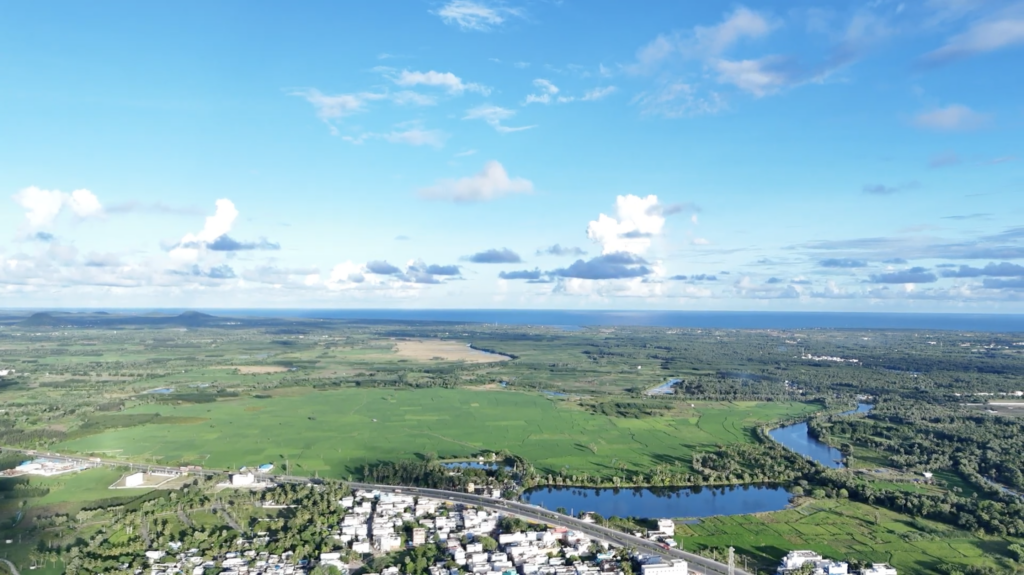
“Our village is surrounded by agricultural fields. We fear that we will face the same consequences: vedi (heat), neelu (water scarcity) and sabdham (noise),” said Sreenivas Rao. “Memu kevalam bhoomi kosame kaadu, maa bhavishyathu kosam kooda poraadutunnaam (we are fighting not only for our lands, but for our future too).”
The larger question, said EAS Sarma, a former bureaucrat and now an activist, is why agricultural land and irrigation infrastructure built to sustain rural livelihoods and food production should now be diverted to industrial projects. “When so much has been invested in improving the irrigation system for food security and the rural economy, why should that purpose be diverted now?” asked the former Union Secretary of Economic Affairs.
Sarma argued that this shift has been enabled by amendments and exemptions to the central land acquisition framework introduced by several state governments, including Andhra Pradesh. These changes, he added, have progressively weakened safeguards that restrict the acquisition of multi-crop agricultural land, except in exceptional circumstances.
The proposed project in Bhogapuram is part of a much larger expansion of data centre projects. According to data compiled by the Human Rights Forum (HRF), the Andhra Pradesh government has so far approved around 8 GW of AI data centre capacity, concentrated entirely in and around Visakhapatnam for which a total of 2536.72 acres of land has been allotted.
The state’s Data Centre Policy itself makes the coastline a central selling point. Andhra Pradesh, with approximately 975 km of coastline—the second longest among Indian states—is presented as an attractive destination for data centre investment. The policy cites as key advantages the proximity to international submarine cable networks, the potential to use seawater-based cooling systems to reduce energy consumption, and access to ports for importing equipment.
But the concentration of such projects is raising serious concerns about the region’s capacity to absorb their environmental and resource demands. VS Krishna of the HRF warned that the “reckless and unprecedented concentration” of hyperscale AI data centres in and around Visakhapatnam, a city nestled in the Eastern Ghats, threatens local ecology while placing enormous additional demands on already strained water and electricity resources. The employment generated, he argued, is unlikely to match the scale of investment or the resources consumed.
He also questioned the regulatory scrutiny surrounding these projects: “These are billion-dollar projects with a massive footprint on land, environment and ecology, yet the necessary appraisals have not been carried out through the proper channels. This is highly undesirable.”
Unequal Power to Resist
Unlike Bhogapuram, resistance has been muted in Polipalli, where 270 acres have been notified for acquisition.
The district administration's advertisement lists much of Polipalli's land registered under private estates and developers. But it also identifies around 38 acres of assigned land belonging to nearly 40 Dalit families, who say the government allotted it to their parents in the 1990s.
In early October 2026, around 35 families jointly petitioned the Revenue Officer, a copy of this document was accessed by BehanBox. The families questioned the absence of a gram sabha or public hearing, flagged errors in the survey numbers and demanded ownership rights over their land instead of its acquisition. The Andhra Pradesh Assigned Lands (Prohibition of Transfers) Act, 1977, bars the sale or transfer of assigned lands.
At least four signatories of the petition spoke to BehanBox anonymously. “Our parents received an acre or less per family in the 1990s. Though we have not formally divided this, each sibling would get barely 20 cents, perhaps less. A cent now costs around Rs 5 lakh. Without land in return, we may never be able to afford to buy any again,” one of them said.
Their reluctance to protest publicly stems from economic insecurity. “We lack the money and influence to fight like the farmers in Bhogapuram. Most of us work as daily wage labourers or in nearby factories, where many employers are affiliated with political parties. Speaking out could jeopardise our livelihoods. So we are staying away from political movements and limiting ourselves to submitting representations to the district administration.”
Vizianagaram Revenue Divisional Officer S Sudha Sagar, however, told BehanBox that the acquisition process was still at an early stage. “We have issued notices inviting objections and will hear the affected people out,” he said.
Asked why agricultural land, including land belonging to Dalit families, had been identified for acquisition, Sudha Sagar said the decision may have been taken by the state government or APIIC. On the concerns raised by farmers and landowners, he said the compensation package had not yet been finalised. “Negotiations will begin soon after we hear the objections, and the state government will try to address their concerns,” he said.
Power to Negotiate
This electoral victory gives the farmers political leverage. The elected MPTC members, in an indirect election scheduled to be held today (November 19), will choose the Mandal Praja Parishad president and vice-president.
With neither of the main political formations securing a majority in these elections, the farmers are hoping to be wooed for support. “We will negotiate and seek a formal announcement about the cancellation of the AI data centre project, along with an assurance that irrigated multi-crop land will not be acquired for other projects. Whoever seeks our support must give us these assurances,” Saroja said.
For now, the farmers’ collective remains united. Members told BehanBox that although they consider it unlikely, they would withdraw their support if their elected representatives switched, compromised on or abandoned their cause entirely. They also plan to continue their legal challenge and the sit-in protest.
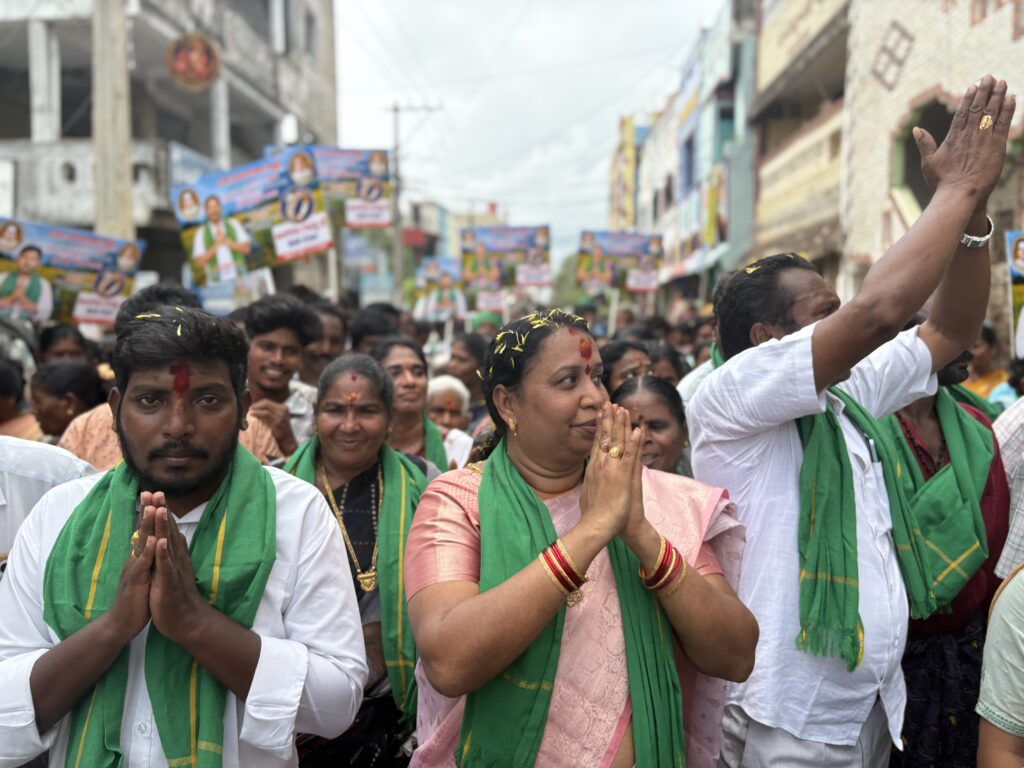
There are those who are affiliated with the main political parties who may not have contested on behalf of the farmers but say that their main loyalties lie with the local resistance movement. Bollu Trinadh, a ruling JSP member, who participated in the agitation, contested as an independent but lost. “Had I won, I would have raised the issue directly with our party leadership”, he said. “For us, village interests come before party loyalties…that has not changed even though I lost [this time]. We will all return to the same tent and continue to protest.”
Meanwhile, the protest tent is set to be replaced. With the election dust settling, farmers have returned to their fields, even as they help one another file objections to the land acquisition notices.




We believe everyone deserves equal access to accurate news. Support from our readers enables us to keep our journalism open and free for everyone, all over the world.
