
Why Mumbai’s Health Workers Are Demanding An End To Third-Party Contract System
More than 500 contract health workers protested at Azad Maidan for two months in 2026 against a private hiring system that denies them fair pay, job security and permanent staff benefits
- Priyanka Tupe
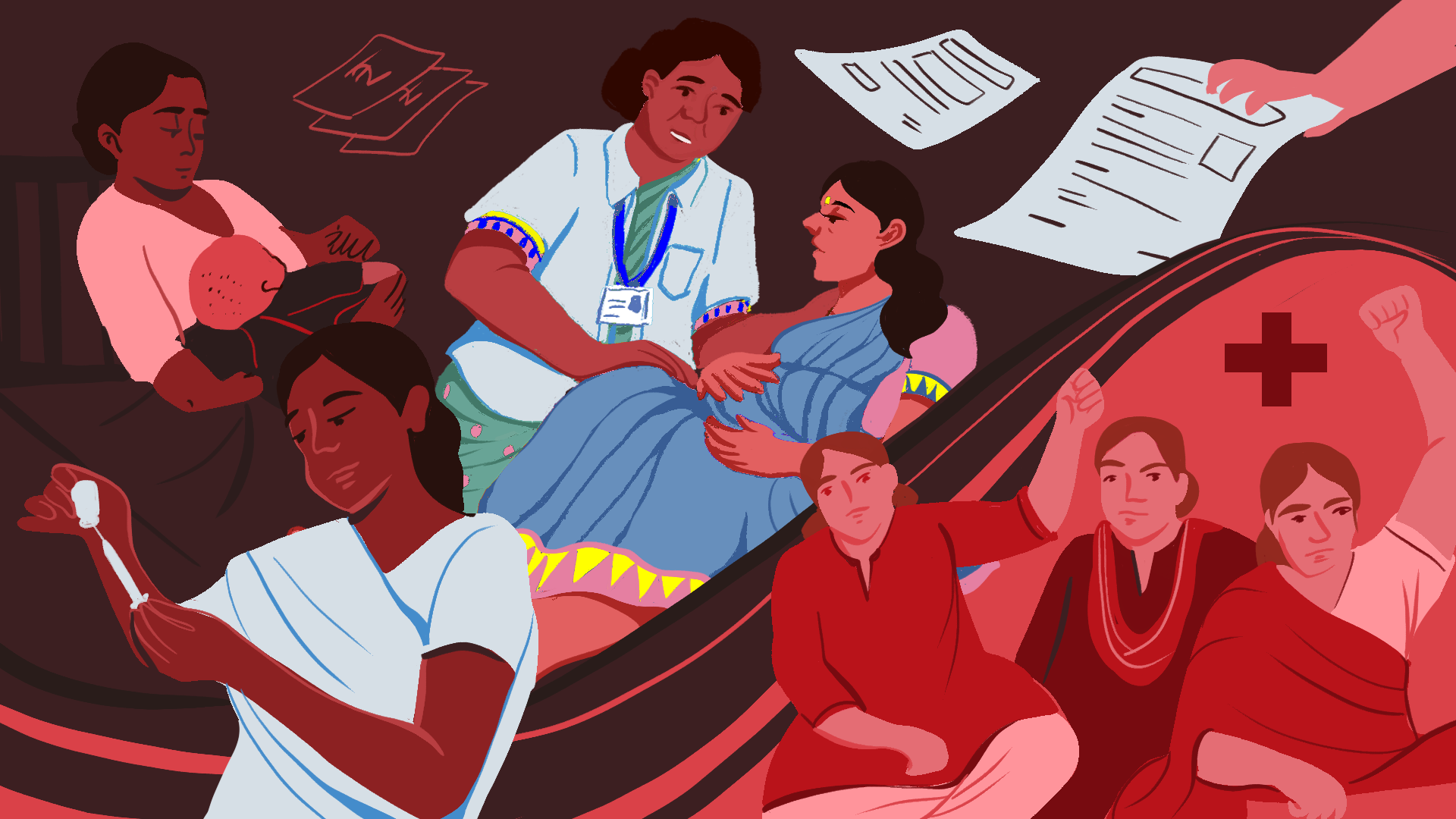
Close to 1,200 frontline healthcare workers contracted by the Brihanmumbai Municipal Corporation (BMC) went on a two-month strike between August 31 to October 29, 2026 demanding an end to an exploitative third-party contract system that employs them. Of these, 500 workers would take turns to a sit-in at Azad Maidan everyday in those months. The aggrieved workers, most of them women, who care for Mumbai’s poor and marginalised communities, and contracted by the BMC through a private entity DS Enterprises, said they were not paid fair and timely wages, granted maternity leave or provided social security benefits. These include auxiliary nurse midwives (ANMs), lab technicians among other healthcare staff.
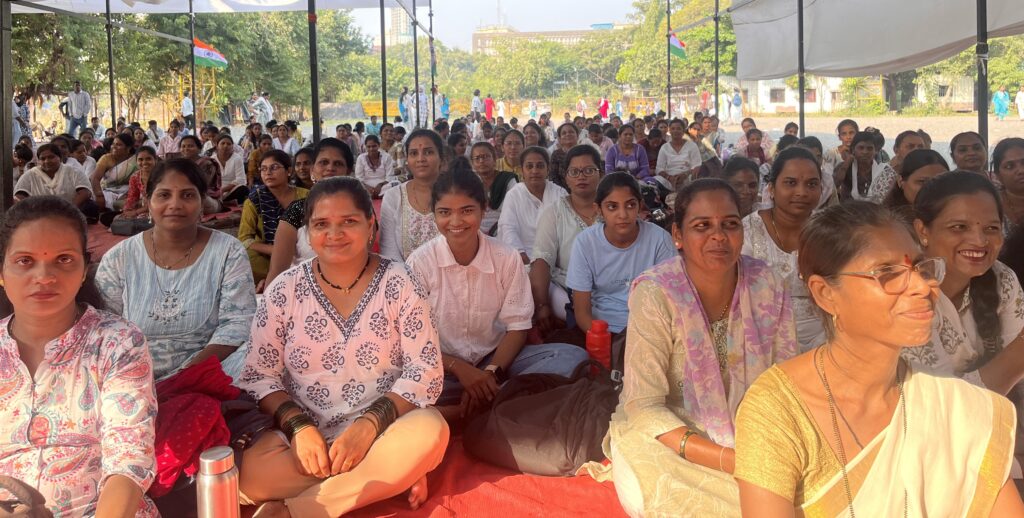
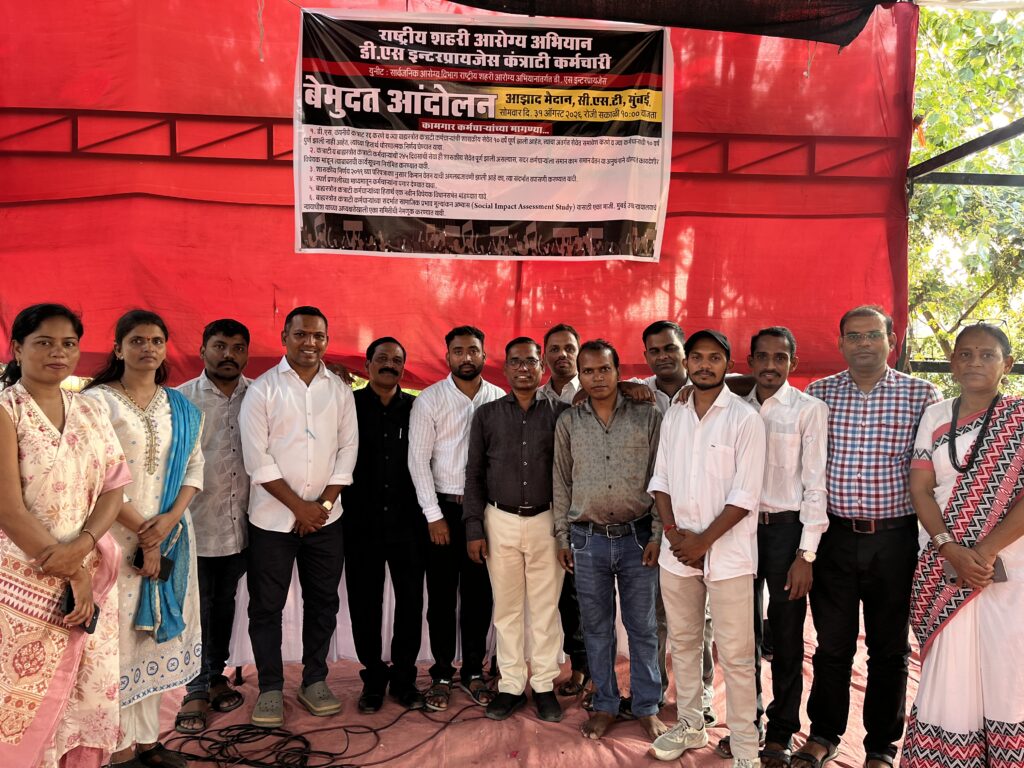
On October 29, the workers called off their protest after the Socialist Labour Union negotiated with the BMC. The corporation promised 180 days of maternity leave and protection against punitive action for joining the strike while ensuring the workers are paid salaries for the duration of the protests. The BMC, which has recommended revised wages, has also threatened action if the contracting agency delays salaries.
However, the agreement on October 29 between the workers, the union and the BMC officials is verbal, which has left workers sceptical about its intent. “On October 29, during the talks with the BMC, we didn’t receive any letter. We were promised that the BMC will study the provisions that need to be made and will release the details soon. We were told that these are ‘technical issues’,” Sanjay Kadam, one of the leaders of the Sangharsh Samiti, a group of NUHM workers who advocate for labour rights, told BehanBox.
There are other reasons for the workers’ mistrust too. On October 13 2026, Mumbai mayor Ritu Tawde met the protesters and forwarded their demands in a letter to Prajakta Verma-Lavangare, the BMC’s additional municipal commissioner. Prajakta then wrote to the workers promising them maternity leave, but the letter carries no signature or timeline, the workers said.
The NUHM contractual staff have protested at least three times since 2024 with these same demands. Each time, state and BMC officials promised remedies and nothing followed, and that record brought them back to Azad Maidan on August 31, 2026. “Promises were made in the past too, but we had to agitate for its non implementation,” Pratiksha Bhagwat, an ANM and leader of the Sangharsh Samiti told BehanBox, adding that they are prepared to resume protests if their demands are not fulfilled soon.
The two-month-long protest was called off because there had been threats of dismissal from DS Enterprises, said Sachin Bansode, general secretary of the Socialist Labour Union. Impunity from dismissal was one of the demands that was put forth to the BMC, he said.
Privately contracted health workers earn as little as half of what permanent staff do. The root of the current protests needs to be understood in the backdrop of the precarity of work — an outcome of the growing trend of privatisation of healthcare.
These workers are the pillars of the city’s primary health facilities under the National Urban Health Mission (NUHM). Launched in 2013, it was designed to improve access to affordable primary healthcare for the urban poor. The NUHM is part of the National Health Mission (NHM). The Centre and Maharashtra fund it in a 60:40 ratio, and it is operated through state health departments and urban local bodies.
NUHM has relied on contractual workers since its inception. The BMC has been outsourcing the NUHM staff within its Public Health Department since 2014 in accordance with the state government’s directive. Since January 1, 2016, DS Enterprises, a manpower supply company based in Mahim, has been the sole provider of outsourced healthcare workers to the BMC. Of the 1,759 sanctioned staff, 1,484 are provided by the company, according to a letter written by the BMC mayor Ritu Tawde to BMC’s Prajakta Verma-Lavangare. They include 511 auxiliary nurse midwives (ANMs), 201 general nurse and midwives (GNMs), 253 data entry operators (DEOs), 169 attendants, 105 lab technicians, 99 pharmacists, and medical officers, among others. The only staff who are directly contracted by the BMC are doctors and domain experts such as nutritionists and lactation consultants.
The outsourced workers say they are paid far less than the permanent staff in government health departments for the same work. For instance, the ANMs hired through DS Enterprises earn Rs 15,000 a month, while ANMs employed directly by the government in public hospitals earn between Rs 20,000 to Rs 30,000. Roles such as staff nurses, data entry operators and pharmacists hired through the contractor earn Rs 18,000 a month, against Rs 30,000 to 40,000 for those employed directly in public hospitals. Contract staff get none of the benefits government employees receive.
“There is no provident fund, gratuity or annual bonus. How do I survive with my family, especially with rising prices?” asked Sonali Dalvi, 31, who lives in Virar and works as ANM at a health center in Govandi, in eastern Mumbai.
Jyoti Sonkamble, 40, an ANM, travels every day from Palghar to Powai to work at the Nahar Amrut Shakti Aarogya Kendra. She said her commute costs at least Rs 3,000 a month. “I can’t provide for my children with such a low salary, so I have sent them to my parents’ place at Sangamner, in Ahilyanagar district. I provide care to other children, but my own are away from me. No one understands this pain,” she said.
The contractualisation of these healthcare workers is part of a wider push towards privatisation of public healthcare in urban India, most visible in the public-private partnership (PPP) model. Under it, the government hands over the infrastructure and operation of hospitals to private companies, outsources staffing to third-party contractors, or both, while retaining oversight of the operations. Research has found that this model has led to poorer care for patients, irregularities, and weak transparency and accountability. For workers, it means weaker labour rights and diminished job security.
Abhay Shukla, a public health physician and national co-convenor of Jan Swasthya Abhiyan, a national network of health organisations and activists, advocates for the arrangement to be scrapped. “The BMC should abolish the outsourcing of human resources for NUHM with immediate effect. Instead of third-party private contractors, workers’ co-operatives should be formed and given the opportunities of human resource management,” he said.
The public health administration, he added, must look into these issues, because “human resources are a critical aspect of healthcare”.
In September 2026, the BMC issued punitive orders to DS Enterprises for delayed salaries, as per a letter issued from the mayor, but the nature of actions taken remains unclear.
‘We Had No Choice But To Protest’
Most of the protesters were women, and many travelled from as far as Palghar, Virar, Kalyan, and Ambernath to sit on a dharna from 10 am to 5 pm. They knew this would cost them their wages, but they said they had no option.
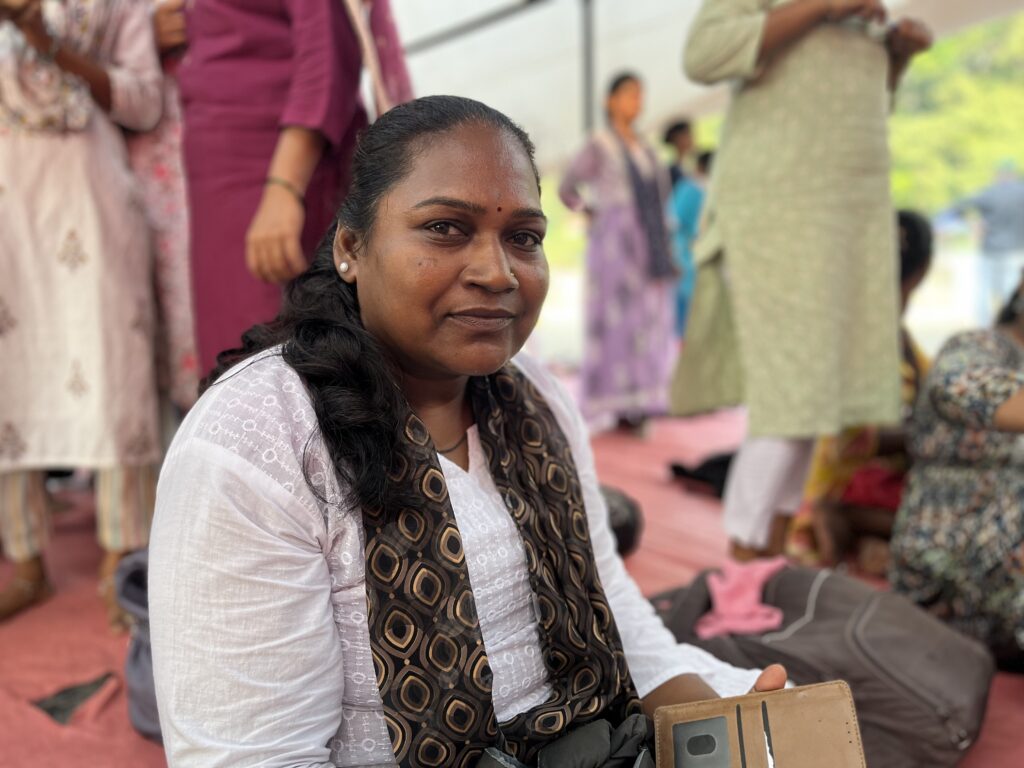
At the protest site, on October 1, 2026, we found the women singing protest songs, raising slogans, laughing and taking photos. Some said they had received calls from mothers anxious about their children’s missed vaccinations. “I feel guilty telling them that the vaccination programme is paused. I am a mother too, and [it bothers me that] I am unable to give vaccines on time to newborns. No one protests because they want to, but we have no choice,” said Jyoti.
The ANMs are the backbone of the system, providing preventive and primary healthcare. Their duties include maternal and child healthcare, antenatal and postnatal check-ups, immunisation, family-planning counselling, screening and referrals, and health education on nutrition, sanitation and communicable diseases. They also maintain health records, track pregnant women and children due for vaccinations, and conduct community outreach. They coordinate with Accredited Social Health Activists (ASHAs), medical officers and urban primary health centres.
The workers allege that DS Enterprises has exploited them since 2016, and that their pay and working conditions have left them anxious about their future. BehanBox contacted DS Enterprises by email on October 28 and by phone about these allegations. We will update this story with their response.
Sonali said she often pays out of her pocket for cotton swabs used after vaccinations, and for autorickshaws to carry vaccine boxes from the BMC ward offices to the health centers. “These expenses have not been reimbursed to us in the last two years,” she said. The BMC can reimburse workers up to Rs 1,000 for work expenses.
Maternity Penalty
ANMs such as Sonali and Jyoti, who have worked in this sector for years, describe how DS Enterprises treats them.
“The contractor charges us a one-time ‘fee’ of Rs 5,000 when we join, and then an extra Rs 500 every 11 months to renew the contract. Forget paid maternity leave, the contractor actually charges us a maternity penalty. If we need to go on maternity leave, we have to pay the contractor Rs 1,200 for every month of absence to keep our job,” said Sonali. “Even then, there is no guarantee that a woman returning from maternity leave will get her job back. Mostly, they are transferred to other health centers.”
The women we interviewed said they stay in the job despite these issues because of the flexibility it offers. “This job requires us to work seven hours, from 9 am to 4 pm. This allows us the time to care for our own children and families. We also live in the hope that someday the BMC will employ us directly as permanent staff,” Pratiksha explained.
Training as an ANM is also within reach for many of the women we interviewed. Anyone who has passed Class 12 can take the two-year ANM diploma at a government nursing school. Fees range from Rs 60,000 to Rs 2 lakh, with scholarships for candidates from marginalised communities.
“My parents could not afford to educate three daughters. Also, graduation, and post graduation degrees don’t guarantee jobs these days; skills-based courses are better instead,” said Maya*, 31, who works as an ANM. “This job allows me to do social work and study public health.”
BehanBox reviewed the appointment letter DS Enterprises issues to workers – the only document issued on record. It lists only the employee’s name, date of joining, post and salary, with no terms of employment, working hours or duties. Its only conditions are that workers give the company 30 days’ notice before leaving, and that the contract can be “terminated without assigning any reason”. Once they sign it, workers must stay in the job for at least six months. They get 15 days of paid leave a year, with no separate sick leave. Permanent staff in the BMC’s health department get 45 days of leave, including casual, sick leave, privilege leave, along with maternity leave of 180 days. Every year the contract is renewed on April 1, but in 2026 it was renewed in August, causing them intense anxiety about their future, several workers alleged.
‘Regularise Us’
The protesting workers demanded that the BMC cancel its contract with DS Enterprises and make permanent those with more than 10 years of service with the NUHM. They also sought a clear employment policy for those with less than 10 years of service, and stronger BMC oversight to ensure minimum wages are paid.
NUHM workers paused all vaccination drives across two health posts of 24 municipal wards during the strike. This has pushed some among the urban poor to turn to private healthcare, exposing them to an immense burden of out-of-pocket expenses.
These workers had protested in 2025 as well, mainly over months of unpaid salaries. They say the contractor has, at times, withheld wages for three to four months, citing delays in government funds. They also say they are denied dignity at work.
“We are not treated the way permanent workers are. There have been many instances when I was disrespected. They [permanent staff] share a lot of camaraderie with each other, but not with us. They often stand in for each other when there is an emergency, but not for us. Also, we are paid far less for the same work, and that creates a class difference between us,” said Pratiksha.
A 2022 ethnographic study, “We are nurses – what can we say?”, examined the power ANMs hold relative to doctors and managers at two rural community health centres in an eastern Indian state, which the researchers chose not to name. It found that ANMs, many of whom were employed on contracts with lower pay and fewer benefits than permanent staff, carried heavy workloads and had little say in workplace decisions. They faced gender discrimination, had poor access to clean toilets and rest spaces, and insufficient security. Managers threatened to withhold their salaries or increments. The researchers argued that these power imbalances left ANMs feeling undervalued and disempowered, and also affected the quality of care patients received.
‘Unions Neglect Outsourced Workers’
The workers we interviewed say unions do not protect their interests. Hundreds of Mumbai’s NUHM workers were members of the Municipal Mazdoor Union but left, alleging that it paid little attention to their issues. “Unions give importance to permanent workers. They express solidarity with our issues, but don’t help us during our agitations. Many of us were members of the union for three years. Later, we withdrew,” said Pratiksha.
Milind Ranade, union leader of the Kachara Vahtuk Shramik Sangh, said unions need to start organising outsourced workers because services across sectors are being privatised. “It is true that unions give more importance to the welfare of permanent workers. But regular employment has shrunk in every sector, and if not today, then the next generation of workers will suffer due to rapid privatisation. Therefore, there is no alternative to unity between both sections of workers,” he said.
He also objected to the government’s use of words like “mission” for schemes such as the National Urban Health Mission. “Words like ‘volunteers’, ‘service’, ‘mission’ and so on are deliberately designed to let the government suppress workers’ rights. Missions evolve, transform, and end, but the precarity remains constant – and inevitable. The government and private companies act as though they are doing workers a favour by employing them under the mission, which leaves them unable to assert their rights with confidence,” he said.
BehanBox has followed these struggles across India. Over the past decade, frontline health workers have repeatedly protested over low pay, wages promised and never paid and workloads that keep growing, with little social security entitlements.
‘People Are Desperate For Work’
By October 28, the protest’s 59th day, workers said they were struggling financially – they had lost one month’s salary and were likely to lose another. A few women had already asked the organisers if they could return to work, since they are the only earning members in their family.
“Workers risk their lives to protest, yet the government and employers remain unbothered because they can hire new workers, thanks to privatisation and rising unemployment. People are so desperate for work that there are hundreds who can replace protesting workers. In many ways, privatisation snatches away workers’ power to unionise, protest, and negotiate with employers,” said Milind.
The contractual workers of NUHM also demand separate state-level legislation to protect their interests and employment. Maharashtra has no law or policy specific to contractual care workers akin to gig workers legislations in states like Rajasthan. Like all workers, they are covered by the four central labour codes in force since November 2025.
*Name changed to protect anonymity


We believe everyone deserves equal access to accurate news. Support from our readers enables us to keep our journalism open and free for everyone, all over the world.
