
In Landslide Hit Wayanad Village, Why Women Collectivised To Demand Loan Waivers
Women, whose homes and businesses were decimated by a landslide two years ago, are running a vociferous campaign to have their debts waived
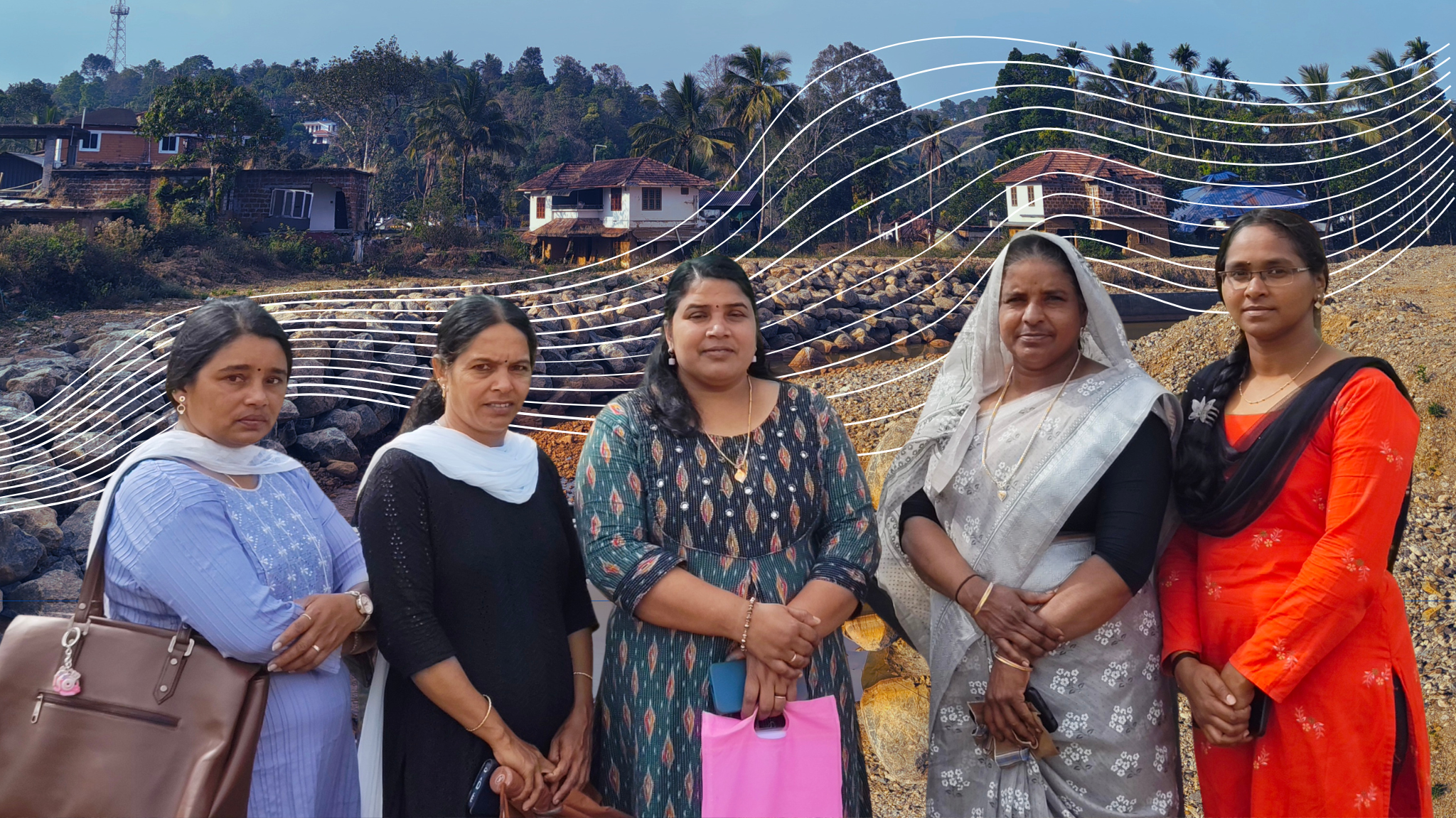
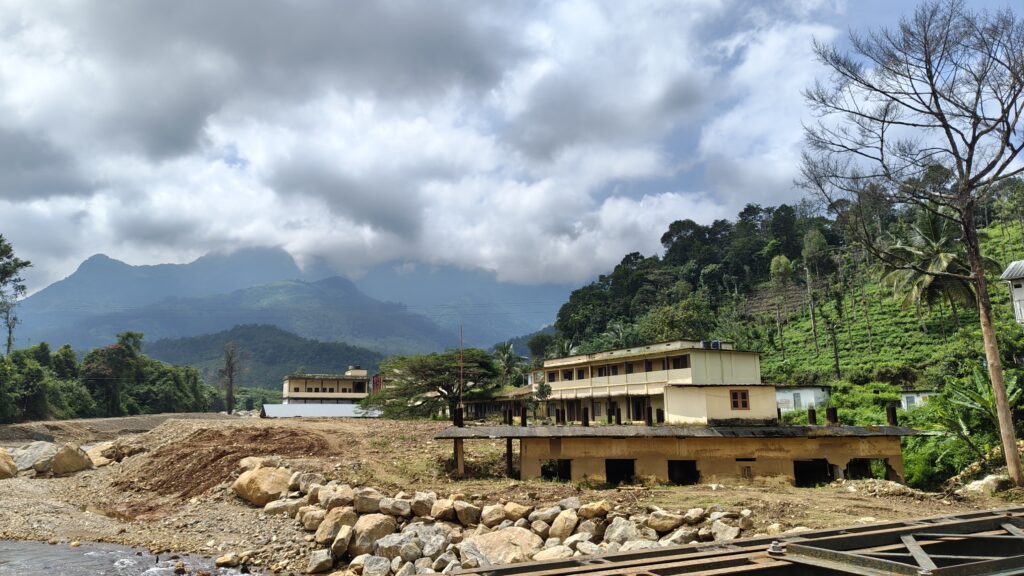
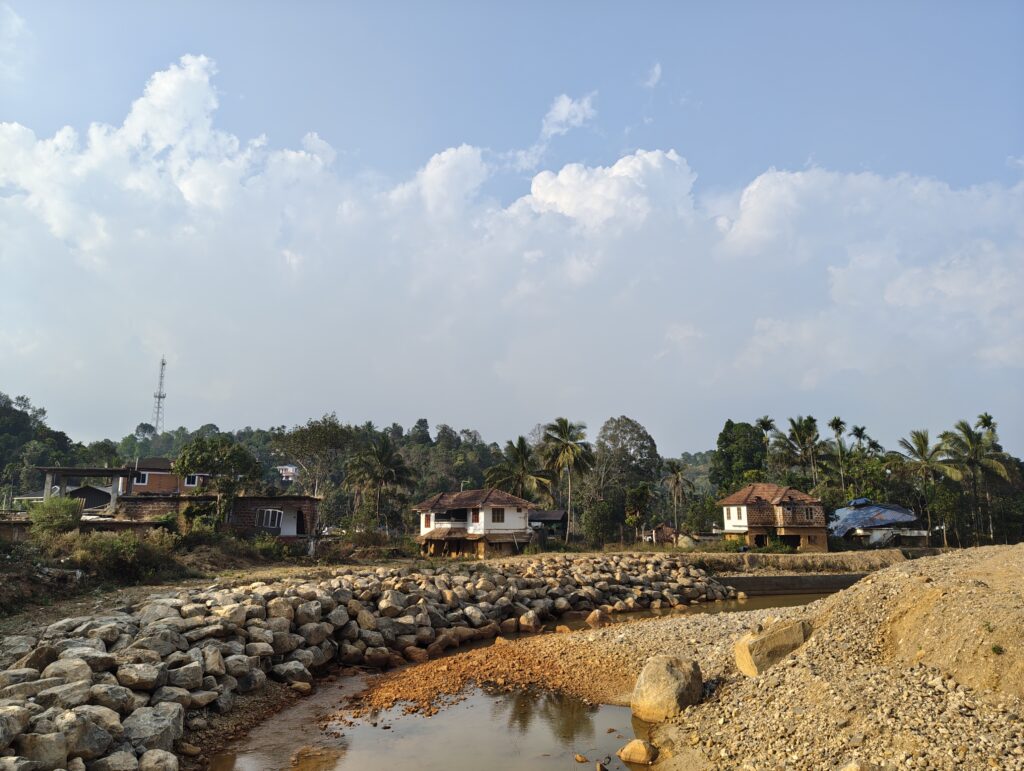
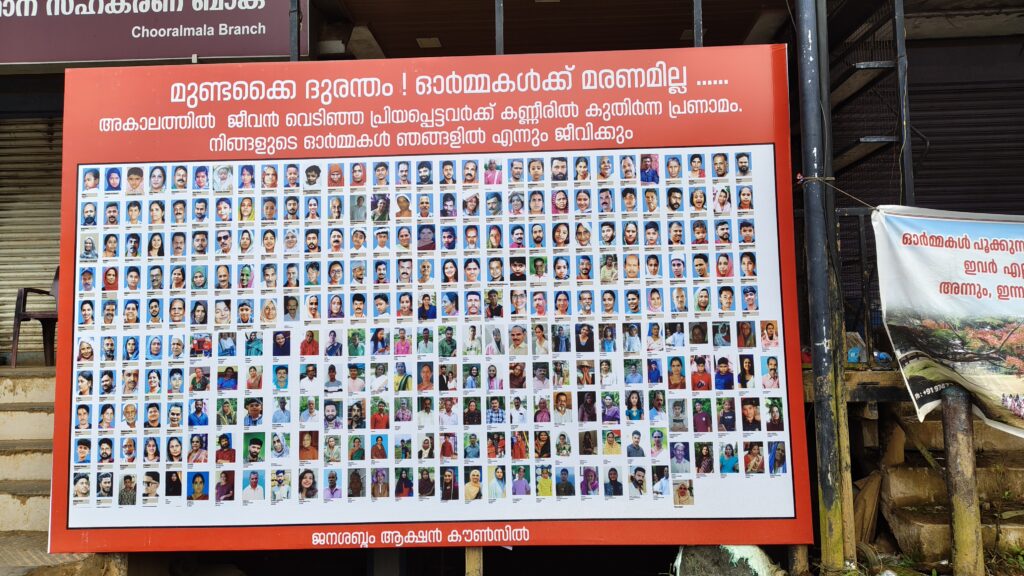
Chooralmala, a small village with a rich biodiversity, sits 23 km inland from the town of Kalpetta in northern Keralam. Its people say it had never experienced any scarcity. All that changed over a single night in July two years ago when massive debris flows from the neighbouring Vellarimala mountain range buried three wards in the Meppadi panchayat — Chooralmala, Mundakkai and Attamala.
Unofficial estimates say that around 500 people lost their lives and at least 5,000 suffered some kind of damage or loss. The survivors of the disaster are now scattered across Wayanad. Those who lost their homes now live in rented houses, awaiting the completion of a new state-built township, Elston (Kalpetta). The rest continue their lives in the disaster-stricken area itself.
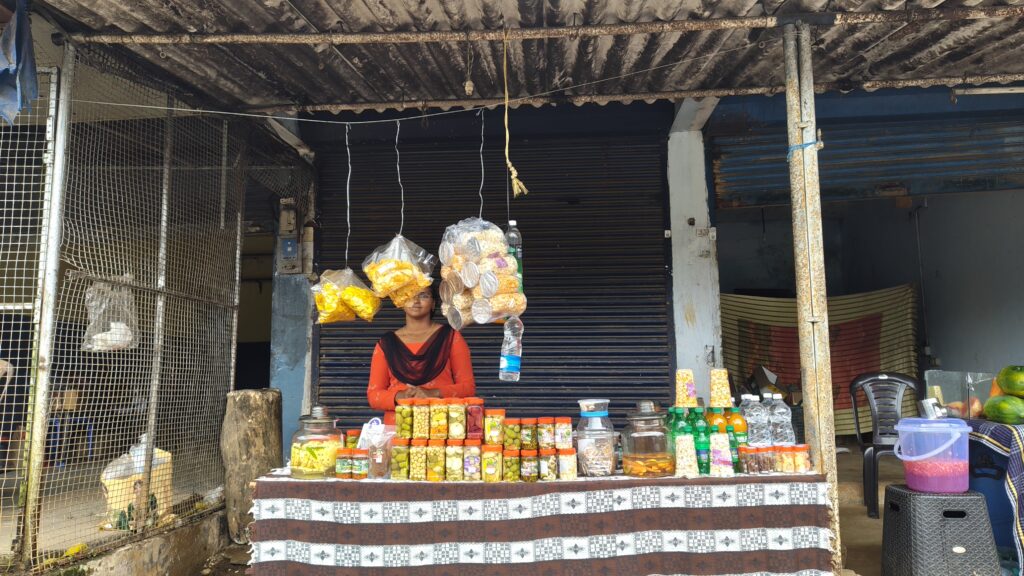
At hourly intervals, KSRTC operates a bus from Kalpetta town to Chooralmala, stopping near the police barricade close to the Bailey Bridge, a temporary bridge constructed by the government after the disaster. Scars of the disaster are still visible. Across the bridge is Attamala Glass Bridge, a tourist attraction. Visitors are returning here now, though in smaller numbers, but most come to gawp at the remnants of the landslide. “It is ironic how the disaster site turned into a tourist spot,” says a woman who sells juice and sweets to tourists in front of the destroyed shop buildings. “Tourism might help us make ends meet but it does not help us repay our loans.”
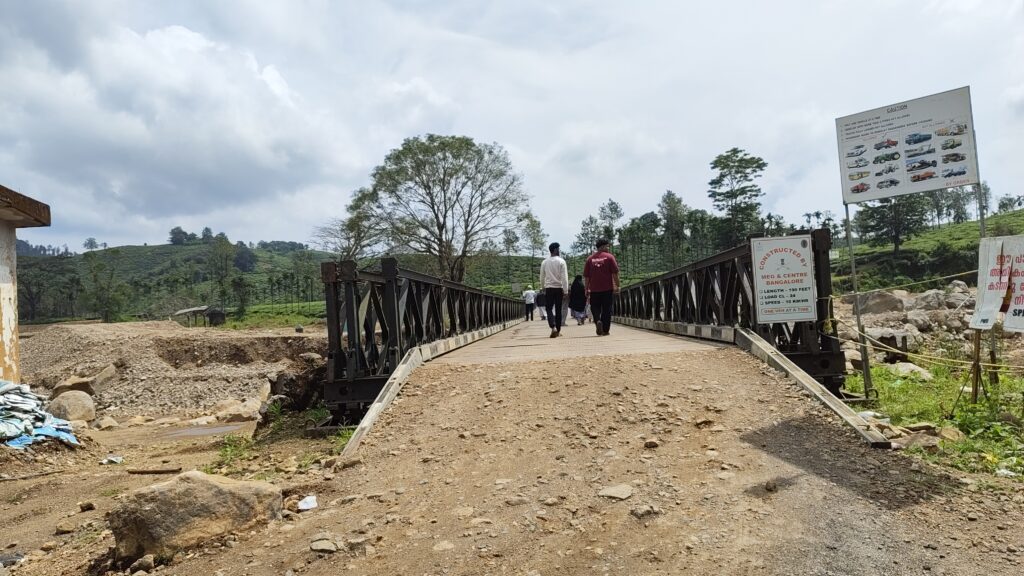
The landslides hit the assets and livelihood opportunities – tourism and tea plantation work – of Chooralmala’s residents hard. Plantation work which is anyway seasonal has resumed but work opportunities are sporadic and weather-dependent. Also the plantations located beyond the Bailey Bridge will be closed once heavy monsoons set in.
But the biggest blow the disaster brought was an oppressive burden of indebtedness, especially for the women who are the primary earners and financial managers in most households. Across the world, women are disproportionately affected by climate disasters, as BehanBox has reported. They are also those at the forefront of the efforts to rebuild their communities (here, here and here).
More than a year after the disaster the women found themselves struggling to repay debts, rebuild their homes, educate their children and run their homes and collapsed businesses. This was when around 700 women from across wards 10, 11 and 12 of the disaster-affected Meppadi panchayat launched a collective last September, Women for Loan Relief. The collective was born of frustration with the silence of the state’s officials and the Centre’s denial of its responsibility. The women are members of Kudumbashree, the state-wide network for women’s empowerment and livelihood generation. They come from its 64 neighbourhood groups (ayalkoottam) active in the area and at least 280 were directly affected by the disaster and the rest indirectly affected.
Women For Loan Relief have been leading a sustained campaign for complete loan waiver across the three wards that resulted in a strong Kerala High Court’s intervention to deal with the Center’s refusal and the inability to issue a loan waiver, as we explain later. They wrote to ministers, representatives of both the state and the Central government, and 12 banks operating in the area, explaining their situation and requesting relief. With no certainty around who will benefit from the waiver that was finally announced by the state four months ago, their campaign continues.
“Without a loan waiver, we see no way forward. We had been surviving on the Rs 9,000 monthly allowance. My monthly rent is Rs 6,500, of which Rs 6,000 is provided by the government ( both from the government’s relief package). We have no other source of livelihood. My husband used to be a daily wage worker but cannot work any longer because the disaster left him with severe leg pain,” says Manjusha, a Women For Loan Relief member. She has been allotted a home in the new township, Elston (Kalpetta), and is now awaiting a loan waiver as the only way to move forward.
On January 29, 2026 the Keralam government finally announced that it would take over the loans. The women welcomed the announcement, but concerns followed. Many of those living in the three officially declared disaster-affected wards worried that the loan takeover would not cover them. With no property, no credit, and no savings to fall back on, being left out was not a small matter.
The collective’s role is significant, as it represents a unified voice highlighting the economic vulnerabilities faced by people, mostly women. In a disaster-prone state like Keralam, structured and legally supported financial relief mechanisms are essential for women, as our reporting shows. Without clear provisions for loan restructuring or waivers, rehabilitation remains incomplete.
‘Impossible To Repay These Loans’
While the loan burden includes all kinds of debts, in this article we focus on the credit offered by Kudumbashree because they are the most popular among the women here. This is because they are low interest and are offered for purposes that larger financial institutions often do not serve – funding consumption, improving livelihood opportunities, or setting up micro enterprises. In Wards 10, 11 and 12 of the Meppadi panchayat, for instance, many women had taken Kudumbashree loans for house construction, education and medical needs. Kudumbashree also enables linkage loans from banks based on the credit rating of its members.
“Women here depended on Kudumbashree for everything,” says Bushara, a Kudumbashree member from Ward 11 who was badly affected by the disaster. “Just before the disaster, I took a Rs 17 lakh linkage loan to run a tourist home. Three members of my family died; nine from my sister’s family died. My mother became bedridden. The entire loan amount kept at my sister’s house was lost in the landslide. Even if we had used it, it would not have been this painful.”
The Kudumbashree Mission did promise a loan waiver but failed to push it through. It is then that the women stepped forward to collectivise. They came not only to seek resolution of Kudumbashree dues, but also to demand complete waiver of all loans across the three wards.
Women for Loan Relief first approached the Keralam High Court seeking a resolution to their debt issues on October 7, 2025, a month after it was set up.
“There were 64 Kudumbashree units across the three wards. Everyone had taken linkage and internal loans and had been repaying them regularly before the disaster. Now, around 1000 people continue to live here without stable livelihoods and loan burdens. It is impossible to repay loans under these conditions,” says Sabitha, an executive member of the collective and one among them still living in the disaster site.
Although the government announced a general takeover of the loans on January 28 this year, it has not specified how the waiver will be implemented. It is also unclear whether it will include everyone affected and all Kudumbashree loans. This means that the struggle of Chooralmala’s women is far from over
How Women Borrow
There are two types of loans related to Kudumbashree membership. An internal loan is one where a member of its neighbourhood group (ayalkoottam) seeks a loan from pooled savings for urgent personal or livelihood needs. It is sanctioned with consensus of the group that also decides the interest rate, generally not exceeding 12% per annum.
Linkage loans at rates between 9%-12% are extended by banks to well-performing neighbourhood groups under a programme promoted by NABARD. It is given to groups that get 80% in the evaluation of factors such as its savings discipline, internal lending and repayment records. Interest rates vary by bank and may be lowered through subsidy schemes or government assistance.
According to the petition filed by the loan relief collective in the Kerala High Court, the total burden of linkage bank loans borne by women from the three affected wards is Rs 4.10 crore. And they owe Rs 1.44 crore to the Kudumbashree neighbourhood groups. Although 50% of the linkage loans have been repaid, the remaining amount is now “impossible” to repay, the women say. Besides all these, there are also Rs 95 lakh worth of internal loans from Kudumbashree savings that have yet to be repaid.
About four months after the collective started its campaign, in January this year, the Keralam government declared that loans amounting to over Rs 18.75 crore covering 1,620 loans taken by 555 beneficiaries from the three impacted wards would be cleared through the Chief Minister's Distress Relief Fund (CMDRF). This included a special scheme for Kudumbashree members wherein Rs 8.5 crore in interest-free loans for 434 members of the network who were affected by the disaster. Each affected member was entitled to an interest-free loan of Rs 2 lakh and each neighbourhood group was eligible for a loan of Rs 20 lakh. The banks in this scheme include Keralam Gramin Bank, Central Bank of India and the Bank of Baroda. Of these, the first two have already initiated the scheme.
The state has also requested banks not to downgrade survivors’ credit scores and tasked a bankers panel with waiving off interest on loans.
When No One Listened
The key demands that Women for Loan Relief placed before the High Court was to direct the governments and banks to take steps to unconditionally write off all types of loans from the three affected wards, direct the relevant departments to prioritise women, small traders, plantation workers, MGNREGA workers and small farmers and direct the government to assume the loans of women from neighbourhood groups who died in the disaster and take steps to maintain the financial stability of those groups. It also sought interest-free bank loans with a special six-month repayment relief for affected people and urgent directions to banks to protect the credit scores of disaster-affected individuals.
In its response to the collective’s petition, the Keralam High Court observed: “Having lost their lands and their means of livelihood in the devastating landslide, they are now being called upon to repay the loans availed by them for agricultural and related purposes when the very property that they had offered as collateral security while availing those loans has ceased to exist. This is nothing short of an affront to their dignity, which has been recognised as an aspect of their fundamental right to life under Article 21 of the Constitution.”
In October 2024, volunteers of Chooralmala Relief Centre, a citizens group, had met state ministers and RBI officials to demand loan waivers. But nothing had come of it. This strengthened the women’s resolve to press for a more vociferous campaign led by them.
Vini Mol, member of the executive committee of the collective, points to a broken, abandoned house standing in ruins nearby. “This is where my home was,” she says. “Is there a house there?” asks another member of the group and everyone bursts into laughter. “Do not be misled by the laughter right now. The moment the time comes to repay the loans, all of this will change,” another woman in the group says.
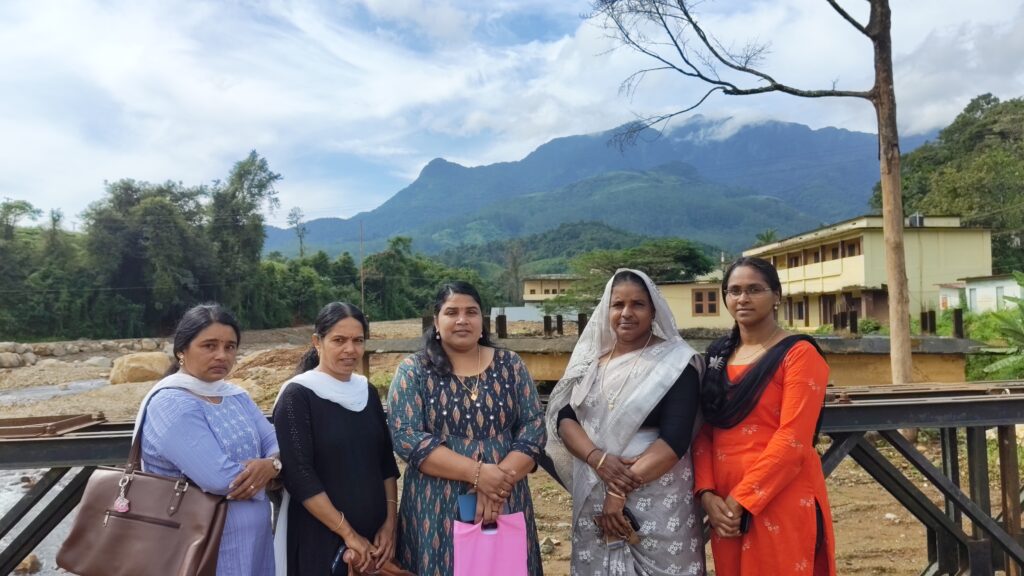
An executive committee of eight members — Sabitha S, Vineetha K R, Bushara Mujeeb, Zeenath, Manju, Shabna, Sherina and Vinimol — coordinates all the activities of the lobby. Till the disaster hit, these women from Kudumbashree made a living through small occupations — farming, petty trade, livestock rearing, crafts, MGNREGA work, and various neighbourhood group schemes.
As per the court petition, the internal loans of the 47 women who died in the disaster have now fallen upon the other members of their neighbourhood groups. Some of the deceased had not even had the chance to use the loans they had taken. Despite several meetings with senior Kudumbashree representatives, there has been no meaningful intervention from the mission on these loans, we were told.
Centre Washes Its Hands Off
In July 2025, the Keralam High Court, even before the collective had been formed, had heard a suo motu PIL on Wayanad, and rebuked the Union government and National Disaster Management Authority (NDMA) for not waiving victims’ loans, noting the disaster was declared “severe”. The bench directed Union/NDMA to consider invoking the Disaster Management Act to relieve debts.
The HC pointed out that banks hold only Rs 35.3 crore of such loans, and that Keralam Bank had already written off Rs 5 crore. It stayed all loan recovery action and ordered banks to file counter-affidavits explaining whether they are willing to waive the loans availed by the landslide victims in Wayanad, and if not, why this was the case.
The HC also criticised the removal in March 2025 of Section 13 from the Disaster Management (Amendment) Act, 2025, stating that the Centre cannot claim to be powerless on this count because its authority is not derived solely from that provision. The section had a provision that authorised the NDMA to recommend loan repayment relief and concessional loans for disaster-affected individuals — its removal closing a critical avenue for financial recovery.
The Disaster That Does Not End
In Meppady, Kudumbashree had prepared the government-initiated micro-plan to address and direct the needs of those affected by the disaster. Across the three wards, there were 15 enterprises, of which 13 were severely impacted. These included tailoring units, handicraft production and various types of farming activities. After the disaster, most of them had to be completely shut down.
Of the total bank linkage loans worth Rs 4.10 crore taken in the three wards, 50% has already been repaid. Internal loans totalling Rs 95 lakh remain outstanding. The following figures detail the loan burden carried by Kudumbashree members across the three wards.
Ward 10 - Attamala | Ward 11 - Mundakkai | Ward 12 - Chooralmala | |
Neighbourhood Groups | 22 | 10 | 31 |
Total Members | 246 | 113 | 337 |
Deaths in Disaster | 6 | 23 | 18 |
Pending Linkage Loan (Rs) | 66,15,476 | 37,58,473 | 79,90,918 |
Pending Internal Loan (Rs) | 29,24,140 | 20,53,390 | 48,12,550 |
Saleema, a Kudumbashree member from Ward 10 has been given a house in the Elston township, and she is hopeful about the loan waiver. She has been an active member of Kudumbashree which supported her goat-rearing business and provided her loans that she has yet to repay. A survivor of the landslide, she and her family are still haunted by the memories of its aftermath.
“My husband suffered a broken shoulder and we have all been struggling with mental health issues. I believe that Kudumbashree will write off the loans, because it has always stood with women. If not, we will stand up against this,” she says.
Manjusha from Ward 10 too received a house in the township after a long wait. She too has loans from Kudumbashree and other sources to help finance housing for her family and her son’s education.
Pointing to another shattered house, Shajitha, executive member of Women for Loan Relief, says: “See that house? It was built but the family never moved in. They were planning to move in during that year’s Onam. There are many such houses here.”
That house belonged to Revathi, a Kudumbashree and Women for Loan Relief member from Ward 10, and was built on her mother’s land. She had taken loans from Kudumbashree and multiple banks to construct it. Her mother, who owns the land, is eligible for another house which means that the loan Revathi took is now her burden.
Why the struggle has to continue
Around 1000 survivors continue to live in the disaster hit areas. But they are struggling to rebuild their livelihoods and access basic infrastructure. “There are no functioning shops, schools or hospitals here. For medical treatment, we have to travel kilometres,” Shajitha, an executive member, says.
Those excluded from the priority list say they deserved to be heard. “The three wards were declared extremely affected areas by the Central Government. Then how can we be left out? We cannot sell our property or obtain fresh loans from banks. Whatever we earn today is only enough to survive that day; we cannot save anything. No one is in a position to lend. There is a serious fear that some [caught in debts] may take extreme steps,” says Sabitha.
Lalitha, a Kudumbashree member, is an Anganawadi teacher. Before the landslide, her centre had 105 children but now their number is down to less than 40. “People here are struggling even to meet their daily needs. My house is not included in the No-Go Zone, but the area just in front of it is. How can a few metres erase what I experienced and continue to experience?” she asks.
Lalitha built a cottage for tourists as a business just before the landslide hit and now it remains unused. But the building loan is a burden for her. “As an Anganwadi teacher, I have observed something else. Before the landslide, we had to call people to collect the rations distributed through the Anganwadi. Now, everyone comes on their own without being called.”
Revathi remains firm in her resolve. For her, stepping back would mean allowing the loans to consume her life. “We are planning to expand the activities of the Women for Loan Relief collective. People are waiting to see how the government declaration takes shape. We cannot move ahead without a complete loan waiver; there is no other possibility of life without it.”
Policy Delays and the Burden of Debt
Strong rehabilitation procedures are crucial for Keralam, given its vulnerability to natural disasters, especially those brought on by its torrential monsoon rains. We had reported last June on a women-led initiative in Kochi to map tidal floods to bring the government’s attention to their vulnerability. Once a seasonal event in the state’s coastal villages, these floods have started occurring with greater regularity because of climate change. Salt water creeping into the homes, lanes and workplaces of people have been increasingly disrupting lives and livelihoods. Eight months later, in February this year, the Keralam government declared that tidal floods a natural disaster – the only state to do so – with provisions for financial and other kinds of assistance.
The financial challenges faced by survivors of natural disasters was exacerbated by the removal of Section 13 of the Disaster Management Act, 2005 – it took the state out of the role of ensuring loan relief, leaving the decision entirely on banks.
In 2018, Keralam had been struck by floods that were the worst in nearly a century, affecting 5.4 million people and claiming 491 lives. Kudumbashree had mobilised around 400,000 women across the state, leading a drive to clean out schools and hospitals flooded by muddy waters, counsel affected families, and open 38,000 homes of members as temporary shelters.
Yet the 2018 flood had struck Kudumbashree from within too. At least 3,550 women entrepreneurs were directly affected, and losses to Kudumbashree microenterprise units bakeries, tailoring units, food businesses, and paper bag enterprises were severe. The overall loss to microenterprise units stood at Rs 7.80 crore. The most severely hit were women farmers who had taken bank loans to lease land.
The state had floated the Resurgent Keralam Loan Scheme, an interest-free loan of up to Rs 1 lakh for flood-affected families, with Kudumbashree as the implementing agency. A total of 1,42,715 members submitted applications, and Rs 463 crore was sanctioned under the scheme. For women farmers — the hardest hit within Kudumbashree — a Crisis Management Fund of Rs 20,000 was extended. Together, these measures formed part of the broader post-flood recovery programme that included disaster relief and for livelihood restoration.

We believe everyone deserves equal access to accurate news. Support from our readers enables us to keep our journalism open and free for everyone, all over the world.
