[Readmelater]

‘In This Land of Buildings and Bulldozers, We Create Our Own Place’, Say Women of Demolished Bastis

As large infrastructure projects like the Coastal Road destroy livelihoods and homes in Mumbai bastis, affected women resist.

On a chatai outside the barricaded and demolished Siddharth Nagar in Mumbai’s western suburb of Andheri West, Sitabai Gajanan Hirwale (56) and her friend sit shelling peas for dinner. Behind them are large drums full of belongings they salvaged from their destroyed homes and secured from dust and unseasonal rain with tarpaulin sheets.

Sitabai, a Dalit woman, mother of three children and domestic worker, came to Mumbai from her village in Jodgavhan Kheda, near Akola, Maharashtra, long before the area had water or electricity supply. “We built [this land] using our own hands. But we have to move every time they break our homes – not once or twice, but almost 20-22 times now. Puri jawani geli. Mhatare howa lagle tari pan ghari tutna band nahi jhala ata (my entire youth is gone and even now, when I’m aging, they don’t stop breaking our homes),” she says. She is livid as she points to the building across the road, whose residents allegedly complained to the police against Siddharth Nagar’s residents for “encroaching” and causing “visual pollution”. 

Aarti Mukesh Khanna Gautam (45), a Dalit woman and domestic worker in SVP Nagar, grabs a stool and joins us. A resident of Siddharth Nagar for years and a member of Jan Haq Sangharsh Samiti, a Mumbai-based people’s collective, she is among the women at the forefront of the fight for housing rights and citizens’ dignity in Mumbai. “Ghar ke badle ghar chahiye (a house for a house). If they think they can bribe us, then they are wrong. They have to give houses to everyone in Mumbai whose houses they have demolished. And if they don’t, we will march with Babasaheb’s statue.” 

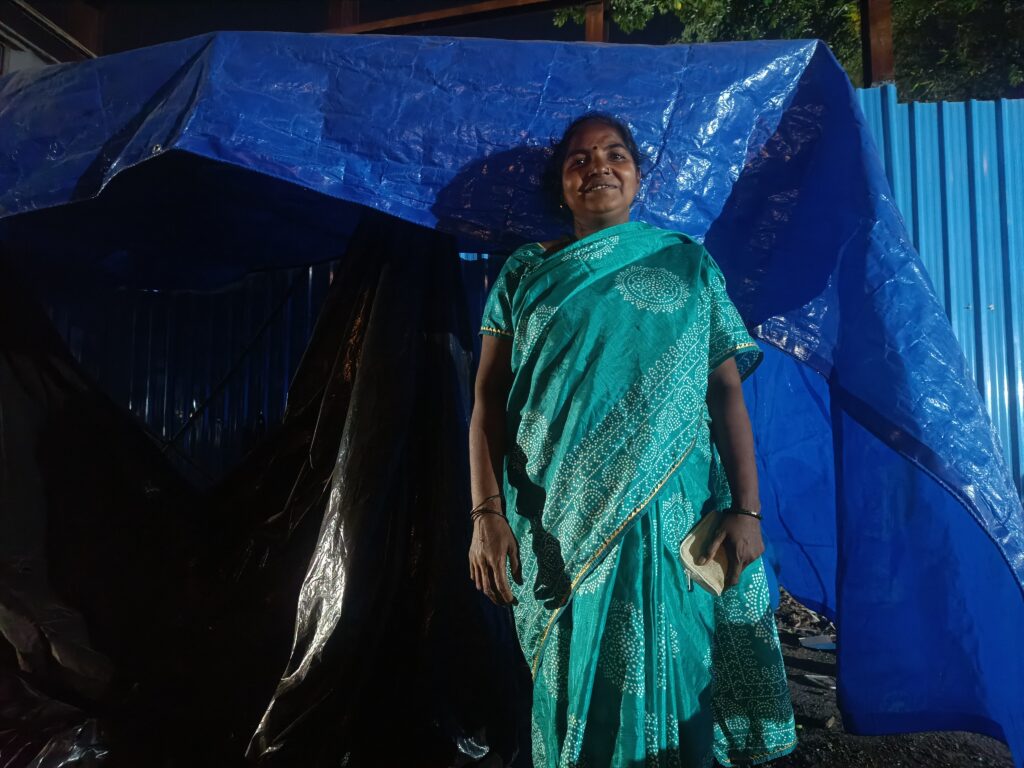
Aarti Mukesh Khanna Gautam standing in front of the temporary pandal that residents collectively built after the demolition/ Anjali

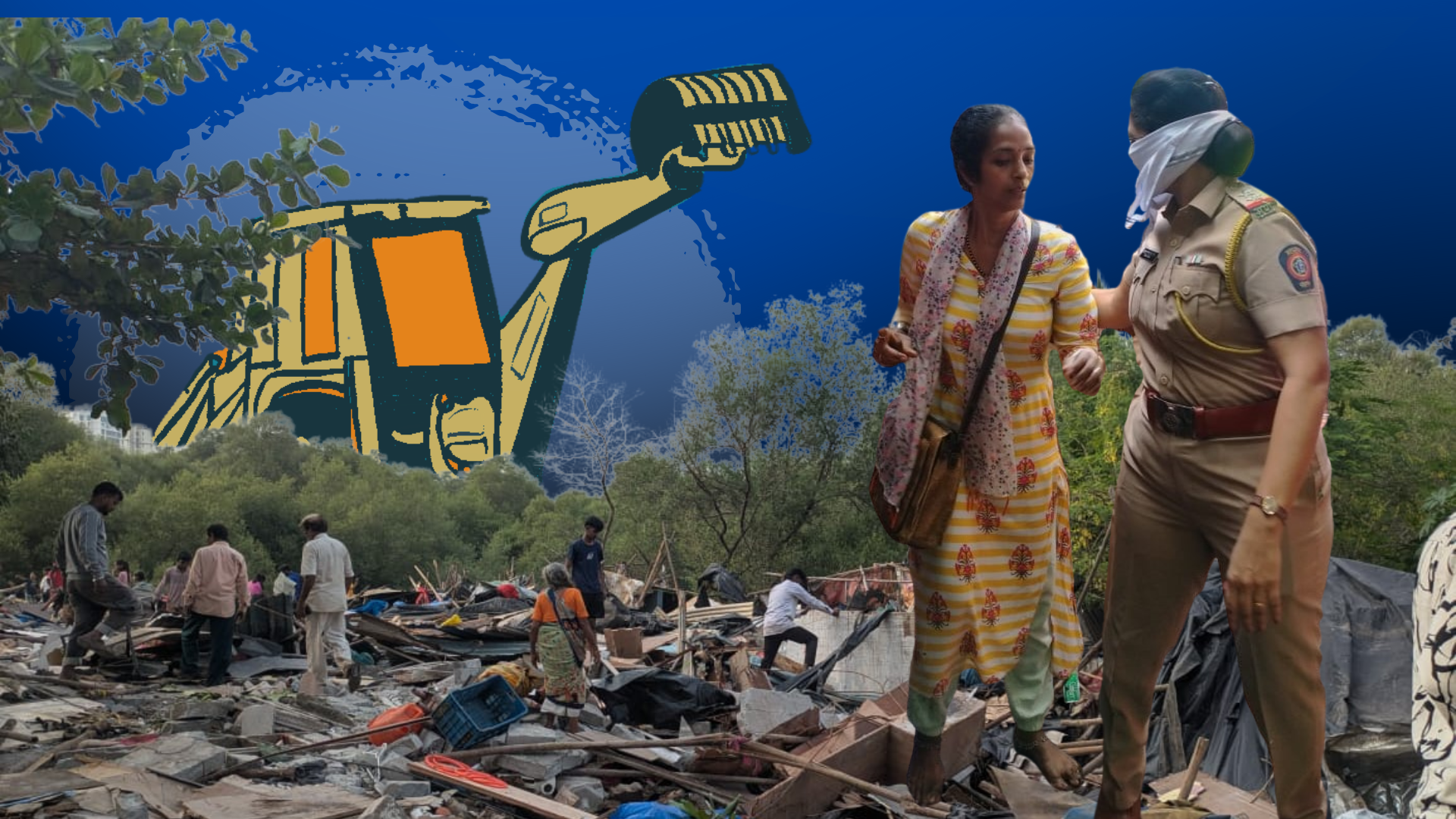
The women of Siddharth Nagar, a predominantly Buddhist and Muslim Dalit basti, have been fighting for years for secure housing, basic facilities, and stable education for their children. Around 1pm on October 30, their homes were demolished by the Brihanmumbai Municipal Corporation (BMC) to build a 393-meter connector bridge worth Rs 42-crore to ‘ease traffic congestion’ and ‘facilitate access’ to the proposed Versova-Bhayander Coastal Road and Versova-Bandra Sea Link. As we detail later, such attempts at demolition have taken place at least twice before.

In March 2025, the Maharashtra Housing and Area Development Authority (MHADA) delivered a demolition notice to residents printed with the wrong address from across the creek. Residents wrote back within 2 weeks demanding a corrected notice, but were met with silence. Six months later, MHADA replied on another technicality and then served a demolition notice under Section 50 of the Maharashtra Land Revenue Code, 1966 to bypass rehabilitation requirements as per the Maharashtra Slum Areas Act, 1971. A month later, Siddharth Nagar was demolished. 

Between 2022 and 2023, it is estimated that over 1.5 lakh homes were demolished in India, leaving more than 7.4 lakh people homeless.. At BehanBox, we have reported extensively on how demolitions, homelessness and dispossession, by what has now come to be referred as Bulldozer Raj (rule), disproportionately and generationally impact women who are Dalit, Adivasi, Muslim, and migrant or informal sector workers (see here, here, here and here). We also write on how they continue to create and fight despite being repeatedly stripped of opportunities, financial independence, mental and physical wellbeing, and social belongingness (here and here). 

In Mumbai itself, over the past several years, demolitions in the name of conservation, city beautification and ‘development’ have become increasingly common, affecting at least 7 lakh people between 2022-2023. From Navi Mumbai and Malvani, to Kavte Khadi and Colaba, residents living in informal settlements have been subject to arbitrary and violent demolitions in the name of mangrove protection, while roads and real estate multiply unchecked on the same lands. 

The Day of The Demolition

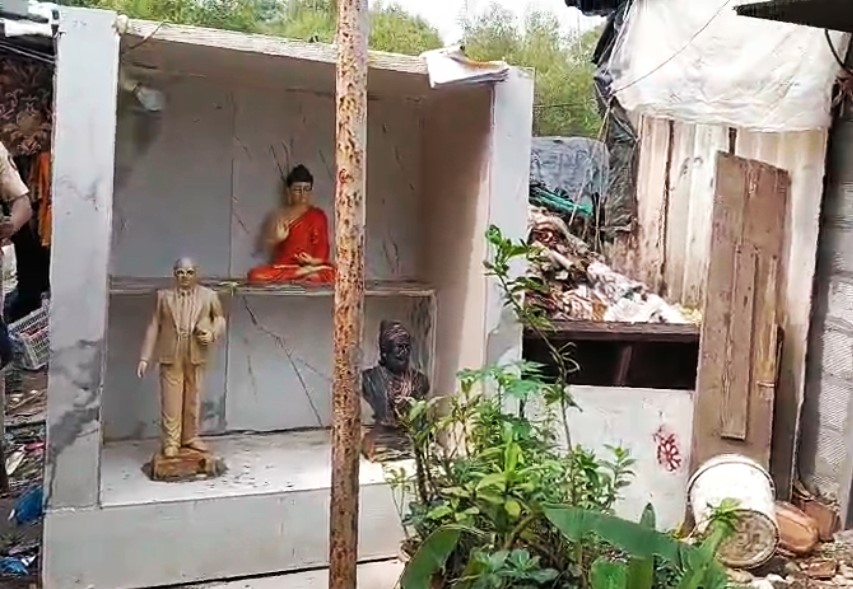
Arati recalls the time the demolition crew arrived in the basti. Some of us went out to fight, while others tried to salvage whatever they could. Many people were at work and didn’t know about the demolition…” she says. “Bouncers broke the Budh Vihar we built, wrapped up Babasaheb’s statue and took it outside without asking us. When I told them I wanted the statue at any cost, they wrote my name down and threatened to detain me.” 

Though Aarti was not detained, Pushpa Bhagatrao Gupta (39), a resident of Siddharth Nagar and a member of Jan Haq Sangharsh Samiti, was.

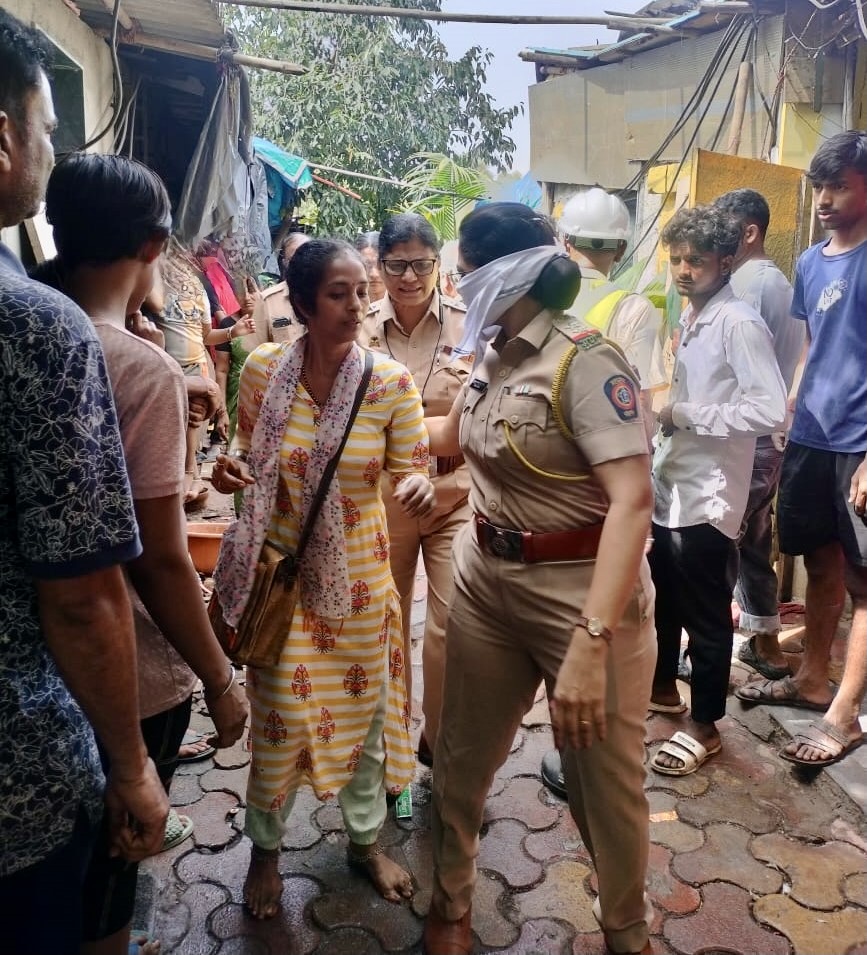
“I asked them why they hadn’t provided rehabilitation and why they came so suddenly to break our houses. They detained me to prevent other women from asking questions,” says Pushpa, an upper-caste resident born in Mumbai. Residents allege that the BMC brought cameras, Riot Control Police, Reserve Forces, and even “private bouncers” to the demolition. “The bouncers are still sitting here to make sure we don’t enter Siddharth Nagar.”

The police detain Pushpa Bhagatrao Gupta, for asking questions/ Jan Haq Sangharsh Samiti

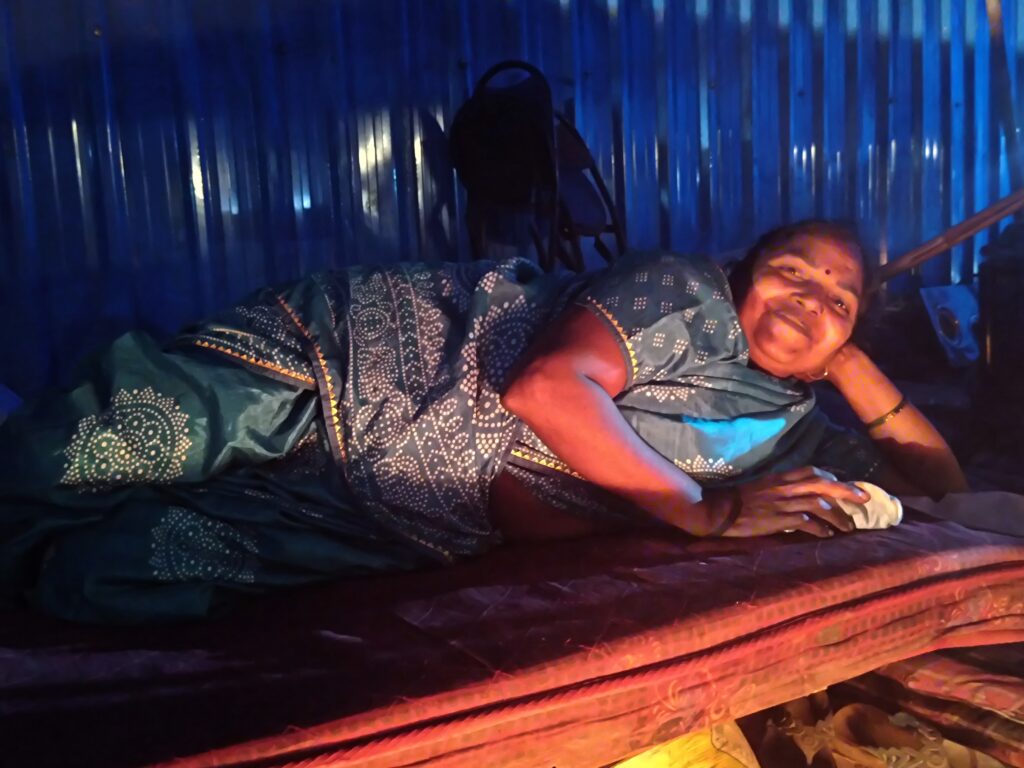
While some families have found temporary shelter in nearby localities, several others continue to live on the street without access to water, cooking gas, toilets, healthcare or privacy. “I was bitten by so many mosquitos that I had to be hospitalised, but there is no hospital nearby. And even when we get there, we have to fight to see the doctor,” says Aarti.

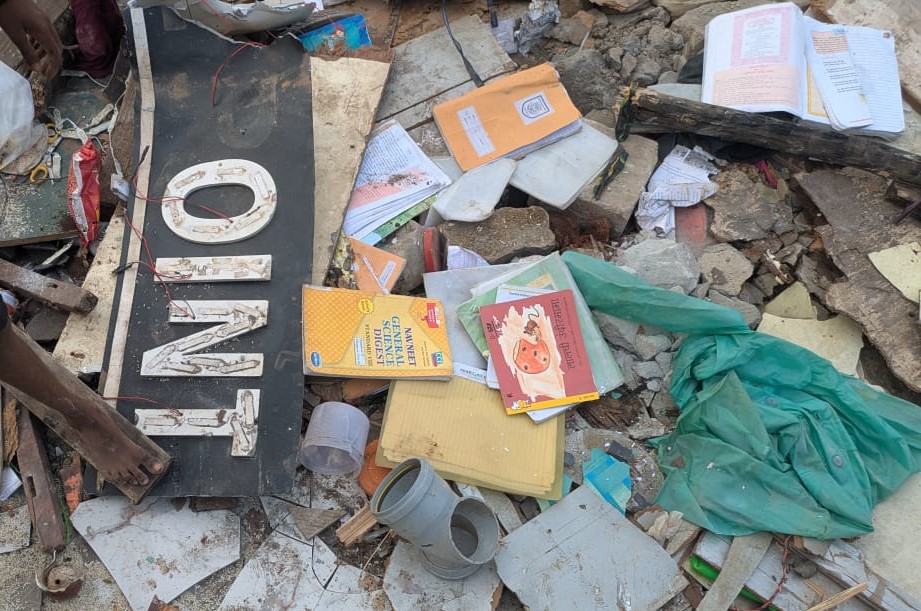
The demolition has left the children’s schooling disrupted too. Over a dozen children from Siddharth Nagar have dropped out of school since then, we were told. “The police beat us up when we tried to take our things. Our school bags, books, clothes are all destroyed. Others at school make fun of me and run away, so I don’t have any friends. But I love maths, because I can solve anything,” says Meera* (13), who has lived in Siddharth Nagar all her life.

Children’s textbooks and school supplies lay damaged and pressed under the rubble/ Chetana Kothari

Right after the demolition, Aarti, Pushpa and other residents built a makeshift pandal (shelter) just outside Siddharth Nagar to protect themselves, demand rehabilitation, and reclaim space in the city. “Until we get justice and a house, we will stay here in this pandal,” says Aarti. 

The women question the logic of ‘development’ in cities like Mumbai, where those who build the city are neglected while the rich are privileged even more. Fighting with the few tools at their disposal, women like Aarti, Pushpa and Sitabai are now developing their own knowledge of the law and organising themselves. 

The Three R’s: Roads, Real Estate and Redevelopment

The Coastal Road was first proposed in 2011 as a 35-km, eight-lane reclaimed road from Nariman Point in the south to Kandivali in the west, budgeted for Rs 8,000 crore. However, the Coastal Regulation Zone (CRZ) Notification 2011 forbade reclamation in intertidal areas (the region between the low-tide and high-tide line, classified as a CRZ-1 area under the 2011 Notification). Coincidentally, in December 2015, the Ministry of Environment, Forest and Climate Change (MoEFCC) amended the CRZ Notification to allow land reclamation “in exceptional cases”. 

Two years later, amidst heavy protests by the Worli Koli fishing community, the 10.6-km south section of the project running from Marine Drive to the existing Bandra-Worli sea link, was granted clearance and constructed for Rs 14,000 crore – Rs 6,000 crore more than the original allocation for the entire coastal road. More recently, on December 12, the 26.3km north section of the Coastal Road – the Versova-Bhayander Coastal Road – was also granted environmental clearance by the Bombay High Court. 

Despite mangroves acting as a crucial buffer against rising sea levels and flooding in Mumbai, the Bombay High Court has granted the BMC permission to fell 45,000 mangroves for the Versova-Bhayander Coastal Road, and over 50 mangroves for the connector bridge near Siddharth Nagar.

“In 2014, many of these feeder-connector roads were deleted from city development plans as they encroached on CRZ lands. But after heavy lobbying, the updated 2014 plan was scrapped, and all of these feeder roads were brought back despite severe ecological costs,” says Hussain Indorewala, an assistant professor of architecture at Kamla Raheja Vidyanidhi Institute of Architecture and Environmental Studies (KRVIA).

While thousands of mangroves are set to be cut for the upcoming roads, evictions and demolitions have been justified in the name of conservation. Four years ago, MLA Bharati Lavekar, an ardent proponent of the connector bridge and Coastal Road, pushed for the eviction of ‘slum dwellers’ from ‘sensitive’ mangroves area. Similarly, Ashoke Pandit, trustee of the Oshiwara-Lokhandwala Citizens’ Foundation, praised the swift mangrove felling for the connector bridge but then argued for the demolition of Siddharth Nagar on the grounds that it allegedly impacts the mangroves and fragile coastal ecosystems. 

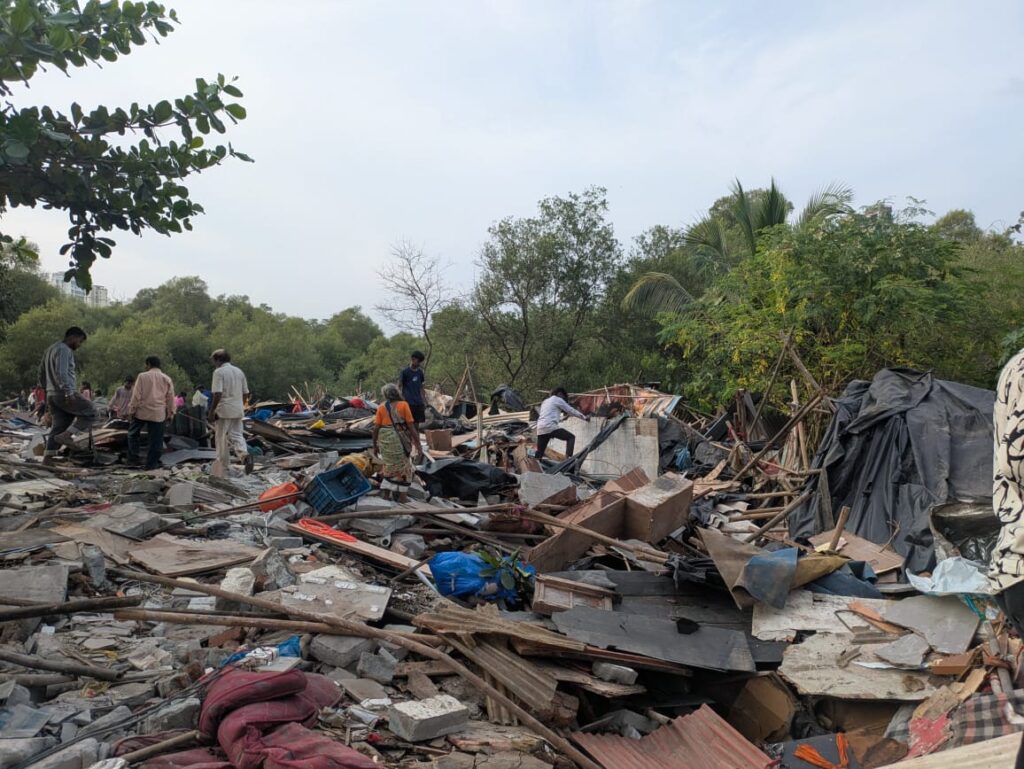
Siddharth Nagar after the demolition on 31st October 2025/Chetana Kothari

Durgaprasad Chauhan (58), an OBC resident of Siddharth Nagar who has been demanding rehabilitation from local authorities, points out that the projects do not even provide large scale employment opportunities. “They don’t even employ us after razing our houses. If they pay us fairly, we too could create a new world. They don’t want this,” says Durgaprasad, who migrated from his village in Divariya District, UP in the late 1980s for construction work.

Hussain argues that the city is being planned for real estate speculation, not for the needs of ordinary people. “Projects like the coastal road, freeways and even metros raise land prices tremendously, inviting luxury real estate investment and redevelopment in relatively less developed areas like Vasai and the western outskirts of the city,” he explains. For instance, in Malad, which already has high-end projects and new constructions, the metro’s yellow line has been built on top of the existing Malad Link Road, hiking the area’s property price and making it even more lucrative for big builders, he points out. Similarly, he adds, the south Coastal Road coincides with major property developments in the Madh-Marve Area. 

At the same time, MHADA has shifted its focus away from constructing new affordable homes for the working poor of Mumbai. Its new projects and budgets suggest that it is looking at land brokerage for private developers and cluster redevelopment, in which slums and old MHADA housing stock are demolished and rebuilt. Most of these redeveloped MHADA units, publicised as housing for the poor, are sold through lotteries and priced between Rs. 20 lakhs to Rs. 1 crore and more  – well out of budget for the working class. Furthermore, last month, the Maharashtra government issued an order under which the individual consent of slum dwellers will no longer be required for cluster redevelopment. 

“Working class people in Mumbai are not even paid a living wage. Affordable – and even free – housing should be given simply as compensation,” says Shubham Kothari, a member of Jan Haq Sangharsh Samiti. 

Not the First Time

Residents of Siddharth Nagar, especially Dalit, Muslim and migrant women, say they have been subject to this kind of precarity for decades, if not generations. “Earlier, when they broke our houses, we would rebuild them. This time, we are not able to because they have barricaded the walls. It has not even been six months since we rebuilt our house,” says Aarti, who moved to Mumbai in 1997 from Lucknow. 

Durgaprasad points out that when the families built their homes 30 years ago, no objections had been raised. Siddharth Nagar, earlier registered as Ambedkar Nagar, has been demolished countless times since 2004 for various projects, as we said earlier. Through all of this, the people of the basti continued to exist, fight and work in the area – as security guards, masons, carpenters, home-based workers, bus drivers, domestic workers, cleaners, painters, and gutter cleaners. 

In 2019, Ambedkar Nagar was completely razed to the ground, and the basti established afterwards was officially registered as Siddharth Nagar. On June 1, 2023, the BMC once again attempted to demolish the basti, this time for the Yari Road-Lokhandwala connector bridge. Though demolitions are prohibited in heavy monsoon months, the women say the bulldozer arrived without notice during a red alert for intense rains and under the pretext of cleaning the gutters.

“The BMC does not even clear the large garbage from inside our basti. And when they finally do come to supposedly clean our gutters, they leave us homeless. We risk our lives everyday to clean this city’s gutters but we become encroachers when it’s time for city beautification and development,” says Sitabai angrily.

Although the police tried to arrest protesting residents and demolish the basti in 2023, they were forced to turn back after facing heavy resistance. “All of us women came together and used gas cylinders as shields. Some of our elderly women sat at the very front. We told the police – come, attack us,” recalls Pushpa, who has been running between the BMC, and offices of the collector and the local MLA for months to demand rehabilitation. 

Children, many of whom have already experienced demolitions, police violence, and homelessness at least 6-7 times in the span of 15 years, remember 2023 vividly. “We punctured the tires and smashed the glass of the bulldozer when it tried to break our house. Then we ran away,” say a group of children, happy to have foiled the demolition. “I cried a lot when they broke our house this time [in 2025]. I thought we would all get separated. I can’t imagine not living with my friends – we would hide on top of the bathroom, run around in the galli (lane), and jump in the naali (stream) to catch fish. I loved looking out of the window behind my house and taking pictures,” shares Meera.

These disruptions have denied the children opportunities to study and move ahead in life, says Sitabai. “Our lives are a game for them. They don’t want to end poverty, they want to get rid of the poor,” she says. Sitabai has worked as a domestic worker for 11 years in the same household, cooking, cleaning and doing the tasks that no one else wants to do. Yet, every time her house has been demolished, her employer had her wages cut for the days she could not work.

We Are Still Here

The residents of Siddharth Nagar continue to organise and resist.

Music has been a powerful tool of expression for the children of Siddharth Nagar. Meera recounts how she feels powerful when she sings the song ‘Patra re patra’, a Marathi resistance song about the symbolism, significance and resilience of tin sheets that often line houses in working-class neighbourhoods across cities. Though they have been unable to start school, children have been studying daily in the pandal. They are also engaged in street theatre, singing, and are learning instruments such as the duff.    

“Mahila shakti aayi hai, nayi roshni layi hai (women’s power has arrived, bringing a new light with it). If they lead with police force, we will reply with women’s power and leadership” says Aarti. “Babasaheb taught us never to bow down or beg in front of anyone. Mehenat se khane ka, himmat se rehene ka (work hard for food, and live with courage).

In 2022, Aarti and Pushpa joined hands to build a Budh Vihar in the basti to keep the idols of Dr Ambedkar and Buddha. After building it, they realised the basti had never had a pucca toilet for women, only a small and portable one. They spent nearly 1.5 years building a proper toilet, sparking conversations in the basti on women’s legal rights. 

Budh Vihar in Siddharth Nagar just before it was demolished. Screenshot from a video by Jan Haq Sangharsh Samiti

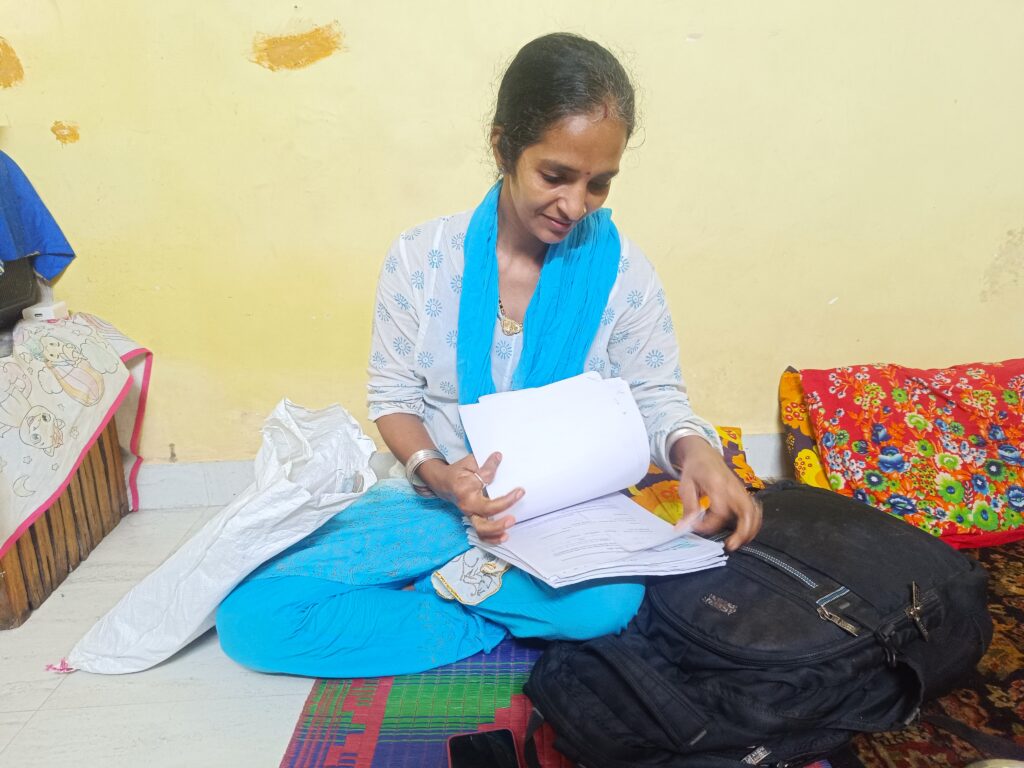
Pushpa, who put all her earnings as a domestic worker in building her home in Siddharth Nagar, says that her home means everything to her and she decided to take up the fight because not everyone can. “I have gained so much knowledge from speaking to authorities, deciphering legal papers, and discussing things with my Jan Haq family,” she says as she files papers for an upcoming meeting at the Collector’s office. 

Pushpa explains how many opposed her when she first tried to organise with women in the basti, worried that she was politically motivated. Over time, she built trust by holding meetings, working closely with leaders like Aarti, and communicating transparently with people who had been living in the basti longer than her. Together, women have nurtured relationships of care, solidarity and sisterhood stretching beyond Siddharth Nagar.

For example, days after the recent demolition in October, women from Panchasheel Nagar, Govandi, brought more than 100 boxes of home cooked food for the residents of Siddharth Nagar – despite the threat of demolition hanging over their own heads too. “Our sisters from other bastis across Mumbai are standing with us in spite of their own struggles and difficulties,” says Aarti.

Aarti resting near the fire to prevent mosquitoes from biting her after a long day of meetings and work/Anjali

Inter-basti solidarity is helping the campaign come up with creative solutions, shares Pushpa. One such solidarity meeting took place on November 9 in central Mumbai where basti residents from across the city shared their experiences of navigating an illegible and casteist bureaucracy and discussed how to work together for their basic rights. They started the session by singing an old resistance song – Bhim Surya Kranticha – rooted in Mumbai’s anti-caste history. 

“Babasaheb sacrificed his life to leave something for all of us,” says Pushpa, with tears in her eyes. “We are standing and fighting today, only because of the prerna (inspiration) we derive from him.” One of Pushpa’s goals has been to educate people about Dr BR Ambedkar’s fight for the rights and dignity of common people, starting with her own family.

Pushpa flipping through and filing hundreds of legal documents/Anjali

Despite submitting a letter to the police about the pandal, on 21st November 2025, the BMC demolished it without any intimation, leaving those still living on the street without any shelter. Undeterred by the adversities, the residents of Siddharth Nagar have now taken their fight to the court, demanding interim relief for everyone made homeless as well as long-term rehabilitation. 

Malini Nair (Editor)

Malini Nair is a consulting editor with Behanbox. She is a culture writer with a keen interest in gender.

Support BehanBox

We believe everyone deserves equal access to accurate news. Support from our readers enables us to keep our journalism open and free for everyone, all over the world.

Donate Now