
‘Distributing Land Like Candy’: How Diluted Laws, Opaque Processes Power India’s AI Data Centre Boom
Data centres have existed since the 1990s so what is it about the new hyperscalers that is generating so many anxieties around livelihood, land rights and sustainability? We bring you an explainer
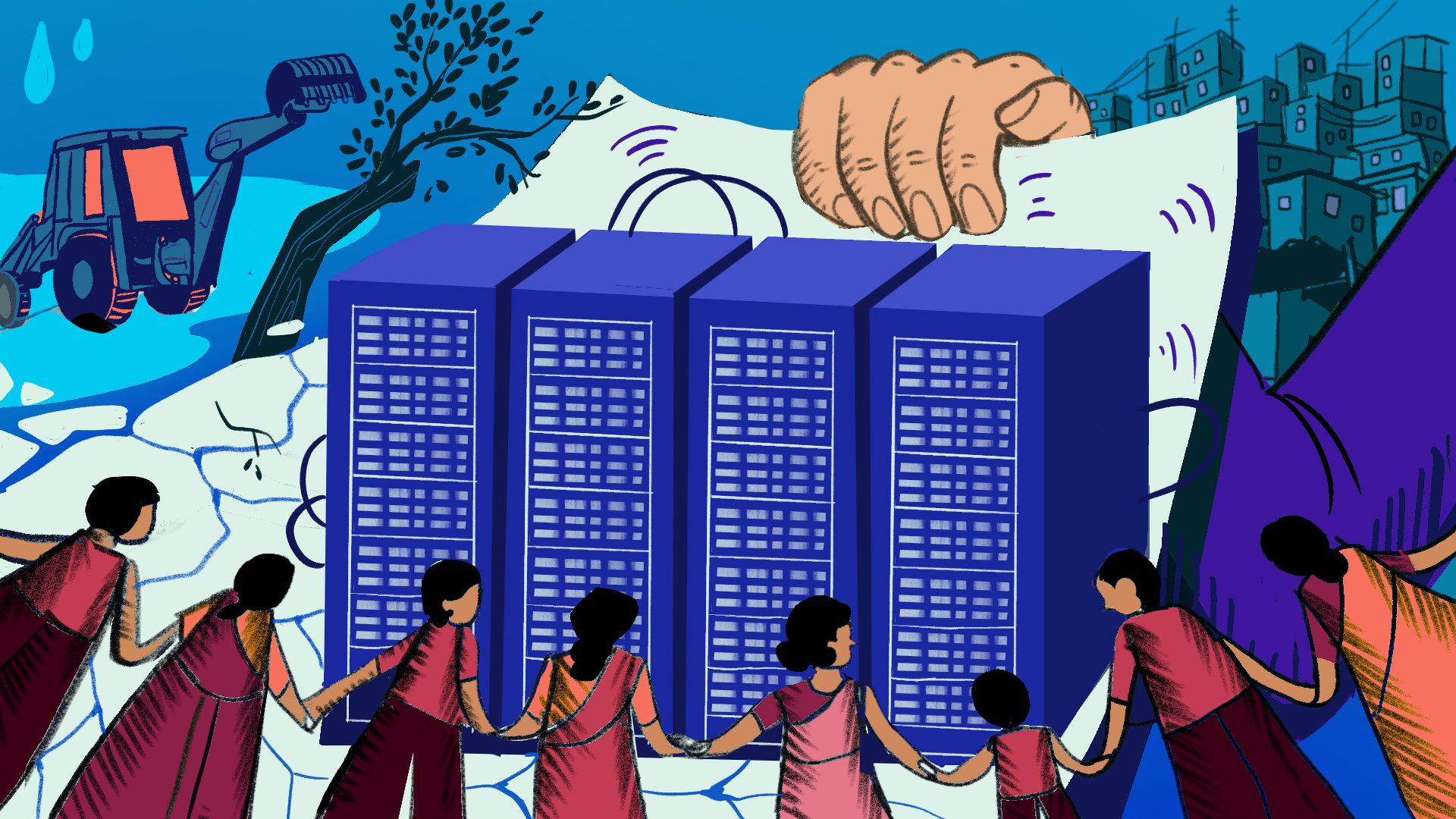
There are two stories about data centres. One, told by companies and governments, promising abundance: more jobs, hefty foreign investments, transformation of the IT sector, and in due course, a ‘sovereign AI’. The other story is an account of deficits and discrepancies. Of projects enormous enough to consume resources of an entire city receiving approvals within nine days with no evaluation of cost or benefit, impact assessments or public consultations.
This, activists say, is where AI hype, regulatory gaps and neoliberalisation policies converge. “Every developmental project has come at the cost of people giving away their lands or lands being taken away from them,” said Arpita Kanjilal, a researcher at the Digital Empowerment Foundation. “Which is why a data centre’s story also starts with the question of land.”
The question of land unravels other questions: Who does the land belong to, who lives there? How is it taken from communities, and for whose benefit? Is the land being fairly valued and the compensation equitable? Which laws are being bent and rights ignored, and what routes carved to enable this transfer?
This diversion of land not only affects communities in the region, but leaves citizens across the state to absorb the cost, pointed out Arpita. “It will only result in higher water and electricity bills, less water, and fewer resources for us,” she said.
BehanBox studied various kinds of projects – those proposed, those under construction, and those already operational in states such as Telangana, Andhra Pradesh, Maharashtra, Tamil Nadu – and found state governments leveraging regulatory loopholes to route land to companies from informal settlers, Dalit farmers, and communities that live off agriculture, fishing and forests. These projects are no longer confined to designated IT/industrial belts on the edges of major cities – that too were built by displacing agricultural communities – but moving into agricultural lands, environmentally sensitive zones, and commercial and residential spaces. The proposed Adavivaram data centre in Andhra Pradesh, for instance, is 120 m from a reservoir, to the east of which is the densely-populated Arilova colony, and about 4 km away is the Health City.
Why The Growing Anxiety
Contrary to popular perception, data centres are not new, and not all come with catastrophic costs. They have existed since the 1990s – making possible GPS navigation, cloud storage, emails, streaming services, and everything else in between. What has changed is influence, scale, and technology. Once built and run by universities and governments, their power shifted to private companies, who have since tried to outdo each other with steep investments in generative AI.
The appetite over the last five years has created a new category of ‘hyperscale’ data centres, used by some of the best-known AI companies such as Anthropic, Microsoft, Meta, xAI, OpenAI, Amazon and Google. Once concentrated in the US and China, they are now expanding into global majority countries such as Nigeria, Philippines, Indonesia, and India – regions that do not have ideal climate conditions for a data centre and often lack the necessary regulatory infrastructure.
There are several actors in the picture in India now. The Union Government in its budget this year extended a 20-year tax holiday to all foreign cloud companies. State governments supply subsidy architecture – electricity waivers (for up to 10 years, as in the case of UP and Maharashtra), land subsidies, fast track approvals, exemptions from local taxes and labour laws. State industrial bodies such as the Andhra Pradesh Industrial Infrastructure Corporation (APIIC) transfer land to companies such as Google, AdaniX, Amazon, and Microsoft. In the game are also real estate developers, state level expert bodies, and consultants like Pridhvi Envirotech (P) Limited in AP that lobbied state governments).
India’s data centre expansion builds on its development history of using public purpose laws to treat lands as investment parcels, reinforcing a cycle of dispossession, experts told BehanBox.
Activist groups across Vizag, Indore, Chennai, around Bengaluru have documented environmental violations, displacement, threats to water sources, and air and heat stress. The nature of violations vary, depending on individual state’s histories with land ownership and the political relationship they maintain with the Centre, as we will detail later.
In many cases, communities – including farmers in Telangana’s Mekaguda and Dalit families in Vizag – are coaxed or coerced into relinquishing land with poor compensation and promises of employment. Activists we interviewed also maintained that their RTI requests were stonewalled; and NDAs between state governments and companies shielded both from public scrutiny.
Wanted: Land, Rich With Resources
The internet’s physical systems are located across geographies – the computing hardware across land, cables running through the sea, and nuts and bolts that come together at a data centre. Think of a giant warehouse full of computers that runs 24×7 to process large amounts of data. Inside are servers, graphics processing units (GPUs), and other equipment that needs large amounts of power and gives off intense heat.
Data centres also demand land with access to valuable resources. Complexes need a power grid, so land near transmission infrastructure is valued; connectivity to fiber-optic high speed internet is essential, so proximity to existing cable corridors is desired. Access to rivers or lakes is also prized because data centres need varying amounts of water for cooling (a single 100 MW facility can consume up to 20 lakh litres of water daily, equivalent to the needs of 6,500 households). Where the three converge, land becomes a strategic acquisition.
Mumbai, given its position and link to multiple submarine cable lands, has the highest number of documented data centres in India. Vizag, hosting one of India’s largest data centre complexes, is a favoured site given its coastal location, access to the city’s reservoir network, and a power grid anchored by the Visakhapatnam Steel Plant’s transmission infrastructure. Adani and Google have acquired more than 600 acres of land across three locations in Vizag, roughly the size of 430 football pitches.
As we mentioned earlier, not all data centres drain and damage resources. They were modest complexes for decades, sitting in what are called colocation facilities in industrial belts. Hospitals or banks or companies could rent out its servers without incurring the cost of opening their own. Things changed in 2022. OpenAI’s launch of ChatGPT set off a race among technology companies to build and deploy large-scale artificial intelligence tools (like Gemini and other GenAI tech). Training and running AI models requires more computational power than traditional data storage and cloud facilities, which in turn requires more cooling, electricity, and physical space.
The industry’s answer: hyperscalers.
The Question Of Public Purpose
Perceived as necessary to achieving India’s ambitions and development, hyperscalers have thus earned the classification of ‘public purpose’ infrastructure or “essential services” under several state data centre policies (including Karnataka, Telangana, Maharashtra, Odisha). This puts a data centre in the same category as education and healthcare, manufacturing facilities or infrastructure.
“This categorisation equates the electricity generated in a mall or a residential building with that used in a data center. That’s absurd,” said Arpita.
In her 1996 essay ‘Displacement and the Law’, scholar Usha Ramanathan wrote about how public purpose laws, “give state control over land and related resources, and so over the lives of the people; acquisition provides the process; and compensation is the limited replacement of the rights of the displaced person”.
Data centres are located in roughly three types of areas with contested, charged political and ecological histories. In India, for instance, private agricultural land is being used to set up these centres as in Andhra Pradesh’s Tarluvada, where some Dalit families who received land after the 1970s land reform allotments said they are under pressure to sell the land. There is also land sitting on lake beds such as Telangana’s Tungakunta lake and the Ennore creek ecosystem in Tamil Nadu. The third category is “government” land, often disputed by informal settlers. An example of this is the proposed Hiranandani data complex, whose expansion in the Dalit settlement of Jai Bhim Nagar was preceded by the demolition of 504 homes.
But contrary to ideas of public purpose, data centres produce few jobs and do not always generate mass economic activity, unlike other resource intensive industries. The proposed benefits of AI tools are also not directly associated with the costs communities bear. “Very specific communities end up bearing the cost of land, electricity price hikes, water access, and emissions…More often than not, these communities might not be the ones who are using Claude or ChatGPT,” said Dona Mathew, a senior researcher at Digital Futures Lab.
The Regulatory Matrix
Hyperscalers, like every development project, need several axes of approval.
Land acquisition at the centre level comes under the Right to Fair Compensation and Transparency in Land Acquisition, Rehabilitation and Resettlement Act, 2013 (LARR Act), considered the biggest reform in land governance since colonial rule. With its mandates of social impact assessment (SIA), consent from 70–80% of affected families, compensation, and resettlement and rehabilitation entitlements, it made the processes transparent and curbed the unchecked use of ‘public purpose’.
After land is acquired, companies need to obtain environmental clearances under the EIA Notification Act, 2006, from the state environment body for projects under a certain threshold (“Category B”) or from the Ministry of Environment, Forest, and Climate Change (MoEF&CC) for those with large-scale environmental impact. The EIA must also be translated in the local language, followed by public consultations and hearings. In the case of forest lands, an NOC is given after these requirements are met. Consent is also needed from pollution control boards; fire safety authorities and various permissions are required for building, power and water connection, and telecoms.
None of these processes are being conducted currently. Where they are, they are rushed and opaque, alleged activists.
One challenge is there is no statutory definition of a data centre, even at the level of state governments that have published relevant policies. The policies define “data center parks” or “data center units” but not the actual infrastructure – an omission that makes little sense, said Dona.
The Central Board of Direct Taxes (CBDT) in November last year pulled up the Centre for not precisely defining a data centre. Without that framing anyone can claim the associated tax incentives, and no regulatory framework can be applied, Dona added.
‘Zone Of Exception’
Then there are the regulatory loopholes that predate the current expansion.
Land being a state subject, LARR’s implementation depends on state governments, many of which have over the years amended the Act or implemented their own acquisition laws. Andhra Pradesh, for instance, amended the Act to exempt projects for rural infrastructure or in industrial corridors from SIAs and consent. This in turn reduced the Gram Sabha’s advisory role. In the case of proposed or under construction data centres in India, there are no documented SIAs, said researchers.
States – including Maharashtra, Tamil Nadu, UP, Telangana, which have the highest number of data centres in India – have also been finding paths to circumvent LARR to obtain land, found a Down to Earth investigation. In Andhra Pradesh, the Amaravati capital project used a Land Pooling Scheme as an alternative to conventional land acquisition and based it on “mutual consent” between the state and landowners, who received developed plots in return for surrendering their land. Tenant farmers who cultivated that land without formal title were excluded from any benefit entirely. We reported earlier that even wealthy landowners did not benefit as much from these schemes.
In the case of data centres, the state industrial bodies are the operational mechanisms, explained Arpita of DEF. The Telangana State Industrial Infrastructure Corporation (TSIIC) or its Andhra Pradesh counterpart identify which pockets of land should be acquired for data centre use, fast track clearances and transfer titles – acting as intermediaries between the state and the companies.
Take the case of the Adavivaram data centre. The site is being built on a live drinking water source and sits within its catchment area — land on which no construction is legally permitted. It borders the Simhachalam temple stretch, part of the Kailasa Kona Hills forest. The 160 acres were allocated from the Endowments Department, transferred to APIIC, and passed to the Google-Adani special purpose vehicle (SPV, a legal entity created for such acquisitions) within weeks.
Land, when it sits in a state’s land bank and transferred through industrial corridors, is not subjected to LARR’s scrutiny. It allows companies to bypass social assessments and written consent requirements; disregard legislative safeguards like the Panchayats (Extension to Scheduled Areas) Act, such that Gram Sabhas, with their constitutionally mandated role in land use decisions, are not informed.
These mechanisms also have the effect of undoing earlier means of reforms and rehabilitation. In the 1970s, Andhra Pradesh allotted roughly two acres per household to some landless Dalit families as part of land reforms under the Andhra Pradesh Land Reforms (Ceiling on Agricultural Holdings) Act, 1973. The subsequent AP Assigned Lands (Prohibition of Transfers) Act, 1977 banned the transfer of land assigned to the landless poor. This same land held by farmers in Tarluvada is now being acquired for the Google-Adani data centre Of the 308.657 acres the APIIC is allotting to Google, reports noted, around 110 acres include these D-patta lands [given to landless communities under the reforms] in exchange for generous compensation and subsidised land elsewhere.
Experts say this maneuvering bypasses the safeguards built in law and allows state acquisition for industrial purposes, thus weakening the Act’s protections.
“There is a procedure to be followed, you can’t just hand land over like candy,” said VS Krishna, of the Human Rights Forum.
In Crack Up Capitalism, Quinn Slobodian writes about ‘zones of exception’ – special economic zones (SEZs) and free ports – which sit outside of political reach, in the interest of capital gain. Data centres could over time fall into these categories, said Indumugi C, a lawyer who studied the regulatory landscape of data centres in India. “It is a possibility such zones can be created to insulate AI technologies and the profits made through them from democracy, popular sovereignty, environmental laws, tax laws, and labour laws.”
The Chhattisgarh government inaugurated a data centre park in Nava Raipur with SEZ-equivalent incentives. Farmers are resisting similar moves to develop an AI-powered city in Karnataka’s Bidadi. Telangana has announced plans for what it calls India’s first data centre city.
Domino Effect
Once land is allotted, before regulatory scrutiny, other safeguards become easier to bypass. At Tarluvada, where 90% of the site falls within the Pedda Chukka Konda Reserve Forest, and the Kambalakonda Wildlife Sanctuary is 1.53 km away, the State Level Environment Impact Assessment Authority (SEIAA) granted environmental clearance nine days after the application was filed, according to a Human Rights Forum investigation. “They applied on April 9 for an environmental clearance, and they got it on April 18. Nine days — you can’t even get a death certificate in this time,” said VS Krishna.
Miles away, at the Adavivaram data centre, the group received a call from a whistleblower about the third data centre. “By the time we visited, the forest was already being cleared,” said VS Krishna. “You’re not supposed to pull out a small plant till you get an EC…It’s not just an EC you need, but also a consent for establishment, without which you cannot lay a boundary wall or a fence.”
Satellite images accessed by BehanBox confirmed that clearing had begun in February this year, months before an environmental clearance was filed.
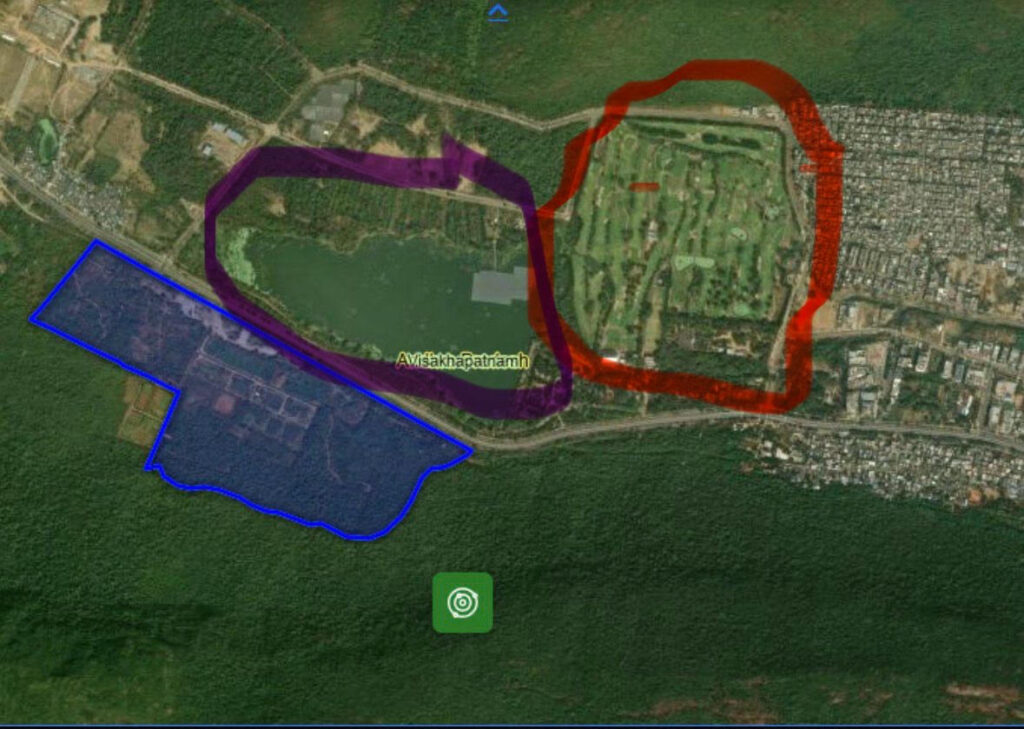
When HRF filed an RTI with the forest department, they were told the land falls under the domain of the revenue department. But regardless of the administrative holder, the legal status of the land doesn’t change and the Forest Conservation Act still applies, the group said. They have called for an “ïmmediate halt” on all land acquisition and clearance processes.
Researchers say states like Andhra Pradesh are approving data centres without conducting a cumulative study across land, water, energy, and livelihoods, and not assessing the impact of clustering multiple hyperscales in one region. This siloed approach strips community agency and fails to see the socio-ecological consequences, noted a DEF study titled ‘Just AI, Just Land’.
Post construction, data centres have new legal escapes to evade scrutiny. Data centres when labelled “essential services” or put under public purpose laws exempt operators from inspections under several labour laws, including the Maternity Benefit Act, Contract Labour Act, Payment of Wages Act, and Minimum Wages Act.
The Ministry of Information and Technology (MeiTY) and Telephone Regulatory Authority of India (TRAI) have both proposed incorporating data centres in the national framework of the Essential Services Maintenance Act, 1968 (ESMA). They have not provided studied reasons for this besides the “capitalistic need for uninterrupted operations,” said Indumugi.
Feisty Federalism
Telangana was the first Indian state to publish its data centre policy in 2016, just two years after it was newly carved from Andhra Pradesh. The state had its share of anxieties around economic neglect, and also an inheritance of HITEC City, which had been built in the 1990s under the then chief minister Chandrababu Naidu.
Telangana’s 2016 Information and Communication Technology (ICT) policy took note of this. “Telangana…is an outcome of decades of struggle against discrimination, suppression of opportunities and rights. Now that we have become masters of our own fate, we must ensure that every sphere of economic activity that can propel the state towards the vision of ‘Bangaru’ Telangana is realised,” the then chief minister K Chandrashekar Rao wrote.
The data centre policy, with its cascade of subsidies and exemptions, was one answer to Telangana mastering its own fate.
“It’s not just one particular data centre, it’s the data centre and tech regime we’re talking about,” Arpita said, referring to the landscape already shaped by 25 years of pharmaceutical industry expansion.
States are undercutting each other on stamp duty waivers, electricity exemptions, interest subsidies, and guaranteed uninterrupted water and power supply. The Andhra Pradesh Government in April also granted Google a license to distribute and procure power, the first state in India to do so.
The HRF called the move “ironic” – Google is receiving concessional treatment whereas in the West, energy-intensive data centers are often charged higher electricity tariffs to reflect the costs they impose on the power system.
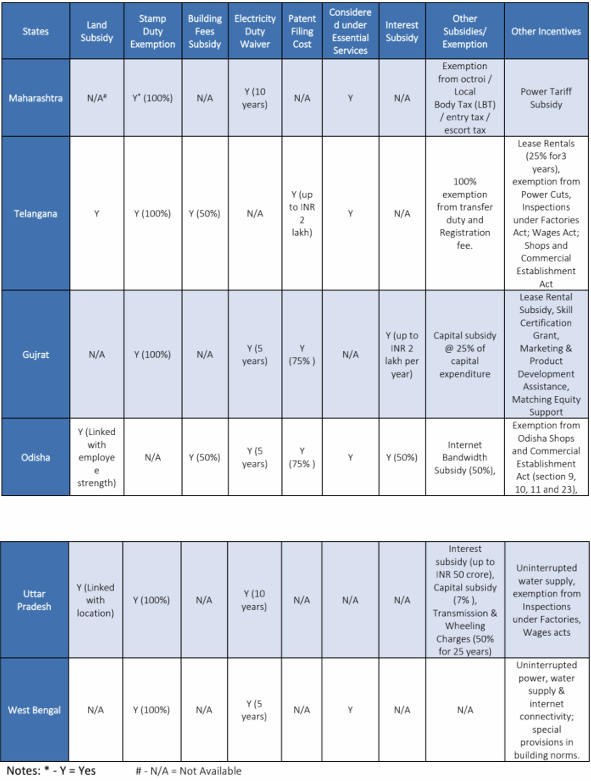
Months after the AP government partnered with Google for a massive AI hub, Telangana in July announced Amazon’s biggest data centre in India at Rs 60,000 crore.
When Naidu built HITEC City in the 1990s in undivided Andhra Pradesh, land was acquired from 17 villages on Hyderabad’s periphery, displacing farming communities in favour of IT parks to rise. Even then the state was the facilitator and land was the instrument. Other states have since implemented a similar architecture to reduce regulatory compliance, each outbidding the other.
In the end these policies are designed to reduce friction and cost for industry, not safeguard land equity, said Mili Dangwal, a researcher at the Digital Empowerment Foundation.
Engineering Opacity
Public information on data centre construction is scarce or absent entirely; whatever has emerged is through investigative reports, whistleblower accounts, activist pushback. Information asymmetry is a significant barrier, Indumugi said: “One worry is that lands are being acquired elsewhere without the knowledge that these will go towards constructing data centres.”
HRF has filed RTIs to understand how land flowed between different departments and trace the regulatory pipeline. The officials have deliberately stonewalled information, citing third-party confidentiality, said VS Krishna.
“This is not a secret deal between Adani sahab and the government for weapon systems or missiles…This is not a mall or a multiplex – this is a $15 billion investment, a developmental project,” he added.
Public discourse online is similarly being stifled. At least 20 reels critical of the proposed Adavivaram-Mudasarlova data center project were blocked on Instagram; Change.org campaigns and YouTube videos also pulled down, groups allege. After women in Tarluvada publicly refused to give up their lands, a video went viral but Meta restricted the video citing orders under the Information Technology Act.
There is also no disaggregated record of specific data centre uses within these documents. How much land is acquired and where? What type of electricity is used? How much water will cooling operations need? The lack of transparency is one way of minimising public pushback, Dona added.
A DEF study in Telangana found women in the Mekaguda and Begarikancha region did not distinguish these complexes from other industries such as chemical units in the area. From the outside, they also look like regular industrial buildings, without designated labels, not evoking instant alarm or concern. This, Mili explained is “something they have witnessed happening over many years, across successive waves of industrialisation”.
Manufacturing Consent
In India conversations around hyperscalers’ impact on the environment and their unimpressive job record are nascent, as we mentioned, and consent is thus being bought through “coercion and enticement”, VS Krishna said. Communities are offered generous amounts of compensation, promised infrastructures (such as a Dalit complex in Tarluvada) and employment opportunities across the AI supply chain.
For under construction and operational data centres, these prosperous claims haven’t materialised. In Meerkhanpet, where the AWS data centre is coming up, land prices have reportedly risen 5–6x in two years, according to Mili.
Compensation too is pending or contested. The LARR mandates evaluations up to four times the market value for rural areas and two for urban locations. However, in Telangana’s Mekaguda, the CPI(M) alleged farming communities received only Rs 7,70,000 for the land that was worth over Rs 1 crore. In Andhra Pradesh’s Tarluvada, Dalit families are demanding pending compensation, alongside promised jobs and rehabilitation.
Scholar Usha Ramanathan pointed out that the development paradigm remakes the relationship between a community and its resources, stripping away other dimensions of what resources like land means – as inheritance, social standing, material legacy.
This matters for caste marginalised communities for whom land ownership is most precarious. The 2011 Census found that 58.4% of rural Dalit households own no land at all, and 92% of SC landholdings are marginal, comprising just 9% of total agricultural land in the country. Telangana’s Socio-Economic, Educational, Employment, Political and Caste Survey 2024 found that Reddys, who make up just 4.8% of the state’s population, own 13.5% of its land — while several SC and BC communities have the least land and asset ownership.
Communities then have limited bargaining power to negotiate compensation that is inadequate or disputed.
The Indian government has projected nearly 1 lakh engineering jobs by 2030 but global evidence suggests otherwise. Data centres are among the least labour-intensive structures, large projects promise only a few hundred permanent workers while construction jobs are temporary, according to a Brookings report.
In Mekaguda, for instance, residents report being offered local security gigs despite holding graduate degrees. Amber* has been fighting a court case for fair compensation for the acquired land his family sold. An engineer by training, he now works as a security officer at a data centre.
The Pushback
In the US, Ireland and the Netherlands, sustained community and legislative resistance has succeeded in pausing or redirecting data centre construction. There are presently legal challenges in Andhra Pradesh and Telangana High Courts; HRF has challenged the Tarluvada and Rambili before the National Greens Tribunal in Chennai.
Communities are also campaigning to have a say in the AI story. In the US, companies are required to negotiate Community Benefit Agreements before construction. The local governance institution becomes the first frontier, in a way the local panchayat should, asking questions about the land needed and resources in question, and even negotiating specific safeguards – say renewable energy grids or wastewater treatment.
In India’s case, Dona thinks there’s still a need for more awareness and transparency about how data centres function and what resources are used. “When the community doesn’t know what the infrastructure is, and then doesn’t know what the impacts are, its ability to negotiate becomes hard.”
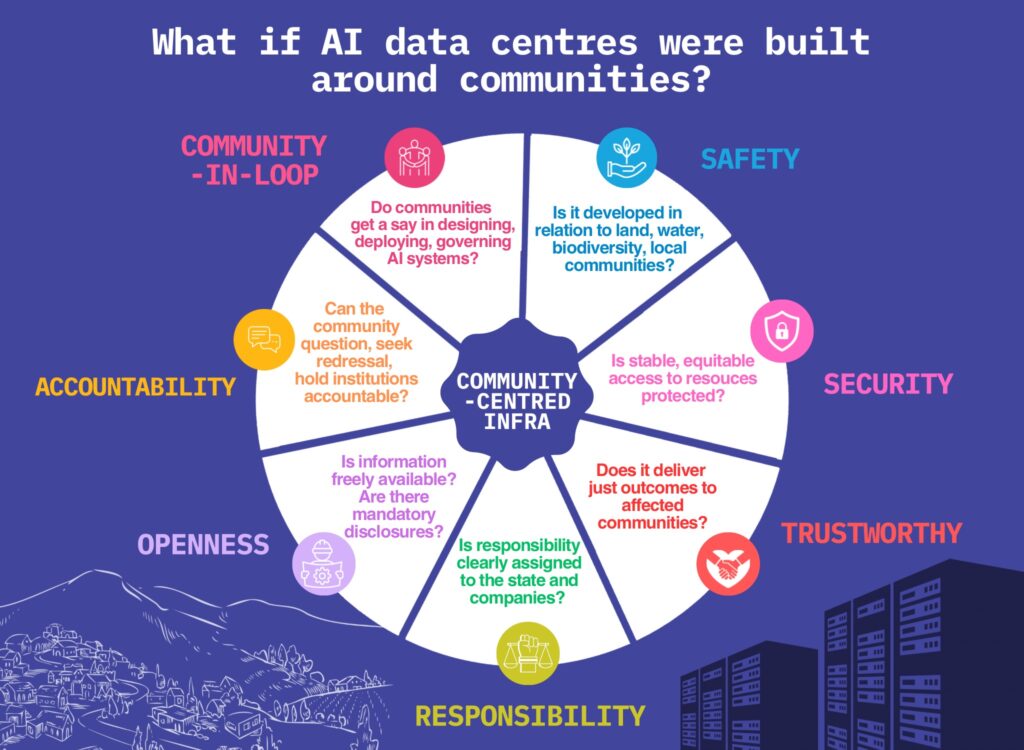
Arpita concurs, adding that while valuable, importing any framework wholesale comes with risks. “Communities are not a monolith category. There are power asymmetries within them, some are landed, some are not. Some of them come from more marginalised communities while some have allegiance to political parties or the existing industrial landscape where they find jobs.”
Not everyone benefits, and not everyone loses.
In India, public opinion also unfolds in the long shadow of the BPO era, where tech investments are associated with jobs and upward mobility. But VS Krishna thinks we might be close to a turning point. The third data centre on the Mudasarlova reservoir is, according to him, the weakest link. “It sits bang on top of the catchment of a reservoir that supplies drinking water to the entire city…People have realised that there are no jobs to be had, that we’re handing over so much of our resources. Nobody in their right mind is going to agree.”
He is hopeful. “There’s public resistance building slowly over here, now that things have gotten so brazen. I wish there was more…[but] we’re doing all we can.”
This story was produced with support from Report for the World, a global media service strengthening local independent journalism.


We believe everyone deserves equal access to accurate news. Support from our readers enables us to keep our journalism open and free for everyone, all over the world.
