Care Diaries: ‘It Is An Odd Thing, To Be Both A Daughter And A Mother’
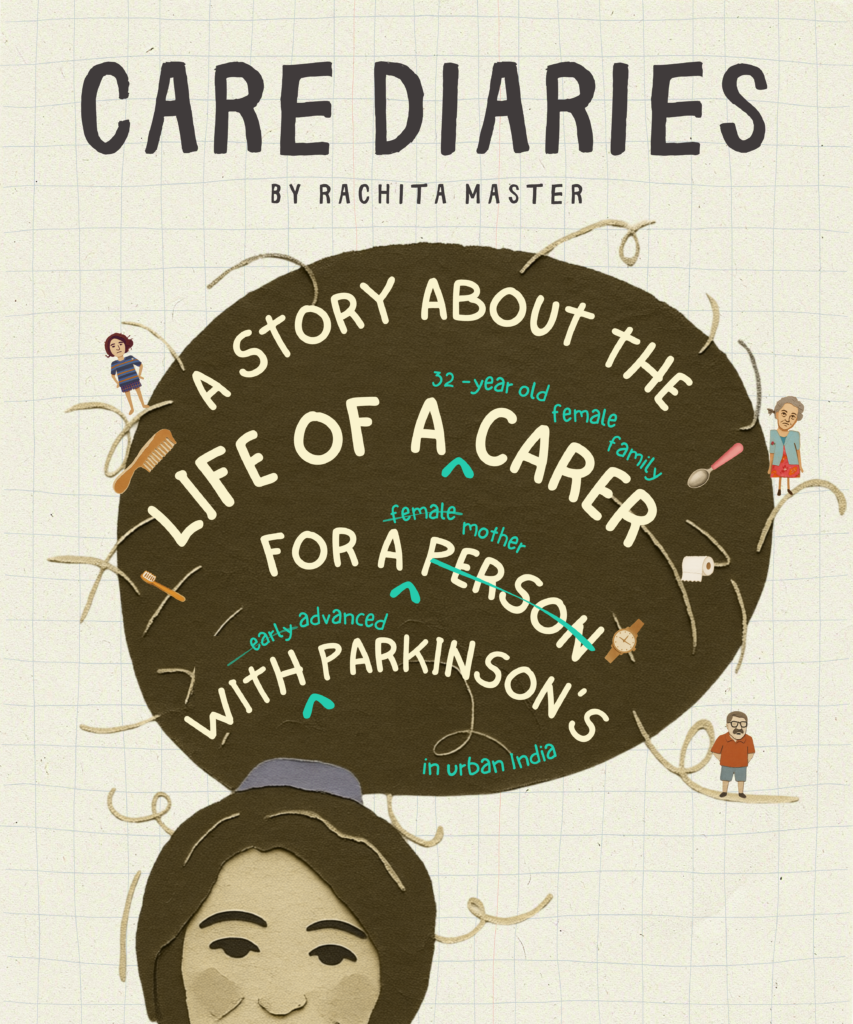
A chronicle of a 32-year-old woman’s caregiving, burnout, and search for community after her mother's diagnosis with Parkinson's Disease
I. The Beginning
It was 2020, peak pandemic. I had recently joined a master’s degree after ten years of working as a design researcher. It was then, when a new life awaited, that I found myself at home. Caring for my mother.
We had watched the gray clouds gather. The diagnosis confirmed what we feared. It was still early days of her Parkinson’s. Her movements had slowed down over weeks, then months. She leaned on me for support – to manage her medicines, create an exercise routine, give her a bath. I did this while trying to live a “normal” life. You know, finish my course, find a job, take out time for my partner.
Because life shouldn’t stop. (It can’t stop.)
I was 32 by the time the course ended. By then the disease had progressed too. Maybe I could work from home? But home had ceased to be so. It was a strange space filled with new sensations, sights of clutter and chaos, sounds of my mother’s involuntary groaning. Chaos of a body in revolt.
I stayed, not fully convinced, not knowing what I was getting myself into.
You don’t decide to be a caregiver. One day you realise you are. It was not a single decision. It wasn’t even my decision. It was something that had to be done. That I expected from myself. That was expected of me.
This is my story.
II. ‘Just’ Caring
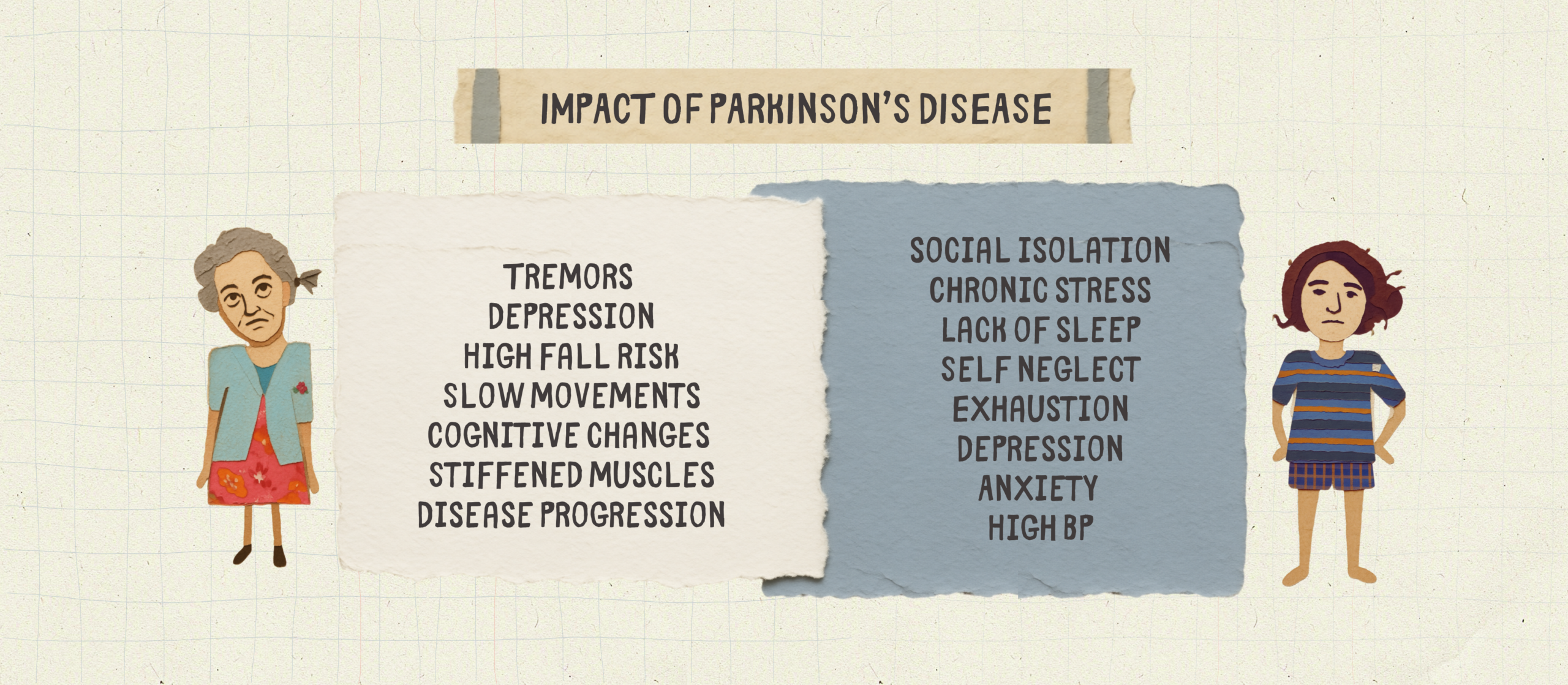
There was a strange, childlike quality to mom’s disease. She often lost balance, moved slowly around the house with small steps. She said she felt stuck, as if her feet were frozen (the medical term for it is “freezing of gait”, I learned later). Her muscles weakened, it got harder for her to swallow, and tremors made it difficult to even hold a spoon at times.
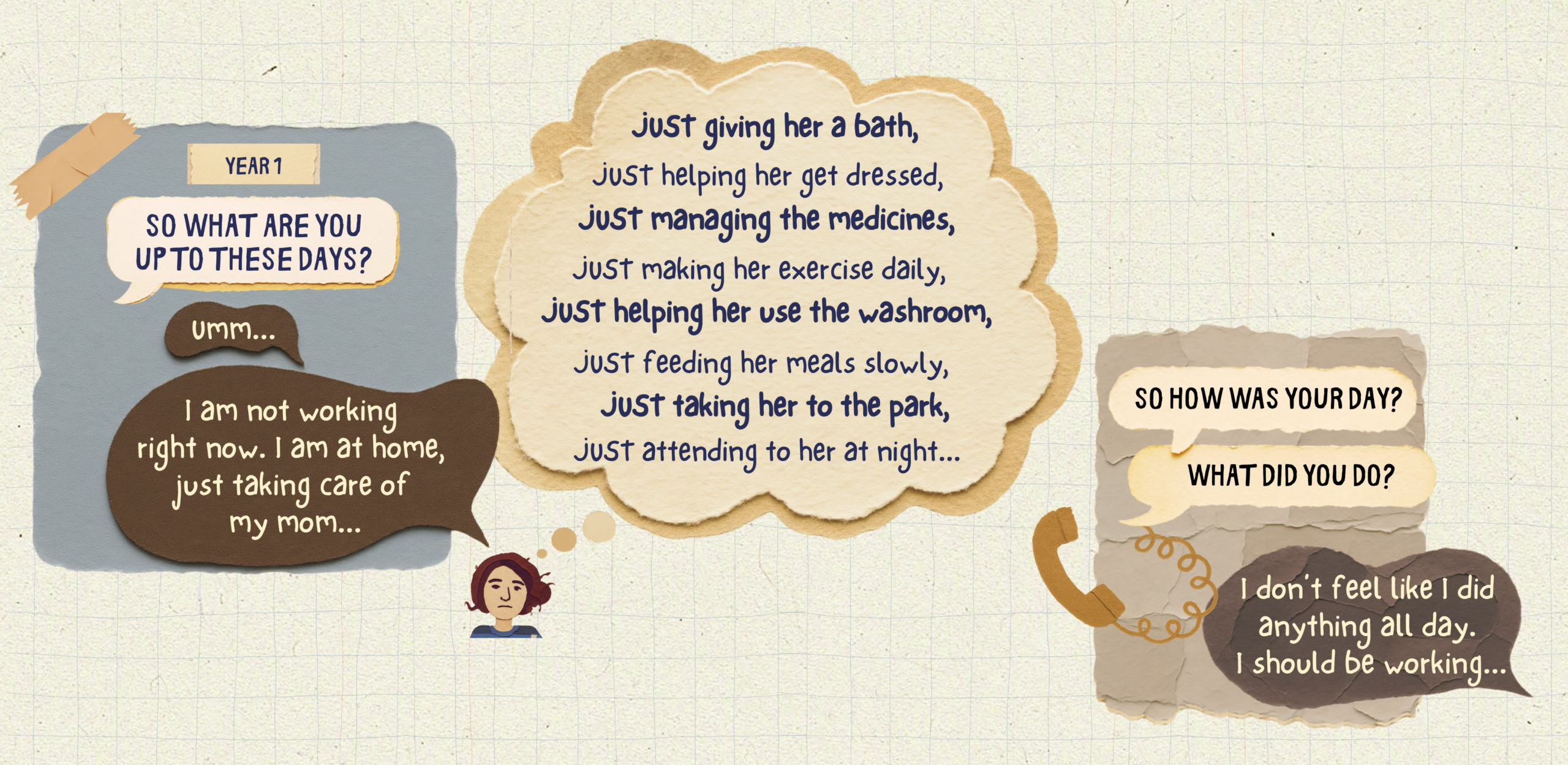
I felt the same slowing of time. Two years since I went from packed Google calendars to sitting at home all day, every day. What did I do? Just things – six or seven some days, eight or nine on others – but things that summed up to one big nothing.
I convinced myself to see her disease as a design thinking project. Understand what she needs, learn everything about her disease, ideate, prototype and iterate solutions. This would make things easier. This was the only way I knew.
III. Mothers And Daughters
My friends moved forward in life with promotions, marriage, kids. I too had a baby to care for – only, there was no label or template for my motherhood. I was an adult daughter caring for her mother. How was I to be?
Curiosity dominated those days. I pulled up half-remembered notes from a medical sociology class, followed stray footnotes into gender theories. I chased anything that could provide language and meaning to my reality. Because the truth was this: PD affects more men than women globally, and women are the ones who disproportionately care for them. There are also gender differences in how a disease is experienced. Women see themselves as carers and are hesitant to accept care from others. In India – and perhaps the rest of the world – the responsibility of family care falls on us.
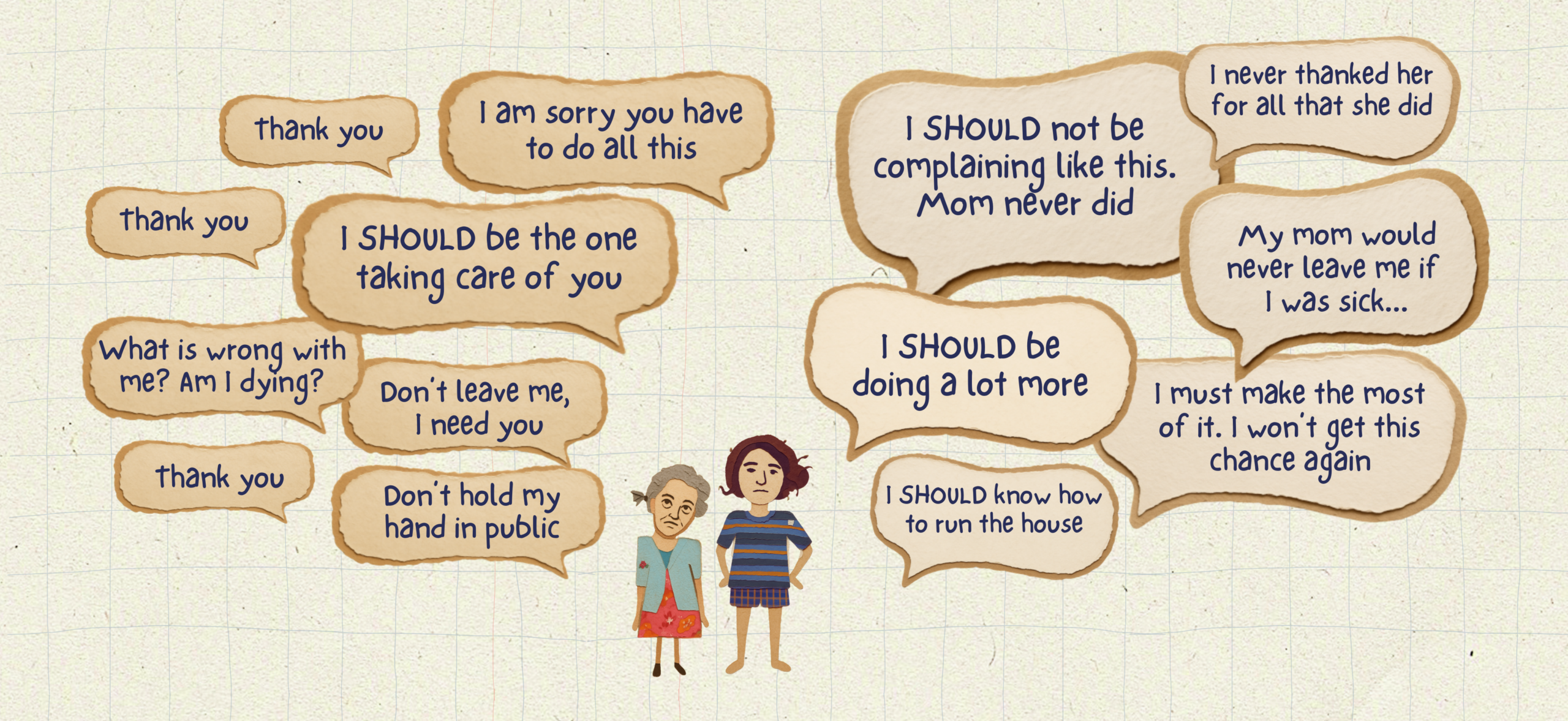
We were raised into it, to care was our moral responsibility, and so the emotional burden – guilt, anxiety, depression – washed over with tidal intensity.
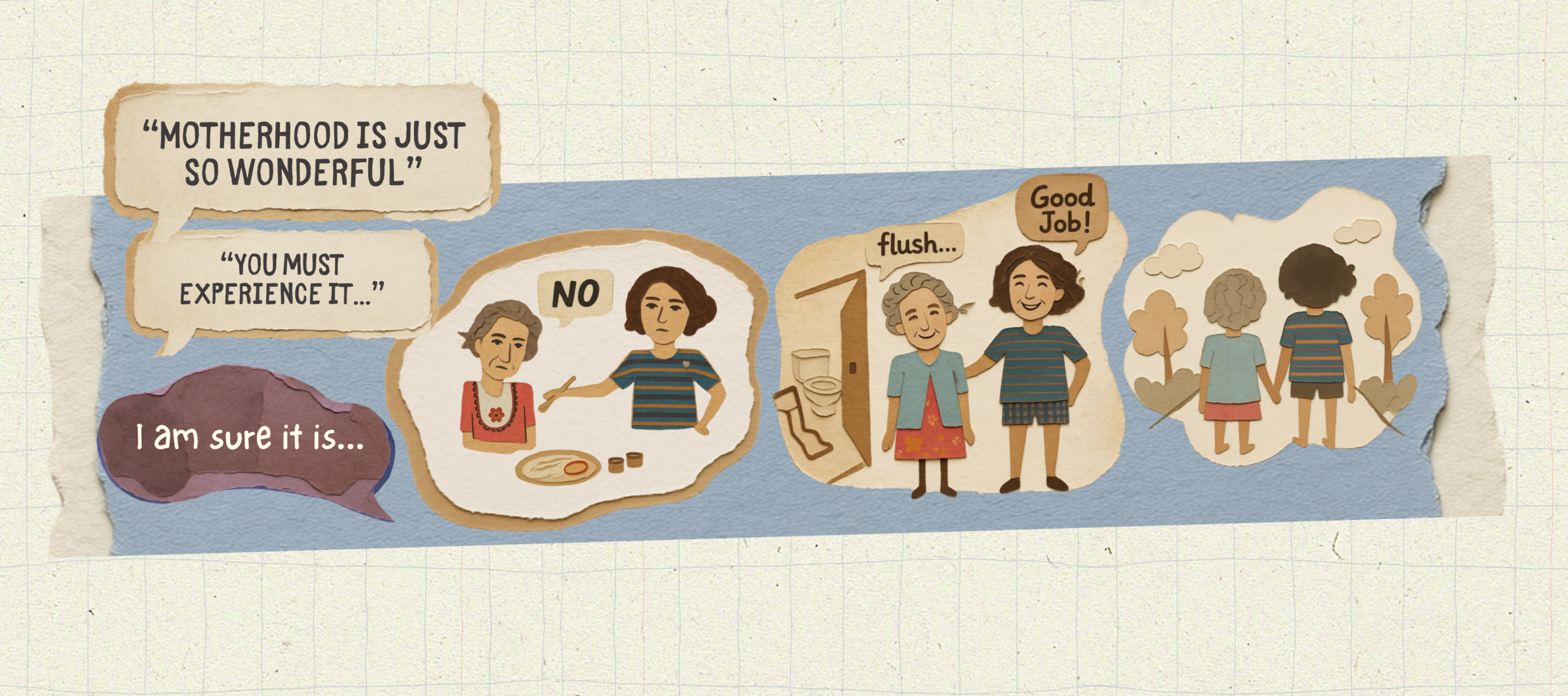
Mom had her own reservations. She wanted to be the ‘good mother’, dutiful and caring, so she resisted this role reversal. What was she like before? I can’t remember her.
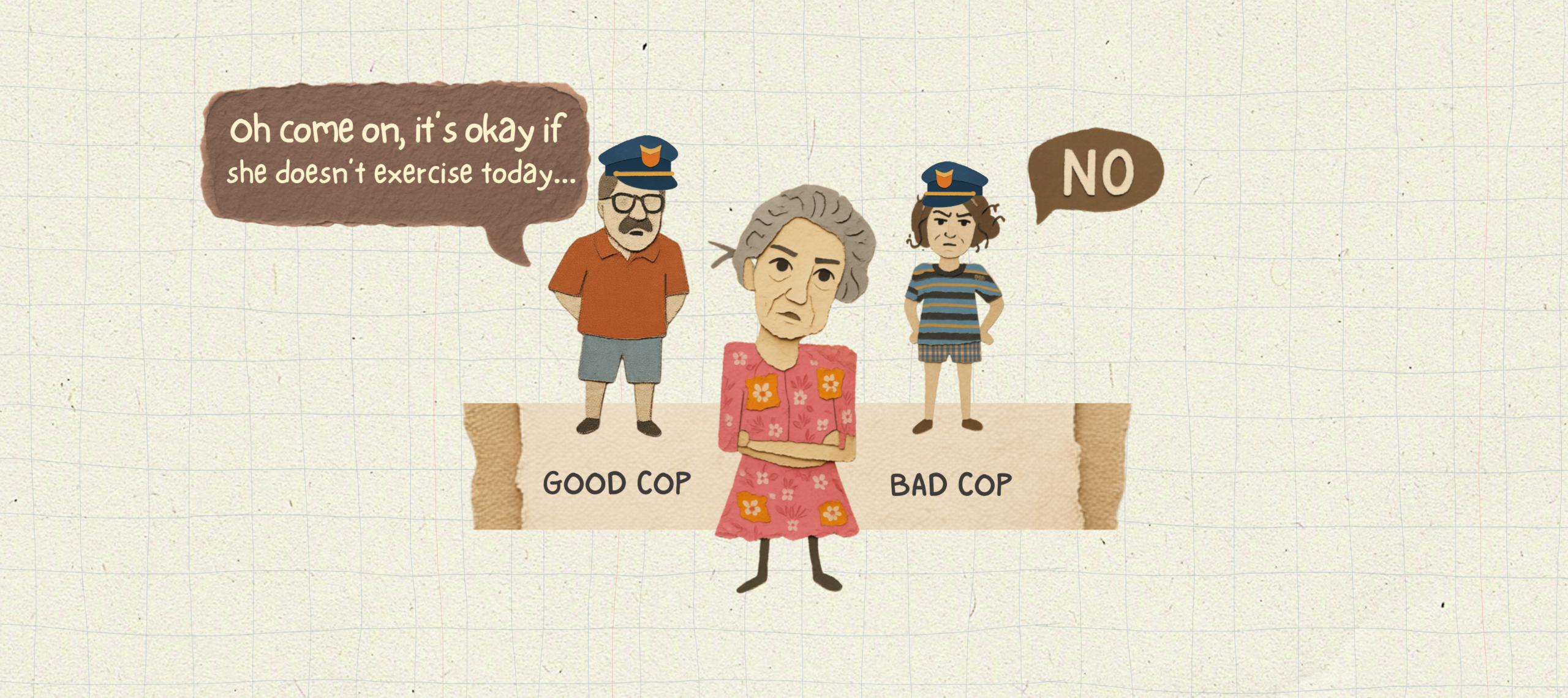
In the end, we managed daily wins that lay outside regular checkboxes. I wanted to be gentle and caring, like her, but I needed to be strict.
It is an odd thing: to be a mother to a mother. To be both a daughter and a mother. I thought these labels would help, but they were just words in the end. They couldn’t keep up with us.
IV. The Invisible Second Patient
In Parkinson’s, dopamine neurons lose their function even though they are still present. These ‘zombie neurons’ are essentially undead. Which is why Parkinson’s patients describe bouts of fog and fatigue as being in a ‘zombie state’.
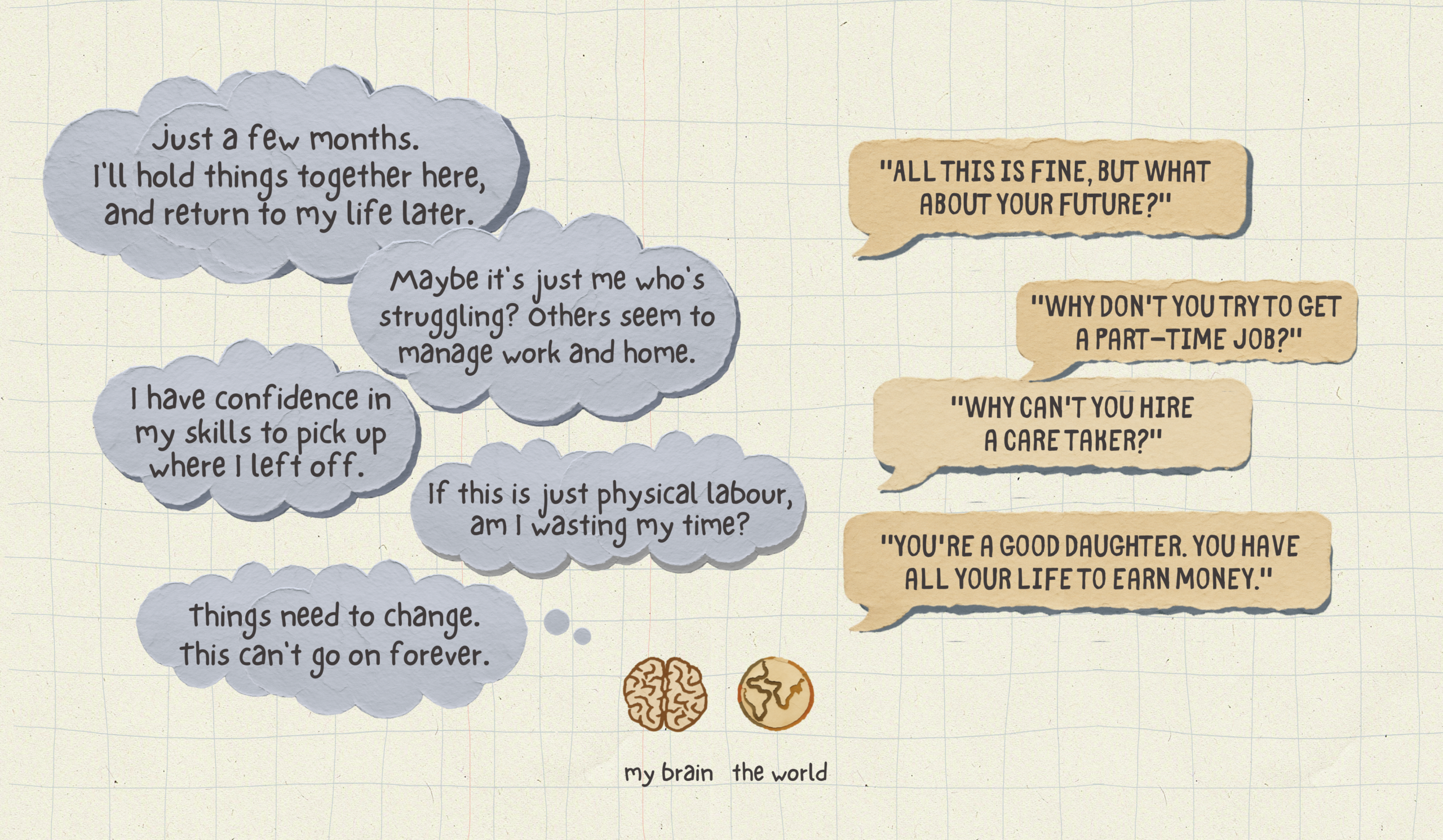
I was operating on the opposite frequency. My brain was constantly at work, aimless and incessant. Am I wasting my life? What am I sacrificing my life for? What do I talk to friends about? How do I spend money on myself when I am not earning anymore? Am I doing my best for her?
There was an alertness to my days. I could sense the lightest twitch and the softest moan even when she was asleep.
The mind ran and muscles ached. I lifted her from the bed to the portable commode, sometimes multiple times in one night. I did things alone, because I didn’t know who to ask or how to ask. Or even what I wanted to know. How to turn and roll someone in bed? How to ease their discomfort? How to lift someone without breaking your back?
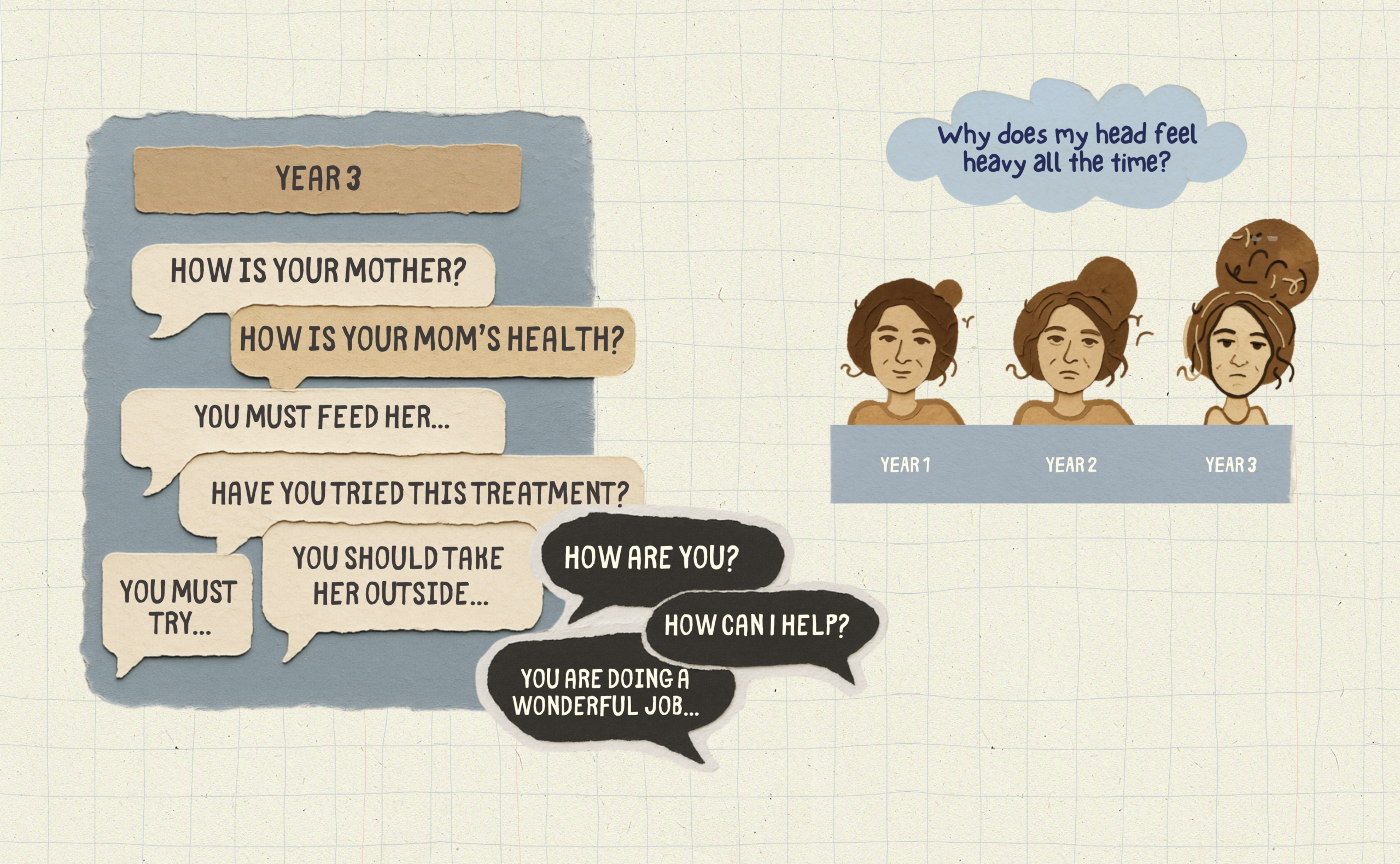
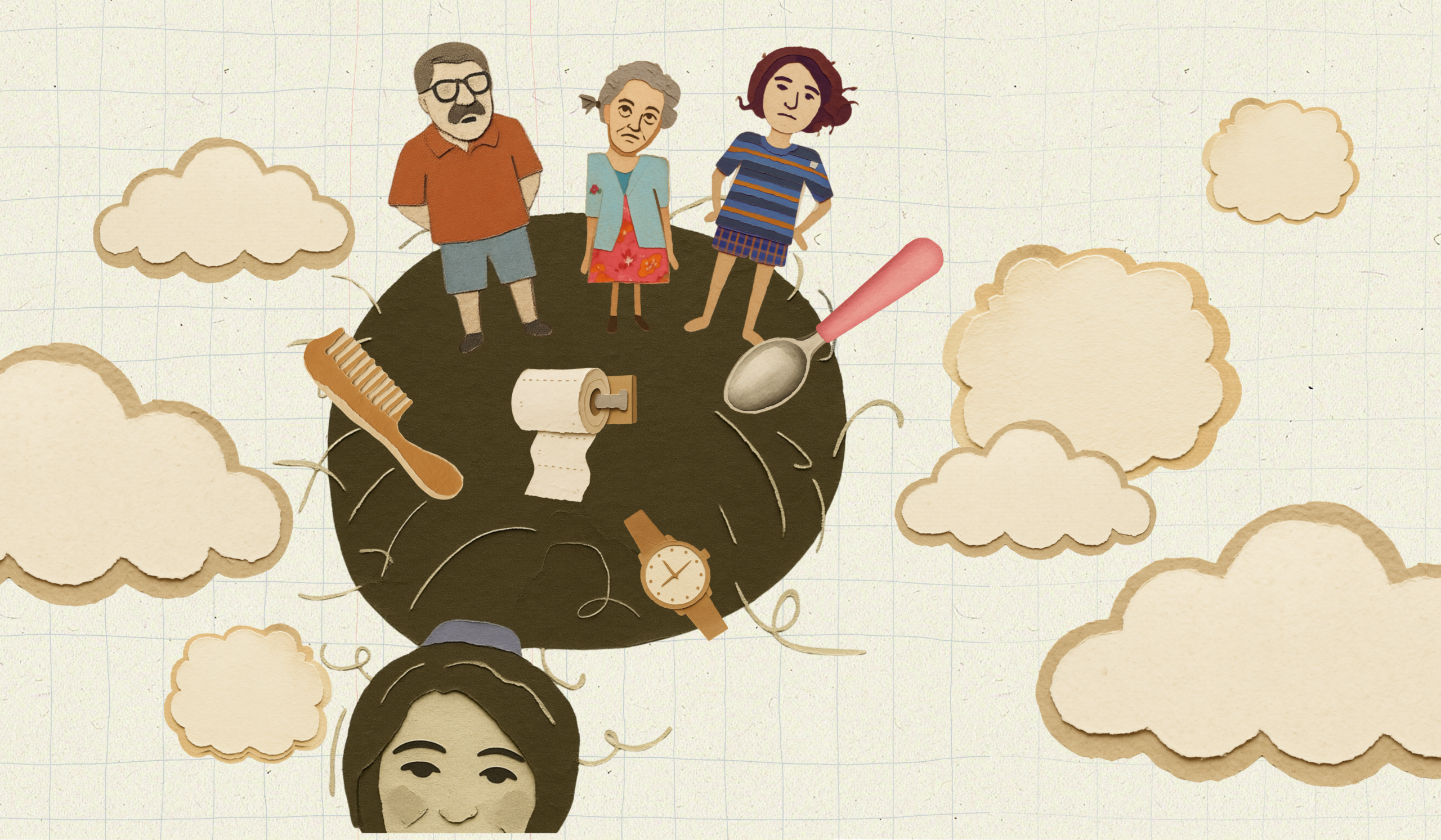
Female caregivers, particularly those caring for male spouses with PD, consistently reported higher levels of caregiver strain, burnout, depression, and anxiety compared to male caregivers. In my head, I imagined our shared anxiety as an ominous, swollen cloud, about to let loose an endless stream of shoulds.
V. Care For The Carer
Three years in, and her condition had worsened. The clouds had settled over the house, over me. I lost weight. I wept without reason and without end. I felt miserable, from the moment I opened my eyes to the time I forced them shut.
I needed to step back. But how do you say that out loud, who would understand the maddening fatigue of this disease? I felt embarrassed, uncomfortable. I need help, I need to care for myself now. I had created a new sense of self but now I had to let it go.
I had to separate love and care.
We were privileged to afford external help from time to time, including domestic workers and part-time nurses. These women were gentle, generous with their attention and affection. I felt grateful but guilty. This wasn’t just any job; I wasn’t paying for just another service. I was purchasing my relief by outsourcing labour to women who already have families to care for and patients to look after, to perform a role that wears me down. Do they have the luxury to look after themselves? How do I ethically compensate them?
I didn’t have answers. I’m still looking.
VI. Web Of Care
This support system allowed me to turn attention to myself. I needed a release from this torrent of feelings inside me. I needed time to care for myself. To heal? Or to be selfish (so I can care for her again).
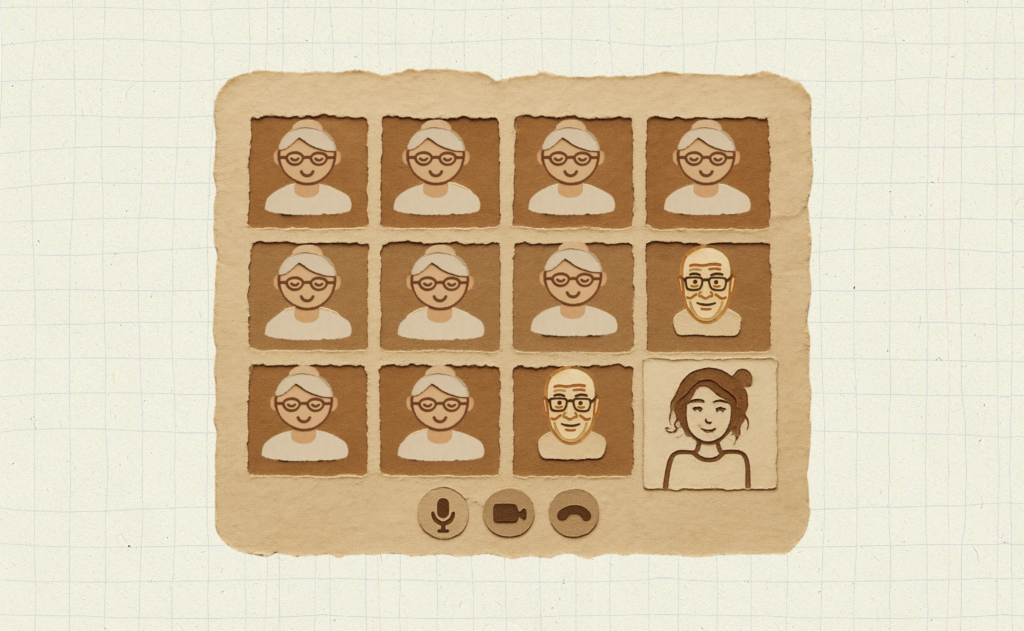
My friend told me about the Parkinson’s Disease and Movement Disorder Society that ran caregiver support sessions. There was no one my age there, but I had found community. It was precious, I’m still holding on to it.
On Mother’s Day this year, I tried therapy. I felt ready, it felt right.
What has existed, and continues to be, is a support system that best resembles a patchwork rather than a plan. Some days an aunt sent my favourite meals, other days I go to an uncle’s place for refuge and respite. My sister introduced me to the world of jigsaw puzzles. New routines are being stitched in where the old ones tore.
VII. A Label Of My Own
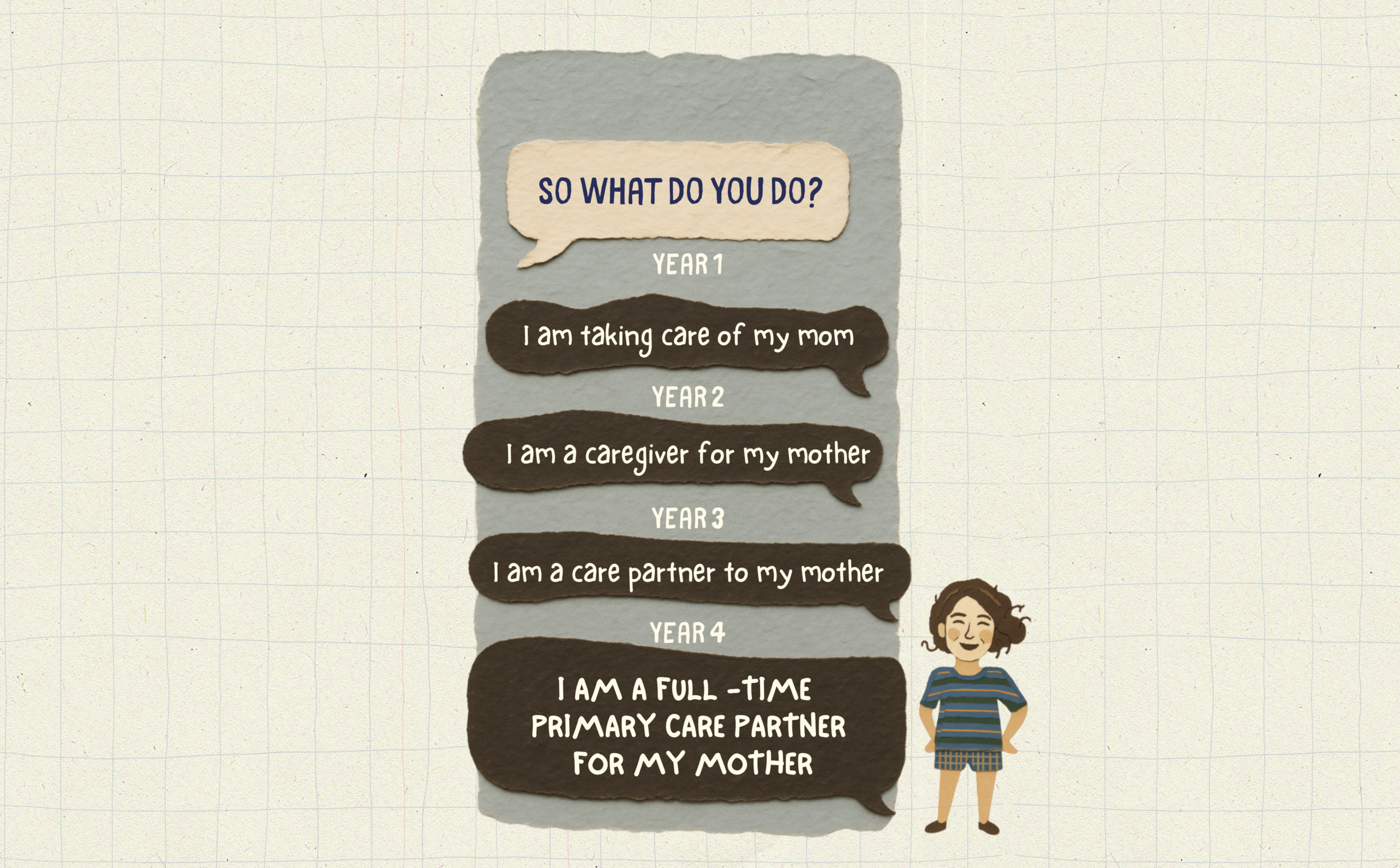
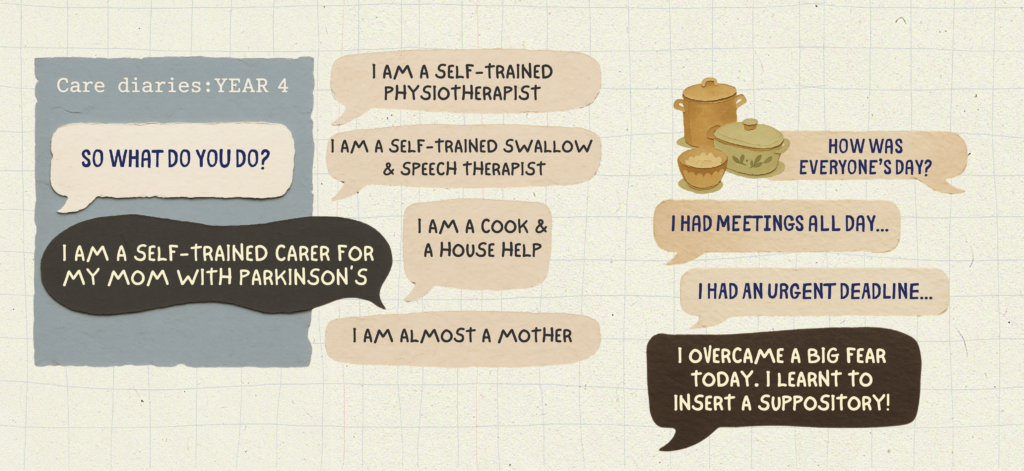
Carer, caregiver, care partner. I couldn’t describe to myself or others what I did or who I was becoming. In conversations I fumbled over my identity, sounding vague and cryptic, trying not to let it define me. Occasionally the C word was uttered or a duty described in a muted response, and it brought conversations to a halt. “Sorry I can’t, I am babysitting my mom”. “I am on night duty.” No one knew how to react. I wanted neither their awkwardness nor their pity.
I kept playing with adjectives and verbs to construct my identity. My vocabulary developed, and with it, my confidence. I felt in control again, of my days and nights, of my work and worth. I realised I had to redefine, create my checkboxes and categories, and celebrate my own wins. Finding the right language made my own work visible to me. (I realise now I am privileged to have this vocabulary).
It’s like learning a bird’s name after spotting it every day: one takes notice of the hop, the colourful plumage, the phrases and notes buried in the song, and if one is so inclined, even the species and their migration. Recognition comes flying on the wings of a name.
VIII. Present Continuous
The world has certain expectations of what you should be doing at a specific age. Carework, at this age, felt like stepping out of time. There was a sense of displacement. My response was to recover that time, in the hope that it will save me. If time was not moving in a way it was desired to move, I learnt to recalibrate. I learned to value that time differently from others.
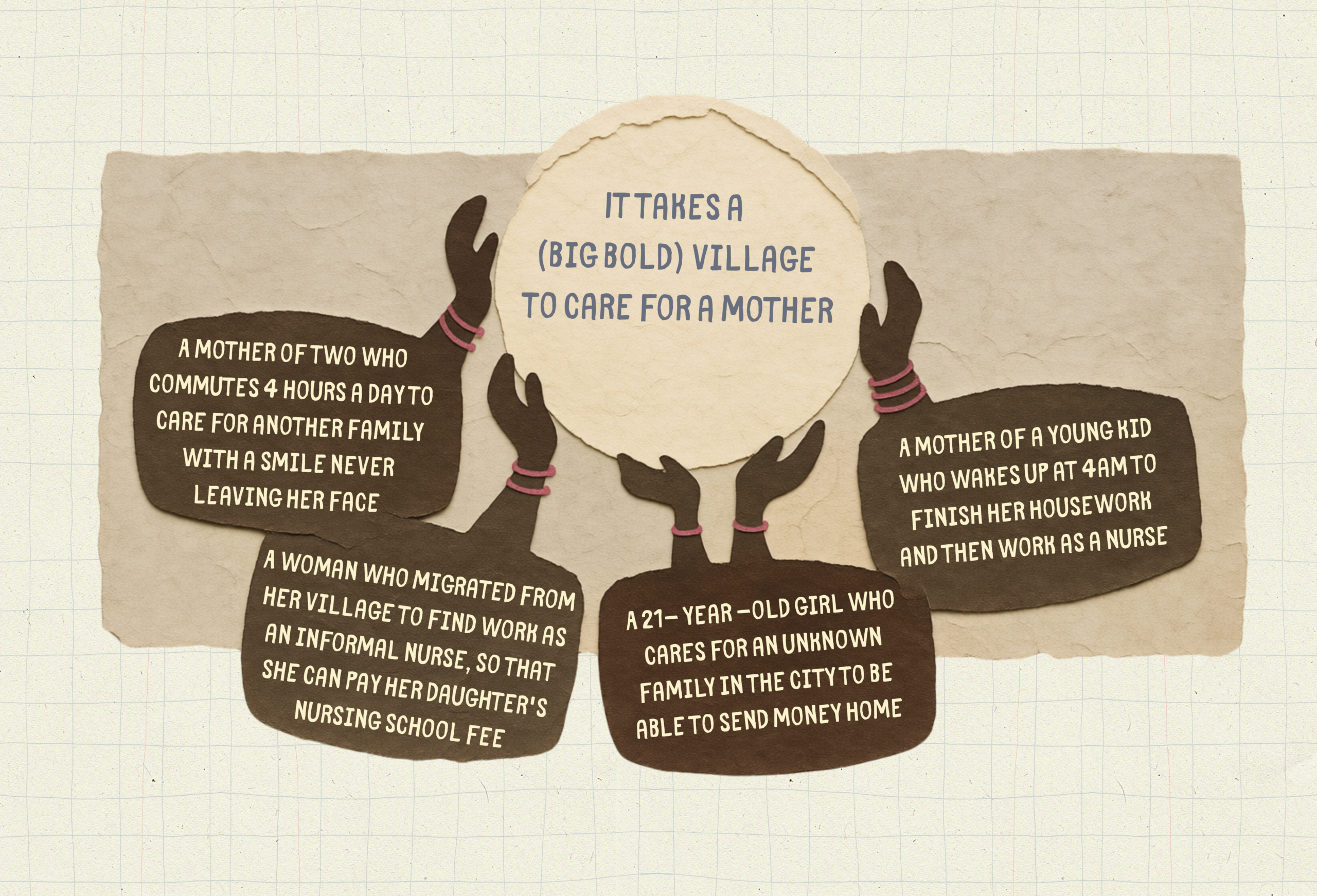
I now notice carers everywhere. My school principal, in her 80s, cares for her older sister. Men and women in their 70s serve as primary carers for spouses. Women in their 40s raise children while looking after elderly parents and in‑laws. Teenagers step into caregiving when a parent or sibling becomes chronically ill; some relocate with patients for long‑term treatment. I’m a millennial caregiver too, as many of us soon will be.
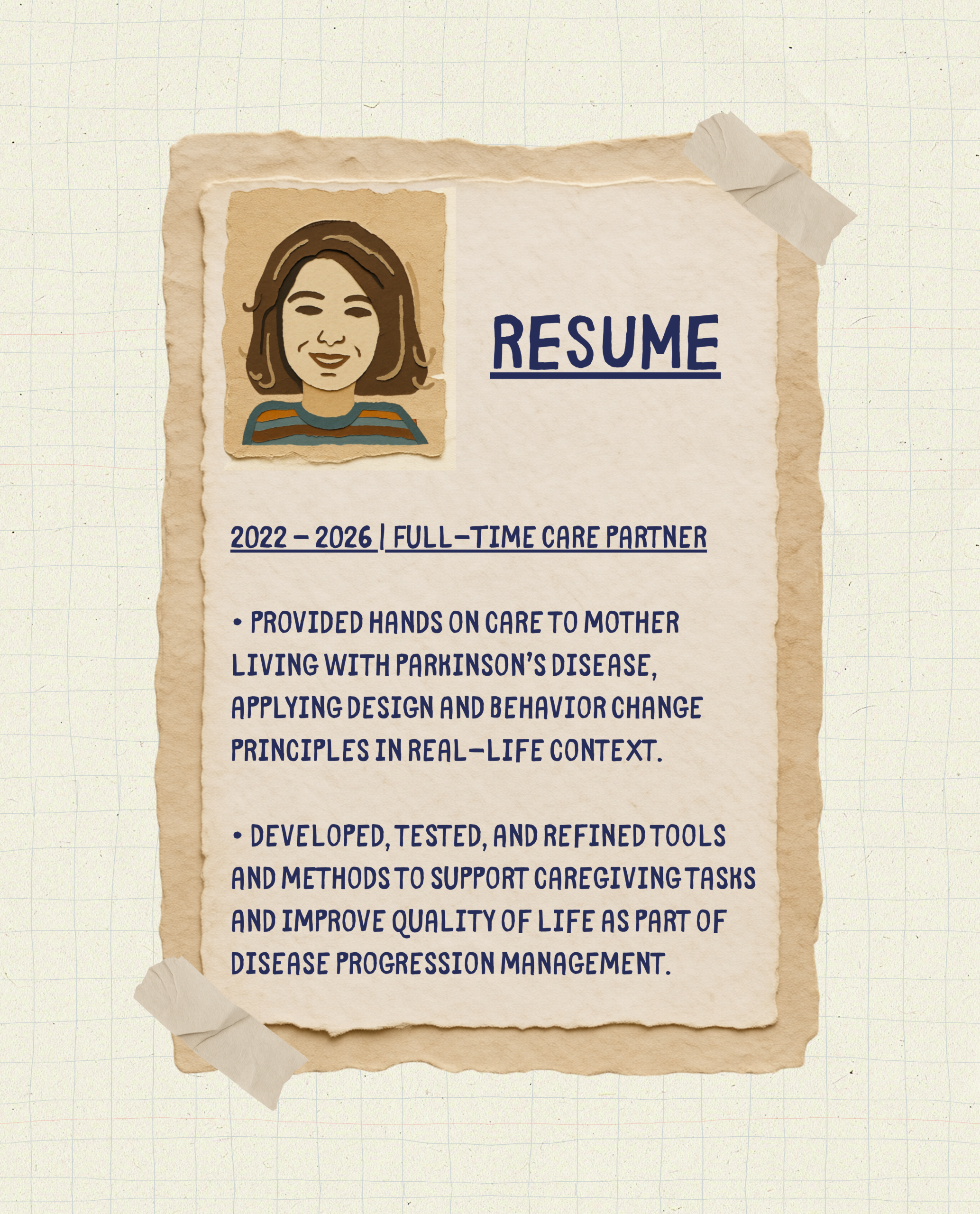
Despite this diversity, carers share a common invisibility. Our labour is routinely unrecognised, unsupported by systems, and made harder to sustain. Communities of support are rare. I wish we could reimagine this idea of who a carer is and what they do. It would make the first step to providing the formal and informal support caregivers need.
And it will, I hope, help us find one another.
We believe everyone deserves equal access to accurate news. Support from our readers enables us to keep our journalism open and free for everyone, all over the world.