BehanVox: The Logical Discrepancy Of SIR
This week in BehanVox: the delimitation push, love in the time of caste, and more

Subscribe to our weekly newsletter that brings you top stories, gender news from the world, and our team’s reading recommendations.
Hello and welcome to BehanVox!
After the staggering chaos of an exceptionally stringent and exclusionary SIR exercise, the deletion of voter names in millions, and the useless promise of adjudication that will not help the disenfranchised this election, West Bengal finally goes to vote the next week. As does Tamil Nadu where superstar and potential disruptor Vijay makes his political debut amidst extreme – both a sweeping triumph as well as a total wipeout. At the Feminist Election Newsroom, we pulled together striking data painstakingly pulled together by the research body, SABAR institute, to estimate how disproportionately women from marginalised communities lost out the right to vote in the roll revision. We wrote on how transgender voters struggled to deal with the SIR and had to make do with dead names and gender. We also marked the Dalit History Month with a tender yet powerful love story on what resistance means in romance.
Elections these days are also exercises in competitive cash transfer announcements for women. In Tamil Nadu, they have been framed as Urimai- or right. How do we make sense of these Universal Cash Transfer schemes, unpaid care and what good policy design must look like? These are questions we will be taking to Dr Prabha Kotiswaran and Dr Varna Sriraman, who have worked on these themes across states. Sign up for our FEN and get exclusive (free) access to this webinar.
Story So Far
Early this week, the Supreme Court remarked that the SIR in West Bengal deviated from the procedure it adopted in other states by inserting a new category for scrutiny – “logical discrepancy”. These could refer to a mismatch in parents’ names, low age gap with parents and the number of children of the parents being more than six. Having said that however the court dismissed the petitions of those excluded who had appealed to special tribunals. This means that it is a certainty that those who have sought adjudication — around 34 lakh — will not be able to vote this time.
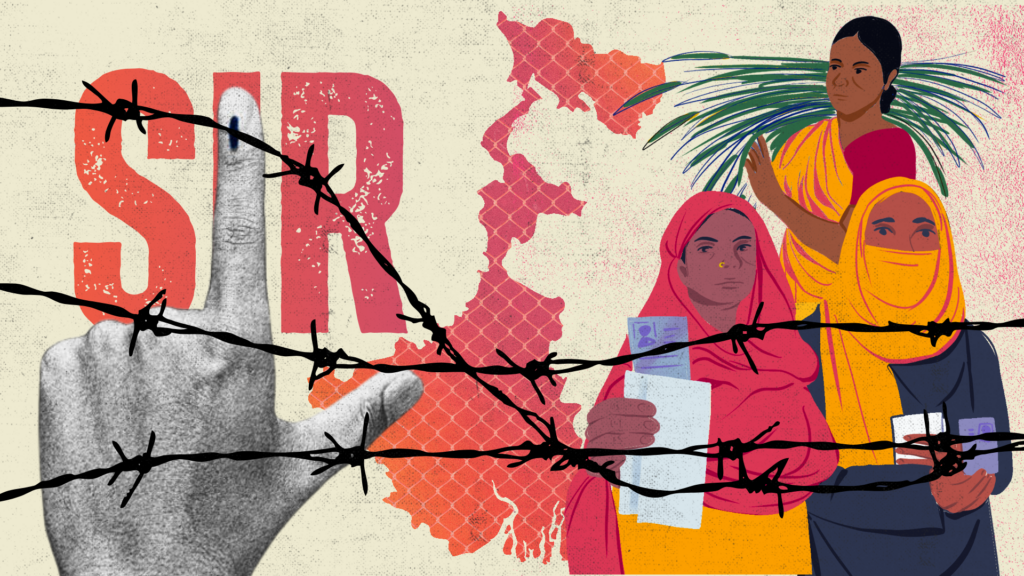
This particularly bruising revision exercise has left women voters more deeply impacted than men, found an exclusive investigative story in which BehanBox collaborated with the Kolkata-based Sabar Institute, which is focussed on evidence-based research aimed at inclusion. The numbers the researchers estimated are shocking – almost 61.8% of voters who were deleted (or under adjudication) from West Bengal’s electoral rolls after the SIR are women.
As many as 61,93,386 eligible women voters will not be able to vote in the upcoming state assembly elections. It is telling that the deletions are heavily concentrated in constituencies that have large populations of marginalised communities, including Muslims, Scheduled Tribes and Matuas. Women make up more than half of the deleted voters in over 88% constituencies. The deletions, the data show, are heavily concentrated among women in constituencies with large populations of marginalised communities, including Muslims, Scheduled Tribes, and Matuas.
It demonstrates that an exercise like the SIR, which relies on the presentation of documents and legacy linkage, disproportionately affects women, as was the case in Bihar. The only constituencies where women were less affected than men were urban ones like Kolkata. In absolute terms, Murshidabad and Malda —both Muslim-majority districts—recorded the top 10 constituencies with the highest numbers of women voters removed.
The primary cause for deletion of women voters, according to ECI’s disclosure, was that they ‘permanently shifted’ – likely due to marriage. Marriage, as per Census 2011 data, was the most important reason for migration of women. A process like SIR that asks a female voter who is already marginalised — who does not own land, and often lacks educational or formal documents — to produce proof they simply do not have, takes away the one document that establishes identity and political power: a voter card.
Read our story here.
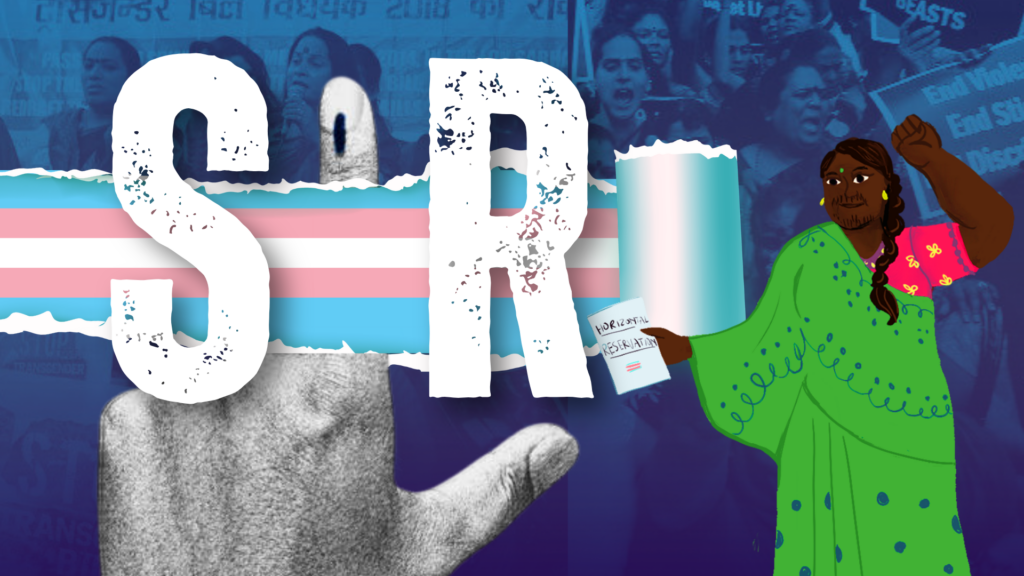
The election process was never an easy one for the trans-queer community. Gender identity, name, permanent address, constituency – these are all problematic issues that add a certain precarity to their very citizenship. BehanBox has reported extensively on how queer persons are forced to leave home early to escape abuse and harassment at the hands of families and neighbourhoods; how they struggle to find stable housing in the face of hostility even as they are deprived of their familial inheritance of property and how red tape and official apathy make it hard for them to secure transgender identity cards.
And then the SIR arrived. All the factors that seemed challenging earlier, now seem insurmountable. Stuti Gupta reports for Behanbox from West Bengal on how hard it has been for them to re-establish connections with their families to procure documents, return to their old neighbourhoods to visit BLOs and ensure that their current names and genders are reflected in the electoral rolls.
For Rahul, a trans man who works at a cafe in Kolkata, the idea of returning to the Hooghly neighbourhood that he fled is inconceivable. It not only brings back painful memories of the hostility he faced but also poses a risk to his physical safety. “Okhaane gele ora maar-dhaar korte paare [if I go there, they could beat me up],” he said.
When he explained his situation to the BLO, the response was apathetic: “Na aashte to hobe hi [there is no choice, you must come].” It was eventually decided that Rahul would meet the BLO at the latter’s home, not office. This never happened but Rahul did find his name on the voter list from a constituency he had left long ago, with a dead name, dead identity and a face that may not look the same as it does on his old photo. Will he actually get to vote? There is no certainty.
Read our story here.
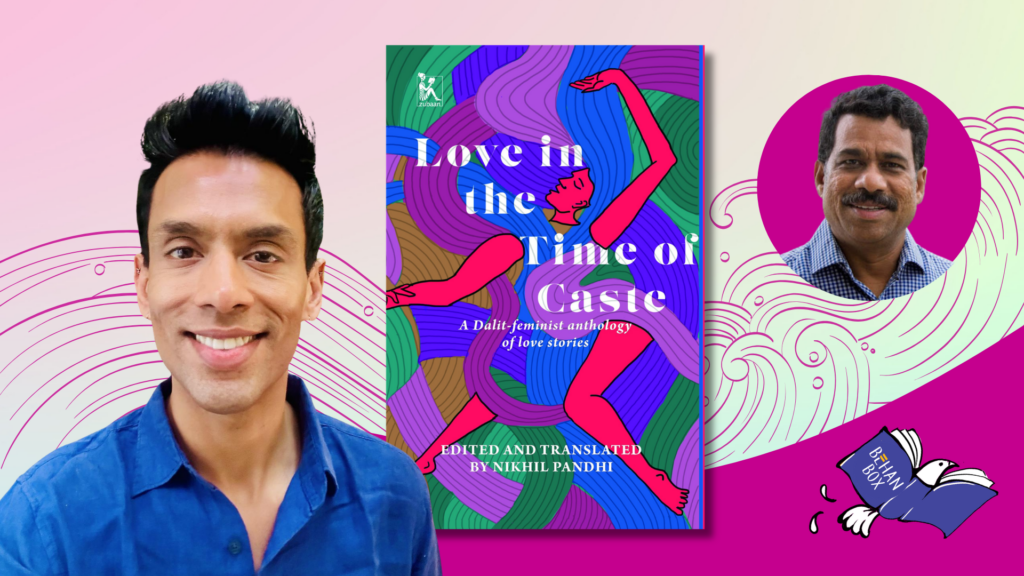
Zubaan, the feminist publishing house, has been generously sharing their fabulous books list with BehanBox, allowing us to publish extracts from works on themes that are deeply meaningful for us. This week we mark the Dalit History Month with a story excerpted from their recent book, Love in the Time of Caste: A Dalit-feminist anthology of love stories, edited, translated and with an introduction by Nikhil Pandhi. Love, Pandhi says in the introduction to the book, can and must bloom under conditions of acute debility and duress.
Love should be a radical tool of rebellion against caste, NT-DNT activist Deepa Pawar had argued in a fabulous essay for BehanBox. It is also the line that runs through Mhow, a delicately told story from the book, written by Kailash Wankhede. It talks of the radical possibilities of solidarity and consciousness in intercaste unions.
Read the excerpt here.
Talking Point
Protest Bloc: The Lok Sabha, on April 17, rejected the constitutional amendment bill to increase the strength to 850 to “operationalise” 33% reservation for women. The Opposition parties voted against it, declaring that while they support women’s reservation, the government’s bid to link this to delimitation is disingenuous. The constitutional amendment bill was a “smoke screen” that would have given the government arbitrary powers to manipulate future electoral outcomes, said Maadhyam founder Maansi Verma to BehanBox in an interview with us. The fear is that delimitation will result in significant changes to parliamentary arithmetics, representation based on population and centre-state relations. India has redrawn parliamentary seats thrice based on the censuses in 1951, 1961 and 1971. Thereafter, the exercise was halted for fear of imbalance in the representation because the southern states were steadily moving towards declining birth rates.
Protest and Punishment: Unrest festers in Noida and Haryana’s industrial belts as hundreds of contractual factory workers protest for higher wages, social protection, and working conditions. Earning between Rs 10,000-15,000 a month, workers say wages have remained unchanged for years even as a cost of living crisis and ongoing war exacerbates their distress. The Hindu noted that in Uttar Pradesh, around 67.8% of regular workers had no written contract and 59.2% lacked access to social support — effectively working as informal labour despite being employed in formal establishments. Workers in both UP and Haryana have rejected the proposed’ “insufficient” wage hike. In the last week hundreds have been detained, arrested, and beaten. Women domestic workers and gig workers in Noida, employed in similar precarious conditions, recently joined their factory counterparts in asking for dignified wages and safe workspaces.
Orban Out: Strongman Viktor Orban, who ruled Hungary for 16 years with an iron hand, was defeated this week in parliamentary elections by a huge margin by Peter Magyar, once his loyalist. It was a shock defeat for the man who had become the icon for rightwing politicians across the world, including the US where he enjoys huge support among conservative groups and the Trump administration. Magyar has promised to revive Hungary’s stagnant economy, deal with the rampant corruption of the Orban regime and improve relations with the EU. However, to the chagrin of the country’s queer community he has remained silent on the restoration of their rights which had been severely curtailed by the outgoing government. He did in a carefully worded statement, decry Orban government’s attempt to “instill fear and divide us”.
Lots In A Name: Shrilal Shukla would have gone to town on this in Raag Darbari, the superlative satire on Indian politics: the Rajasthan government in its wisdom has decided that names like “Sheru” and “Shaitan” will be replaced under a Sarthak Naam Abhiyan or a meaningful name campaign. The education department has identified around 2,000-3,000 such names across government and private schools and will offer parents nearly 3,000 “meaningful” alternatives. Its argument is that children with names like these grow up with a lifelong complex. Navbharat Times, however, reports that among the names the government considers meaningful for girls are Bhayankar, Bhiksha, and Kaljugi.

BehanVox Recommends
The Age of Dinosaurs: ‘But we also visit museums to bend time and distance, to shuck off the weight of perspective, however briefly.’ Read Elena Megalos’ beautiful essay on parenting, time and perspective.
Diary from Lebanon: A month since the war began in West Asia, and it has pushed the people from the region to their physical and psychological limits. Justin Salhani’s diary captures this from Lebanon.
America’s Limits, Iran’s Leverage and Pakistan’s Moment: How did Pakistan get US and Iran to talk? In this episode of the Mishal Hussain show, Maleeha Lodhi, the former Pakistan ambassador to the US explains.
Want to explore more newsletters? In Postcards, we send you missives on the places, people and ideas that brought Team BehanBox joy. Our monthly offering Postscript invites you, the reader, into our newsroom to understand how the stories you read came to be – from ideation to execution. Subscribe for more.

We believe everyone deserves equal access to accurate news. Support from our readers enables us to keep our journalism open and free for everyone, all over the world.