“India’s growing energy demands and clean energy commitments make a strong case for expanding nuclear capacity. Round-the-clock electricity is vital for emerging needs such as data centres and advanced industries, yet existing laws do not provide the flexibility or speed required for such growth.”
That is how the Union government frames its new SHANTI [Sustainable Harnessing and Advancement of Nuclear Energy for Transforming India] Act which is meant to drive its ambition to meet its ambition of decarbonisation by 2070. It became necessary, the centre argues, to create a “modern legal framework which enables wider participation, leverages indigenous resources, and integrates innovation with safety”.
The new Act subsumes all the earlier legislations on the subject and despite its claim to “wider participation” was pushed through without any consultation and is kept outside the ambit of RTI. The Act opens up nuclear energy to the private sector, dilutes accountability, and raises concerns for public safety. Companies like Adani, Jindal, Reliance, Tata, and Vedanta have already shown interest in nuclear energy and the Adani Group has begun exploring a 1,600 MW project in Uttar Pradesh.
Is this idea of a nuclear techno utopia a reality? Is it really the best climate responsive solution for energy generation? What does it actually mean for the average Indian whose voice is never heard on questions of nuclear energy, a field of such evolved scientific complexity that it is believed to be only the domain of “experts”. But it is always this average Indian whose shared, precious and precarious resources that go into building nuclear facilities, who deal with the impact of potential contamination. And of them, it is the marginalised caste groups, the women, children and the Adivasis who bear the biggest brunt, says Misria Shaik Ali, PhD from Rensselaer Polytechnic Institute. In an interview this week with Anjali D, she draws on her decade of research to answer our questions.
“My work over the past decade shows that nuclear energy is far from safe. Jadugoda in Jharkhand, also called the nuclear graveyard of India, is a stark example where uranium mining and radioactive contamination have resulted in widespread disabilities and diseases, worsened by lack of government support. Nuclear reactors involve radioactive materials with severe biological risks, whether through contamination or warfare. Placing such an unstable energy source in the hands of profit-driven companies raises serious concerns about accountability and public welfare,” says Misria.
She points to the fact that the sector weaponises expertise by suggesting that it is of national importance and thus beyond the grasp of ordinary people. “This pushed me to study nuclear contamination more seriously and form my own opinion,” she recalls.
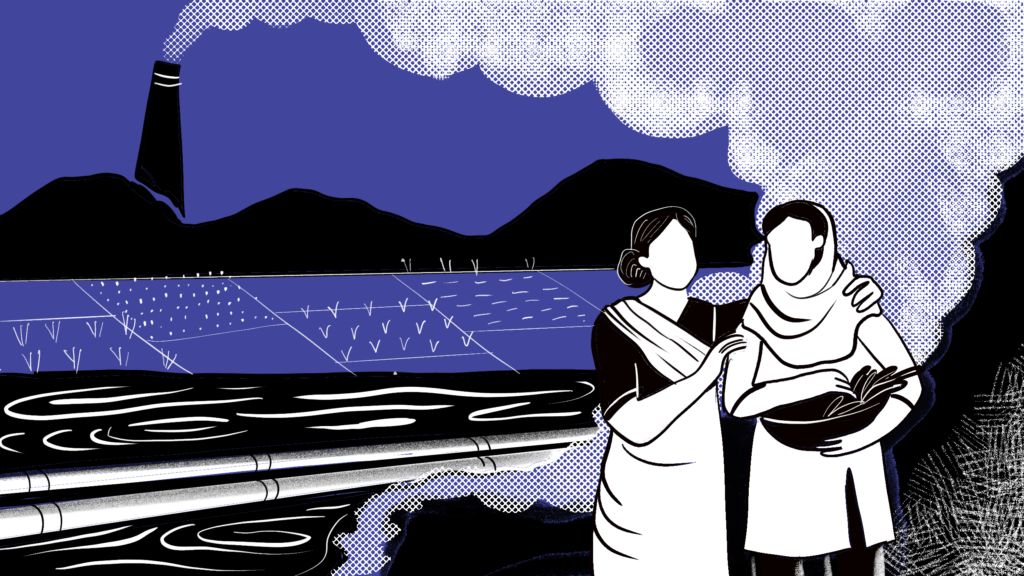
Her findings from Tumalapalle in Andhra Pradesh and Koodankualm in Tamil Nadu were profoundly disturbing – that contamination happens through invisible particles that seep into water, air, and food, and our bodies, where they remain and continue emitting radiation, causing cellular and genetic damage.
“People only realise they have been exposed long after it has entered their bodies and through small signs like skin discolouration or irregular menstrual cycles. Over time and across generations, this can manifest as spontaneous abortions, children born with disabilities, and chronic diseases,” she says.
The SHANTI Act, Misria believes, deepens all these issues, especially the neglect of affected communities and even more particularly marginalised social groups – the women who deal with contaminated water on an everyday basis, and the oppressed castes whose livelihoods go with their lands.
Read our interview here.