[Readmelater]

BehanVox: Fighting For The Right To Decent Work

This week in BehanVox: AI misogyny, gig worker strike, MGNREGA's repeal impacting women and Adivasi farmers, and more

Subscribe to our weekly newsletter that brings you top stories, gender news from the world, and our team’s reading recommendations.

Hello Behans!

It is our first BehanVox for 2026. Hope you all had a rested break over the last week of December.

At BehanBox, we took a short break too but we kept an eye over unfolding events to make sense of them for you. And we are ringing in the new year with some hard-hitting stories and analyses. A lot transpired in the last couple of weeks and as the month rolls in we will be working hard to understand, unravel and delve into what these mean for us. There was the repeal of MGNREGA whose momentous implications became clear in our interview with an economist in December. We take the dive deeper this week with two more reports on what it means for women and Adivasis.

Gig workers and unions went on a strike on new years’ eve over exploitative work conditions. What followed was a familiar gaggle of tech entrepreneurs declaring themselves as engines of our economy and saviours of our society, calling the strike a failure and protestors as ‘miscreants’. As always, we calmly asked the question – did the strike really fail? It draws from our sustained reporting on the gig economy.

Story So Far

In an interview with BehanBox soon after the passing of the hurried VB-GRAMG Act that upended the 20-year-old MGNREGA and that too with no consultation process, economist Dipa Sinha had explained the perils of centralisation and funding constraints. Especially problematic, she had pointed out, was the shift away from making the livelihood guarantee a citizen’s right.

“It is important that a job guarantee scheme be driven by demand — because it’s a right and not some largesse of the State. And all these benefits of floor wages, restricting migration, and more are realised if work is available when people need it. So it’s also about shifting power within the labour market, giving the worker a say over where they’ll work and for how much, because currently the power is tilted towards the employer,” she said.

The increased fiscal burden on states, and the centralisation of digital technologies were other problems.

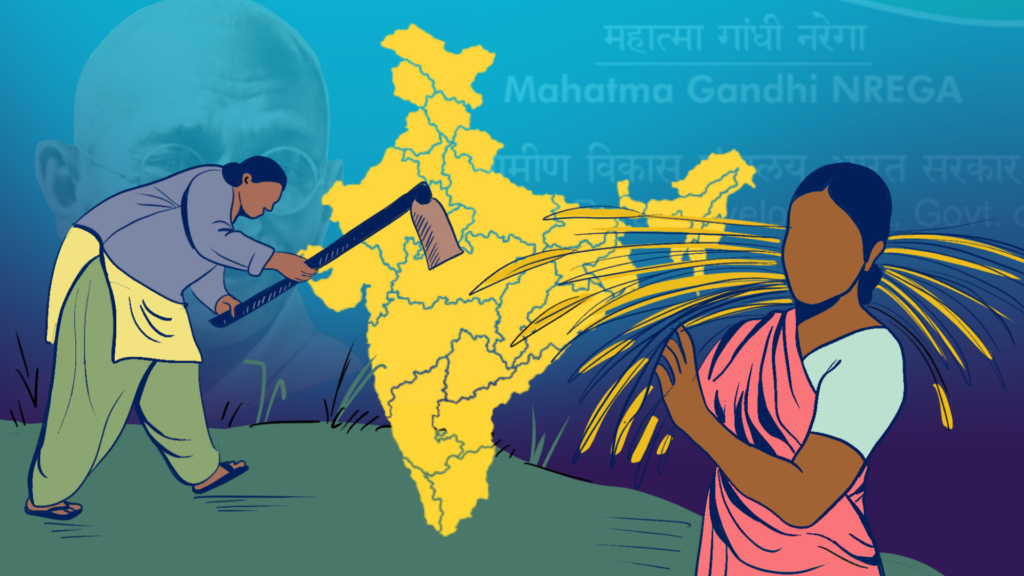
These issues were further reiterated this week in an analysis for BehanBox by researchers with the women farmers and workers collective, MAKAAM and the Feminist Policy Collective. It pointed to the impact of the change on women’s employment, economic security, and agency, leaving them especially vulnerable. Around 77–80% of rural women workers in India are engaged in agriculture, largely as unpaid family labour, self-employed cultivators, sharecroppers, or casual agricultural labourers. Despite their central role, they earn 20–30% less than men on average, and over 75% have little or no independent cash income.

More even than employment, MGNREGS offered women the opportunity to be critical instruments of economic citizenship and an alternative to exploitative agricultural labour markets. It gave them negotiating power in an unequal job market, combined paid work with care work and provided food security.

It was a transformative scheme because it decentralised planning through Gram Sabhas and Gram Panchayats. Women were not only workers but also participants in deciding what kinds of assets would be created—water harvesting structures, land development works, soil conservation, village roads, and common property resources. These works directly supported women’s agricultural livelihoods and contributed to climate resilience.

All of these features will be hit hard by the centralised, budget-capped normative approach of the new Act, the researchers argue.

Read the analysis here.

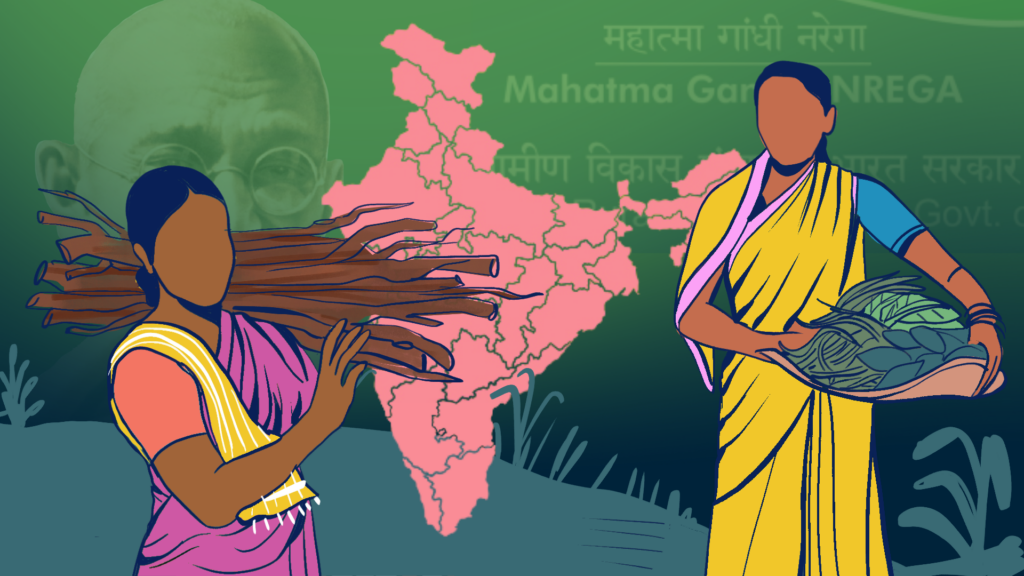
There is another section of the population, even deeper in the margins and living in remote pockets of the country, who will feel the changes in the livelihood scheme acutely—the Adivasis. In a strongly and sharply argued analysis for us, Chakradhar Buddha, a senior researcher with LibTech India, explains why the new framework—with its promise of 125 days of employment, normative allocations, improved asset creation, and closer alignment with national development priorities—works with assumptions that do not hold in tribal contexts.

Chakradhar uses his field engagement with Adivasi communities going back over two decades, especially across Andhra Pradesh’s Integrated Tribal Development Agency (ITDA) regions, to explain why. While his data comes from his field of work, he points out that it would apply to any tribal region of India: in 2024–25 Adivasis constituted just 5.53% of Andhra Pradesh’s population but accounted for around 9.8% of its active workers and their share of MGNREGA employment was even higher at 12.5%, more than double their population share.

Thin income buffers and high exposure to seasonal shocks mean that the withdrawal of a demand-driven employment guarantee is thus likely to have far more severe consequences for regions with high Adivasi populations, the researcher argues. In Scheduled Areas, where Gram Sabhas were once central to local planning, resource use, and livelihood decisions, the change will re-centralise decisions that were meant to rest with Adivasi communities, he points out.

And most significantly, MGNREGA had constituted a statutory entitlement recognising the additional labour required for land development and livelihood security in forest regions. But the new Act contains no explicit recognition of FRA lands or the additional labour support they require.

Read this analysis here.

Talking Point

MGNREGA Protests: The Congress is planning to mobilise gram sabhas on January 26 to pass resolutions for the restoration of MGNREGA and the scrapping of the VB-G RAM G Act that replaces it. The party is also set to launch a kaam mango abhiyan in villages demanding assured livelihoods. All this is supposed to be a part of Congress’s sustained campaign, MGNREGA Bachao Sangram. In the meanwhile, Telangana, Karnataka and Punjab legislative assemblies have adopted resolutions demanding that the Union government continue with the older livelihood scheme.

Bail Denied: On Monday, the Supreme Court rejected the bail pleas of Umar Khalid and Sharjeel Imam, accused of conspiracy to incite deadly violence in the capital during the 2020 Delhi riots. The court, though, granted bail to five others arrested in the case. The two-judge bench said the bail petitions had to be considered individually because they did not stand on “equal footing as regards culpability”. In an essay, scholar Janaki Nair, who also taught Khalid and Imam at JNU, has argued passionately that the years taken from their lives will discourage the young from dreaming of an idyllic world.

Uttarakhand Protests: The murder of a young worker, Ankita Bhandari, three years ago by a sexual predator with political connections had shaken the BJP-led Uttarakhand government. The resort manager, Pulkit Arya, the son of former BJP leader Vinod Arya, was held for her murder. The Special Investigation Team, investigating the murder found that she was killed for resisting an attempt to force her to provide sexual service to someone influential. Rumours had swirled around the identity of this “VIP” but the SIT said it found nothing to prove this. There are now massive protests in the state fed by fresh allegations linking her death to a politician and demands for a CBI inquiry.

AI Misogyny: Grok, the free AI assistant, developed by Elon Musk’s xAI, was seen to allow users to generate sexualised images of women and children that were then allowed to be displayed on X. Initially Grok said these were “isolated cases”. Musk’s first response was to post the crying-with-laughter emoji. But after global outrage and strong reprimands from France and India, he posted that “anyone using Grok to make illegal content will suffer the same consequences as if they upload illegal content”. A French research agency found that among image generation prompts on Grok, there was a high prevalence of terms including “her”, “put”, “remove”, “bikini” and “clothing”, Guardian reported.

BehanVox Recommends

When The Movement Found Print: We love archives and more so when they’re on feminist movements, thoughts and actions. The Maharashtra Stree Mukti Parishad (MSMP), which turned fifty this year, had pulled together this incredible archive of feminist magazines in Maharashtra over the years. Dive in.

Couscous in Marsala: A sweeping history of Sicilian-Tunisian migration shows how shared food, memory, and exile challenge today’s hardened Mediterranean borders and politics, in this fantastic piece by Stefania D’Ignoti for Newlines Magazine.

Welcome Back to Office: In this piece on return-to-office mandates for The Walrus, Toronto writer Kathy Chow writes about modern office design, worker productivity, and employer control; and also reflects on her own lackadaisical office experiences early in her career.

Want to explore more newsletters? In Postcards, we send you missives on the places, people and ideas that brought Team BehanBox joy. Our monthly offering Postscript invites you, the reader, into our newsroom to understand how the stories you read came to be – from ideation to execution. Subscribe for more.

Support BehanBox

We believe everyone deserves equal access to accurate news. Support from our readers enables us to keep our journalism open and free for everyone, all over the world.

Donate Now