[Readmelater]

‘ASHA Workers’ Data Was Crucial In Rehabilitating Those Hit By Wayanad Landslide’

ASHA worker Subaida recalls how she and her colleagues worked to deal with the aftermath of a devastating disaster even as they themselves grieved for their lost homes, family and friends

This interview is part of The ASHA Story, the first public archive of ASHA workers’ lives and histories. Read the other stories here.

A short walk from Chundale town in Wayanad stands the rented house where Subaida, 57, lives with her husband and son. The landslide of 2024 destroyed their home in Mundakkai, and they have moved twice since. When Subaida was interviewed, the family expected to move into a permanent house in Thrikkaipetta by November 2026. Her two daughters are married and live with their husbands. 

In almost every exchange, Subaida finds it difficult not to return to the grief that the crisis brought. She carries an emptiness in her heart for every villager she knew and visited since she became an ASHA worker in 2008. “Mundakkai is my home. There were so many people I used to visit, and they welcomed me with so much love and care. They would affectionately call me ‘itha’ (sister). Most of them died, and I cannot forget any of their faces,” she says. “This is not just my condition. Everyone carries a piece of pain like this, and it will remain with us until death.” Subaida speaks with pride about the work she and her fellow ASHA workers undertook during the post-disaster rehabilitation process and the responsibilities they fulfilled collectively for their people.

A year after the 2024 disaster, Subaida had a heart attack. 

“Whoever comes to a disaster-affected area should ask about the ASHA workers there. It is because of the role we play as grassroots health volunteers and the relationship we share with our land. We did everything we could for both those who survived and those we lost. When I say ‘we’, I mean all the people who voluntarily came forward to help us. As ASHA workers, we did our best to fulfil our responsibilities.” 

Edited excerpts below.

Could you briefly describe your journey as an ASHA worker?

I am from Mundakkai, in Meppadi panchayat, the area affected by the 2024 landslide. I studied up to the pre-degree level. After marriage, I started working as an ASHA worker in 2008 out of interest. My family was very supportive, and they are still happy with what I do.

Back then, this work did not have as much visibility as it does now. The health inspector approached me [to take on the role] knowing I was interested in such work. At that time, we did not have this much work. It was mostly about collecting data on pregnant women and newborns and passing it on to Junior Public Health Nurses (JPHNs), caring for them, and providing them with proper guidance. We also did not receive much payment, a maximum of Rs 500 a month. Over time, however, the workload gradually increased. At the time of the landslide in 2024, I was assigned 265 houses in Mundakkai ward. Now, we have to do everything related to health. We also have responsibilities such as chlorination, creating awareness about dengue, checking every home for mosquito breeding sites, and, more recently, conducting surveys on lifestyle diseases.

After the landslide, I spent almost a year working on post-disaster activities alongside government officials. After that, I was temporarily assigned to the Poothakolly ward in Meppadi panchayat. I expect to get my new house in Thrikkaipetta within a month [by November 2026]. Once I move there, I will relocate to the ward that covers that area, as per the orders of my superiors.

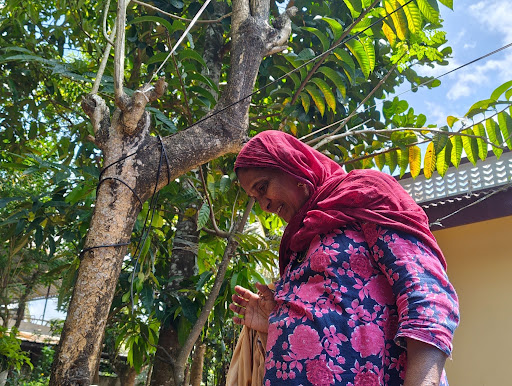
Subaida outside her rented house. At the time of the interview, she expected to move into a permanent house by November 2026 / Liniya Babu

What does a typical day at work look like for you?

We can work whenever we have the time. However, I have to visit 100 houses  a month to conduct health investigations and compile reports on the information collected. I also need to submit the report at the monthly meeting of ASHA workers. Of these 100 households, 50 may have pregnant women or breastfeeding mothers, and the other 50 may have patients who need palliative or other kinds of care. These people are our priorities.

I mostly work from 10.30 am to 1 pm, but additional work may come up in the form of sessions, classes or meetings. So, we have to be ready for anything at any time.

To explain my daily work in simple terms, I ask newly married couples to register at our centre and provide them with counselling on family planning. I also ask them to contact me whenever they become pregnant. Then, I collect the relevant data and share it with the JPHN. I inform pregnant women about the vaccinations they need and make them aware of the precautions they must take during pregnancy. After delivery, I tell breastfeeding mothers about the important vaccinations their babies need and the appropriate time to receive them. Many people in villages like ours were not aware of these things. People from the Paniya tribal community hesitate to go to hospitals. I provide them with the necessary support and make all the arrangements required for their hospital visits.

For palliative care patients, I visit them as part of a team comprising a doctor, a nurse and an ASHA worker. More than our services, it is our visits that make bedridden patients happy. For them, we are visitors who ask about their well-being and spend time with them, helping them take their minds off their pain. It is a relief for both them and us. If we do not visit them, they ask us why we did not come the previous month.

Your area was severely affected by the landslide of 2024. What are your memories of the disaster, and as an ASHA worker, what was your role in managing the aftermath?

It was more like a nightmare for me. The first landslide occurred around 1 am, and a group of us who happened to be together [because of the disaster], waited until morning to see the devastated land. The whole village was destroyed, and only mud remained. I fainted at one point as it was too much for me to bear. After I was treated, I rejoined the work.

After the disaster, my husband and I struggled a lot. For years, he had been going to mosque in the evenings with three of his friends. We lost all of them. Just think about that pain. Somehow, we helped him cope with it. The loss was enormous, and it is impossible to explain this to someone from the outside. Those who survived were displaced. That, too, is a huge pain. I cry very easily whenever I am reminded of those memories. I wish I had died in the landslide because bearing this pain is too much for me.

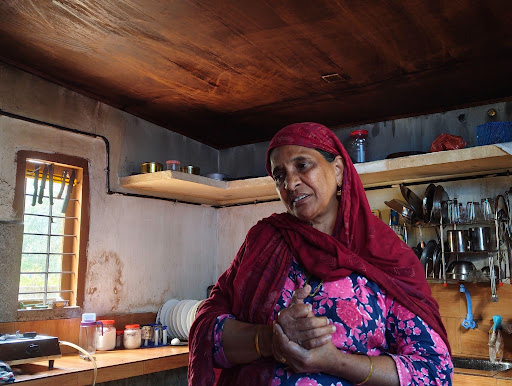
Subaida talking about the landslides during the interview / Liniya Babu

As an ASHA worker, I worked in the relief camps, organising them, coordinating with other groups, cleaning the camps, helping patients, distributing medicines and so on. All the ASHA workers and several groups of people collectively helped during that time. For the first 15 days after the disaster, the task of washing and identifying the bodies was mostly carried out by ASHA workers. It was truly heartbreaking to wash unrecognisable bodies. It felt as though we were working like robots. There was no time to process the tragedy; we had to continue providing our services. I was shattered, and everyone else was too, but collectively, we did everything that was needed.

After the primary rehabilitation phase, we were involved in collecting data alongside government officials for the official death report and the [planning of a] proposed township [at Elstone Estate in Kalpetta]. It was like a desert, with no homes left. Officials relied on our diaries to provide details of each house, the people who had lived there, and other information required. No one knows a village like an ASHA worker. We carry every home, every family and every person in our hearts and minds.

For almost two weeks, we assisted government officials with the data collection. Over the following year, ASHA workers from the three wards of Chooralmala, Mundakkai and Attamala prepared the data for the township and listed eligible people at the district collectorate [Kalapetta].

How do you see the role of ASHA workers in grassroots disaster management?

I believe ASHA workers are one of the pillars of grassroots disaster management. For example, as I mentioned, all the data used for building houses for disaster-affected people came from us. There is no other reliable source of data. We worked on this for almost a year, and it was a huge task.

We also know every person in the disaster-affected area. It was my coworker and friend, Shaija Baby, who identified 100 dead bodies, and the government appreciated her for it. It takes a lot of courage to do that. They are not just people; they are our villagers and friends.

Then Health minister Veena George visited me during that time and specifically appreciated our work. I believe ASHA workers are an indispensable part of grassroots disaster management or any crisis, and serve as an accessible bridge between the authorities and the people.

Is the ASHA worker’s job welcomed by society? How do you think people perceive an ASHA worker?

In the beginning, people did not know about our work, what we were doing, why we were collecting data, and so on. They would question and doubt me. But I was still their fellow villager, and I had their trust. Later, they began welcoming me as a family member and treated me with love. After the COVID-19 pandemic, society developed a much greater acceptance of us. We were the ones who supported people in quarantine and helped everyone with proper awareness and emotional support. I believe people will never forget those who stood by them when they were helpless.

I am new to this area. But when I worked in Mundakkai, people would not let me leave their home without feeding me. There were so many people who treated me that way, and many of them are no longer alive.

People from the Paniya tribal community are often reluctant to listen to others, but they are friendly with me. During the disaster, they waited for me to come and ask them to move to the camps. I considered that a great recognition of my work.

One of the community members, Neeli, called me for help during the night after she saw the hillside collapsing in the landslide. She was at the Vellarimala school camp, and I asked everyone to run to the other side. They trusted me, and everyone in that group survived. Later, Neeli showed me the scars she got on her legs while running. She hugged me and cried.

Much of an ASHA workers’ work revolves around women, and ASHA workers form one of the largest women’s workforces in India. What is it like to work alongside women as an ASHA worker, meeting them, supporting them and collaborating with them?

Working with women gives me a lot of happiness. When I have health problems, they take care of me. Whether they are other ASHA workers, nurses or other women, everyone receives me with a lot of support and love.

When I visit homes, many mothers share personal struggles with me that they cannot share with others. Sometimes, these are about their personal problems or the abuse they face from their husbands. There is not much I can do in such situations. I cannot advise the men; the only thing I can do is help the women calm down and provide them with emotional support. I try to listen to them and initiate support by offering counselling.

I also help girls understand menstruation. At that age, they need proper knowledge to deal with matters related to their health and hygiene.

Could you share the details of the incentives and honorarium you receive as an ASHA worker?

We receive an honorarium of Rs 12,000 and a fixed monthly incentive of Rs 3,000 as of October 2026. Apart from this, we receive additional incentives for specific duties. For every vaccination given to a newborn, we receive an extra incentive of Rs 20. For each vaccine administered in its 10th month, we receive Rs 100.

If a woman delivers in a government hospital, we receive an incentive of Rs 600, while the amount is Rs 300 for a delivery in a private hospital. We also receive an incentive of Rs 100 for conducting classes for mothers on maternal and child health, including the essential nutrients for both mothers and children. After [hospital] deliveries, we conduct follow-up visits on the 3rd, 7th, 14th, 21st, 28th and 42nd days. We receive a total incentive of Rs 250 for all these visits combined.

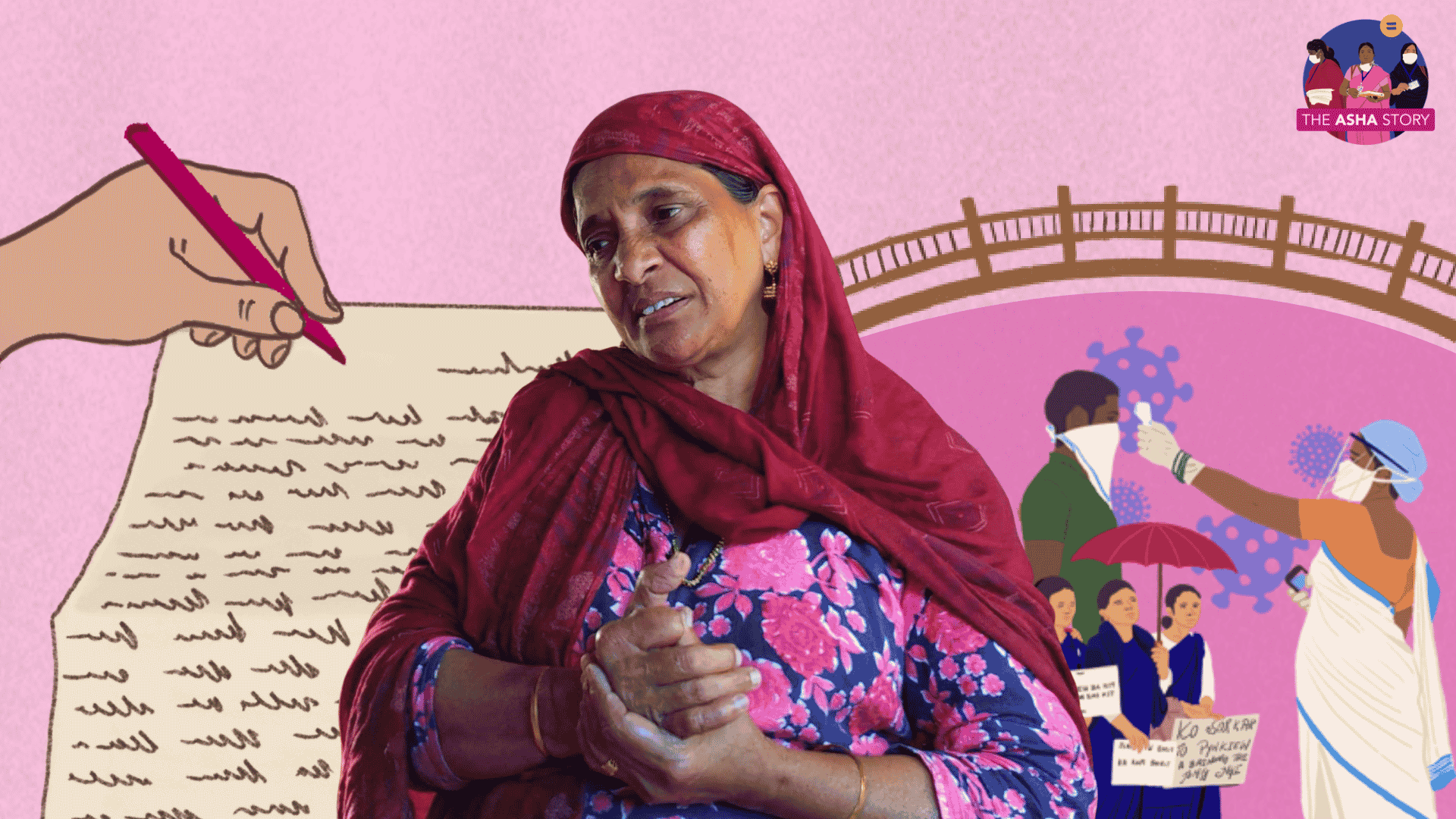
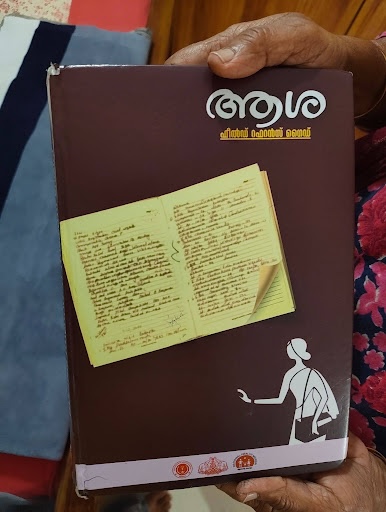
Subaida’s ASHA work diary. The cover reads “ASHA Field Reference Guide” in Malayalam / Liniya Babu

The incentive we receive also depends on the number of visits we make in a month. We need to cover 100 households to receive the full amount. 

ASHA workers began an indefinite strike in front of the State Secretariat in Thiruvananthapuram in February 2025, demanding better working conditions and wages. What is your view on this?

The more we work, the more we earn. It is not sufficient for sure. When we started, the payments were very low, but they have increased over time. To my knowledge, around 50% of the women working here are single mothers who depend entirely on this job for their livelihood. It is very difficult for them to make ends meet with this income.

Moreover, the payments are not credited at a fixed time, so we cannot rely on them. This month [October 2026], for instance, the honorarium has been credited, but the incentive has not yet been paid. Since there is no fixed payment schedule, it affects our ability to manage our finances and plan our expenses. There is no job security or fixed salary, yet we have so many responsibilities. Financial support is important, too.

I supported the ASHA workers’ protest in Thiruvananthapuram, and although I did not attend it, I will continue to support such protests because I believe their demands are very relevant. Though people accept us and value our work, we are not permanent workers and do not receive a regular salary, which is essential in today’s world.

It is our interventions and demands that have led to the increments we have received so far. So, I believe we must continue to raise our demands.

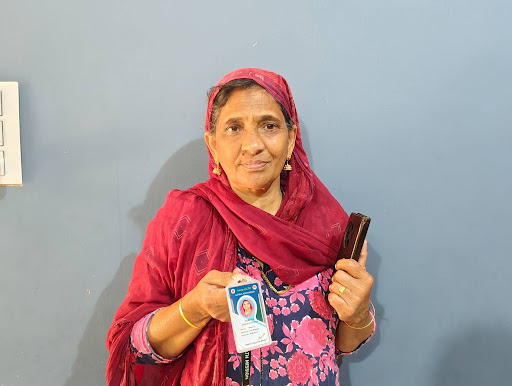
Subaida with her ASHA identity card. She has been an ASHA worker since 2008 / Liniya Babu

You have been an ASHA worker for 18 years. Are you satisfied with the work you have done? Is there any particular experience that has given you a sense of fulfilment?

I am always satisfied with the work I do and am happy to do more. One memory is how the tribal students of Mundakkai started going to school as a result of the awareness I raised as an ASHA worker. I am very proud of that. I educated them about the importance of education and explained its benefits. All of them studied at the school in Mundakkai that was destroyed in the landslide, and they have now moved to other places.

You mentioned that you have had health issues. Have you ever thought of leaving this work? How do you see your future?

After I had a heart attack, my family asked me to stop working, but my doctor advised me to continue working and interacting with people. I have spent so much of my life working and living as an ASHA worker, and serving people always makes me happy, so I will continue until someone at the top asks me to stop. 

  • Liniya Babu is an independent journalist based in Keralam.

Malini Nair (Editor)

Malini Nair is a consulting editor with Behanbox. She is a culture writer with a keen interest in gender.

Support BehanBox

We believe everyone deserves equal access to accurate news. Support from our readers enables us to keep our journalism open and free for everyone, all over the world.

Donate Now