
‘Coerced Sterilisations Impacting Dipping Tribal Population’: Alu Kurumba Women Of Nilgiris
Women said they are not counselled about their reproductive rights or alternative contraceptive methods, which contravenes government policy on rights and choice-based family planning
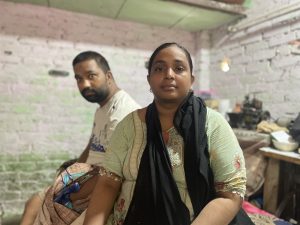
After Anita*, 29, an Adivasi from the Alu Kurumba tribe, a Particularly Vulnerable Tribal Group (PVTG) in the Nilgiris, delivered her daughter three years ago, she decided that she would wait for at least three years before conceiving again. Both she and her husband Kannan* came from large families and they were keen for their daughter to have a sibling. Anita had also to leave behind in Odisha a child from her first marriage, and the loss still rankled.
Anita should have welcomed another child this year but could not.
“After delivering my baby, I told the healthcare professionals who supervised the childbirth at the Government Hospital in Ooty that I did not want to undergo sterilisation because I wanted another baby,” she recalled. But, she said her choice was disrespected. A tubectomy surgery was conducted within two days of her stay at the hospital. She was told that she was too weak to carry another pregnancy since she had a blood disorder, sickle cell anaemia. While it is true that one in four children born to parents with this disorder are likely to inherit it, she was not allowed the time or space to consent to a tubectomy.
According to her, contraceptive methods and spacing were not discussed either. “They simply went ahead with the surgery after forcing me to make the decision,” she said. The right to decide – make bodily choices, about her family and its future – was stripped away the moment the consent for sterilisation was obtained without the chance to make an informed choice.
We found in interviews with Alu Kurumba women that these tubectomy procedures are often conducted in government hospitals where women are admitted to deliver their second child. Doctors and other healthcare professionals do not counsel women about their reproductive rights, alternative contraceptive methods, or short-term contraceptive options to prevent unplanned pregnancies. Instead, they recommend sterilisation as the only option.
All these are in contravention of the government policy on rights and choice-based family planning. As per the National Population Policy, 2000, the Indian government promotes a small family norm without dictating the number of children while reiterating that the country’s family welfare campaign is to be entirely voluntary. Sterilisation can only be done after counselling and securing informed consent. The policy also stresses that information should be shared on the nature and impact of the procedure and that no kind of coercion be used, including the threat to withhold access to state facilities and schemes.
Community Numbers Dwindling
Anita and women from her community told BehanBox that this emphasis on sterilisation after two children has imperilled their community which is already dealing with a declining population.
Tamil Nadu’s Socio-Economic Survey of Scheduled Tribes in the Nilgiris, conducted in 2010, also noted that the Alu Kurumba population stood at 1765. The 2024 survey revealed that this has now fallen to 1,038 and that the numbers have been declining steadily.
Decisions Should Be Voluntary: Govt
The National Health Mission’s standards for sterilisation are laid out clearly – it should be voluntary, based on informed consent and understanding of the implications of the procedure. And at no time must the individual be made to feel that they will lose out on access to government services and schemes by refusing sterilisation. Few of these rules seem to have been followed in the tribal hamlets we visited.
Anita lives in one of the seven Alu Kurumba hamlets in the Coonoor block. It is a subgroup of the Kurumba tribal community in the hilly region. The Nilgiris is home to six Particularly Vulnerable Tribal Groups (PVTG): Toda, Kota, Kurumba, Kattunayakan, Paniya and Irula. PVTGs are a highly marginalized and isolated sub-classification of Scheduled Tribes in India. There are 75 officially recognised PVTGs in India.
“As a tribal woman with limited access to education and reproductive health related knowledge, I felt I could never confront them [health officials],” she said.
Karthika*, 26, is another Alu Kurumba woman from a neighbouring village. She too had been admitted to the same government hospital to deliver her second baby in 2021. She alleged that the tubectomy surgery was not only done without her consent it was also conducted without her knowledge. “They did not discuss this with me, or my husband, or my in-laws. After the C-Section, they conducted a sterilisation procedure. We came to know about it only two days later,” she recalled.
When asked whether she or her family had confronted the health professionals, she said doctors and nurses refused to reply when she demanded to know why the tubectomy had been conducted.
Kalaivaani*, who is not from a tribal community but married into one, said that after she delivered her second baby boy two years ago, healthcare professionals subjected her to “insulting conversations and humiliation”. She was not keen on a tubectomy but felt that she had no choice but to agree.
The women also told us that every government in power in the state, regardless of ideology, has pushed for coercive sterilisations. To avoid this, several women from the community hide in the forests every time Village Health Nurses (VHNs) tour the hamlets for inspection. This fear also drives them to opt for non-institutional deliveries, risking both their own lives and that of their newborn.
A few women from the community did make an informed choice to stop at two children because they have better access to education or mobile phones on which they watch YouTube videos on reproductive health and childbirth — the kind of awareness that is supposed to be spread by ground-level healthcare professionals such as ASHA workers and VHN.
Alu Kurumba couples were repeatedly told that they were incapable of raising more than two children, a Malthusian idea that suggests that population growth hinders societal development.
Troubled History
India has a long history of forcing marginalised citizens into sterilisation – the worst instances of these were reported during the Emergency. But this approach ignores the fact that caste and class play a crucial role in determining the development of the society and which groups actually benefit from such development.
Mass state-conducted sterilisation drives, again centred around disadvantaged social groups, were once considered a key health campaign till 1977. During Emergency (1975–1977), the government launched mass sterilisation programmes to control population growth. Over two years, 1.07 crore coerced sterilisations were reportedly carried out, exceeding the target of 67.40 lakh set by the Indira Gandhi government then. Several states linked access to essential services such as rations, housing, jobs, and healthcare to sterilisation. People with two or more children who refused to undergo sterilisation were denied access to these services.
According to the Shah Commission Report, which was tabled in Parliament on August 31, 1978, sterilisation procedures were conducted on 548 unmarried persons, and 1,774 deaths related to sterilisation were reported. Reports suggest that most surgeries were conducted in haste under unhygienic conditions. The patients who underwent the surgeries did not receive follow-up medical care, and many died from infections.
With the sterilisation campaign significantly denting Indira Gandhi’s political career, succeeding regimes avoided mass sterilisation programmes, fearing electoral backlash. India then adopted a target-free approach to family planning in 1996, emphasising community-level planning. But the official obsession with state-determined sterilisation targets never quite ended.
As per a BBC report, India carried out nearly 4 million sterilisations in
In 2013-2014, and under 100,000 of these were done on men. Between 2009 and 2012, the article adds that over 700 deaths and 356 complications were reportedly caused by botched surgeries. One of the biggest sterilisation-related medical disasters was reported in 2014 when 15 women died at two state-run tubectomy camps in Chhattisgarh. In India, the burden of contraception are disproportionately borne by women. According to the recent NFHS-6, female sterilisation stood at 36.5%, whereas male sterilisation stood at only 0.5%. In NFHS-5, the rate of female sterilisation was higher at 37.9%, while the rate of male sterilisation was lower at 0.3%
‘Let Them Have Better Quality of Life’
When BehanBox reached out to district medical officers with the allegations of coerced sterilisations, they maintained that the procedure was conducted with the women’s consent. They also said that the women said they were unwilling to use other long-term forms of contraception including the Intrauterine Device (IUD).
A government doctor who wished to remain anonymous said that healthcare professionals recommend sterilisation to protect the women – most of whom have multiple health issues – from the risks that come with multiple pregnancies.
“Instead of allowing them to have more than two babies, let them have a better quality of life,” said the doctor who maintained that the two-child policy was the norm in India.
Alu Kurumba women told BehanBox that healthcare workers, particularly VHNs, are manipulative in their interactions with tribal women and often use a curt tone and insulting arguments. They also did not offer incentives for women who opt for sterilisation. But VHNs do not hesitate to question the personal choices of the women or their economic status when they choose to have more than two children. They alleged that this was never done in the case of other OBC communities, such as the land-owning Badagas of the hill district.
“Forests give us everything. We rarely rely on others for our livelihood. Our interactions with the outside world are limited. Why was there a need to question our economic statuses and our ability to raise children?” asked community elder Nalayini*.
She admitted that in the years healthcare facilities were made available to rural and hilly pockets of the district, infant and maternal mortality rates in the community had been high. But with the precarity that comes with living in areas where disease and human-wildlife conflict are common, families choose to have at least three children, she added.
“Today, modern medicine has reduced mortality rates. We thought that improved healthcare services would help us sustain our population,” she noted. Nalayini is one of the five children in her family.
Besides dwindling population, sterilisation procedures often affect interpersonal relationships within the community. Community women said that coerced sterilisation often prevents them from finding another match after separation or widowhood. “What is the point of marriage, if we cannot have children of our own?” asked Nalayini.
Now, strict sterilisation programmes, coupled with other factors such as rising infertility, have become a key factor for their negative growth in the tribal population, said experts.
Kurumbas: Community with declining population
Tribal communities that have declining or stagnant populations are classified as PVTGs. They are also characterised by the continuation of a pre-agricultural level of technology, extreme backwardness, and a low literacy rate.
Kurumbas are traditionally hunter-gatherers and slash-and-burn cultivators. The community is further divided into three subgroups: Alu Kurumba, Betta Kurumba and Mullu Kurumba – based on their cultural practices and geographical location. Alu Kurumbas predominantly live in 45 villages in Kotagiri and Coonoor taluks. Betta Kurumbas live in Gudalur and Pandalur taluks, while Mullu Kurumbas only live in Pandalur taluk.
Kurumbas’ population stood at 4,874 in the 1991 census. It was 5,498 as per the 2001 Census. The 2011 Census recorded their population as 6,823 (Male – 3380, Female – 3443).
Even though the 2011 Census did not provide numbers for each subgroup, the state government’s Socio-Economic Survey of Scheduled Tribes in the Nilgiris, conducted in 2010, noted Alu Kurumbas’ population at 1765.
The Socio-Economic Survey conducted in 2024 revealed that there were 3,931 Kurumbas, 2,892 fewer than in the 2011 Census, and the Alu Kurumba population stood at 1,038, showing a steady decline.
Contradictions have also been found in the total Kurumba population between the Union Government’s Census result and the Socio-Economic Survey. The survey noted the total Kurumba population at 6552.
JR Mani, a community leader from Coonoor, told BehanBox that Mullu Kurumba and Betta Kurumba communities are spread across Kerala and Karnataka, respectively. “If forced sterilisation continues for another decade, our community could disappear,” he said.
Sobha Madhan, a Betta Kurumba activist from Gudalur, said that the same pressure to undergo sterilisations was not seen in her community, and among the Paniya and Kattunayakan communities. “Most of the people here rely on NGO-run hospitals.
Pregnant women would be referred to the Government Hospital in Ooty only in cases of complications,” she noted.
M Alwas, secretary of Nilgiris Adivasi Welfare Association (NAWA), a non-profit organisation that works closely with tribal communities in the Nilgiris, acknowledged that intense campaigns had taken place against having more children in the past and noted that women were pressured to undergo sterilisations 10 years ago, citing their inability to afford childcare.
“We did raise awareness among women about the financial and social challenges of having more children, but never supported forced sterilisations,” he noted.
However, he maintained that the tribal population in the district had remained steady and argued that any population decline was linked to health issues such as sickle cell anemia and alcoholism.
According to Tamil Nadu’s Family Welfare and Health Department Policy Note 2023–2024, the state’s Total Fertility Rate (TFR) is 1.4, below the national average of 2.0. TFR refers to the average number of children expected to be born to a woman during her reproductive years between the ages of 15 and 49. Tamil Nadu is expected to become the first state in the country to stabilise its population by 2035.
Population control measures are not designed on a case-by-case or community-specific basis, particularly for communities with very small populations. Unequal access to education, development, and modern technology – these factors have left many tribal communities marginalised, limiting awareness about concepts such as informed choice and consent and reproductive rights. All six tribal communities living in the Nilgiris have populations of fewer than 10,000 people each.
Human Rights Violation
Any discussion on family planning within any community must be grounded in a reproductive justice framework that is unequivocally voluntary, informed, and rights-based, said Poonam Muttreja, Executive Director of the Population Foundation of India (PFI). The fundamental principle is that a woman has the right to make decisions about her own body and fertility.
Reproductive rights and the right to health are also integral to Article 21, she said. “In this context, any instance of coerced sterilisation, such as among Adivasi communities like the Alu Kurumba, is a human rights violation and against the spirit of the National Population Policy,” she said, pointing out that this is especially so in a small tribal population, where the State’s duty is to protect life, health, dignity, and informed choice.
The Supreme Court emphasised that “sterilization services must be provided in a client friendly manner in a conducive environment after taking informed consent”, in its order on Devika Biswas Vs Union of India case. Devika’s writ petition stated that the Kattunayakan tribes of Wayanad in Kerala, and a hill district adjacent to the Nilgiris, were subjected to the same kind of intervention.
There is no evidence that the two child policy is effective, Muttreja said, especially given its adverse impact on marginalised population groups. She pointed to the study submitted by Nirmala Buch, a former senior Indian Administrative Service officer, conducted across five states – Madhya Pradesh, Andhra Pradesh, Haryana, Odisha, and Rajasthan. It had revealed that, “in the states that adopted a two-child policy, there was a rise in sex-selective and unsafe abortions”.
Risking human ecology
The human ecology of Alu Kurumba communities may be lost if their population continues to shrink, warned Charles Varghese, an assistant professor from the Department of Sociology and Social Anthropology, Indira Gandhi National Tribal University (IGNTU).
“As they have spent thousands of years in the forest, they know the changes in seasons, migration patterns of wild animals, and how to survive during heavy rain or extreme drought. They also protect the environment they belong to,” he said. “The decline of tribal populations erases the cultural memory of a certain landscape which would have social consequences.”
CR Sathyanarayanan, former Head of the Southern Regional Centre of the Anthropological Survey of India (AnSI) at Mysore, pointed to the unique language, lifestyle, and oral traditions of India’s tribes. During his tenure as Director of the Tribal Research Centre (TRC) in Tamil Nadu during 2009 -11, he recalled conducting a detailed Socio-Economic Survey of the Nilgiris Tribes. It was the first time that the population and distribution details of the three subgroups of the Kurumbas were attempted in Nilgiris district.
He said it was necessary to amend the Scheduled Tribes Constitutional Order to recognise each Kurumba subgroup as an individual entity in the ST list of Tamil Nadu, so that each community would receive special attention and adequate funds for its welfare, including measures to population sustainability and to enable women to make informed decisions about their family size.
G Lakshmi Priya, former secretary of Tamil Nadu’s Tribal Welfare Department and the current Secretary II to the Chief Minister, said she was unaware of the issue but assured that she would consult the Health Department and look into the matter if the allegations were found to be true.
‘Counselled, Not Coerced’
Ravishankar, a Resident Medical Officer (RMO) of Government Medical College, Nilgiris, said that there was no such special sterilisation programme for tribes. “As per the National Family Welfare Programme, we would try to convince women who already have two children to undergo the procedure. However, we do not encourage the same for the tribal population,” he said. According to him, VHNs begin ‘counselling’ women against further pregnancies after they conceive a second time.
Rajasekharan, Joint Director of Health Service (JDHS) of the Nilgiris said that only women who were willing were encouraged to go for the procedure. “We often recommend spacing between two children, and for that we recommend contraceptive methods such as IUD, Antara (hormonal injections), and Chhaya (pills),” he said, denying the allegations of coercion.
He said sterilisation was preferred only if a woman’s third pregnancy is likely to be high-risk. “The uterus may not contract properly during their third pregnancies. Women may experience excessive bleeding, uterine ruptures, stillbirths, and premature deliveries,” he said.
When asked about the declining population of tribal communities, he said this was a global trend. “When we analyse the reasons behind the decline in population, infertility was one of the reasons. Diet, lifestyle, alcoholism, and decisions not to have children are contributing factors,” he said.
Poonam Muttreja is of the view that any family planning policy should centre women’s choices and community demographics. So if infant and maternal mortality were concerns, the ethical imperative should be to strengthen health systems and uphold informed consent.
As for maternal and child health outcomes in tribal communities, she said, the government itself has acknowledged the need for targeted maternal and child health action for Scheduled Tribes. “This entails improving antenatal care, emergency obstetric care, transport, nutrition, treatment of anaemia, newborn care, and access to quality counselling and a full basket of contraceptive options, especially spacing methods, not pushing permanent procedures on women,” she said.
Anita and other Alu Kurumba women said that health professionals do not have respectful conversations with them about contraception. “If the healthcare professionals offered me guidance on how to avoid unwanted pregnancies and how to conceive after improving my health, I would’ve opted for an IUD rather than obey their order. Now, it is too late,” said Anita, “to fulfill my dream of having a family of four.”
Names have been changed and village names withheld to protect the identities of the women.


We believe everyone deserves equal access to accurate news. Support from our readers enables us to keep our journalism open and free for everyone, all over the world.
