[Readmelater]

Malnutrition, Poor Rural Public Health Infrastructure Behind Infant and Maternal Deaths In Maharashtra
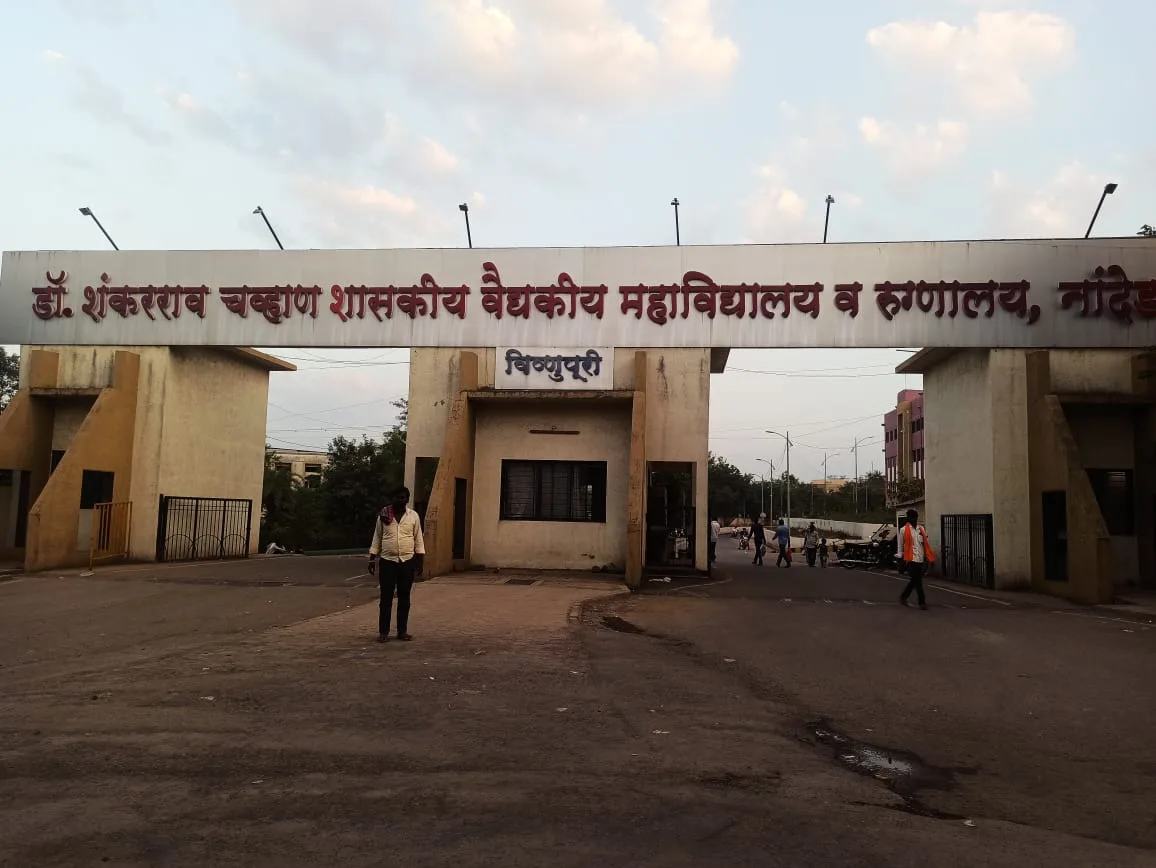
Sunita Sahebrao Dandekar (28), a Dalit woman from Kharvad village in Hingoli district in the Marathwada region of Maharashtra had to be rushed to Dr. Shankarrao Chavan Government Medical College and Hospital (SGMCH), 100 kilometres away in Vishnupuri in the neighbouring district of Nanded on 5 October after she complained of severe stomach pain and itching. The Gramin Jilha Rugnalay (rural district hospital) at Hingoli had no expert doctors at the time to perform a critical delivery and the Natal Intensive Care Unit (NICU) was ill equipped to deal with pregnancy related complications.Dandekar delivered a pre-term baby boy the next day. Two days later, the baby died.Ā 

ā€œPan Vishnupurila jayacha tari kay fayada zala? Maza lekaru gelachĀ (What did we achieve by going to Vishnupuri? I lost my child anyway)ā€, she says in a voice filled with agony.Ā Apart from the grief of losing her baby, Dandekar, a mother of three daughters, is also anxious about the taunts and continuing pressure from her in-laws to bear a son.

Dandekar’s baby was among the 31 children who died in the SGMCH in one week Ā between 30 September to 7 October; 22 of these were new born babies. Of these, 17 babies were underweight at the time of the birth. 10 babies were born pre-term and 8 out of these preterm babies were suffering fromĀ respiratory distress syndromeĀ according to the press notes released by the SGMCH. Since then, 108 more deaths have been reported in theĀ SGMC, as per news reports. The hospital itself has stopped releasing data on deaths since October 3. Among those who died were 14 men, 11 women and one transgender person. In the last couple of months, the state has seen a spate ofĀ deathsĀ in public hospitals in Chatrapati Sambhaji Nagar (Aurangabad) and Thane.

ā€œRespiratory distress syndrome is quite common in pre-term and underweight babies. Their lungs are not developed enough to breathe by themselves which causes respiratory distress,ā€ a neonatal specialist in Nanded district toldĀ Behanbox. Such babies need extraordinary care with neonatal specialists and trained nurses within the NICUs.Ā 

There was a severe shortage of functioning warmers for pre-term babies at the SGMCH. ā€œThe SGMCH has only 24 warmers, while there were 72 babies who needed them. So they cramped 3 to 4 babies in one warmer which led to them being infectedā€, the neonatal specialist added.

A doctor who was serving as a NICU in-charge on the day we visited the SGMCH on the 8 October, refused to comment on the availability of warmers at the hospital and asked us to speak to the medical superintendent Dr. Ganesh Manoorkar, but we are yet to receive a response from him. However both news reports and public health activists in Nanded told us that while theĀ hospital has more than 50 warmers but only 24 were in working condition.

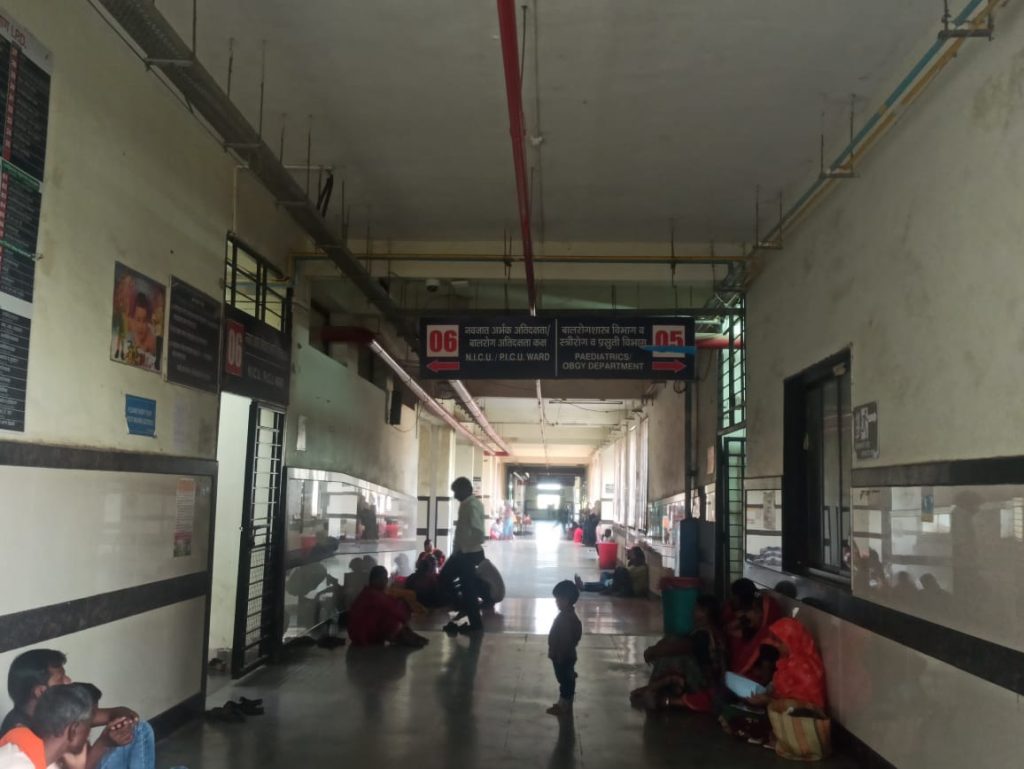
A Neonatal Intensive Care Unit Ward at Dr. Shankarrao Chavan Government Medical College and Hospital, Nanded, Maharashtra / Priyanka Tupe

The public healthcare crisis that Maharashtra is witnessing currently is an outcome of the an inadequate and overburdened public healthcare system. Low budgetary allocations has meant severely understaffed and ill- equipped primary, tertiary and district hospitals indicating an overall lack of political will, say the many public health experts we spoke to.Ā 

Doctors working in public healthcare are equally concerned about the inadequate infrastructure which puts a lot of pressure on the frontline staff.Ā  ā€œEver since the government has announced all theĀ treatments, surgeries completely free, there has been a massive increase in patients seeking treatments in the government hospitals. But infrastructure and human resources have not increased in proportion which creates a pressure not only on the doctors but on the overall ecosystemā€, said a doctor working at SGMC on the condition of anonymity.Ā Ā 

ā€œThis is a 500 bed capacity hospital which is now treating at least 1200-1300 patients everyday. It is inconvenient for patients but we try to save every life. We don’t send patients back home because of insufficient infrastructure.ā€Ā 

Hunger and Malnutrition

Malnutrition is a significantĀ  factor in the rising patterns of pre-term deliveries and neonatal mortalityĀ  in Maharashtra. ā€œThere are multiple reasons, but one of the important contributing factors is the inadequate nutrition for the mother and child. It’s difficult for women from lower economic backgrounds to get good nutritious food. Naturally, the mother’s health impacts the health of the baby and this increases the number of severely malnourished children ā€, a paediatrician practising in Mumbai toldĀ Behanbox.

All through her pregnancy, Sunita Dandekar did not receive any food grain under theĀ Poshan Aahar,Ā a central government scheme that gives free food grainsĀ such as wheat, rice and chickpeas to pregnant women from lower socio-economic backgrounds. Dandekar does not have an Aadhar card and the Anganwadi worker told her that she was ineligible for the scheme.Ā 

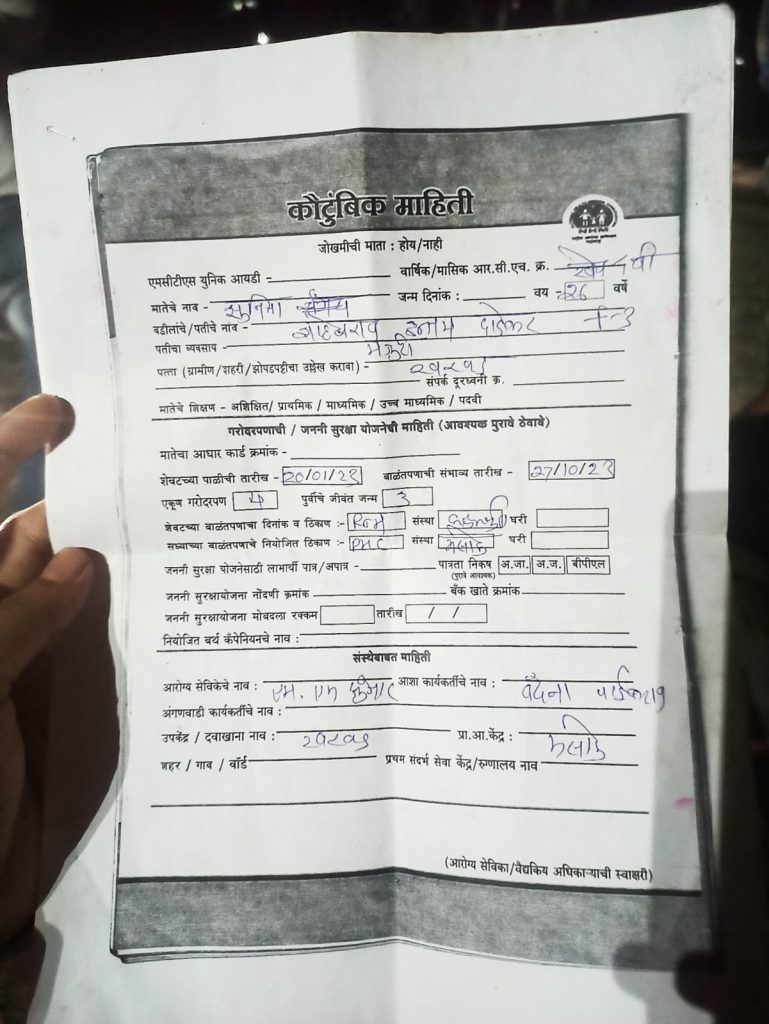
Sunita Dandekar’s pregnancy record / Priyanka Tupe

ā€œMang ek dana pan milala nay, mala vatala aadhar card nahi tar aapun bi kasa magava? Mi unpad bai, shalecha tondach baghitala nay, aadhar card tari kon denar mala? (I didn’t get food for any month while I was pregnant. After the Anganwadi worker told me about the need for the Aadhar card, I felt too embarrassed to ask for food grains again. Who will give an aadhar card to an illiterate person like me?ā€,Ā Ā askedĀ Sunita.

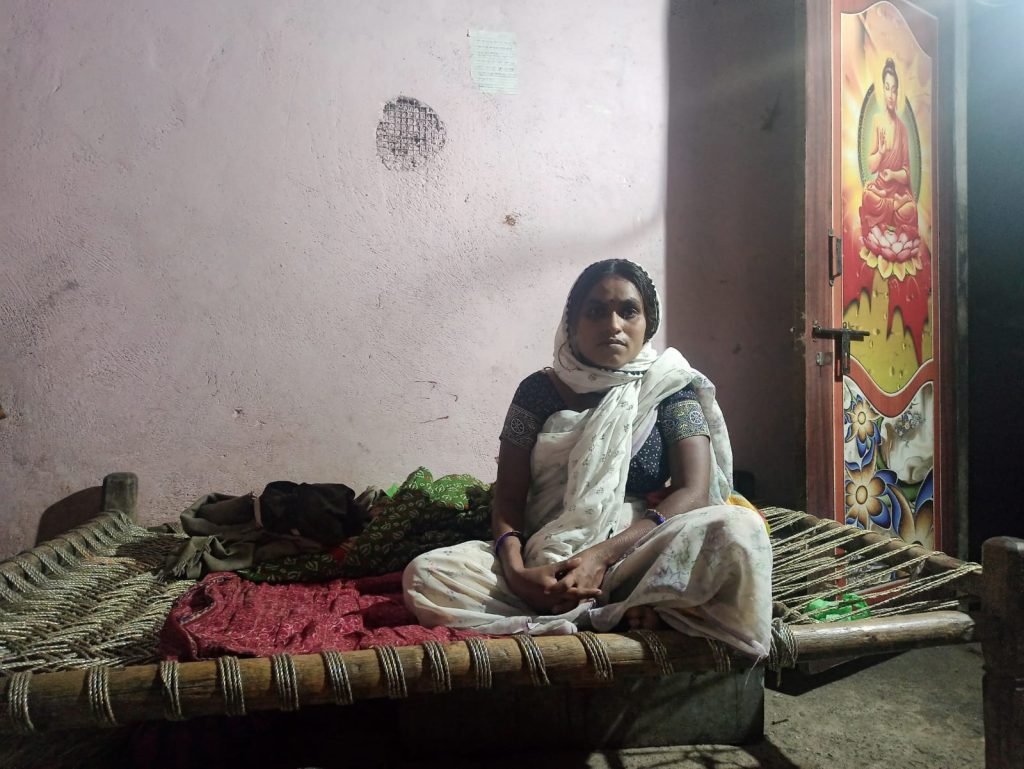
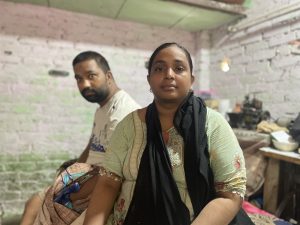
Sunita Sahebrao Dandekar at her residence in Hingoli’s Kharwad village whose pre-term baby boy died on 6th October / Priyanka Tupe

The Dandekar family doesn’t get subsidised food grains as part of the Public Distribution System (PDS) either. The only piece of land they have is less than an acreĀ GayranĀ (common land under the Panchayats for cattleĀ  grazing) redistributed by the government, on which the family cultivates cotton with no fixed income.Ā 

35 % children under 5 years of age in Maharashtra are stunted, 26% wasted, 11% severely so and 36% are underweight according to data fromĀ Ā National Family health survey – 5. 69% children between the ages of 6 to 59 months are anaemic, according to the NFHS data. 46% of pregnant women and 54% of women between 15-49 in Maharashtra are anaemic. This data captures indicators until 2019-2020. ā€œThe number of anaemic women must have been increased after covid-pandemic which affected the nutrition of women, specially those from the marginalised communitiesā€, a senior statistician who has worked with International Institute of population sciences has toldĀ Behanbox.

ā€œThe relation between poverty, hunger and nutrition is complex and self-reinforcing. Poverty is the cause as well as effect of hunger and malnutrition. This relation between poverty, hunger and nutrition is getting more complex with structural changes in the economy. Higher market integration, urbanisation and migration have weakened the ties with farm & direct farm produce for a majority of the population. This has a severe impact on accessibility and affordability of nutritious fresh foodā€, Dr. Savita Kulkarni- Assistant Professor, Gokhale Institute of Politics and Economics.

ā€œSadly, still the government policies are growth-centric rather than distribution-centricā€, she added.

BehanboxĀ reached out to a few primary health care centres (PHC) to understand the underlying causes behind infant mortality, rising pre-term deliveries and very low birth weight of babies.Ā 

ā€œThese are high risk pregnancies where babies are very low weight. Pre-term deliveries are mostly high risk deliveries. Anaemia and hypertension along with other reasons increase the chances of high risk deliveries among rural women who come to our PHC ā€, a doctor working at a PHC in Nanded district toldĀ Behanbox.Ā 

Ā ā€œWhile weĀ  provide iron, folic acid tablets and counselling for nutrition, neither the PHCs nor the district rural hospitals are equipped enough to perform critical deliveries and provide NICU for pre-term and very low birthweight babies. So we have to refer such patients to medical college hospitals like the SGMCH ā€, added the doctor.Ā Ā 

Inadequate Infrastructure

ā€œThey made me sleep on the floor. There was no bed. Can a seven months pregnant woman sleep on the floor without a mattress?,ā€ asks Sunita Dandekar. We met Dandekar in her village Kharwad in Kalamnuri tehsil of Hingoli days after she lost her baby.Ā 

ā€œHer saline drip was withdrawn right after the baby’s death. Does the mother not need saline once her baby has died? We brought medicines from outside, and did everything the doctor told us to do. They only gave us a bed after multiple requestsā€ says Sahebrao Dandekar (33),Ā  Sunita’s husband who works as a daily wager and earns around 200 to 250 a day.

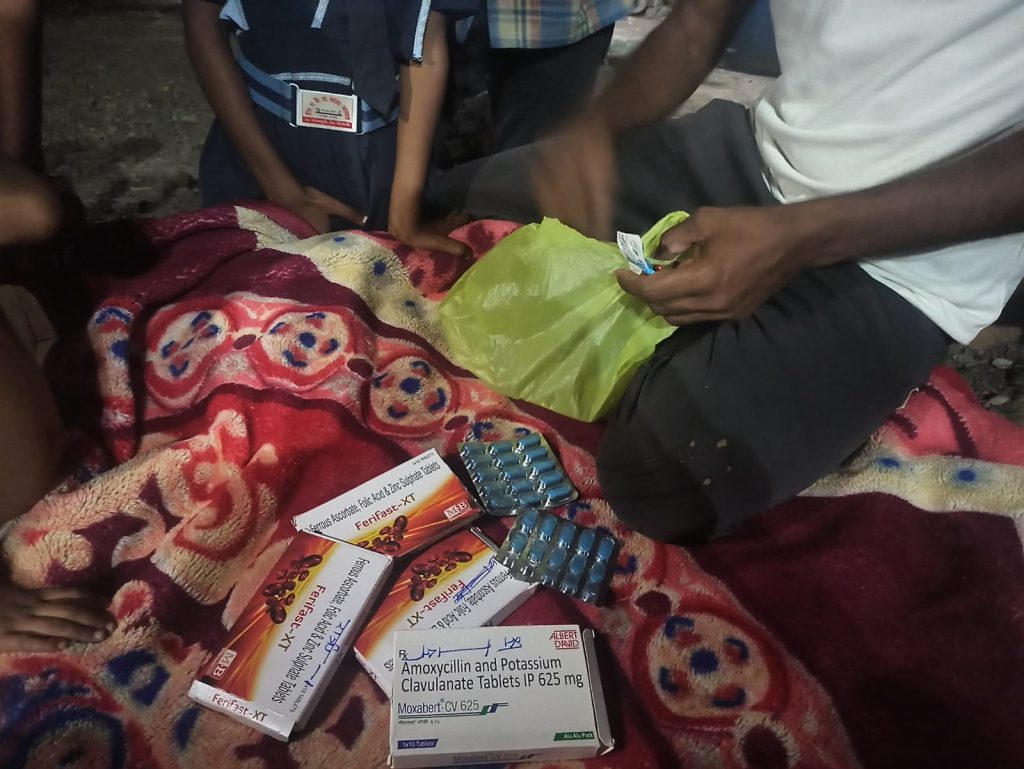
Sunita’s husband, Sahebrao Dandekar showing the medicines he bought after being advised by doctors at Dr. Shankarrao Chavan Government Medical College and Hospital / Priyanka Tupe

We also met Anjali Waghmare’s family in Kurula villege of Kandhar tehsil in Nanded, who recounted similar stories of hospital inadequacies. Waghmare, another Dalit woman, died last week soon after she lost her two days old baby boy at SCGMCH.Ā BehanboxĀ also spoke to at least a dozen patients at the medical store inside SCGMCH campus who said that they were asked to buy medicines from outside.

While the SGMCH initially citedĀ multiple reasons for the deaths, from the admission of patients at a critical stage of illness to lack of infrastructure, medicine shortage, inadequate human resources, the hospital later denied.Ā 

As the public healthcare crisis unfolded in Maharashtra,Ā BehanboxĀ visited three public hospitals in Nanded– Gurugovindsingh Civil Hospital,Ā Stree Rugnalaya Nanded (Women’s Hospital Nanded) andĀ  SCGMCH– to see the infrastructure in these public hospitals first hand.Ā As we walked around theĀ Gurugovindsingh Civil HospitalĀ hospital in Vazirabad, the lack of basic infrastructure was hard to miss. There were no clean drinking water taps or filters. Upon asking about access to drinking water for patients, the hospital staff said that the bottled water cans that the hospital usually bought were delayed on the day.

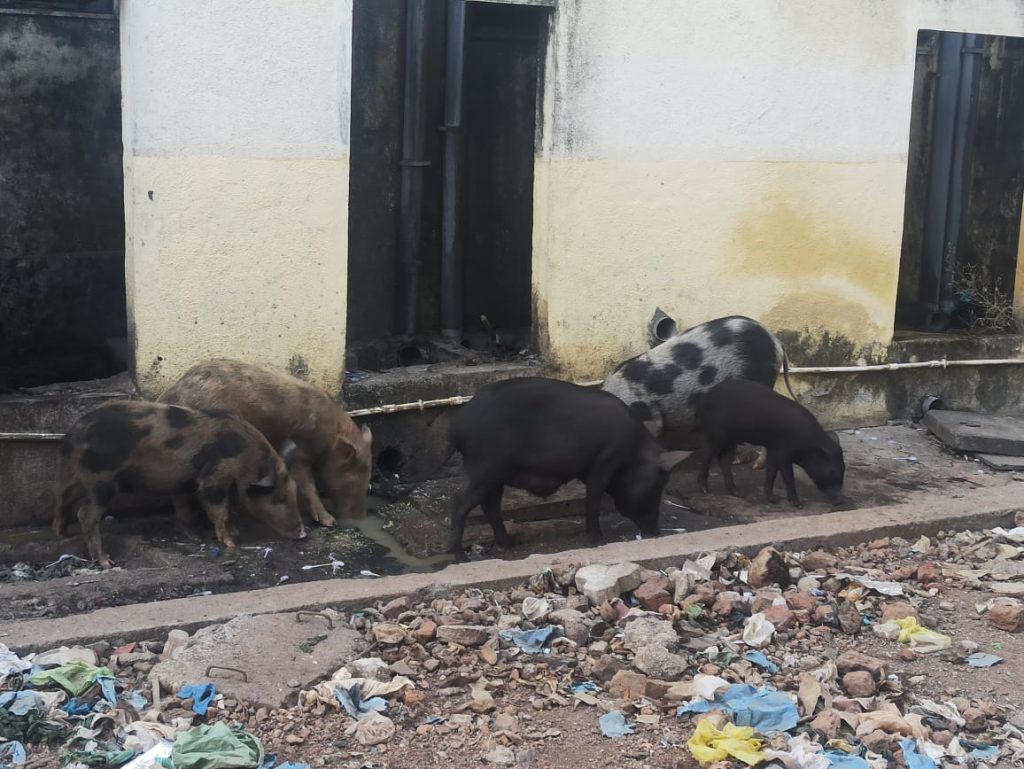
Pigs roamed freely around in the hospital premises raising health and safety concerns for the patients seeking treatments at the district’s foremost public health facility. ā€œWe tried to remove these pigs from campus time and again, but they always come backā€, Dr. Nilkanth Bhosarikar, Civil Surgeon at Guru Gobind Singhji civil hospital toldĀ Behanbox.

ā€œThe public health crisis that you see in Maharashtra is a multifaceted problem. Secondary hospitals like sub-district hospitals and the Civil hospital in Nanded do not have the capacity for specialist care for complicated conditions for newborn babies. Due to severe understaffing, patients who could be treated for ailments at the peripheral hospitals are directly referred to the Medical college hospitalā€, said Dr. Abhay Shukla,a senior public health activist associated with Jan Swasthya Abhiyan. Dr.Shukla was part of a fact-finding committee to look into the recent deaths in the state.

Pigs seen roaming freely at the hospital premises of Guru Gobind Singhji Civil Hospital in Vazirabad, Nanded.

There are 19,695 vacant posts in the public health department in Maharashtra according to a statement made by the chief minister Eknath Shinde. He has announced thatĀ 34 super specialty hospitals and 25 civil hospitalsĀ would be set up in the state’s districts by 2034, reported the Times of India. He has also stated that the health expenditure would be doubled.

BehanboxĀ has reached out to public health minister Tanaji Sawant seeking his response on the plans for additional budgetary allocations and reduction of the state’s health budget byĀ 7%Ā in 2023-24. We also sent out questions to Aditi Tatkare, women and child development minister on the rising maternal and infant deaths in the backdrop of the prevailing healthcare crisis. We are yet to receive any response from them. The copy will be updated when we do.

ā€œThe mostĀ  important issue is ā€˜Vitamin A’ – Accountability, which must start at the top instead of making frontline health administrators the scapegoatsā€, said Dr.Shukla. ā€œ We need a well-functioning public healthcare system. Upgrading health services and strengthening the public health system is not an impossible task but it needs political will, which seems to be currently lacking.ā€ Dr. Shukla added.

[ This is our first report from Nanded on the public healthcare crisis looming over Maharashtra. Stay tuned as we bring you more over the next weeks from Aurangabad and other places.]

  • Priyanka Tupe is a multimedia journalist with Behanbox based in Mumbai.

Support BehanBox

We believe everyone deserves equal access to accurate news. Support from our readers enables us to keep our journalism open and free for everyone, all over the world.

Donate Now