
Tech, Trade And History – How Facial Recognition Technology Made Its Way To India
The technology being used to identify and punish protestors at recent anti-government rallies were pushed by historic tech trade links between the US and India
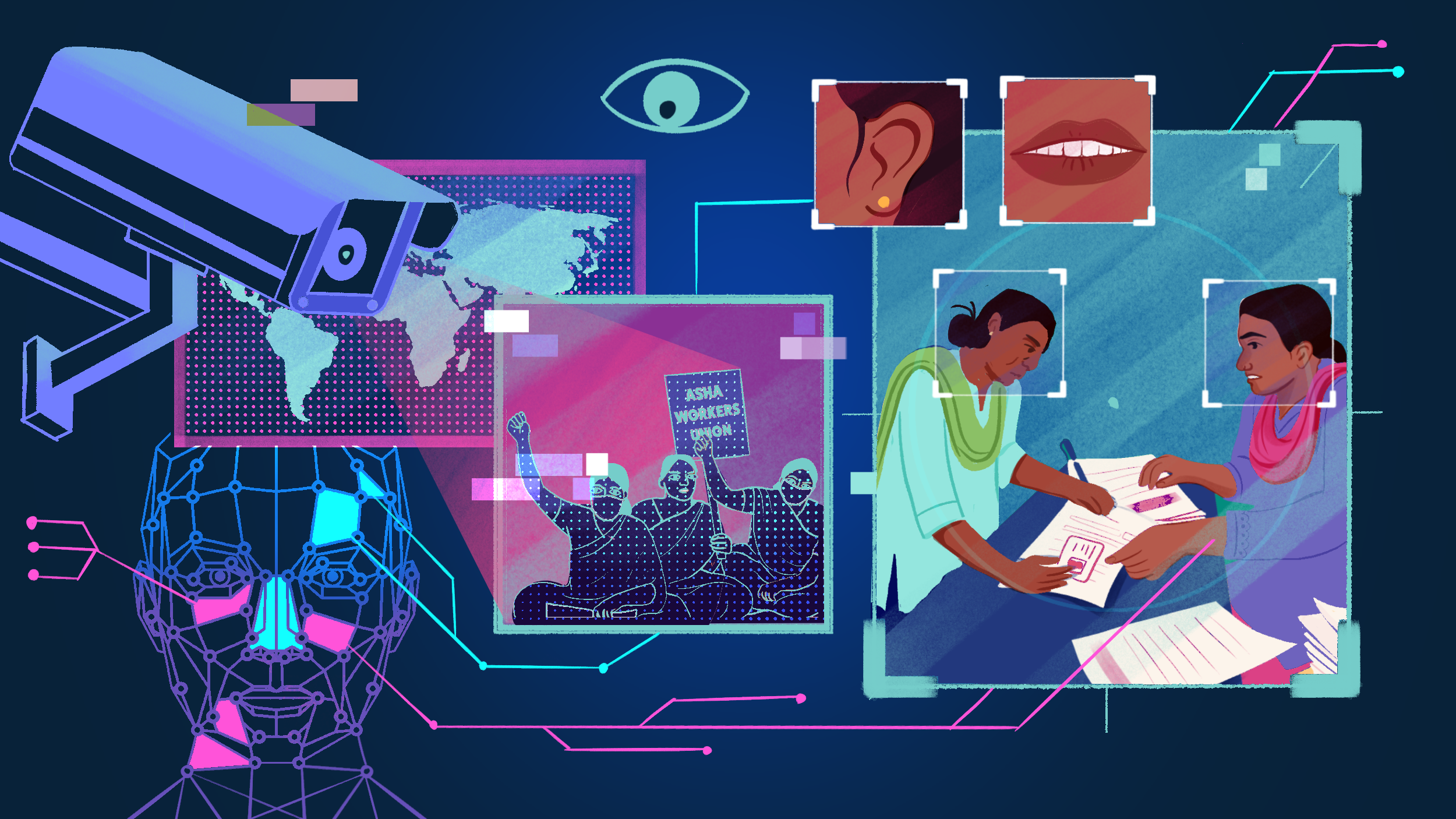
SOMETIME IN 2024, a reporter from an international publication called to ask me about the state of public expression in India amid the growing use of video surveillance and facial recognition. I remember telling them that something seemed to be shifting — a gradual silencing of public dissent, a palpable retreat from protest as a form of collective expression.
It was true that there had been a lull after the 2019 CAA NRC protests and the 2020 farmers’ protests. The use of high-tech surveillance, especially facial recognition, during the protests and during the Delhi riots of February 2020 had made people wary about coming out in public. It later emerged that individuals identified through facial recognition during the second round of farmers’ protests faced bureaucratic reprisals. Many were Canadian citizens of Indian origin who were denied essential documentation, had their Overseas Citizen of India (OCI) cards revoked, or saw their freedom to travel to India curtailed. The ‘chilling’ effect of this all-encompassing tech was real. The reporter who called me had only spoken to people from three countries: India,Iran and Russia.
What we saw at Jantar Mantar during the student protests against paper leaks in July this year was a revamped version of what had already begun in 2019 and even earlier.
Facial recognition technology (FRT) entered Delhi under the ostensibly benign pretext of finding missing children. In 2017, in Sadhan Haldar v. State of NCT of Delhi and Others, the Delhi Police secured permission from the Delhi High Court to deploy the technology for this purpose, with the support of the NGO Bachpan Bachao Andolan. Yet by 2019, the system had reportedly identified only two missing children, with an accuracy rate of just 1% and an inability to reliably distinguish between boys and girls.
During the 2019 CAA-NRC protests, CCTV cameras were sparse at protest sites; it was mostly policemen filming demonstrators on their mobile phones, footage that would then have to be taken back to the station for processing and analysis. Few protesters seemed particularly concerned about facial recognition technology, perhaps believing that the anonymity of the crowd offered them some protection. Yet I remember a student from Chennai telling me that he had stopped attending protests after a policeman photographed him at one. He feared that being identified as a protester might jeopardise his chances of going abroad for further studies.
In 2021, Delhi was declared the most CCTV-dense city in the world and the news received jubilant congratulatory messages from the political circles, including the then Chief Minister, Arvind Kejriwal.
In 2020, the Home Minister announced that facial recognition technology had been used to identify around 1,900 people in connection with the North East Delhi riots. It was around this time that we became familiar with the chilling phrase “kapdo se pehchaanenge” (they will identify them by their clothes).
On December 22, 2019, the police had used FRT for the first time for mass surveillance at the Prime Minister’s rally in Delhi.
By the July 2026 student protests at Jantar Mantar, surveillance had become ubiquitous. Cameras were strategically positioned to capture key areas, including the protest stage. Delhi Police reportedly hired wedding photographers to take close-range, high-resolution photographs of demonstrators for facial recognition. Social media offered yet another repository of protest images and videos.
Along with this, the ‘DP Drishti’ and ‘Ikshana’ vans along with a mobile command and control centre, were stationed at the premises. A report in The Hindu said that these vans scanned CCTV feeds with AI assisted technology to identify faces. Protestors on the ground reported seeing photographs of people with their passport numbers on the side when they looked inside; they also claimed that they were scanned even when they were just standing or sitting, doing nothing that would warrant being recorded by the police. Some protestors and journalists even saw their own photos on the screen.
Crowd management of such a large-scale protest was necessary but as a journalist from Article14.com told me, the live facial recognition did nothing to manage the crowd. Instead, we saw women protestors being identified and doxxed online by fringe units of the ruling party. According to several reels on Instagram, there were plans to extract compensation from those identified for the destruction of public property, and to make sure that protestors would not be able to apply for government office or get a passport (to go abroad for higher studies).
Objective, Scientific and Neutral Police(ing)
As the name suggests, FRT is simply a technology to match unknown faces with a known collection of facial images. As humans we do it all the time, we recognise familiar faces in a crowd without much trouble. A machine needs to break the face into certain parameters and match those with the given set of parameters. Although this tech can be traced to the 1800s to attempts of European researchers and criminologists to connect crime with facial/cranial characteristics, as we detail later, facial recognition became really big in India only after 2018.
However, biometric tech has been around much before that. For example, your photograph is a core biometric that accompanies every government interaction in the country. During Aadhaar enrolment, a photograph, along with iris scan and fingerprint, were collected as biometric data for identification.
When India became independent, there was a demand to make police interrogations more scientific, says political scientist Jinee Lokaneeta in her book Truth Machines. Truth serums and brain mapping became the new scientific (read objective) techniques that projected the police force as a humane organisation that did not indulge in torture.
With passing years, we see a growing police interest in predictive technologies based on data collected by surveillance, crime data and even social media and other sources. The argument was again that this would make the police more objective. In this analysis, I trace the history of the use of FRT in India which includes all data based technology. Where did this tech come from and how did it become the centrepiece of all policing in India?
Eugenicist and Racist: The Beginnings Of Facial Recognition
The early history of the development of facial recognition shows up its racist underpinnings. The earliest databases of photographs were anthropometric databases created to study biological criminality and were used in pseudosciences such as physiognomy and phrenology which made connections between mental traits, criminal behaviour with biological, especially cranial, features. Francis Galton, a 19th century English explorer, anthropologist and eugenicist, who wanted to find out the biological difference between races, was quickly followed by Italian criminologist Cesare Lombroso who posited that criminals have a different cranial structure as compared to non-criminals.
The then census commissioner and permanent secretary at the India office in London and also the man instrumental in conducting the first census in 1901 in India, Herbert Risley, employed anthropometry to classify castes in his 1891 book Tribes and Castes of Bengal. Later, his database was used by Prasanta Mahalanobis to study the statistical distance between castes and tribes in India according to region. This study led him to develop the ‘Mahalanobis distance’ or D2 in 1936, which enabled him to argue that people of the same region, even when belonging to different castes, have greater affinity to each other than to people of the same caste from different regions. D2, with its promise of greater accuracy, was picked up eagerly by researchers working on the problem of technologically identifying faces across the world.
According to tech writer Samuel Brice, around the late 1960s, mathematician and computer scientist Woodrow Bledsoe and his company, Panoramic Research, received substantial funds from the Central Intelligence Agency (CIA) to develop facial recognition technology, which it developed with the applied physics lab at the Stanford Research Institute. The initial growth of this tech was slow because it needed large databases of photographs, which were expensive because of the lack of infrastructure for taking and storing pictures. This problem was solved by digital cameras and tools such as Google Images and social media sites such as Facebook – all of them enable easy clicking, storing and crowdsourcing of millions and millions of photographs at one go.
But nothing was more helpful than the rising insecurity and culture of fear that has gripped populations, especially after ‘9/11’ and the declaration of the ‘War on Terror’.
‘Export’ Of Homeland Security
Biometric identification became omnipotent and omnipresent across the world after the September 11, 2001 terrorist attack. Its repeated coverage on 24X7 news channels across the world put the question of urban security at the forefront. The answer to this question lay in the correct identification of the ‘outsider’, such as those who carried out the attacks. Biometric identification, the fingerprint scanner, face scanner and iris scanner, became the go-to tech to execute this solution. 9/11 is also when the concept of ‘homeland security’ gained prominence in America and became a staple later in India, and worldwide.
Once biometric devices became cheaper and more ubiquitous, they started to be used for all sorts of identity verification across the world. The close connections between the Indian and American tech markets meant that Indian-American businessmen soon started selling biometric tech in India and lobbying for its use in the government, as reported by researcher Ravi Sundaram in his 2017 paper, ‘The Post Colonial City in India’. According to him, Pune and Hyderabad were the first cities to register their welfare recipients with biometric identification.
Aadhaar was also conceived and executed in this period. With the lofty goal of providing an identity to the identity-less and removing issues in welfare delivery, Aadhaar, in reality, became an investigative device to find and remove the deviant of welfare delivery – the ‘ghost beneficiary’ – through data analytics. By enrolling each resident of India, it created a formidable database which, as we now know, can also potentially be used for facial recognition.
In December 2001, India suffered a major terrorist attack on its Parliament house leading to the passage of Acts such as the Prevention of Terrorism Act (POTA) in March 2002. Though POTA was repealed in 2004, its controversial twin, the Unlawful Activities Prevention Act (UAPA) 1976, was revised in the same year.
Researcher-author Rhys Machold points out in his 2024 book, Fabricating Homeland Security in India, that the early 2000s, after the Parliament attack, was the time when Indian political analysts and intelligence officials argued that India was hit being by multiple terrorist attacks because it did not have a body like the US department of homeland security (DHS). The demand for emulating the US, he says, was directed at replacing “India’s colonial policing infrastructure and ‘backward’ approach to security by emulating ‘modern’ models from the Global North”.
This model of the Global North’s “urbanisation of security” is a concept I take from Machold’s 2017 paper, ‘Militarising Mumbai, the Politics of Response’. Here, the locus of security becomes the city and implies deep entanglement of military and policing activities. This also includes the ‘securitisation’ of urbanity, translating to investment in tech which ensures our safety in the future.
This ‘technosecuritisation’, as I call it, has the impact of a) depoliticising the security question and reducing it to a technology question and b) handing public security over to the private sector. Once this model is accepted, everything is fair game in the name of security, including covering the entire city with video surveillance and declaring privacy a redundant concept, such as what we are witnessing in our cities right now.
26/11 - India’s 9/11
As we said, between 2001 and 2008, the idea of securing our cities from terrorist activities and replicating military security techniques inside city limits had become mainstream. In 2008, India witnessed what could be called its biggest international scale terror attack – on Mumbai. The country was overwhelmed with a sense of loss and the failure of the intelligence agencies, the government and police to save them from the disaster. It was the perfect time to initiate homeland security measures in India.
Bureaucratic systems mimicking that of the homeland security state were put in place right after 26/11, such as Crime and Criminal Tracking Network Systems (CCTNS), NATGRID and National Investigating Agency (NIA). This is where urban security was militarised and forces/techniques used in border security were brought inside the city.
Another player entered the Indian security scene after the events of November 2008: Israel. Mumbai’s city commissioner publicly stated that India needed “Israel’s killer Instinct” to combat terrorism in the country. India created its central monitoring system (CMS) to monitor all electronic communication after the 2008 attacks with Israeli technical support. Since then India has become a strategic partner for defence procurement with Israel along with such products as surveillance softwares and drones.
Questions around the safety of women in the capital city’s public spaces had gathered force in the wake of the rape and murder of a a young physiotherapy student in a moving bus in Delhi in 2012 In response to the outrage, the government constituted the ‘Nirbhaya’ (‘braveheart’ in Hindi) Fund in 2013 to make cities safe for women.
The ‘Smart City’ mission was launched in 2015 and 100 cities were chosen where digital infrastructure would help in gathering data to improve governance of the city. In 2018, the ‘Safe City’ mission was launched which also aimed to provide ‘safety’ to people using digital surveillance infrastructure, with a report to this effect drafted by American consultancy PwC for ASSOCHAM. ‘Safe City’ used women’s safety and mission to find missing children to justify deployment of programmes of mass surveillance with the executioner being the private sector.
India, US Bond Over Tech
The path from America to India in terms of technology exchange was not accidental and was carefully laid down over more than a century of institutional, educational, and commercial exchange. In his 2016 book, The Technological India, researcher Roy Basset shows how in 1881, Bal Gangadhar Tilak, a college-educated Brahmin from Pune and one of the most important figures in the Indian nationalist movement, had through the newspapers he co-founded with fellow Brahmins, argued consistently and passionately for industrialisation and technical education in India because they believed the country had been left behind twice over – first by colonial exploitation, and second by being kept away from the industrial transformations reshaping the world. What India needed, they argued, was engineers, machine makers, traders, people who could compete in a globalising world. They suggested in editorials that India look to MIT for inspiration.
In 1943, AV Hill, a Nobel Laureate, was invited to India to advise on technological research and education. His report backed the creation of institutions modelled on MIT. Thus, in 1951, the first Indian Institute of Technology opened at Kharagpur, near Calcutta.
Of all the IITs that followed, Kanpur mattered most for what eventually became India’s relationship with American computer technology. In his 2009 paper, ‘Aligning India in the Cold War Era,’ Roy Basset says that in July 1963, a chartered DC-7 landed at a military airbase in Kanpur carrying an IBM 1620 computer, one of the most common computers in American universities at the time. American faculty, some of the foremost figures in US computing, came with it. They set up the machine, ran informal courses for students who would stay up late into the night programming, and then went further, travelling across India giving lectures at universities and research institutes evangelising computer education. IBM kept the hardware coming, at low cost though often nearing obsolescence .
Computers elsewhere in India at this time were a luxury. Researcher Nikhil Menon explains in his book, Planning Democracy, that the few computers India had arrived at two venues – the Indian Statistical Institute and the Tata Institute of Fundamental Research. This was largely because Mahalanobis and Bhabha, who headed these institutions respectively, were personal friends of Nehru. For everyone else, Kanpur was the gateway.
Eventually computer education reached all the IITs in different parts of the country – Chennai, Bombay, Delhi. When the best IIT graduates found that India could not offer them what their training had prepared them for, they went to the US, the country most aligned to their education but one with better infrastructure and funding. Most of them never came back, killing the nationalists’ dream, such as Tilak’s, of such engineers building the nation.
However, the networks they built, in American universities, American companies, and eventually American venture capital, became the infrastructure through which technology would flow back to India for decades. TCS, Patni Computers, and Infosys are products of this history. The Indian IT services industry that emerged from these connections now functions, in many respects, as a subsidiary of the American tech sector.
Urban Security, The American Way
Through these links, every technology that gained traction in the United States after 9/11 found a newly receptive audience in India after 2008, and especially after 2012. Israel also became a close ally in this period because it followed the American model of militarised urban safety.
CCTV cameras, biometric identification, data surveillance, all of it became normalised in the name of keeping people safe. As per researcher Ravi Sundaram, Indian-American technology entrepreneurs began promoting surveillance products to Indian bureaucrats, who initially deployed them for the relatively mundane purpose of identifying legitimate beneficiaries of government welfare. Biometric tech gained the most prominence not because of any inherent competencies but because of its association with criminality and biometric identification right from the era of fingerprinting.
Consultancy firms including EY and PwC moved into this space, pushing for expanded surveillance infrastructure modelled on American frameworks like CompStat and PredPol (PwC was the consulting partner for Assocham Safe City Report and EY for the Nagpur Safe City Project). Their pitch was efficiency, safety, and modernity, a package that carried the implicit authority of having worked, or at least having been tried, in the world’s most powerful country.
The biometric identification industry followed the same logic. Facial recognition arrived not only through government procurement but through a wave of startups setting up shop in Bangalore and using the police as their base consumers because of their capacity to swallow the business risk of engaging entrepreneurs.
The trajectory of developments in India such as the invention of fingerprinting, the founding of the Mahalanobis’ distance or D2 , along with the presence of statistical bent of mind could have meant that India would have become the world leader in terms of data analytics based technologies used in policing. However, India’s focus on forensics and its close ties with the US meant that these technologies entered India from a different route – through terrorist attacks, security contingencies and a close, almost umbilical relations with US in the field of technology.
If we dig deeper, we see that this model is pervasive in most global majority countries that follow the US model of urban security – these countries do not just become consumers but also laboratories for the development of surveillance infrastructure across the world.
(A more detailed version of this article will be available in Oxford Handbook of Digital Technologies in Criminal Justice coming out next year.)

We believe everyone deserves equal access to accurate news. Support from our readers enables us to keep our journalism open and free for everyone, all over the world.
