
‘Only The Name Remains Unchanged’: How the NFSA Amendment is Yet Another Betrayal of People’s Right to Food
The proposed amendment to the National Food Security Act 2013 is curtailing the rights of the most vulnerable to foodgrains
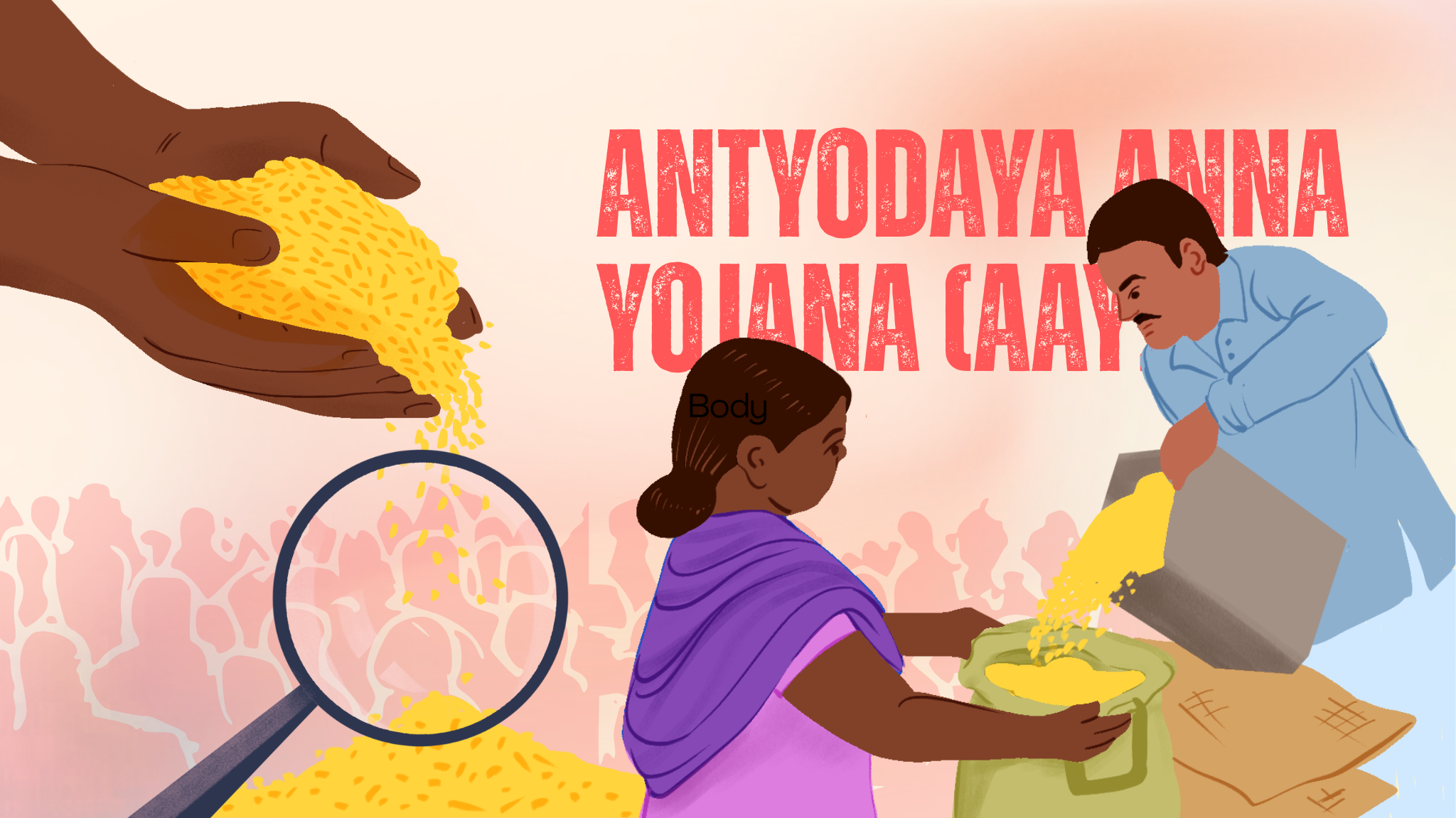
IN THE NEARLY 13 YEARS since its enactment, the National Food Security Act (NFSA), 2013 has been subject to frequent changes, recalibrations and exclusions, affecting the lives of those it promises to protect. Even today, people’s struggle has not ceased and the crisis will be worsened by the newly proposed amendment to the Act by the Department of Food and Public Distribution, experts working on people’s right to food security say.
Under the NFSA, beneficiaries fall into two categories: Antyodaya Anna Yojana (AAY) households and Priority Households (PHH), with different eligibility criteria, coverage and entitlements.
The amendment changes the quantity of foodgrain entitlement of AAY families loosely defined as “poorest of the poor” – from 35 kg per household per month irrespective of the number of members to a per-person entitlement of 7 kg per person per month, capped at 35 kg. The government’s stated objective is to ensure “equity” between small and big households in the AAY scheme and provide for a standardised entitlement logic based on a per-person calculation between the PHH that receive 5 kg per person per month and AAY families.
The NFSA is instrumental in recognising that a large part of India suffers from food scarcity, promising a two-third coverage of 75% of the rural areas and 50% of the urban areas.
As we explain later, the new amendment is in line with the government’s seeming hesitation to provide food as a right, with every technology and policy change excluding more number of beneficiaries over the years, without any expansion in its coverage. Experts we interviewed also say that the Bill risks deepening the impact of existing forms of digital exclusion faced by AAY entitlement holders, especially the women living alone, destitutes and widows.
Moving Towards ‘Equity’
The “equity” the government is seeking in food distribution, say experts, cuts down on the foodgrains for small households, while not doing anything significant to improve the entitlements of the bigger AAY households.
“Smaller households, with less than five members will lose 20% to 80% of their current entitlements. And a majority of AAY households have fewer than five members. There are no gainers in this bargain, only losers,” estimates Jean Drèze, an economist and social activist who had worked extensively on food security and MGNREGA. He believes that the new food allocation will have no significant impact on the government’s actual expenditure, which has already seen a gradual decline over the years.
217.01 lakh households (7,75,68,344 individuals) are covered under AAY, as per the Department of Food and Public Distribution records. The “equity” move could reduce the foodgrains of around 73% of these households that have fewer than five members. Only around 27% (59,13,887) households have five or more members, per recent data presented in the Rajya Sabha.
“The government is trying to reduce offtake and cut costs at a time where the godowns are already overflowing with undistributed grains,” points out Drèze.
The foodgrains quota under the AAY category only amounts to 18% of the total food allocation under Targeted Public Distribution System (TPDS). The NFSA encompasses a range of other food and nutritional schemes such as PM POSHAN, catering to the mid day meals at schools, Pradhan Mantri Matru Vandana Yojana (PMMVY) and Integrated Child Development Services (ICDS) for lactating women and their children, and Pradhan Mantri Garib Kalyan Anna Yojana (PMGKAY) providing foodgrains free of cost under TPDS.
Prabhat Patnaik, Professor Emeritus at the Centre for Economic Studies and Planning, JNU, points to the flaw in the equity argument: “It is not as if the amount of foodgrains ‘saved’ would be distributed among households having more than five members.”
The state governments of Kerala and Tamil Nadu have opposed the bill, arguing that it would significantly decrease the government allocation of foodgrains to the southern states that tend to have smaller household sizes than in the north.
Women Hit the Hardest
Of the nearly 1 million women living alone in the Antyodaya category, according to Household Consumption Expenditure Survey (HCES) data, 85% are widows and 74% are illiterate and vulnerable, says Dreze.
The struggle for the right to food legislation began in 2001 on the streets of Rajasthan after the state faced droughts for three consecutive years, resulting in waves of hunger and starvation. In April 2001 People’s Union for Civil Liberties (PUCL) filed a petition in the Supreme Court arguing that the government should take responsibility to alleviate hunger and the Right to Food Campaign soon began as an offshoot of this petition. This mass struggle was led by a large number of women from rural areas, across the country. Realising the place women had in ensuring food and nutrition in homes, the NFSA, when it was passed, made them Heads of the Household (HoH), issuing ration cards under their names.
However, researchers (here and here) point out that the social policy discussions around NFSA have continued to treat women’s labour as a free resource to implement the welfare agenda. The actualisation of nutritional and food programmes from state’s distributed foodgrains to cooked meals at home remains uncompensated as privatised care work, while ASHA workers, Anganwadi workers and those preparing mid-day meals are only paid in form of small “honourariums.”
Sejal Dand, co-founder of ANANDI and a member of Mahila Kisan Adhikaar Manch (MAKAAM), believes that the care work in most of the agricultural societies includes the food systems work as well. “Women look after the livestock, fetch water, engage in homestead farming, and do gathering and collecting of food that forms a large part of the food basket of Adivasi households. All the knowledge and the labour of these women farmers are largely invisibilised,” she says.
According to the Periodic Labour Force Survey (PLFS) 2023-24, 60.6% of working women are engaged in agriculture and allied labour compared to 35.6% men across India, yet it is not recognised as legitimate farming. BehanBox had earlier reported how this definition excludes a large number of widows engaged in agriculture in the state of Maharashtra, also excluding them from formal social security benefits tied with the occupation.
“If someone is working for 10-12 hours a day whether it is domestic, care or agricultural work, then they have the right to adequate and nutritious food with dignity. NFSA never recognised these women and then there is this amendment that will negatively impact widows and those living alone,” says Sejal. She adds that as per Section 4 of the NFSA the central government is supposed to give “maternity benefit of not less than rupees six thousand” which they have reduced to Rs. 5,000 under Pradhan Mantri Mantru Vandana Yojana (PMMVY). At times, she alleges, even this sum is split between the states, or not allocated in the first place.
Besides, the government has also cut down on the expenditure of maternity benefits under PMMVY and other child nutrition provisions such as Integrated Child Development Services (ICDS). Their coverage, too, is severely impacted by accessibility issues, lack of awareness, frequent entitlement changes and introduction of digital technology.
Earlier reporting, in a remote Adivasi village in Andhra Pradesh, by BehanBox revealed how the technological exclusions work in the form of repeated failed attempts that eventually forced these women to give up on receiving even their limited entitlement under the PMMVY scheme.
As we explain later, an emphasis on increased technological intervention has also pushed for more centralised control over the PDS system.
Deepening Digital Exclusions
The shift from a per household to a per person entitlement not only reduces the foodgrains available of the household but, experts say, is also an attempt at more robust authentication of the beneficiaries under the PDS system amidst widespread digital exclusion.
The most advertised change the government made to NFSA was the provision of free foodgrains under Pradhan Mantri Garib Kalyan Yojana (PMGKY) but this was accompanied by a mandatory e-KYC for every member of the household, says economist and activist Dipa Sinha. The new amendment’s emphasis on an individual entitlement can make the impact of digital exclusions more visible within the AAY households.
“With the new amendment, even if the household has a ration card, the members within the household will be impacted. The households that used to get 35 kg of foodgrains irrespective of the number of e-KYC verifications, will lose out on 7 kg on every e-KYC failure. This is the biggest destruction, as it will deprive so many people of their rights,” says Dipa.
An advisory issued in June 2024 by the Ministry of Consumer Affairs, Food and Public Distribution (MoCAFP) made it mandatory for all the states to comply with 100% e-KYC completion. All members listed on a ration card had to link it to their individual Aadhaar numbers, and undergo biometric or IRIS authentication. Later, the Targeted Public Distribution System (‘TPDS’) (Control) Amendment Order, 2025 mandated that e-KYC needs to be updated every five years.
There are numerous reports (here, here and here) of people’s ration cards being cancelled due to small clerical errors like mismatch or mistakes in spellings. In remote areas, access and availability of Aadhaar Seva Kendras (ASKs) and Common Services Centres (CSCs) are a problem.
A survey by the Right to Food Campaign, after Aadhaar seeding was made mandatory in Odisha, found that 18.67 lakh people were excluded from the list of beneficiaries. It also documented more than 100 starvation deaths between 2015 and 2019 across the country, due to the same reason.
The government has said that it has provided for multiple authentication modes, including Single Finger, Fusion Finger, IRIS, and OTP but reports (here, here and here) have shown that the process of e-KYC built another layer of exclusion into the system, due to biometric failures, issues of internet connectivity and the non-functioning of e-POS machines.
The government’s reasoning behind building multiple levels of technologies into the system is to ostensibly arrest leakages and reduce corruption in the PDS system. A study titled “Datafication of the PDS System in India”, conducted by The Centre for Internet and Society, found that while technological interventions have certainly helped in reducing corruption, they have also led to a disproportionate exclusion of beneficiaries from marginalised communities in states like Chhattisgarh and Jharkhand.
According to Sameet Panda, a researcher with LibTech, most of the welfare systems including the PDS are becoming exclusively digital but they should work with the offline mechanism to reduce reliance on a singular delivery mode.
The Question of ‘Nutritional Norms’
The government has maintained that the NFSA amendment Bill is formulated on the basis of “nutritional norms” – factoring in findings from the Dietary Guidelines for Indians (2024) issued by the Indian Council of Medical Research (ICMR) and of the Household Consumption Expenditure Survey (2023–24).
However, the experts argue that this calculation is based on a selective definition of foodgrains which only includes rice, wheat and coarse grains, resulting in serious nutritional deficiencies in women and children. The ICMR 2024 guidelines recommend 250 gm of cereals in a plate per adult per day, amounting to a total of around 7.5 kg per month. However, this is only a part of the recommendation made by the ICMR that the government has decided to focus on.
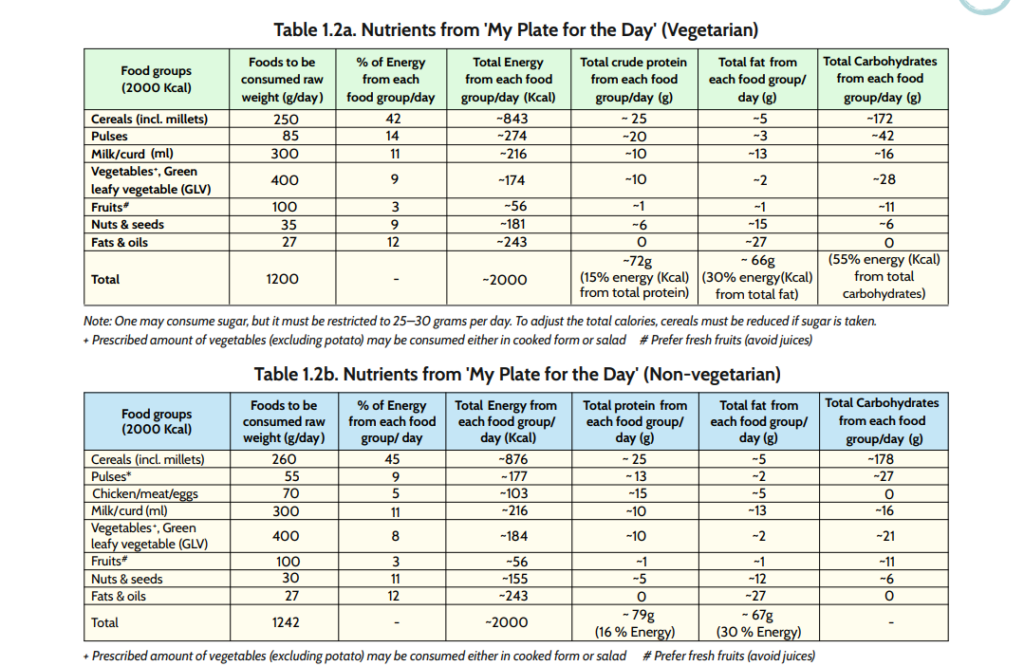
ICMR changed its earlier benchmark of 330-400 grams of cereals per adult per day to a dietary diversity inclusive of micro-nutrients. It points out that for a large segment of the country’s population, the intake of nutritious food was found to be lower than the recommended levels, whereas, the intake of cereals was found to be higher. “If the concern was really for the poorest of the poor, then a different policy would have been adopted. Instead of 35 kg for a single-headed household, provide them with pulses and oil. Overeating is not the problem, diversity is,” Dipa says.
The data from Household Consumption Expenditure Survey, 2023–24 — on which the government’s estimate is based — shows that while the household expenditure on cereals has seen a decline in both rural and urban areas, this has not translated to more spending on pulses, oil, etc. which has remained low over the years. Activists have long lobbied for the inclusion of pulses, oil, fruits and vegetables – unaffordable for AYY homes without state support – in the food basket under PDS.
Sejal notes that there is no scope for nutritional outcome unless it is accompanied by protein intake. While NFHS-6 did not report the prevalence of anaemia among women in the country, NFHS-5 found that 57% of women aged 15–49 in India were anaemic. It also revealed that 89% of children between the formative ages of 6-23 months do not receive a “minimum acceptable diet”.
Though official reports say that India has made progress in reducing undernourishment, challenges remain, particularly in relation to child stunting, anemia, and access to healthy diets. India’s position is low in the 2025 Global Hunger Index — 102nd among 123 countries.
Dipa notes that the MSP is provided for 22 crops but the procurement is mostly restricted to paddy and wheat. She emphasises the importance of decentralisation and local procurement of foodgrains, which, in her opinion, would not only help in improving nutritional standards but also in standardising the prices.
A Right Weakened Over the Years
Experts allege that the new amendment is a way to formally codify the exclusions built into the Act through a series of executive changes. “That is why when there is a major change that happens, like in the case of MGNREGA, you might not see much response or agitation on the ground,” reasons Dipa.
As mentioned earlier, technological and bureaucratic barriers can become significant bottlenecks. In addition, the government is piloting more technologically advanced systems like Direct Benefit Transfers (DBT) in place of foodgrains and Central Bank Digital Currency (CBDC). The PDS system currently provides subsidised foodgrain 813.5 million beneficiaries, lower by 22.7 million than even its own estimate.
Another concern that the experts have long pointed out is about the coverage based on outdated Census numbers of 2011. A 2021 estimate by economists Reetika Khera, Jean Dreze and Meghana Mungikar found that over 100 million people are excluded currently from the PDS system because of this. “Today millions are out of the PDS system but everyone knows what the projected population figures are,” Sejal explains.
Many state governments have started to distribute their own ration cards under ‘expanded PDS.’ And in many others, state canteens providing highly subsidised meals have quietly become popular across the country.
The Economic Survey 2019-20 argued for the reduction of the two-third coverage under the PDS system stating that it is “too high” and should be reduced to cover only the bottom 20%. This reluctance to expand the coverage of the food distribution system became particularly visible during the COVID-19 pandemic.
On June 29, 2021, the Supreme Court directed the Union government to take steps to “re-determine” the number of beneficiaries covered under the NFSA. Despite repeated directions from the Court, the Union government ultimately resisted expanding the coverage. In September 2022, it argued that the number of poor people had declined over the previous decade and, therefore, that an expansion of coverage was not necessary. An investigation by The Reporters’ Collective, however, showed how bureaucratic manoeuvring prevented any efforts to increase the coverage.
Over the years, the government has introduced schemes such as Pradhan Mantri Garib Kalyan Ann Yojana (PMGKAY) that essentially reduced the earlier entitlements, as well as the One Nation One Ration Card (ONORC) scheme with only limited benefits.
“There is a general pattern of hostility towards these programmes,” says Dreze. “The government does not believe in rights, they believe in duties. These laws have created justiciable entitlements for the people.”
Dipa believes that the recent amendment to the NFSA can be understood as part of a broader pattern of attacks on foundational rights secured through decades of popular struggle—including the right to information and the right to work under MGNREGA. “NFSA mandates social audits but to conduct social audits you need to know the official data, and then compare it with the ground realities to verify it with people. Now we can’t get that cumulative official data,” she points out.
How To Build Accountability, Access
Experts say that the answer lies in decentralisation, a hybrid online-offline approach, strengthening mechanisms of transparency and accountability and a universal and updated coverage of beneficiaries.
According to Panda, local District Grievance Redressal Officers (DGRO) and vigilance committees should be empowered to address grievances and conduct social audits. In Scheduled Areas, centralisation also bypasses constitutional safeguards under the Panchayats (Extension to Schedules Areas) Act (PESA), which require Gram Sabha involvement. Digital interventions have been rolled out uniformly in tribal regions without meaningful consultation, undermining the spirit of constitutional protection.
The success of the NFSA should not be measured, says Sejal, by the number of digital transactions completed. “But by whether every woman, child and vulnerable household can actually access nutritious food without fear of exclusion.”



We believe everyone deserves equal access to accurate news. Support from our readers enables us to keep our journalism open and free for everyone, all over the world.
