
Heat Journals: ‘The Heat Makes It Impossible To Do Household Chores’
A homemaker contends with the exhaustion heat brings, the money it drains, the tempers it sharpens, and the limits it places on the body
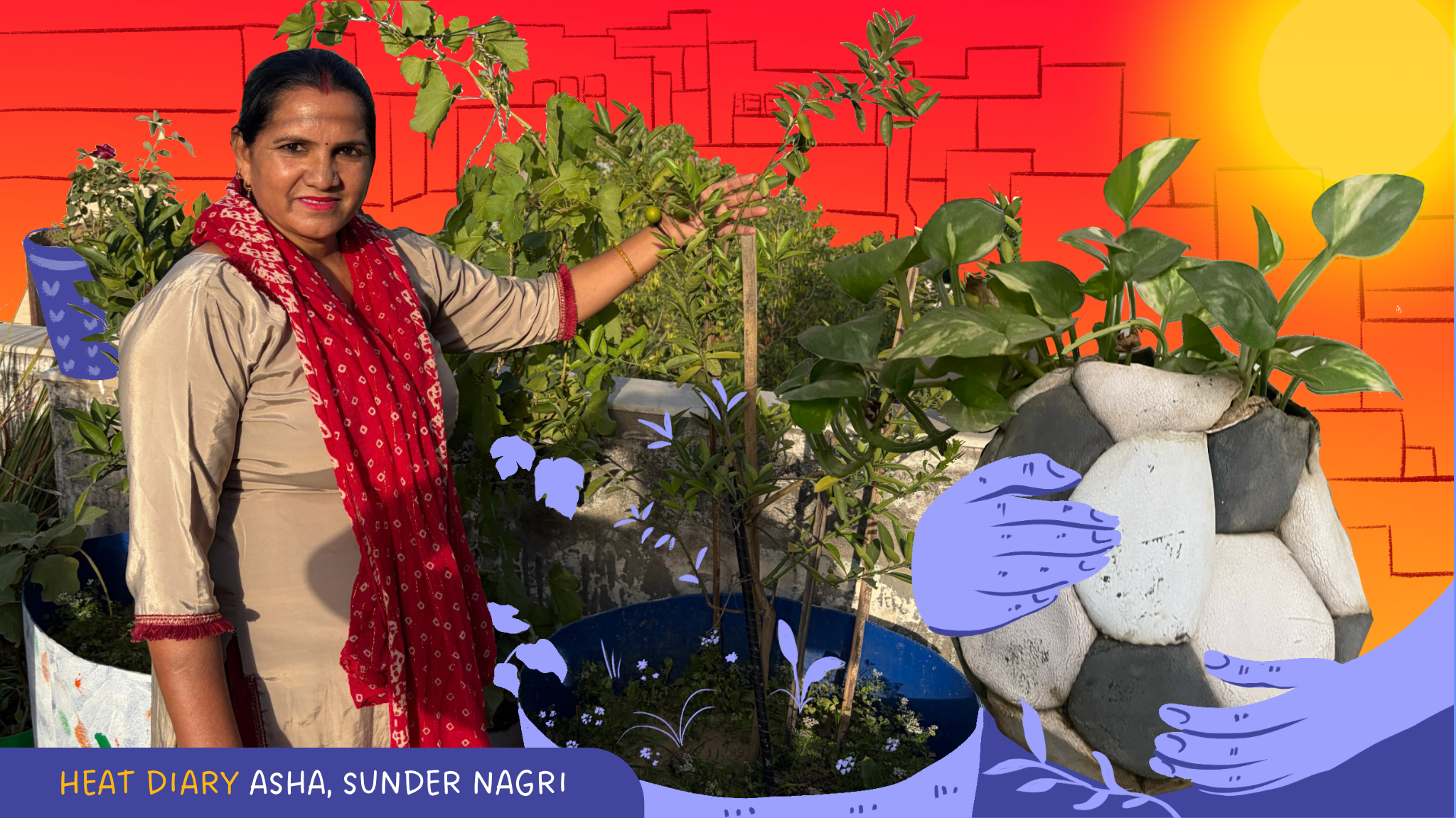
This is part of our Heat Diaries series, where we document – through reports, profiles, data, and illustrations – the degrees of losses and longings that communities experience while living under extreme climate realities.
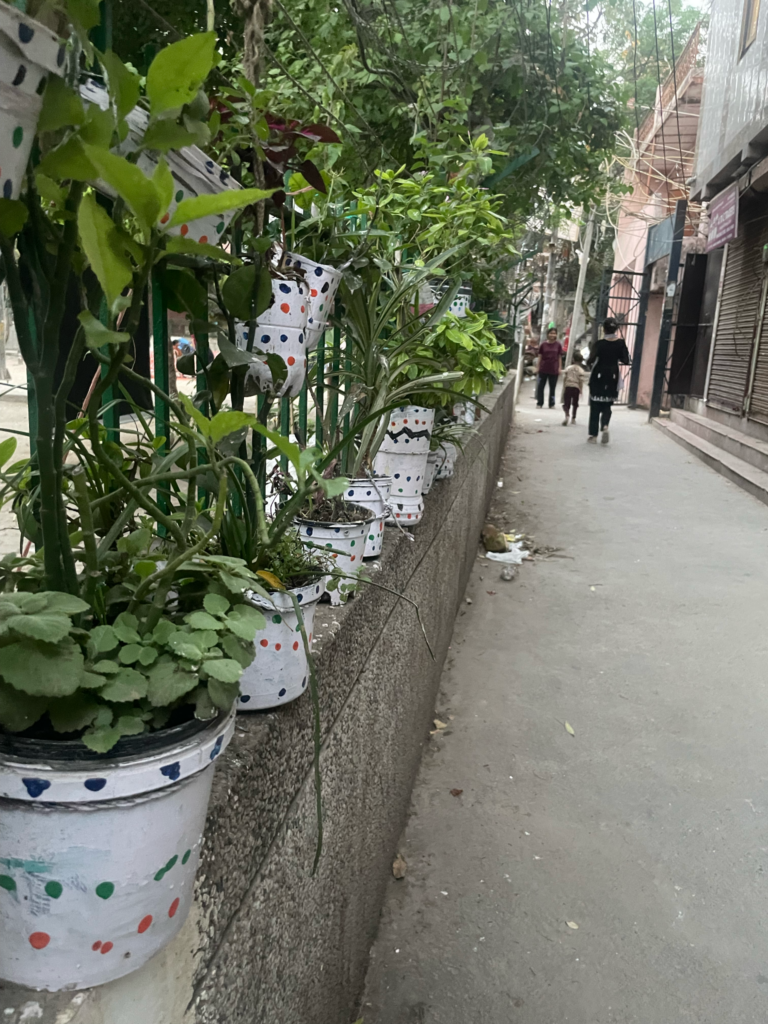
Inside Sunder Nagri’s F Block, at the edge of a narrow lane, Asha’s two-storey home has a striking facade. It is densely curtained by a dark green creeper, long vines dangle from the balconies, and planters – some fashioned out of old footballs – line the railings. Inside, each corner holds a plant she has nurtured. Outside, in the park that is a few steps from her front door, sit rows of pink and white plastic containers that Asha repurposed to grow something green.
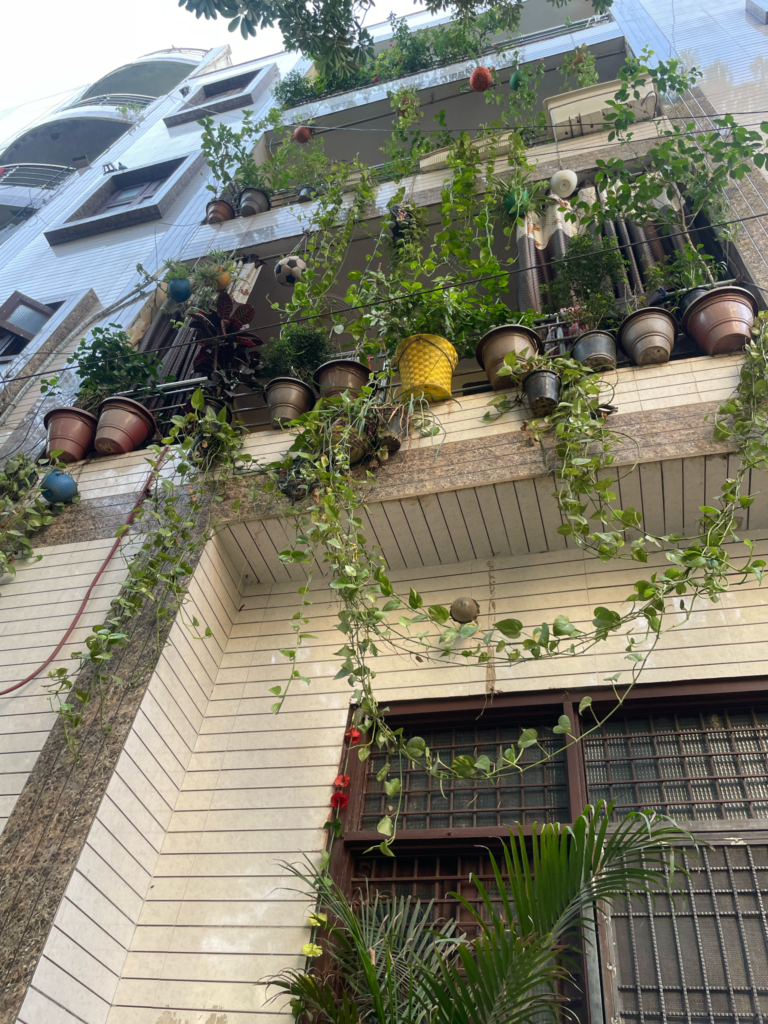
The 47-year-old homemaker has lived in Sunder Nagri for the last three decades. She has patiently made this world, its layered green shadows and small and faithful blossoms, a sanctum she could retreat into and rest. And now her sanctum is burning.
“The trees used to be so full of shade… now there is almost nothing,” Asha says. She almost teared up when she saw the lauki vine that she tended and watched as it climbed her terrace wall shrivel and dry up in the heat. She usually waters the plants twice in a day but hesitates at the threshold these days. The blistering heat, with temperatures crossing 50 degrees Celsius, gives her a sharp migraine the moment she steps out. The trees in the park wither the same way; their canopies, lush every summer, have gone dull, leaf tips brown and curled.
This anguish follows her everywhere – in her daily chores, cycles of cooking and cleaning – and it exhausts her faster and more completely than before. Tempers flare faster at home as her husband, a security guard on night shift, comes home worn down by the heat. The two often lose sleep over rising expenditure on water and electricity.
But Asha responds to the losses with a spirit of renewal. She continues to hope, growing plants, turning junk into containers even as the city turns hotter every year.
Nurturing A Relationship
Asha grew up on a farm in a village near Hisar, Haryana. Before electricity arrived in the village in 1999, she spent summer nights sleeping on a charpai in the courtyard. She remembers pruning the neem trees – her favourite species – into umbrella-like canopies, then tying old saris to the branches and laying wet jute sacks over them to create cool shade at night. She fondly recalls the plants and trees she planted, the fields running in every direction, the doors and windows left ajar. The air constantly moved through the house.
“There was always ventilation there,” she says. “Here, there is only concrete and suffocation.”
When Asha was still in third grade, a swelling developed in her right leg that made movement difficult. The scans showed a finger-sized worm. A local doctor administered the wrong treatment, leaving her paralysed for three years with the risk of an amputation. But her father eventually amassed the resources for a surgery, and Asha gradually recovered. When she returned to school, a few years older for her grade, she was bullied so severely she decided to drop out. Her dream of joining the police force was left unfulfilled.
With a sigh, Asha says she regrets not finishing school. But over time she channeled the remorse into learning. She taught herself to read and write, laying her hands on grocery packets and whatever literature she could get her hands on. She learned Hindi and fragments of English.
Asha was persistent, and whatever passion remained flowed into creative pursuits, one of which is gardening. She wakes up at 3 am each day and spends two hours meditating, rests for an hour and then begins household work. “Then I spend almost an hour and a half in the morning tending to the plants, and sometime again in the evening after five,” she notes.
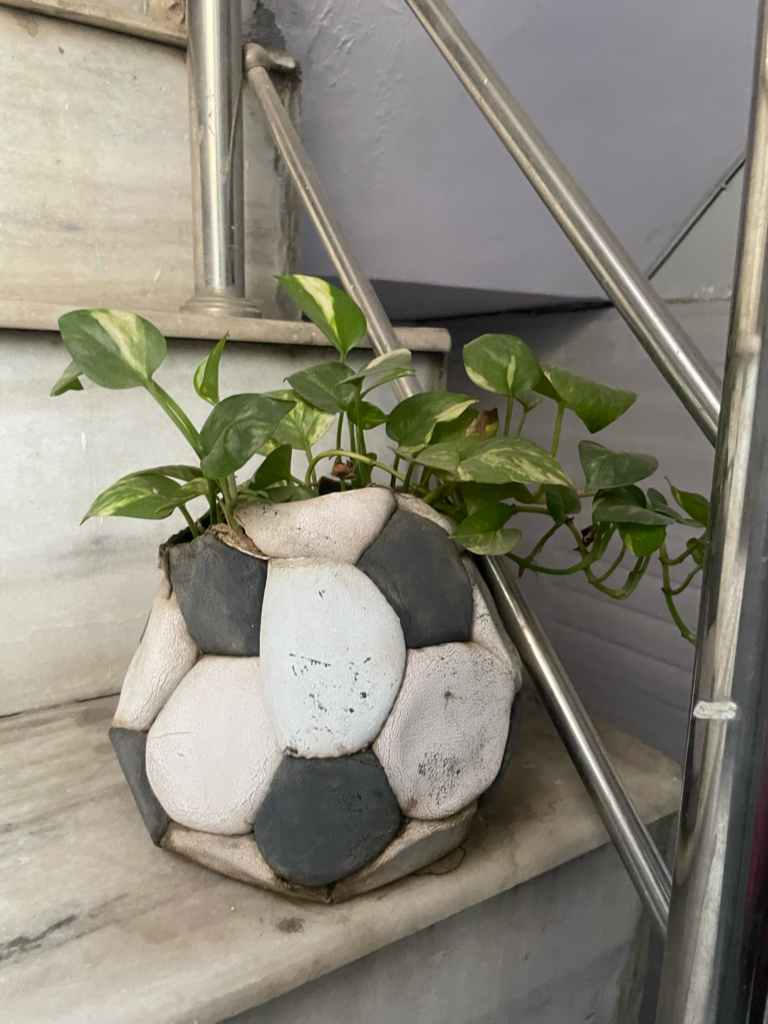
With her plants, Asha forgets most of her worries. “I tend them as if they are my children…Even if I go away for a day, it pains me to leave them behind.”
The green cover brings her relief these days. Earlier, direct sunlight would heat up the entire house but the vines now absorb and deflect the heat. The balcony and attached room have again become spaces where she can rest. “When trees shelter me, something inside me shifts. I feel safe.”
Heat, Gendered
In late May, while running errands in the neighbouring market, Asha felt dizzy and suffocated by the relentless sun. “I needed to find an AC…Wherever I reached a cool spot, I stopped briefly for a few moments of rest. As soon as I reached home, I drank a whole water bottle, changed my clothes, and lay down in my room. It felt as if the whole house was spinning.”
Like Asha, women who perform unpaid and paid care labour are doubly exposed to heat. Rising temperatures hinder access to resources like water and fuel, forcing women to spend more time tending to household – for instance travelling longer distances to fetch water. Heat’s risk to children and elderly people further add to women’s nursing and childcare responsibilities. Without access to proper cooling indoors, even routine chores like cooking become enervating in stifling spaces.
“Often, the heat and humidity cause fatigue, which slows down the pace of my work. There is both discomfort and unreasonable anxiety,” Asha says. The hardest part is cooking – in summers the kitchen feels like a furnace. “I can’t even cook food for the children some days,” she adds.
Day time is the hardest, when she can neither step out due to heat, nor rest “because there is always something”.
She frets over her children and husband who come home from outside exhausted, wrung out by the same heat. Asha’s husband travels 25-30 km every day on a motorcycle, and at work spends long hours inside a tin shed with just a fan for cooling. He returns in the morning irascible. “Chehra ekdum jhulsa hua hota hai (his face looks drained),” she says.
Sometimes he snaps: “You sit home and relax all day, what do you know about what it is like working in heat?” Asha understands it is not easy for him. “When I step out in the heat to even go to the market it feels like ants are biting inside my head,” she says, “it must be much worse for him.”
But I manage everything else by myself, and it is exhausting, she says.
The Cost Of Care
Most days Asha avoids stepping out of the house to save money. The electricity bill which was less than Rs 100 until a few months ago shot up to Rs 1,500 this month; the couple is spending as much as Rs 2,500 on water bills as consumption surges. “There is a lot of financial strain.”
The tension the heat brings drifts like the summer loo, the hot winds that sweep across Delhi in May-June. This brings on a headache that lingers and turns everything dreary for Asha. “I am so sleepless and restless I am almost afraid to step out of the house during summer,” she says
On a recent visit to her parental home in Sirsa, the hot loo and sun gave her a headache and nausea. “When I had to return, I waited for the bus in the scorching heat for a very long time…I fell sick again,” she remembers.
Researchers have labelled Asha fear as ‘climate anxiety’ or ‘eco-anxiety’. Women are more involved in climate adaptation and mitigation globally but have less decision making power in comparison to men. This, along with a diminished ability to learn, earn, and adapt, often leave women psychologically exhausted and anxious.
A Budding Climate Leader
Marginality shapes the responses to heat. As we discussed above, gender norms, class hierarchy, and caregiving burdens mean women are forced to spend more time on unpaid work and have less time for leisure, personal well-being, and healthcare support. Moreover, not everyone has the resources and agency over their work conditions to avoid the midday sun or consume nutritious food that health advisories recommend to citizens.
In Asha’s diary is a list of ways to cope that are within her means: avoid chores between 1 and 4 pm, drinking cold water from an earthen pot, and wearing light cotton clothes. When possible, she sits near the plants.
Asha, who once peered over her books with the same gentle diligence that she expends on her plants now, is one of the several residents writing about their experience of living with extreme heat in the Garmi Khata or The Heat Register, an evidence-building exercise by Greenpeace India collaboration with informal workers’ groups across the city.
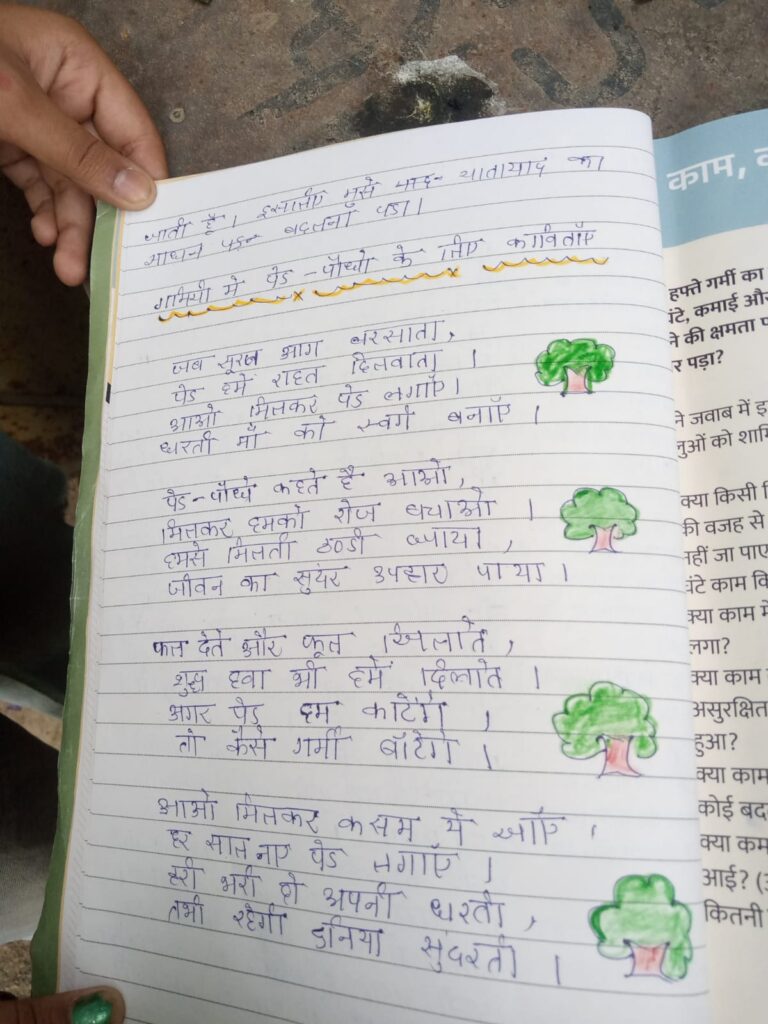
Asha’s entries come embellished with drawings of vines and trees; some of her worries find their way out as poems. One reads:
पेड़-पौधे कहते हैं आओ,
मिलकर हमको रोज धयाओ।
हमसे मिलती ठंडी छाया,
जीवन का सुंदर उपहार पाया।
फल देते और फूल खिलाते,
शुद्ध हवा भी हमें दिलाते।
अगर पेड़ हम काटेंगे,
तो कैसे गर्मी बाँटेंगे।
Trees and plants call out to us
Come, tend to us every day
From us you receive cool shade
And life’s most beautiful gift.
They give fruit and make flowers bloom,
They bring us clean, fresh air.
If we cut trees down,
How will we ever share the cool?
Trees to her are like rooms: the bitter earthy scent of neem, the gentle embrace of the banyan. Without this ‘house’ she feels forsaken, but when she sees the park in full bloom, “it feels wonderful”.
“It is essential to plant a neem tree around the house,” she declares. She can rattle off the benefits of neem trees off her head. Brushing teeth with a neem twig prevents cavities; leaves are beneficial for hair; she believes chewing neem leaves on an empty stomach improves her metabolic health. She would encourage people to plant mint, marua, and holy basil at home. She religiously drinks their juice, with lemon and black salt, as a way to protect herself from heat strokes.
“I do this gardening so that everything stays green for my health and for my children, which also gives us relief from the heat.” Gardening is therapy for Asha. It is also climate adaptation at the scale of one home.

We believe everyone deserves equal access to accurate news. Support from our readers enables us to keep our journalism open and free for everyone, all over the world.
