
Inside The Radical Promise Of Social Audits Under MGNREGA
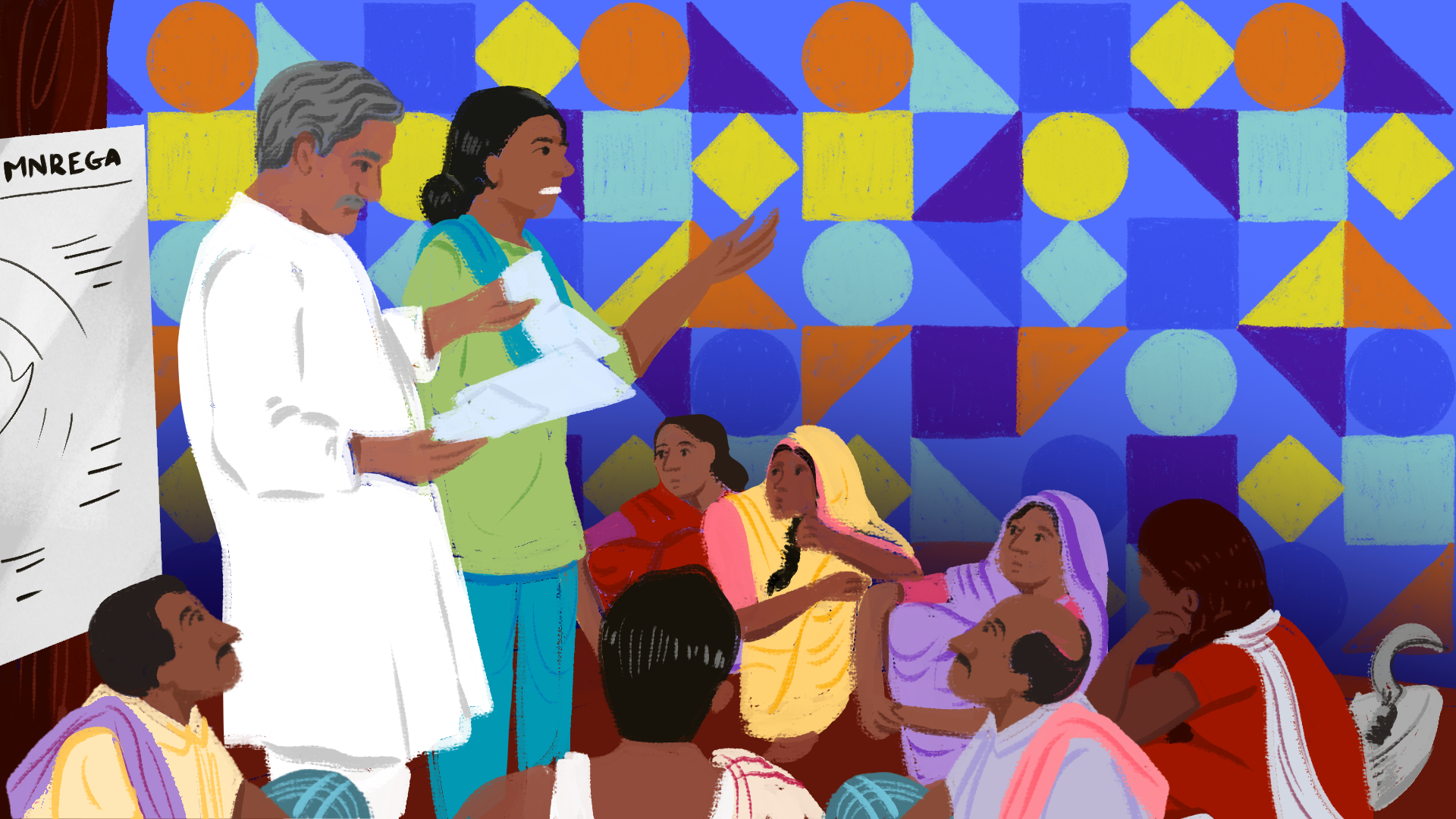
The jan sunwai, an experiment in participatory democracy, was premised on the idea that ordinary citizens, especially the rural poor, can and must hold the state accountable
The Mahatma Gandhi National Rural Employment Guarantee Act (MGNREGA), enacted in 2005, was among the most ambitious and progressive social protection legislations in the world. By guaranteeing at least 100 days of wage employment to every rural household that demands work, it marked a decisive shift from discretionary welfare to a rights-based framework. Yet, what truly distinguished MGNREGA from earlier poverty alleviation programmes was the carefully designed architecture of transparency and accountability embedded in it. At the heart of this architecture lay the institution of social audits.
In my engagement with social audits that has spanned over three decades I have witnessed a process that began as a people’s audit – “jan sunwai” – of development works carried out under various programmes in their villages/wards to it becoming embedded in government and taking on the form of social audits. As a full-time member of the Mazdoor Kisan Shakti Sangathan in rural Rajasthan, I participated extensively in these jan sunwai processes that laid the foundation for participatory accountability. I subsequently joined the composite State of Andhra Pradesh from 2006 to help the State Government set up the Society for Social Audit, Accountability and Transparency (SSAAT), the first independent social audit society established in the then-undivided State of Andhra Pradesh (now Andhra Pradesh and Telangana).
Eventually, after bifurcation of the State, as Director of SSAAT, I was tasked with the creation of two robust, autonomous social audit institutions – one in each State. The frameworks, rules, and institutional architecture for social audits subsequently adopted across India, including by the Union government, were significantly shaped by these two experiences.
Social audits under MGNREGA represented one of the most significant experiments in participatory governance in contemporary India, and given its scale, perhaps in the world. They were premised on a radical idea: that ordinary citizens – especially the rural poor – can and must hold the state accountable for the delivery of public goods and services. In doing so, social audits sought to invert traditional power hierarchies, placing workers and communities at the centre of monitoring and evaluation.
Social audits have been one of India’s most significant contributions to global debates on public and social accountability. The process that originated in India has since been adopted in several countries and is widely regarded as a benchmark for open government and citizen participation – jan bhaagidaari.
MGNREGA has since been repealed and several progressive provisions of the Act have been removed or diluted under the newly enacted Viksit Bharat Guarantee for Rozgar and Ajeevika Mission Gramin (VBGRAMG), but the Ministry of Rural Development has retained the provision for social audits.
How MGREGA Framed Social Audits
A social audit is not limited to the social sector; it is a public, participatory process through which beneficiaries scrutinise the planning, implementation, and outcomes of a programme. Under MGNREGA, social audits were mandated by law. Section 17 of the Act required the Gram Sabha to conduct regular social audits of all works executed within the Gram Panchayat. This mandate was further strengthened by the Audit of Schemes Rules, 2011, which institutionalised independent Social Audit Units (SAUs) in every state.
In practice, a social audit involves placing all relevant records – job cards, muster rolls, measurement books, sanction orders, and payment details – before the community. These records are verified through door-to-door interactions, physical inspections of worksites, and collective deliberation in Gram Sabha meetings or Social Audit Forums/Public Hearings. Discrepancies between official records and lived realities are identified, discussed publicly, and documented.
Unlike conventional audits conducted by accountants or bureaucrats, social audits privilege lived experience over technical expertise. The testimony of a worker who has not received wages, or of a villager who knows that an asset exists only on paper, is treated as valid evidence. This epistemological shift is central to the democratic ethos of MGNREGA.
Why Social Audits Matter
Rural development programmes in India have historically been plagued by leakages, corruption, and elite capture. MGNREGA, which covers nearly every district in the country, was particularly vulnerable to such risks. Social audits were thus designed as a systemic antidote.
The practice of social audits originated in a grassroots struggle in rural Rajasthan, spearheaded by the Mazdoor Kisan Shakti Sangathan, where rural workers and peasants sought to enforce minimum wages on public works programmes that they knew were being systematically embezzled by local elites. This struggle soon revealed that accountability was impossible without access to government information, eventually contributing to the movement for the Right to Information Act. However, access to information alone was insufficient. What was equally necessary were public forums where official records could be collectively examined and compared with ground realities.
The jan sunwai emerged in response to this need and was later institutionalised as the social audit, enabling citizens to openly and collectively question the functioning of government agencies. In the early 1990s, jan sunwais proved remarkably effective in improving the implementation of welfare programmes in rural Rajasthan.
Social audits serve multiple, interlinked functions. First, they enhance transparency by mandating proactive disclosure of records and public discussion, breaking the monopoly over information traditionally held by officials and contractors. Workers become aware of their entitlements – minimum wages, compensation for delayed payments, unemployment allowance, and worksite facilities.
Second, social audits strengthen accountability. Officials responsible for programme implementation are required to respond publicly to issues raised by the community. In principle, audit findings are linked to grievance redressal and disciplinary mechanisms, including the recovery of misappropriated funds.
Third, social audits promote citizen empowerment. Participation builds confidence, collective agency, and a sense of ownership among rural communities. For many workers – particularly women, Dalits, and Adivasis – social audits provide a rare public platform to speak truth to power.
Finally, social audits contribute to improved programme outcomes. Evidence from studies and field experience suggests that areas with robust audit processes tend to have more timely payments, better-quality assets, and lower levels of corruption.
Institutionalisation Of Social Audit Units
Recognising the need for independence and credibility, the central government mandated the creation of Social Audit Units in every state. These units were intended to function autonomously from the implementing machinery, although they are funded under MGNREGA. The erstwhile composite state of Andhra Pradesh was the first to establish an independent SAU in 2009, following pilot social audits that began in 2006, alongside the notification and implementation of the Act. While the process took deep roots in Andhra Pradesh and later Telangana, in most other states progress remained slow and uneven.
SAUs recruit and train village-level resource persons, often drawn from civil society or local communities. These resource persons facilitate the audit process, ensure access to records, and assist in documenting findings. Many states conduct social audits annually, covering all Gram Panchayats in a phased manner.
The institutionalisation of SAUs represents a significant achievement. It is one of the few instances of the State formally creating a space for structured dissent and public scrutiny of its own programmes. However, the degree of autonomy enjoyed by SAUs varies widely across states, directly affecting the quality and impact of audits.
The Social Audit Process in Practice
A typical social audit unfolds in several stages. First, relevant records are obtained from implementing authorities and shared with the team. These records are then verified at the household and worksite level. Workers are asked whether they were employed for the number of days recorded, whether wages were paid in full and on time, and whether mandated facilities were provided at worksites.
The findings are then consolidated and presented in a public hearing or Social Audit Forum attended by workers, villagers, elected representatives, and officials. Issues such as fake job cards, inflated measurements, missing assets, and delayed payments are discussed openly. Officials are expected to provide explanations and commit to corrective action.
The presence of the community acts as a moral and political check, making it difficult for grievances to be dismissed or suppressed.
What Social Audits Achieved
Where implemented sincerely, social audits have exposed large-scale irregularities, enabled the recovery of funds, and improved administrative practices. In the case of Andhra Pradesh, Telangana, Tamil Nadu, Jharkhand, Sikkim, Karnataka, social audits have resulted in working as a strong deterrent. In several states, they have helped institutionalise a culture of record-keeping and responsiveness that extends beyond MGNREGA.
In 2022, there were more than 20 central teams that descended on the State of Telangana, often with a notice of just a day. These teams would land at the airport and head straight to the villages. They would come prepared with the list of Districts, Panchayats, works to be inspected and simply inform the accompanying officers from the State Department of Rural Development, where they wanted to go. Despite these inspections, the Ministry of Rural Development did not manage to find many anomalies. Even the few that they did manage to identify, had already been flagged in the social audits and action initiated. Unlike West Bengal where the MoRD stopped funds for 3 years, Telangana did not face a similar situation. Both the State and Central Government acknowledged that a major reason for this were the effective social audits that were being conducted by the Social Audit Unit.
Equally significant is their symbolic impact. Social audits have redefined citizenship for millions of rural workers, transforming them from passive beneficiaries into rights-bearing claimants. For women in particular, participation in audits has often translated into increased confidence and public visibility.
MGNREGA’s social audit framework is frequently cited as a global best practice in participatory accountability and has influenced similar initiatives in other countries. I have had the opportunity to train people in Kenya, South Africa, Indonesia, Mexico in the social audit process and seen how the process quickly transforms people from bystanders to participants. Access to information followed by an enabling environment, ensured that public hearings held in informal settlements, where we were warned any untoward incident could take place, saw highly charged discussions but no violence. In Kenya’s Mombasa where we trained citizens to audit the Constituency Development Fund and in South Africa, the janitorial services, these processes went on to give space to citizens to engage with policy makers and the government on issues of transparency, accountability, and governance.
Autonomy, and Persistent Challenges
Despite their promise, social audits under MGNREGA have faced serious challenges. Administrative resistance has remained a major obstacle, with officials often perceiving audits as adversarial rather than constructive. This has resulted in delays in the provision of records and non-attendance at public hearings. In my experience, employees often try to game the system when they perceive a threat, and one such hack that they learnt in the early years of the social audits was to hide records and pretend that they were lost. The other hack was to keep the audit team waiting and not providing the records. The audit team would begin to get frustrated and not know what to do. During a review meeting that was held once a month, the resource persons brought this up and informed the Principal Secretary, RD, who was chairing the meeting and me, that records were being withheld.
This hack was not new. The biggest challenge faced by even the Local Fund Audit and the CAG’s audit has been the non-production of records. The Principal Secretary, RD, issued immediate orders stating that any custodian of records, who failed to produce records to the social audit team within 48 hours of their reporting in the mandal, would be suspended. The handing over of records went up immediately. However, these measures tend to be effective only when there is stringent follow up and issues that have been raised are taken seriously.
Political interference is another concern. In many areas, local elites attempt to influence or intimidate auditors and participants, undermining the independence of the process. Social audit resource persons themselves are often vulnerable, particularly when audits expose entrenched corruption. In one instance, the brother of a sitting Minister, abducted a social audit resource person from the village where he was facilitating an audit. The entire episode was like a scene in a film. The resource person was tossed into a jeep and taken to the residence of the concerned. While the Resource Person was in the jeep, he quietly dialled my number and I could hear the conversation quite clearly. He was being instructed to stop the audit and leave, failing which, they threatened him with dire consequences. I reached out to the District Collector and informed him that I would be filing a FIR for abduction if the resource person was not released immediately to finish the audit. The District Collector in turn informed the Minister and emphasised how it would reflect badly on the Government and the party. The Resource Person was released and sent back to the village.
Capacity constraints further weaken the process. Effective audits require skills in record analysis, facilitation, and documentation. Inadequate training and high turnover among resource persons have limited the depth and consistency of audits.
Perhaps the most critical weakness lies in follow-up and enforcement. Audit findings do not automatically translate into action. Recoveries are frequently delayed, disciplinary proceedings remain pending, and systemic issues recur across audit cycles. This constrains the transformative potential of social audits.
The Erosion Of The Audit
The distinction between a social audit (samajik ankeshan) and other forms of audit lies in its emphasis on the “social” (samajik) dimension. As a former rural development minister observed at a ministry-organised seminar in 2023 that I was present at, the spine of the social audit process is the samaj, and without it, the exercise is reduced to a mere audit. He noted that social audits had increasingly been reduced to formats and data, with insufficient emphasis on impact and, crucially, on jan bhaagidaari. This assessment rings true: a process intended to be citizen-centric has been hollowed out, rendering workers incidental to the exercise.
Several factors have contributed to this erosion. Despite the issuance of robust standards by the Comptroller and Auditor General in 2016 – standards that ideally should have been notified as Rules – most states continue to conduct social audits only under pressure rather than as a matter of institutional commitment. The persistent failure to address the three Fs – Funds, Functions, and Functionaries – has crippled SAUs.
The Ministry of Rural Development has repeatedly acknowledged delays in releasing funds to SAUs, reported most recently in the Parliamentary Committee Report on payment of wages in the MGNREGS. There have been years in which SAUs have not received a single tranche of funding. Despite repeated representations by SAUs in every official forum, little has been done to address this systemic failure. During my tenure as Director, I would continuously raise the issue of delays in release of funds and flag the dependence of the SAU on the State Government that these delays were creating through written communications, but on no occasion was there a response from the Ministry. During my 18 years of working with the State Government, 13 of which was spent heading the social audit unit, the issue of fund release remained unresolved.
Conducting audits without timely funding is untenable. When resource persons – often from labourers’ households – are not paid their daily wages on time, the integrity of the process itself is compromised. As a result, states have stopped recruiting human resources due to uncertainty around salary payments.
Unsurprisingly, most SAUs today suffer from acute staff shortages. The principle is straightforward: outlay defines outcome. Funding constraints force SAUs into dependence on state governments, undermining their independence. Insufficient and inadequately trained personnel limit the ability of SAUs to conduct even one complete round of audits across all Gram Panchayats.
Arguably, the biggest danger to the process of social audits has been the undermining of the independence of the unit. The social audit standards of 2016 were evolved through a joint task force led by the Office of the Comptroller and Auditor General of India emphasising above all the sacrosanct need for independence of the social audit unit and its processes.
Although the rules made in consonance with these standards mandate independent social audit societies led by full-time directors with both social audit and administrative experience, most states have resisted such appointments. Where appointments have been made, incumbents often lack one or both forms of expertise. Compounding this is the lack of institutional independence, which makes it virtually impossible for SAUs to function autonomously from the implementing agencies.
The absence of functional and independent governing bodies further weakens SAUs in their governing an architecture. Without oversight and policy guidance, these institutions risk becoming, as a former Secretary of the ministry warned, “choron ka adda,” entirely dependent on the whims of state departments or the central ministry. The question that has begun to be asked by people who are witnessing the dilution of the social audit process – is, who will audit the auditors?
The Ministry of Rural Development has failed to nurture the one institution that could have provided independent, nonpartisan oversight to monitor and watch over the states and their implementation of the Scheme. There is undoubtedly political pressure that officials in the central government face and have no choice but to give space to when it comes to issues like fund allocation.
While states such as Telangana, Andhra Pradesh, Tamil Nadu, Karnataka, and Jharkhand have conducted effective social audits under opposition governments, they have faced intense scrutiny and reprimands including threats to stop funding of the programme. On the other hand, BJP-ruled states such as Gujarat, Haryana, Maharashtra, Rajasthan, Assam have largely performed poorly on social audits, but have not so much as received a rap on the knuckles, and have received MGNREGA funds with very few conditions. For instance, in the year 2025-26, in the report 9.2.6. Financial Misappropriation Recovery Report – MGNREGA website, the number of FM issues reported by the SAUs, Telangana reported 1,69,719 cases, Andhra Pradesh- 2,64,546, Tamil Nadu – 3,37,773, Karnataka – 1,38,807 and Jharkhand – 47,202. Whereas in Gujarat – 93, Haryana – 125, Maharashtra – 1875, Rajasthan – 1651, Assam – 496 cases of FM have been reported. In many of these states, social audits have either not been implemented at all or have been compromised by local political interference, privately acknowledged by the Ministry.
However, by acting unequally on the action taken reports, the Ministry of Rural Development has also been seen by states at the receiving end, as having weaponised social audits, by withholding or delaying the release of funds to the state, thereby, undermining state implementation of MGNREGA. The consequence and real cost have always been borne by the people.
Additionally, while the conduct of social audits has been used as a criterion for releasing funds to states, some SAUs themselves have been denied timely funding by the ministry.
More recently, the mandatory transition of SAUs to the SNA-SPARSH (Real-time System for Integrated Quick Transfers) accounting platform introduced by the GoI, has effectively blocked their access to funds altogether. It is a Centrally Sponsored Scheme (CSS) fund management system that has been made mandatory for the state governments to ensure “just-in-time” fund releases, integrating RBI’s e-Kuber, PFMS, and State IFMIS to enhance efficiency and transparency. By introducing a real time system for fund management, the SAU’s will no longer be able to give advances to the field resource persons during the audit. Instead, the resource persons are expected to spend money from their pockets and then get reimbursed by the State which could take anywhere up to three months at the very least. This is a sure shot mechanism to ensure that the social audits get compromised at the village level and resource persons depending on the implementing agency to provide local logistical support, meals, transport etc, paving the way for corruption.
While there are informal murmurs about the MoRD fully funding the social audit process under the new VBGRAMG scheme and increasing the allocation from 0.5% to 1%, the current accounting situation of the SAUs remains bleak. If the MoRD fails to fund the social audit process fully, then under a co-contributory model, the question of how SAUs will retain their independence becomes even more pressing.
There has also been no oversight of the Ministry itself to ensure timely financial support to SAUs. Most SAUs have faced delayed releases or no releases at all, making them dependent on the State Governments.
The Way Forward
To strengthen social audits, it is important to reaffirm their centrality to large-scale welfare programmes and not treat them as procedural obligations. First, the independence and adequate resourcing of Social Audit Units must be ensured so their administrative control and fund release abilities are not undermined.
Second, audit findings must be institutionally linked to grievance redressal and vigilance mechanisms, with clearly defined timelines for action. Accountability cannot rely solely on moral pressure.
Third, sustained capacity building and community mobilisation are essential. Social audits are most effective when communities perceive them not as external inspections but as their own forums of accountability.
Finally, political commitment to transparency must be renewed. Social audits are not merely technical tools; they are democratic practices. Their success ultimately depends on the willingness of the state to accept scrutiny from below.

We believe everyone deserves equal access to accurate news. Support from our readers enables us to keep our journalism open and free for everyone, all over the world.
